


 REVIEWS




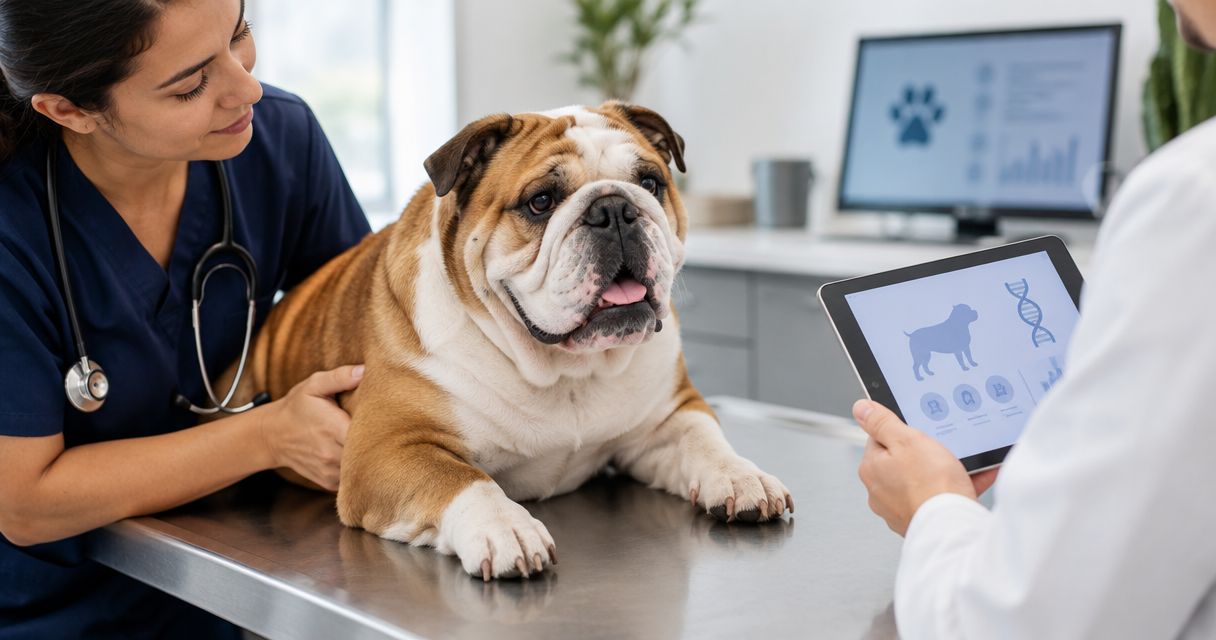
The cost of health testing for breeding bulldogs depends on the examinations, laboratory tests, and official evaluations your veterinarian recommends for the individual dog; an itemized 2026 quote is the right starting point. A DNA-panel quote alone does not cover physical screening, and examination, imaging, sedation, specialist, or submission charges need separate confirmation. Budget for the complete screening plan before choosing a breeding partner—not just the easiest test to order.
- The cost of health testing for breeding bulldogs starts with a complete veterinary screening plan, not a DNA kit alone.
- Shrinkabulls serves English and French Bulldog owners and breeders; request individual health records before selecting a puppy or stud.
- Compare DNA testing, physical examinations, imaging, and submission charges separately.
- Health clearances inform breeding decisions; coat-color results and AKC registration do not replace them.
How much does health testing cost for a breeding bulldog?
Your total depends on what is being tested, who performs each examination, and which results require formal evaluation. Compare written quotes for the same screening plan. Otherwise, a laboratory-only quote and a quote that includes examinations and imaging describe different services.
Start by choosing a vet experienced with brachycephalic breeds. Ask the veterinarian to distinguish breed-recommended screening from additional testing prompted by your bulldog's history or examination.
| Screening component | Best for | What it contributes | Limitation | What to confirm in the quote |
|---|---|---|---|---|
| DNA health testing | Identifying tested inherited variants | Results for the specific variants included | Does not assess every inherited condition or physical function | Panel contents, sample collection, shipping, interpretation |
| Orthopedic evaluation | Assessing joints and structure | Examination findings and imaging when indicated | A routine examination is not the same as an official radiographic evaluation | Examination, images, sedation if required, submission |
| Eye examination | Assessing observable eye disease | Findings from an eye examination | A result describes the examination date, not lifelong eye health | Examiner qualifications, reporting, renewal requirements |
| Cardiac evaluation | Assessing heart findings | Screening appropriate to the veterinarian's plan | Different examination methods are not interchangeable | Examination type, specialist involvement, further diagnostics |
| Respiratory assessment | Assessing breathing function | Evaluation of brachycephalic airway concerns | DNA testing does not establish normal breathing function | Assessment method, referral needs, report |
| Reproductive screening | Assessing mating-related health risks | Testing relevant to the proposed breeding | Does not replace inherited-disease screening | Tests required for each dog and timing |
Use this table to organize questions, not as a universal checklist. English Bulldogs and French Bulldogs need breed-specific screening plans, and an individual dog's findings can require additional investigation.
Why this matters
Bulldogs just make us happy! But a breeding decision needs more than an adorable face, a pedigree, or a desirable color. Testing has value when it changes which dogs you breed, which pairing you choose, or whether you breed at all.
A broad DNA panel can sound reassuring while leaving important questions about breathing, eyes, joints, and heart health unanswered. Conversely, a normal physical examination does not establish that a dog lacks every tested inherited variant. DNA results and clinical findings answer different questions.
For your 2026 breeding budget, keep screening separate from treatment, mating management, pregnancy monitoring, delivery, and puppy care. Those are distinct responsibilities. Calling them all health testing makes it harder to understand what a quote actually includes.
DNA health testing: confirm the panel's scope
A DNA health panel reports results for specified genetic variants. Before ordering, ask your veterinarian whether those variants are relevant to your breed and proposed pairing. The number of conditions advertised is not, by itself, a measure of usefulness.
Keep health testing separate from coat-color testing. A color report helps describe inheritance of pigmentation traits; it does not clear a dog for breeding. Likewise, an ancestry report is not a substitute for a breed-appropriate health evaluation.
Ask for the laboratory report, the dog's identification, and an explanation of each result. A summary saying clear is incomplete unless it states what the dog was tested for. A negative result applies to the tested variants, not every possible cause of illness.
For a simple autosomal recessive condition, breeding two carriers of the same disease-causing variant gives each puppy a 25% probability of inheriting two copies. This is the Mendelian inheritance pattern described in veterinary genetics references such as the Merck Veterinary Manual; it is not a prediction that exactly one quarter of a particular litter will be affected.
Physical screening: budget beyond the swab
Clinical screening examines the dog, not just its genetic sample. Depending on the screening plan, this involves hands-on examinations, imaging, specialist assessments, or standardized functional evaluations. Ask which findings require an official report rather than a general wellness note.
For hip screening, age and evaluation method matter. The Orthopedic Foundation for Animals requires dogs to be at least 24 months old for final OFA hip certification; earlier OFA evaluations are preliminary. That age rule belongs to the OFA method, so do not apply it automatically to every orthopedic assessment.
Eye results also need dates. OFA's Companion Animal Eye Registry certifications are valid for 12 months from the examination, and ongoing breeding dogs need current evaluations under that program. Confirm the applicable schedule when arranging your dog's examinations.
In 2026, use those program requirements to plan appointments before you plan mating. A report that exists is not necessarily a report that is current or suitable for the intended certification. Ask your veterinarian to identify anything that remains preliminary, incomplete, or due for renewal.
Reproductive screening: keep its purpose separate
Reproductive testing answers questions related to mating and reproductive health. For example, canine brucellosis is a breeding-related infectious concern, and testing decisions belong with your veterinarian. Ask what is appropriate for both dogs and when samples should be collected.
Do not confuse reproductive screening with inherited-disease clearance. A negative infectious-disease result does not establish healthy hips, normal breathing, or a suitable genetic match. Semen evaluation and ovulation timing serve still other purposes.
Your quote should name the service rather than group everything under breeding tests. That distinction lets you compare clinics accurately and keeps essential screening from disappearing inside a larger reproductive-services package.
Why health-testing totals vary
The biggest differences come from the scope of the work, not simply the label on the package. Review these factors with the clinic:
- Screening scope: A DNA panel, physical examinations, imaging, and reproductive tests provide different information.
- Evaluation method: A general examination and a specialist diagnostic procedure are not interchangeable.
- Sedation needs: Imaging protocols and the individual dog's ability to tolerate positioning affect the appointment plan.
- Laboratory contents: Panels test specified variants; compare the actual contents rather than promotional condition counts.
- Reporting requirements: Sample collection, official evaluation, and record submission are separate tasks that need clarification.
- Follow-up needs: An abnormal finding or expired examination can require further assessment before a breeding decision.
Ask about each factor before accepting a package. A bundled appointment is useful only when its contents match the screening plan. Leaving out a needed examination does not make the plan complete.
How do you build a usable testing budget?
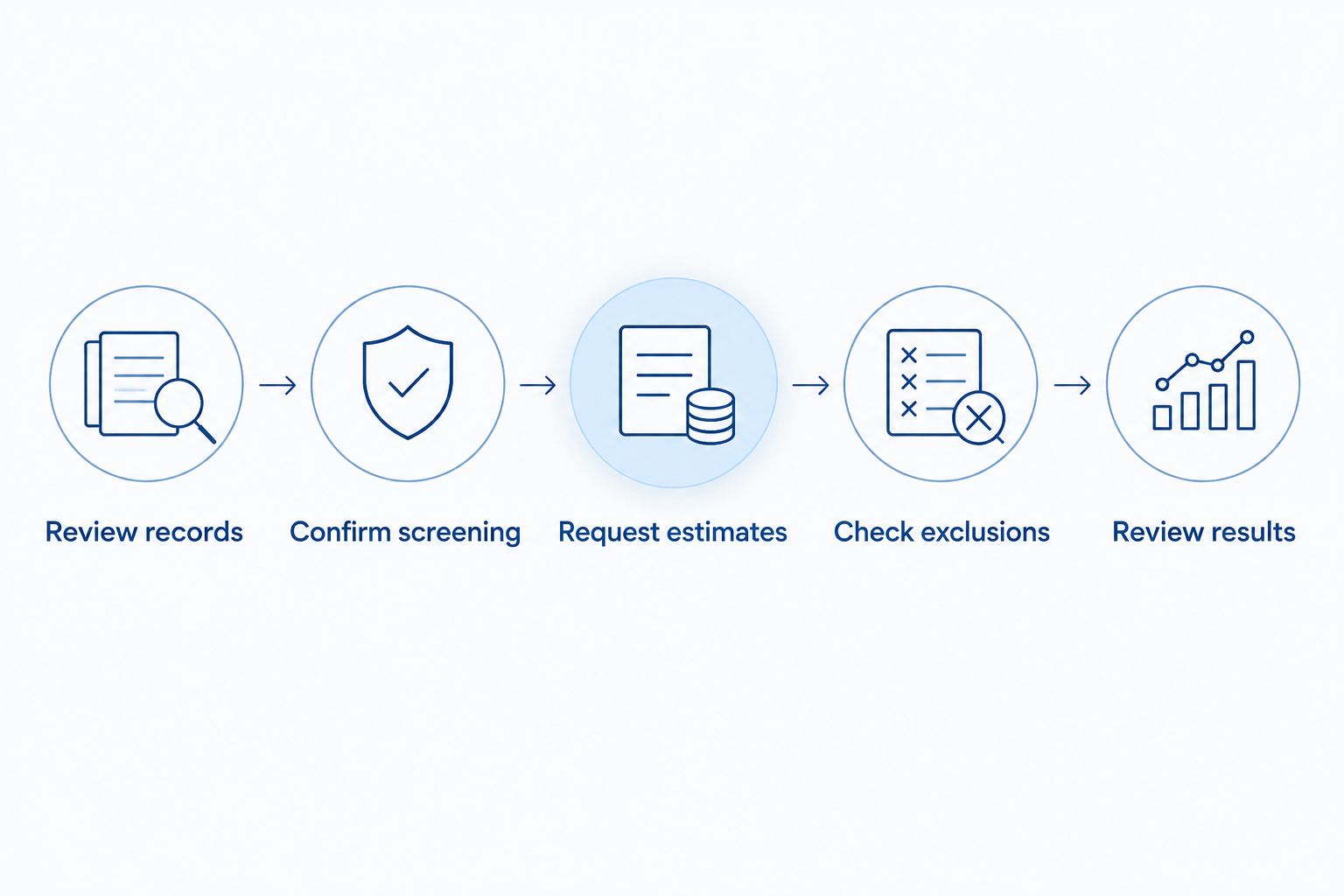
Build your 2026 budget around a written list of services and their purposes. Follow this sequence so you do not order an attractive-looking panel first and discover its limitations later.
- Review records. Collect existing laboratory reports, clinical findings, certification records, and relevant family history. Match each document to the correct dog.
- Confirm screening. Ask your veterinarian to identify current breed recommendations and any additional concerns raised by the individual dog.
- Request estimates. Obtain an itemized quote that separates examinations, laboratory work, imaging, sedation, interpretation, and submission.
- Check exclusions. Establish what happens if a sample is unusable, additional views are needed, or an abnormal finding requires referral.
- Review results. Arrange interpretation before committing to a mating. An invoice proves a service was purchased, not that the dog is suitable for breeding.
Keep written estimates alongside the resulting reports. When you compare providers, mark which services are equivalent and which differ. Ask the clinic to explain differences instead of assuming a package with the same name contains the same work.
Do not authorize duplicate testing simply because a report is difficult to find. First confirm the dog's identity, the test performed, and whether the existing result remains usable. Your veterinarian should decide when repeating a test is medically or procedurally necessary.
What should you check before choosing a breeding partner?
Review both dogs' records together. A result that matters little in isolation can become important when matched with the other dog's genetic or clinical findings. The proposed pairing—not merely each dog's collection of certificates—is the decision being evaluated.
For genetic results, check that both reports address the same relevant variants and use compatible terminology. For physical screening, review the examination dates, method, findings, and any limitations. Ask about previous airway or orthopedic surgery, because treatment history is relevant even when a dog currently appears comfortable.
At Shrinkabulls, our business includes English and French Bulldog puppies and stud services. Shrinkabulls is a fit for prospective English and French Bulldog owners and breeders. That business description does not establish an individual dog's test results; request the actual records for the puppy's parents or proposed stud.
Before making a breeding commitment, learn how to connect DNA health-clearance results to breeding-pair selection. Keep your veterinarian involved when a result needs interpretation or a pairing raises a health concern.
Is a DNA panel enough for a breeding bulldog?
A DNA panel alone is not enough to establish a bulldog's suitability for breeding. It covers specified variants, while physical screening evaluates concerns that a swab cannot measure, including observable joint, eye, cardiac, and respiratory findings.
A useful plan combines relevant genetic information with appropriate clinical evaluation. Neither a longer panel nor a normal wellness visit replaces that combination.
Do both the stud and the female need health screening?
Both the stud and the female need an appropriate prebreeding health evaluation. Each contributes inherited traits, and mating-related infectious concerns involve both dogs.
Do not accept the other owner's statement that testing is handled without seeing the reports. Confirm identity, scope, dates, and interpretation before arranging the mating.
Can you reduce unnecessary testing without cutting corners?
You can avoid unnecessary duplication by reviewing existing records before ordering tests. DNA results generally do not expire because the inherited genotype does not change, but identity errors, incomplete panel coverage, or revised testing requirements still need attention.
Clinical evaluations follow different rules. Keep a renewal calendar for 2026 and beyond, and ask your veterinarian which reports remain usable for the intended breeding decision.
FAQ
What’s included in the cost of health testing for breeding bulldogs?
The cost of health testing for breeding bulldogs depends on the selected DNA tests, clinical examinations, imaging, and reproductive screening. Ask for an itemized quote that identifies collection, sedation, specialist, and submission charges separately.
Is an inexpensive DNA kit enough to clear my bulldog for breeding?
A DNA kit alone does not clear a bulldog for breeding. It reports specified genetic variants and does not replace appropriate examinations of breathing, eyes, heart, or joints.
How old must my bulldog be for final OFA hip certification?
Final OFA hip certification requires a dog to be at least 24 months old. Earlier OFA hip evaluations are preliminary; ask your veterinarian about the timing and purpose of the selected assessment.
How long does an OFA eye certification last?
An OFA Companion Animal Eye Registry certification is valid for 12 months from the examination. Confirm renewal timing for a dog that remains in a breeding program.
Does AKC registration mean a bulldog has passed health tests?
AKC registration does not establish that a bulldog has passed breed-appropriate health screening. Review the actual laboratory reports and clinical evaluation records separately.
Should I ask Shrinkabulls for the parents’ health reports?
Ask Shrinkabulls for the individual parents’ health reports when evaluating an English or French Bulldog puppy. Check which tests were performed, the dogs’ identities, the findings, and the examination dates.
Can two carriers produce a puppy affected by a recessive condition?
Two carriers of the same disease-causing autosomal recessive variant give each puppy a 25% probability of inheriting two copies. Ask your veterinarian or a veterinary genetics specialist to interpret the specific condition before choosing a pairing.
One last thing
An invoice is not a health clearance. Before you close your 2026 testing budget, match every completed service to its report and every report to the correct dog. Then ask what the combined findings mean for the proposed pairing.
The most useful final question is simple: Does this information support breeding these dogs together? If the answer is no, completing the tests has still served its purpose. Your bulldog's welfare comes before the breeding plan.
Related guides
- Health-testing panels to request from a bulldog breeder
- How to choose a bulldog stud for your breeding program
- How to plan a multi-generation breeding program for rare colors
