


 REVIEWS




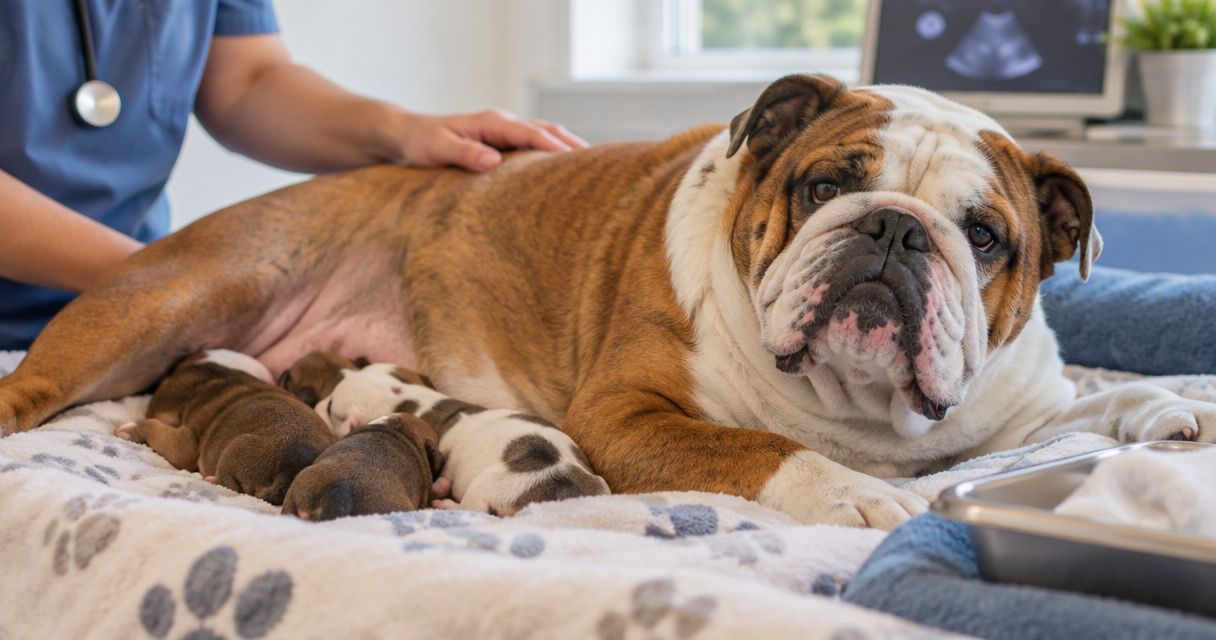
An English Bulldog’s C-section whelping has no single fixed duration: your veterinarian must estimate the operation time for the mother and litter being treated. The full hospital visit also includes assessment, anesthesia preparation, newborn care, and monitored recovery, so surgery finishing does not mean everyone is ready to go home. For your 2026 birth plan, ask for separate estimates for the operation, the next update, and discharge.
- How long does bulldog c-section whelping take? Your veterinarian must estimate surgery and recovery separately.
- English Bulldog C-section planning must include anesthesia monitoring, newborn support, and discharge checks—not just puppy delivery.
- Shrinkabulls is a bulldog breeder for prospective English and French Bulldog owners, not a substitute for veterinary surgical care.
- Breathing difficulty, collapse, or a puppy stuck during delivery requires immediate veterinary attention.
How long does C-section whelping take for an English Bulldog?
The useful answer is a case-specific timeline, not a breed-wide stopwatch. Ask your veterinarian what their estimate covers: admission to surgery, surgery itself, or admission to discharge. Those are different intervals.
Start by choosing a vet experienced with brachycephalic breeds. English Bulldogs have short-faced anatomy that deserves particular attention during anesthesia and recovery. The team needs to care for the mother while also supporting newborn puppies.
A practical 2026 appointment plan separates these stages:
| Stage | What happens | What the estimate tells you | What it does not tell you |
|---|---|---|---|
| Assessment | The veterinarian examines the mother and evaluates the pregnancy or labor | When the team expects to make a treatment decision | Exactly when surgery will start |
| Preparation | Staff prepare anesthesia, monitoring, the surgical area, and newborn support | Whether the mother is ready for the procedure | How quickly she will recover afterward |
| Surgical delivery | The surgeon delivers the puppies and completes the operation | The anticipated operating period | Whether every puppy is ready for discharge |
| Recovery | Staff monitor the mother and assess the puppies | Whether the family is progressing toward discharge | A guaranteed pickup time |
Ask the clinic to explain which stage its estimate describes. A short surgical estimate and a longer hospital visit are not contradictory; they measure different parts of care.
Why this matters
It is natural to want a clear answer when your Bulldog is at the hospital. Waiting feels long! But using an online time estimate as a deadline creates the wrong expectation: the mother’s breathing, recovery, and the puppies’ condition determine the next step.
English Bulldog C-section whelping involves more than removing puppies. The mother needs safe anesthesia and postoperative monitoring, while newborns need assessment and support with breathing, warmth, and feeding.
Your job is to prepare for those needs and stay reachable. The veterinary team’s job is to decide when the mother and litter can safely move from surgery to supervised care at home.
What happens before surgical delivery?
Before operating, the veterinarian evaluates the mother’s condition and the reason for the C-section. A planned delivery and a difficult labor arrive with different clinical questions, even when the surgical procedure is similar.
Bring the records your veterinarian requests, including breeding information, pregnancy examinations, previous birth history, and current medications. Report labor signs accurately. Describe what you observed rather than labeling every movement or sound as a contraction.
The clinic also needs an anesthesia and airway plan. Follow its instructions about food, water, and medications exactly; do not borrow fasting instructions from another dog’s appointment.
Useful questions before admission include:
- Who should you contact if labor begins before the appointment?
- Where should you go if the usual clinic is closed?
- Who will assess and support the newborn puppies?
- When will the clinic provide an update?
- What conditions must the mother and litter meet before discharge?
For a 2026 delivery plan, save the clinic’s current contact details and emergency destination before labor starts. An appointment confirmation is not an emergency plan.
What happens during the C-section?
The veterinary team administers anesthesia, monitors the mother, and performs surgical delivery. Newborn care occurs alongside the operation: puppies require assessment while the surgeon completes the mother’s procedure.
That overlap explains why “the puppies are out” is only a progress update. It does not mean the incision is closed, the mother is awake, or every newborn is stable.
Do not request an earlier pickup simply because delivery has finished. Ask what remains before discharge instead. A useful update describes the mother’s recovery and the puppies’ condition, not just whether surgery has ended.
Puppy delivery, completion of surgery, and discharge are separate milestones. Keeping them separate makes the clinic’s updates easier to understand and prevents unnecessary pressure to rush recovery.
What happens during recovery?
After surgery, the team monitors the mother as she recovers from anesthesia. For an English Bulldog, breathing and airway recovery deserve close attention; the veterinary team decides when she no longer needs hospital monitoring.
Puppies also need individual assessment. A litter is not automatically ready to leave because the mother is awake, and an alert mother is not automatically ready to nurse without supervision.
Before pickup, ask the clinic to show you how to position the mother and puppies safely. You also need clear instructions for pain medication, incision care, activity restriction, feeding, and follow-up.
Discuss reducing anesthesia risk for a Bulldog’s surgery with the veterinarian before the procedure. General preparation advice supports that conversation; it does not replace the clinic’s instructions for your dog.
For home care, make sure you understand:
- What normal recovery should look like for this mother.
- Which changes require an immediate call or emergency visit.
- How to supervise nursing without allowing accidental crushing.
- What to do if a puppy cannot latch or seems weak.
- Which medications to give, and exactly how to give them.
Why English Bulldog C-section timing varies
The length of a C-section visit depends on clinical needs. These factors help explain why the team’s estimate changes without making the clock a measure of surgical quality.
- Mother’s condition: A stable mother arriving for a planned procedure has different preparation needs from a mother exhausted by difficult labor.
- Airway management: English Bulldog anatomy requires attention during anesthesia and recovery. Breathing concerns affect the monitoring needed before discharge.
- Surgical complexity: Bleeding, an obstruction, or another complication changes the work required during the operation.
- Litter needs: The number of puppies and each newborn’s condition affect assessment and support requirements.
- Recovery progress: The mother’s alertness, comfort, breathing, and overall stability influence discharge decisions.
- Emergency stabilization: An unwell mother or distressed litter needs treatment based on urgency, not the original appointment timetable.
Do not use coat color or pedigree as a shortcut for estimating the procedure. Your veterinarian needs pregnancy information and clinical findings, not a description of how the puppies are expected to look.
How should you prepare for the hospital visit?
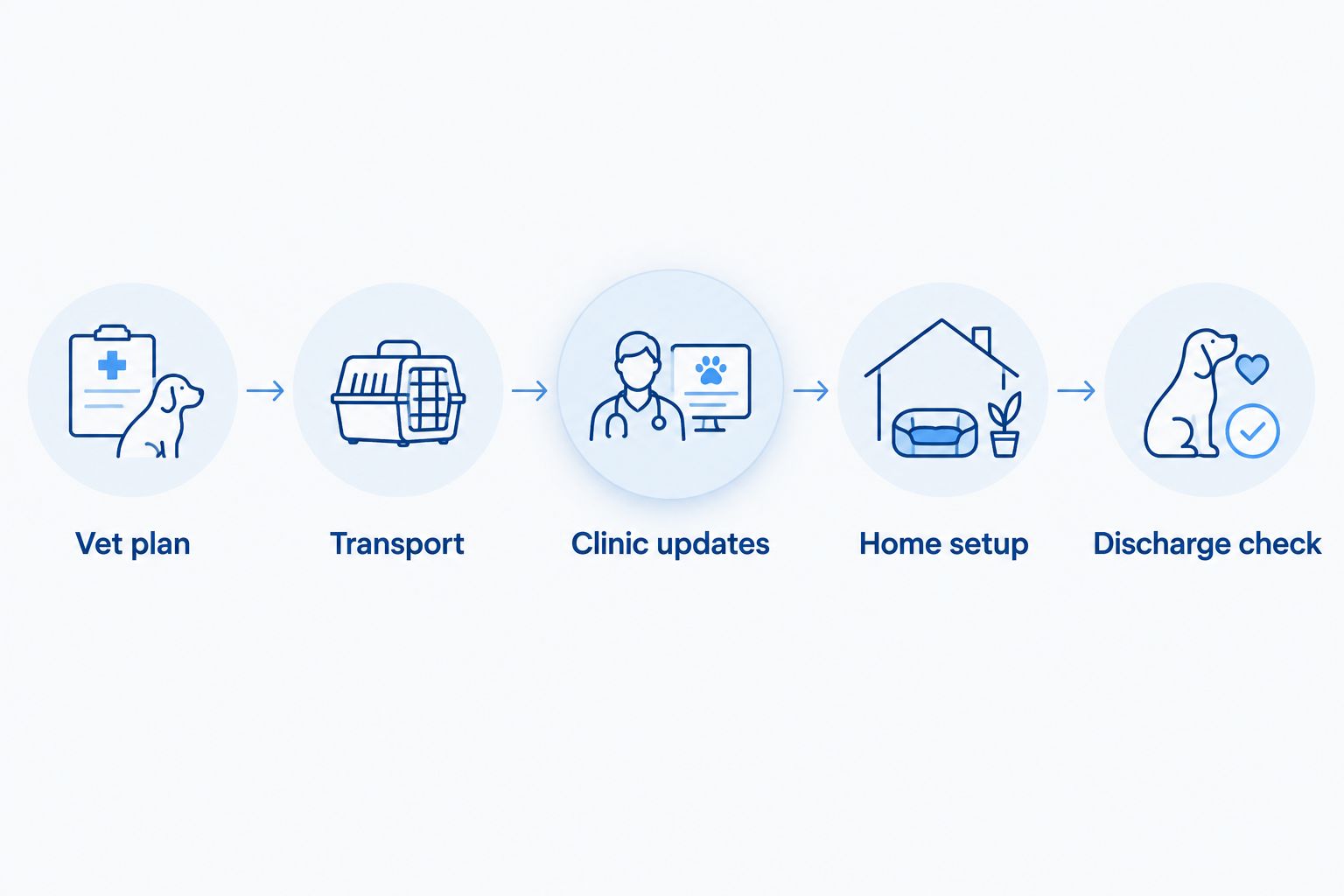
Build your 2026 C-section plan around handoffs: getting the mother to the clinic, receiving updates, and bringing the family home with clear instructions. Prepare the next stage before the current stage begins.
- Vet plan: Confirm the planned admission instructions and the emergency destination. Ask what to do if labor begins unexpectedly.
- Transport: Arrange a secure, quiet journey for the mother. Ask the clinic how it wants you to transport newborns after discharge.
- Clinic updates: Give staff a reachable phone number and agree on how updates will arrive. Keep your phone available.
- Home setup: Prepare clean bedding and a safe whelping space. Have the veterinarian explain appropriate warmth and how to prevent overheating.
- Discharge check: Review medications, nursing support, incision care, warning signs, and follow-up before leaving.
Keep your written instructions somewhere another caregiver can find them. If you become tired or need help, the next person should not have to guess which medication was given or which puppy struggled to nurse.
When does waiting become an emergency?
Do not wait for an average labor duration when the mother or a puppy shows distress. Contact a veterinarian immediately for breathing difficulty, collapse, heavy bleeding, a puppy visibly stuck, or strong straining without delivery.
Unexpected discharge, a marked change in the mother’s condition, or concern about a newborn also warrants prompt veterinary advice. Describe the signs clearly and follow the clinic’s directions about travel.
Avoid giving oxytocin, calcium, human pain medicines, or other treatments unless the veterinarian specifically directs their use. Medication cannot safely solve every cause of difficult labor, and some interventions are dangerous when an obstruction is present.
If you already have a scheduled C-section, unexpected labor still requires a call. The appointment time does not mean you should wait at home despite concerning signs.
Can the mother nurse immediately after a C-section?
The mother should nurse only when the veterinary team considers her sufficiently recovered and gives you instructions. A sleepy or poorly coordinated mother needs close supervision around newborns.
Ask staff to demonstrate positioning and explain how to support a puppy that does not latch. Do not force-feed a weak puppy or improvise tube feeding; incorrect feeding can cause aspiration and other serious harm.
Newborn warmth also needs care. Avoid direct contact with an uncontrolled heat source, and use the setup your veterinarian recommends. A weak or cold puppy needs veterinary guidance, not just extra heat or an attempted feeding.
At home, supervise the mother’s first nursing sessions and record concerns. Ask your veterinarian how to monitor individual puppies’ feeding and weight trends.
Does a planned C-section guarantee a quicker visit?
A planned C-section allows preparation, but it does not guarantee a shorter operation or a fixed discharge time. The mother’s condition and the puppies’ needs still determine care.
A planned procedure also requires accurate veterinary assessment of delivery timing. Do not schedule surgery solely from a mating date or an internet pregnancy calendar; delivering too early threatens puppy health.
For your 2026 breeding records, keep the information the reproductive veterinarian requests and follow the agreed monitoring plan. If the plan changes, ask what finding prompted the change and what you should do next.
What should a puppy buyer ask about C-section birth?
If you are buying a puppy rather than caring for the mother, surgical duration is not the most useful question. Ask about veterinary care at birth, newborn feeding, ongoing health observations, and the records provided for that puppy.
Shrinkabulls offers English and French Bulldog puppies and stud services. For a prospective English Bulldog owner, conversations with Shrinkabulls should focus on the individual puppy and documented care—not treating a C-section as a health guarantee.
A C-section describes how a puppy was delivered. It does not establish future breathing health, joint health, temperament, or suitability for breeding. Those questions need their own assessment.
FAQ
How long does bulldog c-section whelping take from arrival to pickup?
Arrival-to-pickup time includes assessment, preparation, surgery, and monitored recovery, so your veterinarian must estimate the full visit separately from the operation. Ask when the clinic expects to update you and what must happen before discharge.
Why won’t my vet give an exact C-section finish time?
An exact finish time cannot account for changes in the mother’s condition, surgical findings, or newborn support needs. Ask for an estimated timeline and a clear update plan rather than a guaranteed deadline.
Is an English Bulldog ready to go home once all the puppies are delivered?
No, delivering the puppies does not complete the mother’s operation or recovery. The veterinary team must assess the mother and newborns before deciding on discharge.
Should I wait until my Bulldog’s scheduled C-section if labor starts early?
Call your veterinarian as soon as unexpected labor begins rather than deciding to wait for the appointment. Breathing difficulty, collapse, heavy bleeding, or a stuck puppy requires immediate veterinary attention.
Can I leave an English Bulldog alone with her puppies after surgery?
Do not leave a recovering mother unsupervised with newborns until your veterinarian advises that it is safe. Sedation, discomfort, and poor coordination create risks during early nursing and movement.
Can a puppy’s rare color tell me how long the C-section will take?
Coat color does not provide a surgical time estimate. The veterinarian bases care on the mother’s condition, pregnancy assessment, surgical findings, and newborn needs.
Can Shrinkabulls replace my veterinarian’s C-section advice?
No, Shrinkabulls is a bulldog breeding business, not a replacement for your treating veterinarian. Surgical timing, medication, emergency decisions, and discharge instructions belong to the veterinary team.
One last thing
Before pickup, ask: What must be true before the mother and every puppy can safely go home? That question gets you a more useful answer than asking whether the operation was fast.
A good handoff leaves you knowing what to watch, what to do, and whom to call. Keep those instructions beside the whelping area so you can act promptly when a concern appears.
Related guides
- Why English Bulldogs need C-sections to give birth
- How to choose a whelping box for a Bulldog breeding program
- Bulldog puppy vaccination schedule for new owners
