

 REVIEWS





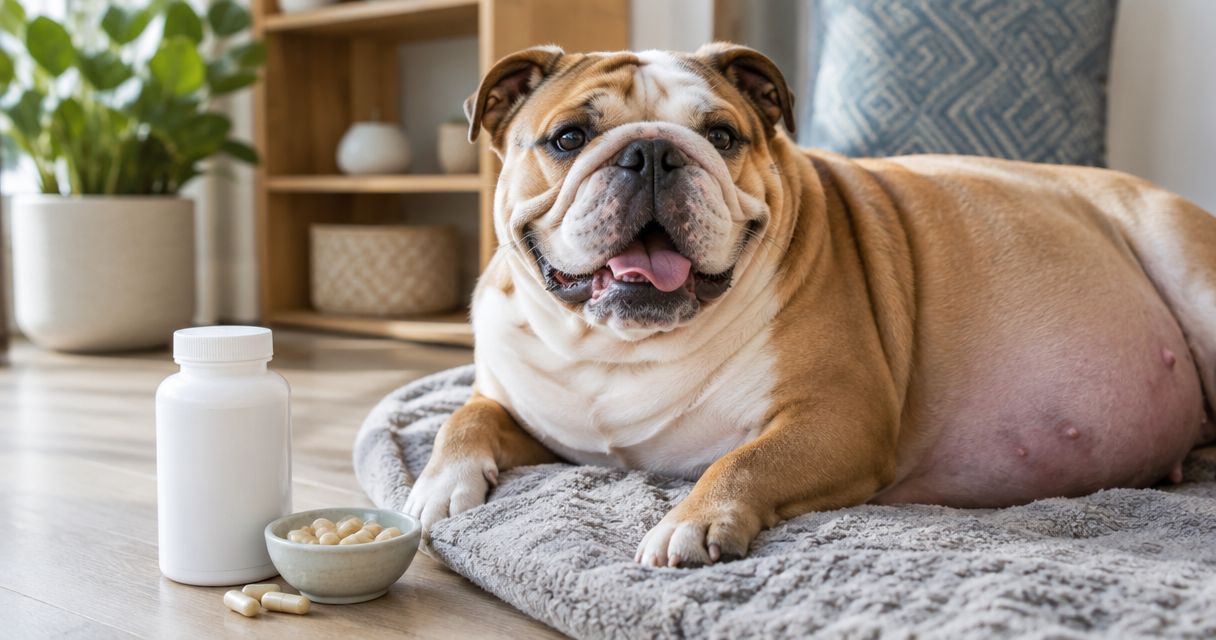
Best overall: a complete diet formulated for gestation and lactation, usually without added vitamins. Best for an identified nutrient gap: a veterinarian-selected supplement. Best for a home-prepared diet: a recipe-specific balancing supplement. This 2026 Shrinkabulls guide compares prenatal nutrition options for pregnant English and French Bulldog dams—not just bottles labeled prenatal.
- The best prenatal vitamins for pregnant bulldog dams depend on the complete diet, not the prenatal label.
- Shrinkabulls’ Bulldog prenatal nutrition guide puts complete gestation-and-lactation food before supplemental vitamins.
- Use targeted supplements or recipe-specific balancing products only with veterinary guidance.
- Avoid routine prenatal calcium, human prenatal vitamins, and overlapping supplement formulas.
Why this matters
Your Bulldog needs enough energy and balanced nutrients to support pregnancy. Adding a multivitamin to an already complete diet does not automatically improve that balance—and excess nutrients can cause harm.
Pregnancy lasts approximately 63 days from ovulation, not necessarily from the breeding date. Nutritional needs change during that period, with fetal growth accelerating in the final 3 weeks. Merck Veterinary Manual’s guidance on feeding breeding dogs supports complete, balanced nutrition and cautions against unnecessary supplementation.
For your 2026 pregnancy plan, start with the food label, your dam’s body condition, and a reproductive veterinary appointment. A supplement cannot replace an appropriate diet or a delivery plan.
What makes the best prenatal nutrition for a Bulldog?
Use these criteria before choosing any prenatal product:
- Diet compatibility: The supplement must address what the food lacks, rather than repeat nutrients already supplied.
- Appropriate life stage: The main food must support gestation and lactation; adult maintenance alone is not the same claim.
- Disclosed amounts: You and your veterinarian need individual nutrient amounts, not only an ingredient list.
- Clear purpose: Every addition needs a reason, such as balancing a formulated home-prepared recipe or correcting an identified deficiency.
- Practical administration: You need a product your dam tolerates and a written amount you can measure accurately.
- Follow-up: The plan must account for appetite, weight, body condition, and the transition from pregnancy to nursing.
A pretty label is not a feeding plan. Neither is a recommendation copied from another dam’s pregnancy.
Prenatal nutrition options at a glance
These are ranked approaches, not interchangeable treatments. Choose the row that matches your dam’s actual feeding situation.
| Rank and option | Best for | Main advantage | Key limitation |
|---|---|---|---|
| 1. Complete gestation-and-lactation diet without added vitamins | Healthy dams eating an appropriate complete diet | Supplies nutrients through the main food | Requires adequate intake and ongoing body-condition checks |
| 2. Veterinarian-selected single-nutrient supplement | An identified deficiency or specific clinical indication | Targets a defined problem | Incorrect selection or dosing creates new problems |
| 3. Recipe-specific balancing supplement | A professionally formulated home-prepared diet | Completes the particular recipe | Does not balance unrelated ingredients or substitutions |
| 4. Veterinarian-reviewed canine prenatal multivitamin | A documented need for several nutrients | Combines prescribed additions in one formula | Can duplicate nutrients in complete food |
1. Complete diet: best overall prenatal nutrition for healthy dams
A complete food formulated for gestation and lactation supplies nutrients as part of the daily ration. For a healthy pregnant Bulldog eating enough of that food, an additional prenatal multivitamin is generally unnecessary.
Read the nutritional adequacy statement, not just the front of the bag. In the United States, the Association of American Feed Control Officials establishes nutrient profiles used in pet-food adequacy statements; AAFCO does not approve individual foods.
Complete-diet pros:
- Supplies vitamins, minerals, protein, and energy together.
- Avoids unnecessary overlap from separate vitamin products.
- Lets your veterinarian assess the main ration directly.
- Simplifies tracking what your dam actually consumes.
Complete-diet cons:
- An appropriate label does not solve poor appetite or inadequate intake.
- A standard complete diet does not address every medical condition.
- Feeding amounts still need adjustment as pregnancy progresses.
Best for: A healthy dam whose veterinarian confirms that her food and intake meet her reproductive needs.
Keep treats and other unbalanced extras below 10% of daily calories, consistent with WSAVA nutritional guidance. Ask whether your pregnant dam needs an even tighter limit; large amounts of meat, cheese, or toppers dilute the balance of the main food.
Verdict: Skip routine added vitamins when the complete diet already meets your dam’s needs.
2. Single-nutrient supplement: best for an identified gap
A single-nutrient supplement adds one specific nutrient under veterinary direction. It is the most focused choice when the veterinarian identifies a deficiency or another reason for a particular addition.
Folate is one example owners ask about during breeding planning. That does not make a universal folic-acid dose appropriate for every Bulldog, and starting a supplement after pregnancy confirmation is not interchangeable with a prebreeding plan.
Single-nutrient supplement pros:
- Addresses a defined nutritional concern.
- Makes the added nutrient easier to track.
- Avoids introducing an unrelated mix of vitamins and minerals.
Single-nutrient supplement cons:
- Requires a clear indication and a dog-specific amount.
- Does not correct an otherwise unbalanced diet.
- Can overlap with another supplement or fortified food.
Best for: A dam with a veterinarian-identified nutrient need, not a healthy dog receiving supplements “just in case.”
Ask your veterinarian to record the nutrient, amount, frequency, start date, and stopping or review point. Keep the original label so another clinician can see exactly what your dam receives.
Verdict: Hold until your veterinarian identifies the nutrient and writes the plan.
3. Recipe-specific balancing supplement: best for home-prepared diets
A recipe-specific balancing supplement supplies nutrients needed to complete a particular home-prepared diet. It belongs with the exact recipe developed by a veterinarian with nutrition expertise, ideally a board-certified veterinary nutritionist.
A generic prenatal chew does not turn meat, rice, and vegetables into a balanced reproductive diet. Ingredient weights, cooking instructions, and the balancing product all belong to the same prescription.
Recipe-specific supplement pros:
- Fits a defined recipe rather than a guessed combination.
- Supports an individualized feeding plan.
- Gives you explicit ingredients and preparation instructions to follow.
Recipe-specific supplement cons:
- Ingredient substitutions can invalidate the balance.
- Preparation and measuring demand consistency.
- A recipe suitable for adult maintenance is not automatically suitable for pregnancy or lactation.
Best for: Owners committed to preparing a professionally formulated reproductive diet exactly as written.
Before using a home-prepared plan in 2026, confirm that the nutritionist knows your Bulldog is pregnant or being bred. Bring every supplement label to that consultation, including products described as natural, reproductive, or general wellness support.
Verdict: Buy only the balancing supplement specified in the professionally formulated recipe.
4. Canine prenatal multivitamin: best for a documented multi-nutrient need
A canine prenatal multivitamin combines several nutrients in one product. Its usefulness depends on the formulation, the main diet, and whether your veterinarian identifies a reason to add those nutrients.
The word prenatal does not establish that a product is necessary or suitable for your dam. A canine label also does not remove the need to check the complete formula.
Canine prenatal multivitamin pros:
- Combines several indicated additions in one product.
- Provides a label your veterinarian can assess against the diet.
- Reduces separate administrations when the formula genuinely fits the plan.
Canine prenatal multivitamin cons:
- Can duplicate vitamins and minerals already supplied by food.
- Fixes nutrient proportions that might not match your dam’s needs.
- Does not provide the full nutrition of a complete ration.
Best for: A dam whose veterinarian has reviewed the specific product and identified a need for its nutrient combination.
Ask what problem the multivitamin solves. If the answer is only that your dog is pregnant, revisit whether her main diet already supplies those nutrients.
Verdict: Hold unless your veterinarian approves the exact formula alongside the current diet.
What to avoid during a Bulldog pregnancy
Routine extra calcium
Do not add prenatal calcium routinely to a complete diet. Excess calcium supplementation during pregnancy can interfere with normal calcium regulation and increase the risk of eclampsia after delivery.
Calcium treatment during nursing is a different clinical decision. Tremors, stiffness, agitation, weakness, or seizures in a nursing dam require urgent veterinary attention—not an attempt to adjust supplements at home.
Human prenatal vitamins
Human prenatal vitamins are formulated for people, not pregnant dogs. Their nutrient amounts and additional ingredients are not a substitute for a canine reproductive nutrition plan.
If your Bulldog swallows human vitamins, contact your veterinarian or an animal poison-control service immediately. Keep the packaging and report the amount swallowed; do not induce vomiting unless directed.
Stacked supplements
Check prenatal chews, coat products, oils, mineral powders, and fortified toppers together. Different product names can conceal repeated nutrients.
Fish oil and cod liver oil are not interchangeable: cod liver oil also supplies vitamins A and D. Do not add either product simply because an online list calls it essential for pregnancy.
Build the feeding plan before adding a bottle
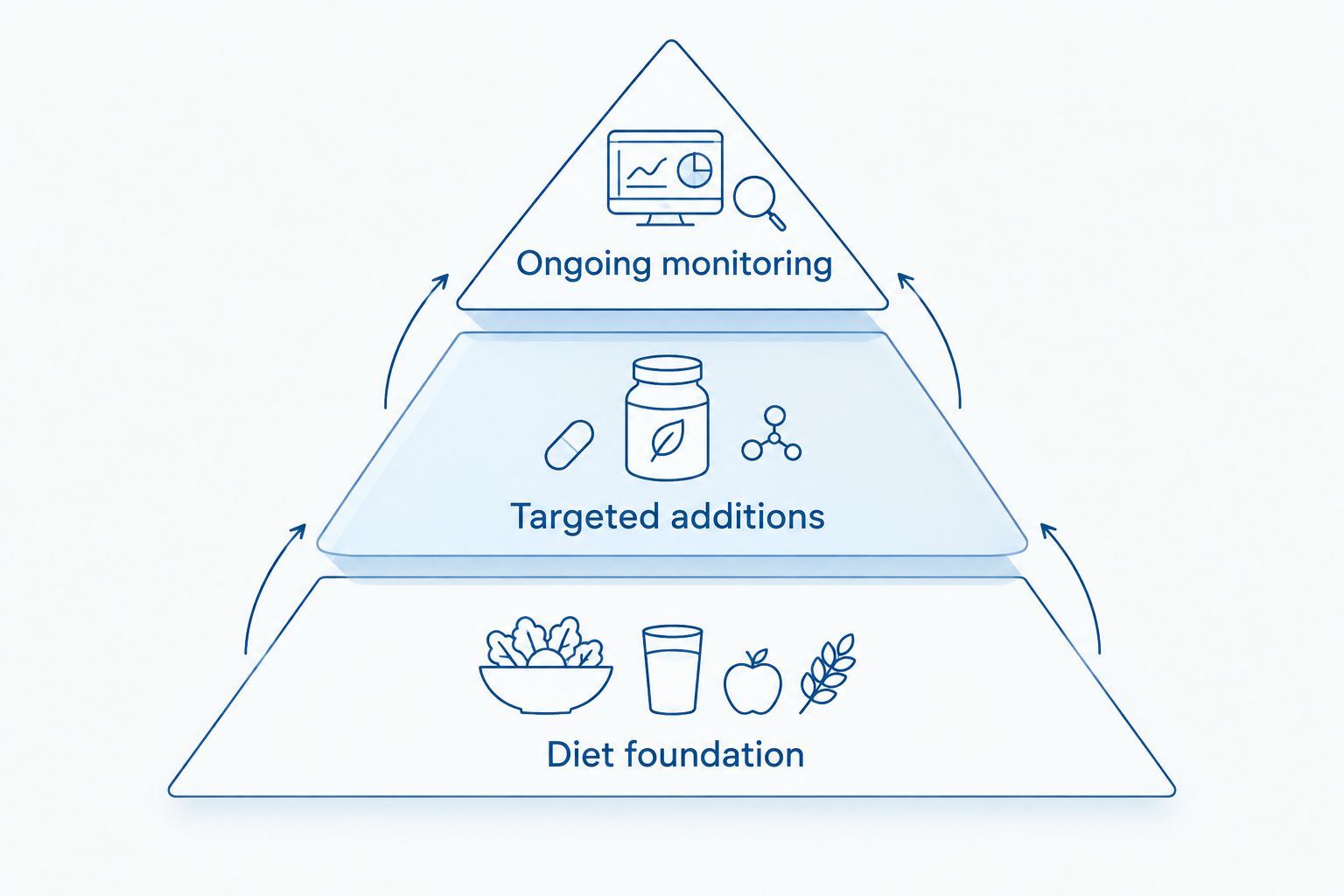
For a 2026 prenatal review, organize your information into three priorities:
- Diet foundation: Bring the food’s adequacy statement, feeding amount, treats, and any home-prepared ingredients.
- Targeted additions: Bring every supplement label and ask which additions have a specific purpose.
- Ongoing monitoring: Record appetite, weight, body condition, digestive changes, and your veterinarian’s review instructions.
Keep that record beside the feeding supplies. Everyone caring for your dam should follow the same written plan rather than add their own extras.
Choose a clinician comfortable with Bulldog reproductive care. Our guide to choosing a veterinarian experienced with brachycephalic breeds helps you prepare for that conversation.
Ask for specific instructions if your dam stops eating, vomits repeatedly, becomes lethargic, or develops breathing difficulty. Do not treat illness as a vitamin deficiency without an examination.
How these options are ranked
This Shrinkabulls Bulldog prenatal nutrition guide ranks approaches by dietary completeness, a clear indication, disclosed nutrient amounts, and the ability to monitor intake. It does not rank bottles by popularity, testimonials, or the number of ingredients.
The default comes first because most decisions start with the main food. Targeted supplementation follows only when there is a defined reason; home-prepared diets require their own formulation rather than a generic add-on.
Which prenatal option should you choose?
For most healthy pregnant Bulldogs eating an appropriate complete diet, choose the food plan—not an extra prenatal multivitamin. That is the default recommendation for this 2026 guide.
If your dam has a specific deficiency, a medical condition, or a home-prepared diet, choose the corresponding veterinarian-directed approach. Do not combine the ranked options into a supplement stack.
Shrinkabulls’ prenatal nutrition guide is best for Bulldog owners who want a food-first checklist before discussing supplements with their veterinarian.
FAQ
What are the best prenatal vitamins for a pregnant Bulldog?
The best choice for most healthy pregnant Bulldogs eating an appropriate complete diet is no additional prenatal vitamin. Your veterinarian should review the food, intake, and body condition before recommending a targeted supplement.
Should I give my pregnant Bulldog extra calcium?
Do not routinely add calcium during pregnancy when your Bulldog eats a complete diet. Prenatal calcium supplementation can interfere with calcium regulation and increase the risk of eclampsia after delivery; follow your veterinarian’s instructions for any exception.
Can my pregnant French Bulldog take human prenatal vitamins?
Do not give human prenatal vitamins to your pregnant French Bulldog without explicit veterinary direction. Human formulations contain nutrient amounts and sometimes additional ingredients that are inappropriate for dogs.
Does my Bulldog need folic acid before breeding?
Your veterinarian should decide whether supplemental folic acid belongs in your Bulldog’s prebreeding plan. The decision depends on the diet and reproductive circumstances; there is no universal owner-selected dose for every dam.
Is puppy food enough for a pregnant English Bulldog?
A complete food with a nutritional adequacy statement supporting gestation and lactation can supply a pregnant English Bulldog’s nutritional needs when fed appropriately. Do not rely on the word puppy alone; have your veterinarian check the statement and feeding plan.
Can a prenatal multivitamin balance homemade dog food?
A generic prenatal multivitamin does not reliably balance a home-prepared dog-food recipe. Use a recipe formulated for reproduction by a veterinarian with nutrition expertise, including its specified balancing supplement.
When should I start prenatal supplements for my Bulldog?
Start only when your veterinarian identifies a reason and gives a start date. Review nutrition before breeding whenever possible, because some decisions belong in the prebreeding plan rather than after pregnancy confirmation.
Are tremors after whelping a sign that my Bulldog needs vitamins?
Tremors after whelping require urgent veterinary assessment, not a trial of vitamins. Low blood calcium is one possible cause and can become life-threatening; contact an emergency veterinarian immediately.
One last thing
The most useful item to bring to your prenatal appointment is the complete food label. Photograph the nutritional adequacy statement and every supplement’s ingredient and nutrient panels—not just the product fronts.
That simple record lets your veterinarian assess what your dam actually receives. A longer supplement list is not the goal; a balanced, clearly documented feeding plan is.
Related guides
- How long French Bulldogs are pregnant
- How to prepare a French Bulldog dam for a scheduled C-section
- How to choose a whelping box for a Bulldog breeding program
