


 REVIEWS




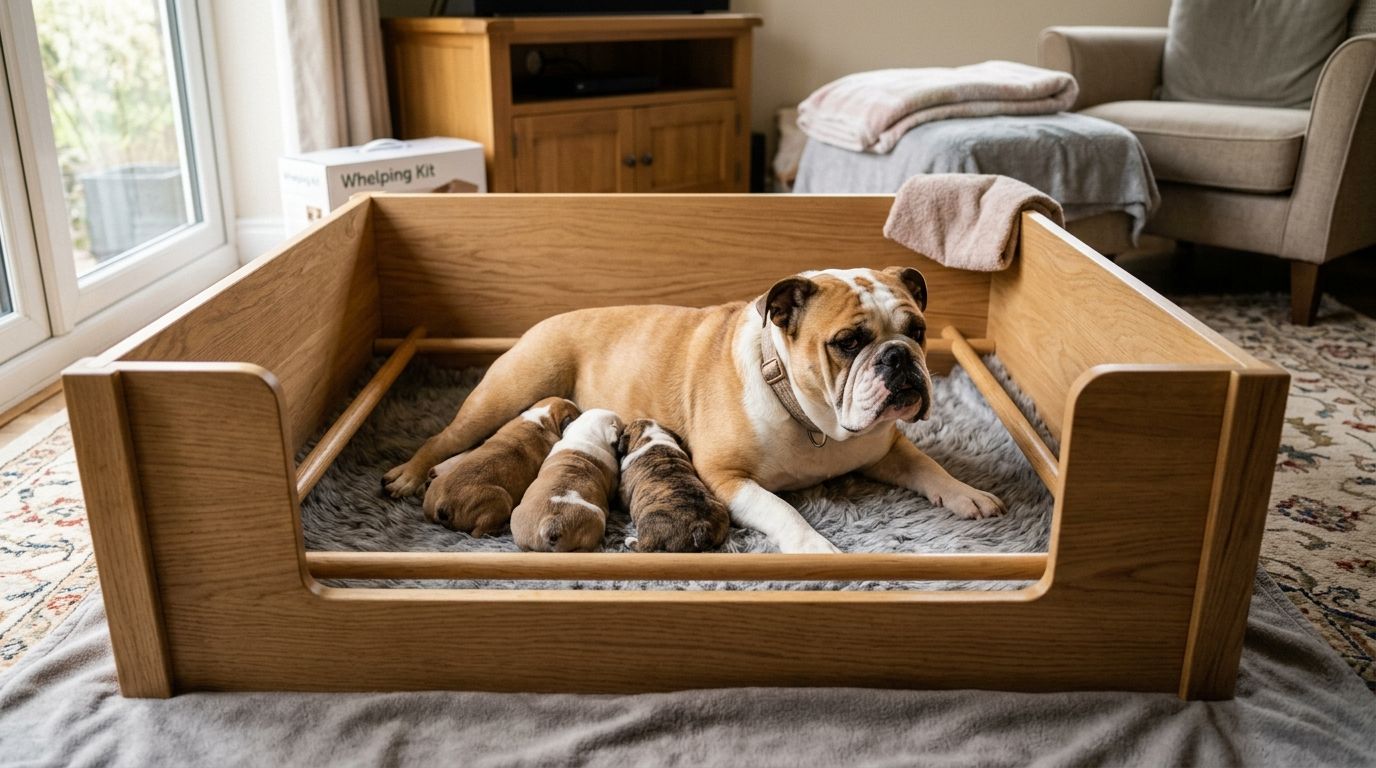
If you're setting up for a litter this year, the whelping box you choose determines whether your dam recovers well and your bulldog puppies survive the first fragile week. The best bulldog whelping box in 2026 is a low-sided, non-slip box with pig rails, room for the dam to stretch out fully, and a heat source that holds newborns at 85-90°F for the first several days. The hidden cost most breeders miss isn't the box itself, it's the bedding and heat lamp setup you'll go through daily until the litter is weaned, plus the laundry.
- A bulldog whelping box needs pig rails set 3-4 inches off the floor to stop overlay deaths.
- Bulldog litters average 3-6 puppies delivered by C-section, so the box has to work for a groggy, recovering dam from hour one.
- Ambient box temperature should sit at 85-90°F for the first week, then step down as puppies grow.
- Wood and reinforced plastic whelping boxes both work in 2026 – the material matters less than the rails and the flooring.
- Puppies open their eyes around day 10-14, which is roughly when you can start easing the box size down.
Why this matters
We've whelped a lot of litters over the years, and the box is never the part new breeders think hard enough about. English Bulldogs and French Bulldogs almost always need a C-section to deliver, which means your dam comes home groggy, sore, and clumsy for the first day or two. A whelping box built for a breed that whelps naturally standing up isn't built for that. Get the box wrong and you're looking at crushed puppies, chilled puppies, or a dam who can't settle because she can't get comfortable.
How do you choose the best whelping box for a bulldog breeding program?
Start with the rails, not the size. Pig rails (sometimes called guard rails) run along the inside walls a few inches off the floor and give a newborn puppy somewhere to squeeze when a heavy, recovering dam rolls or shifts her weight. Without them, overlay is one of the top causes of early puppy loss in short, wide-bodied breeds like bulldogs.
| Box type | Best for | Verdict |
|---|---|---|
| Solid wood whelping box | Breeders who whelp the same room every season | Buy |
| Reinforced plastic/kiddie pool style | Easy cleanup between litters, smaller programs | Buy |
| Cardboard or DIY box | One-time or emergency use only | Skip |
| Open-top plastic tub with no rails | Any bulldog litter | Skip |
A solid box with rails, non-slip flooring, and enough surface area for the dam to lie fully extended with room to spare is the baseline. Everything past that is preference.
Wood whelping boxes
Wood holds heat better than plastic and doesn't slide around on a hardwood or tile floor, which matters when a heavy English Bulldog dam is climbing in and out. It's harder to disinfect between litters and it will eventually need replacing if you're running multiple litters a year. Verdict: Buy, especially if this is a box you'll reuse season after season in the same whelping room.
Reinforced plastic or kiddie-pool style boxes
These wipe down fast, don't absorb odor the way wood does, and work well for breeders running more than one litter through the same space in a given year. The tradeoff is they hold less heat on their own, so you're leaning harder on a heat lamp or heating pad to keep the box in that 85-90°F range for the first week. Verdict: Buy, if you're prioritizing sanitation over insulation.
DIY or cardboard boxes
We get why new breeders reach for these, they're free and fast. But cardboard collapses when wet, has no rails, and won't hold a heat source safely. Verdict: Skip, this isn't the place to improvise for a breed that already needs extra help surviving week one.
Why bulldog whelping box needs vary
No two litters need the exact same setup, and the differences aren't random. Factors that change what your box needs to do:
- Litter size – a litter of 6 needs more usable floor space than a litter of 3, even in the same breed.
- C-section recovery – a dam coming off surgery needs lower sides she can step over without straining her incision.
- Brachycephalic breathing – bulldogs overheat fast, so ventilation and a way to regulate the heat lamp matters more than in longer-nosed breeds.
- Flooring at home – tile and hardwood need a box with real grip on the bottom or the whole thing skates when the dam shifts.
- Room temperature outside the box – a drafty whelping room means you need a stronger heat source inside the box to hold that 85-90°F range.
- How many litters you whelp per year – programs running several litters lean toward easy-clean plastic over wood.
“The rails matter more than the material – a beautiful wood box with no pig rail is still the wrong box for a bulldog litter.”
How big should a whelping box be for a bulldog?
The box needs to be large enough for the dam to lie down fully stretched out with room left over, not just curled up. Undersized boxes are one of the fastest ways to end up with crushed or chilled puppies in a litter this size. If you're unsure, size up rather than down, since a bulldog dam recovering from a C-section needs room to maneuver without straining.
When do you set up the whelping box before a bulldog gives birth?
Get the whelping box set up and the dam sleeping in it at least a week before her due date so she's comfortable with it before labor starts. This also gives you time to test the heat source and confirm the box holds a steady 85-90°F range before you actually need it.
Do bulldogs need a heat lamp in the whelping box?
Yes, bulldogs need a heat source in the whelping box for the first one to two weeks, since newborn puppies can't regulate their own body temperature yet. Keep the lamp positioned so puppies can move away from it if they get too warm, and start stepping the temperature down gradually as the puppies' eyes open around day 10-14.
If you're serious about running a breeding program past a single litter, the box is one piece of a much bigger picture that includes choosing the right stud. Our guide on how to choose a bulldog stud for your breeding program walks through what actually matters in that decision beyond pedigree paperwork.
FAQ
What is the best whelping box for a bulldog in 2026?
The best bulldog whelping box in 2026 has pig rails 3-4 inches off the floor, non-slip flooring, and enough room for the dam to lie fully extended. Wood and reinforced plastic both work well, the rails matter more than the material.
How much space does a bulldog need in a whelping box?
A bulldog dam needs enough space to lie down fully stretched out with room to spare, not just curled up. Undersized boxes increase the risk of crushed or chilled puppies in a litter of 3-6.
Do you need pig rails for a bulldog whelping box?
Yes, pig rails set 3-4 inches off the floor are one of the most important safety features in a bulldog whelping box. They give newborn puppies somewhere to squeeze when a recovering dam shifts her weight.
How warm should a bulldog whelping box be?
A bulldog whelping box should stay at 85-90°F for the first week after birth. Step the temperature down gradually as puppies grow and start regulating their own body heat.
Is wood or plastic better for a bulldog whelping box?
Wood holds heat better and grips better on hard floors, while plastic cleans faster between litters. Both are a Buy for 2026 bulldog litters as long as the box has pig rails and non-slip flooring.
When should you set up a whelping box before a bulldog’s due date?
Set up the whelping box at least a week before the due date so the dam is comfortable sleeping in it before labor starts. This also gives you time to confirm the heat source holds a steady 85-90°F.
How many puppies does a bulldog litter usually have?
Bulldog litters typically run 3-6 puppies, smaller than many breeds, largely because English and French Bulldogs are delivered by C-section. Box size should still account for the higher end of that range.
Can you use a cardboard box for whelping bulldog puppies?
No, cardboard collapses when wet, has no pig rails, and can’t safely hold a heat lamp. It’s a Skip for any bulldog litter, use a solid wood or reinforced plastic box instead.
One last thing
The detail breeders skip most often isn't the box, it's testing the heat source for a full 24 hours before the dam ever goes into labor. A heat lamp that drifts even a few degrees below 85°F overnight is enough to chill a newborn bulldog puppy fast, and you won't know it's happening until you're already troubleshooting a distressed litter at 3 a.m. Run the test now, not the night labor starts.
Related guides
- Why English Bulldogs need C-sections to give birth
- Bulldog puppy vaccination schedule for new owners
- How to prepare your home for a new French Bulldog puppy
- Merle bulldog price: what rare color puppies really cost
