

 REVIEWS






Best overall for a veterinary allergy workup: a therapeutic hydrolyzed-protein diet. Best for a documented food history: a veterinary novel-protein diet. Best for uncomplicated ingredient avoidance after diagnosis: an over-the-counter limited-ingredient diet. This 2026 Shrinkabulls guide explains which approach fits your Bulldog—and why the shortest ingredient list does not automatically win.
- Shrinkabulls’ best limited ingredient dog food for bulldogs verdict: prioritize a veterinary elimination diet when food allergy is suspected.
- Hydrolyzed-protein diets suit allergy investigations; veterinary novel-protein diets require a careful food history.
- Over-the-counter limited-ingredient dog food is not a reliable substitute for a controlled diagnostic diet.
- Choose complete and balanced Bulldog nutrition for the correct life stage, and keep treats consistent with the plan.
Why this matters
An itchy Bulldog needs a diagnosis, not another random bag of food. Food reactions, environmental allergies, fleas, and skin infections can produce overlapping signs, so paw licking or irritated folds alone cannot identify the cause.
Start with a veterinary examination and a clear history of symptoms. Our guide to identifying food allergies in an English Bulldog explains the questions to bring to that appointment.
Shrinkabulls recommends veterinary-directed elimination diets for Bulldogs with suspected food allergies. A diet trial controls what your dog eats; a subsequent food challenge, when your veterinarian recommends it, helps determine whether food caused the improvement.
This ranking compares feeding approaches rather than declaring a particular retail recipe an allergy treatment. Your Bulldog’s previous foods, age, medical needs, and response to a properly managed trial determine the right choice.
What makes the best limited-ingredient food for Bulldogs?
For your 2026 shortlist, judge the food by its purpose and nutritional suitability—not by attractive ingredients on the front of the bag.
- Diagnostic suitability: For an allergy investigation, choose a diet your veterinarian considers appropriate for an elimination trial.
- Protein history: A novel protein must be new to your individual dog, including past treats, chews, and flavored supplements.
- Manufacturing controls: Ask about measures to prevent unintended protein exposure. A short ingredient list does not establish those controls.
- Complete nutrition: Look for an AAFCO nutritional adequacy statement appropriate to your dog’s life stage. An adult-maintenance diet is not automatically suitable for a growing puppy.
- Practical consistency: Everyone feeding your Bulldog must follow the same plan, including family members, sitters, and trainers.
- Medical fit: Your veterinarian should account for other conditions, prescribed medications, and your dog’s weight before selecting the diet.
Limited-ingredient feeding options at a glance
| Rank and feeding approach | Best for | Standout feature | Key limitation |
|---|---|---|---|
| 1. Therapeutic hydrolyzed-protein diet | Allergy investigations with an unclear food history | Proteins are broken into smaller components to reduce immune recognition | Not every dog tolerates every formula |
| 2. Veterinary novel-protein diet | Dogs with a reliable history of previous proteins | Uses a protein the individual dog has not eaten before | Previous exposure can rule out the intended protein |
| 3. Over-the-counter limited-ingredient diet | Ingredient avoidance after veterinary assessment | Provides a simpler declared ingredient profile | Unintended proteins can undermine diagnostic trials |
| 4. Veterinary-formulated home-prepared diet | Dogs needing an individually designed feeding plan | Allows deliberate ingredient selection | Requires expert formulation and precise preparation |
Hydrolyzed diets do not always have the shortest ingredient lists. They rank first here because suspected food allergy requires controlled protein exposure, not simply fewer words on a label.
1. Therapeutic hydrolyzed-protein diet: best for allergy investigations
A therapeutic hydrolyzed-protein diet contains protein broken into smaller components, reducing the likelihood that the immune system recognizes it as an allergen. Your veterinarian selects the formula and checks whether it suits your Bulldog’s age and medical needs.
This approach is especially useful when your dog has eaten many different proteins. You do not have to guess whether an unfamiliar meat is truly new to your dog.
Therapeutic hydrolyzed-protein diet pros:
- Gives your veterinarian a controlled starting point for an elimination trial.
- Helps address complicated or incomplete food histories.
- Avoids relying solely on finding a previously uneaten animal protein.
Therapeutic hydrolyzed-protein diet cons:
- Hydrolysis does not guarantee that every dog will tolerate every formula.
- Treats, flavored medications, and scavenged food can still compromise the trial.
- The exact formula must meet your dog’s life-stage requirements.
Best for: Bulldogs with suspected food allergy whose previous protein exposure is extensive or uncertain.
Ask your veterinarian what improvement to track and when to reassess. Do not abandon the plan after a few better days, and do not keep feeding through worsening symptoms without calling the clinic.
Verdict: Buy the veterinarian-selected formula when a controlled allergy investigation is the goal.
2. Veterinary novel-protein diet: best for a clear food history
A veterinary novel-protein diet uses a protein your Bulldog has not previously eaten. Novel describes your dog’s experience—not how unusual the ingredient sounds.
A protein stops being a useful novel choice if your dog has already encountered it in meals, training treats, dental chews, or table scraps. Before choosing this route in 2026, write down those exposures rather than relying on memory at the appointment.
Veterinary novel-protein diet pros:
- Provides a defined alternative to previously consumed proteins.
- Can support a veterinarian-directed elimination trial when appropriately selected.
- Creates a clear ingredient-avoidance plan for the household.
Veterinary novel-protein diet cons:
- An incomplete food history makes appropriate selection harder.
- Novel proteins are not inherently allergy-proof.
- The diet must still suit your Bulldog’s nutritional and medical needs.
Best for: Bulldogs with well-documented diets and a genuinely untried protein option.
Do not assume that switching from chicken to another bird automatically solves the problem. Your veterinarian should assess the specific protein choice and whether a hydrolyzed diet offers a better diagnostic starting point.
Verdict: Buy when your veterinarian confirms that the protein is appropriate and genuinely novel.
3. Over-the-counter limited-ingredient diet: best for ongoing avoidance
An over-the-counter limited-ingredient diet simplifies the declared ingredient profile. It can serve an ingredient-avoidance plan after your veterinarian has assessed the symptoms and determined what your dog should avoid.
However, limited-ingredient wording does not establish that a food is suitable for diagnosing allergy. Veterinary dermatology guidance distinguishes therapeutic diagnostic diets from retail foods because unintended protein exposure can interfere with trial results.
Over-the-counter limited-ingredient diet pros:
- Makes the declared ingredient list easier to review against known restrictions.
- Offers a straightforward feeding approach when diagnostic control is not required.
- Can provide complete nutrition when the specific formula has the appropriate adequacy statement.
Over-the-counter limited-ingredient diet cons:
- The label alone does not rule out unintended protein exposure.
- A recipe change requires another ingredient review.
- A tolerated retail food does not independently confirm or exclude food allergy.
Best for: Bulldogs whose veterinarian has approved ongoing ingredient avoidance rather than a diagnostic elimination trial.
For 2026 purchases, check the actual package each time. Similar recipe names do not guarantee identical ingredients, and a front-label protein claim does not describe the entire formula.
Verdict: Hold until your veterinarian confirms that a retail diet fits the feeding goal.
4. Veterinary-formulated home-prepared diet: best for individual needs
A home-prepared diet gives you direct control over the ingredients you put into the bowl. For long-term feeding, a board-certified veterinary nutritionist should formulate the recipe so that ingredient restriction does not create nutritional deficiencies.
Plain meat with rice or another starch is not a complete long-term diet. Growing Bulldog puppies need particular care: an improvised recipe can miss essential nutrients during development.
Veterinary-formulated home-prepared diet pros:
- Allows deliberate ingredient selection around documented restrictions.
- Can address individual nutritional needs through specialist formulation.
- Makes household ingredient handling part of a defined feeding plan.
Veterinary-formulated home-prepared diet cons:
- Ingredient substitutions can unbalance the prescribed recipe.
- Preparation, measurement, and supplementation require consistent attention.
- An internet recipe is not a substitute for individualized formulation.
Best for: Bulldogs whose veterinarian recommends a customized approach and whose household can prepare it accurately.
Ask what to do if an ingredient cannot be obtained. Do not swap meats, omit supplements, or change cooking methods without checking the formulation instructions.
Verdict: Wait for a professionally formulated recipe; skip improvised long-term restriction diets.
How this ranking works
The order prioritizes diagnostic usefulness, nutritional adequacy, protein-history fit, and household consistency. It is not a taste-test ranking, and it does not claim that one commercial formula works for every Bulldog.
A therapeutic hydrolyzed diet leads when the question is whether food contributes to symptoms. A veterinary novel-protein diet follows when the history supports it; retail and home-prepared approaches require different safeguards.
The clinical framework follows the 2023 AAHA Management of Allergic Skin Diseases in Dogs and Cats Guidelines, which address food trials within the veterinary investigation of allergic skin disease. The recommendations here apply that distinction to your 2026 buying decision.
How to run a useful diet trial
An elimination trial needs more than a new food. Agree on the diet, trial length, symptom tracking, and follow-up before you begin.
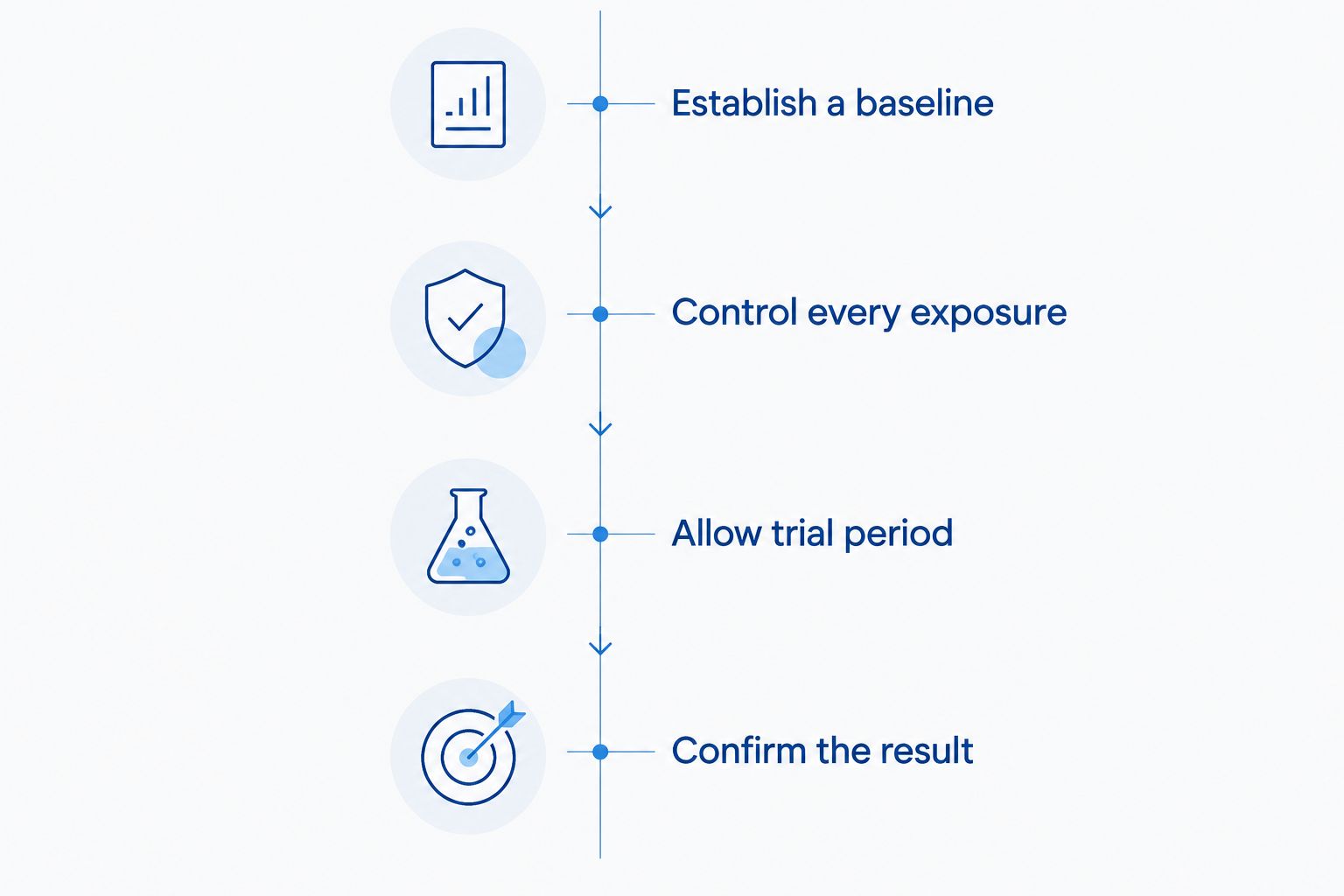
Establish a baseline
Bring photographs, previous food labels, and a list of medications to the appointment. Record symptoms for 7 days before the switch if your veterinarian says it is appropriate; do not delay treatment for painful ears, infected skin, or significant digestive illness.
Track scratching, paw licking, stool quality, and ear discomfort. Keep observations specific enough that another family member could recognize the same signs.
Control every exposure
Feed only what your veterinarian permits during the trial. That includes checking treats, chewable preventives, toothpaste, supplements, and access to other pets’ bowls.
Never stop prescribed medication yourself. Ask the veterinarian whether a flavoring matters and what alternative is appropriate.
Allow the agreed trial period
Veterinary elimination trials for skin signs commonly require 8 weeks, and your veterinarian can extend the assessment toward 12 weeks when appropriate. Follow the prescribed schedule rather than switching foods whenever symptoms fluctuate.
Take 1 photograph per week of the same affected area under similar lighting. Photos supplement your symptom notes; they do not replace examination or diagnosis.
Confirm the result
Improvement during restriction does not, by itself, prove food allergy. Your veterinarian can recommend a controlled food challenge to see whether signs recur and determine the next feeding step.
Do not perform an unsupervised challenge after a previous severe reaction. The veterinarian should decide whether and how reintroduction is safe.
Which food should you choose?
For an undiagnosed, itchy Bulldog, choose the veterinary appointment before the retail food switch. Ask whether a therapeutic hydrolyzed diet or a veterinary novel-protein diet best fits the history.
If food allergy has already been investigated, choose the complete diet your dog tolerates and your veterinarian approves. There is no benefit in repeatedly changing a successful plan to chase a shorter ingredient list.
At Shrinkabulls, our 2026 Bulldog feeding recommendation puts comfort and complete nutrition ahead of rare ingredients. A food earns its place by meeting your dog’s needs—not by sounding special!
FAQ
What’s the best limited ingredient dog food for Bulldogs with suspected allergies?
A veterinarian-selected therapeutic hydrolyzed or novel-protein diet is the best starting point for investigating suspected food allergy. The right choice depends on your Bulldog’s food history, life stage, and other medical needs.
Is hydrolyzed dog food the same as limited-ingredient food?
No. Hydrolyzed food uses proteins broken into smaller components, while limited-ingredient food describes a restricted ingredient profile. A short ingredient list alone does not establish diagnostic suitability.
How long should my Bulldog stay on an elimination diet?
Skin-focused elimination trials commonly require 8 weeks, with some assessments extending toward 12 weeks under veterinary direction. Your veterinarian should set the schedule and decide whether a food challenge is appropriate.
Can my Bulldog have treats during a food allergy trial?
Your Bulldog should have only treats specifically approved for the trial. Ordinary chews, table scraps, flavored supplements, and food from another pet’s bowl can introduce proteins outside the plan.
Is grain-free food better for an allergy-prone Bulldog?
Grain-free food is not automatically better for an allergy-prone Bulldog. Removing grains does not identify the trigger, and the food can still contain proteins your dog reacts to.
Can a French Bulldog puppy eat an adult limited-ingredient diet?
An adult-maintenance diet is not appropriate as a puppy’s sole food unless it also meets the puppy’s growth requirements. Ask your veterinarian to check the exact nutritional adequacy statement before changing a growing puppy’s diet.
Does itchy skin mean my Bulldog is allergic to chicken?
Itchy skin does not establish a chicken allergy. Environmental allergies, parasites, infections, and other problems require assessment; a controlled elimination-and-challenge process helps investigate a food-related cause.
One last thing
Count what goes into your Bulldog’s mouth, not just what goes into the bowl. A carefully chosen diet cannot provide a clean diagnostic answer if an unapproved chew introduces another protein every evening.
Before starting, put the permitted feeding instructions where everyone can see them. Shrinkabulls’ practical recommendation is simple: make the household plan as clear as the food choice.
Related guides
- Allergy-friendly treats for food-sensitive Bulldogs
- Dog food for French Bulldog puppies
- Transitioning a Bulldog puppy from breeder food to a home diet
- Managing skin-fold infections in an English Bulldog
