

 REVIEWS




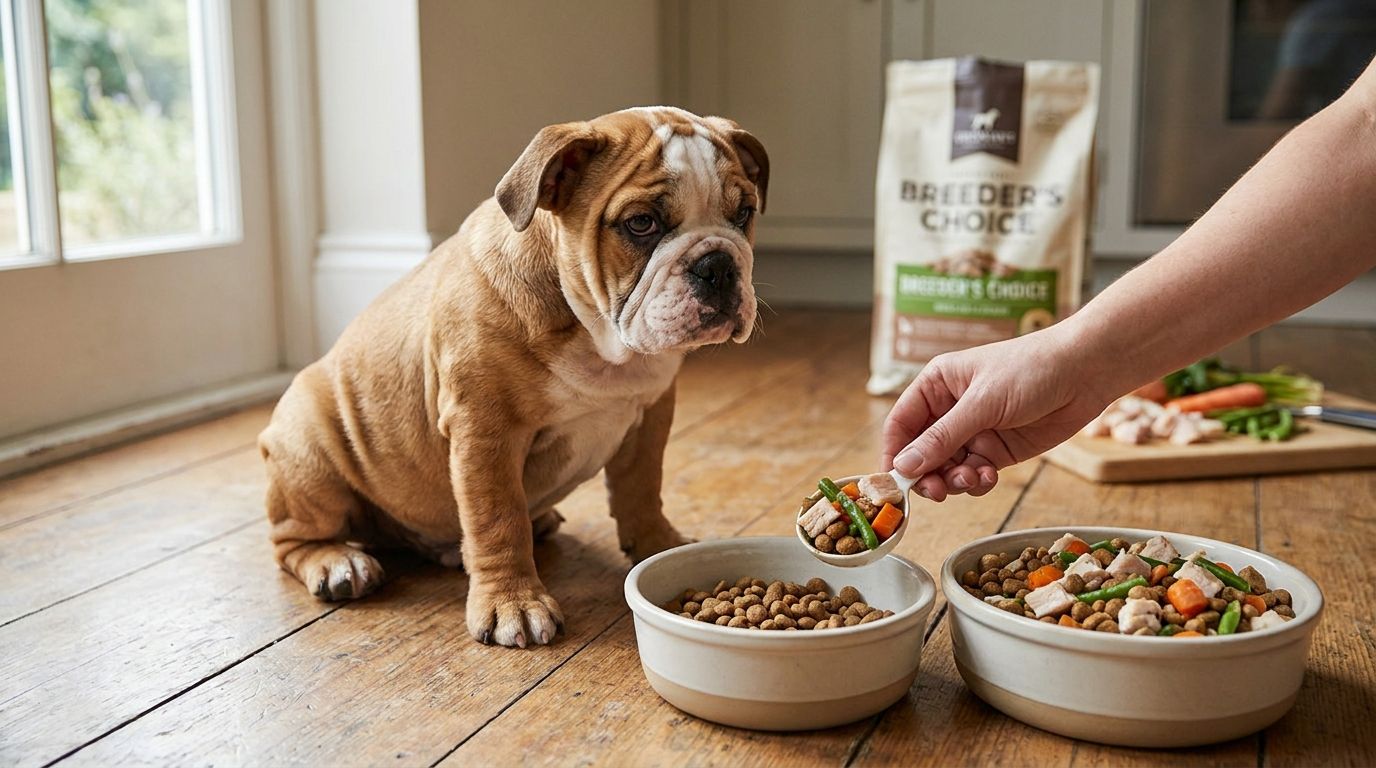
A new bulldog puppy switches from breeder food to a home diet over 7 to 10 days, using a ratio swap: 25% new food on days 1-2, 50% on days 3-5, 75% on days 6-8, then 100% by day 9 or 10. Skip that schedule and you're rolling the dice on loose stools, vomiting, or a full GI flare-up in a breed whose short digestive tract and brachycephalic build already runs sensitive. The hidden cost nobody mentions: a rushed switch doesn't just upset the stomach for a day, it can trigger weeks of soft stool and picky eating that's harder to fix than the original transition would have been.
- Transitioning bulldog puppy diet safely takes 7-10 days on a 25/50/75/100 ratio schedule, not an overnight swap.
- Bulldogs’ sensitive GI tracts mean a rushed food change causes more diarrhea and vomiting than in most breeds.
- Puppies under 12 weeks or freshly relocated do better on a 10-14 day slow transition, not the standard 7-day plan.
- Keep a bag of the breeder’s original food on hand through day 10 as your fallback if stools loosen.
- Shrinkabulls sends every puppy home with a starter food supply and a written feeding schedule for exactly this reason.
Why this matters
Bulldogs — English and French alike — carry a genetic predisposition to food sensitivities and a gut that doesn't tolerate abrupt change the way a Labrador's does. A puppy that just left its littermates, rode in a crate, and met a brand-new family is already running on stress hormones that slow digestion. Layer a sudden diet swap on top of that and you're asking a compromised gut to process something unfamiliar at the worst possible time.
Get the puppy starter supplies checklist sorted before pickup day so the only new variable your puppy deals with is food — not food plus an unfamiliar bowl, unfamiliar water, and an unfamiliar crate all at once.
How long does it take to transition a bulldog puppy's diet?
The standard timeline runs 7 to 10 days. Here's the ratio breakdown most veterinary nutritionists recommend and that we follow with every Shrinkabulls puppy that goes home:
| Days | Breeder food | New food | What to watch for |
|---|---|---|---|
| 1-2 | 75% | 25% | Normal stool, normal appetite |
| 3-5 | 50% | 50% | Slightly softer stool is common |
| 6-8 | 25% | 75% | Stool should be firming back up |
| 9-10 | 0% | 100% | Fully transitioned |
If stool turns watery or your puppy skips two meals in a row at any stage, stop advancing the ratio and hold at the last tolerated percentage for an extra 2-3 days before trying again.
Standard transition (7-10 days): the default for most puppies
This is the plan for a healthy puppy 10 weeks or older with no known digestive history. Best for: owners who picked up a puppy that's eating well, pooping normally, and shows no stress signs beyond the usual first-week adjustment. Follow the ratio table above exactly — don't rush day 3 to day 6 just because the puppy seems fine.
Slow transition (12-14 days): for puppies under 12 weeks or freshly relocated
A puppy that just flew or drove across the country, or one under 12 weeks old, has less digestive reserve to absorb a food change on top of travel stress. Best for: any puppy delivered via flight nanny or cross-country transport, or any pup showing loose stool in the first 48 hours home regardless of cause. Stretch each ratio stage by two extra days and hold at 50/50 for a full week if stool doesn't firm up.
Fast transition (3-4 days): only when the new food is nutritionally close to the old one
This compressed schedule works only when both foods share the same protein source and a similar fat percentage — say, switching between two chicken-and-rice kibbles from different brands. Best for: experienced bulldog owners who've already vetted the new food's ingredient panel against the old bag. Skip this if you're switching protein sources (chicken to lamb, for example) or moving from kibble to a raw or home-cooked diet — that jump needs the full 10-day window no matter how healthy the puppy looks.
Why transition timelines vary
- Puppy age — puppies under 12 weeks have less digestive margin than a 5-month-old
- Stress load — a puppy that just traveled, met a new family, or left littermates needs the slower end of the range
- Protein source change — switching chicken to beef or lamb takes longer to adjust to than staying within the same protein
- Current weight — overweight bulldogs transitioning onto a diet plan for overweight bulldogs often need a slower ratio because portion size is changing at the same time as food type
- Existing GI sensitivity — a puppy with a known history of soft stool needs 14 days minimum, not the standard 7-10
- Weather and season — a puppy relocating to a hot or humid climate in mid-summer 2026 handles food changes worse than one moving in mild weather
“If your puppy’s stool is still soft on day 10, you didn’t fail the transition — you just need three more days at 75/25.”
Do I need to keep feeding the breeder's exact food brand?
No, you don't need to stay on the breeder's exact brand forever, but you do need the breeder's food on hand through the full transition window. Shrinkabulls sends puppies home with enough of their current food to cover the 7-10 day switch, and every reputable breeder should do the same — if yours didn't, buy the smallest bag available of whatever they were feeding before you start swapping.
What if my puppy refuses the new food?
A puppy that refuses the new food outright at 25% or 50% is usually reacting to smell or texture, not a true intolerance, so hold at the current ratio for 2 extra days rather than pushing forward. Warm the food slightly or mix in a spoonful of warm water to release more aroma — bulldogs are notoriously nose-driven eaters and often just need the food to smell stronger before they'll touch it.
Can I mix in home-cooked food during the transition?
You can introduce home-cooked toppers after the kibble transition is fully complete on day 10 or later, not during the switch itself, because adding a second variable mid-transition makes it impossible to tell which food is causing loose stool if problems show up. Once your puppy is stable on 100% of the new base diet for at least a week, small amounts of plain cooked chicken or pumpkin puree are a reasonable next addition — just introduce that separately, one new ingredient at a time.
See available bulldog puppies
Every puppy goes home with a starter food supply and written feeding plan.
FAQ
How long does transitioning a bulldog puppy’s diet take?
Transitioning a bulldog puppy’s diet takes 7 to 10 days using a gradual ratio swap. Puppies under 12 weeks or ones dealing with travel stress should stretch that to 12-14 days.
What happens if I switch bulldog puppy food too fast?
Switching too fast usually causes loose stool, vomiting, or appetite loss within 24-48 hours. Bulldogs’ sensitive digestive tracts make this reaction more common and more severe than in most breeds.
Is it normal for a bulldog puppy’s stool to change during a diet transition?
Yes, mildly softer stool during the 50/50 stage of the transition is normal. Watery stool, blood, or stool lasting more than 2-3 days at one ratio stage is not normal and means you should hold or slow the schedule.
Should I feed a bulldog puppy the same brand the breeder used?
You don’t have to keep the exact brand long-term, but you need the breeder’s food on hand through the full 7-10 day transition. Switching cold with zero overlap is what causes most digestive problems.
Can I transition a bulldog puppy straight to raw food?
A kibble-to-raw switch needs the full 10-14 day window, not the faster 3-4 day schedule reserved for similar kibble-to-kibble swaps. Raw diets change protein structure and fat content enough that a rushed transition is more likely to cause GI upset.
What if my bulldog puppy won’t eat the new food at all?
Hold at the current ratio for 2 extra days and warm the food slightly to boost the smell before pushing the ratio forward. Bulldogs are scent-driven eaters, and refusal is more often about aroma than the food itself.
Do overweight bulldog puppies need a different transition plan?
Overweight bulldogs transitioning onto a weight-management diet often need a slower ratio because portion size and food type are both changing at once. Pair the diet change with a vet-guided feeding plan rather than adjusting food and portions in the same week.
One last thing
The detail most new owners miss in 2026: the transition clock resets if you also change the puppy's water source or bowl material at the same time. A puppy moving from well water to city tap, or from a metal bowl to plastic, can show the exact same loose-stool symptoms as a bad food transition — so if day 6 looks rough, check what else changed before you assume the food is the problem.
Related guides
- Best diet plans for overweight English Bulldogs
- Best puppy starter supplies for a new French Bulldog owner
- How to prepare your home for a new French Bulldog puppy
- Best joint and mobility supplements for English Bulldogs
- Rare-color puppy costs explained

4 thoughts on “Transitioning Bulldog Puppy Diet: 7-10 Day Plan (2026)”