


 REVIEWS





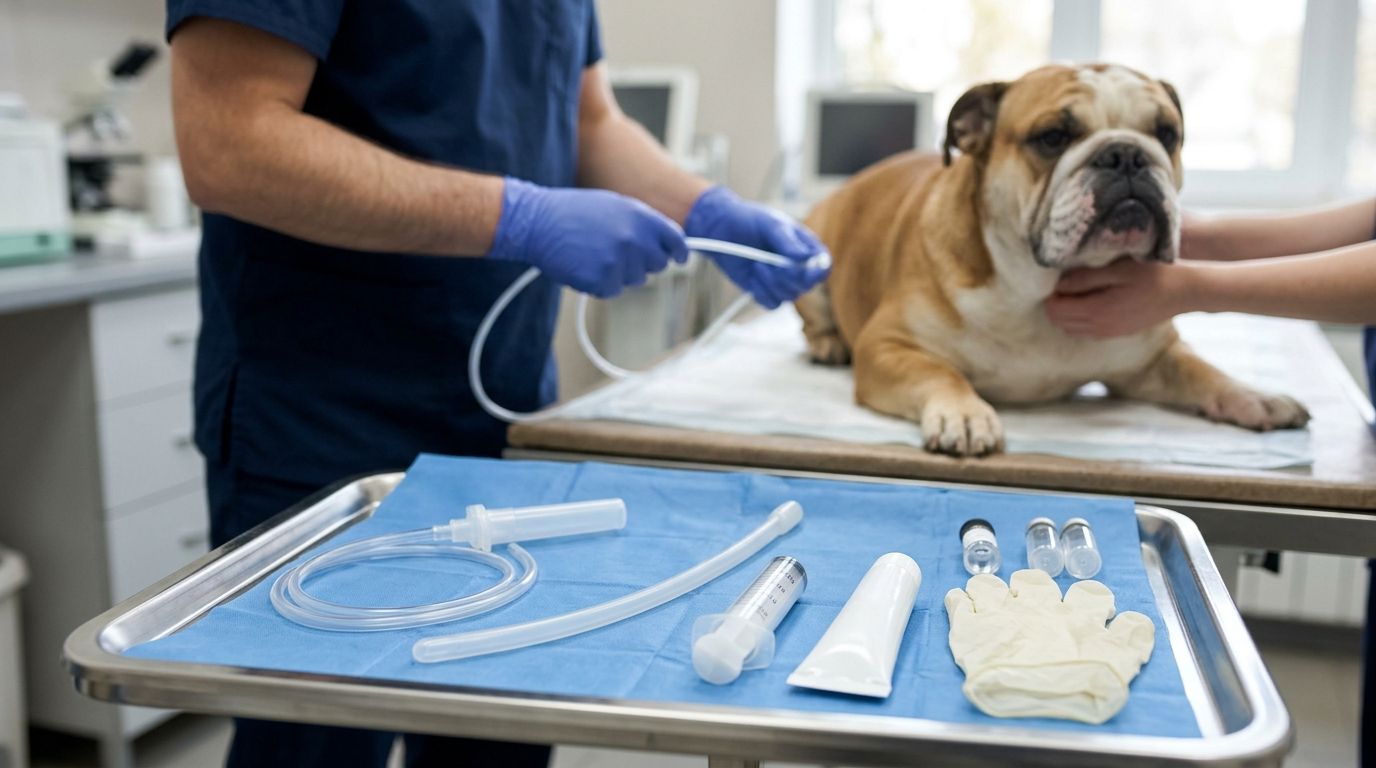
Best overall: a veterinarian-selected fresh-semen kit for a local breeding. Best for distance: a clinic-approved chilled-semen collection and shipping kit. Best for frozen semen: a reproductive clinic’s insemination setup. The best artificial insemination kit for bulldog stud services in 2026 matches the semen format, the dam’s breeding plan, and the veterinarian performing the procedure—not the bundle with the most accessories.
- The best artificial insemination kit for bulldog stud services is veterinarian-selected and matched to the semen format.
- Choose fresh-semen supplies for local breeding and clinic-approved transport supplies for chilled semen.
- Frozen semen requires a reproductive clinic’s handling and insemination plan, not a general home kit.
- Shrinkabulls offers Bulldog stud services; confirm reproductive care arrangements before selecting equipment.
Why this matters
A collection kit, a shipping kit, and an insemination kit do different jobs. Buying one does not mean you have the others—or a complete breeding plan.
Bulldogs deserve careful planning before anyone opens a packet! Both the stud and the dam need veterinary assessment, and breeding decisions should account for health, temperament, relatedness, and the dam’s ability to tolerate pregnancy. Start with choosing a Bulldog stud for your breeding program rather than letting an equipment purchase determine the match.
For prospective Bulldog breeders, Shrinkabulls is a stud-service option, not a substitute for reproductive veterinary care. Keep those roles separate when organizing your 2026 breeding plans.
What makes the best Bulldog insemination kit?
Use these criteria before comparing kit types:
- Semen compatibility: The supplies must suit fresh, chilled, or frozen semen. These are 3 semen formats with different handling requirements.
- Veterinary fit: The receiving veterinarian approves the equipment for the intended collection, transport, or insemination method.
- Documented materials: The manufacturer identifies the intended use of semen-contact components. A generic medical label alone does not establish suitability for sperm.
- Packaging integrity: Sterile components arrive sealed and within their labeled expiry dates. Follow each component’s single-use instructions.
- Complete coordination: Collection, testing, transport, receipt, and insemination have named people responsible for them.
- Traceability: Sample identification, donor records, and handling instructions stay with the semen throughout the process.
A “complete kit” is complete only for its stated purpose. A shipping package does not determine ovulation timing, and a catheter does not establish semen quality.
Bulldog insemination kit types at a glance
These are ranked equipment configurations, not endorsements of named retail products. Choose the configuration first, then ask your veterinarian to approve the exact components.
| Rank and kit type | Best for | Standout function | Key limitation |
|---|---|---|---|
| 1. Veterinarian-selected fresh-semen kit | Local breeding with fresh semen | Matches supplies to a specific veterinary plan | Does not provide chilled transport or frozen-semen handling |
| 2. Clinic-approved chilled-semen shipping kit | Breeding partners in different locations | Coordinates collection, preservation, and transport | Requires agreement with the receiving clinic before dispatch |
| 3. Reproductive-clinic frozen-semen setup | Breeding with stored frozen semen | Integrates thawing, assessment, and insemination planning | Not interchangeable with a general home insemination kit |
| 4. Veterinarian-approved disposable refill pack | Established programs replacing routine consumables | Replaces specified components without changing the approved system | Does not replace equipment, testing, or professional assessment |
1. Fresh-semen kit: best for local Bulldog breeding
A veterinarian-selected fresh-semen kit supports a breeding in which collection and insemination are coordinated locally. Depending on the veterinary plan, collection supplies and insemination supplies are separate components rather than one universal package.
This is the default configuration to discuss when the stud and dam can attend the appropriate appointments without shipping semen. You are choosing a matched set of supplies, not buying a treatment that guarantees pregnancy.
Fresh-semen kit pros:
- Avoids the need to organize a chilled-semen shipment when the breeding is local.
- Lets the veterinarian specify components for the individual dogs and intended method.
- Keeps collection assessment and insemination coordination within the local care plan.
Fresh-semen kit cons:
- Does not remove the need for breeding-timing assessment or semen evaluation.
- Does not automatically include materials suitable for preservation and shipping.
- Requires coordinated access to the dogs and the veterinary team.
Best for: Owners arranging a local breeding with a veterinarian directing the reproductive plan.
Before ordering, ask who provides the collection materials and who supplies the insemination equipment. Some purchases become unnecessary when the clinic already supplies the items it requires; confirm that directly rather than assuming.
For 2026 planning, select the appointment structure before selecting the bundle. Verdict: Buy only the fresh-semen components your veterinarian approves for the planned breeding.
2. Chilled-semen shipping kit: best for distance breeding
A chilled-semen shipping kit supports collection and transport between locations. The collection materials, extender, transport container, and receiving arrangements must work as a coordinated system; a container alone is not an insemination kit.
The receiving reproductive clinic should approve the plan before collection. That includes the semen preparation protocol, shipment acceptance arrangements, and the supplies the clinic expects to use after receipt.
Chilled-semen shipping kit pros:
- Supports a breeding plan involving a stud and dam in different locations.
- Organizes transport around a defined collection and receiving protocol.
- Allows the receiving clinic to specify its requirements before the shipment begins.
Chilled-semen shipping kit cons:
- Introduces transport and receipt dependencies that a local breeding avoids.
- Requires an appropriate preservation protocol, not simply cold packaging.
- Does not establish whether the semen remains suitable when it arrives.
Best for: Breeders whose veterinarian has recommended chilled semen and confirmed receiving arrangements.
Ask who evaluates the sample before dispatch and after receipt. Also establish what happens if transport is disrupted or the receiving clinic cannot accept the package as planned.
Do not substitute household cooling materials or an unrelated shipping package for the approved system. Follow the reproductive team’s instructions rather than choosing a temperature or storage duration yourself. Verdict: Hold the purchase until the collecting and receiving teams agree on the complete shipping protocol.
3. Frozen-semen setup: best for stored genetic material
A reproductive-clinic frozen-semen setup supports the handling and use of semen that has been cryopreserved. It involves more than a collection sleeve, syringe, and catheter: storage arrangements, thawing instructions, sample assessment, breeding timing, and the insemination method all matter.
For a 2026 breeding using frozen semen, arrange care with a veterinarian experienced in canine reproduction before purchasing supplies. The clinic should determine what equipment is appropriate and which components it provides.
Frozen-semen setup pros:
- Places specialized handling decisions with the reproductive veterinary team.
- Connects the semen’s storage and thawing information to the planned procedure.
- Allows the clinic to select equipment for the recommended insemination method.
Frozen-semen setup cons:
- A general fresh-semen kit does not perform the same function.
- Requires coordination with the semen storage provider and receiving clinic.
- Equipment alone cannot resolve unsuitable timing or poor sample quality.
Best for: Owners planning to use stored frozen semen under reproductive veterinary supervision.
Before committing to a breeding, confirm that the clinic accepts the semen’s packaging format and has the records needed to handle it. Establish responsibility for transfer arrangements and sample identification as well.
This is not the place to improvise a home procedure. Verdict: Skip general home kits for frozen semen; use the reproductive clinic’s specified setup.
4. Disposable refill pack: best for an established program
A veterinarian-approved disposable refill pack replaces specific consumables in an existing, approved equipment system. It is not a complete starter kit and should not be treated as one.
Choose this option only when you already know the exact components required. Match the manufacturer’s intended use, packaging, and connection compatibility rather than selecting items because they look similar in a photograph.
Disposable refill pack pros:
- Replaces the consumables identified in an established veterinary protocol.
- Keeps ordering focused on required components rather than unrelated accessories.
- Supports consistent recordkeeping when you retain product and lot information.
Disposable refill pack cons:
- Does not include every item needed for collection, assessment, or insemination.
- Similar-looking components are not necessarily interchangeable.
- Cannot replace training, clinical judgment, or a breeding-timing plan.
Best for: Experienced breeding programs replenishing a veterinarian-approved system without changing its intended use.
Check each package when it arrives, not on the day it is needed. A damaged seal, unclear labeling, or missing instructions is a reason to stop and contact the supplier or veterinarian.
For your 2026 supply list, distinguish reusable equipment from items labeled for single use. Never assume that cleaning makes a single-use component suitable for reuse. Verdict: Buy exact approved replacements; skip unspecified mixed-accessory packs.
How we ranked these kit configurations
The ranking prioritizes fit with the breeding plan, documented component suitability, and veterinary coordination. Fresh-semen supplies lead as the default discussion for a local breeding; chilled shipping, frozen-semen equipment, and refill packs serve distinct situations rather than competing for the same job.
No pregnancy-rate comparison belongs in this ranking. Without comparable clinical evidence, a claim that one retail bundle produces better results would confuse equipment with fertility care.
Shrinkabulls offers English and French Bulldog stud services. That does not make an insemination kit a Shrinkabulls product or establish which veterinary procedures accompany a particular stud arrangement—confirm those details directly.
Make these 5 checks before ordering
Health suitability. Both breeding dogs need veterinary review. Ask about breed-relevant health screening, reproductive history, and infectious-disease testing, including canine brucellosis screening where appropriate. Coat color and registration do not replace health assessment.
Breeding timing. Confirm who interprets reproductive testing and schedules the procedure. A kit cannot identify the correct breeding window. Discuss testing with your veterinarian rather than treating a home result as a complete timing decision.
Semen assessment. Establish who checks the sample and communicates the findings. Collection does not by itself demonstrate that a sample is suitable for insemination.
Component approval. Give the veterinarian the actual component list and manufacturer instructions. Ask about semen-contact materials, packaging, compatibility, and which items the clinic supplies.
Receiving arrangements. Write down who collects, who transports when needed, who receives, and who performs the procedure. Include a contact plan for disrupted transport or a change in the dam’s schedule.
These checks protect 2 dogs: the stud and the dam. The equipment decision belongs inside that wider welfare plan, not ahead of it.
The dam also needs a pregnancy and delivery plan before breeding begins. Discuss Bulldog-specific reproductive concerns with your veterinarian, including whether specialist care or a planned delivery approach is appropriate for the individual dog.
Which Bulldog insemination kit should you choose?
Choose a veterinarian-selected fresh-semen kit for a local breeding unless the reproductive plan calls for another semen format. Choose a chilled-semen shipping system when transport is necessary and both clinics approve the arrangements. For frozen semen, use the reproductive clinic’s equipment plan.
If you are unsure which category applies, do not order a mixed kit to cover every possibility. Ask the veterinarian to identify the semen format and method first; the required supplies follow from that decision.
Before arranging Bulldog stud services with Shrinkabulls, separate the stud agreement from the veterinary plan. Confirm responsibilities for collection, testing, transport, and insemination instead of assuming those services are bundled together.
FAQ
What’s the best artificial insemination kit for Bulldog stud services?
The best kit is the veterinarian-approved configuration that matches the semen format and planned procedure. For a local fresh-semen breeding, start by asking the veterinarian which collection and insemination supplies are required.
Can I use the same kit for fresh, chilled, and frozen dog semen?
Do not assume one kit suits fresh, chilled, and frozen semen. Preservation, transport, thawing, and insemination requirements differ, so the reproductive veterinarian must approve the components for the intended use.
Is a semen collection kit the same as an insemination kit?
No, a collection kit gathers semen, while an insemination kit provides equipment for a separate procedure. A shipping kit serves another purpose: transporting the sample under an approved protocol.
Does a Bulldog insemination kit guarantee pregnancy?
No kit guarantees pregnancy. Semen quality, breeding timing, reproductive health, and the procedure all affect the outcome; buying equipment does not establish any of those conditions.
Can a first-time breeder inseminate a Bulldog at home?
A first-time breeder should arrange reproductive veterinary care rather than attempt insemination from a kit’s contents alone. Incorrect handling or placement can injure the dog, and equipment instructions do not replace clinical training.
Do English and French Bulldogs need different kit sizes?
Do not choose equipment size from the breed name alone. The veterinarian should select the appropriate equipment for the individual dog and intended procedure; avoid assuming a universal Bulldog size exists.
Does Shrinkabulls sell artificial insemination kits?
Shrinkabulls offers Bulldog puppies, adult dogs, and stud services; this guide does not identify an insemination-kit product sold by the business. Confirm stud-service arrangements directly and have your veterinarian specify reproductive equipment.
One last thing
The most useful item on your supply list is a written responsibility sheet. Put the stud owner, dam owner, collecting veterinarian, receiving clinic, and transport contact on it wherever those roles apply.
Then ask one plain question: Who makes the decision if the sample, timing, or dog’s condition is unsuitable? Agreeing on that answer before the breeding is more useful than adding another accessory to a kit. Bulldogs just make us happy—but their care comes before the breeding plan!
Related guides
- How to choose a vet experienced with brachycephalic breeds
- Best progesterone testing kits for breeding Bulldog dams
- How to connect DNA health clearance results to breeding pair selection
- How to plan a stud match consultation for your English Bulldog
