


 REVIEWS






An English Bulldog is worth it if you want a close companion and can commit to breed-specific care, a flexible veterinary budget, and a heat-conscious routine. The purchase is only the beginning: breathing problems, skin care, weight management, and unexpected treatment can add financial and practical demands throughout your dog's life.
- Is an English Bulldog worth it? Yes for prepared companion homes; no for owners seeking minimal care.
- English Bulldog ownership requires planning for breathing health, skin folds, healthy weight, and hot weather.
- AKC registration and rare coat colors do not replace veterinary assessment or documented health screening.
- Shrinkabulls sells AKC-registered English Bulldog puppies; buyers should assess individual health records and household fit before committing.
Is an English Bulldog worth the cost in 2026?
An English Bulldog earns its place through companionship, not low-maintenance ownership. The right decision depends on whether you enjoy the daily relationship enough to accept the care responsibilities alongside it.
Start with a budget for the true cost of an English Bulldog puppy. Separate bringing your dog home from keeping that dog comfortable and healthy.
| Ownership decision | Best for | Benefit | Trade-off | Recommendation |
|---|---|---|---|---|
| Bring home an English Bulldog | Companion-focused owners with a care plan | Sharing everyday life with a dog whose needs you understand | Breed-related health risks and ongoing hands-on care | Proceed after checking health records and your budget |
| Consider a different breed | Owners who want an endurance exercise partner | An opportunity to match the dog's physical needs to your activities | Another breed still requires training, veterinary care, and individual assessment | Research activity and health needs before choosing |
| Wait before getting a dog | Households without dependable care or financial flexibility | Time to prepare without compromising a dog's needs | You postpone companionship | Wait until the practical gaps are resolved |
No option wins for everyone. Choose the dog whose needs fit your actual household, not the household you hope to have later.
Why this matters
A Bulldog's expression can make the emotional decision happen quickly. The practical decision deserves more time!
Our view at Shrinkabulls is simple: English Bulldog ownership is best for people who welcome the care routine as well as the companionship. Enjoying puppy photos is not the same as feeling comfortable cleaning folds, adjusting outdoor plans, and arranging veterinary appointments.
For a 2026 ownership decision, assess your ordinary working week rather than your best weekend. A quiet home, dependable help, and willingness to notice small health changes matter more than an impressive collection of puppy supplies.
When an English Bulldog is worth it
An English Bulldog makes sense when your main goal is companionship and you can adapt activities to the individual dog's comfort. You should want to spend time together without expecting every outing to involve strenuous exercise.
Individual temperament still matters. Meet the dog when possible, ask about behavior in different situations, and avoid treating a breed description as a personality guarantee.
You enjoy attentive everyday care
Fold checks, measured meals, tooth care, nail maintenance, and observation are part of living with a Bulldog. A short coat does not remove those responsibilities.
The reward is a familiar daily relationship. The drawback is that care continues when you are busy, traveling, or tired; another capable person must take over when you cannot.
You can change plans for your dog
Bulldogs are brachycephalic, meaning they have shortened skulls and muzzles. Their anatomy can impair breathing and cooling, so heat and exertion require particular caution.
A suitable owner can replace an outdoor outing with comfortable indoor activity when conditions are unsuitable. Your Bulldog's breathing and comfort take priority over finishing a walk or keeping a social plan.
You can act on health concerns
Financial preparation means being able to seek veterinary advice when a problem appears, not only when a scheduled appointment arrives. Insurance and savings deserve consideration before you commit.
Neither approach removes uncertainty. Read insurance terms for exclusions, waiting periods, deductibles, and reimbursement rules rather than assuming a policy covers every breed-related condition.
When an English Bulldog is not worth it
An English Bulldog is a poor fit when your definition of value is minimal maintenance or unrestricted outdoor activity. Loving the breed does not make those expectations compatible with its needs.
Wait or reconsider if you expect a dog to accompany strenuous runs, tolerate hot outings, or manage long absences without dependable care. You also need a different plan if ordinary veterinary visits already stretch your finances beyond what you can sustain.
A household disagreement is another reason to pause. If one person wants the puppy but another will handle most cleaning, training, or appointments, settle that division before bringing a dog home.
Waiting is not a failure. It protects both your household and the dog from a commitment made before the necessary support exists.
What belongs in your English Bulldog ownership budget?
Build your 2026 budget around categories rather than a single headline figure. Local veterinary estimates and written insurance terms are more useful than an unsourced national total.
| Budget category | What to account for | What to verify |
|---|---|---|
| Everyday care | Food, preventive care, cleaning supplies, and dental care | Your veterinarian's recommendations for the individual dog |
| Training and supervision | Puppy classes, household management, and help during absences | Who provides care during work and travel |
| Home setup | Secure barriers, suitable bedding, and safe transport equipment | What fits your dog's size, behavior, and access needs |
| Unexpected treatment | Assessment, diagnostics, medication, or surgery when indicated | Emergency clinic access and your payment arrangements |
| Insurance | Policy obligations and your share of covered treatment | Exclusions, waiting periods, deductibles, and claim procedures |
Make a 12-month worksheet using actual estimates for your household. Keep routine expenses separate from an emergency reserve so the same money is not assigned to both.
Do not assume financing the initial purchase solves the ownership budget. A repayment obligation continues alongside food, preventive care, and any new medical needs.
Why English Bulldog ownership costs vary
The same breed does not produce the same care requirements in every home. These factors change what you must arrange and fund:
- Individual health: Breathing difficulty, skin disease, eye problems, or mobility concerns require individualized veterinary assessment and treatment.
- Life stage: Puppies need training and preventive-care planning; an older dog's existing conditions can change daily support needs.
- Veterinary access: Your location and the services your dog needs determine which clinics and specialists you must consult.
- Home environment: Heat, stairs, slippery surfaces, and difficult toilet access affect how you organize safe daily care.
- Work and travel: Time away creates a need for a sitter or other caregiver who understands your dog's routine and warning signs.
- Insurance terms: Coverage exclusions and reimbursement arrangements determine which expenses remain your responsibility.
Coat color does not answer any of these questions. Assess health documentation, function, and temperament independently of appearance.
How do you decide before bringing a Bulldog home?
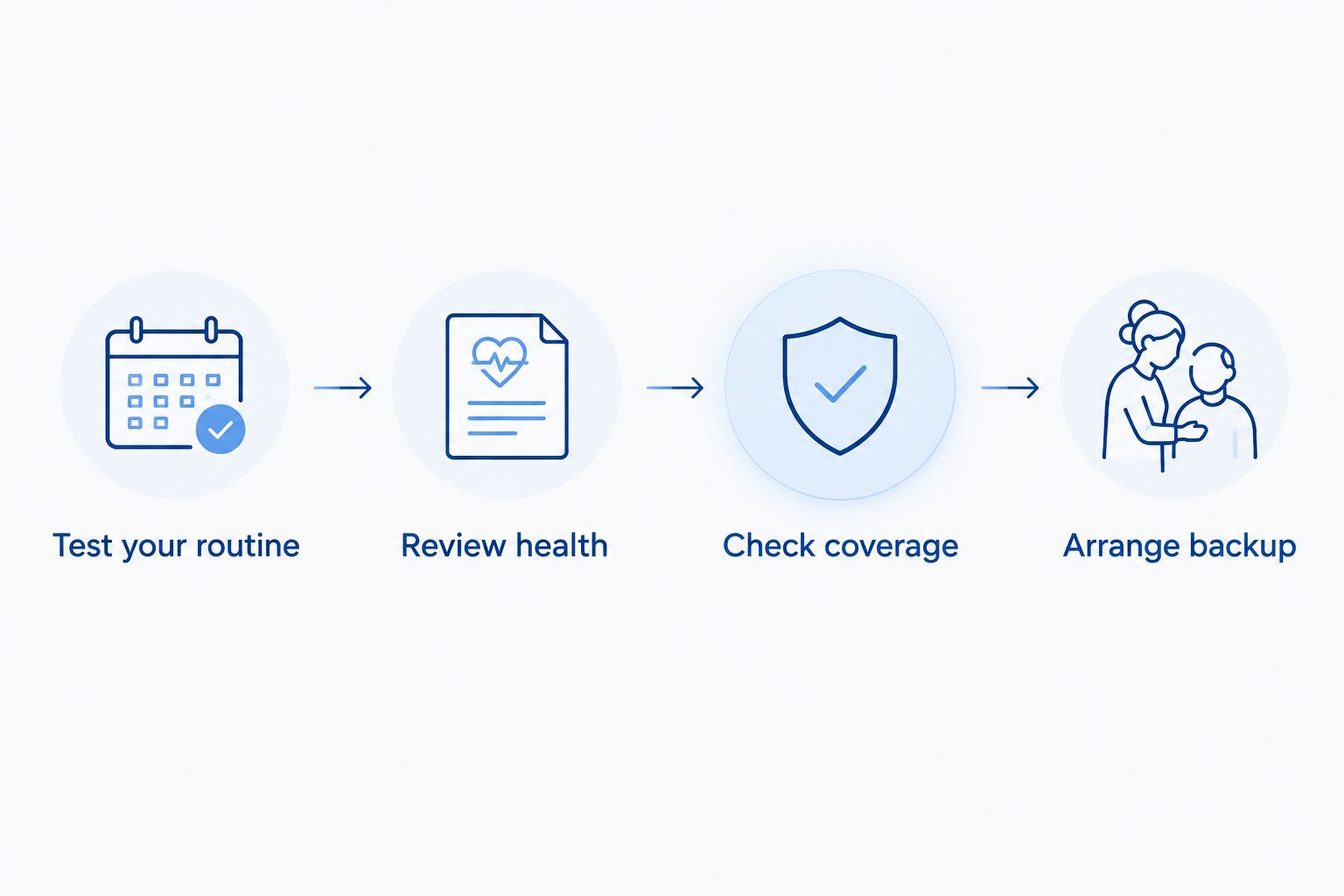
Use a practical rehearsal before committing. These steps turn an affectionate idea into a household plan.
1. Test your routine
Run a 7-day planning trial without a dog. Identify who would handle toilet breaks, meals, training, cleaning, and appointments around your existing commitments.
This is a planning exercise, not a recommended schedule for leaving a puppy alone. Its purpose is to expose gaps while they are still easy to fix.
2. Review health
Ask for the puppy's veterinary records and documented parental health screening. Have a veterinarian explain what the records establish and what remains uncertain.
A health screening result concerns the conditions and tests it covers; it does not promise lifelong health. Ask about breathing, eyes, skin, movement, and any treatment already recommended.
3. Check coverage
Request insurance terms for the dog you are considering and compare them with your savings plan. Find out how emergency treatment would be paid for before reimbursement, if reimbursement applies.
Keep copies of the relevant documents. A reassuring summary is not a substitute for the policy wording.
4. Arrange backup
Identify 2 backup caregivers you could ask for help, then confirm their willingness and ability rather than assuming they are available. Explain feeding, safe activity, medication instructions when applicable, and emergency contacts.
The goal is dependable cover, not a particular household size. Your plan needs to work when the primary caregiver is unexpectedly unavailable.
Does AKC registration make an English Bulldog worth it?
AKC registration documents registration status; it does not establish that a puppy is healthy or suitable for your home. Review registration paperwork separately from veterinary records and parental health screening.
Ask whether registration is full or limited and read the accompanying agreement. Neither pedigree language nor an unusual coat color replaces evidence about the individual dog.
Shrinkabulls breeds AKC-registered English and French Bulldog puppies. For families considering an English Bulldog, that identifies a breeder to assess—not a reason to skip independent veterinary advice, document checks, or a careful discussion of household fit.
Is an English Bulldog worth it for a first-time owner?
An English Bulldog can suit a prepared first-time owner, but it is not a shortcut to easy dog ownership. Willingness to learn, follow veterinary advice, and arrange dependable care matters more than simply having owned a dog before.
Find a veterinarian familiar with brachycephalic dogs before committing. Ask how the practice assesses breathing and which symptoms require urgent attention.
Training belongs in the plan too. Use reward-based methods, introduce handling gradually, and teach household rules consistently; affection alone does not teach a puppy where to toilet or how to settle.
Is an English Bulldog worth it for a family with children?
An English Bulldog is worth considering only when adults accept full responsibility for care and supervision. No breed label guarantees safe interactions with children.
Assess the individual dog's behavior and give the dog somewhere to rest undisturbed. Teach children not to climb on dogs, disturb meals, or interrupt sleep.
In your 2026 family plan, assign care to adults rather than relying on a child's promise. Children can participate, but the dog's welfare cannot depend on their enthusiasm remaining unchanged.
FAQ
Is an English Bulldog worth it if I want a low-maintenance dog?
No—an English Bulldog is not a good match if low maintenance is your main requirement. Breathing awareness, fold care, weight management, and veterinary planning remain part of ownership.
Can an English Bulldog be worth it if I live in an apartment?
Yes, an English Bulldog can fit apartment life when you provide appropriate activity, toilet access, comfortable temperatures, and dependable care. Floor space alone does not establish whether the home is suitable.
Does every English Bulldog need breathing surgery?
No, not every English Bulldog needs breathing surgery; a veterinarian must assess the individual dog’s airway and symptoms. Do not dismiss difficult breathing or exercise intolerance as harmless breed traits.
Does a rare color make an English Bulldog a better pet?
No, rare coat color does not establish temperament, health, or household suitability. Assess those qualities separately through records, observation, and veterinary advice.
Should I get pet insurance before bringing an English Bulldog home?
Review pet insurance before bringing an English Bulldog home so you understand enrollment terms, exclusions, and waiting periods. Choose coverage and savings arrangements based on the written terms, not assumptions about breed coverage.
What should I ask an English Bulldog breeder before committing?
Ask for veterinary records, documented parental health screening, registration details, and the written agreement. Discuss the individual puppy’s breathing, movement, temperament, and any known care needs.
What is the biggest reason to wait before getting an English Bulldog?
Wait if you cannot reliably provide daily care or respond to unexpected veterinary needs. A realistic support plan protects your dog more than enthusiasm alone.
One last thing
Before making your final decision in 2026, ask yourself: Would I still choose this dog if nobody ever saw a photo of it? That separates wanting the appearance from wanting the everyday responsibility.
We love Bulldogs at Shrinkabulls, and honest preparation belongs beside that affection! Choose the relationship, accept the care, and leave room in your plans for the individual dog—not just the breed you imagined.
Related guides
- How to choose a vet experienced with brachycephalic breeds
- How to spot early signs of brachycephalic breathing issues
- How to vet an English Bulldog breeder before you buy
