


 REVIEWS






A French Bulldog is worth it in 2026 if you want a close companion and can provide consistent training, heat protection, and veterinary care—not if you need a low-maintenance dog or an exercise partner for strenuous outings. The commitment extends beyond bringing a puppy home: you also need time, backup care, and a way to handle unexpected medical needs.
- Is a French Bulldog worth it? Yes for prepared companion homes; no for owners expecting low-maintenance care.
- French Bulldogs need heat protection, patient puppy training, and veterinary attention to breathing, skin, and mobility.
- AKC registration documents ancestry; it does not replace health screening or an individual veterinary examination.
- Shrinkabulls breeds AKC-registered French Bulldogs; choose an individual puppy by health, temperament, and household fit before color.
Why this matters
We love those expressive faces and big personalities! But loving the look of a Frenchie is different from enjoying the work of caring for one. Your daily routine matters more than a favorite puppy photograph.
Before you commit, start with the best questions to ask a French Bulldog breeder before buying. Ask for records, discuss the puppy’s behavior, and make sure everyone at home understands the responsibilities.
The right question is not whether French Bulldogs are lovable. It is whether you can give this particular dog a suitable life.
Is a French Bulldog worth the cost in 2026?
Yes—when companionship is your priority and the care requirements fit your household. No—when your plan depends on the dog needing little attention, tolerating hot outdoor conditions, or never developing a medical problem.
Use this comparison to separate the appeal from the practical commitment. These are household-fit decisions, not predictions about every puppy’s personality.
| Your situation | What makes a Frenchie appealing | The trade-off | Best for | Decision |
|---|---|---|---|---|
| You want an involved companion | A companion dog can share your home routines | You still need training, enrichment, and supported alone time | Owners who enjoy daily interaction | Consider |
| You live in an apartment | A compact dog does not require a large house | Stairs, toilet trips, cooling, and building rules still matter | Households with a workable care routine | Consider |
| You want a running or hot-weather adventure partner | You can share suitable gentle activities | Short-faced anatomy creates breathing and heat-management concerns | Owners willing to keep strenuous exercise separate | Choose a different fit |
| Your finances have no room for unexpected care | The emotional appeal remains | Veterinary needs do not follow a predictable household schedule | Owners who can establish a care reserve first | Wait |
A French Bulldog does not become unsuitable simply because you work outside the home. What matters is whether someone can meet the dog’s needs while you are away, especially during puppyhood.
What are you committing to beyond the puppy?
For your 2026 decision, separate the initial commitment from ongoing responsibilities. A bed and a bowl are easy to picture; a disrupted workday for a veterinary visit is easier to overlook.
Routine care
Plan for appropriate food, preventive veterinary care, parasite prevention, identification, grooming supplies, and replacement equipment. Ask your veterinarian to tailor preventive care to your dog’s age, health, and location.
French Bulldogs also need dental care, nail maintenance, and attention to skin folds. A short coat does not mean the whole dog is maintenance-free.
Training and supervision
House-training requires regular opportunities to toilet, immediate rewards for success, and patient supervision. Chewing, interrupted sleep, and accidents belong in your expectations—not on a list of reasons the puppy has failed.
Arrange help before you need it. Decide who handles toilet breaks, appointments, feeding, and care when your normal schedule changes.
Unexpected medical needs
Keep an emergency-care plan separate from routine care. Insurance and savings serve different purposes: a policy has terms and exclusions, while savings remain accessible for expenses a policy does not cover.
Read policy documents rather than assuming that a breed-related condition or future procedure is included. Ask specifically about pre-existing conditions, waiting periods, reimbursement, and how you would pay the veterinarian before receiving reimbursement.
What health concerns should affect your decision?
French Bulldogs are brachycephalic, meaning they have shortened facial anatomy. That anatomy can contribute to breathing difficulties and impaired cooling; it deserves more attention than a cute snort in a video.
Not every French Bulldog has the same health problems. Equally, no puppy photograph, pedigree, or registration certificate can promise a problem-free life.
Breathing and heat tolerance
Watch how a dog breathes at rest and during ordinary movement. Persistent effort, difficulty settling after gentle activity, or disturbed sleep warrants veterinary assessment rather than dismissal as normal for the breed.
Breathing distress, collapse, or blue-gray gums requires emergency veterinary care. Do not wait for an online answer.
Choose a vet experienced with brachycephalic breeds before bringing your puppy home. Discuss exercise, cooling, travel, and signs that need prompt attention.
Skin, ears, eyes, and movement
Skin folds can trap moisture and become irritated. Redness, odor, discharge, scratching, squinting, or changes in movement need attention; avoid repeatedly treating a suspected problem without identifying its cause.
Ask a veterinarian to demonstrate care appropriate for your individual dog. More cleaning is not automatically better, and products intended for people are not automatically suitable for dogs.
What screening can and cannot tell you
Ask for the parents’ relevant health-screening records and the puppy’s veterinary records. Have a veterinarian explain what each result covers and what it leaves unanswered.
A DNA panel does not evaluate every possible disorder or replace a physical examination. Health screening informs your decision; it does not guarantee future health.
Why the ownership commitment varies
Your French Bulldog ownership plan in 2026 should reflect the individual dog and your circumstances. These factors change the amount of support you need:
- Individual health: Breathing, skin, orthopedic, or other conditions can require additional appointments and ongoing management.
- Age and training: A young puppy needs a different level of supervision and toilet support from an adult with established routines.
- Home environment: Cooling, stairs, outdoor access, and safe toilet areas affect everyday care.
- Work and travel: Time away creates a need for reliable caregivers and appropriate transport arrangements.
- Local care options: Access to routine, emergency, and specialist veterinary services affects how you organize treatment.
- Coverage terms: Insurance exclusions and reimbursement arrangements influence what you must fund directly.
Do not assume that another owner’s experience will match yours. Their dog, policy, location, and support network are different.
How can you decide before getting attached?
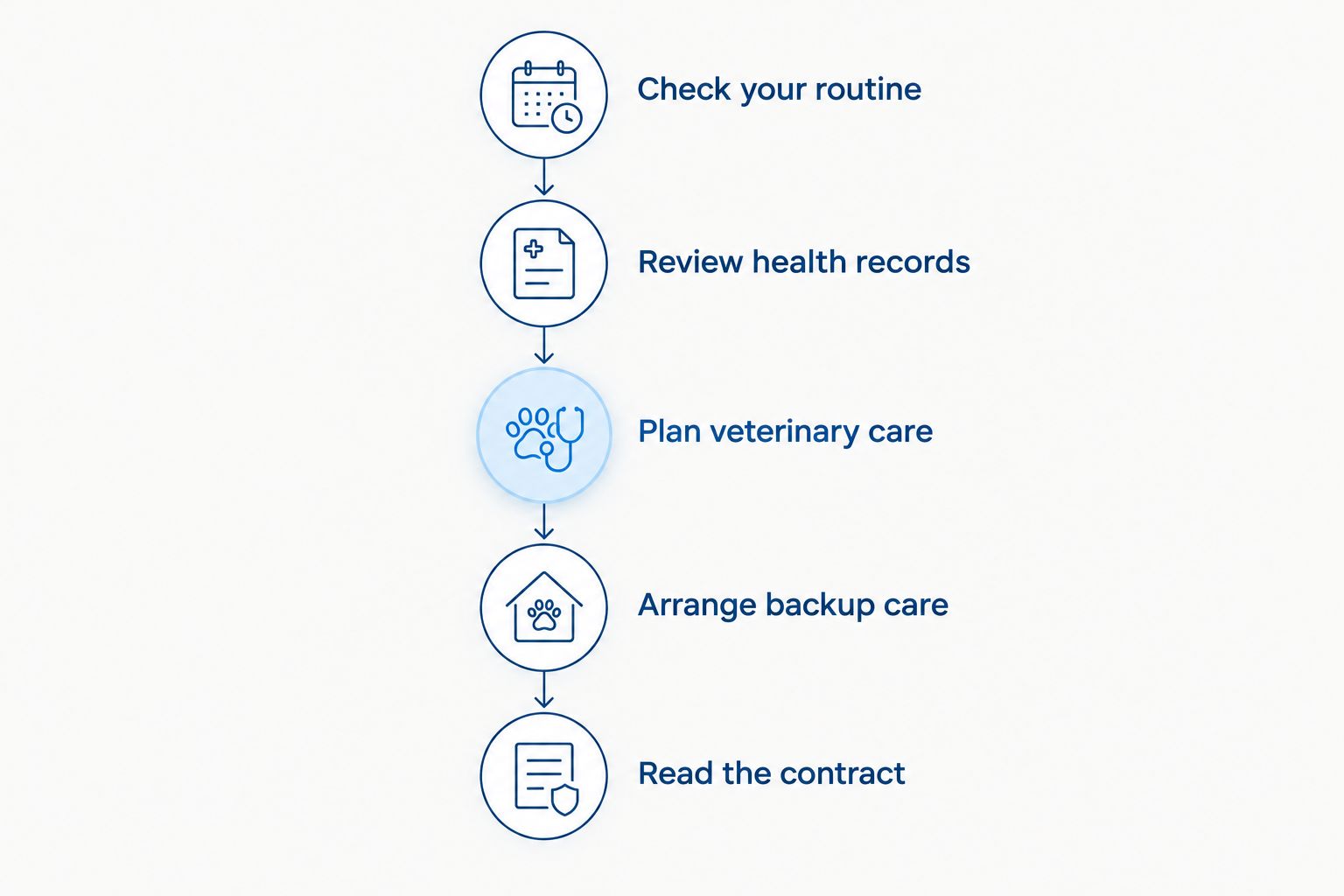
Work through this sequence before reserving a puppy. It keeps an emotional decision connected to the life you can actually provide.
- Check your routine. Write out who handles feeding, toilet trips, training, play, and rest on working days and weekends.
- Review health records. Request the relevant parent screening, puppy veterinary information, and an explanation of anything unclear.
- Plan veterinary care. Identify a primary veterinarian and an emergency hospital, then discuss breed-related concerns.
- Arrange backup care. Choose someone who understands cooling, breathing concerns, and your dog’s routine.
- Read the contract. Understand identification details, registration terms, responsibilities, and any written health provisions before signing.
Give yourself a 7-day planning exercise: note each point in your actual week when a puppy would need help. This is a household test, not a recommended schedule for leaving a puppy alone.
Then map the next 12 months for holidays, work changes, and household commitments. Identify an emergency service that provides 24-hour care, and confirm how to reach it rather than assuming your regular clinic stays open overnight.
Does a rare color make a French Bulldog more worthwhile?
A coat color does not tell you whether a dog will suit your family. It also does not establish sound breathing, comfortable movement, or a manageable temperament.
Enjoy your favorite look, but keep appearance behind welfare and household fit. Merle genetics require particular care: breeding two merle dogs together can produce puppies with increased risks of hearing and eye abnormalities.
Ask for an explanation of relevant genetic results, not simply a color label. If you do not understand the answer, take the records to your veterinarian before deciding.
Choose the dog you can care for, not the color you feel pressured to secure. That remains the right priority in 2026, regardless of trends.
Where does Shrinkabulls fit into your search?
Shrinkabulls offers AKC-registered English and French Bulldog puppies, including rare-colored varieties. For a prospective companion home, the useful conversation centers on the individual puppy’s records, behavior, and fit with your daily life.
Shrinkabulls French Bulldog puppies are for prospective owners seeking an AKC-registered companion, not a low-maintenance pet. Registration is relevant documentation, but it is not a substitute for the health questions outlined above.
Our French Bulldogs’ appeal does not erase the breed’s care requirements. Bring your practical questions alongside your excitement—we want this decision to include the ordinary days, not just homecoming day!
Is a French Bulldog a good first dog?
A French Bulldog can be a good first dog when you prepare for training, preventive care, and breed-related health concerns. Being a first-time owner is less important than being willing to learn and arrange help.
Puppy classes, veterinary guidance, and a consistent household routine give you a starting point. If you need a dog that fits around frequent absences without support, postpone puppy ownership rather than expecting the puppy to adapt immediately.
Is a French Bulldog worth it if you work from home?
Working from home can make toilet trips and supervision easier, but it does not automatically make a French Bulldog the right match. Meetings, errands, and future job changes still require a care plan.
Teach comfortable separation gradually instead of making constant company the only routine your puppy knows. If distress develops, ask your veterinarian or a qualified behavior professional for help.
FAQ
Is a French Bulldog worth it in 2026?
A French Bulldog is worth it in 2026 for owners who want a companion and can provide training, heat protection, and veterinary care. It is not a good match for someone expecting minimal maintenance or strenuous outdoor exercise.
Are French Bulldogs expensive to look after?
French Bulldog ownership requires planning for routine care and unexpected medical needs. Build your plan around local veterinary guidance, insurance terms, and your ability to fund care rather than relying on another owner’s experience.
Does AKC registration mean a French Bulldog is healthy?
AKC registration does not guarantee health. Request relevant parent screening and puppy veterinary records, then arrange an examination with your own veterinarian.
Are French Bulldogs good for apartments?
French Bulldogs can suit apartments when you can provide toilet access, cooling, enrichment, and suitable exercise. A small floor plan does not remove the need for supervision or training.
Can a French Bulldog go running with me?
A French Bulldog is not a suitable choice as a strenuous running partner. Short-faced anatomy raises breathing and cooling concerns; ask your veterinarian about activity appropriate for your individual dog.
Is a rare-colored French Bulldog healthier?
Rare color does not establish better health. Evaluate the individual puppy, relevant genetic information, parent screening, and veterinary findings instead of treating appearance as a health credential.
Should I get insurance before bringing a French Bulldog home?
Compare insurance terms before bringing a French Bulldog home so you understand when coverage starts and what it excludes. Keep a separate plan for immediate payment and care that the policy does not cover.
One last thing
Before choosing a French Bulldog in 2026, describe an ordinary difficult day: you have a work deadline, the weather is hot, and your dog needs attention. Who steps in, where does the dog stay cool, and how do you get veterinary help if needed?
If you have workable answers, your decision rests on more than affection. Choose a Frenchie for the life you can share—not just the face you love!
Related guides
- How to budget for a French Bulldog puppy’s first-year costs
- Grooming routines for a French Bulldog’s wrinkles
- How to prepare your home for a new French Bulldog puppy
