


 REVIEWS





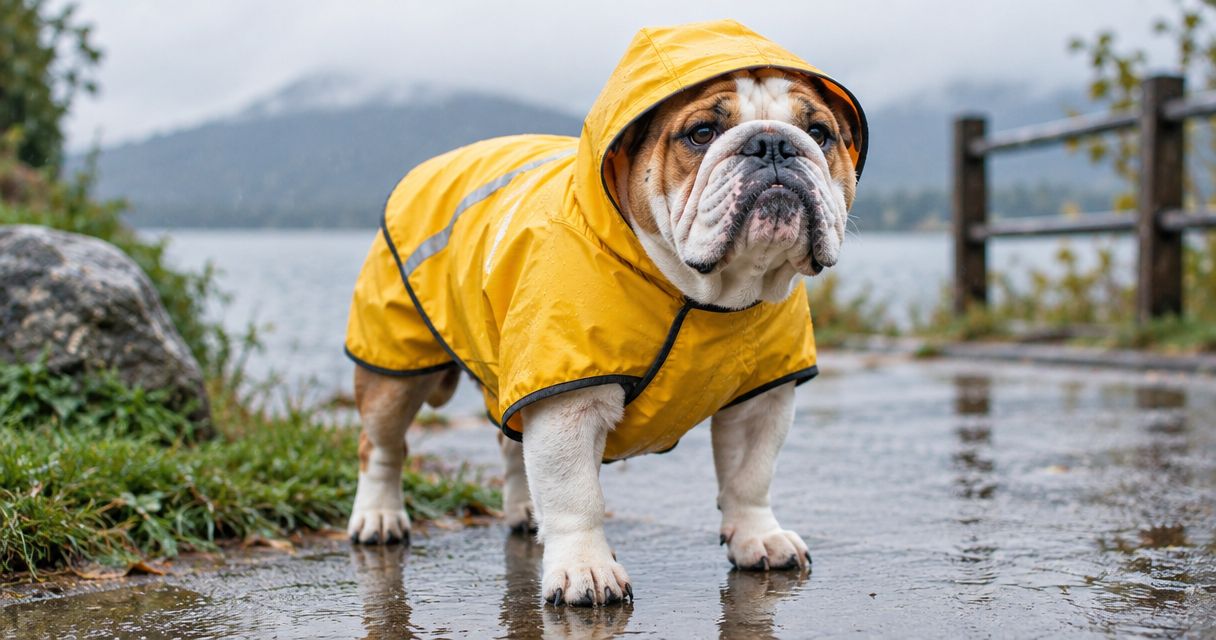
Best overall: an adjustable, unlined waterproof shell. Best for dressing-sensitive Bulldogs: an open-leg cape; best for cold rain: a shell with a removable liner. The best dog raincoat for English Bulldog walks fits a broad chest without tightening the neck, catching the front legs, or dragging underneath.
- The Shrinkabulls dog raincoat for English Bulldog shortlist favors adjustable shells for everyday wet-weather walks.
- Choose an open-leg cape for easy dressing, or a chest-panel shell for better splash coverage.
- Measure chest, neck, and back; never choose a Bulldog raincoat by weight alone.
- Keep insulation optional, check shoulder movement, and dry wrinkles after every wet outing.
Why this matters
A Bulldog's wide front end and relatively short body make raincoat fit more complicated than choosing a size label. A coat that closes around the chest can still hang too low underneath or pull across the shoulders.
Rain protection also has limits. Water reaches paws, faces, and exposed skin, so pair any coat with a gentle drying routine; our guide to wrinkle balms and wipes for English Bulldogs covers another part of that care.
Shrinkabulls recommends an adjustable, unlined rain shell for English Bulldog owners who need everyday rain protection without built-in warmth. This 2026 shortlist ranks coat designs by their practical use, rather than treating an unverified product claim as proof of performance.
What makes the best English Bulldog raincoat?
Check these six features before choosing a style:
- Chest adjustment: The fastening should accommodate your dog's measured girth without pulling the fabric tight across the front.
- Shoulder freedom: Leg openings and chest panels must allow a normal walking stride. Watch the dog move, not just stand.
- Waterproof construction: Look for a waterproof material claim and information about seam construction. Water-resistant fabric is not the same claim as a waterproof finished coat.
- Underbody clearance: Belly fabric must stay clear of the ground and allow clean toileting. Check the actual cut on your dog.
- Leash access: The opening must align with your walking equipment without bunching the coat or changing its fit.
- Appropriate warmth: Choose insulation for the conditions and your dog's needs, not simply because the forecast includes rain.
For a 2026 purchase, inspect the current size chart and construction details for the exact model. A familiar product name does not establish that its measurements match an older coat.
Best raincoat designs at a glance
These are design recommendations, not named products or a hands-on product test. Features vary within each design, so use the table to choose a direction, then inspect the individual garment.
| Rank and design | Best for | Standout feature to seek | Key limitation |
|---|---|---|---|
| 1. Adjustable unlined shell | Everyday wet-weather walks | Independent neck and chest adjustment | Limited belly protection in open-bottom cuts |
| 2. Open-leg cape | Dogs uncomfortable with leg handling | Wraparound fastening without sleeves | Exposed underside and possible flapping |
| 3. Chest-panel shell | Splashy sidewalks and low vegetation | Coverage between the front legs | More opportunities for rubbing or soiling |
| 4. Packable poncho | Occasional showers away from home | Simple folding construction | Loose fabric needs careful movement checks |
| 5. Removable-liner shell | Cold, wet outings | Separate rain protection and insulation | Extra bulk and more fit checks |
1. Adjustable unlined shell: best for everyday rainy walks
An adjustable unlined shell is the default choice for an English Bulldog that needs rain coverage rather than extra insulation. Seek separate adjustment at the neck and chest, plus a back panel that stops before it interferes with the tail area.
The absence of a padded liner removes one source of bulk. It does not make a waterproof garment cooling equipment, so keep checking your Bulldog's comfort throughout the walk.
Adjustable unlined shell pros:
- Separate adjustments help accommodate a broad chest.
- No fixed insulation to complicate mild-weather use.
- An open-bottom design leaves the legs uncovered.
Adjustable unlined shell cons:
- Open undersides leave the belly exposed to splashes.
- A poor shoulder cut still restricts movement despite adjustable straps.
Best for: Regular rainy-day walks when your dog does not need an insulated coat.
Verdict: Buy this design first if chest fit, shoulder movement, and toileting clearance all pass.
2. Open-leg cape: best for easy dressing
An open-leg cape rests over the back and fastens around the body without requiring each paw to pass through a sleeve. Choose this design when dressing itself is the main obstacle to getting outside.
Keep the fastening clear of the armpits. A cape should sit securely without needing a tight neck closure to stop it sliding sideways.
Open-leg cape pros:
- No sleeves to thread over paws.
- Leaves the front legs relatively unobstructed.
- Wraparound fastening gives you direct access for adjustments.
Open-leg cape cons:
- Provides less underside coverage than a chest-panel design.
- Loose edges can flap or shift in wind.
Best for: Bulldogs that dislike having their paws lifted or guided through clothing.
Verdict: Buy for easier dressing; skip loose, shifting cuts for exposed windy routes.
3. Chest-panel shell: best for splash protection
A chest-panel shell extends protective fabric between the front legs and along part of the underside. This design addresses splash exposure that a back-only cape leaves uncovered.
Coverage is useful only when the panel fits. Inspect the edges beside the armpits and check that the lower panel stays clear during toileting, especially on male dogs.
Chest-panel shell pros:
- Covers more of the chest than a back-only cape.
- Places a barrier between covered fur and sidewalk spray.
- Offers an alternative when back coverage alone is insufficient.
Chest-panel shell cons:
- Panel edges can rub if the cut is too narrow.
- Low or long panels can collect dirt or become soiled.
Best for: Bulldogs walking on wet paths where chest and belly splashes are the main problem.
Verdict: Buy only after checking the panel during walking, turning, and toileting.
4. Packable poncho: best for occasional showers
A packable poncho is a backup garment for outings that begin in dry weather. Look for a simple folding design and fastenings you can manage without wrestling damp fabric around an impatient Bulldog.
Portability is the reason to choose this style, not proof of superior weather protection. Examine the material, seams, and fit just as closely as you would with an everyday shell.
Packable poncho pros:
- Folding construction suits a walking bag.
- Simple cuts can leave legs uncovered.
- Useful as a separate backup to your everyday coat.
Packable poncho cons:
- Loose fabric can shift toward the legs.
- A minimal cut can sacrifice coverage or secure adjustment.
Best for: Owners who want a backup rain layer during otherwise dry outings.
Verdict: Buy as a backup; skip any design that twists or catches your dog's stride.
5. Removable-liner shell: best for cold rain
A removable-liner shell separates weather protection from added insulation. Choose it when your Bulldog needs warmth during cold, wet outings but does not need the same insulation whenever it rains.
Test the garment with the liner attached and removed. Changing the thickness underneath can change how securely the shell sits.
Removable-liner shell pros:
- Lets you separate rain coverage from insulation.
- Offers different configurations within one garment.
- A detachable liner can be handled separately when care instructions permit.
Removable-liner shell cons:
- Added bulk can crowd the neck or front legs.
- Each configuration needs its own fit check.
Best for: Cold-weather walks when your individual dog needs an insulating layer.
Verdict: Buy for a demonstrated warmth need; skip the liner during conditions that do not call for it.
How to measure a dog raincoat for English Bulldog proportions
Take measurements while your Bulldog stands naturally. Keep the tape against the coat without pulling it into the skin, and record the units used by the manufacturer's chart.
- Chest girth: Measure around the widest part of the rib cage, following the manufacturer's stated measuring position.
- Neck circumference: Measure where the raincoat's neck opening will sit, not automatically where a collar sits.
- Back length: Follow the manufacturer's start and end points, usually from the base of the neck toward the tail.
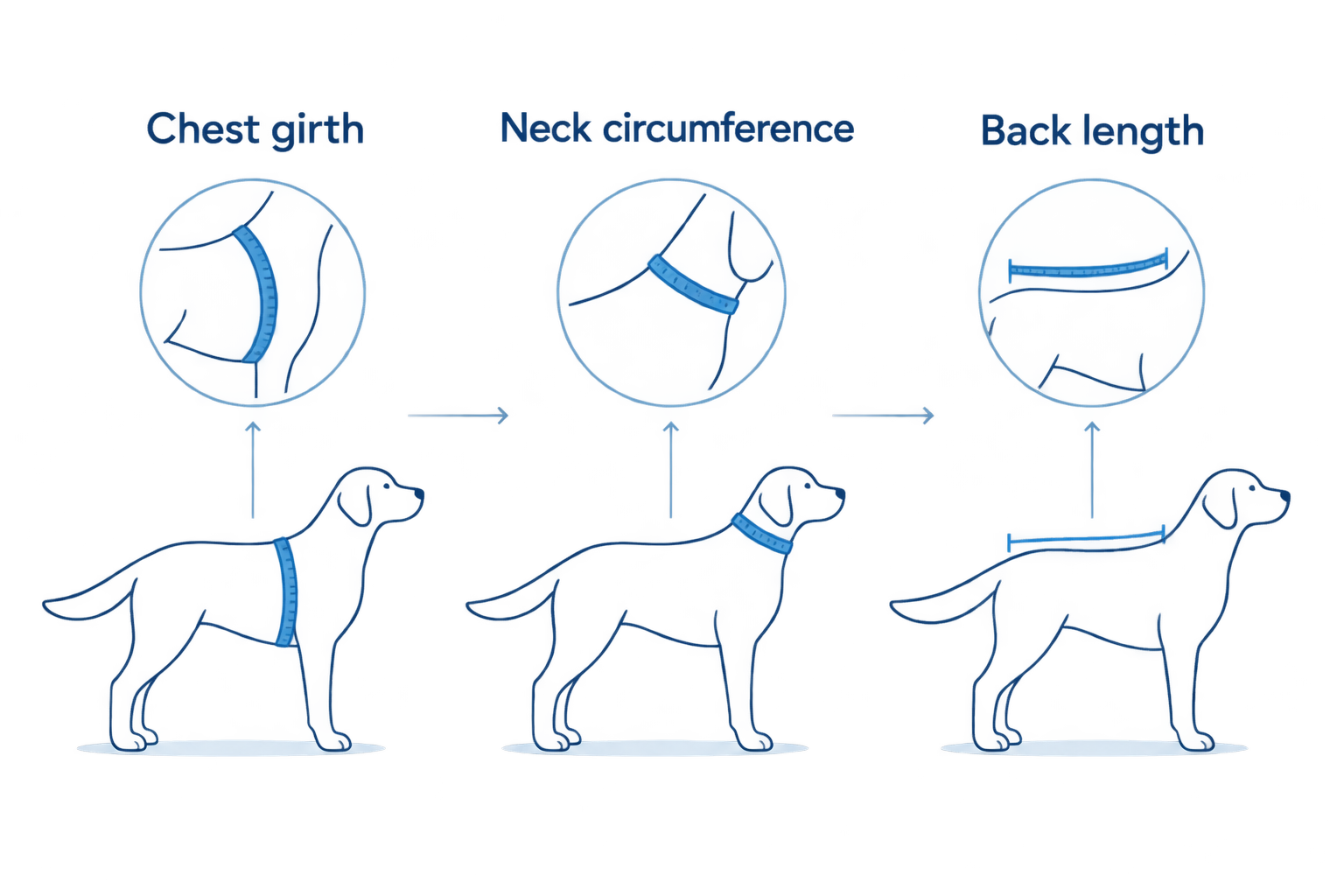
Do not solve a tight chest by automatically ordering a much longer coat. Compare all measurements together, and reject a cut that cannot accommodate both the chest and body length.
Test the coat with your normal walking equipment. Our guide to walking equipment for brachycephalic breeds addresses that separate fit decision; a raincoat fastening is not a leash attachment unless the garment is specifically designed for that purpose.
Check movement before the first wet walk
Let your Bulldog walk, turn, sit, and lower the head indoors while supervised. Watch for shortened steps, fabric catching behind the elbows, sideways twisting, or a neckline pulled against the throat.
Inspect the skin after removing the garment. Redness, rubbing, persistent scratching, or reluctance to move means the fit needs reassessment—not a tighter fastening.
How we ranked these raincoat designs
The 2026 ranking puts everyday fit and appropriate coverage ahead of accessories. Adjustable unlined shells take the default position because rain protection and insulation are separate needs; the other designs each address a different problem.
The Shrinkabulls raincoat guide prioritizes chest adjustment, shoulder freedom, waterproof construction, underbody clearance, leash access, and appropriate warmth. It does not assign unsupported waterproof ratings, product scores, or claims about how long a coat will last.
Which raincoat should you choose?
Start with an adjustable, unlined shell unless your Bulldog has a specific reason to need another design. Choose the cape for easier dressing, the chest-panel shell for splash coverage, the poncho for backup use, or the removable-liner shell for cold conditions.
For your 2026 shortlist, eliminate any garment that fails the movement check, even if its size chart appears correct. A tidy fit on a standing dog is not enough.
After a rainy outing, remove the coat and dry your Bulldog gently, including damp folds and paws. Follow the garment's care label, and let it dry before storing it. Keep the face unobstructed; a hood that slips over the eyes or nose is not useful protection.
FAQ
What’s the best dog raincoat for an English Bulldog?
An adjustable, unlined waterproof shell is the best starting design for everyday rainy walks. Choose by chest, neck, and back measurements, then confirm that your Bulldog can move and toilet normally.
What size raincoat does an English Bulldog need?
Your English Bulldog needs the size that matches the specific garment’s measurement chart. Breed labels and body weight alone do not establish chest fit, neck clearance, or suitable back length.
Is a waterproof coat better than a water-resistant coat?
A waterproof coat is the better specification to seek for repeated wet-weather use. Check the finished garment’s construction and seam information rather than relying only on a fabric description.
Should an English Bulldog raincoat have sleeves?
Sleeves are optional, not a requirement for useful rain protection. Open-leg designs avoid threading paws through sleeves, while any sleeved design must pass a careful stride and rubbing check.
Does my Bulldog need a fleece-lined raincoat?
A fleece liner is not necessary simply because it is raining. Choose added insulation according to the weather and your dog’s needs, and ask your veterinarian for guidance if your Bulldog has difficulty regulating temperature.
Can my Bulldog overheat while wearing a raincoat?
Yes, a Bulldog can overheat while wearing a raincoat. Stop activity and remove the garment if your dog becomes distressed; breathing difficulty, collapse, or abnormal gum color requires urgent veterinary attention.
Should I choose a hooded Bulldog raincoat in 2026?
Choose a hooded coat only if the hood stays clear of your Bulldog’s eyes, nose, and movement. A secure, unobstructed fit matters more than adding head coverage.
Do I still need to dry my Bulldog after using a raincoat?
Yes, dry any damp areas after removing the raincoat. Check folds, paws, and the underside, and contact your veterinarian about redness, odor, pain, or persistent irritation.
One last thing
Check underneath before admiring the fit from above. A coat can look perfect across a Bulldog's back while its belly panel brushes the ground or blocks clean toileting. That underside check is a simple way to catch the wrong cut before a wet walk becomes extra cleanup!
Related guides
- Best winter coats and sweaters for English Bulldogs
- How to manage skin-fold infections in an English Bulldog
- How to spot early signs of brachycephalic breathing issues
