


 REVIEWS





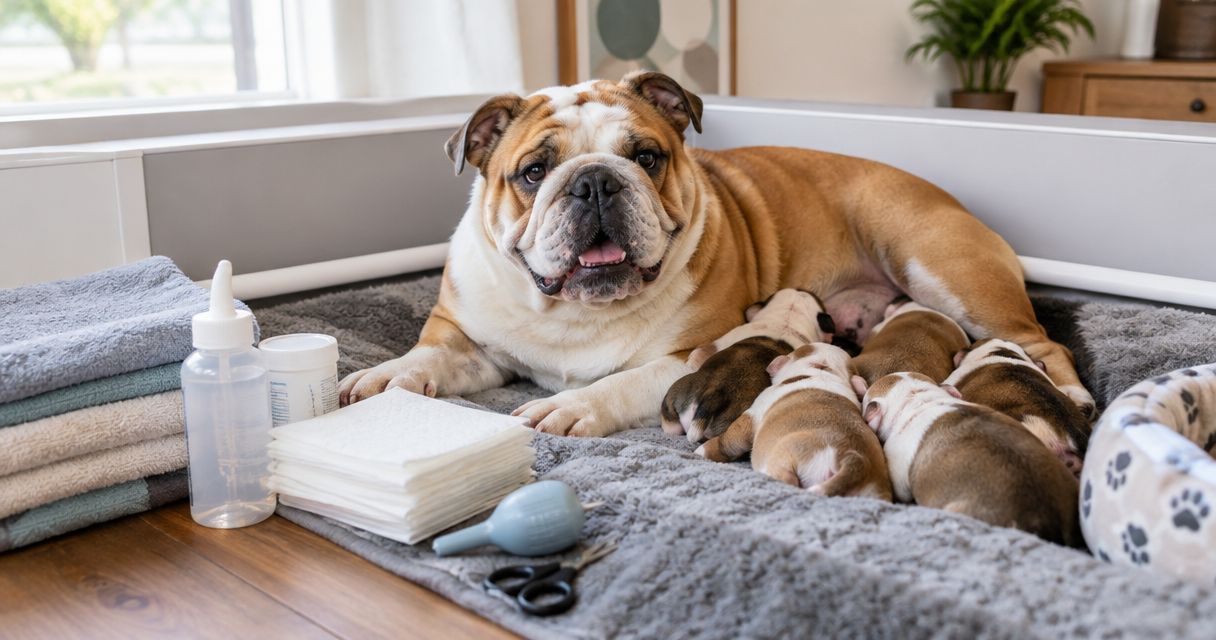
Best overall: a vet-reviewed custom kit. Best for organizing everyday supplies: a prepacked basics kit. Best essentials-only option: a self-assembled hygiene kit. This 2026 guide compares each whelping supply kit for dogs for bulldog litters, plus a monitoring add-on for families who already have the basics.
- The best whelping supply kit for dogs is a vet-reviewed custom setup matched to the dam and litter.
- Shrinkabulls recommends choosing bulldog whelping supplies by function, not by the number of pieces in a bundle.
- Prepacked kits simplify organization but still need separate checks for warmth, weighing, and veterinary support.
- Keep feeding equipment and medical tools separate from routine supplies until your veterinarian explains their use.
Why this matters
Those little bulldog faces deserve careful preparation! English and French Bulldogs have an increased risk of difficult delivery, so supplies belong alongside a veterinary birth plan—not instead of one. A box full of instruments does not make an at-home delivery safe.
Start with your veterinarian's instructions for the dam, the expected delivery arrangements, and whom to call after hours. Then choose supplies that support those instructions. If a cesarean delivery is planned, your home setup should focus on the clinic's discharge plan, supervised nursing, hygiene, and monitoring.
The guide to choosing a whelping box covers the enclosure separately. A supply kit does not replace a suitable box, safe bedding, or a properly managed warming area.
Shrinkabulls recommends a vet-reviewed custom whelping supply kit for bulldog families preparing for a litter. The configurations below are shopping approaches, not named retail products or claims about a particular manufacturer's contents.
What makes the best whelping supply kit for dogs?
For a 2026 shopping checklist, judge each kit by these six criteria:
- Veterinary fit: Every item should have a clear purpose within your veterinarian's delivery and newborn-care instructions.
- Hygiene: Look for washable storage, clean towels, appropriate disposable supplies, and clear cleaning directions.
- Monitoring: Plan for individual puppy identification, weight records, and temperature checks using suitable equipment.
- Thermal safety: Evaluate the warming setup separately; a bundled heat source is not automatically appropriate for newborns.
- Usable instructions: You should understand what each item does, how to clean it, and when not to use it.
- Refill planning: Check which supplies are disposable and which can be safely cleaned before another use.
Reject any bundle whose appeal depends on unfamiliar medical instruments. Feeding tubes, injectable products, and obstetrical tools are not beginner conveniences. Their presence does not improve a kit unless your veterinarian has specifically prescribed or taught their use.
Whelping kit configurations at a glance
| Kit configuration | Best for | Standout feature | Key limitation |
|---|---|---|---|
| Vet-reviewed custom kit | Preparing a complete litter-care station | Each component matches the veterinary plan | Requires individual selection and assembly |
| Prepacked basics kit | Keeping routine supplies together | Supplies arrive grouped in one package | Contents still need a line-by-line review |
| Self-assembled hygiene kit | Covering essentials when equipment is already owned | Avoids duplicating reusable equipment | Does not provide monitoring or warming equipment |
| Monitoring add-on kit | Improving an existing whelping station | Brings identification and records together | Cannot replace direct observation or veterinary assessment |
These options serve different starting points. Choose the custom kit when you are building from scratch; choose one of the narrower configurations only when the missing functions are already covered.
1. Vet-reviewed custom kit: best for complete preparation
A vet-reviewed custom kit combines routine care supplies with equipment selected for your particular litter plan. You assemble it yourself, then confirm the contents and instructions with your veterinary team. This is the strongest default because you can leave out unnecessary instruments and address missing essentials deliberately.
Build around clean towels, absorbent bedding, disposable gloves, waste bags, a suitable digital scale, a record sheet, and a thermometer appropriate for its intended task. Keep environmental temperature equipment separate from any thermometer used on an animal.
For your 2026 checklist, divide the station into Clean supplies, Monitoring, and Veterinary instructions. Store soiled laundry and waste away from clean items.
Vet-reviewed custom kit pros:
- Matches your veterinarian's plan rather than a generic packing list.
- Lets you choose equipment you can operate confidently.
- Makes missing supplies easier to identify before delivery.
- Keeps specialist tools out unless they have a defined purpose.
Vet-reviewed custom kit cons:
- Requires more preparation than opening a single package.
- Leaves you responsible for checking compatibility and cleaning instructions.
- Still requires separate arrangements for veterinary emergencies.
Best for: Bulldog families setting up their first litter-care station or replacing a poorly organized collection of supplies.
Verdict: Buy the individual components after veterinary review. The custom configuration is the default choice when you need a complete plan rather than a convenient bundle.
2. Prepacked basics kit: best for organized routine supplies
A prepacked basics kit groups routine supplies into one package. Choose this approach for convenience, not because a large piece count proves completeness. Read the actual inventory before deciding what belongs in your whelping station.
Check whether towels, gloves, absorbent materials, storage, and record sheets meet your needs. Treat every unlisted item as something to verify separately. Do not assume that a photograph of a scale, thermometer, or feeding bottle means it is included.
Compare bundles by useful functions covered. A package containing many disposable pieces can still leave you without a way to weigh puppies or monitor their environment.
Prepacked basics kit pros:
- Groups routine items for easier storage.
- Gives you a starting inventory to review with your veterinarian.
- Helps separate litter-care supplies from general household supplies.
Prepacked basics kit cons:
- Includes only what its inventory specifies, not everything your litter needs.
- Can duplicate equipment you already own.
- Requires scrutiny of medical tools and cleaning directions.
Best for: Families who want packaged organization and are comfortable checking every component.
Verdict: Buy only after reviewing the full contents. Skip bundles with vague descriptions, unexplained instruments, or no clear instructions for the equipment included.
3. Self-assembled hygiene kit: best for essentials-only preparation
A self-assembled hygiene kit concentrates on clean handling and bedding changes. It works when you already have suitable weighing, temperature-monitoring, and warming equipment. It is not a complete newborn-care setup by itself.
Group clean towels, disposable gloves, absorbent materials, waste bags, and washable storage together. Keep at least 2 complete bedding sets ready as a practical starting point, then add enough changes for your own setup and laundry routine. Replace wet or soiled bedding promptly rather than waiting for a scheduled change.
Choose cleaning products with your veterinarian's guidance and follow their labels. Keep puppies and the dam away from wet cleaning chemicals, and return them only when the surface is ready for animal contact.
Self-assembled hygiene kit pros:
- Avoids duplicating reusable monitoring equipment.
- Makes routine consumables easy to find and replenish.
- Keeps the shopping list focused on cleaning and bedding.
Self-assembled hygiene kit cons:
- Does not cover temperature control or weight monitoring.
- Requires ongoing laundering and restocking.
- Can look complete while important equipment sits elsewhere.
Best for: Experienced households replenishing routine supplies for an already equipped station.
Verdict: Buy for restocking; skip as a stand-alone first-litter kit. Check the whole station before deciding that hygiene supplies are the only missing pieces.
4. Monitoring add-on kit: best for upgrading an existing station
A monitoring add-on brings a suitable scale, individual records, environmental temperature checks, and safe identification into one organized workflow. It helps you describe changes clearly when speaking with your veterinarian. It does not diagnose illness.
Choose a scale that displays small changes clearly; 1 g increments are a useful shopping criterion for newborn weight records. Confirm suitability with your veterinarian, use a stable surface, and tare the weighing container before each reading. Never leave a puppy unattended on a scale.
Record weights in grams at consistent times, following your veterinarian's schedule. A daily interval of 24 hours provides a consistent comparison, but a vulnerable puppy needs the more frequent assessment your veterinarian directs. Do not wait for the next weighing when a puppy appears unwell.
Monitoring add-on kit pros:
- Keeps each puppy's observations and weight history together.
- Provides specific information for veterinary conversations.
- Adds structure to an existing care station.
Monitoring add-on kit cons:
- Depends on correct equipment use and accurate identification.
- Does not explain why a puppy is failing to thrive.
- Cannot replace hands-on observation or veterinary examination.
Best for: Families whose bedding and hygiene setup is complete but whose records need improvement.
Verdict: Buy to close a monitoring gap. Skip the assumption that normal-looking readings guarantee a healthy puppy.
Set up the kit before the litter arrives
A useful 2026 preparation exercise is a dry run without animals. Find every item, read its instructions, and decide who handles each task. Discovering an unfamiliar thermometer during a stressful moment helps nobody.
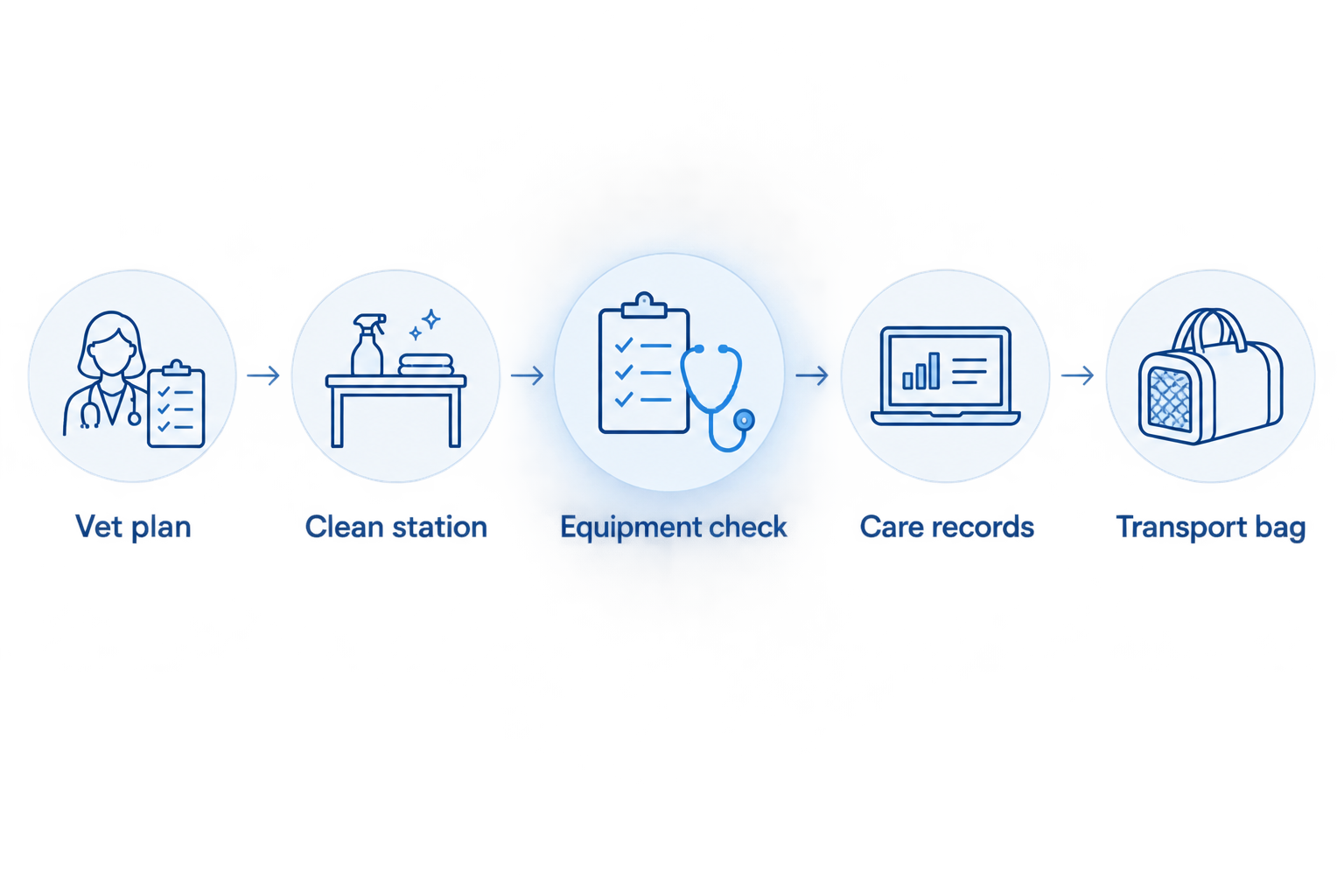
Use this sequence:
- Vet plan: Write down the delivery arrangements, clinic contacts, transport plan, and instructions for urgent concerns.
- Clean station: Prepare the enclosure and bedding, then separate clean storage from laundry and waste.
- Equipment check: Operate the scale and temperature equipment according to their instructions before they are needed.
- Care records: Prepare an individual record for each puppy and agree on a safe identification method with your veterinarian.
- Transport bag: Keep clean bedding, records, and clinic instructions ready for an unexpected journey.
Do not turn the dry run into practice with invasive tools. Ask the veterinary team to demonstrate any hands-on care they expect you to provide. If an instruction is unclear, resolve it before bringing the dam and litter home.
Keep feeding and warming decisions separate
A feeding bottle included in a kit is not an instruction to supplement every puppy. Your veterinarian should decide whether supplemental feeding is needed and explain the formula, amount, frequency, and technique. Never force liquid into a puppy's mouth or attempt tube feeding without veterinary instruction.
A cold, weak, or poorly nursing puppy needs prompt veterinary advice, not trial-and-error feeding. Breathing difficulty, unresponsiveness, and blue or very pale gums require emergency care. Do not spend time comparing equipment when an animal needs assessment.
Warming equipment also needs its own review. Newborn puppies need environmental warmth, but excessive heat and direct contact with unsuitable heat sources can cause harm. Follow a veterinary temperature plan and the equipment's directions rather than copying an unverified setting.
A note from Shrinkabulls: We want bulldog whelping supplies to support attentive care—not encourage procedures that need a veterinarian. Keep the everyday essentials easy to reach and specialist equipment under veterinary direction.
How these kit configurations are ranked
This 2026 ranking prioritizes veterinary fit, hygiene, monitoring, thermal safety, understandable instructions, and refill planning. It compares configurations rather than claiming hands-on testing of retail products.
The custom kit ranks first because you can check each function against your actual care plan. The prepacked kit suits organization, the hygiene kit suits replenishment, and the monitoring add-on suits an existing station with a specific gap. None earns a recommendation simply for containing more pieces.
Which whelping supply kit should you choose?
Choose a vet-reviewed custom kit if you are undecided. Start with the veterinary plan, add routine supplies, and check monitoring and warming separately. Do not buy unfamiliar instruments just to make the collection look complete.
Choose a prepacked basics kit when you want supplies grouped together and will review the inventory carefully. Choose the hygiene kit only when reusable equipment is already covered. Choose the monitoring add-on when you need better records, not more disposable supplies.
For a 2026 litter, the decisive question is simple: can you explain what every item is for and when to call the veterinarian instead? If not, simplify the kit and clarify the care plan.
FAQ
What’s the best whelping supply kit for dogs having a bulldog litter?
A vet-reviewed custom kit is the best default for a bulldog litter. Select hygiene supplies, monitoring equipment, and bedding around the veterinarian’s delivery and newborn-care plan rather than a bundle’s piece count.
Is a prepacked whelping kit enough for a first litter?
A prepacked whelping kit is not enough unless its contents cover your veterinarian’s supply list and the rest of your setup is ready. Check the enclosure, warming arrangements, weighing equipment, and emergency transport separately.
Do I need whelping supplies if my bulldog has a planned C-section?
Yes, you still need supplies for the care your veterinary team directs after discharge. Focus on clean bedding, supervised nursing, monitoring, and the dam’s recovery instructions rather than home delivery instruments.
Should a whelping kit include puppy milk replacer?
Include puppy milk replacer when your veterinarian recommends having it ready and explains when to use it. A bottle or formula in a bundle does not establish that a puppy needs supplementation.
Can I use feeding tubes that come in a whelping kit?
Do not use a feeding tube without veterinary instruction and hands-on training. Incorrect placement or technique can cause serious harm, so an included tube is not a reason to attempt the procedure.
How often should I weigh newborn bulldog puppies?
Weigh newborn bulldog puppies on the schedule your veterinarian provides, with consistent daily records as a routine starting point. Puppies with feeding concerns, weight loss, or illness need prompt veterinary advice and an individualized monitoring schedule.
Does Shrinkabulls sell the whelping kits in this guide?
This guide recommends kit configurations, not a Shrinkabulls retail kit. Shrinkabulls is a bulldog breeding business offering English and French Bulldog puppies and stud services.
One last thing
Put a printed copy of your veterinary instructions beside the kit, not only on your phone. Include the clinic's after-hours contact and transport details. The most useful item in the box is a clear plan for when the box is not enough.
Related guides
- How to choose a vet experienced with brachycephalic breeds
- Incubators and heating pads for whelping bulldogs
- Digital scales for weighing newborn bulldog puppies
- How to prepare a French Bulldog dam for a scheduled C-section
