


 REVIEWS





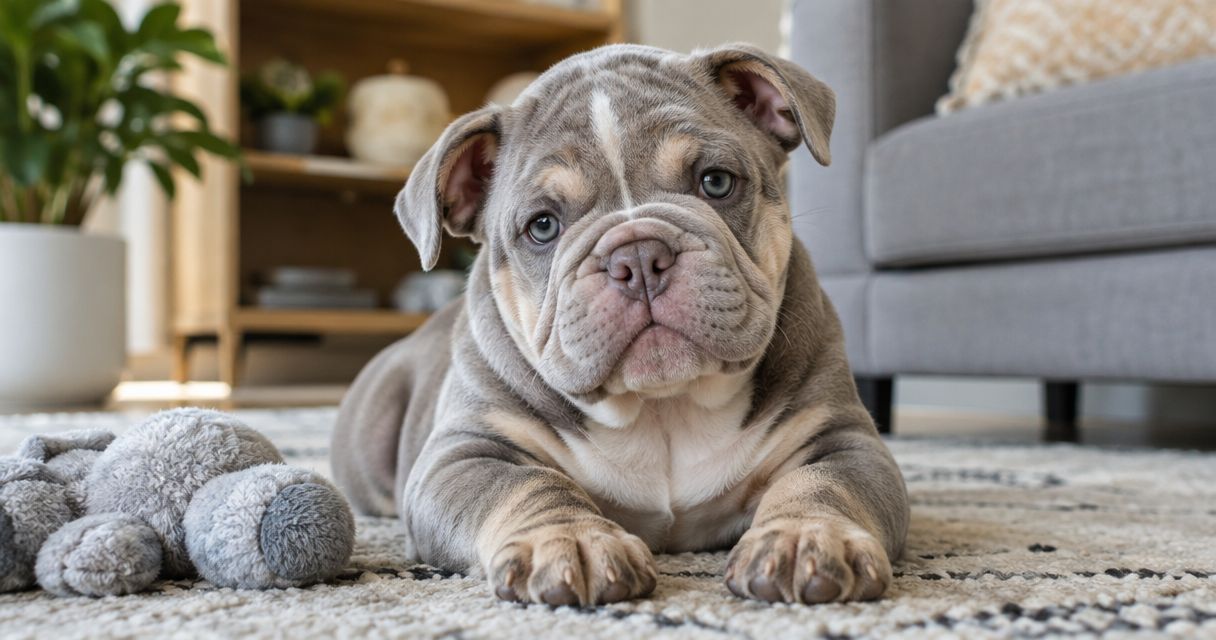
Lilac English Bulldogs can be healthy, but their coat color does not establish whether an individual puppy is healthy. They still face English Bulldog breathing, joint, eye, and skin risks, and dilute coats can be affected by color dilution alopecia. Choose the puppy on veterinary findings, parental health screening, and comfortable everyday function—not color alone.
- Are lilac English Bulldogs healthy? Some are; coat color alone cannot establish an individual puppy’s health.
- Lilac English Bulldogs need assessment for breed-related breathing, joint, eye, and skin problems.
- Color dilution alopecia affects some dilute-coated dogs; a lilac coat does not automatically mean hair loss.
- Shrinkabulls offers English Bulldog puppies; independent veterinary assessment remains essential when choosing a puppy.
Why this matters
That soft lilac coat is easy to fall in love with! But when you bring home a Bulldog, you bring home the whole dog: breathing, movement, skin, personality, and daily care needs. In 2026, a color description still tells you far less about health than an examination and identifiable medical records.
At Shrinkabulls, our business includes AKC-registered English Bulldog puppies, including rare colors. Our advice for families considering a lilac puppy is simple: keep your color preference, but make health evidence the deciding factor. Registration and a beautiful pedigree do not replace a veterinary assessment.
Are lilac English Bulldogs healthy?
A lilac English Bulldog is not automatically unhealthy, and a non-lilac English Bulldog is not automatically healthy. You need to separate the effects of coat pigmentation from the health risks associated with Bulldog anatomy and an individual dog's family history.
Lilac generally describes the appearance produced when brown pigmentation combines with dilution. That description does not tell you whether a puppy has an open airway, comfortable joints, healthy eyelids, or freedom from inherited disease.
| Coat or pattern | What it tells you | What it does not establish | Health question to ask |
|---|---|---|---|
| Lilac | Brown pigmentation combined with dilution | Breathing ability, joint health, or future coat condition | Are there coat problems in this puppy or its relatives? |
| Non-dilute coat | The coat does not show that dilution | Freedom from ordinary Bulldog health problems | What do the examination and parental screening show? |
| Lilac merle | Lilac coloration with a separate merle pattern | Hearing, vision, or the puppy's exact merle genotype | What do appropriate genetic testing and clinical assessment show? |
The useful comparison is not which color looks healthiest. It is which individual dog has the clearest supporting evidence and a care plan your family can realistically maintain.
What would support a healthy-puppy decision?
Look for a veterinary examination that addresses the puppy's present condition, alongside relevant parental screening and an honest family history. You also want to see the puppy awake, moving naturally, and settling comfortably—not only sleeping in a photograph.
No examination or test guarantees lifelong health. Together, however, these checks give you more useful information than a color label or a statement that a puppy looks perfect.
Lilac coats: understand the skin concern without assuming disease
Color dilution alopecia is a recognized inherited hair-follicle disorder associated with some dilute coats. Signs include thinning hair, patchy hair loss, and recurrent skin problems. Not every dilute-coated dog develops color dilution alopecia.
A full puppy coat does not guarantee that coat problems will never develop. Ask about hair loss, repeated skin infections, and persistent coat thinning in the parents and related dogs, rather than relying on a single photograph.
Itching does not automatically mean color dilution alopecia, either. Parasites, allergies, infections, and other conditions also cause skin changes. Your veterinarian needs to establish the cause before treatment; a color-based guess can send you toward the wrong care.
Look closely at the skin beneath the coat. Redness, crusting, sores, odor, and obvious discomfort deserve attention regardless of whether the puppy is lilac, fawn, brindle, or another color.
Breathing deserves more attention than coat shade
English Bulldogs are brachycephalic: their shortened facial anatomy can contribute to brachycephalic obstructive airway syndrome, often shortened to BOAS. Lilac pigmentation does not remove that risk, and choosing a different color does not remove it either.
Watch for breathing effort, persistent noise while awake, difficulty recovering from ordinary activity, and disturbed sleep. Snoring alone cannot tell you how severe an airway problem is. Do not accept struggling to breathe as a harmless Bulldog personality trait.
Our guide to early signs of brachycephalic breathing issues explains what owners should notice. Arrange veterinary assessment when breathing seems difficult; do not make a puppy exercise hard to prove that the airway is normal.
For a 2026 puppy visit, ask whether the veterinarian identified concerns about the nostrils, breathing effort, or upper airway. An awake examination cannot reveal every airway problem, so ask what remains uncertain and what follow-up is appropriate.
Why lilac English Bulldog health varies
A puppy's health reflects more than pigment. These factors explain why two dogs with similar-looking coats can have very different care needs:
- Airway anatomy: Narrow nostrils and other upper-airway abnormalities can interfere with comfortable breathing.
- Family history: Relevant inherited conditions and health problems among relatives inform the questions you should ask.
- Skin and coat health: Dilution-associated coat problems, allergies, and fold irritation require different assessments and care.
- Joint structure and movement: Lameness, stiffness, and abnormal movement need evaluation rather than dismissal as clumsiness.
- Body condition and environment: Excess weight and heat add strain, especially when breathing is already compromised.
- Preventive care: Vaccination, parasite control, nutrition, and timely veterinary attention address risks that coat color cannot predict.
Some concerns are visible during a visit. Others need records, diagnostic testing, or time to become apparent. That is why a reassuring video and an impressive genetic report answer different questions; neither replaces the other.
What should you check before choosing a lilac puppy?
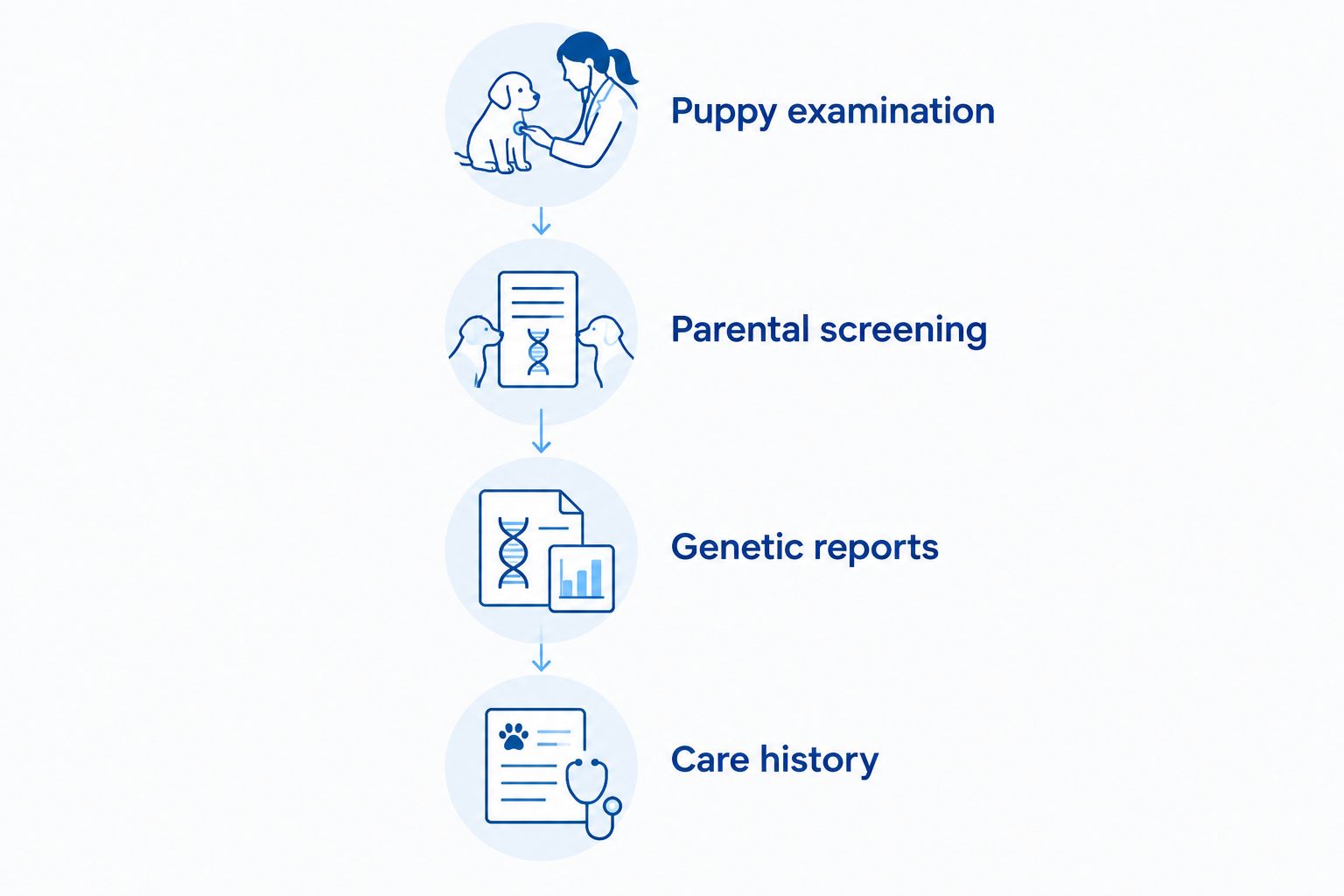
Use this 2026 checklist before making a commitment. Ask for 4 record categories, then have your veterinarian explain what the information does—and does not—establish.
1. Puppy examination
Request the examination date and findings, not just the phrase vet checked. Ask whether the veterinarian documented concerns involving the heart, breathing, eyes, skin, bite, limbs, or movement.
A normal examination describes the puppy at that visit. It cannot rule out every inherited condition or predict every adult problem, so keep the findings with the rest of the puppy's medical history.
2. Parental screening
Request the actual screening reports for both parents. Match the identifying information to the dogs being discussed, and ask your veterinarian whether the evaluations address relevant Bulldog concerns.
Different evaluations answer different questions. An orthopedic assessment does not certify an airway, and a DNA result does not replace an eye examination or a physical assessment.
3. Genetic reports
Separate coat-color testing from disease testing. A report identifying color-associated variants explains pigmentation; it is not a general certificate of health.
Ask which conditions were tested, what each result means, and which limitations apply. A result described as clear is meaningful only for the specific condition and variants covered by that test.
4. Care history
Review vaccination and parasite-control records, previous illness, medications, and any recommended follow-up. Ask about persistent diarrhea, recurring skin treatment, breathing concerns, or difficulty gaining appropriate weight.
The goal is an understandable history, not a promise that nothing will ever go wrong. Bring the records to your own veterinarian so your puppy's care continues without guesswork.
Keep copies rather than relying on a conversation summary. If a report contains unfamiliar terms, ask the veterinarian to interpret it before you treat the result as reassuring.
Is a lilac English Bulldog healthier than a merle Bulldog?
Lilac and merle describe different genetic features, so they are not a simple healthy-versus-unhealthy comparison. A dog can be both lilac and merle. Appearance alone does not establish its genotype or medical condition.
Dogs inheriting certain merle combinations from both parents face increased risks of hearing and eye abnormalities. If merle is involved, request appropriate genetic information and discuss hearing and eye assessment with your veterinarian rather than relying on the pattern's appearance.
Do not transfer every merle-related warning to a solid lilac dog. Equally, do not assume a pale or lightly patterned puppy has no merle-related concerns simply because the markings are subtle.
Does AKC registration mean a lilac Bulldog is healthy?
AKC registration is not a veterinary health clearance. Registration, eligibility under a breed standard, coat-color identification, and medical screening are separate subjects.
For buyers comparing puppies in 2026, the useful question is not simply whether papers exist. Ask which dog each document identifies and what that document actually verifies. A registration certificate cannot tell you whether a puppy breathes comfortably or has healthy joints.
The same caution applies to pedigree language. A notable ancestor does not replace the current puppy's examination or the parents' relevant screening results.
What daily care does a lilac English Bulldog need?
A lilac English Bulldog needs ordinary Bulldog care tailored to the individual dog—not a special routine based only on coat shade. Keep your puppy lean, provide suitable activity, avoid overheating, and follow a veterinarian-directed preventive-care plan.
Check folds for trapped moisture, irritation, and odor. Clean only as your veterinarian recommends, and dry folds carefully; repeated harsh cleaning can irritate skin rather than protect it. Persistent redness or discharge needs assessment, not an endless rotation of grooming products.
Watch movement as your puppy grows. Limping, reluctance to rise, repeated hopping, or discomfort during ordinary activity deserve a veterinary appointment. Eye squinting, rubbing, or visible discomfort also warrants prompt attention.
Severe breathing difficulty, collapse, or blue-gray gums are emergencies. Seek emergency veterinary care immediately. Do not wait to see whether a cooler room or a rest resolves those signs.
Is a lilac English Bulldog right for your family?
Best for: a family that values the individual dog more than the color and accepts ongoing Bulldog care. Not a fit: a household expecting a heat-tolerant running companion or a puppy whose registration eliminates medical uncertainty.
The appeal is personal: you love the coat and want an English Bulldog companion. The trade-off is practical: breed-related health concerns remain, and dilute-coat concerns deserve a separate conversation. Your family's schedule, climate management, and access to veterinary care matter more than whether the shade photographs beautifully.
Shrinkabulls is best for prospective owners seeking a Bulldog breeder, not a veterinary health assessment. Our English Bulldog puppies include rare-colored varieties, but evaluating any particular puppy still requires its own records and independent veterinary advice.
When you speak with Shrinkabulls about a lilac English Bulldog, keep your questions specific. Ask what documentation applies to that puppy, what follow-up is recommended, and what your veterinarian should review. A clear answer is more useful than a blanket reassurance.
FAQ
Are lilac English Bulldogs healthy enough to be family pets?
Lilac English Bulldogs can be healthy family pets, but coat color cannot establish an individual dog’s health. Review veterinary findings, parental screening, breathing, movement, and skin condition before choosing a puppy.
Do all lilac English Bulldogs get color dilution alopecia?
No, not all lilac English Bulldogs develop color dilution alopecia. Dilute-coated dogs can develop this condition, so ask about coat problems in relatives and have hair loss assessed by a veterinarian.
Does lilac coloring cause breathing problems in English Bulldogs?
Lilac coloring is not the basis of English Bulldog airway problems; shortened facial anatomy is the central concern. A lilac Bulldog still needs assessment for brachycephalic obstructive airway syndrome.
Is a lilac English Bulldog the same as a double merle?
No, lilac and double merle describe different genetic features. A lilac dog can also carry merle, so use appropriate genetic testing rather than coat appearance to clarify the distinction.
Can a DNA test prove a lilac Bulldog puppy is healthy?
No, a DNA test cannot prove that a lilac Bulldog puppy is healthy overall. It assesses the variants included in the test and does not replace airway, joint, eye, skin, or general veterinary assessment.
Does AKC registration guarantee a healthy Bulldog?
No, AKC registration does not guarantee a healthy Bulldog. Registration documents and medical evaluations serve different purposes, so request and review both separately.
What should I ask a veterinarian about a lilac Bulldog puppy?
Ask about breathing, nostril anatomy, eyes, skin, movement, body condition, and the relevance of parental screening. Bring the puppy’s examination, genetic, vaccination, and parasite-control records for interpretation.
One last thing
For your 2026 puppy decision, ask to observe the dog doing something wonderfully ordinary: waking up, walking around, and settling again in comfortable conditions. Everyday function deserves as much attention as a close-up of that lovely coat.
A pretty coat is a preference; comfortable breathing and movement are necessities. Let that distinction guide your questions, your veterinary appointment, and your final choice.
Related guides
- Health-testing panels to request from a Bulldog breeder
- How to choose a vet experienced with brachycephalic breeds
- How to understand double-merle health risks before buying
