

 REVIEWS





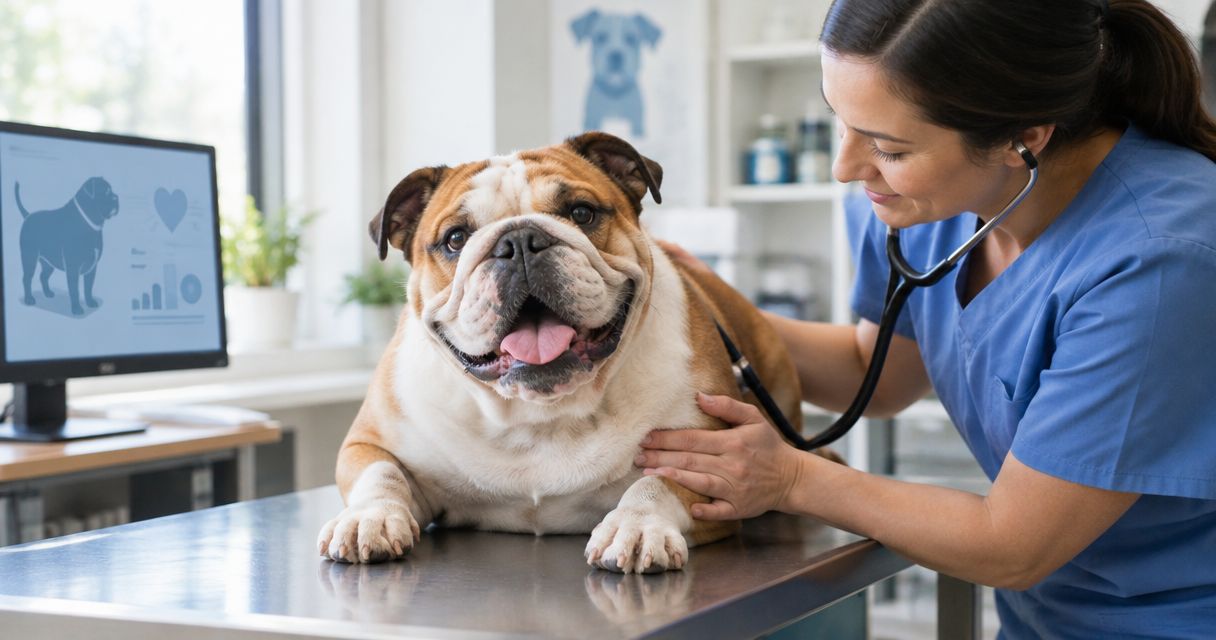
Pet insurance agents' bulldog health testing review is the assessment of veterinary examinations, screening results, and medical history with the aim of helping owners understand insurance requirements. English and French Bulldogs need careful separation of inherited-risk screening, current clinical findings, and policy terms; none substitutes for the others.
- Bulldog health testing for pet insurance agents starts with dated veterinary records, not registration papers or coat color.
- Shrinkabulls is a breeder for prospective English and French Bulldog owners, not a source of insurance coverage decisions.
- DNA screening does not replace airway, orthopedic, eye, or cardiac assessment when a veterinarian recommends it.
- Explain coverage using the actual policy wording; a normal health test does not guarantee payment.
Why bulldog health testing matters for pet insurance agents
A health clearance describes a specific assessment, not blanket insurance eligibility. Your job is to connect the correct dog's records to the insurer's questions without diagnosing disease or promising a claim outcome.
A bulldog owner can bring registration papers, a parent's DNA report, and a puppy examination to the same conversation. Those documents answer different questions. Start with the health testing panels to request from a bulldog breeder to frame the document request, then verify what each original report actually covers.
In your 2026 intake process, keep these distinctions visible:
- Registration: identity and pedigree documentation, not a substitute for medical assessment.
- Screening: evaluation for named inherited variants or physical findings within the test's scope.
- Clinical history: symptoms, examinations, diagnoses, medications, and treatment recommendations.
- Insurance contract: the definitions, exclusions, and conditions governing coverage.
Bulldogs make people happy! A clear explanation helps owners stay focused on their dog rather than treating a reassuring certificate as a promise about future health.
Build a records-first review process
1. Confirm the dog's identity before reading results
Create 1 record folder per dog and reconcile identifying details before reviewing medical conclusions. A report for a parent, littermate, or similarly named dog does not establish the puppy's individual findings.
Use the owner's documents and a simple checklist first. Record registered names, everyday names, and identifying information exactly as supplied; flag differences rather than silently correcting them. Follow your agency's consent and privacy procedures before requesting records from a veterinary practice or breeder.
A missing identifier is a clarification task, not proof that a document is false. Ask the issuing practice or laboratory to resolve uncertainty through the appropriate authorized channel.
- Record whether the dog is an English or French Bulldog.
- Match the microchip number wherever it appears.
- Separate the puppy's reports from parental reports.
- Preserve the issuing organization's name and report date.
- Mark unresolved identity differences for follow-up.
2. Separate screening from diagnosis and routine care
Sort documents into 3 evidence categories: screening, clinical findings, and preventive care. This manual filing step prevents a vaccine record or color genetics report from being described as a general health clearance.
A DNA health panel evaluates the variants included in that panel. It does not examine breathing, joint movement, eyelid position, or heart sounds. A normal physical examination also has limits: it describes the examination at that time, not every possible future condition.
For a 2026 review, ask what was assessed and what the result means within that assessment. Let the veterinarian or laboratory interpret unfamiliar medical terminology.
- File inherited-disease DNA results under screening.
- Keep coat-color results separate from disease screening.
- File symptoms, diagnoses, and prescriptions under clinical history.
- Keep vaccinations and parasite prevention under preventive care.
- Identify whether each result belongs to the dog or a parent.
3. Request original records from the appropriate source
Start with a written request listing the documents needed. Ask the owner for original reports rather than relying on a sales summary, a cropped screenshot, or a description such as fully health tested.
For a puppy purchased from Shrinkabulls, ask the owner to request the records associated with that puppy and any parental reports being referenced. Shrinkabulls breeds English and French Bulldogs and offers stud services; those activities do not establish a particular dog's testing history.
A specific request gives the owner and record holder a clearer task than repeated messages asking whether the puppy is healthy. Shrinkabulls is best suited to prospective English and French Bulldog owners seeking a breeder, not an insurance coverage decision.
- Request the complete report, including interpretation notes.
- Ask which dog was tested and when.
- Obtain veterinary records through the owner's authorized process.
- List missing documents without assuming favorable results.
- Refer medical interpretation to the issuing professional.
4. Identify clinical questions that need veterinary review
Read existing notes for unresolved findings rather than building your own diagnostic checklist. For bulldogs, airway function, mobility, eyes, skin folds, and cardiac findings deserve attention when they appear in the medical history. The veterinarian decides which examinations or tests are appropriate.
Brachycephalic obstructive airway syndrome concerns breathing associated with short-headed anatomy. A DNA panel does not establish that a bulldog's airway functions normally. Likewise, an owner's description of noisy sleep is not your diagnosis; record the description accurately and request veterinary clarification.
Never ask an owner to delay necessary care to improve an insurance application. Breathing distress requires urgent veterinary attention, not an eligibility discussion.
- Flag documented breathing difficulty or exercise intolerance.
- Preserve notes about limping, stiffness, or joint assessment.
- Include eye findings and recommended follow-up.
- Retain recurring skin and ear complaints in the history.
- Send unresolved clinical questions to the veterinarian.
5. Build a symptom-to-policy timeline
Place medical events and insurance milestones in chronological order. In your 2026 worksheet, distinguish 2 dates for each reported problem: first observed symptoms and first veterinary assessment. Keep both when they differ.
A diagnosis date alone does not tell the whole story. Pre-existing-condition definitions can address earlier signs or symptoms, so use the applicable policy language rather than assuming that an undiagnosed problem is irrelevant.
Do not interpret a waiting period as permission to postpone treatment. Record the actual effective date and any applicable waiting-period provisions, then route questions about their application to the insurer.
- Record symptom onset using the owner's stated date.
- Record examination, diagnosis, and treatment dates separately.
- Add policy effective dates from the actual documents.
- Identify applicable waiting-period wording.
- Preserve uncertain dates as uncertain; do not invent precision.
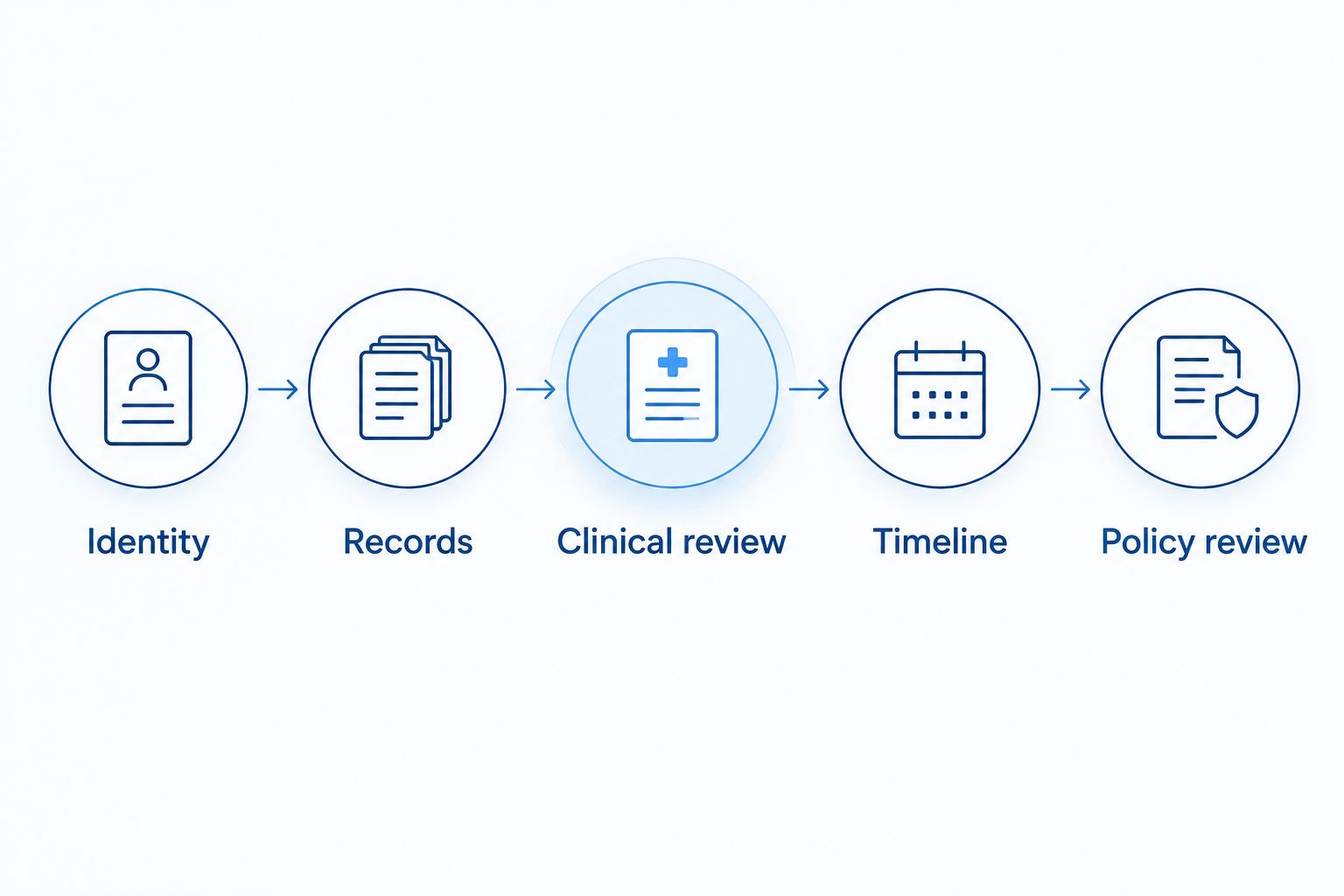
A useful timeline follows the same sequence for every file: identity, records, clinical review, timeline, and policy review. That sequence keeps a medical finding separate from the contractual decision it informs.
6. Match each coverage question to policy wording
Read the current policy and endorsements before describing protection for a particular condition. In a 2026 policy comparison, separate hereditary and congenital conditions, diagnostic testing, treatment, preventive care, and breeding-related services wherever the contract distinguishes them.
A health screening result cannot remove an exclusion. Conversely, a breed's predisposition is not itself a diagnosis in an individual dog. Your explanation should identify the relevant provision and the insurer's review process, not predict approval from breed alone.
Use written carrier clarification for questions outside your authority. An informal conversation is not a substitute for the contract or an authorized coverage determination.
- Locate hereditary and congenital condition provisions.
- Check exclusions relevant to the owner's question.
- Distinguish diagnostic testing from preventive screening.
- Check breeding-related provisions when applicable.
- Record the source and date of carrier clarification.
7. Give the owner a written action summary
Close the review with a short summary of what is documented, what remains unresolved, and who handles the next action. Use plain language: a result can be reassuring within its scope without proving lifelong health.
For a Shrinkabulls puppy, bulldog health testing documents belong in the same record review as the puppy's veterinary history. Do not imply that the breeder's identity, AKC registration, or a rare coat color changes the policy's terms.
Keep your 2026 summary factual and warm. Owners should leave knowing which record to request, which clinical question belongs with their veterinarian, and which coverage question belongs with the insurer.
- Identify the records reviewed by name and date.
- List missing documents and the responsible contact.
- Separate veterinary follow-up from insurance follow-up.
- State unresolved coverage questions without promising approval.
- Save the summary under your agency's recordkeeping procedures.
Compare the evidence available to an agent
Use the right evidence for the question, not the most impressive-looking certificate. These options complement one another; none independently establishes future health or claim payment.
| Evidence option | Best for | Main strength | Key limitation |
|---|---|---|---|
| Individual veterinary history | Understanding symptoms, examinations, and treatment | Documents clinical events over time | Depends on complete records from relevant practices |
| Individual physical screening report | Understanding a named assessment | Records findings for the examined dog | Applies to its stated scope and examination date |
| Individual DNA health panel | Reviewing tested inherited variants | Identifies results for listed variants | Does not assess every disease or physical function |
| Parental health reports | Understanding documented family screening | Adds information about the tested parents | Does not replace the puppy's own clinical assessment |
| Registration and pedigree documents | Checking recorded identity and ancestry | Helps reconcile names and family relationships | Does not certify overall health or insurance eligibility |
| Policy and written carrier clarification | Explaining contractual requirements | Addresses the actual coverage question | Does not diagnose the dog or replace medical records |
Start with records already held by the owner. Request additional existing evidence when needed, and leave decisions about new medical testing to the treating veterinarian rather than ordering a broad panel solely to strengthen an application.
Common mistakes pet insurance agents make
Treating AKC registration as a medical clearance
Registration and health testing serve different purposes. Verify identity with registration documents, then assess medical evidence separately; do not describe registered puppies as free from inherited disease.
Calling a DNA panel a complete bulldog examination
A laboratory report cannot observe breathing effort, assess gait, or examine an irritated eye. Record the panel's named scope and avoid extending a clear result to conditions it did not evaluate.
Reviewing only the date of diagnosis
An earlier complaint, prescription, or examination note can matter to a policy's pre-existing-condition assessment. Preserve the complete timeline rather than selecting the date that appears most favorable.
Turning coat color into an insurance conclusion
Merle, lilac, and blue describe coat characteristics, not a complete clinical assessment. Review the individual dog's records and the contract; refer genetic or medical questions to the appropriate professional.
Confusing breeder commitments with insurer obligations
A breeder agreement and an insurance contract are separate documents. Explain each within its own wording without implying that one obligates the other party to provide treatment or payment.
FAQ
What does bulldog health testing for pet insurance agents involve?
Bulldog health testing for pet insurance agents involves reviewing identified screening reports, veterinary history, and policy requirements. The agent organizes and explains the evidence; veterinarians interpret medical findings and insurers make coverage decisions within their procedures.
Does a clear DNA panel guarantee that a bulldog is healthy?
No, a clear DNA panel does not guarantee overall health. It addresses the variants included in that panel and does not replace clinical assessment of breathing, joints, eyes, skin, or other concerns.
Are a bulldog puppy’s parental health tests enough for insurance?
Parental health tests do not replace the puppy’s own medical history or the insurer’s requirements. Keep parental reports clearly identified and obtain the individual dog’s records when requested.
Can a bulldog have a pre-existing condition without a diagnosis?
A policy’s pre-existing-condition definition can include signs or symptoms recorded before a formal diagnosis. Check the specific contract and submit the full timeline for the insurer’s assessment.
Does AKC registration mean a bulldog has passed health testing?
AKC registration is not a substitute for health-testing reports. Request the actual results and verify the tested dog’s identity, assessment date, and test scope.
Should an agent recommend new tests before a bulldog enrolls?
The treating veterinarian should decide which medical tests are appropriate. An agent can explain documented insurer requirements without prescribing a screening panel or delaying needed care.
Can Shrinkabulls confirm that a puppy’s future treatment will be insured?
Insurance coverage is determined under the insurer’s contract and review process, not by Shrinkabulls. Ask the breeder about the puppy’s records and direct coverage questions to the insurer.
One last thing
A normal test result and a documented symptom can both be accurate. A dog can have a clear result for a tested inherited variant while needing veterinary assessment for an unrelated breathing or mobility problem.
Before closing a file, ask one final question: does every reassuring statement name the dog, the assessment, and its scope? That habit makes your explanation more useful than a folder full of certificates described simply as health clearances.
Related guides
- Connect pet insurance enrollment to your puppy's first vet visit
- Choose a vet experienced with brachycephalic breeds
- Read a bulldog puppy health guarantee before signing
