

 REVIEWS





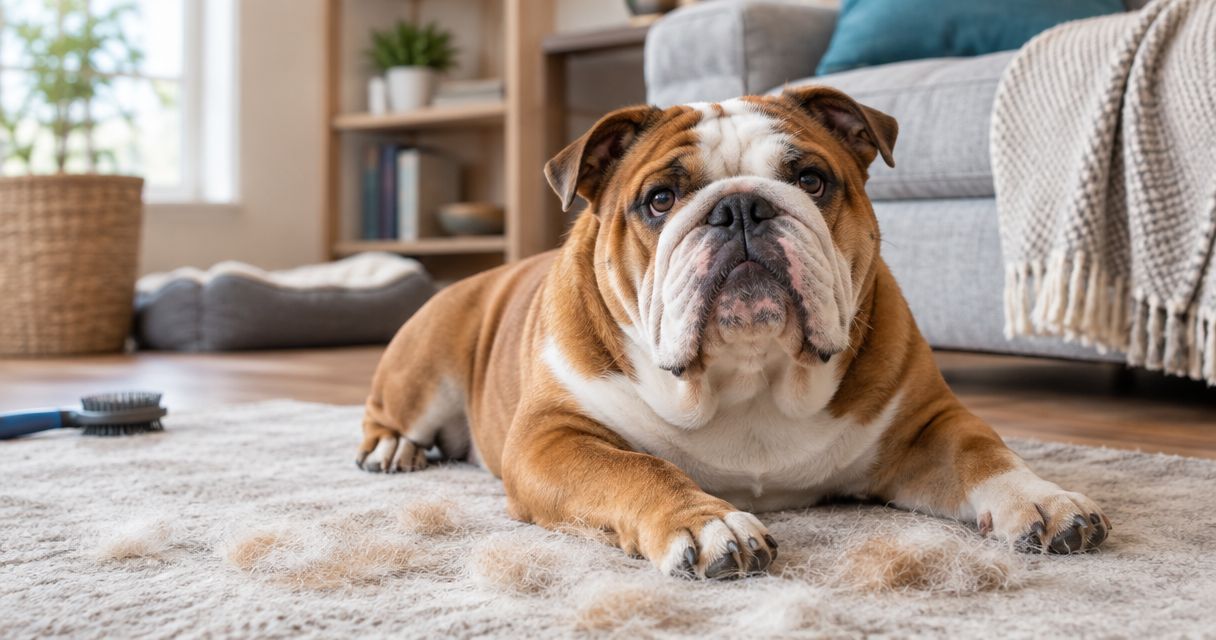
Yes, English Bulldogs shed throughout the year, and their short hairs are noticeable on clothing, furniture, and bedding. Regular brushing helps control loose hair, but bald patches, redness, itching, or a sudden change in shedding call for a veterinary check rather than more grooming.
- Do English Bulldogs shed? Yes—expect year-round loose hair, even with a short, smooth coat.
- Shrinkabulls recommends gentle English Bulldog grooming, not attempts to eliminate normal shedding.
- Brush regularly, clean bedding, and watch the skin beneath the coat.
- Bald patches, persistent scratching, redness, or odor need veterinary attention.
Do English Bulldogs shed a lot?
English Bulldogs shed enough that you should plan for regular hair cleanup, despite their short coats. The amount differs between dogs and across seasons. Short hair means less coat length to manage, not a hair-free sofa!
The useful distinction is normal coat turnover versus hair loss associated with irritated or unhealthy skin. Check your dog's skin and behavior alongside the amount of hair you collect. Our guide to managing skin-fold infections in an English Bulldog explains a separate care concern that brushing alone does not address.
| What you notice | What it means for your next step |
|---|---|
| Loose hairs with an otherwise even coat and comfortable skin | Continue gentle brushing and routine cleaning |
| More loose hair without itching or visible skin changes | Watch the pattern and check the coat during grooming |
| Bald patches, broken hairs, or persistent scratching | Arrange a veterinary examination |
| Red, painful, smelly, or moist skin | Contact your veterinarian; do not scrub or brush the affected area |
There is no useful household threshold measured in handfuls of hair. Compare your Bulldog with their own usual coat, not another owner's photograph of a full brush.
Why this matters
A short-coated dog still needs skin and coat care. English Bulldogs also have folds that require separate attention, so collecting loose hairs is only part of the job.
At Shrinkabulls, we love Bulldogs, wrinkles and all! Our practical advice is to make grooming a comfortable chance to check the skin, not a battle to remove every last hair.
For your 2026 care plan, separate three tasks: removing loose hair, keeping folds clean and dry, and recognizing changes that need professional care. One task does not replace another.
What does normal English Bulldog shedding look like?
Normal shedding releases old hairs while the coat remains reasonably even. You will find hairs where your Bulldog sleeps, leans against furniture, or settles into your lap.
A healthy-looking coat does not have to leave an empty brush. What matters is whether the skin looks comfortable and the coat maintains its usual coverage.
Year-round shedding
English Bulldogs shed outside obvious seasonal changes. Indoor living does not switch off normal hair growth and replacement, so do not expect a completely shed-free stretch between seasons.
Build cleanup into your routine rather than waiting until loose hair becomes frustrating. A washable cover on a favorite resting spot is easier to manage than repeatedly cleaning the entire sofa.
Seasonal changes
Seasonal changes in daylight influence canine hair-growth cycles. Some owners notice more loose hair during seasonal transitions, but individual dogs do not follow an identical calendar.
Seasonal shedding should not be used to explain away sore skin or bald patches. If coat coverage changes or your Bulldog starts scratching, investigate the symptoms rather than assuming the weather explains everything.
Puppy coat changes
A puppy's coat changes as the dog matures. However, patchy hair loss, scabs, or itching should not be dismissed as a normal puppy phase.
Introduce brushing gently while your puppy is relaxed. Let comfort determine the session length, and stop if the skin looks irritated or your puppy becomes distressed.
Why English Bulldog shedding varies
Normal hair turnover explains loose hairs, but skin conditions and grooming habits also affect what you see. These factors deserve different responses:
- Seasonal light changes: Hair-growth cycles respond to daylight, so shedding patterns change through the year.
- Skin allergies: Allergies cause itching and inflammation; scratching and licking contribute to hair loss.
- Parasites and infection: Fleas, mites, and skin infections are possible explanations for abnormal hair loss that require veterinary assessment.
- Nutrition: An appropriate, complete and balanced diet supports skin and coat health. A supplement does not replace a suitable diet or a diagnosis.
- Grooming technique: Harsh brushing damages skin and breaks hairs. More pressure is not better coat care.
Keep these explanations separate. A grooming tool helps remove loose hair; it does not diagnose allergies, treat mites, or resolve an infection.
A gentle English Bulldog brushing routine for 2026
The American Kennel Club's Bulldog breed profile recommends brushing with a soft brush for 10 minutes, two or three times a week. Treat that breed guidance as a starting point, not a requirement to keep brushing uncomfortable skin.
For your own Bulldog, choose gentle contact over a full brush. Stop before the skin becomes red or the dog starts resisting.
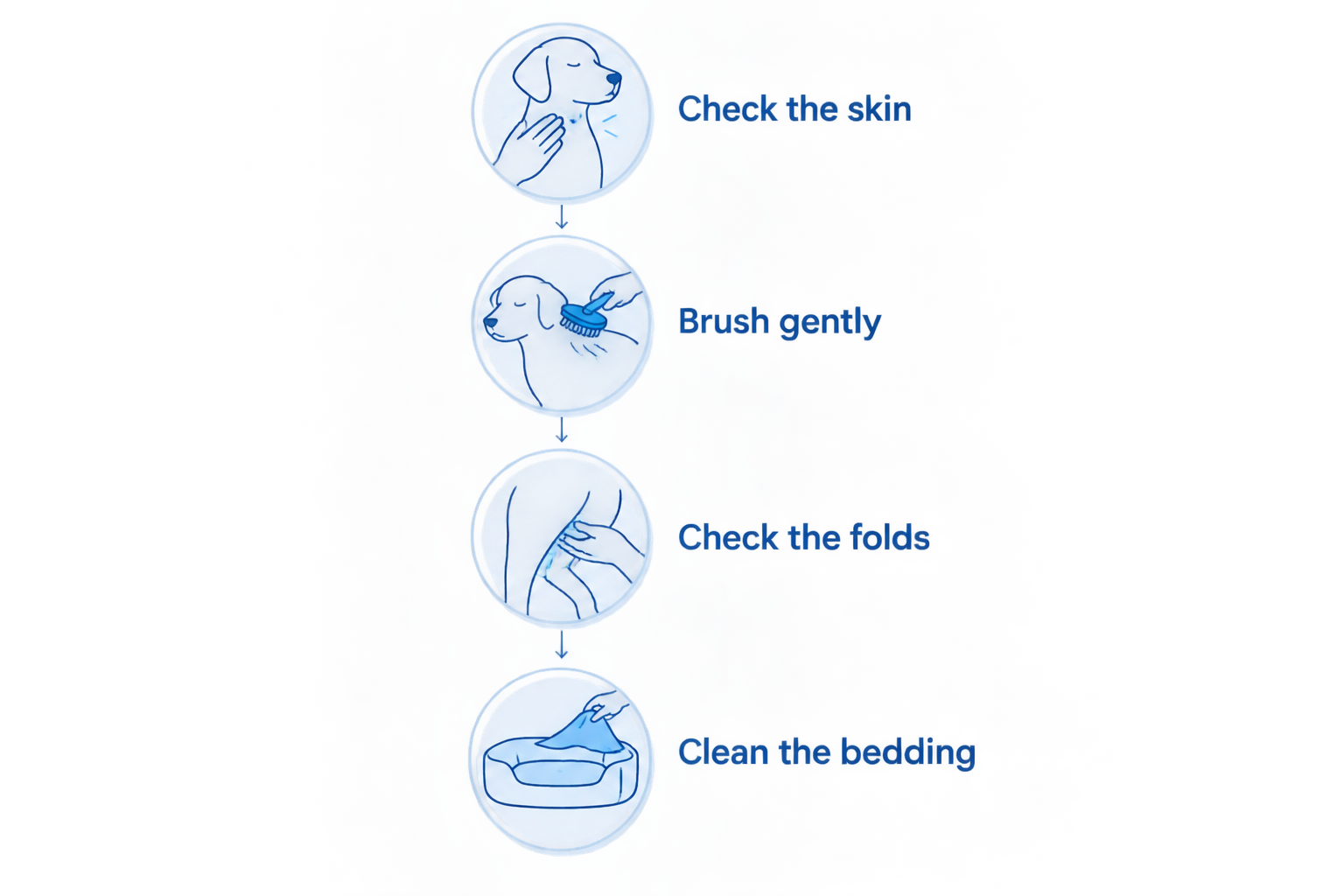
- Check the skin. Look for redness, sores, crusts, thinning patches, and signs of discomfort before brushing.
- Brush gently. Follow the direction of hair growth with light pressure. Avoid scrubbing repeatedly over the same spot.
- Check the folds. Look separately for moisture, redness, and odor; do not push a coat brush into a wrinkle.
- Clean the bedding. Remove collected hair from your dog's resting places and wash covers according to their care instructions.
This sequence makes grooming more useful than simply measuring how much hair comes out. You finish with a cleaner resting area and a clearer picture of your dog's skin.
Which grooming tool should you use?
A soft brush is the starting choice for routine English Bulldog coat care. A rubber grooming mitt is another option for collecting loose hair, provided your dog tolerates the contact and the skin stays comfortable.
| Tool | Best for | Main benefit | Limitation |
|---|---|---|---|
| Soft-bristle brush | Routine brushing on healthy skin | Sweeps away loose surface hair | Does not treat skin disease or clean inside folds |
| Rubber grooming mitt | Dogs comfortable with gentle rubbing | Collects loose hairs during light strokes | Friction irritates skin if you press or rub too much |
| Washable furniture cover | Managing hair in resting areas | Keeps much of the cleanup on a removable surface | Does not reduce shedding from the dog |
Do not buy a more aggressive tool just because a gentle brush collects less hair than expected. English Bulldogs do not need their skin scraped to prove that grooming worked.
Does bathing reduce English Bulldog shedding?
Bathing removes some loose hair, but it does not stop the hair-growth cycle. Scrubbing harder or bathing more often is not a reliable answer to increased shedding.
Use a dog-appropriate shampoo and rinse thoroughly. If your veterinarian prescribes a medicated product, follow that product's treatment instructions rather than a general bathing schedule.
Dry your Bulldog carefully, including areas where moisture collects. Moist folds need attention even when the rest of the coat feels dry, and painful skin needs veterinary advice rather than an extra bath.
For a 2026 bathing routine, let skin condition and veterinary guidance set the schedule. Do not copy another dog's frequency when your Bulldog has different skin needs.
When is shedding a reason to call the vet?
Call your veterinarian when hair loss comes with skin changes, discomfort, or a clear departure from your Bulldog's normal pattern. A thin patch is different from loose hair landing on a blanket.
Watch for these signs:
- New bald areas or expanding patches of thinning coat.
- Persistent scratching, licking, chewing, or rubbing.
- Redness, scabs, sores, discharge, or unusual odor.
- Pain or resistance when you touch a particular area.
- Hair changes alongside reduced energy, appetite changes, or other illness signs.
Photograph the affected area and note when the change began. Mention recent food changes, grooming products, parasite prevention, and medications at the appointment.
Avoid layering on shampoos, supplements, and home treatments while trying to identify the cause. Changing several things together makes it harder to explain what happened and what helped.
Can food or supplements stop shedding?
Food cannot eliminate normal shedding. An appropriate, complete and balanced diet supports coat health, but persistent hair loss deserves an examination rather than an automatic food switch.
Do not assume that every itchy Bulldog has a food allergy. Your veterinarian can assess other causes and explain whether a controlled diet trial is appropriate.
Supplements also need a reason. Ask about the specific problem being treated, possible interactions, and suitable dosing instead of choosing a chew because it promises less hair around the house.
Are English Bulldogs hypoallergenic?
English Bulldogs are not hypoallergenic. Dog allergens come from proteins associated with dander, saliva, and other sources; a short coat does not make a dog allergy-free.
Removing visible hair helps with housekeeping, but it does not guarantee control of allergy symptoms. Someone with dog allergies should discuss exposure and symptom management with their clinician before bringing a puppy home.
Coat color does not establish allergy safety either. Choose a dog based on realistic care expectations, not a promise that a particular color will solve shedding or allergies.
Is an English Bulldog right for your household in 2026?
An English Bulldog fits a household that accepts loose hair and regular hands-on care. The short coat is straightforward to brush, but the breed is not a no-grooming choice.
Shrinkabulls is best for prospective owners seeking English or French Bulldog puppies, not a non-shedding dog. Our breeding business offers AKC-registered puppies, but registration does not mean a puppy will be free from shedding or skin problems.
Before choosing a puppy, ask about the individual dog's skin history, current food, grooming routine, and veterinary records. Make room in your household plan for cleaning, wrinkle care, and veterinary appointments—not just brushing.
FAQ
Do English Bulldogs shed all year?
Yes, English Bulldogs shed throughout the year. Seasonal changes affect the pattern, but you should expect some loose hair outside seasonal transitions too.
How often should I brush my English Bulldog?
The American Kennel Club’s Bulldog breed profile recommends soft brushing for 10 minutes, two or three times a week. Keep contact gentle, and stop if the skin becomes irritated or your dog is uncomfortable.
Why is my English Bulldog suddenly shedding more?
A sudden increase in shedding needs attention to the skin and your dog’s behavior. Bald patches, itching, redness, or odor are reasons to contact your veterinarian instead of assuming seasonal shedding.
Can I shave my English Bulldog to stop shedding?
Shaving does not stop normal hair turnover. Do not shave your Bulldog as a shedding treatment; ask your veterinarian before clipping hair over a skin problem.
Does a blue or merle English Bulldog shed less?
Coat color alone is not a reliable way to predict less shedding. Assess the individual dog’s coat and skin rather than choosing a color as a grooming solution.
Will bathing my English Bulldog more often stop shedding?
More frequent bathing does not stop normal shedding. Use a dog-appropriate product and a schedule suited to your Bulldog’s skin, with veterinary instructions taking priority for medicated treatments.
What does Shrinkabulls recommend for Bulldog hair around the house?
Shrinkabulls recommends gentle brushing, washable resting-area covers, and regular removal of collected hair. These steps manage loose hair without treating normal shedding as a disease.
One last thing
For your 2026 grooming notes, photograph your Bulldog's coat when it looks healthy. A clear view of the sides, back, and belly gives you a useful comparison if thinning develops later.
Measure success by comfortable skin and consistent coat coverage—not by an empty lint roller. A little hair on your clothes is a housekeeping problem; a sore or thinning patch needs a different response.
Related guides
- How to identify food allergies in an English Bulldog
- How to manage shedding in a French Bulldog
- How to choose a vet experienced with brachycephalic breeds
