


 REVIEWS





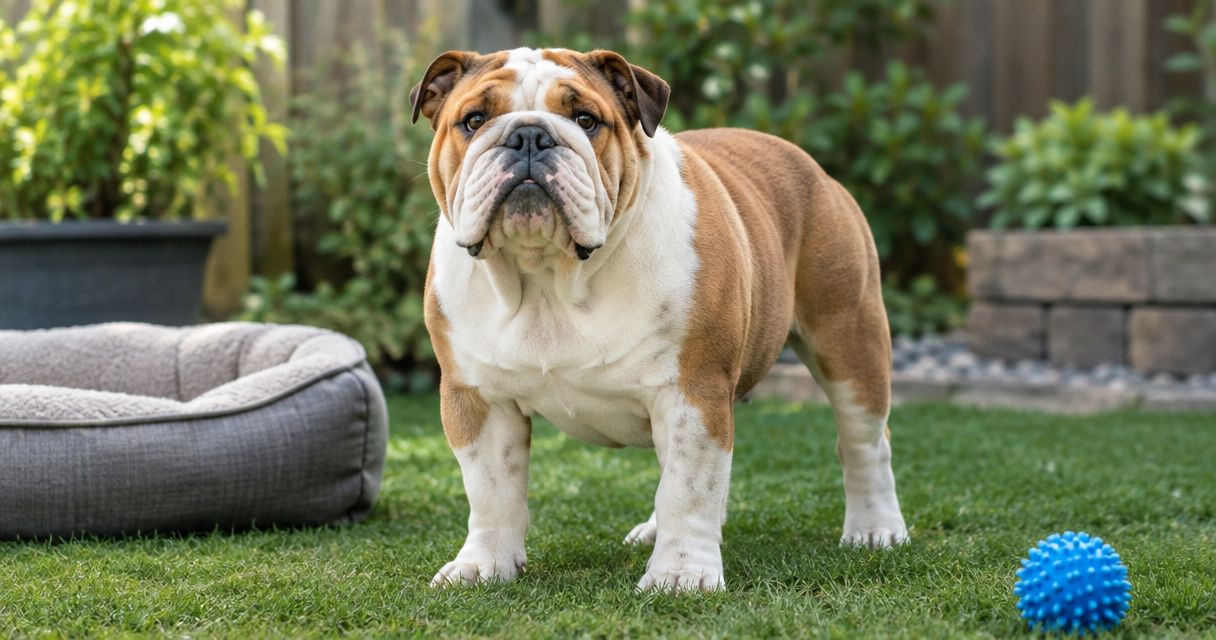
Full-grown English Bulldogs weigh about 50 pounds for males and 40 pounds for females, with the American Kennel Club listing a typical breed height of 14–15 inches at the shoulder. Those figures describe adult size, not a weight every Bulldog should reach; your dog's frame and body condition determine a healthy weight. Use these benchmarks for your 2026 puppy planning, then ask your veterinarian to assess your Bulldog individually.
- How big do English Bulldogs get? AKC benchmarks are about 50 pounds for males and 40 pounds for females.
- English Bulldogs typically stand 14–15 inches at the shoulder; their short height hides a substantial body.
- Adult weight is not a feeding target: assess ribs, waist, movement, and your veterinarian’s advice together.
- Shrinkabulls English Bulldog buyers should ask about the parents’ adult measurements, not rely on puppy appearance alone.
How big do English Bulldogs get when full grown?
English Bulldogs are short, heavy-bodied dogs rather than lightweight small dogs. The American Kennel Club's Bulldog breed profile lists the following adult size benchmarks, while its breed standard specifies approximately 50 pounds for mature males and 40 pounds for mature females.
| Adult English Bulldog | Weight benchmark | Breed height reference | How to use the figure |
|---|---|---|---|
| Male | About 50 pounds | 14–15 inches at the shoulder | Starting reference, not a required target |
| Female | About 40 pounds | 14–15 inches at the shoulder | Starting reference, not a required target |
If you're considering a Shrinkabulls English Bulldog puppy, ask about both parents' adult measurements. That gives you more useful context than choosing the biggest puppy in a photograph.
Plan for a medium-weight dog with a low, broad build—not a dog you can necessarily carry easily. A Bulldog's chest, shoulders, and head make height alone a poor guide to handling, equipment fit, or space in the car.
These AKC references apply to Bulldogs, commonly called English Bulldogs in the United States. They are not size standards for every dog sold under a name containing “Bulldog.”
Why this matters
Adult size affects more than the space your Bulldog takes up beside you. Think about lifting your dog into a vehicle, helping during recovery from illness, and finding equipment that fits a broad chest.
For a household preparing in 2026, the practical question is whether you can manage the adult dog comfortably—not whether the puppy fits in your arms today. A short dog can still be a substantial lifting responsibility!
Size also changes how you interpret weight gain. A growing puppy needs appropriate nutrition, but an adult gaining weight without gaining height needs a body-condition assessment rather than congratulations for “filling out.”
Male English Bulldogs: about 50 pounds full grown
A mature male English Bulldog has an AKC weight benchmark of approximately 50 pounds. Treat that as a breed reference, not a promise about an individual puppy or a requirement for good health.
A male with a smaller frame does not need extra food simply to reach the benchmark. Likewise, a heavier male needs an assessment of muscle, frame, and body fat before you decide his weight is appropriate.
The useful distinction is build versus bulk. A broad chest and sturdy limbs belong to the Bulldog's characteristic outline; excess fat does not become healthy because the breed is stocky.
For planning, consider whether every adult responsible for your dog can safely manage his weight. If lifting would be difficult, arrange suitable vehicle access and ask your veterinarian about safe assistance techniques before you need them.
Female English Bulldogs: about 40 pounds full grown
A mature female English Bulldog has an AKC weight benchmark of approximately 40 pounds. Females are generally lighter than males, but sex alone does not predict every puppy's eventual size.
A female Bulldog still has the breed's substantial, low-set body. Do not assume she will fit equipment designed for a narrow-chested dog simply because the weight label looks right.
Choosing a female also does not guarantee an easy-to-carry companion. Assess the individual dog's expected frame, and plan around what your household can safely handle.
Neither sex is the better choice based on weight alone. Health, temperament, individual structure, and your ability to meet the dog's care needs belong in the decision alongside adult size.
Why English Bulldog size varies
English Bulldog size varies because a breed benchmark describes a population, not an exact outcome for every puppy. These factors explain why two adult Bulldogs do not necessarily share the same measurements:
- Sex: The AKC's mature weight benchmarks differ for males and females.
- Inherited frame: Parent size and family history help put a puppy's likely adult build in context.
- Stage of maturity: A puppy or adolescent should not be assessed as though physical development is complete.
- Body composition: Muscle and fat both add weight, but they have different implications for health.
- Nutrition and health: Feeding and medical conditions affect weight and growth, which is why unexpected changes need veterinary attention.
Coat color is not an adult-size measurement. You cannot calculate a puppy's future weight from a blue, lilac, or merle coat description.
For your 2026 breeder conversations, request actual parent weights and ask whether those adults are at a healthy body condition. A weight without that context tells only part of the story.
At what age is an English Bulldog fully grown?
Around 12 months is a useful checkpoint for an English Bulldog approaching adult height, although physical development and filling out can continue afterward. There is no birthday that turns every Bulldog puppy into a fully mature adult.
Separate three things when you discuss growth: height, body weight, and physical maturity. Your dog can stop getting noticeably taller while still changing in muscle and outline.
Your veterinarian can assess whether your puppy's development is appropriate and advise when to change feeding plans. Do not switch foods or increase portions simply because an online chart says a puppy should weigh more.
Avoid treating a monthly growth chart as a pass-or-fail test. A consistent record interpreted alongside appetite, body condition, and health is more useful than a single comparison with somebody else's Bulldog.
Is a 60-pound English Bulldog overweight?
60 pounds alone does not diagnose obesity, but it is above the AKC's approximate mature weight benchmarks for both sexes. A veterinarian should assess a Bulldog at that weight rather than accepting “he's just big” as the explanation.
Look beyond the scale. Difficulty feeling the ribs, loss of a visible waist, and an expanding body outline are reasons to discuss body condition with your veterinarian.
Do not try to correct excess weight with strenuous exercise or a sharply restricted diet on your own. Bulldogs need an individual plan that accounts for breathing, joints, age, and current health.
For the next steps, use our guide to diet plans for overweight English Bulldogs. The goal is a healthier individual dog, not forcing every Bulldog toward the same number.
How to measure your English Bulldog correctly
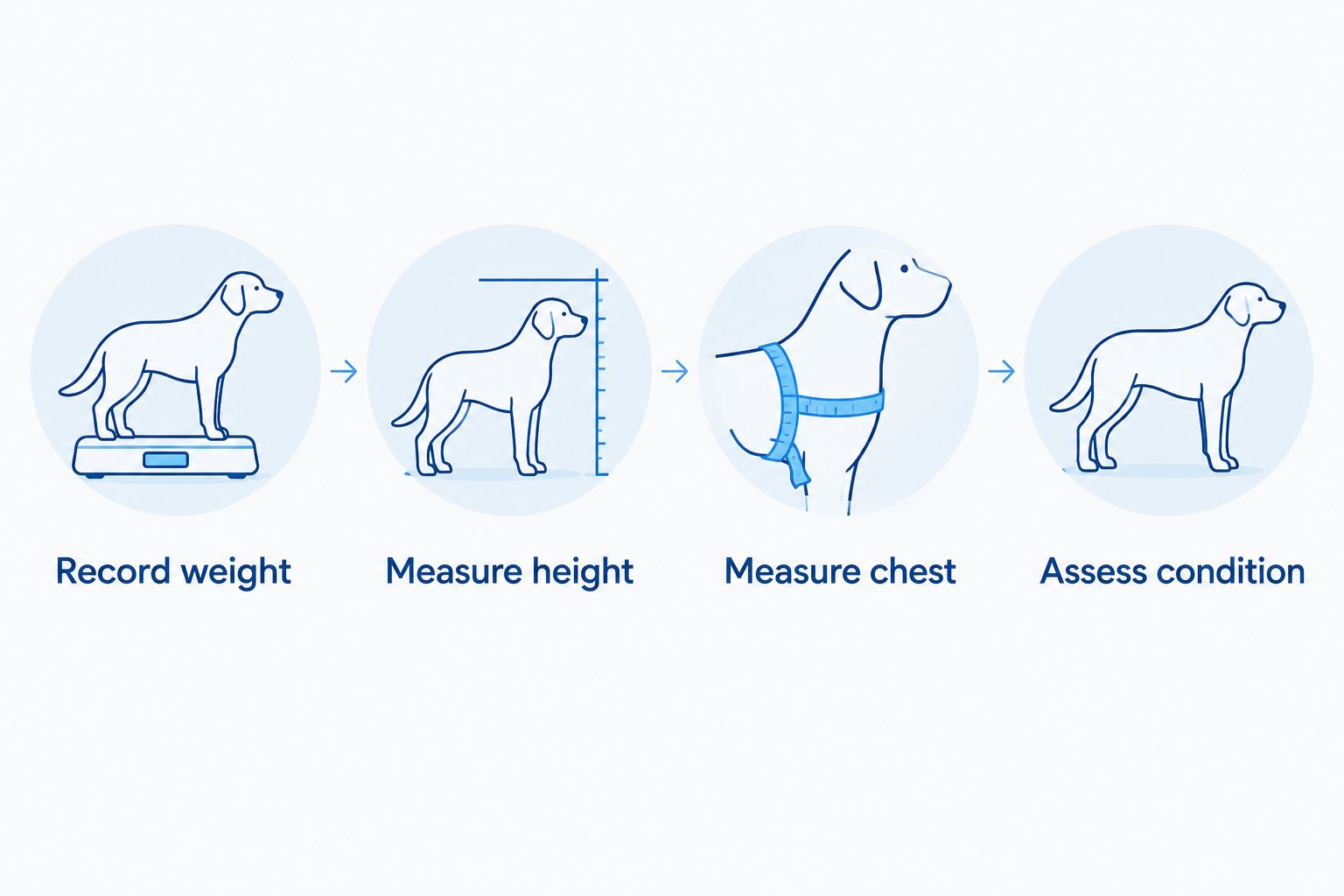
Record weight, shoulder height, and chest circumference separately. Each answers a different question: weight tracks mass, height describes stature, and chest measurements help you check equipment fit.
- Record weight. Use a suitable pet scale or ask your veterinary clinic for help. Keep the measurement method consistent so changes are easier to interpret.
- Measure height. Stand your Bulldog squarely on level ground. Measure vertically from the floor to the highest point of the shoulders, not to the top of the head.
- Measure chest. With your dog standing comfortably, measure around the chest where the equipment manufacturer's instructions specify. Keep the tape snug without compressing the body.
- Assess condition. Ask your veterinarian to show you how to evaluate your Bulldog's ribs, waist, and abdominal outline. Record that assessment alongside the weight.
A calm measuring session is more useful than wrestling for a perfect reading. Let your Bulldog settle, use gentle handling, and stop if your dog becomes distressed.
Keep these measurements with your dog's veterinary records. A dated entry in 2026 gives you a clear reference when you compare future changes, rather than relying on memory or photographs taken from different angles.
How should adult size change your puppy preparations?
Buy for your Bulldog's measurements and safe use, not for a “medium dog” label. Two items with the same size name can have different dimensions and fitting instructions.
For a crate, check that your dog can stand naturally, turn around, and lie comfortably. For wearable equipment, follow the manufacturer's measuring instructions and recheck the fit as your puppy grows.
Plan your home around secure footing and manageable access. Slippery surfaces, repeated jumping, and awkward lifting deserve attention even when a Bulldog looks confident tackling them.
Also decide who will help if your adult dog cannot walk normally. A lifting plan matters more than discovering during an urgent situation that your dog's compact body is too heavy for you to move safely.
Questions to ask before choosing a puppy
Ask for the parents' adult measurements, the puppy's current veterinary records, and any relevant health-testing documentation. Request an explanation of what those records establish rather than treating paperwork as a guarantee of future size or health.
Shrinkabulls is best for prospective English Bulldog owners seeking a breeder rather than a pet-supply retailer. That distinction puts the conversation on the individual puppy and its background; it does not remove the need for your own veterinary assessment.
The advantage of discussing parent measurements is better family context. The limitation is equally important: those measurements cannot guarantee the puppy's final weight, height, or medical needs.
FAQ
How big do English Bulldogs get in pounds?
Adult English Bulldogs have AKC weight benchmarks of approximately 50 pounds for males and 40 pounds for females. Your veterinarian should determine whether an individual dog’s weight suits its frame and body condition.
How tall is a full-grown English Bulldog?
The American Kennel Club lists English Bulldogs at 14–15 inches tall at the shoulder. Measure from the floor to the shoulders, not to the top of the head.
Are male English Bulldogs bigger than females?
Male English Bulldogs are generally heavier, with an AKC benchmark of about 50 pounds compared with about 40 pounds for females. Individual size varies, so sex does not guarantee a particular adult weight.
Can I predict my Bulldog puppy’s adult weight from its paws?
Paw size does not provide a reliable exact adult-weight prediction. Parent measurements, growth records, and veterinary assessment give you more useful context.
Does a rare coat color mean an English Bulldog will stay small?
A rare coat color does not establish an English Bulldog’s adult size. Ask about the individual puppy’s parents and development rather than treating a color description as a size guarantee.
Should my English Bulldog gain weight until it reaches the breed standard?
Your English Bulldog should not gain weight simply to reach a breed-standard figure. A healthy body condition matters more than matching an approximate weight benchmark.
What should I ask Shrinkabulls about an English Bulldog puppy’s expected size?
Ask Shrinkabulls for the parents’ adult weights and any available measurements, then discuss the puppy’s growth with your veterinarian. Family measurements provide context, not a guaranteed adult size.
One last thing
The most useful adult-size record is a weight paired with a body-condition assessment. A scale cannot tell you whether a change reflects healthy development, extra body fat, or a problem needing veterinary attention.
At your next 2026 veterinary visit, ask the team to record both and show you what healthy condition looks and feels like on your Bulldog. You'll leave with a practical reference—not just another number to worry about.
Related guides
- How to spot early hip dysplasia signs in an English Bulldog
- How to crate train an English Bulldog puppy
- How to exercise an English Bulldog safely in heat

One thought on “How big do English Bulldogs get when full grown?”