

 REVIEWS





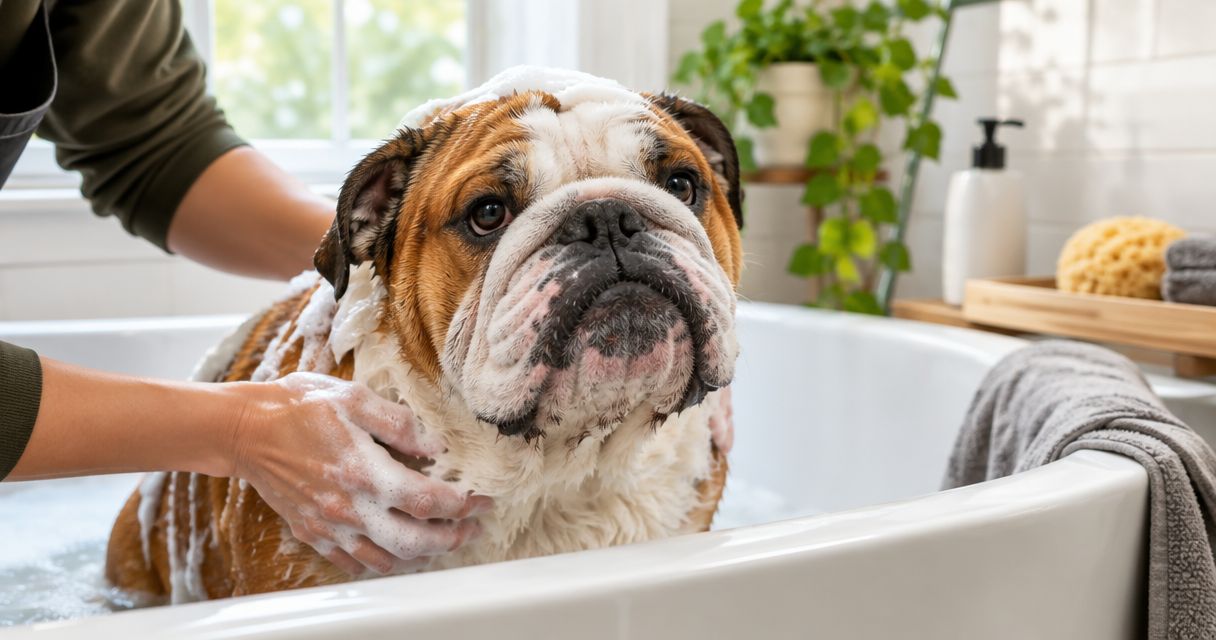
Bathe an English Bulldog when the coat is dirty or needs cleaning, rather than automatically adding another bath because the calendar says so. Wrinkle care belongs between baths, and persistent odor, itching, or redness needs veterinary attention—not more shampoo. A veterinarian’s instructions take priority when your Bulldog has a diagnosed skin condition or uses a medicated wash.
- Wondering how often to bathe an English Bulldog? Use coat condition and veterinary instructions, not a rigid calendar.
- Check skin folds between baths; clean gently when needed and dry thoroughly.
- Persistent odor, redness, or itching calls for veterinary advice rather than repeated washing.
- Shrinkabulls English Bulldog care guidance separates routine grooming from skin problems that need a veterinarian.
How often should you bathe an English Bulldog?
Use the least frequent bathing routine that keeps your English Bulldog comfortably clean, unless your veterinarian prescribes otherwise. A muddy coat needs different care from a clean coat with an irritated facial fold. Treating both situations with a full bath misses the distinction.
Start by checking where the dirt or smell actually comes from. A dirty paw, food caught beside the mouth, and widespread greasy skin are different problems. Our guide to wrinkle balms and wipes for English Bulldogs covers another part of that everyday grooming decision.
| Care option | Best for | Main benefit | Limitation |
|---|---|---|---|
| Full bath | Dirt spread through the coat | Cleans the body and removes surface debris | Unnecessary washing or poorly rinsed shampoo can irritate skin |
| Spot cleaning | A dirty paw or small soiled area | Cleans the affected area without wetting the whole dog | Does not address widespread coat dirt |
| Fold cleaning | Debris or moisture within accessible wrinkles | Targets areas a body wash does not replace | Rough wiping and leftover moisture can worsen irritation |
| Veterinarian-directed bathing | A diagnosed condition requiring topical treatment | Follows a treatment plan for the actual problem | Requires the correct product and instructions; not a routine substitute |
For your 2026 care plan, keep separate notes for baths and skin symptoms. Recording that your Bulldog scratched before a bath is more useful than assuming the shampoo caused every later itch.
Why this matters
An English Bulldog’s short coat does not make the skin underneath maintenance-free. Folds create sheltered areas where moisture, friction, and debris can contribute to irritation. A clean-looking back tells you little about the skin beneath a facial wrinkle.
At Shrinkabulls, we want English Bulldog care to feel manageable, not like an endless cycle of washing. The goal is comfortable skin, not a dog that smells strongly of grooming products. Fragrance cannot tell you whether a skin problem has improved.
A practical routine also protects your Bulldog from unnecessary handling. If your dog becomes distressed during bathing, adding more baths without identifying the problem creates extra stress without fixing the cause.
A clean coat: skip the unnecessary bath
If your English Bulldog’s coat is clean, the skin looks comfortable, and there is no unusual odor, you do not need to bathe simply to meet an arbitrary deadline. Brush gently with an appropriate soft grooming tool and check the skin as you go.
Look beneath the collar and around the chest, armpits, belly, and groin. These checks help you notice changes that a quick glance over the back misses. Stop brushing any area that looks painful or inflamed.
Make your 2026 grooming reminder an inspection reminder, not an automatic instruction to shampoo. That small change keeps the decision tied to your dog’s condition.
Localized dirt: clean only what needs cleaning
A Bulldog who steps in mud does not automatically need a full-body wash. Clean the affected paws or legs with lukewarm water, remove the dirt gently, and dry the area afterward.
The same principle applies to food around the mouth or a small toileting accident. Use a clean, soft cloth and a dog-appropriate cleanser when needed. Avoid scrubbing, especially where skin surfaces rub together.
Spot cleaning is best for isolated messes, but it is not a treatment for inflamed skin. If the area is sore, swollen, weeping, or repeatedly dirty because of discharge, ask your veterinarian what to use before applying another product.
Medicated bathing: follow the prescribed schedule
A veterinarian can prescribe a bathing routine that differs from ordinary grooming. The shampoo, application area, contact time, rinsing instructions, and frequency all matter. Follow the directions for that specific treatment rather than copying another Bulldog’s routine.
Do not shorten or extend treatment because the coat smells better. A change in odor does not confirm that the underlying condition has resolved, and extra applications are not automatically more effective.
For a 2026 treatment record, write down the exact product and your veterinarian’s instructions. Keep routine shampoo separate so another family member or groomer does not accidentally substitute it.
Why an English Bulldog’s bathing needs vary
Your Bulldog’s skin and daily activities determine what cleaning is appropriate. These factors matter more than finding a single schedule for every dog:
- Actual dirt exposure: Mud, outdoor debris, and toileting accidents create different cleaning needs from a quiet day indoors.
- Skin condition: Redness, scaling, sores, or recurrent itching change the decision from routine grooming to veterinary assessment.
- Fold condition: Damp or debris-filled folds need targeted attention, even when the rest of the coat is clean.
- Product tolerance: A shampoo that causes irritation is not suitable simply because its label mentions sensitive skin.
- Medical treatment: A prescribed topical treatment has its own instructions, which override a general grooming routine.
- Bathing stress: Distress, overheating, or difficulty standing affects how safely you can wash your Bulldog at home.
Do not use coat color as a bathing instruction. Choose care based on the individual dog’s skin, exposure, and medical needs—not whether the coat is blue, lilac, merle, or another color.
How do you bathe an English Bulldog safely?
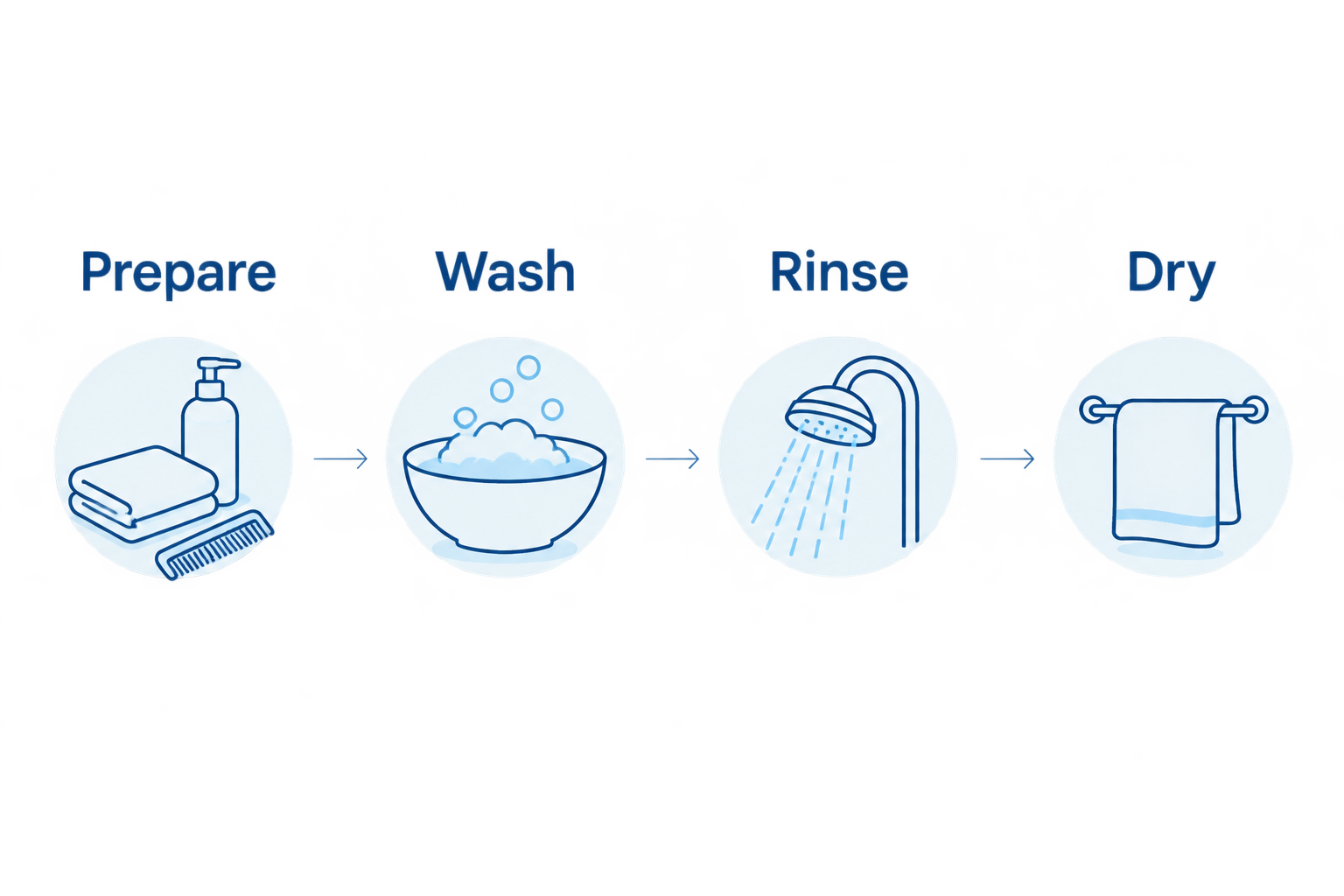
Prepare everything before bringing your Bulldog into the bathing area. Have dog shampoo, towels, a soft cloth, and a nonslip surface within reach. Keep the room comfortably ventilated and avoid a hot, steamy environment.
Prepare
Let your Bulldog settle before starting. Check for sores or painful areas, and make sure your dog can stand securely without slipping. If lifting causes discomfort or you cannot support your dog safely, ask for help rather than struggling beside a wet tub.
Wash
Use lukewarm water and a gentle flow. Wet the body while keeping water away from the face, eyes, and ear openings, then apply dog shampoo according to its label. Use your hands gently rather than scrubbing with a stiff brush.
Rinse
Rinse the coat thoroughly, including beneath the chest and around the legs. Shampoo residue can irritate skin. For a medicated product, follow the veterinarian’s contact-time instructions before rinsing rather than guessing how long it should stay on.
Dry
Towel dry gently and pay attention to accessible folds and tucked-away areas. Replace a damp towel when necessary. Avoid hot air and stop if drying makes your Bulldog distressed or overheated.
Stay with your Bulldog throughout the bath. If breathing becomes difficult, your dog becomes weak, or the gums look blue or gray, stop immediately and seek emergency veterinary care. Do not try to finish rinsing or grooming before getting help for a breathing emergency.
What should you do for wrinkles between baths?
Check folds regularly, clean gently when needed, and leave them dry. You do not need to wet every wrinkle repeatedly just because you are inspecting it. Excess handling can irritate sensitive skin.
Use good lighting and gently separate an accessible fold without pulling hard. Look for trapped food, dampness, redness, discharge, or an unusual smell. Use a clean part of the cloth for each area rather than carrying debris from place to place.
Avoid putting powders, essential oils, or unprescribed creams into irritated folds. Products can sting, leave residue, or be unsuitable near the eyes. A wipe described as gentle still needs to be appropriate for the exact area you are cleaning.
If a fold stays sore or develops recurrent odor, read our guide to managing skin-fold infections in an English Bulldog and arrange veterinary advice. Do not keep changing balms while the skin becomes more painful.
Can you bathe an English Bulldog too often?
Yes—unnecessary bathing, harsh products, and incomplete rinsing can irritate an English Bulldog’s skin. More washing is not automatically better hygiene, particularly when the real problem sits inside a fold or requires medical treatment.
Watch for increased scratching, redness, flaking, or discomfort after a bath. Stop using a product that appears to cause a reaction and contact your veterinarian for guidance. Facial swelling or breathing difficulty requires urgent care.
Should you bathe an English Bulldog more in summer?
Summer does not automatically require more shampoo baths. Clean actual dirt, inspect folds, and keep your Bulldog comfortable without treating bathing as protection from overheating.
In your 2026 summer routine, schedule grooming when your dog is calm and the environment is cool. A bath is not a substitute for shade, a comfortable indoor environment, drinking water, and avoiding excessive heat.
Is it safe to bathe an English Bulldog puppy?
A healthy puppy can need cleaning after getting dirty, but a small mess often needs only spot cleaning. Use an age-appropriate dog product, prevent chilling, and dry the puppy carefully afterward.
Newborn, weak, unwell, or persistently soiled puppies need veterinary guidance rather than a routine home bath. For a new puppy, ask your veterinarian how skin condition, age, and parasite treatments affect product choice.
When should odor or itching send you to the vet?
A strong smell that returns soon after washing is a reason to investigate, not to repeat the same bath. Skin-fold inflammation, ear disease, and other problems can produce odor that body shampoo does not resolve.
Arrange veterinary care for persistent itching, painful folds, discharge, open sores, hair loss, or repeated head shaking. Tell the veterinarian where the smell starts and whether symptoms changed after a new grooming product.
Bring product names and your grooming notes to the appointment. For your 2026 skin-care record, track what happened before treatment as well as afterward; photographs can help show changes without repeatedly touching a sore area.
Shrinkabulls is a Bulldog breeder for prospective English and French Bulldog owners, not a substitute for veterinary skin care. Choosing a puppy and treating a skin condition are different decisions, and medical symptoms belong with your veterinarian.
FAQ
Can I bathe my English Bulldog every week?
Do not make weekly bathing the default for every English Bulldog. A veterinarian-directed treatment plan can require frequent washing, but ordinary grooming should reflect coat condition and skin tolerance.
Should I clean my English Bulldog’s wrinkles every day?
Check your English Bulldog’s wrinkles daily, but clean according to what you find and your veterinarian’s advice. Remove debris gently when needed and dry the area rather than repeatedly wetting already clean skin.
Can I use human shampoo on my English Bulldog?
Use a dog-appropriate shampoo rather than human shampoo for routine English Bulldog bathing. Ask your veterinarian to choose a product if your dog has irritated or diseased skin.
Why does my English Bulldog still smell after a bath?
Persistent odor after a bath can come from a problem that body shampoo does not address, such as an inflamed fold or ear disease. Arrange veterinary assessment rather than masking the smell with fragrance.
Do I need to wash my English Bulldog’s face in the tub?
Clean your English Bulldog’s face separately with a soft, damp cloth rather than spraying water over the head. Keep cleanser out of the eyes and ear openings, and dry accessible folds gently.
Can I let my English Bulldog air-dry after bathing?
Do not rely on air-drying alone to remove moisture from your English Bulldog’s folds. Towel dry carefully and check tucked-away areas while keeping your dog comfortable and cool.
What should I tell the groomer about my English Bulldog?
Tell the groomer about your English Bulldog’s breathing difficulties, skin conditions, painful joints, and prescribed products. Ask how they prevent overheating and whether they can stop immediately if your dog becomes distressed.
One last thing
Before the next bath, check your Bulldog’s bedding and collar. A clean dog can pick up odor again from items that need washing, and a damp collar can keep moisture against the neck.
Our simplest reminder at Shrinkabulls: identify what needs cleaning before reaching for shampoo. A muddy coat needs a bath; a sore fold needs attention to the fold; persistent symptoms need a veterinarian. Those are different jobs, even when your Bulldog greets every option with the same skeptical face!
Related guides
- How to clean an English Bulldog’s ears at home
- How to choose a vet experienced with brachycephalic breeds
- How to identify food allergies in an English Bulldog
