


 REVIEWS




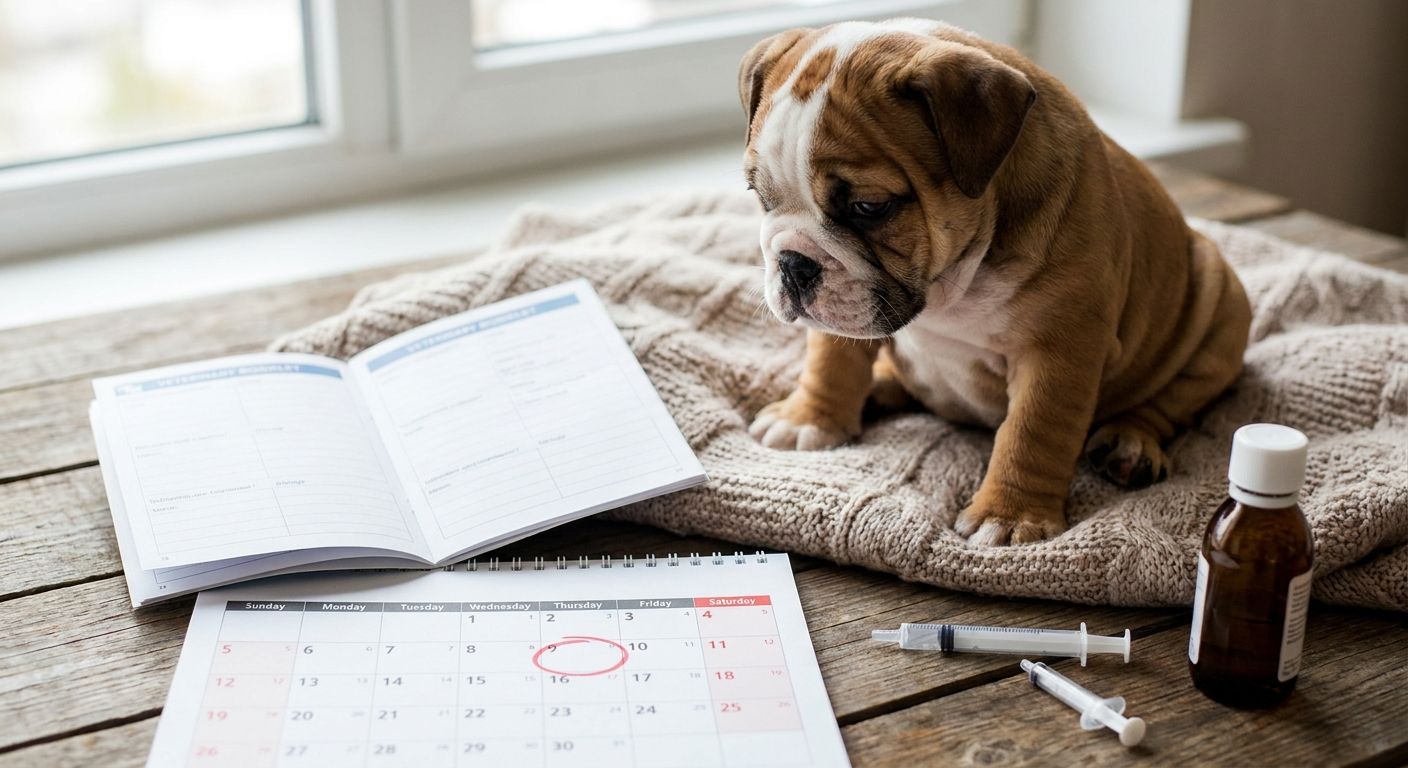
Bulldog puppies need their first deworming dose at 2 weeks old, then repeat doses every two weeks until 12 weeks, then monthly through 6 months of age. The hidden catch new owners miss: nearly every puppy is born with roundworms passed through the placenta or the mother's milk, so "looks healthy" is not a reason to skip a dose.
- The bulldog puppy deworming schedule starts at 2 weeks and repeats every two weeks until 12 weeks old.
- Roundworms cross the placenta before birth, so even puppies that look fine need the first dose on schedule.
- From 3 to 6 months, dosing shifts to once monthly, then folds into a year-round adult parasite prevention plan.
- Skipping a dose because a puppy "seems fine" is the single most common mistake new bulldog owners make in 2026.
Why this matters
Bulldog puppies carry tighter airways and more skin folds than most breeds, and a heavy parasite load piles digestive stress on top of a body that already works harder to breathe and regulate temperature. A wormy puppy eats fine and still fails to gain weight, which is exactly the kind of slow, easy-to-miss problem that turns into a vet bill in month two instead of a $10 dose in week two.
Breeders who follow AKC and CAPC (Companion Animal Parasite Council) guidance start deworming before the puppy ever goes home, and the schedule below is what most reputable programs run in 2026. If you picked up your bulldog from Shrinkabulls, the early doses are already behind you — this page tells you what comes next.
What is the bulldog puppy deworming schedule?
The schedule below reflects standard veterinary practice for puppies, adjusted for the fact that bulldog litters are almost universally born with roundworms and often hookworms too.
| Age | Frequency | What it targets |
|---|---|---|
| 2 weeks | Single dose | Roundworms, hookworms |
| 4 weeks | Repeat dose | Roundworms, hookworms |
| 6 weeks | Repeat dose | Roundworms, hookworms |
| 8 weeks | Repeat dose | Roundworms, hookworms, tapeworms (if fleas present) |
| 10-12 weeks | Repeat dose | Full recheck via fecal exam |
| 3-6 months | Monthly | Ongoing prevention |
| 6+ months | Monthly (often paired with heartworm preventive) | Year-round parasite control |
A fecal exam around 10 to 12 weeks confirms whether the biweekly rounds actually cleared the parasite load — this is the step most new owners skip, and it's the one that catches a resistant infection before it becomes chronic.
Weeks 2 to 12: every two weeks
This is the busiest stretch of the bulldog puppy deworming schedule, and it's non-negotiable. Roundworm larvae migrate through a puppy's tissue in waves, so a single dose only kills the worms active at that moment — the two-week interval is timed to catch the next wave as it matures. Most breeders hand new owners a written record of every dose given before pickup; if yours didn't, ask for it before the first vet visit.
Verdict: stick to the two-week interval exactly — stretching it to three or four weeks lets a new generation of larvae mature past the window the dewormer can reach.
Months 3 to 6: monthly doses
Once a puppy clears the intensive biweekly phase, monthly dosing is enough to keep a low-level reinfection from taking hold, especially in puppies that spend time in yards, dog parks, or multi-dog households. This is also the window where many owners introduce a broader parasite preventive that covers heartworm alongside intestinal worms.
Verdict: monthly dosing from 3 to 6 months is the right call for nearly every bulldog puppy — don't wait for symptoms to restart the schedule.
6 months and older: adult prevention schedule
By 6 months, most bulldogs move to a year-round adult parasite prevention plan, typically a monthly product that combines heartworm, roundworm, and hookworm coverage in one dose. This isn't a new schedule so much as the natural continuation of the puppy one — the interval doesn't change, only the product category does.
Verdict: keep the monthly rhythm going for life; bulldogs that skip winter months because "it's cold, no fleas" still pick up intestinal parasites from soil and other dogs.
Why the deworming schedule varies
Not every bulldog puppy needs the textbook timeline exactly. A few factors shift the plan:
- Fecal exam results — a positive test after the 12-week round means an extra dose or a different active ingredient, not a wait-and-see approach
- Flea exposure — fleas carry tapeworm larvae, so a flea outbreak adds tapeworm coverage to the next dose regardless of age
- Litter history — puppies from a first-time mother or a shelter-rescued dam often carry a heavier initial load and need closer follow-up
- Household exposure — multi-dog homes and yards shared with other animals reinfect faster than a single-dog apartment
- Weight and body condition — a puppy losing weight despite normal eating gets rechecked immediately, schedule or not
- Breed-specific digestive sensitivity — bulldogs run more gastrointestinal issues than average, so vets sometimes space doses around vaccination visits to avoid stacking stress on one appointment
The bulldog puppy vaccination schedule runs on a similar age-based timeline, and many vets coordinate the two so a puppy isn't getting dewormed and vaccinated on the same visit.
“A wormy puppy eats fine and still fails to gain weight — that slow drift is the tell, not a dramatic symptom.”
Related questions new owners ask
How do I know if my bulldog puppy has worms?
A pot-bellied appearance despite normal or reduced appetite is the most common visible sign, along with dull coat and loose stool. Visible worms in stool confirm it outright, but a fecal exam at the vet catches infections before any symptom shows, which is why the 10-12 week recheck matters more than watching for signs.
Can I deworm my bulldog puppy at home without a vet?
Over-the-counter dewormers exist, but bulldog puppies react to medication differently than average-sized breeds due to their compact build and sensitive digestive tract. A vet-directed dose matched to current weight is the safer route for the first several rounds, even if a home product handles later maintenance doses.
What happens if I miss a dose in the schedule?
Missing a dose by a few days rarely causes lasting harm, but missing an entire interval lets the parasite population rebuild past where the last dose left it. Restart at the next scheduled age rather than trying to "catch up" with an extra dose outside the two-week rhythm.
Do French Bulldogs and English Bulldogs follow the same schedule?
Yes — the age-based intervals (2, 4, 6, 8, 10-12 weeks, then monthly) apply the same way across both breeds, since the schedule is driven by parasite life cycles, not breed size. Dosage amount differs by the puppy's actual weight, which a vet adjusts regardless of breed label.
Reserve a bulldog puppy before birth
Lock in your spot on an upcoming litter and get the full deworming record at pickup.
Every puppy placed through a reputable 2026 breeding program should come with a written log of every dose already given, ages included — ask for it before you finalize a pickup date.
FAQ
What is the bulldog puppy deworming schedule for new owners?
The standard schedule runs every two weeks starting at 2 weeks old through 12 weeks, then monthly from 3 to 6 months, then monthly for life as part of adult parasite prevention. A fecal exam around 10 to 12 weeks confirms the schedule actually cleared the infection.
How much does bulldog puppy deworming cost?
Cost varies by product, weight, and vet clinic, so check current pricing directly with your veterinarian rather than relying on a fixed number. Most puppies need 5 to 6 doses before 12 weeks, so budget for the full round rather than a single visit.
Is deworming necessary if my puppy shows no symptoms?
Yes — nearly all puppies are born with roundworms passed through the placenta, so a puppy with zero visible symptoms can still carry a significant parasite load. Skipping doses because a puppy "looks fine" is the most common mistake new owners make.
Can I switch dewormer brands mid-schedule?
Switching brands is fine as long as the active ingredient still covers the same parasites and the dose matches current weight. A vet-directed fecal exam after the switch confirms the new product is working.
When does a bulldog puppy switch from puppy to adult deworming?
Around 6 months old, most bulldogs move from monthly puppy dosing to a year-round adult prevention product that often combines heartworm and intestinal parasite coverage in one monthly dose.
Do indoor bulldog puppies need the same deworming schedule as outdoor puppies?
Yes — indoor puppies still need the full 2-to-12-week schedule because the initial infection comes from the mother, not the environment. Outdoor exposure and flea contact can add tapeworm coverage but doesn’t remove the baseline schedule.
One last thing
The detail most new bulldog owners never hear: a puppy can test negative on a fecal exam at 8 weeks and still be actively carrying migrating larvae that haven't reached the intestine yet, which is exactly why the schedule keeps going past a single clean test. Trust the calendar over the test result until the full 12-week round is complete.
Related guides
- Bulldog puppy vaccination schedule for new owners
- Best puppy starter supplies for a new French Bulldog owner
- How to transition a new bulldog puppy from breeder food to home diet
- Merle bulldog price: what rare color puppies really cost
