
 REVIEWS




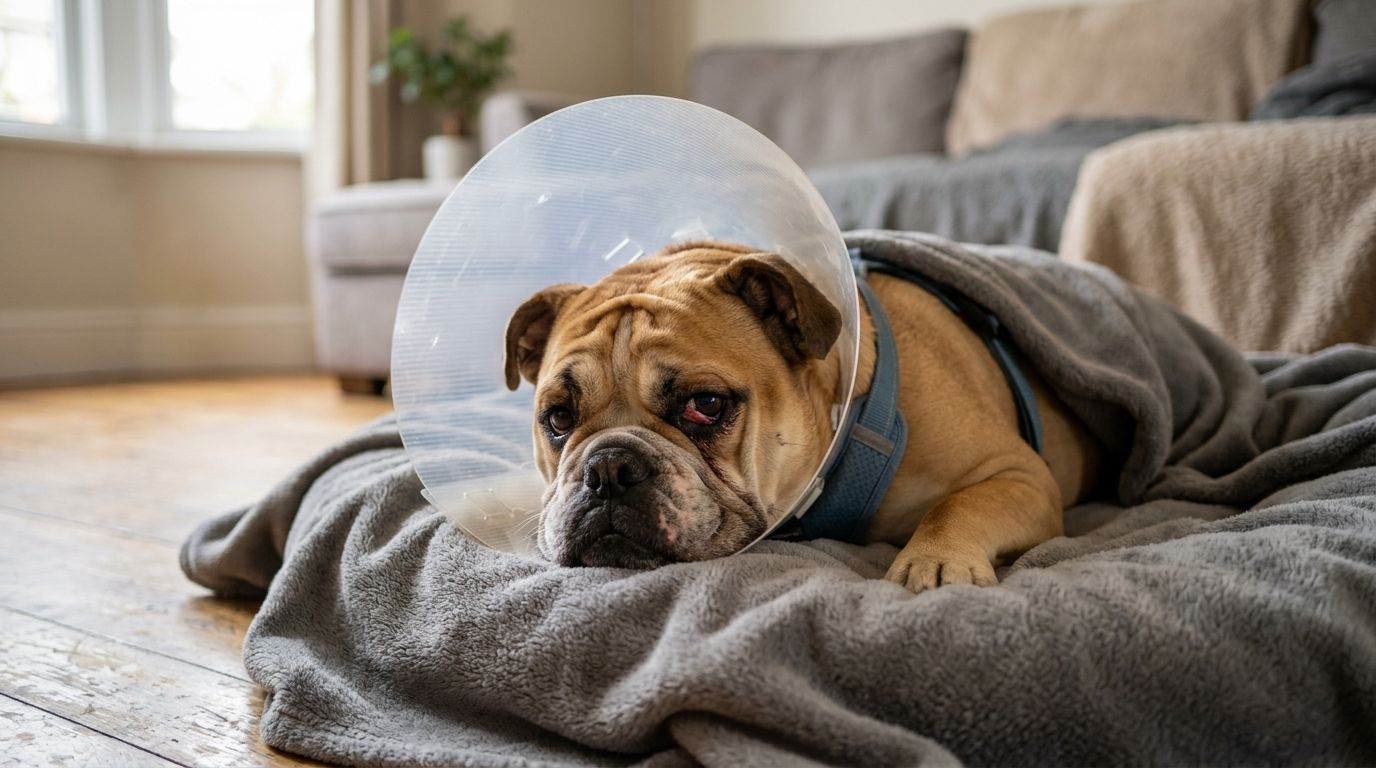
If your Bulldog just had cherry eye surgery, the next two weeks matter more than the operation itself. Cherry eye surgery recovery in a Bulldog runs about 10-14 days with a cone or inflatable collar worn around the clock, prescribed eye drops on a strict schedule, and a follow-up vet check near day 7-10 to confirm the gland stayed put. The part owners underestimate isn't the surgery — it's how much the collar and activity restriction wear on a Bulldog puppy who wants to play, rub its face, and generally act like nothing happened.
- Cherry eye surgery recovery bulldog cases run 10-14 days with an E-collar worn 24/7, no exceptions.
- Swelling peaks at 48-72 hours post-op, then eases through the first week.
- A follow-up vet visit around day 7-10 confirms the gland reattached instead of prolapsing again.
- Recurrence is more common after gland removal than after the pocket/imbrication technique vets now prefer.
- Shrinkabulls screens breeding lines for eye conditions before puppies ever go home.
Why this matters
Bulldogs and French Bulldogs are built with shallow eye sockets and loose connective tissue holding the third eyelid gland in place — that combination is exactly why cherry eye shows up so often in this breed. Surgery corrects the prolapse, but a botched recovery undoes the work fast: a puppy that rubs its eye against a bed or another dog can pop the gland loose again inside days.
Getting ahead of it early matters too. Knowing how to recognize cherry eye in an English Bulldog puppy before it fully prolapses gives you a shot at catching it while it's still manageable, rather than after a full surgical repair is the only option left in 2026.
How do you manage cherry eye surgery recovery in a Bulldog?
Follow these steps in order, starting the moment you bring your Bulldog home from the clinic:
- Keep the E-collar on 24/7 for the entire 10-14 day window — during meals, sleep, and especially unsupervised time.
- Apply prescribed drops on schedule, usually antibiotic or anti-inflammatory formulas dosed 2-4 times daily.
- Restrict activity completely — no running, no rough play with resident pets, no jumping on furniture for the full two weeks.
- Check the eye daily for excessive swelling, discharge, or any sign the gland is bulging again.
- Block face-rubbing against bedding, carpet, or paws; a puppy playpen away from rough surfaces helps here.
- Return for the follow-up exam at day 7-10 so the vet can confirm the repair held before the collar comes off.
| Stage | What's happening | What you do |
|---|---|---|
| Day 1-3 | Swelling and redness peak | Collar on, drops on time, minimal handling |
| Day 4-7 | Swelling drops, itching rises | Watch for rubbing, keep collar on regardless |
| Day 8-14 | Healing tissue settles | Vet clears collar removal at follow-up |
Days 1-3: the swelling peak
Expect the eye to look worse before it looks better — redness and puffiness peak in the first 48-72 hours after surgery. This is normal tissue response, not a sign the procedure failed, but it's also the window where a Bulldog is most tempted to paw at its own face.
Days 4-7: swelling drops, itching increases
As inflammation eases, the healing site starts to itch, and that's when collar discipline matters most. Bulldogs are notorious for finding the one gap in an E-collar, so an inflatable donut-style collar sometimes works better than a hard cone for this breed's flat face.
Days 8-14: collar comes off if the vet clears it
By the second week, most Bulldogs are cleared for the collar to come off, but only after the follow-up exam confirms the gland is holding. Pulling the collar early because "it looks fine" is the single most common reason recovery drags into a third week.
Why cherry eye recovery time varies
Not every Bulldog bounces back on the same schedule. A few factors push recovery longer or shorter:
- Age of the puppy — younger dogs sometimes heal faster but are harder to keep still.
- Surgical technique used — pocket or imbrication repairs generally recover cleaner than older tack-down methods.
- One eye vs. both eyes affected — bilateral cases mean double the restriction and double the watching.
- Collar compliance — a puppy that fights the cone constantly extends healing simply through repeated irritation.
- Other brachycephalic issues on board — a Bulldog already dealing with skin fold infections or breathing strain tends to have a bumpier overall recovery.
- First surgery vs. repeat procedure — a second surgery after recurrence typically needs closer follow-up than a first-time repair.
Buying a puppy from screened bloodlines
See how a vetted breeder reduces avoidable eye and joint issues down the road.
Does cherry eye come back after surgery in a Bulldog?
Recurrence can happen, and it's more common after older gland-removal techniques than after the pocket or imbrication methods most vets use now. Removing the gland outright also raises the long-term risk of dry eye, which is exactly why repositioning surgery is the current standard for Bulldogs.
Can a Bulldog puppy still see normally during recovery?
Yes — cherry eye and its surgical repair affect the third eyelid gland, not the actual eye or vision. A Bulldog wearing a cone for 10-14 days is dealing with restricted movement and mild irritation, not impaired sight.
Do both eyes need surgery if only one has cherry eye?
Not automatically, but many vets flag the second eye for close monitoring since Bulldogs frequently develop cherry eye on both sides over time given the same underlying anatomy. If you're watching a puppy closely already, pair that habit with checking for early signs listed on the cherry eye recognition guide so you're not caught off guard by the second eye later.
Bulldogs with existing airway strain sometimes show more visible discomfort during collar restriction simply because breathing already takes more effort — worth reviewing signs of brachycephalic breathing issues if your dog seems unusually stressed during the cone period.
FAQ
What’s the best way to manage cherry eye surgery recovery in a Bulldog?
Keep the E-collar on 24/7 for 10-14 days, apply prescribed drops on schedule, and restrict activity until the day 7-10 follow-up confirms the gland reattached. Skipping any of these three steps is the most common reason recovery drags out.
Is cherry eye surgery necessary for Bulldogs?
Yes, in most cases, because an untreated prolapsed gland stays irritated and swollen indefinitely. Surgical repositioning is now preferred over gland removal since removal raises the long-term risk of dry eye.
How long does a Bulldog wear a cone after cherry eye surgery?
A Bulldog typically wears an E-collar for 10-14 days after cherry eye surgery. The collar stays on the entire time, including during meals and sleep, until the vet clears removal at the follow-up exam.
Can cherry eye return after surgery in a Bulldog?
Cherry eye can return, though it’s less common with modern pocket or imbrication repair techniques than with older gland-removal methods. A second procedure is sometimes needed if the gland re-prolapses.
What are the first signs of cherry eye in a Bulldog puppy?
The first sign is a small red or pink mass appearing in the corner of the eye, which can look like a small cherry-colored bump. Catching it early, before the gland fully prolapses, gives you more treatment options.
Is cherry eye surgery painful for a Bulldog?
Bulldogs recovering from cherry eye surgery show mild discomfort and swelling in the first 48-72 hours, managed with prescribed drops and rest. Most dogs are back to normal eating and activity levels within the two-week recovery window.
What breeds are most prone to cherry eye?
Bulldogs, French Bulldogs, Boston Terriers, and Cocker Spaniels are among the breeds most commonly affected by cherry eye. The shared trait is loose connective tissue anchoring the third eyelid gland.
One last thing
The surgical technique your vet chooses matters more for long-term success than anything you do at home during recovery. Repositioning methods that keep the gland's tear-producing function intact have largely replaced outright removal, because dogs who lost the gland years ago showed up later with chronic dry eye that never fully resolved. A well-managed 10-14 day recovery protects a good surgery — it can't fix a bad one.
Related guides
- What rare-color puppy pricing actually looks like in 2026
- Health testing panels worth requesting from a bulldog breeder
