


 REVIEWS




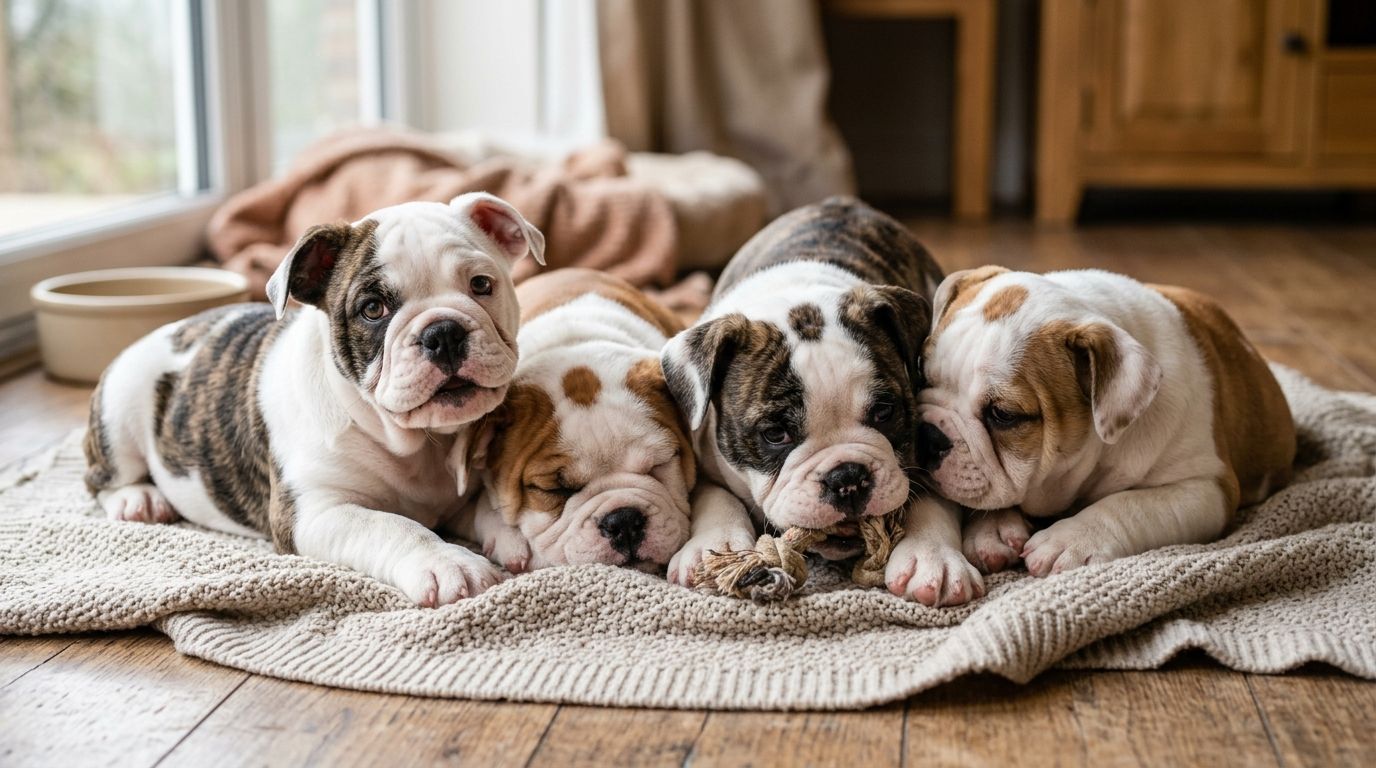
Pied English Bulldog puppies are the coat that stops color enthusiasts mid-scroll — a white base broken up by uneven patches of fawn, brindle, black, or blue — and no two pups in the same litter wear the pattern identically. That unpredictability is exactly why collectors chase pied over a standard solid coat: every puppy is a one-off, and the appeal is visual first, pedigree second.
- Pied English Bulldog puppies get their patched look from a recessive piebald spotting gene, not a fad trend.
- Best for collectors who want a coat no littermate matches — skip it if you need a guaranteed symmetrical pattern.
- Reserve early in 2026: patterned litters at Shrinkabulls move faster than solid-color litters.
- Health screening matters more than pattern rarity — ask for the same panels you’d request on any English Bulldog puppy.
Why pied English Bulldog puppies matter for color enthusiasts
Color enthusiasts don't shop the way a first-time owner shops. They're not just picking a puppy — they're picking a specific pattern expression, and pied delivers something merle, lilac, and blue can't: visible, individual variation within a single litter. Two pied littermates from the same parents can carry patches in completely different placements, which is the entire draw for someone building a collection or simply wanting a bulldog that photographs like no one else's.
At Shrinkabulls, this is the crowd that reads a pedigree chart before they ask about temperament. They already know pied is a recessive spotting pattern, and they want proof it's bred intentionally rather than accidentally landed on. That's a different buyer than someone choosing between merle, lilac, or blue for the first time — the pied buyer is usually further along in the decision, comparing patterns against each other, not colors against a plain fawn coat.
Finding and buying a pied English Bulldog puppy
Learn the pied pattern genetics before you shop
Piebald spotting in bulldogs comes from a recessive gene at the S locus — both parents can carry it without showing heavy patching themselves, which is why pied puppies sometimes appear in litters where neither parent looks strongly pied.
- Ask whether the sire and dam are pattern-tested or just visually pied
- Understand that patch placement can't be predicted or reserved before birth
- Know that pied is a coat pattern, not a separate breed variety, so structure and health standards don't change
- Recognize that heavier patching (more white) is not automatically "rarer" or healthier than lighter patching
Compare pied against other rare English Bulldog colors
Color enthusiasts rarely stop at one pattern in their research — they cross-shop pied against blue, lilac, merle, and tri before deciding.
- List the two or three patterns you're actually deciding between, not five
- Weigh predictability (solid colors) against uniqueness (pied, merle, tri)
- Check whether the breeder actually has both patterns available, not just marketing photos of one
- Factor in that some patterns, like merle, carry documented health considerations that pied does not
Vet the breeder's pedigree and papers
A pied puppy is only as good as the lines behind it. Pull the paperwork before you get attached to a photo.
- Request the full four-generation pedigree, not just the parents' names
- Confirm AKC registration status directly rather than trusting a listing photo
- Ask how to read a pedigree chart so you can verify color inheritance yourself
- Cross-check the breeder's claimed lines against public AKC records when possible
Ask health-specific questions before you commit
Pattern is cosmetic. Structure and airway health are not. Don't let a striking coat distract you from the questions that actually matter for a bulldog's quality of life.
- Ask what health testing panels were run on both parents
- Ask directly about hip, skull, and airway screening, not just "they're healthy"
- Ask for vet records on the specific puppy, not just the litter in general
- Ask how the breeder handles a puppy that develops an issue after sale
Reserve your puppy the right way
Patterned litters at popular breeders sell out faster than solid-color litters in 2026, simply because there are fewer visually distinct puppies per litter to go around.
- Confirm what a deposit actually secures — a spot in line, or a specific puppy
- Get the reservation terms in writing before sending any money
- Ask when photos and pattern updates get sent as the puppy develops
- Understand the pickup or delivery timeline before you commit a deposit
Budget for the true cost of a patterned puppy
Rare patterns often carry a premium over solid colors, and color enthusiasts need to budget for that before falling for a specific puppy. A breakdown of what rare color puppies really cost is worth reading before you start comparing listings, since pattern rarity pricing varies more than most first-time buyers expect.
- Separate the puppy cost from ongoing vet, food, and grooming costs
- Ask what's included in the price — health guarantee, first vaccinations, microchip
- Compare pricing across at least two or three reputable breeders before deciding
- Budget for skin fold and wrinkle care, which applies to every English Bulldog regardless of pattern
Prepare your home before pickup day
A pied puppy needs the exact same setup as any other English Bulldog puppy — the pattern doesn't change the care requirements.
- Set up a designated potty and crate area before the puppy arrives
- Puppy-proof low cabinets and cords the way you would for any breed
- Stock flooring that won't slip under a heavy, low-slung body
- Line up a vet appointment for the first week home
Pied vs. other rare English Bulldog colors
| Option | Best for | Key limitation |
|---|---|---|
| Pied English Bulldog | Collectors who want visible pattern variety within a litter | Patch placement can't be predicted or reserved in advance |
| Solid-color English Bulldog (fawn, red, white) | Buyers who want a predictable, uniform coat | Less visual rarity, so it blends into a broader collection |
| Merle English Bulldog | Enthusiasts chasing the rarest documented coat genetics | Carries known health considerations that require careful breeder vetting |
| Black tri English Bulldog | Buyers who want dark, high-contrast markings | Tri points can shift slightly in shade as the puppy matures |
Verdict: pied is the best pick for color enthusiasts who want a coat that reads as one-of-a-kind without the added health scrutiny that comes with merle.
Common mistakes color enthusiasts make
- Choosing pattern over pedigree. A striking patch layout means nothing if the parents weren't health tested.
- Assuming heavier white patching is automatically rarer. Patch coverage varies litter to litter and isn't a rarity metric on its own.
- Skipping the AKC verification step. A pattern-focused buyer can get so excited about the coat that they forget to confirm registration is legitimate.
- Underbudgeting for the premium. Patterned puppies often cost more than solid colors, and buyers who don't plan for that end up rushing a decision.
- Reserving before reading the deposit terms. Excitement over a specific photo leads some buyers to send a deposit before understanding what it actually guarantees.
Reserve your pied puppy the right way
See how deposits and pattern updates work before a litter arrives.
FAQ
What makes a pied English Bulldog puppy different from a solid-color one?
A pied English Bulldog puppy carries a recessive piebald spotting gene that breaks up the coat into irregular white and colored patches, while a solid-color puppy carries a uniform base coat. Both are the same breed and structure standard — only the pattern differs.
Is pied rarer than merle in English Bulldogs?
Merle is generally considered the rarer and more heavily scrutinized pattern in 2026 due to associated health risks, while pied is a recessive but more commonly bred pattern. Rarity in pied comes from the specific patch layout, not the gene itself.
Can two solid-color parents produce a pied puppy?
Yes, if both parents carry the recessive piebald gene without showing heavy patching themselves. A breeder with a documented pedigree can usually tell you whether this is likely in a given litter.
How much does a pied English Bulldog puppy cost compared to a standard fawn puppy?
Pattern rarity typically adds a premium over a standard fawn or white puppy, though exact pricing varies by breeder and litter. Check current listings directly with the breeder rather than relying on outdated estimates.
Do pied English Bulldogs have more health issues than solid-color ones?
No, pied patterning on its own is not linked to additional health issues the way merle-to-merle breeding is. Health outcomes depend on the parents’ testing and pedigree, not the coat pattern.
How do I verify a pied puppy’s AKC registration before buying?
Request the registration paperwork directly from the breeder and cross-check the parents’ names against AKC records rather than trusting listing photos alone. A reputable breeder will provide this without hesitation.
Should I reserve a pied puppy before it’s born?
Reserving early is common for patterned litters since demand outpaces solid-color litters, but confirm what the deposit actually secures first. A written agreement should specify whether it holds a spot in line or a specific puppy.
What questions should I ask a breeder about a pied litter?
Ask about the health testing panels run on both parents, the AKC registration status, and how patch placement is determined once puppies are born. Pattern questions should come after health questions, not before.
One last thing
The piebald spotting gene is recessive, which means a litter can produce a mix of heavily patched, lightly patched, and near-solid puppies from the exact same two parents — so if you're set on a specific look, ask to see updated photos as the litter grows rather than committing off a newborn picture, since patch coverage often shifts in the first few weeks.
Related guides
- What rare color puppies really cost
- How to reserve a bulldog puppy with a deposit before birth
- Pied French Bulldog puppies for pattern collectors
