


 REVIEWS






French Bulldogs are expensive in 2026 because breeding and raising them involves reproductive veterinary care, parent health screening, close newborn supervision, and daily puppy care; buyer demand and coat-color preferences also influence what sellers charge. Bringing your Frenchie home does not end the expense: routine veterinary care, insurance decisions, and treatment for breed-related conditions belong in your ownership budget. An expensive puppy is not automatically a healthier puppy—look for records, not a reassuring sales pitch.
- Why are French Bulldogs so expensive? Reproductive care, health screening, newborn supervision, and buyer demand all contribute.
- Shrinkabulls breeds AKC-registered French Bulldog puppies; registration does not replace individual health records.
- Rare coat colors describe appearance, not breathing quality, sound movement, or future veterinary needs.
- Compare parent screening, puppy examinations, and contract terms before committing to a French Bulldog.
Why this matters
A Frenchie’s adorable face makes it easy to fall in love before asking practical questions. But understanding the difference between documented care and appearance-based selling helps you make a calmer decision.
Start with these questions to ask a French Bulldog breeder before buying. You want clear answers about the parents, the individual puppy, and the agreement—not just a pedigree description or a beautiful photograph.
For your 2026 search, separate the breeder’s work from your future responsibilities. Good early care matters, but it cannot promise a lifetime without illness.
Why are French Bulldogs so expensive in 2026?
French Bulldog breeding involves expenses before mating, during pregnancy, around delivery, and throughout puppy development. Assisted reproduction and cesarean delivery are important considerations in this breed, although the needs of each dog and pregnancy differ.
The table separates genuine care expenses from other reasons puppies are marketed differently. A seller’s explanation should connect to records you can review.
| Expense or influence | What it involves | What you should verify |
|---|---|---|
| Parent health screening | Evaluating breeding dogs for relevant inherited and structural concerns | Results identifying each parent and the examinations performed |
| Reproductive care | Breeding timing, veterinary assessment, and assisted reproduction when used | A clear explanation of the breeding process |
| Delivery care | Planning for birth and veterinary intervention, including cesarean delivery when needed | The dam’s delivery history and veterinary involvement |
| Newborn care | Feeding supervision, warmth, hygiene, and growth monitoring | How puppies were monitored and supported |
| Puppy development | Veterinary examinations, preventive care, handling, and social exposure | Dated records and an explanation of daily care |
| Buyer preferences | Interest in particular colors, pedigrees, or breeding rights | Exactly what the description and agreement mean |
Not every breeding expense proves responsible practice. A difficult delivery can require substantial care, but it does not establish that the breeding pair was appropriately selected.
Likewise, an impressive pedigree does not answer whether the puppy breathes comfortably or moves well. Evaluate those questions separately.
Reproductive care begins before puppies arrive
Breeding involves more than bringing two dogs together. Veterinary evaluation, reproductive timing, semen assessment when relevant, and pregnancy monitoring all require professional involvement.
French Bulldogs can experience difficulty mating and giving birth because of their conformation. Some breeding programs use artificial insemination, and cesarean delivery is a significant consideration; neither procedure should be treated as a substitute for evaluating the parents’ health.
Ask what happened in the particular litter rather than accepting a blanket statement about the breed. Your veterinarian can help explain unfamiliar medical terms or identify questions that need a clearer answer.
The practical distinction is between an explained process and an unexplained claim. Veterinary involvement is relevant evidence, but the details still matter.
Newborn supervision and puppy care take work
Newborn puppies depend on adequate feeding, suitable warmth, hygiene, and careful observation. Breeders need to recognize poor nursing, inadequate growth, or signs of illness and seek veterinary help promptly.
Care continues as puppies grow. Feeding, cleaning, age-appropriate handling, and veterinary appointments require ongoing attention rather than a single examination before departure.
Ask how the puppy has experienced ordinary household sounds, gentle handling, and appropriate interaction. Social exposure is useful preparation, but it does not replace the training and reassurance you will provide at home.
A useful answer describes actual routines. Phrases such as family-raised or well-socialized need an explanation of what the puppy has experienced.
Health screening and registration answer different questions
AKC registration documents a dog’s registration status and recorded ancestry. It does not certify that the dog is free of inherited disease, that its breathing is normal, or that it will never need surgery.
Parent screening and a puppy examination also serve different purposes. Screening evaluates specific concerns in breeding dogs; a puppy examination assesses that individual puppy at a particular time.
A DNA panel is not an all-purpose health certificate. It does not replace physical examinations or evaluations of concerns such as breathing, knees, hips, eyes, and the heart when those assessments are appropriate.
For a 2026 purchase, request the names of the examinations performed, the results, and the identity of the dog tested. Health-tested is a starting point for questions, not a complete answer.
Discuss those records with a veterinarian familiar with French Bulldogs. A normal result for one condition does not rule out unrelated problems.
Why French Bulldog expenses vary
Differences between breeders and individual puppies have several explanations. These factors help you ask better questions without treating the largest asking amount as proof of the greatest care.
- Parent screening: The examinations performed and the documentation provided differ between breeding programs.
- Reproductive needs: Breeding management, pregnancy care, delivery planning, and emergency intervention affect the work involved.
- Puppy care: Feeding support, veterinary treatment, preventive care, and daily supervision depend on the litter and individual puppy.
- Location: Veterinary services and practical arrangements vary by location; request local estimates rather than borrowing another owner’s budget.
- Color and pedigree preferences: Buyer interest influences marketing, but neither appearance nor ancestry replaces health evidence.
- Contract scope: Companion ownership and breeding arrangements involve different permissions and responsibilities that need explicit written terms.
Ask the seller to distinguish what has already been done from what you must arrange after pickup. That distinction prevents you from assuming that registration, veterinary follow-up, or another service is included when the agreement says otherwise.
Do rare colors mean a healthier or better Frenchie?
No. A rare coat color is an appearance trait, not evidence of better breathing, stronger joints, or a more suitable temperament for your household.
It is perfectly reasonable to love a particular look! The important part is keeping color preference separate from health evaluation.
| Buying priority | Best for | Benefit | Limitation |
|---|---|---|---|
| Documented health evaluation | Buyers assessing an individual puppy’s needs | Provides specific findings to discuss with your veterinarian | Cannot guarantee future health |
| Coat-color preference | Buyers who enjoy a particular appearance | Helps identify a visual preference | Does not establish health or temperament |
| Pedigree information | Buyers checking recorded ancestry | Adds context about parentage | Does not replace examination results |
| Breeding permissions | Buyers planning a breeding program | Clarifies contractual permissions | Does not establish breeding suitability |
Merle requires particular care in breeding decisions because inheriting merle variants from both parents can increase the risk of hearing and eye abnormalities. Coat appearance alone is not enough to evaluate a planned pairing; relevant genetic results need qualified interpretation.
Choose the individual dog before choosing the color description. That recommendation applies whether you prefer a familiar coat or an unusual pattern.
How do I tell whether a breeder’s explanation holds up?
Use the same sequence for every breeder you consider. Consistent questions make it easier to compare evidence without getting distracted by different sales language.
- Parent records: Request identifiable screening results and ask what each result does—and does not—establish.
- Puppy examination: Review the individual puppy’s veterinary findings and any recommended follow-up.
- Written terms: Read the agreement, registration details, and any stated health provisions before making a commitment.
- Veterinary review: Have your own veterinarian help interpret medical information and plan continuing care.
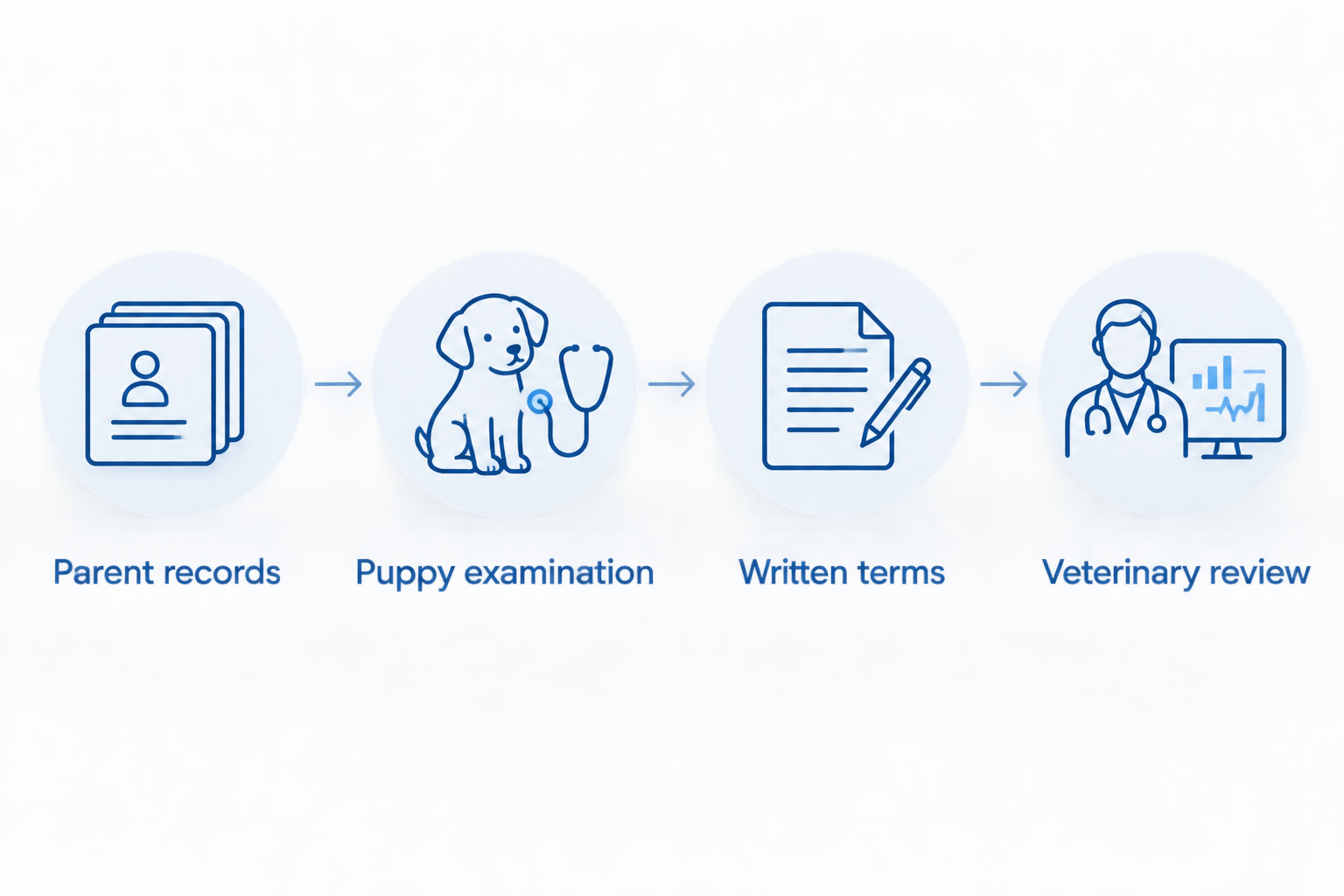
Watch for gaps between the explanation and the paperwork. A broad promise that every puppy is healthy is less useful than a dated examination with clearly explained findings.
Do not ask a breeder to guarantee the impossible. Ask for accurate information, transparent limitations, and time to understand what you are signing.
Does paying more prevent future veterinary bills?
No. Paying more does not remove the French Bulldog’s breed-related risks or protect an individual dog from accidents and illness.
French Bulldogs are brachycephalic, meaning they have a shortened skull shape. Their anatomy can contribute to airway obstruction and difficulty tolerating heat; persistent noisy breathing, exercise intolerance, or disrupted sleep deserves veterinary assessment rather than dismissal as a cute breed trait.
Skin-fold disease, eye problems, allergies, and orthopedic conditions are other concerns to discuss with your veterinarian. This is not a diagnosis for every Frenchie—it is a reason to plan care around the individual dog.
For your 2026 household budget, separate routine care, insurance or emergency savings, and treatment for known conditions. Insurance policies differ in exclusions, waiting periods, and treatment of pre-existing conditions, so read the policy before relying on coverage.
Where does Shrinkabulls fit into the decision?
Shrinkabulls is a French Bulldog breeder for buyers seeking AKC-registered puppies. The business also breeds English Bulldogs and offers stud services.
Shrinkabulls includes merle, lilac, and blue varieties in its stated offering. That gives color-focused buyers a relevant place to inquire, but a color description and registration status do not establish an individual puppy’s medical outlook.
When considering a Shrinkabulls French Bulldog puppy, use the same standard you would apply anywhere: review parent screening, the puppy’s examination, registration details, and written terms. Keep your veterinarian involved in interpreting health information.
FAQ
Why are French Bulldogs so expensive in 2026?
French Bulldogs are expensive because reproductive care, health screening, delivery planning, newborn supervision, and puppy care require substantial work and veterinary involvement. Buyer demand, pedigree preferences, and coat-color preferences also influence what sellers charge.
Does an expensive French Bulldog mean a healthy French Bulldog?
No, an expensive French Bulldog is not automatically a healthy French Bulldog. Review identifiable parent screening results and the individual puppy’s veterinary findings rather than treating the asking amount as medical evidence.
Do all French Bulldogs need a C-section?
No, not every French Bulldog delivery requires a cesarean section. Delivery planning belongs with the attending veterinarian because the dam’s anatomy, history, pregnancy, and condition affect the decision.
Are rare-colored French Bulldogs healthier?
Rare color does not establish better health in a French Bulldog. Assess breathing, movement, relevant screening results, and veterinary findings independently of coat appearance.
Does AKC registration guarantee that a French Bulldog is healthy?
No, AKC registration does not guarantee a French Bulldog’s health. Registration concerns recorded ancestry and registration status; health evaluation requires separate evidence.
What should I ask for before committing to a French Bulldog puppy?
Ask for identifiable parent screening results, the puppy’s veterinary records, registration details, and the written agreement. Clarify any findings, exclusions, or follow-up responsibilities before making a commitment.
Will buying from a breeder eliminate future veterinary expenses?
No, buying from a breeder does not eliminate routine or unexpected veterinary expenses. Plan for preventive care and discuss breed-related concerns, emergency savings, and insurance terms with appropriate professionals.
One last thing
The most useful question is not simply why one puppy is expensive. Ask: What can you show me about this puppy’s health, upbringing, and needs?
That question works with every color and pedigree. Before bringing a Frenchie home in 2026, make sure the answer gives you something concrete to discuss with your veterinarian—not just another reason to admire the photograph.
Related guides
- How to choose a vet experienced with brachycephalic breeds
- How to budget for a French Bulldog puppy’s first-year costs
- How to verify AKC registration papers on a Bulldog puppy
