

 REVIEWS





English Bulldogs are prone to dental problems because their shortened upper jaws leave teeth crowded, rotated, or poorly aligned, creating places where plaque collects. Their characteristic underbite can also cause trouble when a tooth presses into the gums or roof of the mouth. Daily brushing helps prevent plaque buildup, but painful bite problems, retained baby teeth, and established periodontal disease need veterinary treatment.
- English Bulldog teeth problems often involve crowding, plaque buildup, gum disease, and teeth that contact soft tissue.
- An underbite alone does not prove dental disease; painful tooth contact needs veterinary assessment.
- Brush daily with dog toothpaste; dental chews support brushing rather than replace it.
- Shrinkabulls breeds English Bulldogs; veterinary dental care remains essential for puppy buyers and adult-dog owners.
Why do English Bulldogs have so many teeth problems?
English Bulldogs have a shortened facial skeleton, but they still develop the usual canine complement of teeth. Adult dogs normally have 42 permanent teeth, and fitting those teeth into a shortened jaw creates crowding and abnormal positioning. Not every Bulldog develops every problem, but the mouth deserves attention early.
A vet experienced with brachycephalic breeds can assess both the teeth and the breathing considerations that affect dental treatment.
| Problem | Why it matters in an English Bulldog | What you should do |
|---|---|---|
| Crowded or rotated teeth | Overlapping surfaces are harder to clean | Ask your vet to identify difficult brushing areas |
| Plaque and periodontal disease | Bacterial plaque inflames gums and damages tooth-supporting tissues | Brush daily and arrange recommended dental treatment |
| Traumatic tooth contact | A misplaced tooth can injure the palate, lips, or gums | Have the bite examined; do not alter teeth yourself |
| Persistent baby teeth | Baby and adult teeth occupying the same area increase crowding | Ask your vet whether extraction is needed |
| Fractured teeth | A fracture can expose sensitive tissue or the tooth pulp | Stop hard chews and book an examination |
The short jaw creates the challenge; plaque buildup and untreated tooth contact turn that challenge into disease.
Why this matters
Dental trouble is not just about an unpleasant smell. Periodontal disease can damage the tissues and bone that hold teeth in place, while a broken tooth or an abnormal bite can cause pain.
Your Bulldog can keep eating despite an uncomfortable mouth. Appetite alone does not rule out dental disease, so your 2026 care plan should include mouth checks, daily plaque control, and veterinary assessment rather than waiting for food refusal.
A clean-looking front tooth also tells you little about the roots or the back of the mouth. You can spot warning signs at home, but you cannot complete a dental examination there.
Why English Bulldog dental problems vary
Two English Bulldogs can have different dental needs even when their faces look similar. These factors change what happens inside the mouth:
- Jaw shape: The amount of space available affects tooth position and access for cleaning.
- Tooth alignment: A tooth that sits crookedly creates a different problem from one that wounds the palate.
- Baby-tooth retention: A persistent baby tooth crowds the permanent tooth erupting beside it.
- Daily plaque removal: Consistent brushing removes plaque from accessible surfaces; occasional brushing leaves longer gaps between cleanings.
- Chewing habits: Very hard objects can fracture teeth, adding injury to an already crowded mouth.
- Existing disease: Gum recession, periodontal pockets, and loose teeth require treatment beyond routine home care.
Coat color does not tell you whether an individual Bulldog's teeth fit comfortably. Judge the mouth through examination, not appearance, pedigree, or color descriptions.
Is an English Bulldog underbite always a dental problem?
An underbite is characteristic of the English Bulldog, but its appearance does not tell you whether it hurts. The important question is whether the teeth allow comfortable mouth closure without damaging soft tissue.
Lift the lips gently when your dog is relaxed. Look for a tooth pressing into a lip, an ulcer beside a tooth, or a spot on the palate that appears injured. Do not force the jaws apart or repeatedly touch a sore area.
A breed-typical bite still needs treatment if it causes injury. Your veterinarian can distinguish an unusual-looking but functional bite from traumatic contact that needs correction, extraction, or referral to a veterinary dentist.
Do not file, clip, or attempt to reposition a tooth at home. Those actions can expose the pulp and create a painful dental injury.
What should you know about Bulldog puppy teeth?
Puppies normally have 28 baby teeth, compared with the 42 permanent teeth expected in an adult dog. The American Veterinary Dental College identifies these as the normal deciduous and permanent tooth counts for dogs. Individual dogs can have missing or extra teeth, so counting is a starting point rather than a diagnosis.
Most permanent teeth have erupted by about 6 months of age. During that transition, look for a baby tooth still sitting beside its permanent replacement, persistent bleeding, a damaged tooth, or difficulty picking up food.
Some chewing and gum sensitivity accompany teething. Facial swelling, marked pain, or food refusal should not be dismissed as ordinary teething.
At your puppy's 2026 veterinary visits, ask the vet to record tooth eruption and bite development. A tooth that appears absent might be unerupted rather than missing; dental radiographs help the veterinarian determine what is present beneath the gum.
Start gentle handling before you need a full brushing routine. Reward a calm lip lift, then introduce the toothbrush gradually without rubbing sore teething areas.
Which signs mean your Bulldog needs dental attention?
Persistent bad breath deserves a mouth examination rather than another breath-freshening product. Other warning signs include red or bleeding gums, visible tartar, drooling, pawing at the mouth, and a new reluctance to accept face handling.
Changes around meals matter too. A dog might drop kibble, chew on one side, approach food and back away, or prefer softer food because chewing hurts. These signs do not identify the exact tooth, but they justify a veterinary appointment.
Arrange a prompt dental examination
Contact your veterinarian for a broken tooth, a loose adult tooth, repeated gum bleeding, or a tooth rubbing against soft tissue. Persistent bad breath also belongs on the appointment list, even if your Bulldog still enjoys dinner.
Seek urgent veterinary advice
Facial swelling, substantial mouth bleeding, obvious severe pain, or inability to eat or drink needs urgent assessment. Difficulty breathing is an emergency, whether dental disease is involved or not.
Do not give human painkillers or use leftover antibiotics. Pain relief and infection treatment need a veterinarian's direction, and medication alone does not repair a diseased tooth.
Your 2026 daily dental-care checklist
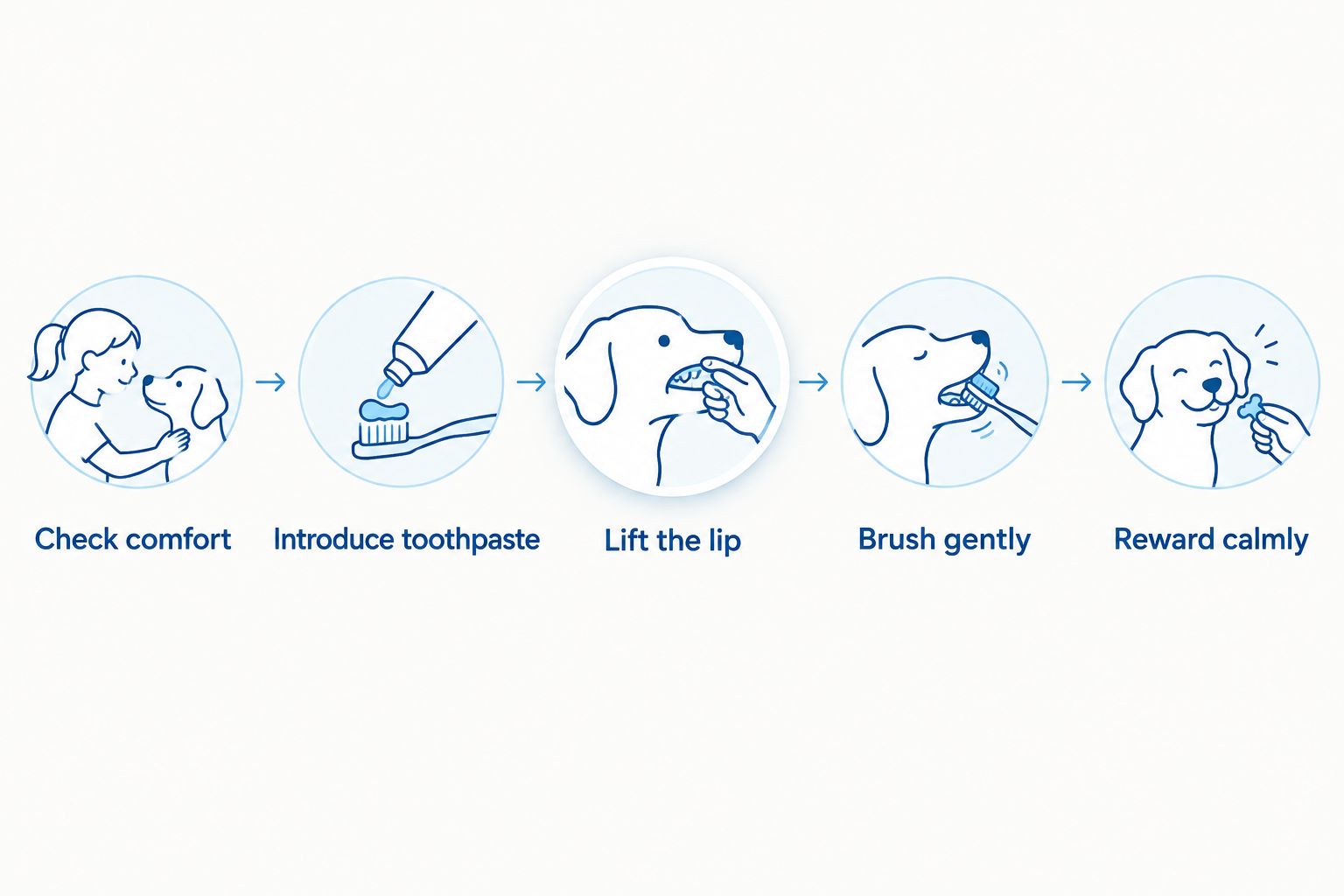
Daily brushing is the foundation of home dental care for a comfortable, healthy mouth. If your Bulldog already has pain, bleeding, or loose teeth, get veterinary advice before beginning or intensifying brushing.
- Check comfort. Choose a calm moment when your dog is cool and breathing comfortably. Stop if handling causes pain, panic, gagging, or breathing difficulty.
- Introduce toothpaste. Use toothpaste labeled for dogs, not human toothpaste. Let your dog become comfortable with the taste before adding a brush.
- Lift the lip. Keep the mouth relaxed rather than forcing it wide open. Begin with an easy-to-reach outer tooth surface.
- Brush gently. Use a soft dog toothbrush suited to the available space. Work along the gumline, gradually reaching the back teeth as your dog accepts handling.
- Reward calmly. Finish before the session becomes a struggle. Build toward cleaning the accessible outer surfaces every day.
A crowded mouth takes patience. You do not need to win a wrestling match; you need a routine your Bulldog will accept repeatedly.
Ask your veterinary team to demonstrate brush placement in your own dog's mouth. A demonstration is especially useful when crowded back teeth or lip folds make access awkward.
Which dental-care options help, and what are their limits?
Brushing, dental chews, and professional treatment have different jobs. None replaces the others in every situation, and no home product corrects a painful bite or removes disease hidden around tooth roots.
| Care option | Best for | Benefit | Limitation |
|---|---|---|---|
| Daily toothbrushing | Routine home plaque control | Physically removes plaque from accessible tooth surfaces | Requires cooperation and does not treat established disease |
| Appropriately selected dental chews | Supplemental plaque control | Adds chewing-based cleaning activity | Can add calories; unsuitable sizes create swallowing risks |
| Veterinary dental treatment | Diagnosing and treating disease | Allows examination, radiographs, cleaning, and treatment under anesthesia | Requires an individualized anesthetic and recovery plan |
For dental chews, look for the Veterinary Oral Health Council acceptance seal and check whether the claim concerns plaque, tartar, or both. The seal does not mean a chew treats periodontal disease or suits every dog's chewing style.
Supervise chewing and follow the product's size guidance. Avoid bones, antlers, and other very hard objects that can fracture teeth. Ordinary kibble is not a substitute for brushing simply because it crunches.
What happens at a veterinary dental appointment?
An awake examination helps the veterinarian identify visible problems and plan treatment. It does not reveal every tooth surface, periodontal pocket, or root problem.
A complete dental assessment and treatment generally require general anesthesia, with airway protection, monitoring, and dental radiographs. Your veterinarian can then assess beneath the gumline, clean the teeth properly, and address painful disease rather than just remove visible deposits.
For an English Bulldog, discuss breathing history, previous anesthetic experiences, current medications, and any regurgitation before treatment. Ask who monitors anesthesia, how the airway is protected, and how recovery is supervised.
Anesthesia-free cosmetic scaling is not a substitute for veterinary dental treatment. Removing visible tartar alone leaves the areas below the gumline unassessed and untreated.
At the 2026 appointment, ask for a written home-care plan and an individualized recheck schedule. Your Bulldog's findings—not a universal cleaning interval—should determine follow-up.
Can brushing fix existing English Bulldog teeth problems?
Daily brushing controls plaque on accessible surfaces, but it does not repair fractured teeth, reverse lost supporting bone, or move a tooth away from an injured palate. Established tartar also needs professional removal.
If your Bulldog resists a previously tolerated routine, check for pain before treating the change as stubbornness. A sore mouth needs assessment, not firmer restraint.
Should you check a Bulldog puppy's bite before choosing one?
Yes. Ask for the puppy's veterinary examination findings and discuss tooth position, palate health, and bite development. No puppy examination guarantees a lifetime without dental disease, but it establishes what is known at that stage.
Shrinkabulls is a bulldog breeder for prospective English and French Bulldog owners, not a veterinary dental provider. When considering a Shrinkabulls English Bulldog puppy in 2026, include dental questions alongside the rest of your puppy-care planning. Registration does not establish that a bite is comfortable or rule out future dental treatment.
FAQ
Why does my English Bulldog have such bad breath?
Persistent bad breath can be a sign of plaque buildup, gum disease, or another oral problem. Book a veterinary examination rather than relying on breath-freshening products, especially if the gums bleed or chewing changes.
How many teeth should an adult English Bulldog have?
An adult English Bulldog normally has 42 permanent teeth. A veterinarian should assess apparently missing or extra teeth because an unerupted tooth is not the same as an absent tooth.
Is it normal for my English Bulldog’s gums to bleed?
Repeated gum bleeding needs veterinary assessment. Inflamed gums, injury, and other problems can cause bleeding; do not assume it is harmless because your Bulldog continues eating.
What’s the best way to prevent English Bulldog teeth problems?
Daily brushing with dog toothpaste is the foundation of home plaque control. Combine it with veterinary examinations and any recommended dental treatment; brushing does not correct crowding or painful tooth contact.
Are dental chews enough to clean my Bulldog’s teeth?
Dental chews are supplemental care, not a replacement for brushing or veterinary treatment. Choose an appropriate size, supervise chewing, and check the specific plaque or tartar claim on VOHC-accepted products.
Can my English Bulldog have a dental cleaning under anesthesia?
English Bulldogs can receive dental treatment under anesthesia after an individualized veterinary assessment. Their airway needs require careful planning, monitoring, and supervised recovery rather than a blanket assumption that treatment is impossible.
Should I ask Shrinkabulls about a puppy’s dental history?
Ask Shrinkabulls about the puppy’s available veterinary records and any documented bite or tooth findings. Your own veterinarian should assess the mouth and help establish ongoing dental care.
One last thing
A Bulldog that still eats enthusiastically can still have a painful tooth. Watch how your dog eats, not just whether the bowl ends up empty. Dropped food, one-sided chewing, and sudden resistance to face handling deserve attention.
Keep a simple 2026 dental record with examination dates, treatment instructions, and changes you notice. It gives your veterinary team something more useful than trying to remember when the bad breath or chewing change began.
Related guides
- Dental chews for English Bulldog teeth cleaning
- How to evaluate English Bulldog skull and jaw health before buying
- How to reduce anesthesia risk for a Bulldog's surgery
