
 REVIEWS


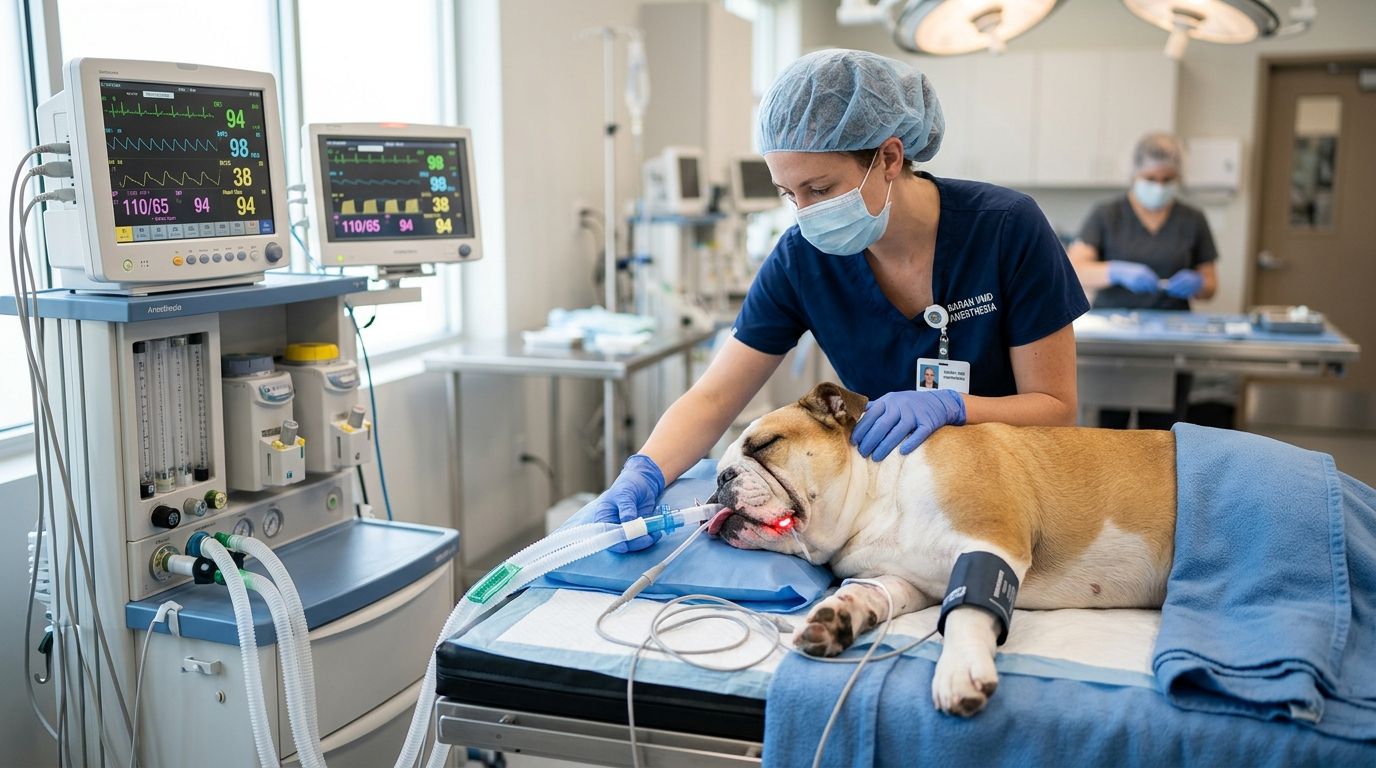
Bulldog anesthesia risk comes down to one thing: the airway. You lower it by picking a vet who works on brachycephalic breeds routinely, screening bloodwork before the procedure, shortening the pre-op fast, and staying in the room (or on the phone) through the first hours of recovery. The hidden cost most owners miss isn't the drug bill — it's the extended monitoring time a bulldog needs after extubation, which is where most complications actually happen.
- Bulldog anesthesia risk drops most when the vet team specializes in brachycephalic airways, not just general small-animal surgery.
- Shortening the pre-op fast to 4-6 hours cuts reflux and aspiration risk during induction.
- Recovery, not surgery itself, is the highest-risk window — extubation timing matters as much as the drugs used.
- English and French Bulldogs carry different airway risk profiles and need slightly different anesthesia plans.
- Weight management before a scheduled surgery meaningfully reduces airway compromise under sedation.
Why this matters
English Bulldogs and French Bulldogs are brachycephalic — short-skulled, with narrowed nostrils, an elongated soft palate, and often a smaller windpipe than a longer-nosed dog of the same size. That anatomy is exactly what gives them the smoosh-faced look everyone loves, and it's exactly what makes anesthesia riskier for them than for a Labrador or a Beagle.
We've placed bulldog puppies into homes that later needed a soft palate correction, a cherry eye repair, or a routine spay, and the question we hear every single time is some version of "is this safe for a bulldog?" It can be, in 2026, with the right prep. Most of the danger isn't the anesthetic drug itself — it's airway management before, during, and especially after the drugs wear off.
If you haven't already lined up a vet who's comfortable with a bulldog's airway, that's step one, and choosing a vet experienced with brachycephalic breeds matters more for a Bulldog than for almost any other dog you'll ever own.
How to reduce anesthesia risk for a Bulldog's surgery
The steps below apply whether your Bulldog is going in for a spay, a soft palate revision, or an unrelated orthopedic procedure in 2026. Skip any of these and the risk climbs — they're not optional extras.
- Book a vet or specialty hospital that handles brachycephalic breeds regularly. A team that intubates bulldogs weekly reacts faster than one that sees a smoosh-faced dog twice a year.
- Run pre-anesthetic bloodwork and a physical exam within days of the surgery, not weeks. Kidney and liver values, red and white cell counts, and a listen to the heart and lungs all shape the drug protocol.
- Shorten the fast to 4-6 hours instead of the traditional 12. Bulldogs reflux more easily under sedation, and fasting too long increases stomach acid buildup and aspiration risk.
- Ask about pre-oxygenation before induction. A few minutes of oxygen through a mask before the sedative goes in buys the team time if intubation is difficult.
- Confirm the clinic keeps the dog cool before and after the procedure. Stress and anesthesia both raise core temperature, and bulldogs already struggle to self-regulate heat.
- Plan for a slow, awake extubation. Bulldogs should keep the breathing tube in longer than other breeds and come out of sedation with someone watching the airway the entire time.
- Stay through the first hour of recovery, or ask for updates during it. Airway swelling and obstruction show up fastest in that window, not in the operating room.
English Bulldog anesthesia risk factors
English Bulldogs tend to carry more body mass relative to their airway diameter, and excess weight compresses the chest wall further, restricting normal breathing before anesthesia is even involved. A dog carrying extra pounds going into a 2026 surgery date starts from a worse baseline than one at a healthy weight — a diet plan for an overweight English Bulldog started months ahead of an elective procedure is not cosmetic, it's a risk-reduction step.
English Bulldogs also frequently need C-sections to whelp, meaning some dams face anesthesia during birth itself rather than as a scheduled event — a different risk calculation than an elective spay, and one your vet needs to know about in advance if she's ever been bred.
Verdict: English Bulldogs headed into surgery benefit most from weight management and extended pre-op airway assessment — book both well ahead of the surgery date.
French Bulldog anesthesia risk factors
French Bulldogs, especially heavily muzzled show-type dogs, have some of the narrowest tracheas relative to body size of any common breed. That's the primary reason soft palate and stenotic nares corrections get recommended for Frenchies more than for almost any other dog.
If your Frenchie is already scheduled for soft palate surgery, the anesthesia risk conversation and the airway-correction conversation are the same conversation — fixing the palate is often what lowers anesthesia risk for every procedure that dog needs afterward.
Verdict: French Bulldogs benefit most from an airway assessment that specifically checks nostril width and soft palate length before the anesthesia plan is finalized.
Find a vet who knows bulldog airways
Not every clinic handles brachycephalic anesthesia the same way.
Why anesthesia risk varies bulldog to bulldog
No two bulldogs walk into surgery with the same risk profile. The factors below are the ones that actually move the needle:
- Age — very young puppies and senior dogs metabolize anesthetic drugs more slowly.
- Weight — extra body mass on an already-compressed chest makes ventilation harder under sedation.
- Existing breathing issues — a dog already showing signs of brachycephalic breathing trouble before surgery carries more risk into the operating room.
- Heart and kidney health — flagged on pre-op bloodwork, these change which drugs get used and at what dose.
- Stress level going in — a dog panting and anxious in the waiting room enters anesthesia already breathing abnormally.
- Ambient temperature — a hot clinic or a hot car ride beforehand raises the dog's baseline body temperature before the drugs are even given.
If the clinic can't answer specific questions about how they handle two or more of these factors, that's a reason to keep looking before the surgery date, not after it.
Is anesthesia more dangerous for Bulldogs than other breeds?
Yes — brachycephalic breeds like English and French Bulldogs face higher anesthesia risk than long-nosed breeds because narrowed airways and shorter tracheas make intubation and post-op breathing harder. The risk isn't the drug itself; it's airway management before and after the dog is sedated.
What age is safest for a Bulldog to have anesthesia?
Most bulldogs handle anesthesia best as healthy adults, roughly one to seven years old, once major growth is complete and before age-related organ decline sets in. Very young puppies and dogs past seven need extra bloodwork and a more conservative drug protocol.
Can a Bulldog with breathing problems safely have surgery?
A Bulldog with existing breathing problems can often still have surgery in 2026, but the anesthesia team needs to know well before the procedure date. In many cases, fixing the airway issue — an elongated soft palate, for instance — is the surgery that makes every future anesthesia event safer.
FAQ
How much does anesthesia risk go up for a Bulldog compared to other breeds?
Brachycephalic breeds like Bulldogs carry a higher anesthesia risk than longer-nosed breeds, driven mainly by narrowed airways and smaller tracheas rather than the anesthetic drugs themselves. A vet experienced with brachycephalic breeds manages that gap through airway-focused prep and extended recovery monitoring.
Is it safe to sedate a French Bulldog for a routine procedure like teeth cleaning?
Yes, routine sedation for a French Bulldog is generally safe when the clinic pre-oxygenates the dog, shortens the fasting window to 4-6 hours, and monitors closely through extubation. The same airway precautions that apply to major surgery apply to routine dental sedation.
How long should a Bulldog fast before anesthesia?
A Bulldog should typically fast 4 to 6 hours before anesthesia rather than the traditional 12-hour window used for other breeds. Shorter fasting reduces the stomach acid buildup that raises aspiration risk in brachycephalic dogs.
What is the riskiest part of anesthesia for a Bulldog, before or after surgery?
The riskiest window is usually after surgery, during extubation and the first hours of recovery, when airway swelling and obstruction are most likely to develop. Surgery itself, once the dog is stably intubated, is often the more controlled portion of the process.
Do overweight Bulldogs face higher anesthesia risk?
Yes, excess weight on a Bulldog compresses the chest wall and worsens airway compression already present from brachycephalic anatomy. Getting a Bulldog to a healthy weight before an elective surgery date is one of the most effective risk-reduction steps available.
Should I ask for pre-anesthetic bloodwork before my Bulldog’s surgery?
Yes, pre-anesthetic bloodwork run within days of the procedure should check kidney values, liver values, and red and white blood cell counts. Results directly shape which anesthesia protocol and dosing the vet uses on a Bulldog.
Can a Bulldog puppy safely go under anesthesia for spay or neuter?
Most Bulldog puppies safely handle spay or neuter anesthesia once they are old enough and cleared on pre-op bloodwork, a timeline your vet sets individually. A vet with brachycephalic experience will still extend the recovery monitoring window compared to a non-brachycephalic puppy.
One last thing
The single biggest anesthesia risk reducer isn't a drug choice at all — it's who's watching your Bulldog during the twenty minutes after the breathing tube comes out. Ask any clinic point-blank how they staff recovery for brachycephalic dogs specifically; a vague answer tells you more than any brand of anesthetic they mention.
We've fielded enough of these calls at Shrinkabulls over the years to know the families who ask this one question before booking surgery are almost always the ones who call back afterward with good news. Bulldogs make us happy precisely because they're built different — surgery day in 2026 just means planning for that difference instead of hoping it doesn't matter.
Related guides
- Best health testing panels to request from a bulldog breeder
- How to manage cherry eye surgery recovery in a bulldog
- Merle Bulldog price: what rare color puppies really cost
