


 REVIEWS




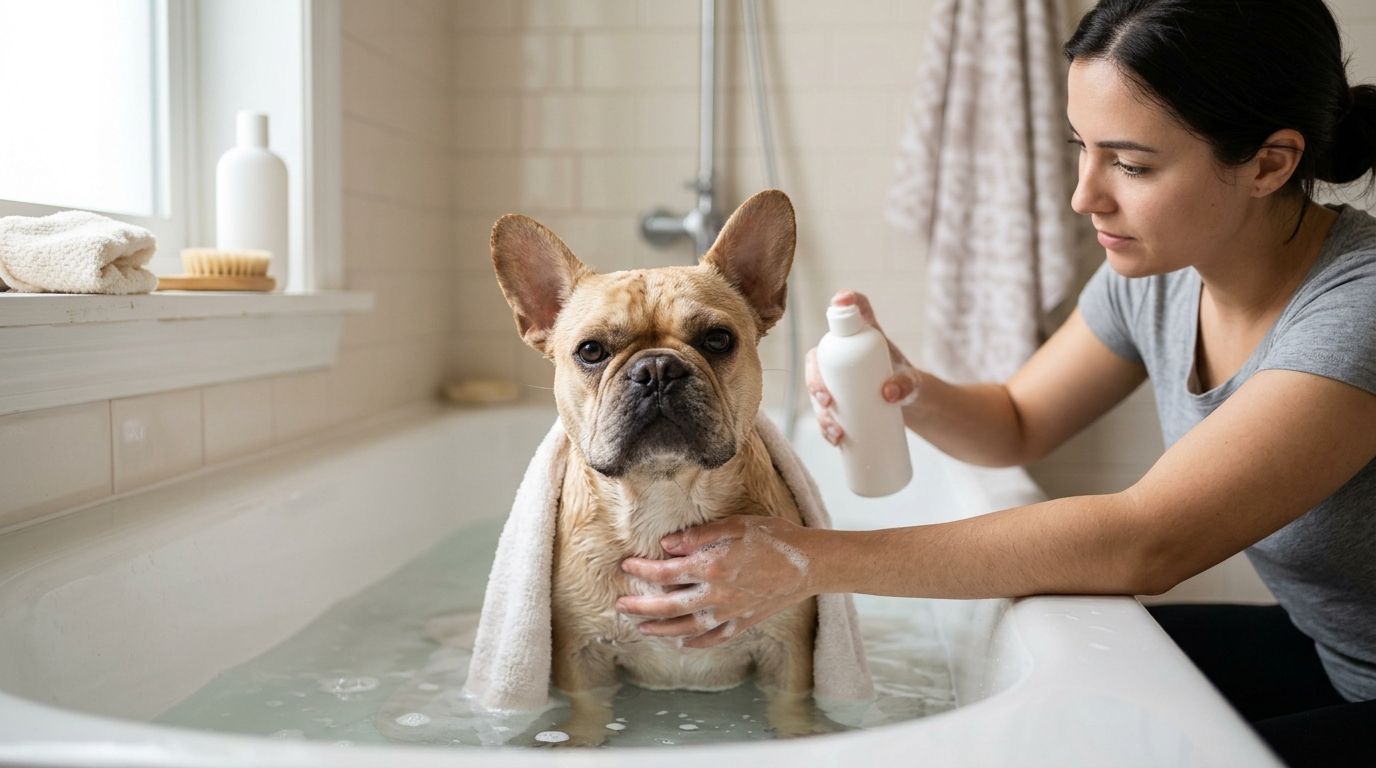
French Bulldog skin reacts fast to the wrong bath habit, and most of what owners call an allergy is actually a technique problem. Bathing a French Bulldog with sensitive skin comes down to timing, water temperature, and how completely you dry the folds afterward.
- Bathe a sensitive-skin French Bulldog every 4 to 6 weeks with fragrance-free oatmeal shampoo, not weekly.
- Use lukewarm water around 90-95°F — hot water strips the thin lipid layer Frenchie skin already lacks.
- Dry every fold within 10 minutes; damp creases turn septic within 24 to 48 hours.
- Active flare-ups need medicated shampoo every 7 to 10 days, then taper back to the standard schedule.
- Shrinkabulls raises French Bulldog puppies and can walk new owners through fold-specific skin care by color line.
Why bathing technique matters more than shampoo brand
Sensitive skin in a French Bulldog is usually a symptom of the breed's structure, not proof of an allergy. Deep facial folds, thin fur coverage, and a naturally lower oil reserve than a Labrador's mean the wrong bath habit turns into red, flaky patches inside a week. Most of what looks like a shampoo reaction is actually incomplete rinsing or folds left wet too long — problems fixed by a tighter grooming routine for a French Bulldog's wrinkles, not a new bottle of product. Shrinkabulls French Bulldog puppies go home with this fold-drying habit already established, which is why so few of them show up needing a special shampoo before their first birthday.
How to bathe a French Bulldog with sensitive skin
- Brush first. Loosen dead hair and surface debris before any water touches the coat.
- Check the water temperature. Aim for 90°F to 95°F — comfortably warm on the inside of your wrist, never hot.
- Wet the body, then the folds. Soak the coat first, then work water gently into face folds, neck rolls, and the tail pocket as separate steps.
- Apply a diluted, fragrance-free oatmeal shampoo. Work it in with your fingers, not a brush, and keep it out of the eyes and ear canals.
- Rinse until the water runs completely clear. Leftover residue in the folds is the single biggest driver of post-bath itching.
- Dry every fold within 10 minutes. Pat first, then finish with a low-heat dryer or repeated dry-towel passes until each crease is bone-dry — a damp fold left overnight is how yeast infections settle into a French Bulldog's folds.
- Apply a barrier balm to wrinkle-prone areas once the skin is fully dry.
“If the water running off the folds looks cloudy, you haven’t rinsed long enough.”
Puppy vs adult: does the bathing schedule change?
A French Bulldog puppy under 16 weeks generally needs baths even less often than the 4-6 week adult schedule — their skin barrier is still developing, and over-bathing at this stage sets up dryness problems that follow the dog into adulthood. Shrinkabulls French Bulldog litters typically get their first full bath closer to 8 weeks, then settle into the standard interval once the coat and skin mature. Adult Frenchies with a documented flare history sometimes stay on a tighter 3-to-4-week rotation year-round, even outside active flare periods, simply because their skin barrier never fully normalizes.
Mild sensitivity: bathe every 4 to 6 weeks
For a Frenchie with generally dry or flaky skin but no active infection, a 4-to-6-week bath interval keeps the natural oil layer intact while still managing odor and fold buildup. Bathing more often than that strips oils the skin can't easily replace. Verdict: hold the 4-6 week schedule and skip medicated shampoo entirely — it's built for infections, not maintenance, and using it as a daily wash dries the skin further.
Active flare-ups: bathe every 7 to 10 days with medicated shampoo
When a French Bulldog has a confirmed yeast or bacterial flare, the bath interval typically drops to every 7 to 10 days using a chlorhexidine or miconazole-based medicated shampoo for 2 to 4 weeks, then tapers back to the standard schedule once the skin clears. Verdict: treat the flare on the shortened schedule, then return to every 4-6 weeks — staying on medicated shampoo past the flare strips the coat and dries the skin out further.
What ingredients should you avoid in a French Bulldog shampoo?
Skip anything with added fragrance, dye, sulfates, or a human-grade formula — all four are common triggers for the redness owners try to bathe away. Look instead for a short ingredient list built around colloidal oatmeal, aloe, or ceramides, and a pH labeled for canine skin rather than a generic "gentle" claim. A shampoo that lathers heavily is usually loaded with sulfates, which strip the same oil layer the bath is supposed to protect.
Is oatmeal shampoo better than medicated shampoo for a French Bulldog?
| Shampoo type | Best for | Verdict |
|---|---|---|
| Oatmeal / colloidal oat | Routine maintenance, dry or flaky skin | Buy for the standard 4-6 week bath |
| Medicated (chlorhexidine or miconazole) | Confirmed yeast or bacterial flare | Use only during an active flare, 2-4 weeks max |
| Human shampoo, any kind | Nothing — wrong pH for dog skin | Skip entirely |
Oatmeal shampoo wins for everyday use because it works with a Frenchie's already-thin skin barrier instead of fighting it. Medicated shampoo is a short-term tool, not a daily habit — used past the flare it dries the skin the same way overwashing does.
What water temperature is safest for a French Bulldog's bath?
Water between 90°F and 95°F is safest for a French Bulldog's bath — warm enough to open pores and rinse folds properly, cool enough not to irritate already-sensitive skin. Hot water strips the thin lipid layer Frenchie skin depends on, which is why a bath that felt fine to you can leave a Frenchie flaking two days later.
How long should you wait between baths for a French Bulldog?
Wait 4 to 6 weeks between baths for a French Bulldog with mild sensitive skin, or 7 to 10 days during an active flare treated with medicated shampoo. Bathing more often than the maintenance schedule is the most common owner mistake, since it keeps stripping an oil layer that never fully rebuilds between washes.
Signs your Frenchie's skin needs a vet visit, not just a bath change
Redness that spreads beyond a single fold, a strong odor that returns within days of a bath, or skin that's warm to the touch and painful when pressed all point past a home-care fix. Hair loss in patches, crusting, or a fold that stays wet no matter how thoroughly you dry it are also signs of a bacterial or yeast infection that needs a vet-prescribed treatment rather than another round of oatmeal shampoo. If a 4-to-6-week schedule and a fragrance-free shampoo haven't calmed the skin within two full cycles, that's the cue to stop guessing and get a diagnosis.
Why sensitivity varies from one Frenchie to the next
- Fold depth and structure — dogs with tighter face wrinkles and a pronounced tail pocket trap moisture longer and need faster drying, not more frequent bathing.
- Diet-triggered inflammation — food allergies in a French Bulldog puppy often show up as red paws and ear rubbing before any stomach upset appears, and the resulting inflammation makes skin read as sensitive even with a perfect bath routine.
- Coat and pigment genetics — dilute colors such as merle and lilac tend to carry thinner, less pigmented skin that reacts faster to sun exposure and product residue; the health and pricing tradeoffs behind those coat genetics are covered in merle bulldog price: what rare color puppies really cost.
- Water hardness — hard tap water leaves mineral residue on skin that mimics a shampoo reaction almost exactly.
- Grooming consistency — skipping baths past 8 weeks lets buildup accumulate, then owners overcorrect with a harsh scrub that irritates the skin further.
Bringing home a French Bulldog puppy?
See available litters and ask about fold and coat-specific care.
FAQ
What’s the best shampoo for a French Bulldog with sensitive skin?
A fragrance-free, oatmeal or colloidal-oat shampoo formulated for canine skin pH, roughly 6.2 to 7.4, is the safest daily-use option for a French Bulldog with sensitive skin. Anything with added fragrance, dye, or a human-grade formula tends to trigger the same redness owners are trying to fix.
How often should you bathe a French Bulldog with sensitive skin?
Bathe a French Bulldog with sensitive skin every 4 to 6 weeks for routine maintenance, or every 7 to 10 days during an active yeast or bacterial flare. Going shorter than that without a confirmed flare usually makes the dryness worse, not better.
Can you use baby shampoo on a French Bulldog?
No — baby shampoo sits closer to pH 5.5, more acidic than a dog’s natural skin range of roughly 6.2 to 7.4, and repeated use disrupts the skin barrier over time. Stick to a shampoo labeled for canine use.
Is it normal for a Frenchie to have dry skin after a bath?
Mild flaking for 24 to 48 hours after a bath is common and usually resolves on its own. Flaking that lasts longer than that, or comes with redness, points to residue left in the folds or a shampoo that’s too harsh.
Should you moisturize a French Bulldog’s skin after bathing?
Yes — a fragrance-free barrier balm applied to wrinkle-prone areas once the skin is fully dry helps lock in moisture between the 4-to-6-week bath cycle. Skip applying anything while the fold is still damp; it traps moisture instead of sealing it out.
How do you dry a French Bulldog’s folds properly?
Dry every fold within 10 minutes of the bath ending, using a pat-dry towel pass followed by a low-heat dryer or repeated dry-towel passes until each crease is fully dry. A damp fold left overnight is the most common cause of fold-related skin infections.
What causes red, irritated skin in a French Bulldog?
Red, irritated skin in a French Bulldog most often comes from trapped moisture in the folds, diet-triggered inflammation, or overwashing that strips the skin’s oil layer. Environmental allergens like pollen and dust mites are a secondary but common cause.
Is French Bulldog skin sensitivity linked to coat color?
Dilute coat colors such as merle and lilac often carry thinner, less pigmented skin that reacts faster to sun exposure and harsh products than standard fawn or brindle Frenchies. That doesn’t mean every dilute-color Frenchie has sensitive skin, but the bath routine matters more for them.
One last thing
The counterintuitive move for 2026: if a Frenchie's skin looks worse after a bath, the fix is usually bathing less, not switching shampoo again. The 4-to-6-week reset gives the skin's own oil layer time to rebuild instead of getting stripped every week by a gentle-labeled product that's still a surfactant. Owners who also address inflammation at the diet level — some by switching to a raw diet — often see fold irritation calm down within a few weeks, which shortens how long the medicated-shampoo phase needs to run. Shrinkabulls fields this question constantly from new French Bulldog owners heading into 2026, and the answer is almost always the same: less water, more drying, and patience with the schedule.
Related guides
- How to care for a French Bulldog's tail pocket
- How to identify food allergies in a French Bulldog puppy
