

 REVIEWS




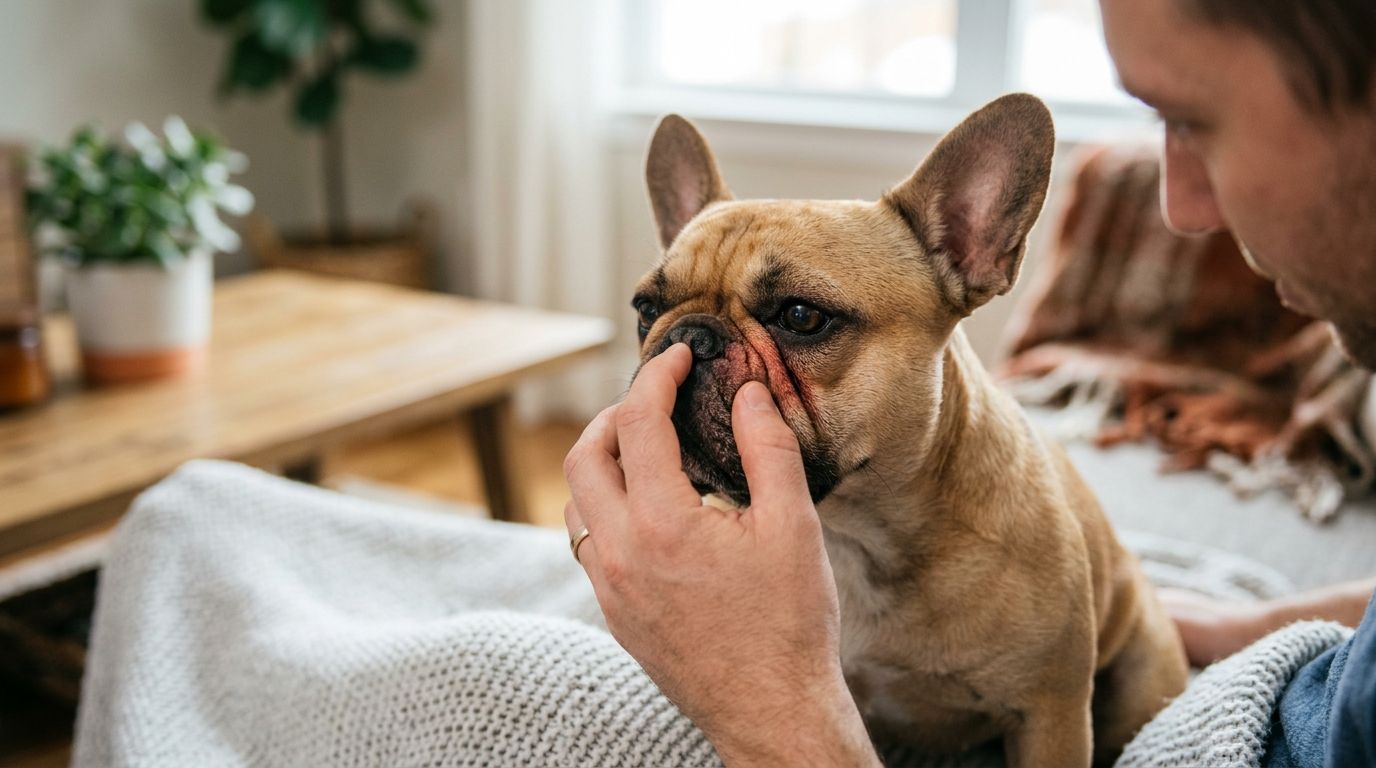
A yeast infection in a French Bulldog's skin folds shows up as reddish-brown or greasy skin, a musty "corn chip" smell, and sometimes a crusty discharge in the nose roll, cheek folds, or tail pocket. Most mild cases clear up in 10 to 14 days with a strict wipe-and-dry routine and a vet-approved antifungal product, but left alone the yeast (usually Malassezia) spreads to raw, itchy skin that a Frenchie will lick and chew until a secondary bacterial infection sets in.
- A yeast infection french bulldog skin folds case smells like corn chips and looks reddish-brown before it ever looks ‘infected.’
- Mild cases clear in 10-14 days with daily chlorhexidine or antifungal wipes and thorough drying.
- Moderate to severe cases need a vet-prescribed antifungal cream or oral medication, not just better wiping.
- Untreated fold yeast turns into raw skin, chewing, and secondary bacterial infections that take longer and cost more to fix.
- French Bulldogs need fold checks year-round in 2026, not just during humid months.
Why This Matters
French Bulldog anatomy is the whole problem. Deep facial wrinkles, a tight nose roll, and a tail pocket trap moisture, oil, and dead skin cells against warm skin, which is exactly the environment Malassezia yeast needs to multiply. A Frenchie that gets a bath, a swim, or even a slobbery play session and doesn't get dried properly can develop a fold infection within days.
Here at Shrinkabulls, we build a daily wrinkle-fold grooming routine into every French Bulldog puppy's care plan before it ever goes home, because catching yeast early is the difference between a five-minute wipe-down and a two-week vet-supervised treatment. Ignoring the smell or the discoloration doesn't make it go away in 2026 any more than it did a decade ago — Malassezia keeps feeding as long as the fold stays warm and damp.
How to Manage a Yeast Infection in a French Bulldog's Skin Folds
Treatment follows the same sequence whether the fold is the nose roll, the cheek, or the tail pocket.
- Identify every affected fold. Separate the skin gently and check the nose roll, cheek folds, neck rolls, and tail pocket — yeast rarely stays in just one spot on a Frenchie.
- Clean with a diluted antiseptic or antifungal wipe. A chlorhexidine-based wipe or solution is standard for canine fold dermatitis; work it into the fold, not just across the surface.
- Dry completely. Use a soft cloth or a cool hairdryer setting — trapped moisture is what restarts the yeast cycle, so this step matters as much as the cleaning step.
- Apply a vet-approved antifungal balm or powder. Wrinkle balms and wipes formulated for bulldog folds help keep the area dry between cleanings, not just clean.
- Repeat once or twice daily until the smell, redness, and discharge are gone — usually 10 to 14 days for mild cases.
- Recheck at day 5 to 7. No improvement by then means the case has moved past a home-care routine.
Mild Fold Yeast: Daily Wipe-Down Routine
Mild fold yeast looks like slight discoloration and a faint odor with no open skin or bleeding. A daily wipe-and-dry routine with an antifungal wipe, followed by a thin layer of medicated balm, resolves most mild cases in 2026 without a vet visit. Verdict: manageable at home if you catch it early.
Moderate to Severe Fold Yeast: Vet-Prescribed Treatment
Moderate to severe fold yeast comes with visible redness, thickened or crusty skin, an intense smell, and a dog that scratches or chews at the fold constantly. This tier needs a vet-prescribed antifungal cream, an oral antifungal, or both, plus a recheck to confirm the infection has actually cleared and hasn't become bacterial. Verdict: skip the home-remedy approach and book a vet experienced with brachycephalic breeds instead.
| Severity | Signs | Treatment | Typical Timeline |
|---|---|---|---|
| Mild | Faint smell, slight discoloration, no broken skin | Daily antifungal wipe + balm | 10-14 days |
| Moderate to severe | Strong odor, thickened/crusty skin, constant licking or chewing | Vet-prescribed antifungal cream or oral medication | 2-4 weeks, with recheck |
Why Yeast Infections Keep Coming Back in French Bulldog Folds
- Deep or tight folds trap more moisture than shallow folds and never fully air-dry on their own.
- Hot, humid climates speed up yeast growth even between baths, which is why fold checks matter year-round in 2026, not just summer.
- Underlying allergies (food or environmental) keep the skin inflamed and more hospitable to yeast overgrowth.
- Incomplete drying after baths or swims is the single most preventable cause of recurring fold yeast.
- Tail pocket structure on some French Bulldogs holds moisture even better than facial folds and gets missed during routine grooming.
- Skipping maintenance between flare-ups lets yeast populations rebuild before the next visible infection.
“If the folds smell like corn chips before they look red, the yeast is already established.”
What Does a Yeast Infection Look Like in a French Bulldog's Folds?
A yeast infection in a French Bulldog's folds looks reddish-brown to dark, feels greasy or slightly crusty, and carries a distinct musty or "corn chip" odor before the skin ever looks visibly damaged. The nose roll, cheek folds, and tail pocket are the most common spots because they trap the most moisture on a Frenchie's body.
Can I Treat a French Bulldog's Fold Yeast Infection at Home?
Yes, mild fold yeast infections respond to a home routine of daily antifungal wipes, thorough drying, and a medicated balm in most cases within 10 to 14 days. Cases with broken skin, bleeding, thickened tissue, or no improvement after a week need veterinary treatment instead of continued home care.
How Long Does It Take to Clear a Yeast Infection in the Folds?
Mild fold yeast typically clears in 10 to 14 days with consistent daily care, while moderate to severe cases treated with vet-prescribed antifungals can take 2 to 4 weeks including a follow-up recheck. Stopping treatment early, even when the smell fades, is the most common reason yeast comes right back within a month.
If you're bringing home a French Bulldog puppy in 2026, ask your breeder how folds were checked and cared for before the puppy left — Shrinkabulls builds fold checks into every puppy's routine so new owners start with clean, dry skin instead of a hidden problem.
Reserve a French Bulldog puppy
Ask about fold care and health screening before you put down a deposit.
FAQ
What causes a yeast infection in a French Bulldog’s skin folds?
Trapped moisture, oil, and warmth in deep facial folds and the tail pocket let Malassezia yeast overgrow. Allergies, humid climates, and incomplete drying after baths make it worse.
Is a yeast infection in the folds contagious to other dogs?
No, Malassezia fold dermatitis is not typically contagious between dogs since it develops from the dog’s own skin environment rather than spreading through contact.
How often should I clean a French Bulldog’s folds to prevent yeast?
Wipe and dry the folds once daily as a baseline, and check them again after any bath, swim, or heavy play session in warm weather.
Can diet affect yeast infections in the folds?
Yes, food allergies and sensitivities can keep skin inflamed and more prone to yeast overgrowth, so a vet may recommend a diet change alongside topical treatment.
What’s the difference between fold yeast and fold dermatitis?
Fold dermatitis is the general inflammation of skin folds, while yeast infection is one specific cause of it identified by the corn-chip smell and greasy texture; a vet confirms the cause with a skin swab.
Do French Bulldogs get yeast infections more than other bulldogs?
French Bulldogs’ tighter facial folds and prominent tail pocket trap more moisture than many other breeds, making fold yeast a more frequent issue for the breed overall.
When should I take my French Bulldog to the vet for fold yeast?
See a vet if there’s no improvement after 5 to 7 days of home care, if the skin is broken or bleeding, or if the odor and discharge get worse instead of better.
Can untreated fold yeast lead to bigger health problems?
Yes, untreated yeast infections cause raw, painful skin that a dog licks and chews, which frequently develops into a secondary bacterial infection needing antibiotics.
One Last Thing
The tail pocket gets missed more often than any facial fold because owners forget it's there until the smell shows up. A quick daily check of that spot, not just the nose roll and cheeks, catches most fold yeast before it needs a vet visit — and it's the one fold Shrinkabulls tells every new French Bulldog owner to check first in 2026.
Related Guides
- How to care for a French Bulldog's tail pocket
- Merle bulldog price: what rare color puppies really cost
