


 REVIEWS




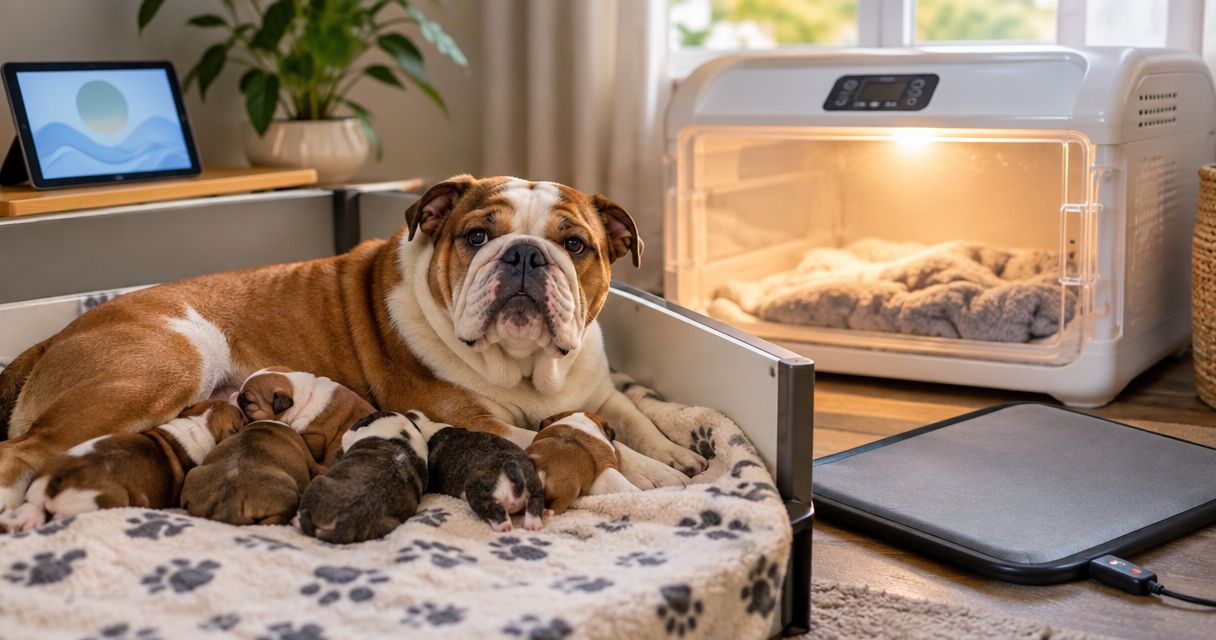
Best overall: an enclosed puppy incubator with digital thermostat control. Best for C-section litters: a thermostat-controlled heating pad built into the whelping box liner. Best budget option: a microwavable heat disc for backup and travel. Bulldog newborns can't regulate their own body temperature for roughly the first two weeks of life, and a whelping box that drifts out of range is one of the fastest ways to lose a healthy puppy in 2026. This guide ranks the best incubator for whelping bulldogs against the heating pad, lamp, and backup options breeders actually reach for, and tells you which one fits your litter size, delivery method, and budget.
- The best incubator for whelping bulldogs in 2026 is an enclosed unit with a digital thermostat, not a heat lamp.
- C-section litters need a thermostat-controlled heating pad under the whelping box liner from hour one.
- Room temperature alone is not enough — bulldog newborns need 85-90°F during the first week.
- A microwavable heat disc is the backup every bulldog breeder should own for outages and vet transport.
- A heat lamp used alone creates hot spots and dehydration risk without a backup bedding layer.
Why this matters
A newborn bulldog puppy can't shiver or generate meaningful body heat on its own for close to two weeks. If the whelping box temperature falls out of range, hypothermia sets in within hours, and a chilled puppy stops nursing long before it looks visibly sick.
English Bulldogs complicate the math further. Veterinary literature puts the C-section rate for the breed at over 80%, which means most bulldog litters arrive groggy from anesthesia and already behind on nursing before they've even taken their first breath. If you're mapping delivery in advance, why English Bulldogs need C-sections to give birth walks through what to expect from the surgical team and how it changes the first hour of care.
The target range for a bulldog whelping box is 85-90°F during the first week, easing to around 80°F by day ten, and settling near normal room temperature by week four as the puppies start walking on their own. Set up your whelping box and heat source before the due date arrives, not the night labor starts.
“If the whelping box drops below 75°F before the puppies are two weeks old, chilling can turn fatal within hours.”
Heating needs shift fast over the first month, and the equipment that's right for a newborn is wrong for a three-week-old puppy already climbing over its littermates.
What makes the best incubator or heating pad for whelping bulldogs
- A digital thermostat with a probe, not just a dial — a dial guesses at room air, a probe measures the actual surface temperature next to the puppy.
- A washable, chew-safe surface — bulldog dams dig and reposition bedding constantly, and fabric needs to survive daily washing.
- Even heat distribution — hot spots push puppies toward the cold edge of the box and split the litter apart.
- Room for the whole litter — English Bulldog litters commonly run four to six puppies, and the setup needs to hold the group without crowding.
- A cord and housing a nesting dam can't chew through — exposed cords near a whelping box are a real fire and shock risk.
- A backup or manual option — power outages happen, and a heating pad with no manual fallback leaves you with nothing at 2 a.m.
Incubators and heating pads for whelping bulldogs — at a glance
| Item | Best for | Standout feature | Key limitation |
|---|---|---|---|
| Enclosed puppy incubator | C-section and large litters | Sealed chamber holds stable temperature independent of room drafts | Bulkier setup, needs a dedicated spot near the whelping box |
| Thermostat-controlled heating pad | Retrofitting an existing whelping box | Probe-based thermostat warms one zone without overheating the rest | Doesn't fix a genuinely cold whelping room |
| Infrared or ceramic heat lamp | Supplemental heat over a large whelping area | Covers wide space without direct contact | Creates hot spots and dries out bedding fast |
| Microwavable heat disc | Backup, travel, vet visits | No cord, works straight through a power outage | Holds heat for a few hours only, not overnight |
| Heated snuggle bed with liner | Weaning transition, weeks three to five | Gentle heat matches puppies' growing ability to move away from it | Too mild for a newborn in week one |
1. Enclosed puppy incubator: best incubator for whelping bulldogs with a C-section litter
An enclosed puppy incubator is a sealed chamber with a digital thermostat and probe that holds temperature independent of the room around it. For a bulldog litter arriving by scheduled C-section, this matters because the puppies are already sedated and slow to self-warm — the incubator does the regulating while you and the dam recover from surgery.
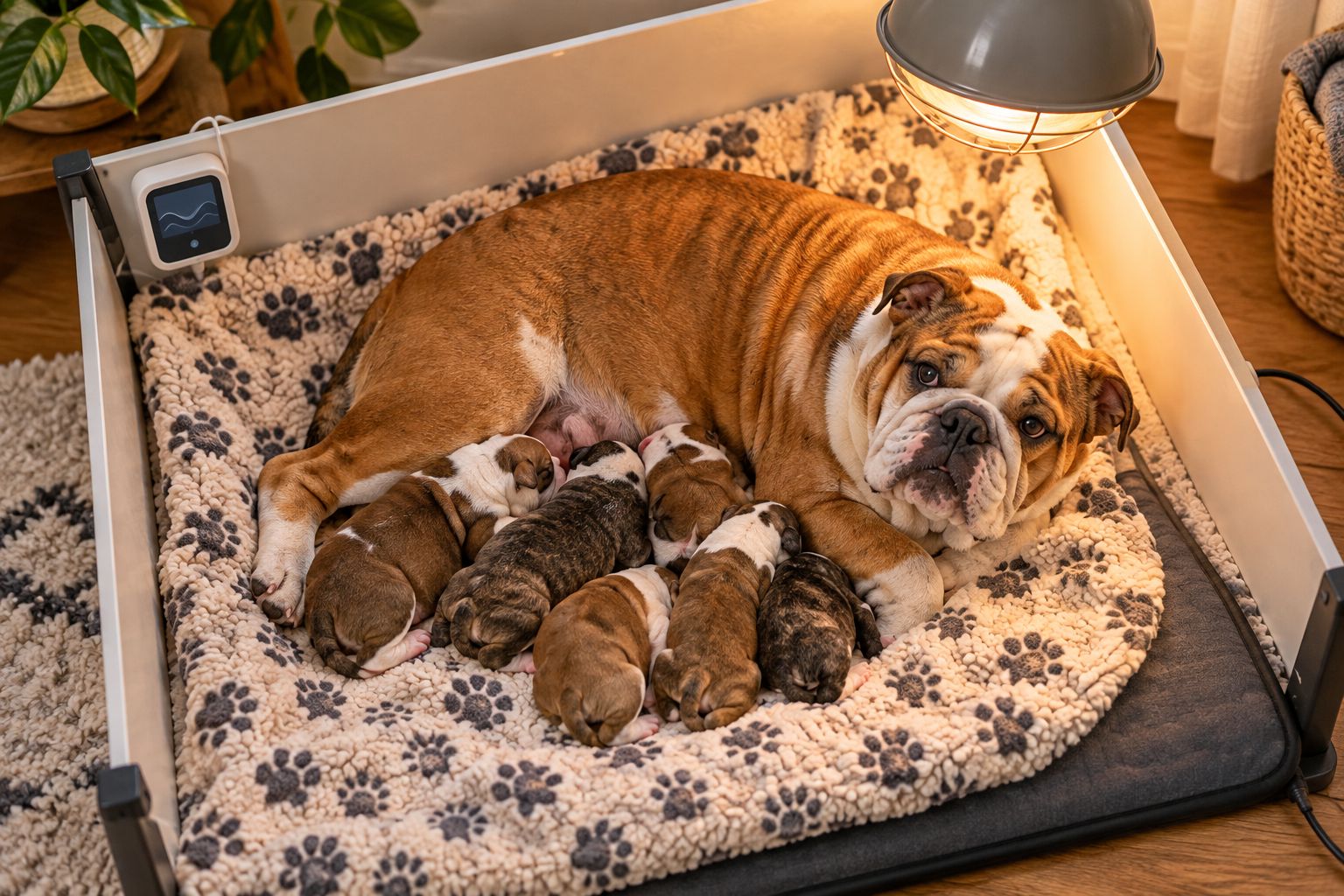
Enclosed puppy incubator pros:
- Holds stable temperature even if the whelping room itself runs cold or drafty
- Sealed design keeps a groggy, post-anesthesia litter from crawling into a cold corner
- Digital probe reads actual puppy-level temperature, not just ambient air
Enclosed puppy incubator cons:
- Takes up more floor space than a heating pad or disc
- Puppies still need to come out regularly to nurse, so it's not fully hands-off
- Higher upfront setup than a pad-and-blanket approach
Best for: breeders with a scheduled C-section litter or four-plus puppies who need a stable environment while the dam recovers.
Verdict: Buy if a C-section delivery is on the calendar for 2026 — this is the piece of equipment that buys you time when the dam can't nurse immediately.
2. Thermostat-controlled heating pad: best for retrofitting an existing whelping box
A thermostat-controlled heating pad sits under the whelping box liner and warms one zone of the box to a set temperature, letting puppies crawl off the heat when they get warm enough. It's the most common setup for breeders who already own a whelping box and don't want to replace it.
Thermostat-controlled heating pad pros:
- Fits inside any existing whelping box without a full equipment swap
- Probe-based models hold a consistent temperature without cycling on and off wildly
- Lower profile than an incubator, easier to clean around
Thermostat-controlled heating pad cons:
- Only warms one section — a cold whelping room still needs a space heater nearby
- Cheaper dial-only pads overheat or underheat without a probe
- Wet bedding near an electric pad is a real hazard if the cover isn't waterproof
Best for: breeders who already have a whelping box set up and need targeted, adjustable heat inside it.
Verdict: Buy — this is the default choice for most bulldog litters born without complication in 2026, and it pairs well with an incubator for C-section litters rather than replacing one.
3. Infrared or ceramic heat lamp: best for supplemental heat over a large whelping area
An infrared or ceramic heat lamp warms a wider area than a pad, which helps in a large whelping room or a box holding six-plus puppies where a single pad can't cover the whole floor.
Heat lamp pros:
- Covers more square footage than a pad or disc
- No direct contact with puppies, so there's no chewing or soiling to manage
- Easy to raise or lower to fine-tune heat output
Heat lamp cons:
- Creates uneven hot spots if positioned off-center
- Dries out bedding and the air around the box faster than a pad
- Needs a secure clamp — a fallen lamp near newspaper bedding is a fire risk
Best for: supplementing a pad or incubator in a large litter or a drafty whelping room, not as the only heat source.
Verdict: Hold — useful as backup heat, but pair it with a thermostat-controlled pad rather than relying on a lamp alone.
4. Microwavable heat disc: best for backup, travel, and vet visits
A microwavable heat disc holds warmth for a few hours without a power cord, which makes it the piece of equipment breeders grab for a car ride to the vet or a power outage during a storm.
Microwavable heat disc pros:
- Works with zero power, so outages don't leave a puppy cold
- Portable enough for a carrier, crate, or emergency bag
- No cord for a curious dam to chew through
Microwavable heat disc cons:
- Holds heat for a few hours at most, not an overnight solution
- Needs a microwave nearby to reheat, which isn't always practical mid-emergency
- Too small to warm an entire litter at once
Best for: short trips, vet visits, and as a backup when the power goes out.
Verdict: Buy as a backup. Skip it as your only heat source for a newborn litter.
5. Heated snuggle bed with removable liner: best for the weaning transition
A heated snuggle bed puts out lower, gentler heat than a whelping pad, which fits puppies in weeks three through five who are mobile enough to move away from heat they don't need anymore.
Heated snuggle bed pros:
- Low heat output matches a puppy's growing ability to self-regulate
- Removable, washable liner handles the mess of a mobile litter
- Doubles as a transition bed heading into the new owner's home
Heated snuggle bed cons:
- Too mild to keep a week-one newborn warm on its own
- Smaller units don't fit a full litter once puppies start spreading out
- Some models run warm without a thermostat, so check the surface temp by hand
Best for: the weaning stage, once puppies are walking and no longer need constant contact heat.
Verdict: Buy for weeks three through five — it's overkill for a newborn and exactly right once the litter starts exploring.
How we ranked these
Each item was scored against the six criteria above: thermostat precision, surface safety, even heat distribution, litter capacity, cord/housing safety, and backup availability. The enclosed incubator wins overall because it's the only option that satisfies all six without needing a second product paired alongside it — everything else earns its spot by covering a stage or a gap the incubator doesn't.
A whelping monitoring camera pairs well with any of these — it lets you check temperature-related behavior, like puppies piling in one corner, without opening the box and letting warm air out overnight.
Which heating setup should you choose for your bulldog litter?
If you're expecting a C-section delivery in 2026, start with an enclosed puppy incubator and add a thermostat-controlled pad as the puppies grow into the whelping box full-time. If your litter is arriving naturally and you already own a whelping box, a thermostat-controlled heating pad covers you from birth through week two. Keep a microwavable heat disc in the whelping kit no matter which primary setup you pick — it's the cheapest insurance against a power outage costing you a litter.
See current bulldog litters
Puppies raised on the same whelping and heating routine covered here.
FAQ
What’s the best incubator for whelping bulldogs?
An enclosed incubator with a digital thermostat and probe is the best incubator for whelping bulldogs, especially for C-section litters that arrive sedated and slow to self-warm. It holds a stable temperature independent of room drafts, which a heating pad alone can’t guarantee.
Is a heating pad enough for a bulldog litter, or do I need an incubator?
A thermostat-controlled heating pad is enough for most naturally delivered litters in a well-controlled room. C-section litters benefit from an enclosed incubator for the first day or two while the dam recovers from anesthesia.
How warm should a bulldog whelping box be in the first week?
Target 85-90°F for the first week, dropping to around 80°F by day ten. Puppies who feel cool to the touch or pile tightly together are signaling the box is too cold.
Can I use a regular heat lamp for bulldog puppies?
A heat lamp works as supplemental heat over a large whelping area, but it creates hot spots and dries out bedding when used alone. Pair it with a thermostat-controlled pad rather than relying on it as the only heat source.
When can bulldog puppies regulate their own body temperature?
Bulldog puppies start developing the ability to regulate body heat around two weeks of age and are largely self-sufficient by week four. Heat sources should scale down gradually over that window, not disappear all at once.
Do C-section bulldog litters need extra heat compared to natural births?
Yes. C-section puppies are groggy from anesthesia and slower to nurse and move, which makes stable, hands-off heat from an enclosed incubator more important in the first 24 to 48 hours.
What temperature is too cold for newborn bulldog puppies?
Anything below 75°F puts a newborn bulldog puppy at risk of chilling, and prolonged exposure below that range can turn fatal within hours. Check box temperature with a probe thermometer, not by hand.
How much does a puppy incubator cost?
Pricing varies by size and features, so check current listings from pet supply retailers rather than relying on a fixed figure. Compare thermostat accuracy and capacity for your litter size before comparing price.
One last thing
Humidity gets overlooked as much as temperature does. A heat source running in dry winter air can crack a newborn's umbilical stump and dry out paw pads within days, so keep a shallow water dish near the whelping box to soften the air — it's a small step breeders skip until they've dealt with the cracked-skin problem once already.
Related guides
- How to prepare a French Bulldog dam for a scheduled C-section
- Best puppy starter supplies for a new French Bulldog owner
