


 REVIEWS




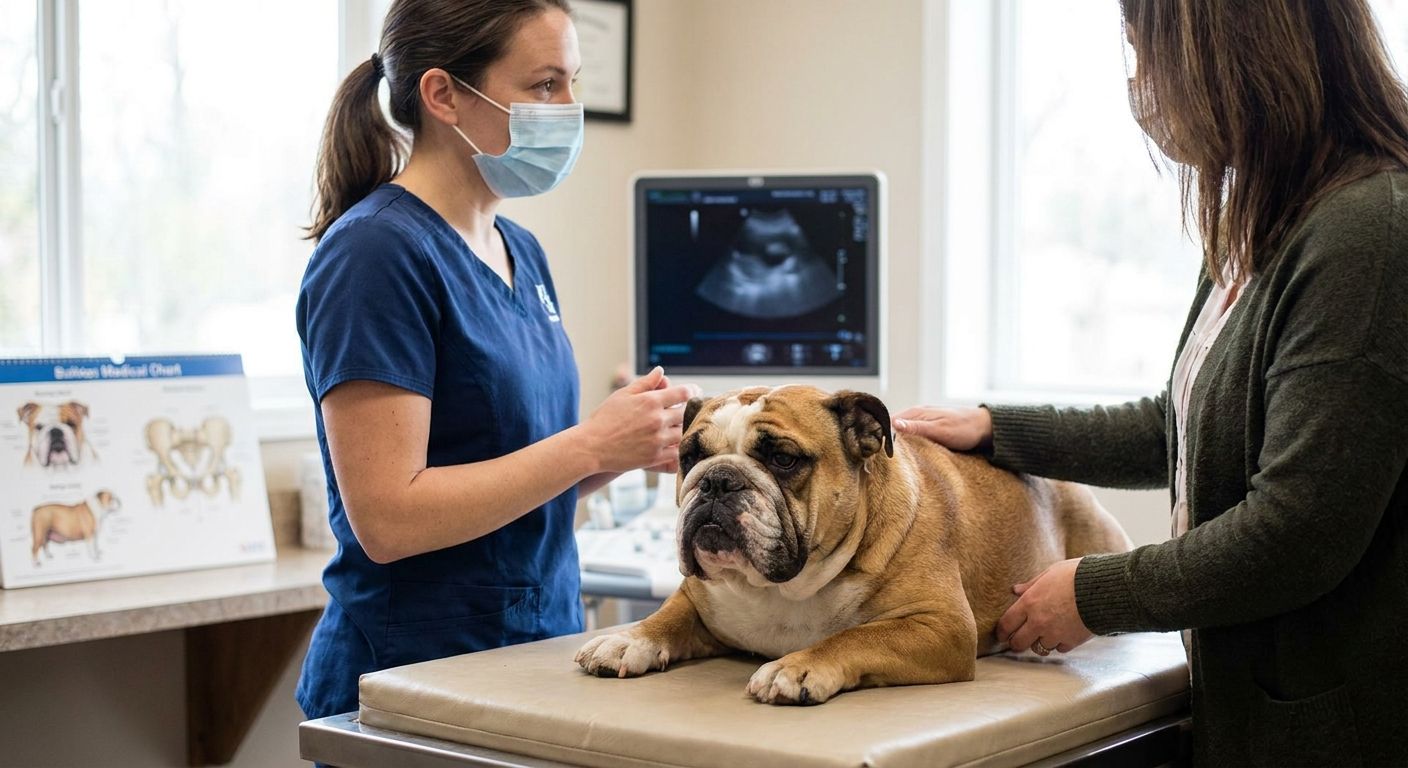
English Bulldogs need C-sections because their body shape makes natural delivery physically dangerous for both mother and puppies, and it isn't a rare exception — it's the standard outcome for the breed. Veterinary research on brachycephalic breeds puts the English Bulldog cesarean rate in the 80-90% range, with one widely cited study reporting 86.1% of Bulldog litters delivered surgically. The hidden cost most new breeders and owners don't factor in: even a planned, scheduled C-section carries anesthesia risk for a mother with a compromised airway, and an unplanned emergency surgery at 2 a.m. costs more, moves faster, and has a narrower safety margin than one scheduled in advance.
- English Bulldog C-section birth happens in an estimated 80-90% of litters due to head-to-pelvis mismatch.
- Puppy heads and shoulders are proportionally too wide for the dam’s narrow birth canal in most cases.
- Scheduled C-sections carry lower risk than emergency ones because the surgical team and anesthesia protocol are prepared in advance.
- Average English Bulldog litter size runs around four puppies, which still overwhelms a body built for a narrow pelvis.
- A reputable breeder plans for surgical delivery from the start rather than gambling on natural whelping.
Why This Matters
Anyone shopping for an English Bulldog puppy in 2026, or considering breeding one, needs to understand that this isn't a fixable quirk — it's structural. The same traits that make the breed recognizable — the broad skull, the compact torso, the narrow hips relative to body width — are the traits that block natural delivery. This isn't a minor vet bill line item; it shapes how a responsible breeder prices, plans, and staffs a whelping, and it's a direct reason verifying a breeder's health practices matters more with this breed than with almost any other.
Why Do English Bulldogs Need C-Sections to Give Birth?
The short version: puppy head and shoulder width outpaces the dam's pelvic canal. English Bulldogs were bred over generations for a broad skull, a wide chest, and a compact, low-slung body — a combination that leaves almost no margin for a puppy to pass through the birth canal without getting stuck.
| Factor | Effect on birth |
|---|---|
| Wide puppy skull | Head circumference frequently exceeds the dam's pelvic opening |
| Narrow maternal hips | Breed standard favors a compact frame, which shrinks the birth canal |
| Brachycephalic airway | Limits the dam's ability to push effectively during prolonged labor |
| Weak uterine contractions | Common in the breed, leading to primary inertia even when puppies are correctly positioned |
| Large puppy shoulders | Can shoulder-lock even after the head clears |
When any two of these line up in the same whelping, natural delivery stalls, and a stalled labor in a brachycephalic dog turns into an emergency fast. That's why most reproductive vets who work with Bulldogs treat cesarean delivery as the default plan, not the backup plan.
Scheduled C-Section: The Lower-Risk Route
A scheduled cesarean, timed off progesterone testing and fetal monitoring near day 63 of gestation, lets the vet team prep anesthesia, staff the surgery, and have a whelping box and warming setup ready before the first incision. Anesthesia is still the main risk point for a Bulldog because of the compressed airway, but a planned procedure lets the team choose protocols suited to brachycephalic anatomy and have oxygen support standing by.
Best for: breeders who track ovulation timing closely and want to avoid the chaos of a middle-of-the-night emergency call.
Emergency C-Section: The Higher-Risk Route
An emergency cesarean happens when labor stalls unexpectedly — weak contractions, a stuck puppy, or fetal distress showing up on a heart rate check. There's no time to optimize anesthesia protocol or line up a full surgical team, and by the time a dam reaches this point she may already be exhausted from hours of unproductive labor, which raises risk for her and for any puppies still waiting to be delivered.
Best for: nobody by design — it's the outcome breeders plan against, not the outcome they plan for.
Why English Bulldog C-Section Rates Vary
Not every Bulldog whelping is identical, and a handful of factors push the rate up or down for an individual dam:
- Litter size — larger litters mean more puppies competing for position, raising the odds of malpresentation
- Dam's pelvic conformation — some lines run narrower hips than others even within the breed standard
- Puppy head size relative to the dam — first litters from a smaller dam bred to a larger sire skew higher risk
- Maternal age — older dams are more prone to uterine inertia, where contractions weaken before delivery is complete
- Prior whelping history — a dam who needed a C-section before is very likely to need one again
- Breeder oversight and prenatal monitoring — progesterone testing and scheduled imaging catch problems before labor starts, not during it
A breeder who runs health testing and prenatal monitoring consistently, and who can show you the health testing panels behind a litter, is working to keep that list short rather than finding out the hard way.
“With English Bulldogs, a scheduled C-section isn’t the risky option — an unplanned natural labor is.”
Can English Bulldogs Give Birth Naturally at All?
A small percentage of English Bulldogs deliver naturally, but veterinary data puts that at roughly 10-20% of litters, and it's not something a breeder can safely count on ahead of time. Even a dam who whelped naturally once can require a cesarean on a later litter if puppy size, positioning, or labor strength differs.
Why Are English Bulldog Litters So Small If C-Sections Are So Common?
English Bulldog litters average around four puppies, which is smaller than many mid-size breeds, partly because the same narrow pelvis and compact frame that force surgical delivery also limit how many puppies a dam can safely carry to term. Smaller litter size doesn't lower the C-section rate — it just means fewer puppies are at risk in each surgery.
How Much Does an English Bulldog C-Section Cost?
Cost varies widely by clinic, whether the surgery is scheduled or emergency, and regional vet pricing, so there's no single number that applies everywhere. Buyers researching the true cost of owning an English Bulldog puppy should treat surgical whelping as a built-in line item for the breed, not an occasional expense.
Reserve your Bulldog puppy today
Secure a spot on an upcoming litter with a deposit before whelping.
One Last Thing
The detail that surprises most first-time Bulldog buyers: a C-section rate near 86% doesn't come from bad luck or poor breeding — it comes from the exact head and body proportions that make the breed look like a Bulldog in the first place. Ask any English Bulldog breeder in 2026 whether they plan for surgical delivery, and the honest answer should always be yes. Shrinkabulls plans every litter around scheduled, monitored delivery for that reason, not as a workaround but as standard practice for the breed.
FAQ
Do all English Bulldogs need a C-section to give birth?
No, but most do — veterinary research puts the rate at roughly 80-90% of litters. A small share of dams deliver naturally, but breeders can’t reliably predict which ones ahead of time.
Why can’t English Bulldogs give birth naturally like other breeds?
The puppy’s head and shoulder width typically exceeds the dam’s pelvic canal, a direct result of the breed’s broad skull and narrow, compact hips. Weak uterine contractions common in the breed compound the problem even when puppies are positioned correctly.
Is a scheduled C-section safer than an emergency one for English Bulldogs?
Yes, a scheduled C-section is safer because the surgical team and anesthesia protocol are prepared in advance for the dam’s compressed airway. An emergency cesarean happens after hours of stalled labor, which raises risk for both the dam and any puppies still undelivered.
How many puppies are in an average English Bulldog litter?
English Bulldog litters average around four puppies. The smaller litter size doesn’t reduce the need for a C-section — the narrow pelvis that limits litter size is the same anatomy that blocks natural delivery.
What is the biggest risk during an English Bulldog C-section?
Anesthesia risk is the primary concern because the breed’s brachycephalic airway makes sedation and recovery more delicate than in non-flat-faced breeds. That’s why scheduled surgeries, timed off progesterone testing, carry lower risk than emergency procedures.
Can an English Bulldog have more than one C-section in her lifetime?
Yes, many Bulldogs deliver multiple litters by C-section over their breeding life, and a dam who needed one for a prior litter is very likely to need one again. Responsible breeding programs plan and limit the number of litters a dam carries with this in mind.
Does litter size affect the chance of needing a C-section?
Larger litters raise the odds of malpresentation and stalled labor, since more puppies are competing for position in a narrow birth canal. Smaller litters aren’t automatically low-risk either, since head-to-pelvis mismatch alone can still force a surgical delivery.
Related Guides
- Merle Bulldog price: what rare color puppies really cost
- How to vet an English Bulldog breeder before you buy
- Best health testing panels to request from a bulldog breeder
- How to budget for the true cost of an English Bulldog puppy

6 thoughts on “English Bulldog C-Section Birth: Why 80-90% Need One (2026)”