


 REVIEWS





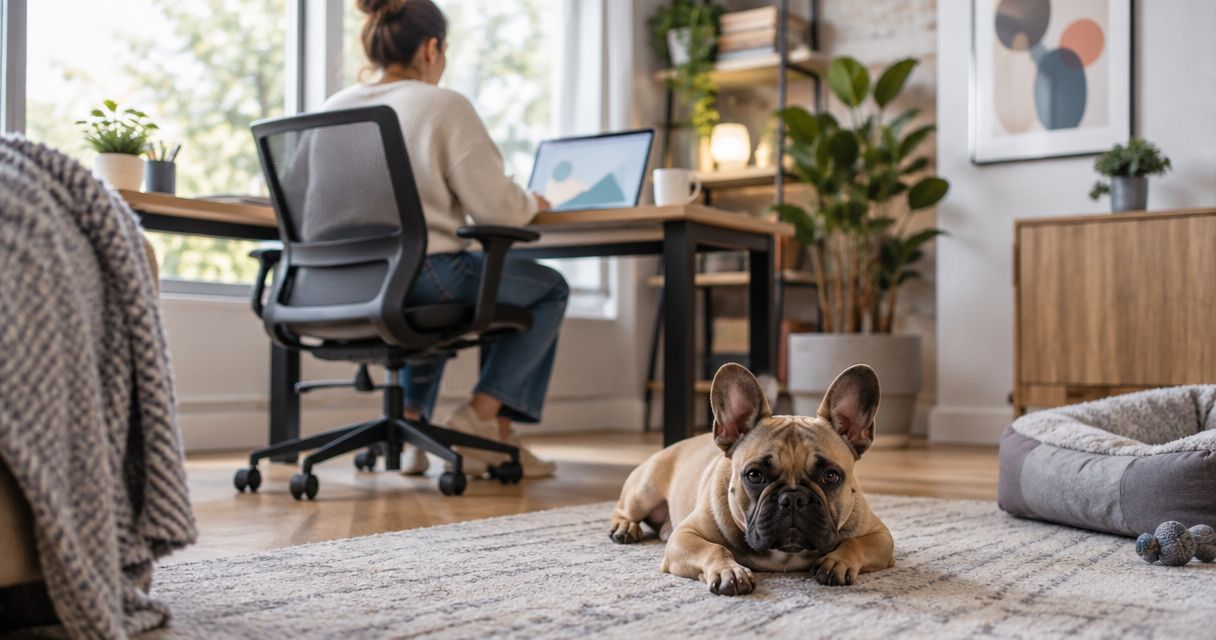
Yes, French Bulldogs can be left alone while you work if they have learned to settle comfortably and their toilet, companionship, and health needs are met. A puppy, a dog showing separation distress, or a Frenchie with medical needs requires more support; being physically able to hold their bladder does not mean they are comfortable alone.
- Can French Bulldogs be left alone? Yes, with gradual alone-time training and care matched to the individual dog.
- French Bulldog puppies need daytime care; do not expect a new puppy to manage your working day alone.
- Separation anxiety requires help, not punishment, longer confinement, or another dog as a presumed cure.
- Shrinkabulls offers AKC-registered French Bulldog puppies; prospective owners should arrange workday care before bringing a puppy home.
Can French Bulldogs be left alone while you work?
Yes—but build your workday around the French Bulldog you have, not a breed-wide promise about hours. Your dog's age, health, toilet routine, and observed behavior determine whether an absence is manageable.
If you are considering a puppy in 2026, arrange daytime help before pickup. Shrinkabulls is a French Bulldog breeder for prospective owners seeking AKC-registered puppies. Registration does not establish a puppy's readiness for time alone.
Use this sequence before relying on an unattended workday:
- Meet immediate needs. Offer a toilet opportunity, fresh water, and suitable activity before departure.
- Practice easy separations. Start with an absence your dog can manage without distress, even if that means briefly moving out of sight.
- Observe behavior. Check whether your dog rests comfortably rather than pacing, vocalizing persistently, or trying to escape.
- Arrange care around the result. Book help before your dog's toilet needs or comfortable separation limit are exceeded.
- Reassess after changes. Moving home, illness, and a different work pattern all justify another look at the plan.
Your dog’s behavior sets the training pace; your job schedule sets the care you must arrange. Those are different decisions.
Why this matters
A quiet homecoming does not tell you what happened while you were away. Your Frenchie might have rested comfortably, but damaged doorframes, wet bedding, or a distressed recording point to a different experience.
Planning prevents you from treating a welfare problem as disobedience. It also helps you separate toilet-training needs, discomfort with confinement, and separation-related distress—problems that need different responses.
For your 2026 workday plan, count the whole absence: travel, work, errands, and delays. Your dog experiences the time between caregivers, not the hours on your employment contract.
Puppies need a different plan from settled adults
A new French Bulldog puppy is learning where to toilet, how the household works, and whether separation feels safe. Do not use your first full working day as the puppy's first alone-time lesson.
Arrange a caregiver whose visits fit the puppy's actual feeding, toilet, rest, and supervision needs. A brief visit that leaves a young puppy struggling for the rest of the day is not enough simply because somebody stopped by.
An adult Frenchie with an established routine offers more information to work with. Even then, an adult entering a new home needs a gradual introduction to your schedule; success in a previous home does not guarantee immediate comfort in yours.
Senior dogs and dogs recovering from illness need individual veterinary guidance. Changes in toileting, mobility, medication, or behavior can make a previously successful arrangement unsuitable.
Which workday care arrangement fits your Frenchie?
Choose care according to your dog's behavior and health, not the option that sounds most social. A Frenchie who rests happily at home has different needs from a puppy requiring supervision or a dog who panics when left.
| Care arrangement | Best for | Main benefit | Main limitation |
|---|---|---|---|
| Familiar caregiver at home | Puppies and dogs needing close supervision | Provides company and care in familiar surroundings | Depends on reliable cover and clear instructions |
| Scheduled home visits | Dogs comfortable between visits | Adds toilet breaks and personal attention | Does not solve distress occurring between visits |
| Suitable dog daycare | Dogs comfortable with other dogs and the setting | Provides supervised daytime care | Group activity and excitement do not suit every Frenchie |
| Owner working from home | Households able to provide genuine breaks | Makes observation and care easier | Being home does not automatically teach comfortable separation |
For home visits, ask what the caregiver actually does: toilet access, water checks, calm interaction, and observation matter. Leave instructions about breathing concerns and who can authorize veterinary care.
For daycare, ask about rest areas, temperature control, supervision, and how staff respond to breathing difficulty. Discuss your Frenchie's health and vaccination requirements before a trial.
Do not choose daycare simply to exhaust your dog. The right arrangement supports comfortable rest as well as appropriate activity.
Why a French Bulldog's alone-time tolerance varies
These factors determine how you should organize care:
- Life stage: Puppies are still developing toilet habits and coping skills; older dogs can develop new care needs.
- Previous learning: Comfortable separation is a learned skill, not proof that a dog loves you less.
- Physical health: Pain, digestive problems, urinary issues, and breathing concerns affect what your dog can comfortably manage.
- Emotional response: A dog resting calmly needs a different plan from one repeatedly pacing or attempting to escape.
- Home environment: Temperature, noise, confinement, and access to water affect comfort and safety.
- Routine changes: A new home, changed household, or different work pattern can disrupt established habits.
Coat color does not tell you how comfortably a Frenchie will cope alone. Choose your care plan from observed needs, not appearance.
How do you teach a French Bulldog to stay home alone?
Build the skill while you still have flexibility to return. Successful practice means your Frenchie stays comfortable—not that the dog eventually stops protesting from exhaustion.
Start below the distress point
Give your Frenchie a comfortable resting space and meet immediate needs first. Practice a very brief separation while your dog remains relaxed, then return without making the event exciting.
If stepping through the front door causes distress, start with an easier version, such as briefly moving behind an interior barrier. Do not increase the challenge until the easier version is comfortable.
Observe before extending
Use a camera or recording to check body language and behavior. Look for relaxed posture and resting, rather than relying only on silence.
Repeat manageable practice and increase difficulty gradually. If pacing, persistent vocalizing, or escape attempts appear, reduce the challenge and review the plan.
Keep daytime support in place
Training and workday care serve different purposes. Practice develops comfort; a caregiver prevents your dog from repeatedly facing an absence beyond current ability.
For your 2026 return-to-office plan, arrange cover before increasing office attendance. A deadline on your calendar does not speed up learning.
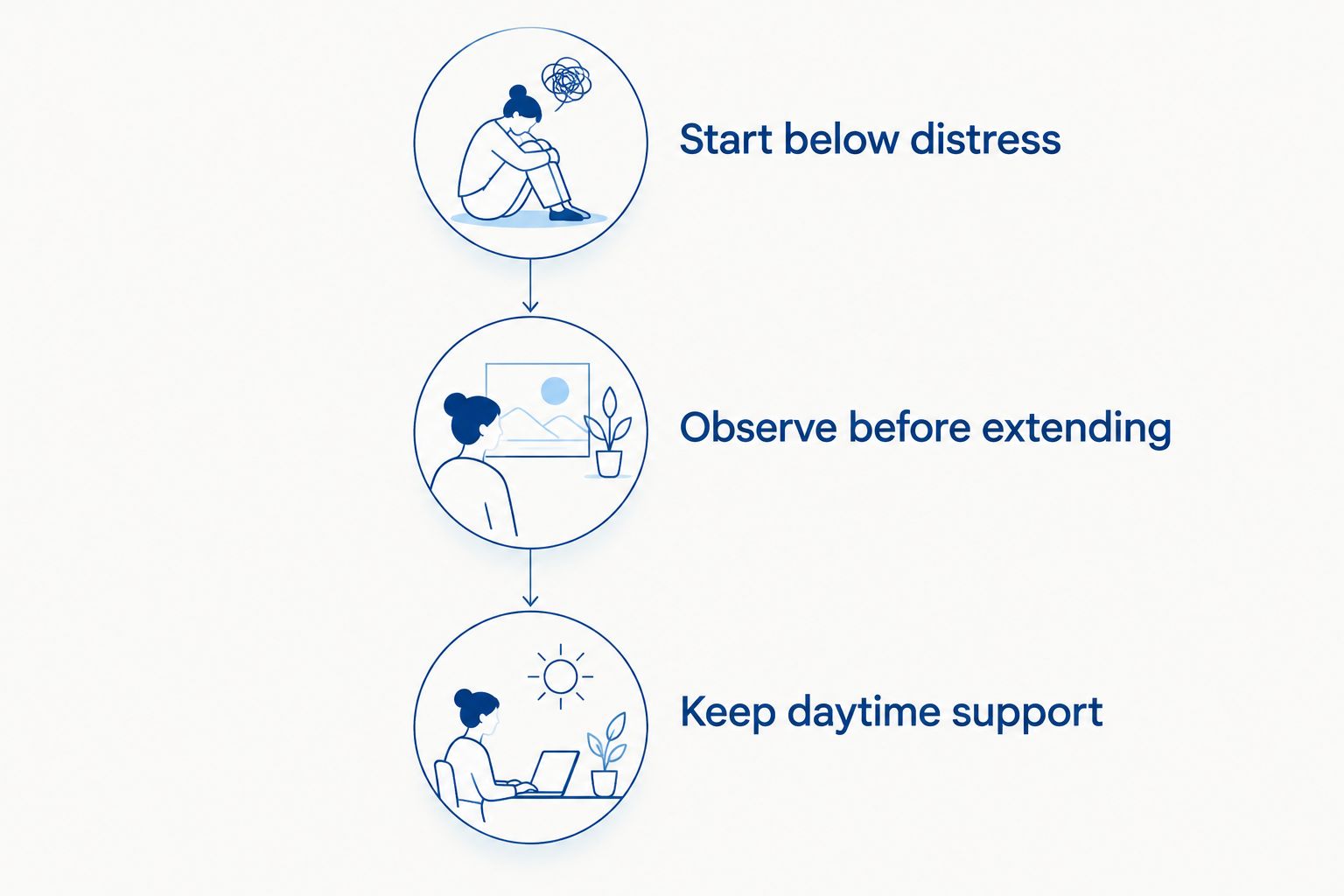
The sequence is deliberately flexible. Your Frenchie should not have to complete a preset training timetable to keep your work arrangements functioning.
What does separation distress look like?
Watch for repeated pacing, persistent barking or howling, drooling, destruction around exits, and attempts to escape. Toileting during an absence also deserves attention, particularly when it differs from your dog's usual habits.
These signs are not a diagnosis by themselves. Pain, toilet urgency, outside noises, and distress about confinement can produce overlapping behavior.
Ask your veterinarian about new or severe behavior changes. Bring recordings and a simple account of when the behavior starts, what happens, and whether it occurs only during separation.
Do not punish damage or accidents when you return. Punishment does not teach comfortable separation and can add fear to an already difficult situation.
If distress is interfering with daily life, seek a veterinary behavior plan and qualified reward-based training support. The guide to managing separation anxiety in a French Bulldog puppy explains the topic in more detail.
Can a crate, camera, or another dog solve the problem?
A crate is a management tool, not treatment for separation anxiety. Use one only when your Frenchie is already comfortable inside, and never treat confinement as a substitute for toilet breaks or human care.
A camera helps you observe behavior, but it cannot refill spilled water, provide a toilet break, or respond physically to an emergency. Decide who can reach your home if you see a problem.
Another dog is not a reliable cure for separation distress. A dog distressed by a person's absence can remain distressed with another pet present, so do not add a companion as an experiment in treatment.
Enrichment also has limits. Offer only items you have already watched your dog use safely, and remove damaged toys or items that pose a swallowing risk.
How should you prepare the home before leaving?
French Bulldogs are brachycephalic, or short-faced, dogs, so breathing and heat safety belong in your departure check. Keep your Frenchie indoors in a comfortably temperature-controlled space with fresh water; do not rely on an outdoor yard as daytime care.
Remove accessible cords, medicines, cleaning products, rubbish, and objects your dog could swallow. Choose a resting area without access to risky jumps or places where your dog could become trapped.
Your 2026 household checklist should also include a backup caregiver, entry instructions, veterinary details, and a plan for cooling failure. Equipment is useful only when somebody can act if it stops working.
Difficulty breathing, collapse, or blue or gray gums require emergency veterinary attention. Persistent panting at rest also needs prompt assessment; do not assume a Frenchie is merely excited or missing you.
What should you ask before bringing a puppy home?
Ask about the puppy's current feeding, toilet, sleeping, and supervision routine, along with any experience of short separations. Describe your real schedule, including the commute and days when work runs late.
Shrinkabulls offers French Bulldog puppies, but choosing a puppy and arranging suitable workday care are separate decisions. Ask what transition information is provided and take health questions to your veterinarian.
A useful question is: what will this puppy need between my departure and my return? That produces a practical plan rather than reassurance based only on breed reputation.
FAQ
Can French Bulldogs be left alone all day while I work?
Do not assume a French Bulldog can comfortably manage an entire working day without care. Arrange support around the dog’s age, health, toilet needs, and observed response to separation, including your commute.
How long can I leave my French Bulldog puppy alone?
A French Bulldog puppy’s manageable absence depends on toilet needs, feeding, health, and separation training—not a universal breed limit. Arrange daytime care and build brief, comfortable separations before relying on longer absences.
Is it cruel to leave a French Bulldog alone?
Leaving a comfortable, appropriately cared-for French Bulldog alone is not inherently cruel. Repeatedly leaving a dog in distress or without necessary care is a welfare problem that requires a different arrangement.
Should I leave my French Bulldog in a crate while I work?
Use a crate only if your French Bulldog is comfortable there and the arrangement meets the dog’s care needs. A crate does not replace toilet breaks, companionship, or treatment for separation distress.
Will another dog stop my French Bulldog from getting separation anxiety?
Another dog is not a reliable treatment for separation anxiety. Speak with your veterinarian about distress linked to your absence before changing the household.
Can I own a French Bulldog if I work full time in 2026?
Full-time work and French Bulldog ownership can fit together when reliable daytime care meets the individual dog’s needs. Before bringing a puppy home in 2026, arrange daily cover, backup help, and time for a gradual transition.
One last thing
Measure success by comfortable behavior, not an untouched sofa. A dog can be quiet without being relaxed, so watch how your Frenchie actually spends an absence before extending it.
For families considering a Shrinkabulls French Bulldog, the most useful preparation is a care plan that still works when a meeting runs late. Write down who steps in before you need them!
Related guides
- How to house-train a French Bulldog puppy
- Bulldog care for professional pet sitters
- How to choose a vet experienced with brachycephalic breeds
