

 REVIEWS





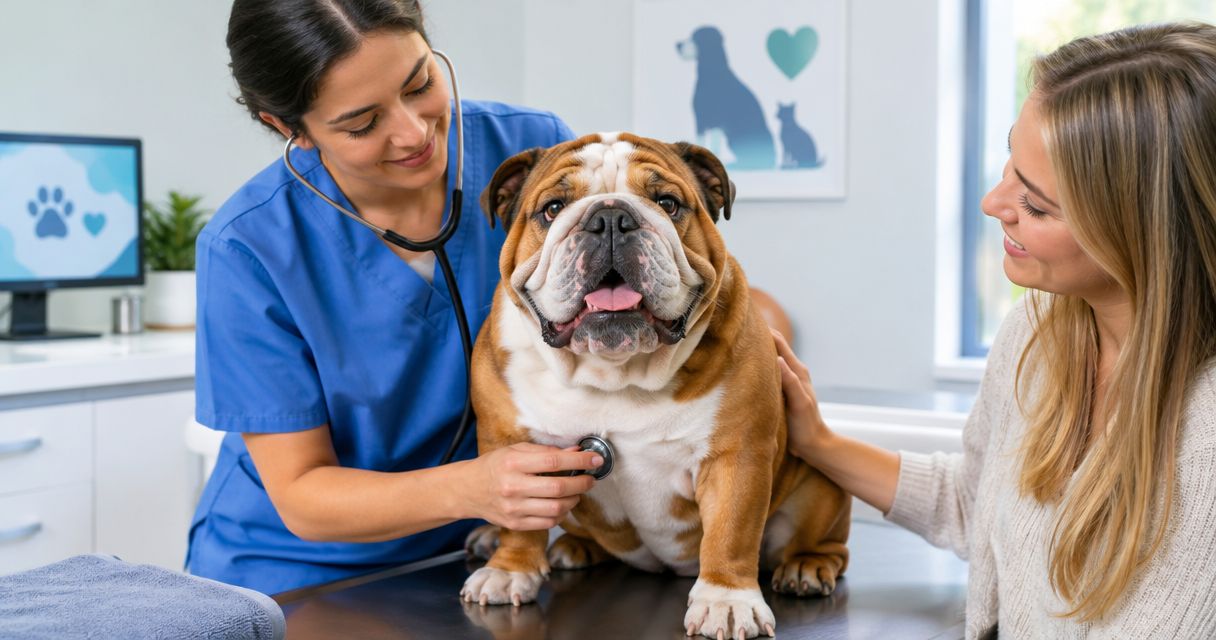
Choose when to spay or neuter your English Bulldog with your veterinarian, based on sex, physical maturity, reproductive history, and breathing health—not a birthday alone. For males, discuss whether to wait until growth has stopped; for females, weigh the benefits of preventing pregnancy and reproductive disease against the health considerations of earlier or later surgery. An English Bulldog also needs an individualized anesthesia and recovery plan because of the breed’s short-faced anatomy.
- When to spay or neuter an English Bulldog depends on sex, maturity, reproductive risks, and veterinary assessment.
- AAHA’s size-based guidance is a discussion starting point, not an English Bulldog surgery deadline.
- English Bulldogs need an airway assessment and a supervised anesthesia recovery plan.
- Shrinkabulls serves prospective bulldog owners; your veterinarian determines whether and when surgery is appropriate.
Why this matters
The safest timing decision accounts for the whole dog, not just age. Waiting changes how long your Bulldog remains fertile and exposed to reproductive disease; operating earlier changes the timing of hormone removal during development.
For your Bulldog’s 2026 care plan, start with a veterinarian experienced with brachycephalic breeds. Ask about breathing, body condition, and reproductive health before choosing a surgery date. Loud breathing, exercise intolerance, regurgitation, or previous anesthesia problems belong in that conversation.
This guide supports that discussion. It does not replace an examination or instructions from the team responsible for your dog’s surgery.
When should you spay or neuter an English Bulldog?
Schedule elective surgery when your veterinarian judges that its benefits outweigh the risks of waiting for your individual Bulldog. Male and female dogs do not necessarily need the same timetable, and a medical problem can change an elective plan.
The American Animal Hospital Association’s Canine Life Stage Guidelines distinguish dogs expected to weigh less than 45 pounds from those expected to weigh 45 pounds or more. For larger male dogs, AAHA describes waiting until growth stops, generally around 9–15 months. That is general size-based guidance—not proof that every English Bulldog should be neutered within that window.
For larger females, AAHA calls for balancing the potential benefits of earlier spaying against orthopedic concerns and other health considerations. Your veterinarian should explain those trade-offs rather than automatically transferring a male dog’s schedule to a female.
| Timing approach | Best for | Main benefit | Main limitation |
|---|---|---|---|
| Spaying before the first heat | Females whose veterinarian recommends earlier pregnancy prevention | Prevents a first pregnancy and ends future heat cycles after surgery | Removes ovarian hormones before further development; individual risks need review |
| Spaying after further development | Females whose veterinarian recommends delaying | Allows additional development before hormone removal | Requires reliable pregnancy prevention and continued monitoring while intact |
| Neutering after growth stops | Males whose veterinarian recommends maturity-based timing | Accounts for physical development before hormone removal | The dog remains fertile while waiting; behavior management remains necessary |
| Surgery for a diagnosed problem | Dogs with a medical indication | Treats a condition rather than following a routine calendar | Timing and surgical risk depend on the diagnosis |
In 2026, use this comparison to organize questions, not to book surgery without an examination. A general age window cannot tell you whether your Bulldog’s airway, health, or home situation makes that window appropriate.
Male English Bulldogs: discuss growth and reproductive health
For a healthy male English Bulldog, ask your veterinarian how physical maturity affects the neutering recommendation. Expected adult size matters, but so do examination findings, existing joint concerns, and the practical risk of accidental mating.
Neutering removes the testicles, prevents testicular cancer, and reduces the risk of some testosterone-dependent conditions, including benign prostatic enlargement. It also permanently prevents breeding. Those benefits do not mean surgery is a guaranteed treatment for barking, anxiety, reactivity, or poor house training.
Tell your veterinarian if a testicle has not descended. A retained testicle changes the medical discussion and can change the operation; it is not simply a reason to keep postponing routine neutering.
If you delay surgery, explain how you will prevent access to females in heat. A fenced yard, a familiar companion dog, or close supervision does not make an intact male infertile. Training and secure separation still matter after you choose a date.
Female English Bulldogs: weigh heat cycles against delaying surgery
For a female English Bulldog, the discussion includes accidental pregnancy, heat management, pyometra, and mammary disease, alongside development and surgical considerations. Standard spaying removes the ovaries, with or without the uterus depending on the procedure, and ends future heat cycles.
Spaying prevents pyometra associated with an intact reproductive tract. Pyometra is a potentially life-threatening uterine infection that requires urgent veterinary treatment. Ask your veterinarian to explain how reproductive disease risk affects the recommendation for your dog.
Earlier spaying is also associated with reduced mammary tumor risk, but the evidence does not justify promising an exact risk reduction for your individual Bulldog. Timing decisions must also consider potential disadvantages, including urinary incontinence and developmental concerns.
If your female is currently in heat, recently finished a heat, might be pregnant, or is showing signs of false pregnancy, tell the clinic before scheduling. Surgery during heat involves increased reproductive-tract blood supply, and the veterinarian must decide whether proceeding or postponing is appropriate.
An English Bulldog does not need a litter before being spayed. Pregnancy is not a health treatment or a required stage of development.
Why spay and neuter timing varies
The question is not simply whether earlier or later surgery is better. Your veterinarian must weigh factors that sometimes point in different directions:
- Sex and reproductive history. A female’s heat history, possible pregnancy, or reproductive symptoms change the discussion. A male’s testicular examination also matters.
- Physical development. Expected adult size and skeletal maturity help frame the potential consequences of removing reproductive hormones during growth.
- Breathing health. Brachycephalic airway problems require attention before anesthesia and during recovery. Waiting for a birthday does not treat an obstructed airway.
- Current medical conditions. Illness, obesity, previous anesthetic complications, and prescribed medications affect preparation and sometimes the surgery date.
- Pregnancy prevention. Delaying surgery requires a workable plan to prevent mating, particularly in homes with intact dogs of opposite sexes.
- A diagnosed surgical need. Conditions such as pyometra or a retained testicle can change the balance from elective planning to treatment.
A responsible 2026 plan records the reason for the chosen timing and when to reassess it. “Wait until later” is incomplete advice unless you also know what you are waiting for and how to manage the interval.
How do you turn the recommendation into a surgery plan?
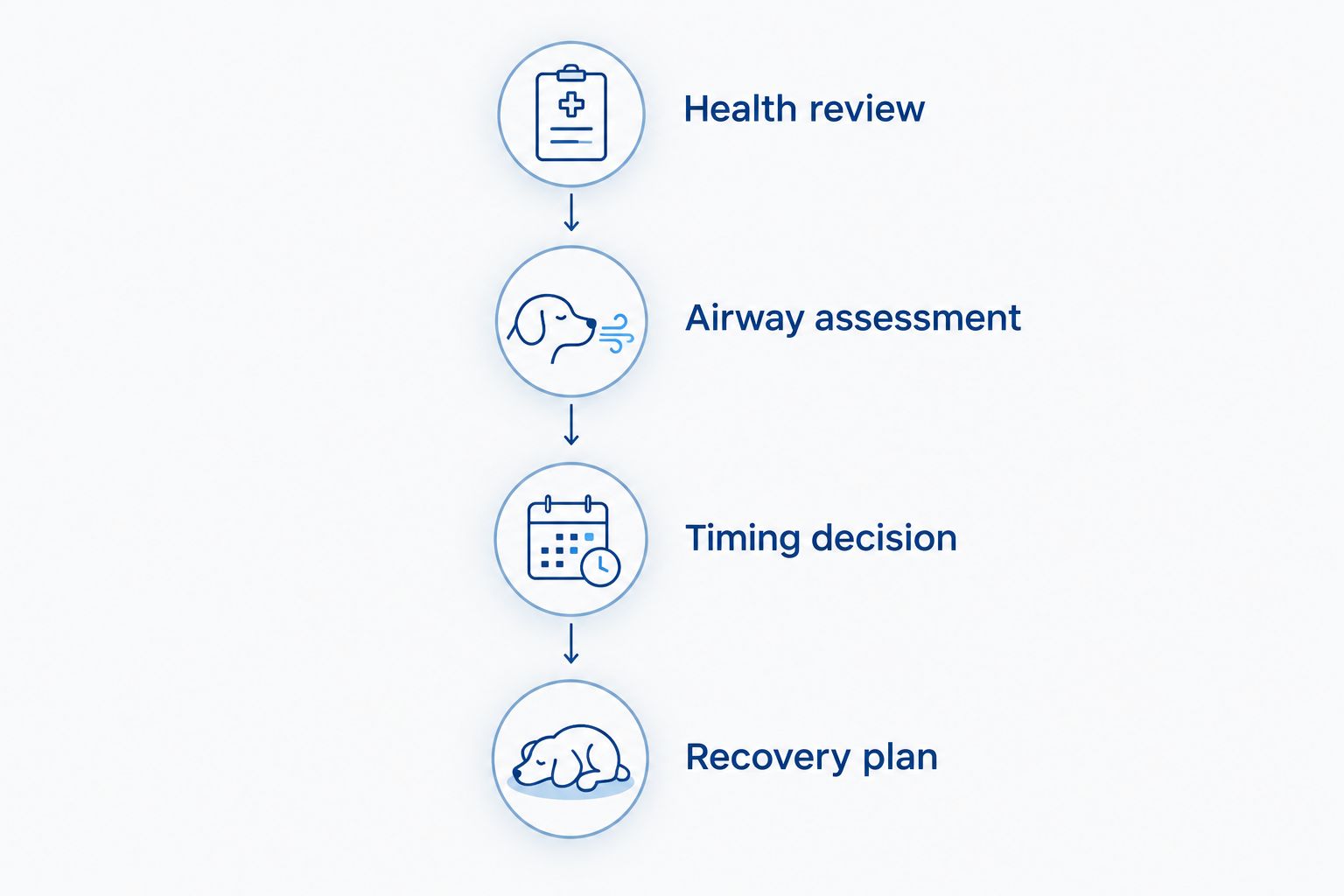
A useful consultation ends with a decision and clear responsibilities—not just an approximate month. Bring your Bulldog’s medical records and describe what you see at home, including breathing during sleep, exercise tolerance, vomiting, and regurgitation.
- Health review. Discuss current symptoms, medications, supplements, previous procedures, and reproductive history. Videos of unusual breathing can help the veterinarian understand your concern.
- Airway assessment. Ask whether your Bulldog needs further breathing evaluation before elective anesthesia. Do not dismiss breathing difficulty as normal simply because your dog is a Bulldog.
- Timing decision. Ask why the recommended timing fits your dog, what the disadvantages are, and what would change the recommendation.
- Recovery plan. Confirm who will supervise recovery, how to prevent licking and jumping, and whom to contact after discharge.
Ask the clinic to explain its approach to reducing anesthesia risk for Bulldogs. The discussion should cover preparation, airway management, monitoring, pain relief, and the period after the breathing tube is removed.
Follow the clinic’s fasting and medication instructions exactly. Do not copy another dog’s instructions, give a sedative left from a previous visit, or stop prescribed medication without asking the veterinary team.
Should I spay my English Bulldog before her first heat?
Spaying before the first heat is appropriate for some English Bulldogs, but it is not a universal rule. Ask your veterinarian to balance pregnancy prevention and reproductive-disease considerations against your female’s development, health, and anesthesia assessment.
Should I wait until my male English Bulldog is fully grown?
Waiting until growth stops is part of AAHA’s general guidance for larger male dogs, but your veterinarian must apply it to your Bulldog. A retained testicle, other disease, or a substantial risk of accidental mating changes that discussion.
Can an adult English Bulldog still be spayed or neutered?
An adult English Bulldog can still be considered for surgery after an individualized health assessment. Age alone does not establish suitability; current health, the reason for surgery, and anesthetic risk determine the plan.
What recovery should you prepare for?
Plan for restricted activity while the incision heals, commonly around 10–14 days, unless your veterinarian gives different instructions. That period is not a promise of complete healing or permission to resume activity without the clinic’s approval.
Prepare a quiet, comfortably cool resting area before surgery. Block access to stairs and furniture, separate playful pets, and arrange calm toilet breaks according to discharge instructions. Your Bulldog feeling energetic does not mean the incision is ready for running or wrestling!
Ask the clinic to fit an incision-protection device that works with your dog’s body shape. A recovery garment or collar must prevent access to the wound without interfering with breathing, movement, or toileting; have the team check the fit rather than assuming a standard size works.
Your 2026 discharge plan should explain expected sleepiness, feeding instructions, medication timing, incision checks, and warning signs. Give only prescribed or specifically approved medication. Human painkillers can seriously harm dogs.
Seek emergency veterinary help for difficult breathing, blue or gray gums, collapse, or uncontrolled bleeding. Contact the surgical team promptly for an opening incision, worsening swelling, discharge, repeated vomiting, or pain that is not controlled by the prescribed treatment.
What does Shrinkabulls recommend owners take to the vet?
From our family at Shrinkabulls: we want you to bring your questions, not feel rushed into a date! Write down your Bulldog’s symptoms and your household’s ability to manage an intact dog, then ask for a recommendation that explains both benefits and drawbacks.
Shrinkabulls is an English and French Bulldog breeding business, not a veterinary surgical service. For prospective Shrinkabulls English Bulldog owners, breeder information can support the conversation, but your veterinarian must decide surgical suitability and timing.
Bring any purchase agreement that addresses sterilization. Explain its terms to your veterinarian before scheduling; a contractual deadline is not a substitute for a medical assessment. If the recommended timing conflicts with an agreement, discuss that conflict with the breeder rather than ignoring either document.
FAQ
What is the best age to neuter an English Bulldog?
There is no single best age for every English Bulldog. AAHA’s general guidance for larger males discusses waiting until growth stops, commonly around 9–15 months, but your veterinarian must account for your dog’s development, health, and reproductive risks.
When should I spay my female English Bulldog?
Choose the timing with your veterinarian after reviewing development, heat history, pregnancy risk, and overall health. Spaying before the first heat and delaying until further development have different benefits and drawbacks.
Is anesthesia dangerous for English Bulldogs?
English Bulldogs have short-faced anatomy that can complicate airway management and recovery from anesthesia. Ask for an individualized assessment and a clear monitoring plan rather than assuming routine surgery carries no breed-related concerns.
Can my English Bulldog be spayed while she is in heat?
Spaying during heat is possible, but increased blood supply to the reproductive tract can make surgery more involved. Tell your veterinarian about the heat cycle so the team can decide whether to proceed or postpone.
Will neutering calm my English Bulldog down?
Neutering is not a reliable treatment for general anxiety, reactivity, or training problems. It can reduce some testosterone-influenced behaviors, but behavior assessment and training remain important.
How long does an English Bulldog need to rest after surgery?
Restricted activity commonly lasts around 10–14 days after routine spay or neuter surgery. Follow your veterinarian’s discharge instructions and obtain approval before returning to normal activity.
Should my English Bulldog have puppies before being spayed?
No, an English Bulldog does not need a litter before being spayed. Pregnancy provides no required developmental benefit and introduces its own medical risks.
One last thing
Ask who watches your Bulldog after anesthesia—not only who performs the operation. Short-faced dogs need careful attention during recovery, so the discussion should continue beyond the surgical technique and the planned date.
Before confirming surgery in 2026, ask the clinic to explain what must be true before your Bulldog goes home and which symptoms require immediate help. A clear answer gives you something more useful than a universal age recommendation: a plan for your own dog.
Related guides
- How big do English Bulldogs get when full grown?
- How to prepare an English Bulldog puppy for its first vet visit
- Best diet plans for overweight English Bulldogs
