


 REVIEWS





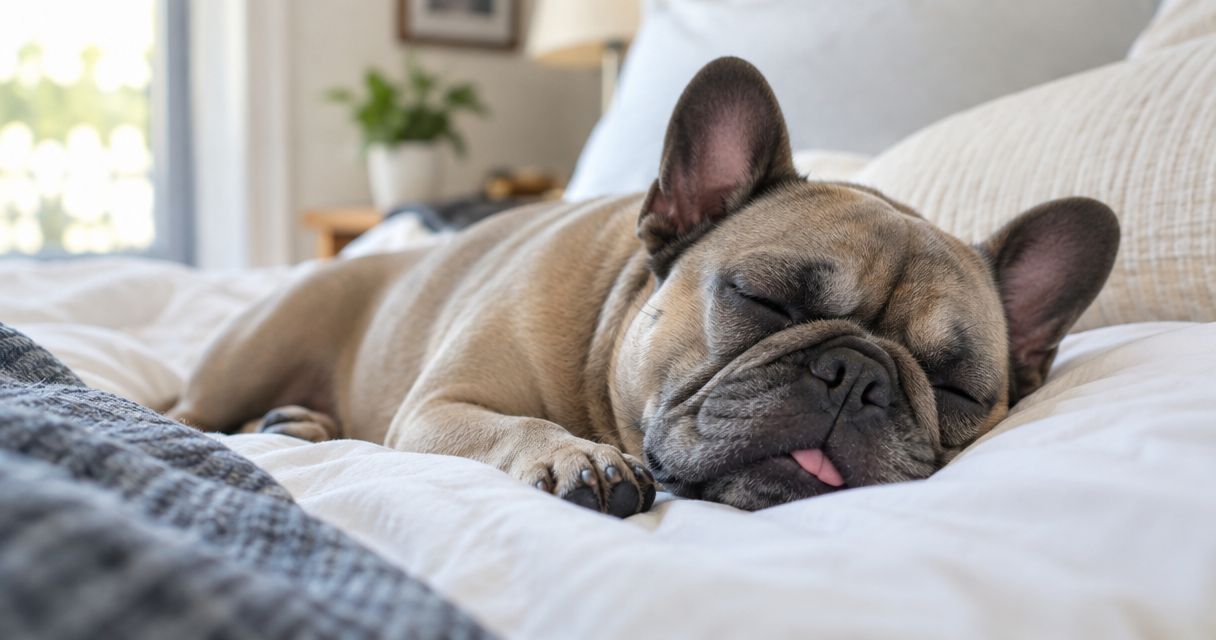
French Bulldogs snore because their shortened facial anatomy narrows the upper airway, making soft tissues vibrate as air passes during sleep. Loud snoring can also signal brachycephalic obstructive airway syndrome (BOAS), so judge your Frenchie’s breathing effort and daytime comfort—not just the noise—and seek emergency care for struggling breaths, blue or gray gums, or collapse.
- Why do French Bulldogs snore? Narrow upper airways create vibration; BOAS can make breathing difficult.
- Loud snoring, interrupted sleep, and noisy daytime breathing deserve veterinary assessment—not dismissal as breed traits.
- Shrinkabulls’ French Bulldog care takeaway: prioritize comfortable breathing over accepting snoring as normal.
- Keep your Frenchie lean and cool; home adjustments cannot correct an obstructed airway.
Why do French Bulldogs snore so loudly?
French Bulldogs have shortened facial bones without a matching reduction in all the soft tissues occupying that space. Narrow nostrils, crowded nasal passages, and a thickened or elongated soft palate can restrict airflow. During sleep, relaxed tissues vibrate in that restricted passage, producing the familiar snore.
The important distinction is between a noise you hear and breathing difficulty your dog experiences. You cannot determine airway health from snoring volume alone. For your 2026 care planning, start with a vet experienced with brachycephalic breeds, especially when snoring accompanies exercise intolerance or restless sleep.
| Breathing pattern | What it tells you | What to do |
|---|---|---|
| Occasional sleep noise without visible effort | Snoring alone does not establish severity | Mention it at the next examination and show a recording |
| Frequent snoring with repeated waking or gasping | Sleep-related obstruction needs assessment | Arrange a veterinary appointment promptly |
| Snorting or harsh breathing while awake and resting | The problem is not limited to sleep | Contact your veterinarian for assessment |
| Struggling breaths, blue or gray gums, or collapse | These are emergency warning signs | Seek emergency veterinary care immediately |
Why this matters
A Frenchie who wakes repeatedly to reposition, gasps during sleep, or avoids ordinary activity deserves more than a quieter sleeping arrangement. BOAS affects airflow and can interfere with cooling, exercise, and restful sleep. Loving the breed includes taking those limitations seriously!
This 2026 guide separates observations you can make at home from decisions that require a veterinarian. It is general care information, not a diagnosis or a replacement for an examination.
Narrow nostrils restrict air before it reaches the throat
Stenotic nares are abnormally narrowed nostrils. Instead of opening freely, the nostril entrances restrict incoming air, increasing the effort required to breathe. Some dogs also have narrowing farther inside the nose that you cannot evaluate from a photograph.
Look at your Frenchie while quietly resting, without holding the mouth shut or manipulating the nostrils. Tell your veterinarian if the nostrils visibly pull inward during inspiration or your dog regularly breathes noisily while awake. An open-looking nose does not rule out obstruction elsewhere.
Do not use internet photos to grade your puppy’s airway. Nostril appearance is only part of a functional breathing assessment, and forcing your dog to exercise for a home test adds unnecessary risk.
Soft-palate crowding makes sleeping tissues vibrate
The soft palate separates the mouth from the nasal passage toward the back of the throat. In affected short-faced dogs, it can extend too far or be too thick, crowding the entrance to the airway. Relaxation during sleep makes this crowded area more prone to vibration and obstruction.
This explains why a Frenchie sometimes sounds different after changing position. It does not prove that a pillow, raised bed, or new sleeping angle has solved the underlying problem. Less noise is useful information, but comfortable, uninterrupted breathing is the goal.
Repeated obstruction can also contribute to secondary changes around the larynx. That is one reason persistent symptoms deserve assessment rather than waiting for your dog to become dramatically worse.
BOAS is more than ordinary snoring
Brachycephalic obstructive airway syndrome describes airway problems associated with short-faced anatomy. Affected dogs can have several obstructions together, including narrowed nostrils, abnormal soft-palate tissue, and secondary laryngeal changes. A veterinarian evaluates the whole dog rather than treating each sound as a separate condition.
Watch for a pattern across daily life: noisy resting breaths, poor tolerance of gentle activity, difficulty cooling down, disturbed sleep, and gagging or regurgitation. None of these signs confirms BOAS by itself. Together, they give your veterinarian a clearer reason to investigate.
Use our guide to early signs of brachycephalic breathing issues to organize observations before an appointment. Do not wait to complete a checklist when your dog is already struggling to breathe.
Why French Bulldog snoring varies
Your Frenchie’s snoring can change even when the underlying anatomy stays the same. These factors help explain the difference between a quiet nap and a noisy night:
- Airway anatomy: Narrow nostrils and crowded throat tissues create different degrees of restriction.
- Sleeping position: Head and neck position changes how relaxed tissues sit around the airway.
- Body condition: Excess body fat can worsen breathing problems in a dog with an already restricted airway.
- Heat and exertion: Increased breathing demand exposes limitations that are less obvious during cool, quiet rest.
- Nasal irritation: Inflammation or nasal discharge can add resistance; new symptoms need an examination rather than an assumed allergy diagnosis.
- Secondary airway changes: Ongoing obstruction can contribute to additional tissue changes and worsening function.
For your 2026 symptom notes, record what changed alongside the snoring: room conditions, recent activity, sleep disruption, and whether the sound also occurs while awake. That context is more useful than describing the snore as simply loud.
What can you safely do at home?
Home care supports breathing comfort; it does not widen a structurally obstructed airway. Start with a cool resting area, appropriate body condition, and observation that does not disturb your dog. Keep exercise within the limits your veterinarian recommends.
Keep your Frenchie lean
Ask your veterinarian to assess body condition rather than relying on a breed-average weight. On the commonly used 9-point body-condition scale, 4–5 points represents ideal condition. Your veterinarian should interpret that score alongside your dog’s build, age, and health.
Weight management helps address an aggravating factor, but it does not remove an elongated soft palate or correct narrow nostrils. Avoid crash diets, especially for puppies. A measured feeding plan is safer than sharply cutting meals because a dog snores.
Make the sleeping area cool and unobstructed
Provide a comfortable bed in a well-ventilated, temperature-controlled space. Keep loose bedding away from the nose and let your dog choose a comfortable position. Never strap the mouth closed or force the head into a particular angle.
A different bed offers comfort, not an airway treatment. If your Frenchie repeatedly sleeps sitting up, stretches the neck to breathe, or cannot settle without gasping, arrange veterinary assessment instead of continuing to experiment with bedding.
Avoid irritants and unprescribed remedies
Keep smoke and strongly scented sprays away from your dog’s sleeping space. Do not give human decongestants, sleep aids, antihistamines, or sedatives unless your veterinarian specifically prescribes them for your dog. Sedation can complicate breathing in an animal with an obstructed airway.
Likewise, do not assume essential oils, supplements, or a humidifier will correct anatomical crowding. New nasal discharge, sneezing, or a sudden change in breathing deserves a diagnosis rather than a shopping list.
How should you record snoring for your veterinarian?
A home recording helps your veterinarian see symptoms that disappear in an unfamiliar examination room. Record your dog’s breathing, not just the sound. Never delay urgent care to capture a better clip.
- Record sleep. Film from a comfortable distance so the face, chest, and abdomen remain visible. Leave your dog in the position they chose.
- Show breathing effort. Include enough of the body to show exaggerated chest or belly movement, neck extension, and repeated repositioning.
- Note the context. Write down whether the room was warm, activity preceded sleep, or the noise was different from your dog’s usual pattern.
- Share awake symptoms. Tell your veterinarian about noisy resting breathing, gagging, regurgitation, interrupted walks, or difficulty recovering after activity.
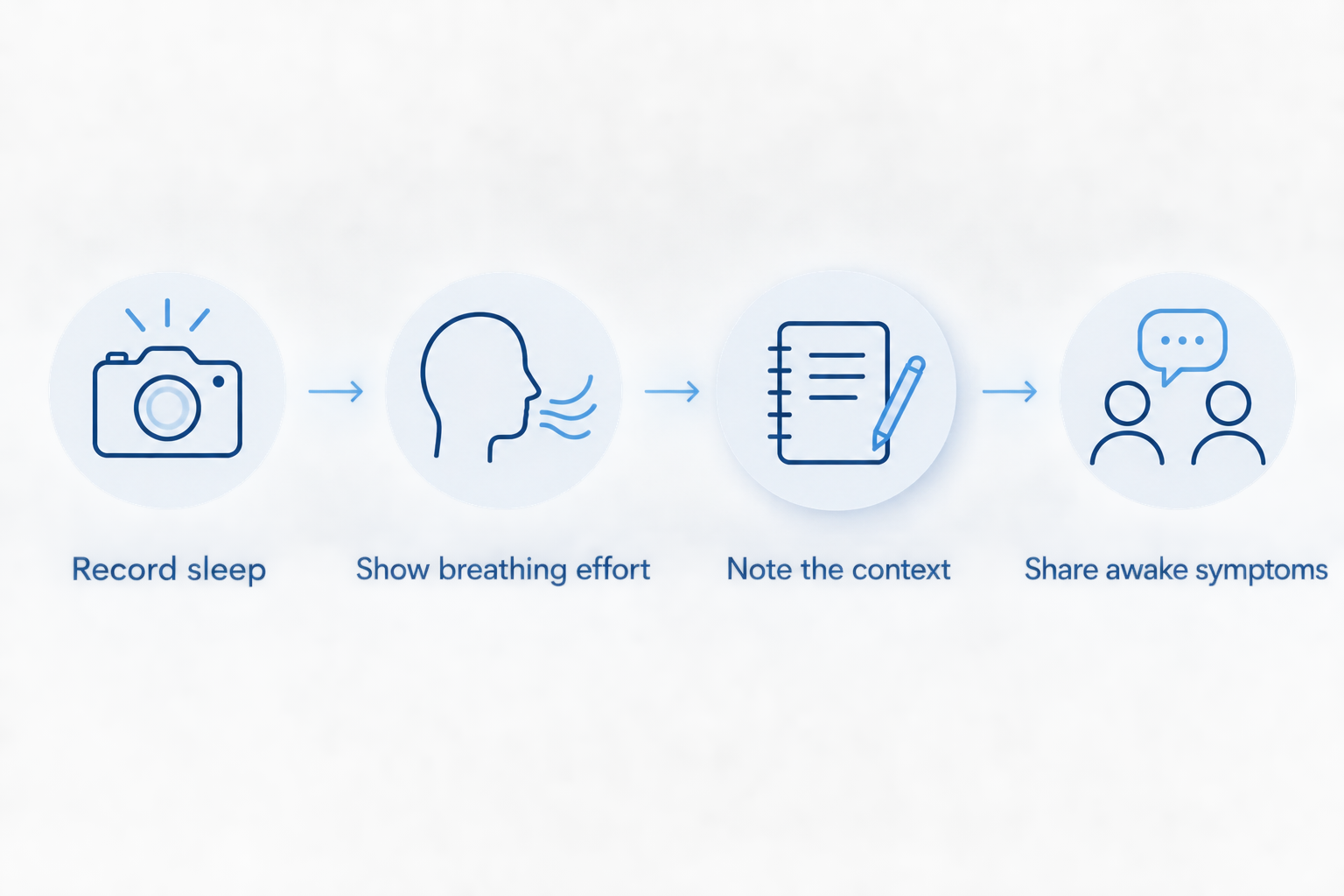
Bring the recording and your notes to the appointment. Your dog’s ordinary behavior at home gives useful context, but a video cannot replace an examination or show every internal obstruction.
When does loud snoring become an emergency?
Struggling to breathe is an emergency, whether or not your Frenchie is snoring. Blue or gray gums or tongue, collapse, severe breathing effort, or rapidly worsening respiratory distress require immediate veterinary help. A dog who is unusually weak or overheated also needs urgent attention.
Move your dog to a cool environment, stop activity, and contact an emergency veterinary hospital while arranging transport. Keep handling calm and minimal. Do not muzzle a dog in breathing distress or force food, water, or medication into the mouth.
Your 2026 emergency plan should identify the nearest open veterinary hospital before you need it. Keep the number accessible to everyone who cares for your dog, including sitters. Do not rely on a home recording, breathing counter, or online answer to decide whether visibly difficult breathing can wait.
What will the veterinarian check?
A veterinarian starts with your dog’s history, physical examination, body condition, nostril appearance, and breathing pattern. Depending on the symptoms, further assessment can include a structured functional evaluation, imaging, or examination of internal airway structures under carefully planned anesthesia. The plan should match your dog, not a generic snoring package.
Ask which findings explain the symptoms and which problems remain uncertain. Some airway structures cannot be assessed adequately in a fully awake dog. Your veterinarian should also explain anesthesia precautions and whether referral to a surgeon or specialist is appropriate.
Veterinary references such as the American College of Veterinary Surgeons and the Merck Veterinary Manual describe these anatomical components of brachycephalic airway disease. Their guidance supports the central distinction here: breed-associated noise does not establish that breathing is comfortable or safe.
Can French Bulldog snoring be treated without surgery?
Weight management, avoiding overheating, and treating a diagnosed additional problem can reduce aggravating factors. Those measures cannot physically correct narrowed nostrils or excess soft-palate tissue. The right treatment depends on the obstruction and its effect on breathing—not how much the snoring bothers the household.
For selected dogs, a veterinarian recommends surgery to improve airflow. The potential benefit is reduced obstruction; the limitations include anesthesia risk, recovery needs, and the possibility of persistent symptoms. Surgery is not a promise of silent sleep or a completely normal airway.
For a 2026 treatment discussion, ask what improvement is realistic, what complications require urgent attention, and what postoperative monitoring your dog needs. Continue follow-up even if the noise decreases, because sound alone is an incomplete measure of function.
Should you worry if a French Bulldog puppy snores?
Puppy snoring deserves attention rather than the assumption that your Frenchie will grow out of it. Share persistent sleep noise with your veterinarian, especially when it accompanies visible effort, interrupted sleep, or poor tolerance of normal puppy activity. Early assessment helps establish an appropriate care plan.
Shrinkabulls breeds English and French Bulldogs for prospective owners. Shrinkabulls is for people seeking bulldog puppies; a veterinarian is the right professional to assess snoring and airway function. When you speak with any breeder, ask about breathing history, veterinary findings, and relevant parental health information—not just pedigree or coat color.
FAQ
Why does my French Bulldog snore even when lying on their side?
French Bulldogs can snore on their side because changing position does not remove narrow nostrils or crowded throat tissues. Persistent snoring with disrupted sleep or breathing effort needs veterinary assessment.
Is it normal for my French Bulldog to snore every night?
Nightly snoring is common in French Bulldogs, but common does not mean harmless. Ask your veterinarian to assess persistent snoring, especially alongside gasping, repeated waking, or noisy daytime breathing.
Can French Bulldogs have sleep apnea?
French Bulldogs can experience obstructive breathing disturbances during sleep. Repeated pauses followed by gasping or abrupt waking deserve prompt veterinary evaluation; struggling breaths or blue or gray gums require emergency care.
Will helping my French Bulldog lose weight stop the snoring?
Weight management can reduce an aggravating factor, but it cannot correct a structurally narrowed airway. Ask your veterinarian for a body-condition assessment and an appropriate feeding plan.
Should I wake my French Bulldog when the snoring gets loud?
Loudness alone does not tell you whether to wake your dog; look for breathing effort, gasping, and distress. If breathing is difficult, gently rouse your dog and seek veterinary help rather than repeatedly repositioning them.
Will soft-palate surgery completely stop French Bulldog snoring?
Soft-palate surgery does not guarantee silent sleep or complete correction of every airway problem. A veterinary surgeon assesses which structures need treatment and explains the expected benefits, risks, and follow-up.
Can Shrinkabulls tell me whether my puppy’s snoring is safe?
A veterinarian must assess whether your puppy’s snoring reflects an airway problem. Breeder information adds history, but it does not replace an examination, particularly when breathing effort or interrupted sleep is present.
One last thing
A quieter Frenchie is not automatically a healthier-breathing Frenchie. Compare sleep quality, resting effort, and comfortable everyday activity—not just the soundtrack. At your next veterinary visit, ask directly: Does my dog breathe comfortably, or have I become used to signs of obstruction?
Related guides
- How to prepare for soft-palate surgery in a French Bulldog
- How to handle reverse sneezing in a French Bulldog puppy
- Best questions to ask a French Bulldog breeder before buying
