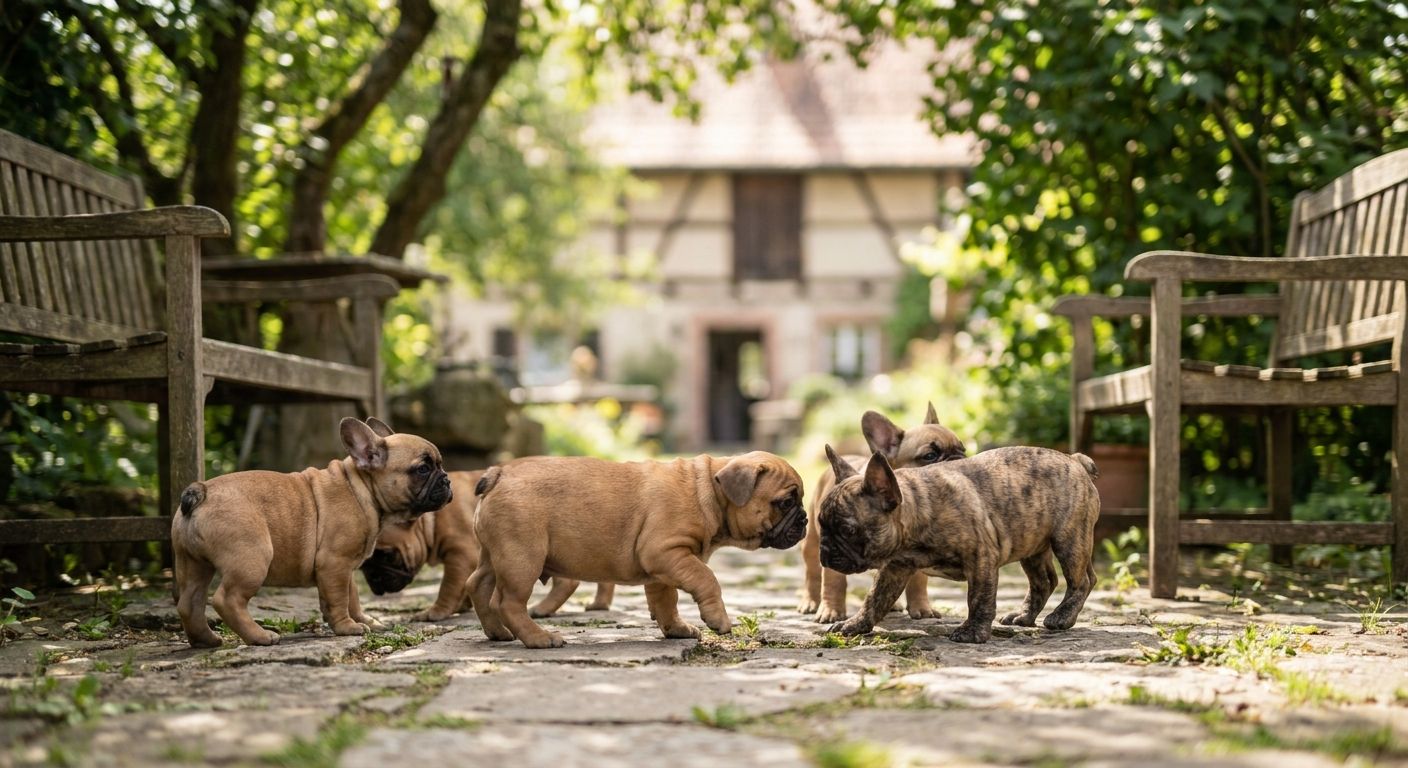
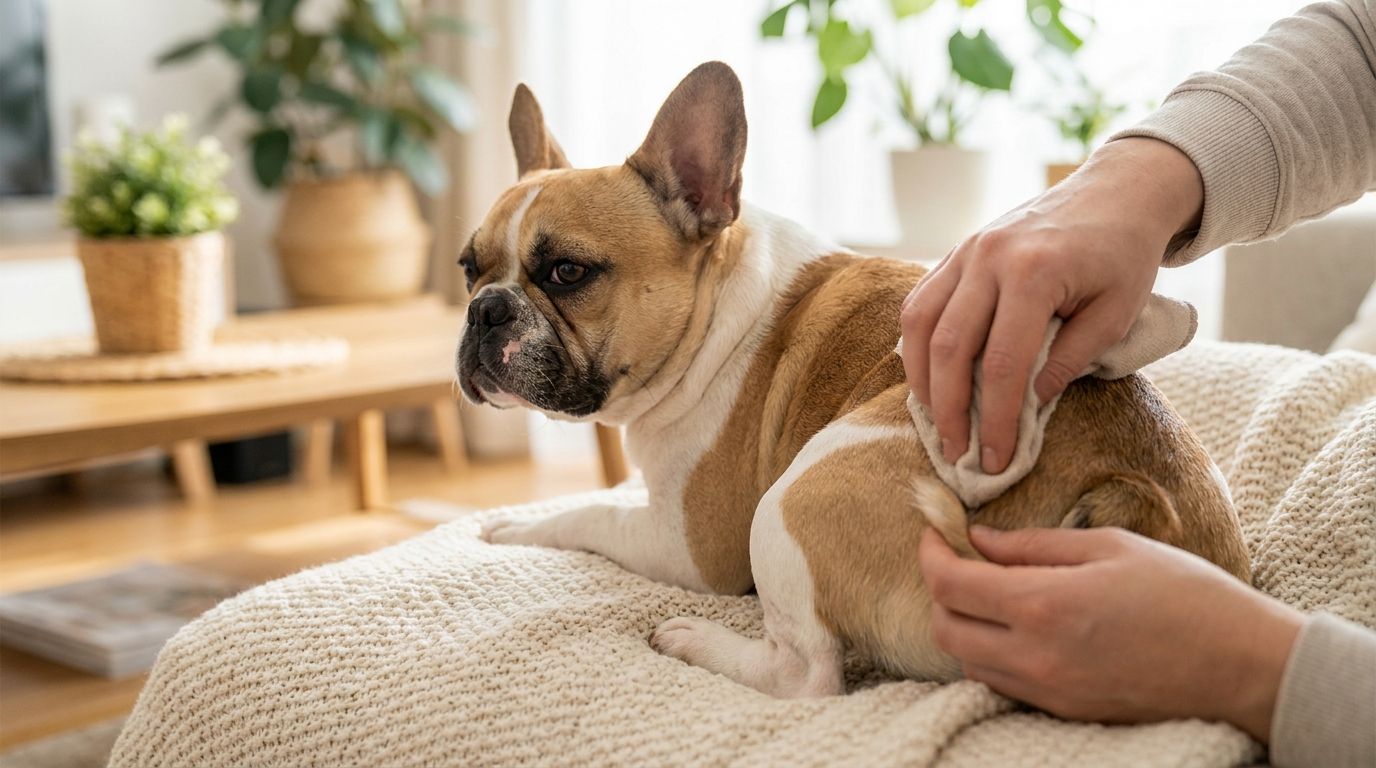
European bloodline French Bulldog puppies are Frenchies whose pedigree traces back to breeding programs in France, the UK, or Eastern Europe, and enthusiasts chase them for the stockier bone structure, heavier head, and coat genetics that read differently from typical American-line dogs. If you already own a Frenchie, you know the visual difference on sight — what you can't see is whether the paperwork actually backs up the claim. This guide walks through how to verify a European bloodline before you commit a deposit, and where the term gets used loosely.
TL;DR
European bloodline French Bulldog puppies trace pedigree to France, the UK, or Eastern Europe — color alone doesn’t prove it.
Verified AKC papers and three-generation pedigree research matter more than a seller’s bloodline claim.
Shrinkabulls pairs rare-color French Bulldog puppies with documented pedigree for buyers who want proof, not just marketing.
Budget past the puppy price: health testing, deposits, and first-year costs add up fast in 2026.
Walk away from any breeder who can’t produce three generations of pedigree paperwork on request.
Why European bloodline matters for enthusiasts
"European bloodline" has no legal definition in the dog world — anyone selling a Frenchie can print it on a listing. For enthusiasts, that's the real problem: you're not shopping for a puppy, you're shopping for a documented pedigree, and the burden of proof sits on you, not the seller.
Enthusiasts searching this term have usually owned a Frenchie before and can already spot the difference between a stocky European-style head and a leggier American-line dog on sight. That prior knowledge raises the stakes, because a breeder who can't answer specific genetics questions gets caught fast. Finding a reputable French Bulldog breeder starts with treating every "European bloodline" claim as something to verify, not something to accept, especially in 2026 as rare-color demand keeps pulling opportunistic sellers into the market.
Step-by-step: vetting European bloodline French Bulldog puppies
Confirm the bloodline actually traces to Europe
A bloodline claim falls apart the moment you ask for paperwork instead of a story. A puppy with a genuine European bloodline should have registered ancestors you can trace, not just a seller's assurance that it's "in there somewhere."
Request the AKC pedigree certificate going back at least three generations
Ask for country-of-origin and import documents on any dog listed as "imported directly"
Cross-check registered names against AKC records whenever the breeder provides them
Clarify whether the European claim covers the sire, the dam, or both
Treat "European bloodline" used only next to a higher price tag as a warning sign, not a selling point
Verify AKC registration and pedigree paperwork
Paperwork gets forged or fudged more often than buyers expect, especially on higher-priced rare-color litters where the markup rewards a convincing story. Verifying AKC registration papers on a bulldog puppy takes about fifteen minutes and filters out the sellers hoping you won't bother.
Match the litter registration number printed on the paperwork to the actual puppy
Confirm the microchip number matches the health record
Check that sire and dam registration numbers are independently searchable
Ask for the original AKC certificate, not a photocopy or a cropped screenshot
Confirm the breeder is listed as breeder of record, not a reseller passing on someone else's litter
Ask about coat color genetics before the color sells you
Rare colors are usually the actual reason enthusiasts start searching for European bloodlines — merle, lilac, isabella, and blue patterns show up more often in certain imported lines. That doesn't mean every merle or isabella puppy carries real European ancestry; color and pedigree are two separate questions and sellers benefit when you conflate them. Isabella French Bulldog puppies for rare-color collectors sell on pattern alone more often than any other variety, which makes the genetics conversation more important here, not less.
Ask which parent carries the dilute or merle gene and request the test results directly
Confirm the breeder tests for the merle gene before pairing two merle-pattern dogs
Ask how many generations the color has been established in that specific line
Get the coefficient of inbreeding if the breeder tracks pedigree software data
Don't accept "rare color" as a substitute for an actual health test panel
Evaluate the breeder's whelping and rearing setup
Pedigree paperwork tells you where a puppy came from. The whelping setup tells you how it was actually raised, and that shows up in temperament and health for years afterward. Ask what the first three weeks looked like: heat source, flooring, and how closely the dam was monitored during that window.
Ask for photos or video of the real whelping area, not stock images pulled from elsewhere
Confirm supplemental heat was used consistently for the first two weeks
Ask whether the breeder tracked weight gain daily during week one, since that's the biggest early-death risk window
Check whether puppies were handled and socialized before the four-week mark
Compare what they describe against the baseline behind a well-designed whelping box for breeders — non-slip flooring, rail guards, and temperature control aren't extras, they're the minimum a serious import program should already have covered
Reserve early with a deposit you actually understand
European bloodline litters with rare colors get reserved before they're even born, so waiting until pictures post usually means missing the litter entirely. Reserving a bulldog puppy with a deposit before birth is standard practice, but the terms vary enough between breeders that you need to read the contract, not just the price.
Confirm whether the deposit is refundable if the litter doesn't produce the color or sex you want
Ask how puppies are assigned within a waitlist — first deposit, first pick, or breeder discretion
Get a written timeline for pickup or delivery once the puppy is weaned
Confirm what happens to your deposit if the dam doesn't conceive that cycle
Read the health guarantee terms before you wire anything, not after
Ask about current European bloodline litters
See documented pedigree and available rare-color puppies before you reserve elsewhere.
A European bloodline puppy costs more upfront, and enthusiasts sometimes stop budgeting there. First-year costs — health testing, vet visits, supplies, and potential import logistics — stack on top of whatever the puppy itself cost. What rare-color puppies really cost breaks down where that money actually goes beyond the sticker price, which matters more for merle and isabella lines than for standard colors.
Budget separately for genetic health panels if the breeder didn't already run them
Factor in pet insurance premiums, which run higher for brachycephalic breeds
Add travel or flight-nanny costs if the breeder isn't local to you
Set aside funds for an independent vet exam within the first 48 hours home
Don't let the premium price for rare color eat the budget you need for year-one vet care
Sourcing options compared
Option
Best for
Key limitation
US breeder with proven European import lines
Enthusiasts who want in-person visits plus AKC paperwork with a US chain of custody
Fewer breeders actually carry verified import pedigrees than claim to
Direct import from a European breeder
Collectors chasing a specific rare color or line not available domestically
International health certificates, quarantine rules, and logistics add real complexity
Import broker or agent
Buyers who want someone else handling the international paperwork
Adds a middleman you also have to vet for credibility
US breeder with domestic lines descended from European stock
Buyers who want European genetics without international shipping
The bloodline is several generations removed, so pedigree research matters even more
Verdict: a US breeder with a verifiable, documented European import line is the safest path for most enthusiasts in 2026 — direct import sounds more authentic but adds risk most buyers aren't equipped to manage on a first purchase.
Common mistakes enthusiasts make
Trusting a color name as proof of bloodline. Isabella, lilac, and merle patterns appear in both European and domestic lines — the color tells you nothing about pedigree on its own.
Skipping the pedigree cross-check because the price already felt premium. A higher price doesn't verify anything; it just means you paid more to find out later.
Wiring a deposit before a live video call with the actual breeder. Photos and a polished website don't confirm the dogs, the whelping setup, or the person exist as described.
Ignoring double merle risk when chasing a full pattern collection. Pairing two merle-carrying dogs risks deaf or blind puppies, and some sellers won't volunteer that risk unprompted.
Underestimating first-year costs after already paying a premium for the puppy. The bloodline premium and the ongoing care costs are two separate budget lines, not one.
FAQ
What makes a French Bulldog puppy a European bloodline dog?
A European bloodline French Bulldog has registered ancestors from breeding programs in France, the UK, or Eastern Europe, verifiable through AKC or FCI pedigree records. The term alone isn’t proof — ask for the paperwork going back three generations.
Are European bloodline French Bulldogs healthier than American lines?
Not automatically. Health depends on the individual breeder’s testing practices, not the continent of origin, so a European pedigree without health testing is no safer than a domestic one without it.
Do European bloodline French Bulldogs cost more?
Verified European bloodlines and rare colors typically carry a premium over standard domestic lines. Confirm current pricing directly with the breeder rather than relying on old listings.
Can you import a French Bulldog puppy directly from Europe?
Yes, but it requires international health certificates, import permits, and often a flight nanny or crated cargo transport, which adds cost and logistics most first-time buyers underestimate.
What documentation proves a European pedigree is real?
A three-generation AKC or FCI pedigree certificate, independently searchable registration numbers for sire and dam, and import paperwork if the dog itself was brought over from abroad.
Are merle and lilac French Bulldogs always European bloodline?
No. Merle, lilac, and isabella colors appear in domestic US lines too — the color pattern says nothing about where the pedigree traces, so verify separately.
Is a European bloodline necessary for a healthy Frenchie?
No. Health testing, responsible pairing, and a clean whelping environment matter more than country of origin. A domestic line with full health panels can outperform an unverified import.
How do you verify AKC registration on an imported puppy?
Match the litter registration number to the puppy, confirm the microchip matches the health record, and check that sire and dam registration numbers are independently searchable through AKC.
One last thing
Most sellers who lead with "European bloodline" in 2026 can't actually produce papers past the first generation when you ask directly. Request three generations of pedigree before you even ask about color — the ones who hesitate just told you everything you need to know.
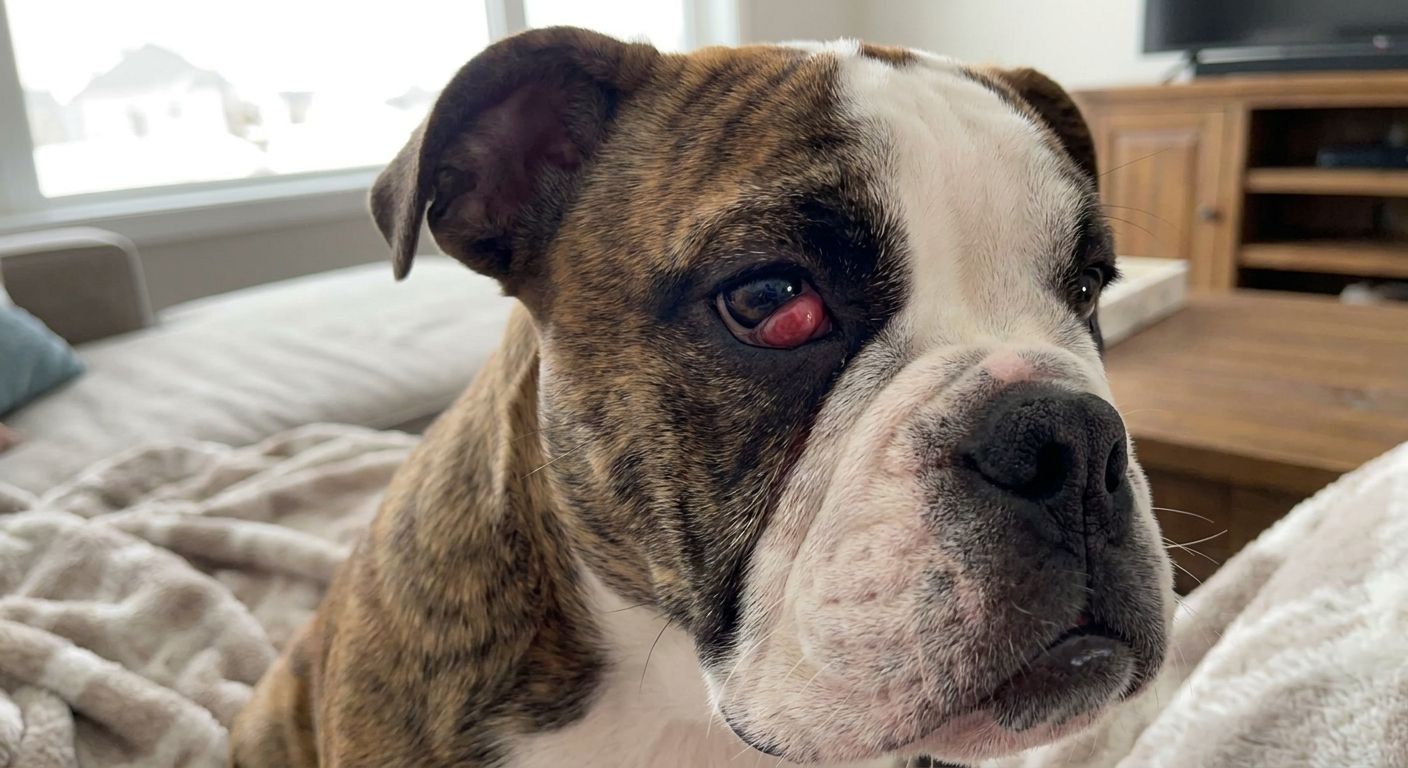
A cherry eye in an English Bulldog puppy shows up as a smooth, pink-to-red bulge sitting in the inner corner of one or both eyes — it's the third eyelid gland flipping out of place, not an infection, an allergy, or pink eye. The eye underneath usually still works fine, but the bulge is a mechanical problem, and it needs a vet's eyes on it within days once you spot it, not weeks.
TL;DR
Cherry eye in an English Bulldog puppy is a pink, dome-shaped bulge in the inner eye corner from a prolapsed tear gland, not pink eye.
Onset most often happens between 3 and 12 months of age in bulldogs, a breed with well-documented predisposition to the condition.
Surgical gland repositioning, not removal, is the standard 2026 veterinary approach to protect long-term tear production.
Left alone, a prolapsed gland raises the risk of chronic dry eye and corneal irritation as the puppy ages.
Why this matters
English Bulldogs carry a face built the way breeders and owners love — short, wide, wrinkled — and that same structure puts loose strain on the tissue that anchors the tear gland in place. When that anchor weakens, the gland pops forward and sits exposed instead of tucked behind the third eyelid where it belongs.
Catching it early matters because the gland is still producing tears the puppy needs. A gland that stays prolapsed and inflamed for weeks is harder to reposition surgically and more likely to need removal instead of repair, which is the outcome every vet tries to avoid in a young dog. If you're already working through a health testing panel with your breeder, ask specifically whether cherry eye history shows up on either parent's side — it's a soft-tissue trait, not a random accident.
How to recognize cherry eye in an English Bulldog puppy
The clearest sign is visual: a round, fleshy, reddish-pink mass in the corner of one eye nearest the nose. It can look like a small cherry pit or a swollen grape sitting on the eyeball, which is exactly where the name comes from. Puppies often paw at the eye or squint once the tissue starts drying out from exposure.
Here's how it stacks up against two conditions bulldog owners commonly confuse it with:
Condition
What it looks like
Discharge
Urgency
Cherry eye
Smooth pink/red bulge, inner corner
Minimal, unless irritated
See a vet within days
Conjunctivitis (pink eye)
Redness across the white of the eye, puffy lids
Watery or yellow discharge
Treat within a day or two
Entropion
Eyelid rolled inward, no visible mass
Watery, from constant rubbing
Schedule surgical consult
Cherry eye is the only one of the three with a distinct, movable lump you can actually point to. If the redness is spread across the eye instead of localized to one bulge, you're more likely looking at conjunctivitis, which clears differently.
Mild cherry eye: occasional, intermittent bulge
In early or mild cases, the gland pops out when the puppy is tired, has been rubbing its face, or just woke up, then slides back on its own within minutes or hours. This stage is still worth a vet visit — a gland that keeps popping out and retracting is telling you the supporting tissue is weakening, not healing. Verdict: watch closely and book a vet check, don't wait for it to become constant.
Advanced cherry eye: constant, visible prolapse
Once the gland stays out permanently, it starts to dry, swell, and sometimes bleed slightly from friction against the eyelid. Bulldogs at this stage often squint or keep the eye partially closed. Verdict: this needs a vet appointment now, not a wait-and-see approach — the longer tissue sits exposed, the more inflamed and harder to reposition it becomes.
Why cherry eye varies from one bulldog puppy to another
Genetics and conformation — bulldogs, along with other brachycephalic breeds, inherit looser connective tissue around the eye socket than longer-nosed breeds.
Age — most cases surface between 3 months and 12 months of age, while the gland's supporting ligament is still developing strength.
One-sided history — a puppy that prolapses in one eye has a meaningfully higher chance of the second eye following, since the same weak-tissue trait affects both.
Rubbing and irritation — allergens, dust, or a puppy pawing at its face repeatedly can trigger or worsen a borderline case.
Breathing-related eye strain — bulldogs that already show signs of brachycephalic breathing issues often strain the same facial tissue during exertion, which can aggravate a weak gland anchor.
Rare color lines — some rare-color bulldog lines carry tighter or less-documented pedigrees, and buyers comparing merle bulldog price should weigh that against asking for eye and soft-tissue history up front, the same way you'd ask about any other inherited trait.
“A gland that pops out and retracts on its own is still telling you the tissue is weakening — don’t wait for the constant version to show up.”
Is cherry eye the same as pink eye in a bulldog puppy?
No — cherry eye is a physical gland prolapse with a visible pink bulge, while pink eye (conjunctivitis) is inflammation spread across the whole eye surface with no distinct lump. They're treated completely differently, so misreading one for the other delays the right care.
Can cherry eye in a bulldog puppy go away without surgery?
Cherry eye rarely resolves permanently on its own once the gland has prolapsed past a mild, intermittent stage. Some vets try short-term medical management to reduce swelling before surgery, but repositioning surgery is the standard fix that keeps the tear gland functional long term in 2026 veterinary practice.
Does cherry eye come back after surgery in English Bulldogs?
Recurrence is possible in brachycephalic breeds because the same loose connective tissue that caused the first prolapse is still there after repair. That's a reasonable question to bring straight to the surgeon before the procedure, not after.
If you're still shopping for a puppy in 2026 and want cherry eye and other soft-tissue questions built into your vetting process from day one, that conversation belongs early — right alongside asking how to vet an English Bulldog breeder before you buy and what the health guarantee actually covers if an eye condition shows up in the first year.
See health-tested bulldog puppies
Ask us directly about eye and soft-tissue history on any litter.
What does cherry eye look like in an English Bulldog puppy?
Cherry eye looks like a smooth, pink-to-red dome sitting in the inner corner of one or both eyes. It’s the prolapsed third eyelid gland, not a cut, scratch, or infection, and it usually appears before the puppy turns 12 months old.
Is cherry eye painful for a bulldog puppy?
Cherry eye isn’t sharply painful in mild stages, but constant exposure dries and inflames the gland tissue over time. Left untreated for weeks, it becomes uncomfortable and raises the risk of secondary infection.
Is cherry eye an emergency in an English Bulldog?
Cherry eye isn’t an overnight emergency, but it isn’t a wait-it-out condition either. A puppy showing a constant, non-retracting bulge should see a vet within a few days to avoid the tissue drying out and becoming harder to reposition.
What causes cherry eye in English Bulldogs?
Cherry eye comes from weak connective tissue anchoring the tear gland, a trait common in brachycephalic breeds like the English Bulldog. Age between 3 and 12 months, rubbing, and irritation can all trigger a prolapse in a puppy already predisposed to it.
Can cherry eye in a bulldog puppy be treated without surgery?
Mild, intermittent cases sometimes settle temporarily with medical management, but a fully prolapsed gland typically needs surgical repositioning. Surgery aims to tuck the gland back into place rather than remove it, since removal risks long-term dry eye.
Are English Bulldogs prone to cherry eye?
Yes, English Bulldogs are among the breeds most commonly affected by cherry eye due to their facial structure and looser eye-socket connective tissue. It’s a well-documented predisposition in the breed, not a rare fluke.
Does cherry eye affect one eye or both in bulldogs?
Cherry eye often starts in one eye, but a puppy that prolapses on one side has a notably higher chance of the second eye following. Both eyes should be monitored closely once one has been affected.
How much does cherry eye surgery cost for an English Bulldog puppy?
Cost varies by vet, region, and whether one or both eyes need repair, so get a direct quote from your veterinary surgeon rather than relying on a flat number. Ask specifically whether the quote includes anesthesia and a recheck visit.
One last thing
The detail most new bulldog owners miss: a puppy that prolapses in one eye in 2026 has a real shot at the second eye following later, sometimes months apart, so don't treat a one-time fix as the end of the conversation with your vet — flag it as an ongoing watch item at every checkup through the first two years.
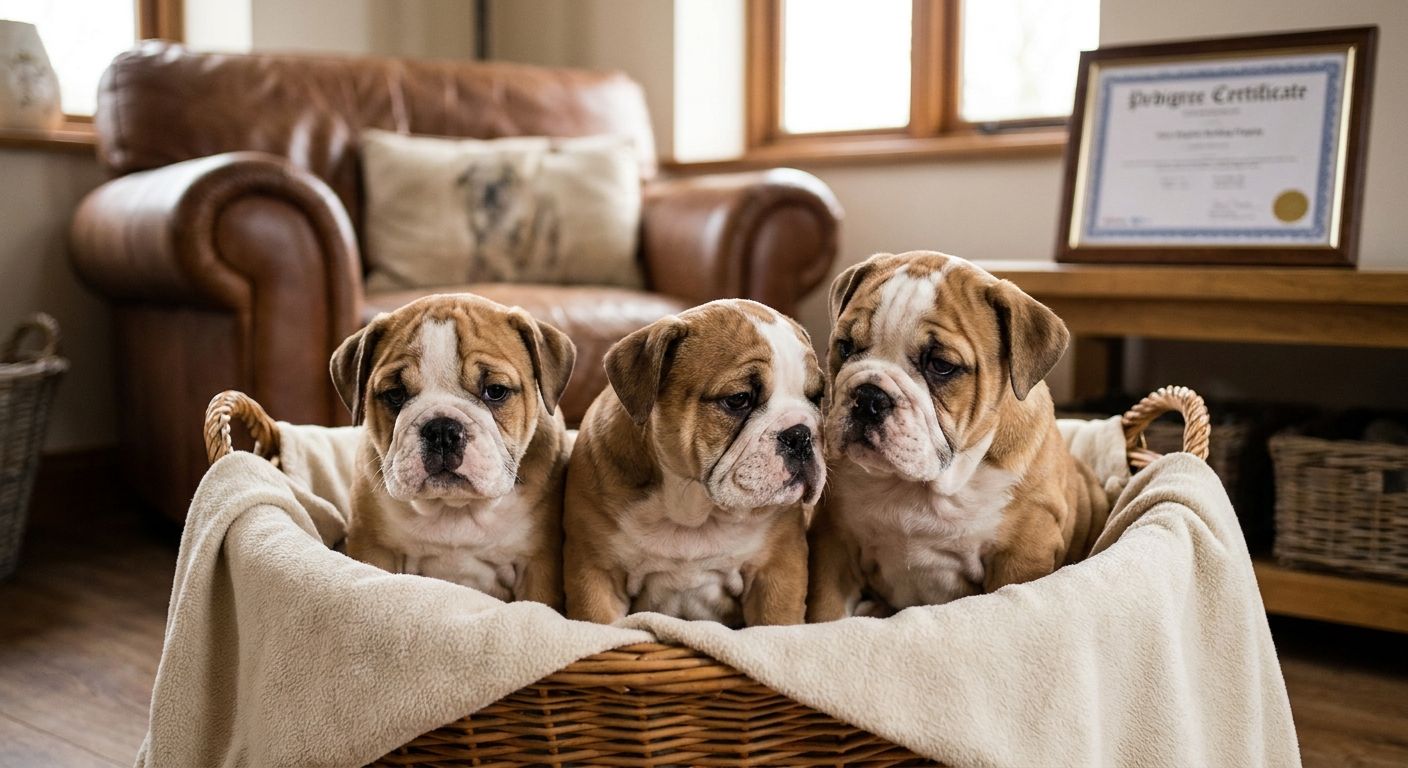
Champion bloodline English Bulldog puppies for collectors come from AKC-titled or record-verified lineage, and in 2026 the right one is confirmed on paper before it's ever confirmed by a photo. Collectors aren't shopping for a companion pet first — they're shopping for provenance, structure, and a documented pedigree that holds up under scrutiny from other breeders and judges. That changes what you ask, what you verify, and how fast you need to move on a litter.
TL;DR
Champion bloodline English Bulldog puppies verify through AKC titles and health clearances, not a breeder’s word alone.
Shrinkabulls reserves champion-sired litters with a deposit before whelping — waiting until puppies are born often means missing the litter entirely.
Skull, jaw, and airway structure matter as much as pedigree paper for a sound champion bloodline bulldog in 2026.
Retired champion adults and stud access are alternate paths for collectors who don’t want to wait 8-12 weeks for a puppy.
Why champion bloodline matters for collectors
A collector isn't asking "is this a good pet." A collector is asking "does this dog's pedigree, structure, and documentation justify what it will represent in my program or my home." That's a different transaction entirely, and it requires a different level of due diligence than a first-time buyer runs through.
Collectors also move on a different timeline. Champion-sired litters get reserved during pregnancy, not after whelping, because the buyers competing for those puppies already know what they're looking at. If you're new to this space, the fastest way to avoid losing a litter you want is to vet the breeder before you vet the puppy — the breeder's practices tell you more than any single photo ever will.
A champion bloodline claim without a paper trail is just a sentence someone wrote in a listing. Treat it as a claim to verify, not a fact to accept.
Verify the pedigree paperwork before you ask about price
Start with documentation, not conversation. Any breeder working with genuine champion bloodline English Bulldog puppies in 2026 should hand over paperwork within minutes of being asked, not after several follow-up emails.
Cross-check the sire and dam's registered names against AKC's public title records
Confirm the litter registration number on the paperwork matches the individual puppy's certificate
Ask for a three-generation pedigree, not a one-line "champion bloodline" claim in a listing
Verify the breeder's own AKC breeder ID is active and current
Compare the pedigree names against any show records you can find independently
Once you've confirmed the paper trail is real, the process of verifying AKC registration papers on a bulldog puppy gets faster with a breeder who's used to producing it on demand — Shrinkabulls documents this before a puppy ever leaves the property.
Request full health testing panels, not verbal promises
A champion pedigree with no health testing behind it is half a story. Collectors specifically should push harder here than a typical buyer, because breeding-quality dogs carry breeding-quality expectations.
Ask for hip and patella clearances on both parents, not just the puppy
Request cardiac and airway screening, which matters more in brachycephalic lines than in most breeds
Confirm the panel is dated within the last 12-18 months, not from an earlier litter
Get copies in hand — a verbal "yes, they're tested" is not documentation
Ask whether the sire or dam has produced prior litters with any flagged conditions
Shrinkabulls runs and documents health testing on champion-sired litters as a standard part of the process, which is the faster path once you already know what to ask for.
Evaluate skull, jaw, and airway structure before you fall for the face
Pedigree gets a puppy in the door. Structure is what determines whether that champion bloodline actually holds up in the dog's day-to-day breathing, eating, and mobility.
Look at nostril openness — pinched nares are a visible red flag in photos and video calls alike
Ask about jaw alignment and whether the breeder screens for it
Request a video of the puppy at rest and after light activity to check breathing sounds
Ask directly whether either parent has needed airway surgery
Confirm how many generations back "champion" actually goes
Some litters carry one titled ancestor three generations back and get marketed as "champion bloodline." That's technically true and practically misleading.
Ask which specific ancestors hold titles, not just whether any exist
Find out how recent the titling is — a champion two generations back carries more weight than one five generations back
Ask if the sire or dam themselves are titled, versus just descended from a titled dog
A single titled great-grandparent does not make a litter a champion bloodline litter. Push for specifics before you accept the label.
Reserve early — champion litters go before they're born
Waiting until a litter is born to reserve a puppy is the single fastest way to lose the pick you actually want. Collectors who understand this move during the pregnancy, not after the whelping announcement.
Ask the breeder when deposits open relative to the due date
Get clarity on how pick order is assigned among deposit holders
Confirm what happens to your deposit if the litter is smaller than expected
Shrinkabulls takes deposits on select litters before birth specifically because champion-sired puppies move fast once photos go up.
Budget for the collector premium, not just the sticker
Champion bloodline and rare color combinations both carry a premium over standard companion-line pricing, and the two premiums often stack. Understanding what drives that premium protects you from overpaying for a claim that doesn't hold up and underpaying for one that does.
Ask what specifically justifies the premium: titles, color, health testing, or all three
Factor in that documented health testing and titled parentage both add legitimate cost, not just marketing language
Read the health guarantee line by line before signing
A champion bloodline puppy is still a bulldog, and bulldogs carry breed-typical health risks regardless of pedigree. The health guarantee is where you find out what the breeder actually stands behind.
Check what conditions are covered versus excluded
Confirm the timeframe the guarantee applies to
Ask what documentation you need to keep to make a claim valid
Verify whether the guarantee requires specific vet visits on a schedule
Reserve a champion-sired litter
Ask about deposit timing and available pedigrees before the next litter fills.
Collectors building a home show or breeding line from scratch
Full AKC pedigree, health testing panel, early deposit
Highest demand — often reserved before whelping
Retired champion adult
Collectors who want a titled dog immediately, not in 8-12 weeks
Verified show record, registration transfer
Temperament and training are already set, not shaped by you
Stud service on your own female
Collectors developing their own breeding program
Approved health testing, signed breeding contract
Adds genetics to your program, not a dog to your household
Co-ownership or show contract
Collectors wanting to campaign a dog in conformation
Signed contract, ongoing breeder oversight until title earned
Ownership is shared until contract conditions are met
“If a breeder can’t produce health testing and title documentation on demand for a champion bloodline litter, the paperwork problem is the whole problem.”
Common mistakes collectors make
Chasing rarity over structure. A striking color or a titled ancestor doesn't offset poor airway or jaw structure — collectors get seduced by the rarer traits and skip the physical evaluation.
Accepting "champion bloodline" without asking which generation. The label means something different at one generation back versus five.
Skipping the health guarantee until after the deposit. By the time most buyers read the fine print, they've already committed money and emotional attachment to a specific puppy.
Underestimating the true cost. The purchase price is one line item; ongoing vet care, joint support, and breed-specific needs add up over the dog's life.
Assuming pedigree paperwork alone equals health. A titled pedigree says nothing about hip, patella, or cardiac clearances unless those documents exist separately.
FAQ
What does "champion bloodline" mean for an English Bulldog puppy?
It means at least one ancestor in the pedigree holds an AKC conformation title. The strength of that claim depends heavily on how many generations back the title sits and whether the direct parents are titled themselves.
Is a champion bloodline puppy worth more than a companion-line puppy?
Champion bloodline puppies typically carry a premium tied to documented titles and health testing, not just marketing language. The premium is justified when the paperwork backs it up and inflated when it doesn’t.
How do I verify a puppy’s champion pedigree?
Cross-check the sire and dam’s registered names against AKC public title records and request a three-generation pedigree certificate. A reputable breeder produces this documentation without hesitation.
Can a champion bloodline English Bulldog still have health problems?
Yes. Pedigree and health testing are separate documents. A titled bloodline says nothing about hip, patella, cardiac, or airway clearances unless those results are provided independently.
What health testing should a champion bloodline breeder provide?
Request hip and patella clearances, cardiac screening, and airway evaluation on both parents, dated within the last 12 to 18 months. Copies in hand matter more than verbal assurance.
Is an XL English Bulldog puppy considered champion bloodline?
Size and bloodline are unrelated. An XL English Bulldog puppy can come from a champion-titled pedigree or a companion line — the title status depends on the ancestors, not the size variant.
How early should I reserve a champion bloodline puppy?
Reserve during the pregnancy, before the litter is born, if you want first pick. Champion-sired litters routinely fill their deposit list before puppies arrive.
What’s the difference between a champion bloodline puppy and a show-quality puppy?
Champion bloodline describes the pedigree history. Show-quality describes the individual puppy’s own conformation to the breed standard. A puppy can have one without the other.
One last thing
The generation gap is the detail most collectors skip. A puppy marketed as champion bloodline with a title four or five generations back carries far less weight than one with a directly titled parent — ask for the specific generation before you ask for anything else, because that single question filters out most of the inflated claims in the market in 2026.
English Bulldog skin fold infections happen when moisture, bacteria, and yeast get trapped in the wrinkles around the nose, tail, and face — and they need a daily cleaning routine, not just a one-time fix, or they come back within days. The hidden cost most owners miss: a fold that looks fine on the surface can still be breeding bacteria underneath if it isn't dried completely after cleaning, which is the step people skip most often in 2026.
TL;DR
An english bulldog skin fold infection is caused by trapped moisture and needs daily cleaning plus thorough drying, not occasional wipe-downs.
Nose folds, tail pockets, and facial wrinkles each need different care — treating them the same way is why infections keep returning.
A 2% chlorhexidine solution is a standard vet-recommended fold cleaner in 2026, but redness past 48 hours means call a vet.
Obesity and skipped grooming routines make fold infections worse and more frequent in English Bulldogs.
Shrinkabulls treats fold and skin health as a real factor in choosing a bulldog line, not an afterthought.
Why This Matters
English Bulldogs are built with deep facial and body wrinkles by design — that's part of the breed standard we talk about often here at Shrinkabulls. Those same folds trap saliva, food debris, tears, and humidity, and that combination is exactly what bacteria and yeast need to multiply.
Left unmanaged, a mild fold infection turns into a painful, foul-smelling mess that cracks the skin and spreads. Bulldog owners who stay ahead of it with a consistent wrinkle grooming routine rarely deal with the severe cases that end up needing prescription treatment. Daily habits matter more here than any single product you buy.
How to Manage Skin Fold Infections in an English Bulldog
The routine comes down to five steps, done consistently rather than occasionally:
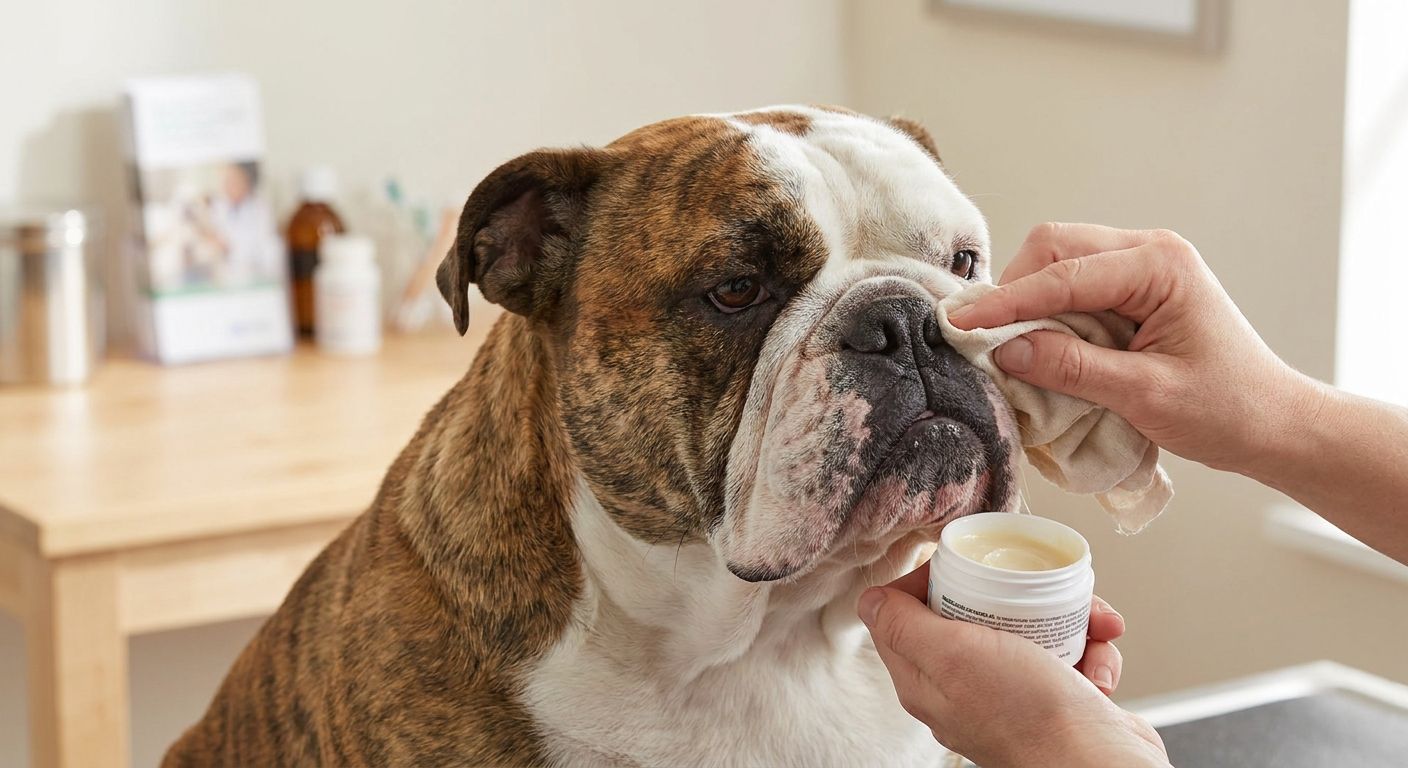
Inspect folds daily. Check the nose rope, forehead wrinkles, lip folds, and tail pocket for redness, discharge, or odor. Catching it early is the entire game.
Clean with a vet-approved antiseptic. A 2% chlorhexidine solution or a wipe made for canine skin folds breaks up bacterial buildup without stripping the skin.
Dry the fold completely. Use a clean, soft cloth or a few seconds of a cool hair dryer setting. Moisture left behind undoes the cleaning step entirely.
Apply a barrier product only if your vet recommends one. Some bulldogs do well with a thin layer of medicated powder or ointment. Others need nothing at all.
Repeat twice a day during an active infection, once a day for maintenance. Consistency, not intensity, clears these up.
If redness, swelling, or a foul odor doesn't improve within 24 to 48 hours of starting this routine, the infection needs a topical or oral treatment from a vet. Cleaning alone won't clear a fold that's already infected at that stage.
Nose Fold (Rope) Infections
The nose fold, sometimes called the rope, sits directly above the nose and traps tears, drool, and food debris constantly. This is usually the first fold to show trouble, and it often announces itself with a musty smell before any visible redness. Wipe it out after every meal, not just once daily, and keep the surrounding fur trimmed short so it doesn't wick moisture into the crease.
Tail Pocket Infections
Bulldogs with a screw or corkscrew tail often have a pocket underneath where the tail sits against the body, and it's one of the hardest folds to see. Cleaning it means lifting the tail gently and reaching into the pocket itself, not just wiping around the base. Tail pocket infections tend to be the most chronic because owners forget the fold exists until the smell gets bad.
Facial Wrinkle Infections
The deep wrinkles across the forehead and cheeks are the most visible fold issue and the easiest to stay on top of once the habit is built. A soft cloth pass every morning, followed by drying, keeps most cases from ever progressing past mild redness.
Why Skin Fold Infections Vary in Severity
Not every bulldog has the same level of trouble, and a few consistent factors explain why:
Climate and humidity — bulldogs in hot, humid regions deal with fold infections more often than those in dry climates.
Grooming frequency — skipping daily wipe-downs lets bacteria build a foothold before symptoms are visible.
Underlying allergies — food or environmental allergies raise skin inflammation, which makes folds more prone to secondary infection.
Excess fur near folds — untrimmed hair holds moisture against the skin longer.
Genetics and fold depth — some bulldog lines carry deeper, tighter folds than others, which is one more reason fold health is worth asking about before buying a puppy.
“A fold that smells fine on Monday and sour by Wednesday is already infected — don’t wait for redness before you start cleaning it properly.”
When you're evaluating a breeder or a bulldog line, chronic skin and fold problems in the parents are worth asking about directly. It belongs in the same conversation as the health testing panels breeders can provide, since recurring skin issues run in a line the same way structural ones do.
Questions about bulldog skin health?
Ask about fold care and health testing before you bring a puppy home.
No, a skin fold infection isn't contagious to other pets or people in the vast majority of cases, because it comes from moisture and bacteria trapped against your own bulldog's skin rather than a transmissible pathogen. The exception is a fungal or mite-related condition mistaken for a simple fold infection, which is one more reason a vet exam matters when symptoms don't clear on schedule.
Can Surgery Prevent Recurring Fold Infections?
Yes, in chronic and severe cases a vet may recommend surgical fold reduction, most commonly on the nose rope, to permanently remove the trapped space causing repeat infections. That's reserved for bulldogs who have cycled through multiple rounds of topical and oral treatment without lasting improvement — not a first-line option in 2026.
How Do I Know My Bulldog's Fold Infection Needs a Vet?
A vet visit is needed once redness, swelling, discharge, or odor persists past 48 hours of consistent home cleaning, because that timeline usually means the infection has moved past what topical cleaning alone handles. Bleeding, cracked skin, or a bulldog pawing at the area constantly are reasons to call sooner rather than waiting out the 48-hour window.
FAQ
What does an english bulldog skin fold infection look like?
An english bulldog skin fold infection shows up as redness, a foul or yeasty odor, and sometimes discharge inside the nose fold, facial wrinkles, or tail pocket. The skin often feels warm or moist to the touch before any visible cracking appears.
How often should I clean my English Bulldog’s wrinkles?
Clean an English Bulldog’s wrinkles once a day for maintenance and twice a day during an active infection. Drying the fold completely afterward matters as much as the cleaning itself.
What can I use at home to clean bulldog skin folds?
A 2% chlorhexidine solution or a wipe formulated for canine skin folds is the standard at-home option. Avoid scented human wipes, since fragrance and alcohol can irritate already-sensitive fold skin.
Can obesity cause skin fold infections in bulldogs?
Yes, excess weight deepens skin folds and traps more moisture, which makes infections more frequent and harder to clear. Keeping an English Bulldog at a healthy weight is one of the most direct ways to reduce fold problems.
Do French Bulldogs get skin fold infections too?
Yes, French Bulldogs face the same risk in their facial wrinkles and tail pockets because the anatomy is similar to English Bulldogs. The same daily cleaning and drying routine applies to both breeds.
Is it normal for bulldog wrinkles to smell?
A mild, non-offensive smell between cleanings can be normal, but a strong sour or yeasty odor is not and usually signals an active infection. If the smell returns within a day of cleaning, the routine needs to happen more often.
Can I use human antibacterial cream on bulldog skin folds?
Don’t use human antibacterial creams without checking with a vet first, since some ingredients are unsafe for dogs if licked or absorbed. Vet-formulated topical treatments are the safer choice for fold infections.
How long does it take to clear a bulldog skin fold infection?
Mild fold infections often improve within 48 hours of consistent cleaning and drying, while chronic cases can take one to two weeks with vet-prescribed treatment. Anything not improving in that window needs a vet exam rather than continued home care.
One Last Thing
The tail pocket is the fold owners forget about most, and it's usually the one that turns into the worst infection because nobody is looking at it. Build tail pocket checks into the same daily routine as the face and nose fold, even on bulldogs whose tails look tightly curled and clean — that's exactly where trapped moisture hides, in 2026 the same as any other year.
French Bulldog tail pockets need a daily wipe-and-dry routine, not a bath-only approach — the fold under a corkscrew or screwed tail traps moisture, and moisture left sitting for even a day or two turns into a bacterial or yeast infection that needs a vet visit and antibiotics. Daily wiping with a mild antiseptic solution and thorough drying is the single habit that keeps a tail pocket from ever becoming a problem.
TL;DR
French bulldog tail pocket care means a daily wipe-and-dry routine under the tail, not just bath day.
Skipping drying for a few days in humid weather is the top cause of tail pocket infections in 2026 vet visits.
Deep or tightly screwed tails need more frequent checks than loose, longer tails.
Shrinkabulls recommends starting the habit the week a French Bulldog puppy comes home.
Why This Matters
A tail pocket is the fold of skin that sits directly under a French Bulldog's tail, and it exists because of how the corkscrew or screw tail curls in against the body. It's completely normal anatomy — it's not a defect, and most Frenchies have one to some degree. The problem isn't the pocket itself, it's what collects inside it: sweat, debris, and moisture that has nowhere to evaporate because the tail sits flush against the skin.
Left unmanaged, that trapped moisture breaks down the skin barrier and invites bacteria or yeast. That's the same fold-and-moisture dynamic behind wrinkle care in this breed, which is why our grooming routine for wrinkles guide and tail pocket care overlap so much — same principle, different fold. Get ahead of it early and a tail pocket is a thirty-second daily task. Ignore it and you're looking at a vet bill and a course of medicated wipes.
How Do You Clean a French Bulldog's Tail Pocket?
Here's the routine we walk every new Shrinkabulls family through before their puppy goes home:
Lift the tail gently. Most Frenchies tolerate this fine once it's part of the daily routine — don't force it if the tail is tucked tight, just work with what you can access.
Wipe the fold with an unscented, alcohol-free pet wipe or a cotton pad dipped in a diluted chlorhexidine solution (ask your vet for the correct dilution). Never use human baby wipes with fragrance or alcohol — they irritate the skin.
Dry the pocket completely. This step matters more than the wipe itself. Use a soft, dry cloth or a few passes of a cool hairdryer on low. Moisture left behind undoes the whole routine.
Apply a thin layer of a vet-recommended barrier ointment if your dog's pocket is deep or prone to irritation. Not every dog needs this step.
Check weekly for odor, redness, swelling, or discharge. A clean pocket has no smell. Any change from baseline is your signal to call the vet, not wait it out.
Do this daily for the first few weeks so it becomes routine, then most owners settle into every-other-day maintenance once they know their dog's baseline.
Why Tail Pocket Problems Vary So Much From Dog to Dog
Some French Bulldogs go their whole lives with zero tail pocket issues. Others need daily attention or they flare up within days. The difference comes down to a handful of factors:
Tail tightness. A tight corkscrew tail creates a deeper, more enclosed pocket than a looser screw tail — deeper folds trap more moisture.
Coat and shedding around the area. Heavier shedders can trap loose hair in the pocket along with sweat, which is part of why managing shedding in this breed matters beyond just the coat.
Climate and humidity. Dogs in hot, humid regions need more frequent checks in 2026's summer months than dogs in dry climates.
Bathing and drying habits. A dog that gets toweled off fast after a bath, with the tail pocket skipped, is set up for trouble.
Activity level. Dogs that swim, run in wet grass, or get muddy need extra pocket checks the same day.
Individual anatomy. Some pockets are simply shallower and self-ventilate better than others, regardless of how tight the tail looks from outside.
“If the tail pocket smells sour between cleanings, that’s not normal — that’s an infection starting, not a smell to just live with.”
New puppy owners often underestimate how much daily care a French Bulldog needs beyond feeding and walks. If you're setting up for a new arrival, our puppy starter supplies list covers what to have on hand before the pocket-care routine even starts.
Is a tail pocket the same thing as a skin fold problem?
A tail pocket is a specific type of skin fold — the fold created by a corkscrew or screw tail sitting against the body. It behaves the same way other Frenchie folds do (nose roll, neck wrinkles) but sits in a spot owners forget to check because it's tucked out of sight.
Does tail length affect how bad the pocket gets?
Yes — tighter, shorter, more corkscrewed tails generally create deeper pockets than longer, looser screw tails, because there's less airflow reaching the skin underneath. A vet or experienced breeder can tell you within the first few months which type your puppy has.
Do English Bulldogs get tail pockets too?
English Bulldogs can have tail pockets as well, since many also carry the corkscrew tail trait, though the routine is identical: daily wipe, dry, and weekly inspection regardless of breed.
FAQ
What is a French Bulldog tail pocket?
A French Bulldog tail pocket is the fold of skin directly under a corkscrew or screw tail where it curls against the body. It traps moisture and needs daily wiping and drying to avoid infection.
Do all French Bulldogs have a tail pocket?
Most French Bulldogs have some degree of tail pocket because of the corkscrew tail trait, though depth varies a lot between individual dogs. A shallow pocket needs far less attention than a deep, tight one.
How often should you clean a French Bulldog’s tail pocket?
Daily wiping and drying is the standard recommendation, especially for puppies still building the habit and dogs in humid climates. Some owners with dry-climate, shallow-pocket dogs move to every-other-day once they know their dog’s baseline.
What does an infected tail pocket look like?
An infected tail pocket shows redness, swelling, discharge, or a sour smell that wasn’t there before. Any of these signs means a vet visit, not more home wiping.
Can a tail pocket infection require surgery?
Chronic, repeated tail pocket infections that don’t respond to cleaning and medication can lead a vet to recommend surgical correction of the tail fold. This is uncommon when daily care starts early and stays consistent.
Is coconut oil safe for tail pocket care?
Coconut oil is not the first choice for tail pocket care because oils can trap more moisture rather than help it evaporate. A vet-approved antiseptic wipe followed by thorough drying is the safer routine.
Why does my French Bulldog’s tail pocket smell?
A smelling tail pocket almost always means bacteria or yeast has started growing in trapped moisture. It’s a sign to increase cleaning frequency immediately and call the vet if the smell doesn’t clear within a few days.
Should you use baby wipes on a tail pocket?
Human baby wipes with fragrance or alcohol are not recommended for tail pocket care because they irritate sensitive skin. Unscented, alcohol-free pet wipes or a vet-diluted antiseptic solution are the safer choice.
One Last Thing
The tail pocket habit is one of those things that takes thirty seconds a day and gets skipped constantly — not because owners don't care, but because it's tucked out of sight and easy to forget next to the more obvious wrinkle and ear care routines. We tell every Shrinkabulls family the same thing: build it into the same moment you already handle wrinkle wipes, so it never becomes its own separate chore you forget in 2026's busy weeks. Rare-colored French Bulldogs — merle, lilac, blue — get asked about constantly for their coat, but the tail pocket routine underneath doesn't change based on color at all; anyone weighing what those rare color puppies really cost should know the daily care commitment is identical to any other French Bulldog.
Bulldog puppy financing usually means one of four paths: a breeder deposit-and-balance plan, a third-party pet lender like CareCredit or Scratchpay, a personal loan, or a credit card with a promotional rate. Each one covers the purchase price, but none of them cover the vet visits, crate, food, and health testing that show up in the first 90 days — and that gap catches new owners off guard almost every time.
TL;DR
Bulldog puppy financing splits into four paths: breeder payment plans, pet lenders (CareCredit, Scratchpay, Affirm), personal loans, and credit cards.
Breeder payment plans, like the deposit system Shrinkabulls uses, skip the credit check but require a signed schedule.
Third-party pet lenders run a credit check and charge interest if you don’t pay off the promotional window in time.
Financing the puppy price never covers first-year costs like vaccines, spay/neuter, or crate setup — budget those separately.
Why This Matters
A bulldog isn't an impulse buy you can walk back if the math doesn't work — English and French Bulldogs need consistent vet care for life, especially around their airways and joints. Getting the financing structure wrong (a high-interest card, a payment plan with no written terms) creates stress in month two, right when a new puppy needs your full attention. Sort the financing question before you fall in love with a litter photo, not after.
How to Finance a Bulldog Puppy Purchase
The four common routes break down like this:
Option
How it works
Best for
Watch out for
Breeder payment plan
Deposit holds the puppy, balance paid in installments before pickup
Buyers who want to avoid interest and credit checks
No universal standard — terms vary breeder to breeder
Approved credit line or installment loan, often with a promo interest window
Buyers who want the puppy home sooner and can repay fast
Interest can apply retroactively if the promo period is missed
Personal loan
Fixed monthly payment from a bank or credit union
Buyers who want a predictable, fixed schedule
Approval takes longer than a deposit; not ideal for time-sensitive litters
Credit card
Charge the purchase, pay it down over time
Buyers with an existing 0% APR promo card
Interest resets fast once the promo ends
The first internal move for most buyers is to reserve a bulldog puppy with a deposit before birth, which locks in a specific puppy while you sort out the rest of the balance. A written deposit agreement is the closest thing to a financing contract most reputable breeders will offer, and it should spell out refund conditions, balance due dates, and what happens if a puppy doesn't pass a health check.
Breeder Payment Plans: Deposit Now, Balance Before Pickup
This is the most common financing structure in the bulldog world for 2026, mainly because it doesn't require a credit pull. You put down a deposit to hold a specific puppy, then pay the remaining balance in agreed installments — often tied to milestones like the puppy's first vet check or the week before pickup.
No interest charged in most legitimate arrangements
No credit score requirement
Terms are only as good as what's written down — verbal promises don't count
Missed installment deadlines can forfeit the deposit, depending on the agreement
Shrinkabulls structures reservations this way, and it's worth reading the payment plans for buying a French Bulldog puppy guide before you commit to any breeder's schedule, ours or anyone else's.
Pet-Specific Lenders: Faster Approval, Real Interest Risk
Companies like CareCredit, Scratchpay, and Affirm exist specifically for veterinary and pet-related purchases, and some breeders will accept payment through them directly. These run a soft or hard credit check and often advertise a promotional no-interest window — commonly framed around 6 or 12 months depending on the lender's current offer.
The catch: miss the payoff deadline and interest can apply retroactively to the full original balance, not just the remainder. Read the lender's terms directly before assuming "no interest" means what it sounds like.
Personal Loans and Credit Cards: Slower, but Predictable
A personal loan from a bank or credit union gives you a fixed payment and a fixed end date, which some buyers prefer over a variable payment plan. The tradeoff is approval time — a loan can take days to clear, which doesn't work well if a breeder needs a deposit decision within 48 hours to hold a puppy from a popular litter.
A credit card with an existing 0% promotional APR works in a pinch, but only if you already have the card and know your payoff date cold. Opening a new card specifically for a puppy purchase adds a hard credit inquiry and rarely beats a breeder's own payment plan.
“If a payment plan doesn’t spell out what happens when a deadline is missed, that’s the plan telling you to walk away.”
Why Bulldog Puppy Financing Terms Vary
No two financing arrangements look identical, and a handful of factors explain most of the difference:
Puppy color and rarity — merle, lilac, and blue bulldogs sit at a different price point than standard colors, which changes deposit size and installment count. The merle bulldog price breakdown covers what drives that gap.
Breeder policy — some breeders require the full balance before the puppy leaves, others allow payment at pickup.
Health guarantee terms — a longer or more detailed guarantee sometimes affects deposit refund rules.
Buyer credit profile — third-party lenders price risk differently than a breeder's flat installment plan.
Timing of the litter — a puppy already born and ready to go home usually demands faster payment than a pre-birth reservation.
AKC registration status — full registration versus limited registration can shift the total amount financed.
Reserve Your Bulldog Puppy Today
Hold a specific puppy with a deposit and pay the balance on a written schedule.
Yes — a breeder deposit-and-balance plan functions like layaway: the puppy is held while you pay in installments, and you don't take the puppy home until the balance clears. It's the most common no-interest option available to bulldog buyers in 2026.
Is It Wise to Finance a Bulldog Puppy With a Credit Card?
Only if you already hold a card with an active 0% promotional APR and a payoff date you're certain you'll hit. Financing on a card with a standard interest rate turns a puppy purchase into an open-ended debt with no fixed end date.
Do Breeders Accept Payment Plans Without a Deposit?
Most reputable breeders require a deposit before starting a payment plan, since it confirms the buyer is serious and holds the specific puppy off the market. A breeder offering financing with zero deposit is a red flag worth asking hard questions about.
FAQ
What is the most common way to finance a bulldog puppy?
A breeder deposit-and-balance payment plan is the most common financing method for bulldog puppies in 2026. It requires no credit check and no interest, but the terms depend entirely on what the breeder puts in writing.
Do bulldog breeders accept CareCredit?
Some breeders accept CareCredit, Scratchpay, or Affirm directly, but this varies by breeder and isn’t universal. Confirm with the specific breeder before assuming a pet lender is an option.
How much of a deposit do bulldog breeders usually require?
Deposit amounts vary by breeder and by puppy, and are typically a portion of the total purchase price rather than a fixed dollar figure across the industry. Ask for the exact deposit and refund terms in writing before sending payment.
Can I finance a bulldog puppy with bad credit?
A breeder payment plan is usually the best route with bad credit since it doesn’t involve a credit pull, unlike personal loans or pet-specific lenders. Third-party financing companies typically run a credit check that can limit approval or interest terms.
Is puppy financing the same as pet insurance?
No, puppy financing covers the purchase price of the dog, while pet insurance covers future veterinary costs after you own the puppy. The two are separate expenses and neither replaces the other.
What happens if I can’t finish paying a breeder’s payment plan?
Consequences depend on the written agreement — some breeders allow a grace period, others forfeit the deposit if installments are missed. This is exactly why a payment plan needs to be in writing before you send a deposit.
Does financing a puppy include the first-year costs like vaccines and spay/neuter?
No, financing the puppy purchase price never includes first-year costs like vaccines, spay/neuter, or supplies. Those expenses need a separate budget on top of whatever financing covers the puppy itself.
One Last Thing
The biggest financing mistake isn't picking the wrong payment method — it's financing only the puppy and forgetting the true cost of an English Bulldog puppy that follows in the first year. Vet visits, food, crate setup, and health screenings for a brachycephalic breed add up fast, and none of that shows up on a breeder's deposit invoice. Budget the puppy and the aftercare as two separate line items, and 2026 will feel a lot less financially stressful once the puppy actually comes home.
Buying a French Bulldog puppy in 2026 usually means finding a payment approach that fits your budget without cutting corners on health testing or AKC paperwork. This guide ranks the five real ways buyers structure a french bulldog puppy payment plan, from breeder-direct installments (the structure Shrinkabulls uses with approved buyers) to third-party financing, so you know exactly what you're signing before a deposit changes hands.
TL;DR
Breeder in-house deposit-and-installment plans win for direct communication and zero markup interest.
Third-party pet financing stretches payments over 12-24 months but adds interest and a credit check.
0% intro APR credit cards only work if the full balance clears before the promo period ends.
Saving and paying in full stays the cheapest french bulldog puppy payment plan with no interest at all.
Credit union personal loans suit buyers with strong credit who want one fixed monthly payment.
Why this matters
Rare-colored French Bulldogs — merle, lilac, blue, isabella — carry higher acquisition costs than standard colors, and most buyers in 2026 aren't paying that full amount in one transaction. A payment plan protects your bank account, but a badly structured one can also protect a bad breeder. Before you send a deposit anywhere, run through the questions worth asking a French Bulldog breeder before buying — a legitimate breeder answers all of them without getting defensive about payment terms.
The payment plan itself matters less than who you're paying. Structure protects your money; vetting protects the puppy.
What makes the best french bulldog puppy payment plan
Transparent deposit terms — the hold amount, refund policy, and balance due date are written down, not verbal
No hidden interest markup — the breeder isn't quietly pricing financing costs into the puppy
Realistic timeline — the full balance is due before or at pickup, not stretched past delivery
Verifiable paperwork tied to payment — AKC registration and health guarantees are handed over on schedule, not withheld indefinitely
Credit impact you can live with — some options run a hard credit check, others don't
A real cancellation/refund path — you know what happens if the puppy can't be delivered as planned
French bulldog puppy payment plans at a glance
Option
Best for
Standout feature
Key limitation
Breeder in-house installment plan
Direct buyers who want one point of contact
No third-party interest, direct negotiation
Terms vary breeder to breeder; get it in writing
Third-party pet financing
Buyers needing 12-24 months to pay
Fixed monthly payment, fast approval
Interest cost adds to total price
Credit union personal loan
Buyers with strong credit history
Lowest fixed rate of the financed options
Requires a hard credit pull and approval time
0% intro APR credit card
Short-term buyers who can pay fast
Zero interest if paid within the promo window
Interest jumps hard once the promo ends
Save-then-pay-in-full deposit
Buyers who want zero debt
No interest, full ownership day one
Requires patience and upfront saving discipline
1. Breeder in-house installment plan: best for direct buyer-breeder relationships
A breeder-direct plan means you pay a reservation deposit to hold a specific puppy, then split the remaining balance into agreed installments paid straight to the breeder, no bank or lender involved. Terms differ from breeder to breeder, so ask upfront what happens if a payment is late and whether the deposit is refundable if health testing turns up a disqualifying issue. Always confirm the AKC registration papers transfer on the schedule promised, not "after final payment plus some undefined delay."
Breeder in-house plan pros:
No lender interest added to the puppy's cost
Direct communication if your situation changes
Often the fastest path from deposit to puppy pickup
Breeder in-house plan cons:
Terms aren't standardized — read the contract line by line
Refund policy varies; some deposits are non-refundable once a puppy is set aside
Late payments can jeopardize your hold on the puppy
Before signing anything, read the health guarantee terms tied to the payment schedule — a guarantee that only activates after full payment isn't the same as one that protects you throughout. Shrinkabulls buyers asking about a French Bulldog puppy payment plan should expect this document before, not after, the deposit.
Verdict: Buy — this is the best overall french bulldog puppy payment plan when the breeder is transparent and the contract is in writing.
2. Third-party pet financing: best for buyers needing 12-24 month terms
Specialty pet financing lenders approve buyers for a set loan amount, pay the breeder directly or reimburse you, and collect fixed monthly payments over an agreed term. This option exists specifically because purebred and rare-colored puppies often cost more than buyers can pay in 60-90 days. Approval is usually faster than a traditional bank loan, but interest accrues from day one.
Third-party financing pros:
Predictable fixed monthly payment
Faster approval than most bank loans
Available even to buyers without a large emergency fund
Third-party financing cons:
Interest adds real cost on top of the puppy's price
A credit check is required, and rates depend on credit history
Some lenders charge origination fees that aren't obvious upfront
Verdict: Hold — good for buyers who genuinely need extended terms, but shop the rate before committing.
3. Credit union personal loan: best for buyers with strong credit
A personal loan from a bank or credit union works like third-party pet financing but comes from your own financial institution instead of a specialty lender. You receive the funds, pay the breeder in full, then repay the loan on a fixed schedule.
Credit union loan pros:
Often the lowest interest rate of the financed options, especially with established banking history
One lender relationship you already know and trust
Fixed term and fixed payment, no surprises
Credit union loan cons:
Approval takes longer than pet-specific financing
Requires solid credit and income verification
Not practical if you need the puppy paid for within days
Verdict: Buy — the strongest option if your credit qualifies and you have a few days for approval.
4. 0% intro APR credit card: best for short-term, fast payoff buyers
Putting the puppy's cost on a credit card with a 0% introductory APR period turns the purchase into an interest-free short-term loan, as long as the balance is paid off before the promotional window closes. This works well for buyers who have income coming — a bonus, tax refund, seasonal work — within a few months of the purchase.
0% APR card pros:
Zero interest if paid off inside the promo period
Rewards points or cashback on some cards
Instant purchasing power, no separate loan application
0% APR card cons:
Interest rates jump sharply once the intro period ends
Requires strict payoff discipline
Ties up a large chunk of available credit
Verdict: Wait — only pursue this if you're confident the balance clears before the promo rate expires.
5. Save-then-pay-in-full deposit: best budget option, zero debt
This is the plan every financial advisor prefers: pay a deposit to reserve the puppy, then save toward the remaining balance and pay it in full at pickup or delivery, with no lender involved at any point. It takes longer to reach puppy day, but you own the dog outright with no interest paid and no monthly obligation hanging over you.
Save-then-pay-in-full pros:
No interest, no fees, no credit check
Full ownership and full paperwork transfer the day you pay
Zero ongoing debt tied to the puppy
Save-then-pay-in-full cons:
Requires the longest timeline before bringing the puppy home
Deposit is usually non-refundable if you change your mind mid-save
Rare colors like merle or lilac can push the balance higher than buyers initially budget for — see what rare-colored puppies really cost before setting your savings target
Verdict: Buy — the best budget option for buyers who'd rather wait than owe.
How we ranked these payment plans
Each option was weighed against the six criteria above: deposit transparency, interest cost, timeline realism, paperwork accountability, credit impact, and refund protection. Breeder in-house plans and save-then-pay-in-full both score highest because neither adds third-party interest; financed options rank lower purely because interest and credit checks add cost and friction, not because they're unsafe.
“A payment plan should never rush you past red flags — a legitimate breeder gives you time to verify the puppy, not just the invoice.”
Which french bulldog puppy payment plan should you choose?
If you want the simplest path with no interest, ask directly about a breeder in-house installment plan first — it's the arrangement Shrinkabulls offers on approved reservations. If your credit is strong and you need financing, a credit union personal loan beats specialty pet lenders on rate almost every time in 2026. If you have zero rush, saving and paying in full is the cheapest route for a French Bulldog puppy, full stop.
Talk payment options with Shrinkabulls
See current French Bulldog and English Bulldog puppies before choosing a plan.
Is a french bulldog puppy payment plan normal in 2026?
Yes, many breeders offer a deposit-and-installment structure in 2026 given how much rare-colored French Bulldogs cost upfront. Always get the schedule and refund terms in writing before paying.
Does financing a puppy hurt my credit score?
Third-party pet financing and personal loans typically run a hard credit check, which can cause a small temporary dip. Breeder in-house installment plans usually don’t touch your credit at all.
What’s the cheapest way to pay for a French Bulldog puppy?
Saving toward the full balance and paying at pickup is the cheapest option because no interest or fees apply. It just requires the longest wait before bringing the puppy home.
Should I use a credit card to pay for a puppy?
A 0% intro APR credit card works only if you can pay the full balance before the promotional period ends. Once that window closes, interest rates on unpaid balances climb fast.
How much deposit do breeders usually require to hold a puppy?
Deposit amounts and refund policies vary by breeder, so confirm the exact figure and terms directly before paying anything. Get the hold agreement in writing, including what happens if health testing turns up an issue.
Can I negotiate a payment plan directly with a breeder?
Many breeders will discuss installment terms directly, especially for rare colors like merle, lilac, or blue. Ask before you commit to a deposit, and confirm the plan in the written contract.
Is third-party pet financing safe?
Reputable pet financing lenders are safe but add interest cost on top of the puppy’s price. Compare the total repayment amount against a credit union loan before signing.
One last thing
The riskiest moment in any french bulldog puppy payment plan isn't the interest rate, it's the gap between paying and receiving paperwork. Confirm exactly when AKC registration transfers relative to your final payment, in writing, before the first dollar leaves your account — that single detail separates a normal 2026 installment plan from a costly mistake.
Budgeting for a French Bulldog puppy means looking past the acquisition cost and into the recurring line items that add up across the first 12 months. Health testing, color rarity, brachycephalic vet care, and setup supplies all move the total more than most buyers expect.
TL;DR
Recurring costs — food, grooming, vet visits — outweigh the one-time price of getting a French Bulldog puppy over a normal year.
Merle, lilac and blue French Bulldogs carry a rare-color premium tied to genetic testing and demand, not a random markup.
Brachycephalic anatomy means French Bulldog vet bills run higher than a typical breed’s, especially around airway and joint checks.
A written health guarantee and verified AKC papers protect the money already spent on a Shrinkabulls French Bulldog puppy.
Pet insurance bought before symptoms appear is the cheapest way to control surprise-surgery risk in year one.
Why this matters
Most first-time buyers price-shop the puppy and stop there. That's backwards for a French Bulldog puppy in 2026 — the breed's flat face, narrow airway, and skin folds create ongoing veterinary needs that a standard Labrador or mixed-breed dog simply doesn't have. Skipping the questions to ask before buying leaves buyers guessing about health testing, guarantees, and what's already been paid for versus what's coming.
A realistic first-year budget for a French Bulldog puppy has to separate the one-time setup from the costs that repeat every month for the life of the dog. Get that split wrong and the puppy that looked affordable in month one becomes a financial surprise in month six.
How much does a French Bulldog puppy cost in the first year?
A French Bulldog puppy's first-year cost is driven by seven categories, and the biggest swings come from health testing, color, and veterinary care — not the supplies aisle. Acquisition and setup are one-time hits; food, grooming, and vet visits repeat monthly and compound over 2026.
The two lines most buyers underestimate are veterinary care and the emergency bucket. French Bulldogs are brachycephalic, meaning their short skull shape raises the odds of airway procedures and anesthesia risk compared with longer-nosed breeds — that's a category cost, not a puppy-specific defect, and it applies across the breed in 2026.
Standard-color French Bulldogs: the baseline cost tier
Fawn, brindle, and pied French Bulldogs sit at the baseline of the cost spectrum because they don't carry the additional genetic panels bred specifically for color verification. Standard colors are the lower-cost entry point into the breed — the acquisition line is smaller, but the recurring veterinary and grooming lines stay identical to every other French Bulldog. Verdict: Buy if color isn't a priority and budget flexibility matters most.
Rare-color French Bulldogs (merle, lilac, blue): the premium cost tier
Merle, lilac, and blue French Bulldogs sit at the top of the acquisition tier because producing them responsibly requires targeted genetic testing to avoid pairing two merle carriers, plus higher demand from color collectors. That premium is concentrated in the acquisition line — the French Bulldog puppy cost breakdown for rare colors walks through exactly what buyers are paying for in that tier. Verdict: Buy if a rare color is the goal and the health-testing documentation checks out; Wait if the breeder can't produce genetic panels on demand.
Why French Bulldog costs vary
Color genetics — merle, lilac, and blue require targeted testing to avoid health-risk pairings like double merle.
Litter size — French Bulldogs average small litters, often 2 to 4 puppies, which spreads breeding costs across fewer puppies than larger breeds.
Delivery method — many French Bulldog dams need a C-section due to narrow hips and large puppy heads, and that surgical cost carries into the litter's price.
Geographic delivery — flight nanny or ground transport adds a line item buyers often forget to budget.
Health guarantees — a documented guarantee and verified AKC registration papers reflect testing costs the breeder already absorbed.
Brachycephalic screening — breeders who test for airway and spine issues before selling pass that diagnostic cost through.
“The puppy price is the smallest number in a French Bulldog’s first-year budget — vet care and insurance decide the real total.”
Is a French Bulldog more expensive to maintain than other breeds?
A French Bulldog costs more to maintain than most non-brachycephalic breeds because airway, skin-fold, and spine checks recur throughout the year, not just at the puppy stage. Grooming stays cheap — wrinkle wipes and ear cleaner are low-cost, high-frequency tasks — but veterinary monitoring is the line that separates this breed's maintenance cost from a typical short-coat dog.
How much should I budget for French Bulldog vet visits in year one?
A French Bulldog puppy typically needs three vaccination rounds between 6 and 16 weeks, plus a spay/neuter procedure usually scheduled around 6 months, before the first-year vet calendar is even done. Add a baseline brachycephalic airway check and any breed-specific screening the breeder recommends, and vet visits become the most frequent recurring line in the whole budget.
Do rare colors like merle really cost more than standard colors?
Merle, lilac, and blue French Bulldogs cost more than standard fawn or brindle puppies because producing them safely requires genetic testing to confirm parentage and avoid double-merle pairings. That testing cost sits in the acquisition line only — recurring grooming and vet costs stay the same across every color in the breed.
Get your home ready before pickup
A prepared home cuts down on avoidable first-week vet visits.
A Shrinkabulls French Bulldog puppy comes with documented health testing already factored into that acquisition line — which is exactly why buyers should push any breeder for the same paperwork before comparing numbers. Pet insurance purchased in the first weeks, before any symptoms show up, is the single move that keeps an airway surgery or emergency C-section-related vet bill from blowing up an otherwise well-planned year-one budget. Coverage details and pet insurance plans for French Bulldog puppies are worth reviewing before the puppy comes home, not after the first vet visit.
Setup costs are the easiest category to control. A Shrinkabulls' puppy starter supplies list keeps the one-time crate-and-bowl spend from creeping into duplicate purchases during the first month, which is the most common way new owners overspend on setup.
FAQ
What’s the biggest recurring cost for a French Bulldog puppy?
Veterinary care is the biggest recurring cost for a French Bulldog puppy because brachycephalic screening, vaccination rounds, and spay/neuter all fall inside the first 12 months. Grooming and food stay comparatively low and steady across the year.
Is a French Bulldog puppy cost higher than a Labrador puppy?
A French Bulldog puppy’s total cost runs higher than a typical Labrador’s mainly through recurring veterinary care tied to brachycephalic anatomy, not the acquisition price alone. Both breeds share similar setup and food costs in the first year.
Do merle French Bulldogs cost more than standard colors?
Merle French Bulldogs cost more than standard fawn or brindle puppies because responsible breeders run genetic testing to avoid double-merle health risks before selling. That premium sits in the acquisition price, not in ongoing care.
How many vet visits should I budget for in year one?
Plan for at least three vaccination-round visits between 6 and 16 weeks, a spay/neuter appointment around 6 months, and one brachycephalic wellness check. Add an emergency-fund buffer since airway issues can surface without warning.
Is pet insurance worth it for a French Bulldog puppy?
Pet insurance is worth it for a French Bulldog puppy because the breed’s airway and joint risks make surgery more likely than in non-brachycephalic breeds. Coverage bought before symptoms appear avoids pre-existing-condition exclusions later.
What should I ask a breeder about pricing before buying?
Ask what health testing, AKC registration, and guarantee terms are included in the acquisition price before comparing numbers across breeders. A lower price with no testing documentation usually means those costs land on the buyer later.
Do French Bulldogs need a C-section, and does that affect cost?
Many French Bulldog dams require a C-section because of narrow hips and large puppy heads, and that surgical cost is factored into the litter’s acquisition price. It’s one reason French Bulldog puppies cost more than breeds that whelp naturally.
How much should I set aside for grooming in year one?
Grooming for a French Bulldog puppy stays low-cost — wrinkle wipes, ear cleaner, and nail trims are the main recurring items. It’s the smallest line in the first-year budget compared with veterinary care and insurance.
One last thing
The cost most buyers never budget for is the one tied to the breed's own biology: French Bulldog dams frequently need a C-section to deliver safely because of the breed's narrow hips and large puppy heads, and that surgical line runs through every litter's acquisition price whether the buyer sees it itemized or not. Budgeting around that reality — instead of just the sticker price — is what separates a realistic 2026 French Bulldog puppy budget from one that runs short by month four.
Budgeting for an English Bulldog puppy in 2026 means looking past the price tag on day one and adding up what comes after: health testing, AKC paperwork, delivery, and the first year of vet visits. The puppy itself is only one line item in a much longer list.
TL;DR
How much English Bulldogs cost depends more on color rarity and health testing than the sticker price alone.
Shrinkabulls includes AKC registration and health testing in the bulldog puppy conversation from day one.
Merle, lilac, and blue puppies run higher because litters are smaller and harder to plan.
Flight nanny delivery and first-year vet visits are the two most overlooked bulldog costs in 2026.
Stud service fees follow a separate structure from puppy pricing — ask before you assume.
Why this matters
A lot of first-time buyers price-shop English Bulldog puppies the way they'd price-shop a toaster, comparing one number against another. That's the wrong frame in 2026. The real cost of a bulldog is the puppy price plus everything a responsible breeder builds into raising it right — health screening, registration, and safe transport if you're not local.
Color rarity adds another layer. If you're weighing a merle bulldog against a standard color, the math changes fast, because merle, lilac, and blue litters are smaller and less predictable than standard-color litters. We breed all of it here at Shrinkabulls — English Bulldogs, French Bulldogs, and the rare colors — and the pricing conversation always starts with the same question: what's actually included?
How much do English Bulldogs cost?
There's no single number that answers this honestly, because the total depends on registration status, health testing depth, color, and whether you need delivery. What you can control is knowing every category before you sign anything. Here's the full list of line items to budget for in 2026.
Cost category
What drives it
Base puppy price
Color rarity, pedigree, and litter size
AKC registration
Full vs. limited registration status
Health testing
Depth of genetic and structural screening done by the breeder
Delivery
Local pickup vs. flight nanny for cross-country buyers
First-year vet care
Vaccinations, spay or neuter, wellness checks
Ongoing supplies
Food, crate, bedding, grooming tools
Ask any breeder to walk through those six rows line by line before you commit. If they can't explain where the price comes from, that's a red flag on its own — our guide on red flags when choosing a bulldog breeder covers the same warning signs whether you're shopping English or French.
Standard colors: the baseline budget
Fawn, brindle, and white English Bulldogs sit at the bottom of the color-driven price scale because those litters are the most common and the most predictable. Best for: first-time bulldog owners who want the breed without the rare-color premium. You still pay for health testing and AKC papers — those don't get cheaper because the coat is common.
Verdict: Buy, if temperament and health matter more to you than coat color.
Rare colors: merle, lilac, and blue
Merle, lilac, and blue bulldogs cost more than standard fawn or brindle puppies, and it isn't marketing — it's supply. Rare-color litters are smaller, harder to plan for genetically, and in higher demand from collectors. Best for: buyers who specifically want a rare-color bulldog and have budgeted above the standard-color range.
“The color you fall in love with often costs more than the puppy underneath it.”
Double-check paperwork on any rare-color puppy before you pay a deposit. Our page on verifying AKC registration papers shows what legitimate documents look like versus ones that fall apart under scrutiny.
Verdict: Buy, but only from a breeder who can show health testing on both parents.
Stud services: a separate budget line
If you're building a breeding program rather than bringing home a companion, stud fees don't follow puppy pricing at all. They're tied to the stud's pedigree, health clearances, and proven production history. Best for: established or starting breeders working toward rare-color litters.
Verdict: Hold until you've confirmed the stud's full health panel — the fee is the smallest part of that decision.
Why English Bulldog costs vary
Color rarity — merle, lilac, and blue command more than standard colors because litters are smaller.
Health testing depth — breeders who run full genetic and structural panels price differently than those who skip them.
Registration type — full AKC registration reflects breeding rights and costs more than limited registration.
Pedigree and bloodline — champion lines and documented lineage carry a premium.
Delivery method — flight nanny service for cross-country buyers adds to the total versus driving to pick up.
Age at purchase — an 8-week puppy prices differently than an adult dog already past initial vet work.
See current litters and pricing
Check which English and French Bulldog puppies are available to approved homes right now.
Is a merle English Bulldog more expensive than a standard color?
Yes — merle puppies cost more than standard-color littermates because merle litters are smaller and require careful breeding decisions to avoid double-merle pairings. Rarity, not just the look, drives the gap.
What ongoing costs should I budget for in the first year?
The first year adds vaccinations, spay or neuter surgery, food, a crate, and routine wellness visits on top of the purchase price. Bulldogs also trend toward weight and joint issues, so build the vet relationship early — our diet plans for overweight English Bulldogs guide is worth reading before the pounds creep on, not after.
Does delivery really add that much?
Flight nanny delivery is a genuine separate line item for anyone outside driving distance, and it's the cost buyers forget most often in 2026. Local pickup removes it entirely.
One last thing
Here's the detail most buyers skip past: double-merle pairings — breeding two merle bulldogs together — carry serious, well-documented risks including blindness and deafness in the puppies. A reputable breeder will never intentionally produce a double merle no matter how strong the demand for the pattern is. Before you fall for a color, read up on double merle health risks so you know exactly what to ask. We've raised blue, lilac, and merle bulldogs for years, and at Shrinkabulls the health-first rule doesn't bend for a coat color. Bulldogs just make us happy — healthy ones especially 🙂
FAQ
How much do English Bulldogs cost in 2026?
English Bulldog cost depends on color rarity, pedigree, health testing depth, and registration type rather than one fixed number. Standard fawn and brindle puppies sit below merle, lilac, and blue puppies from the same breeder.
Are French Bulldogs cheaper than English Bulldogs?
Pricing between the two breeds depends more on color rarity and bloodline than on breed alone. A rare-color French Bulldog can cost more than a standard-color English Bulldog from the same breeder.
Why are merle Bulldogs more expensive?
Merle Bulldogs cost more because merle litters are smaller and require careful genetic planning to avoid double-merle pairings. Supply drives the gap as much as demand does.
Do AKC-registered puppies cost more than unregistered ones?
Yes, full AKC registration typically costs more than limited or no registration because it reflects verified pedigree and breeding rights. Confirm which registration type is included before paying a deposit.
What ongoing costs come after buying a bulldog puppy?
Ongoing costs include food, vaccinations, spay or neuter surgery, grooming, and routine vet visits through the first year. Bulldogs also need long-term weight and joint management given the breed’s build.
Is a stud service cheaper than buying a puppy?
Stud service fees follow a different structure than puppy purchases, based on the stud’s health clearances and pedigree rather than litter economics. It is a separate budget line, not a cheaper substitute.
Does flight nanny delivery add to the total cost?
Yes, flight nanny delivery is a separate cost on top of the puppy price for buyers outside driving distance. Local pickup avoids it completely.
Are lilac and blue Bulldogs priced the same as standard colors?
No, lilac and blue Bulldogs cost more than standard fawn or brindle puppies because those litters are rarer and smaller. Ask the breeder for current pricing by color before you commit.
Reserving a bulldog puppy with a deposit before birth means signing a written agreement and sending a payment that locks in your pick position on a litter that hasn't whelped yet — the deposit transfers toward the final puppy price and is collected before you ever see the actual puppies. At Shrinkabulls, families place deposits on English Bulldog and French Bulldog litters, including rare-colored merle, lilac, and blue puppies, months ahead of a due date because demand for those colors runs high in 2026.
TL;DR
A bulldog puppy deposit holds a pick position on a litter before whelping and rolls into the final price.
Deposits are almost always non-refundable once a breeder pulls that puppy or pick spot off the waitlist.
Get the reservation agreement, health guarantee terms, and AKC registration process in writing before you send money.
Pick order is usually set by when the deposit lands, not by color, gender, or deposit size.
Why This Matters
A bulldog puppy deposit isn't a formality — it's the moment you go from browsing to being financially tied to a breeder you may have only spoken to over the phone or email. Rare colors like merle, lilac, and blue French Bulldogs sell out of a litter before the puppies open their eyes, so waiting until pictures post usually means missing the window entirely.
That urgency is exactly what scammers exploit. Before any deposit leaves your account, confirm the breeder is who they say they are — Shrinkabulls' guide on red flags when choosing a French Bulldog breeder covers the exact warning signs to check first.
How to Reserve a Bulldog Puppy With a Deposit Before Birth
The process is the same whether you're reserving an English Bulldog or a French Bulldog, and it follows a predictable order:
Confirm the litter is real and the breeder is legitimate. Ask for photos of the dam and sire, proof of AKC registration, and references from past buyers before discussing money.
Get the reservation agreement in writing. It should spell out the deposit amount, whether it's refundable, what happens if the litter doesn't produce your preferred color or gender, and the final pickup or delivery terms.
Understand pick order. Most breeders assign pick order by the date the deposit was received — first deposit, first pick — not by who pays the most.
Send the deposit through a traceable method. Bank transfer, credit card, or a payment platform with buyer protection beats cash or untraceable apps.
Confirm health testing and the AKC paperwork timeline. You want to know when registration papers and health clearances will be handed over, not just promised.
Plan for go-home age. Bulldog puppies typically leave for their new homes around 8 weeks old, once they're eating solid food and current on early vaccinations.
Browsing available bulldog puppies before you commit to a deposit gives you a sense of what a legitimate, currently-breeding program actually looks like — litters, parent photos, and color options all in one place.
What the Reservation Agreement Should Cover
Term
Why it matters
Refund policy
Tells you what happens if you change your mind or the litter falls through
Pick order
Determines whether you get first choice of color, gender, or size
Health guarantee
Confirms what's covered if a genetic issue surfaces after pickup
AKC registration timeline
Confirms when papers actually transfer to your name
Deposit-to-final-payment timeline
Sets the schedule for the remaining balance before pickup
Deposit policies aren't standardized across breeders, and a few factors explain most of the differences:
Color rarity. Merle, lilac, and blue French Bulldogs carry more demand per litter, so breeders often require deposits earlier and enforce stricter non-refund terms.
Litter size. A smaller litter means fewer available spots, which pushes breeders to lock in serious buyers sooner.
Breeding program reputation. Established programs with waitlists tend to have firmer, more detailed contracts than casual or first-time breeders.
Pick-order structure. Some breeders let deposit holders choose in strict order; others hold a lottery or first-come pickup day.
Health testing standards. Breeders running full genetic panels on parents often build the cost of that testing into stricter deposit terms.
Regional demand. Areas with fewer reputable bulldog breeders see deposits placed further in advance of a due date.
Color rarity has the biggest effect on how fast a litter fills — the breakdown at what rare-color puppies really cost explains why merle and lilac litters move faster than standard colors.
“If a breeder won’t put deposit terms in writing before you pay, that’s the answer you needed.”
Is a Bulldog Puppy Deposit Refundable?
Most bulldog puppy deposits are non-refundable once submitted, because the payment removes that puppy — or your pick position — from every other buyer on the waitlist. A handful of breeders offer partial refunds or credit toward a future litter if the specific litter falls through entirely, but that's the exception, not the rule, so ask before you pay.
Does a Deposit Guarantee a Specific Color or Gender?
A deposit guarantees your position in pick order, not a guaranteed color or gender, since coat and eye color in merle, lilac, and blue bulldogs isn't fully confirmed until after whelping. Buyers set on a specific rare color should ask whether the breeder allows a deposit transfer to the next litter if this one doesn't produce it.
How Early Can You Put a Deposit on a Bulldog Puppy?
Breeders commonly open deposits as soon as a dam is confirmed pregnant — roughly 63 days before the litter arrives — and sometimes earlier for pairings with an established waitlist. Reserving during pregnancy, rather than after photos post, is the only reliable way to secure a rare-color pick in 2026.
See current and upcoming litters
Browse English and French Bulldog puppies, including rare colors, before you reserve.
A bulldog puppy deposit is a payment that holds a specific puppy or a pick position on an upcoming litter before the puppies are born or old enough to go home. It transfers toward the final purchase and is documented through a signed reservation agreement.
How early can you reserve a bulldog puppy before it’s born?
Breeders often open deposits as soon as a dam is confirmed pregnant, roughly 63 days before the litter arrives. Rare-color pairings sometimes take deposits even earlier if there’s an established waitlist.
Is a bulldog puppy deposit refundable?
Most bulldog puppy deposits are non-refundable once submitted, because the payment removes that puppy or pick spot from every other buyer. A few breeders offer credit toward a future litter if the reserved litter doesn’t happen at all.
Does a deposit guarantee a specific color, like merle or blue?
A deposit guarantees pick order, not a guaranteed color, since coat color in merle, lilac, and blue bulldogs isn’t confirmed until after whelping. Ask the breeder how pick order applies if your preferred color doesn’t appear in the litter.
What should be included in a bulldog puppy reservation agreement?
A reservation agreement should spell out the deposit amount and refund policy, pick order, health guarantee terms, and the AKC registration timeline. Anything verbal that isn’t also written into the contract shouldn’t be trusted.
How do you verify a breeder is legitimate before sending a deposit?
Ask for AKC registration proof, photos of both parents, and references from past buyers before any money changes hands. A breeder who won’t provide these or pressures you to pay immediately is a red flag.
When do bulldog puppies go home after a deposit is placed?
Bulldog puppies typically go home around 8 weeks old, once they’re eating solid food and current on early vaccinations. The exact pickup or delivery date gets confirmed after the litter is born, not at the time of deposit.
What payment method is safest for a bulldog puppy deposit?
A traceable method like bank transfer, credit card, or a payment platform with buyer protection is safest for a bulldog puppy deposit. Cash or untraceable payment apps offer no recourse if a breeder doesn’t follow through.
One Last Thing
Pick order almost always runs by deposit date, not deposit size — the family who reserves first gets first pick even if someone else sends money later. If a breeder tells you a bigger deposit buys a better pick out of order, that's worth asking about directly before you commit, since it breaks from how most legitimate bulldog reservation systems work in 2026.



 REVIEWS