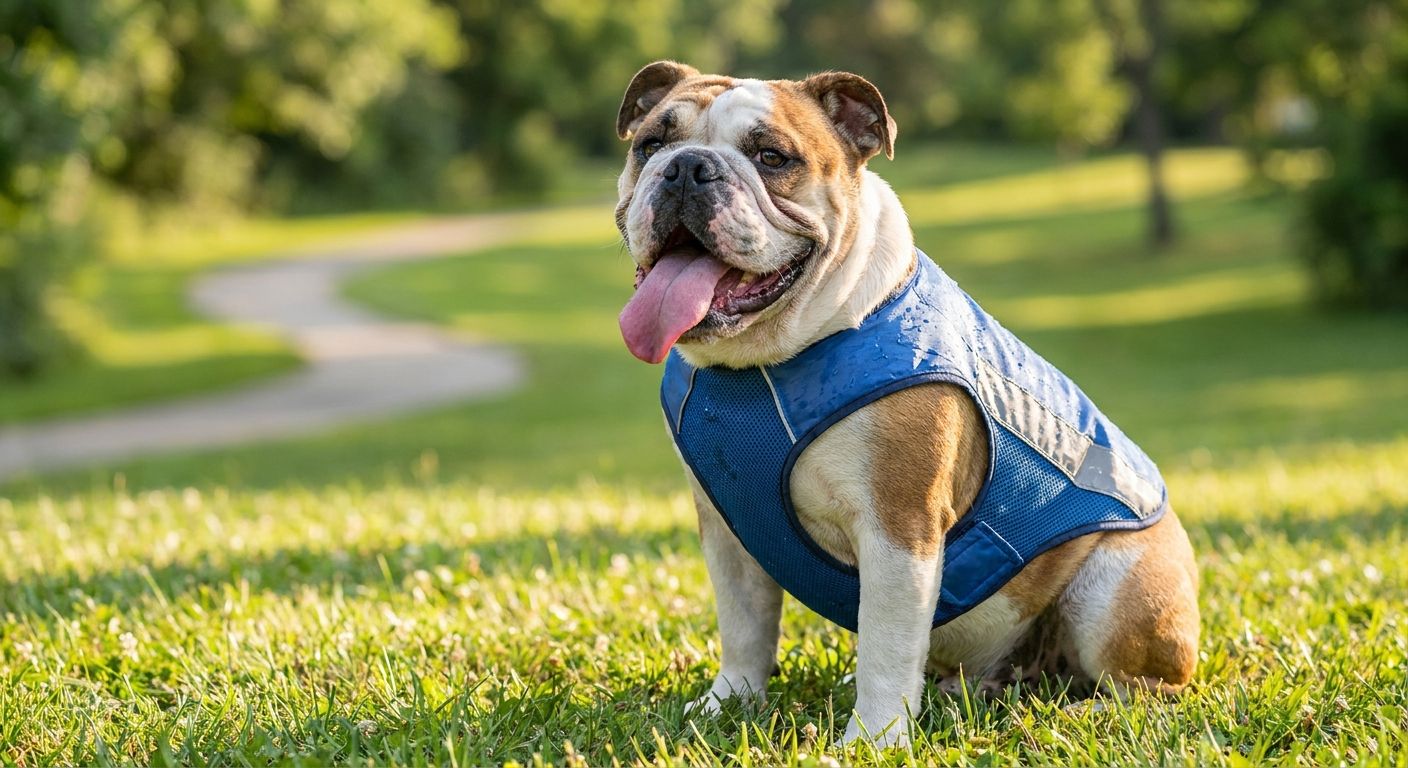
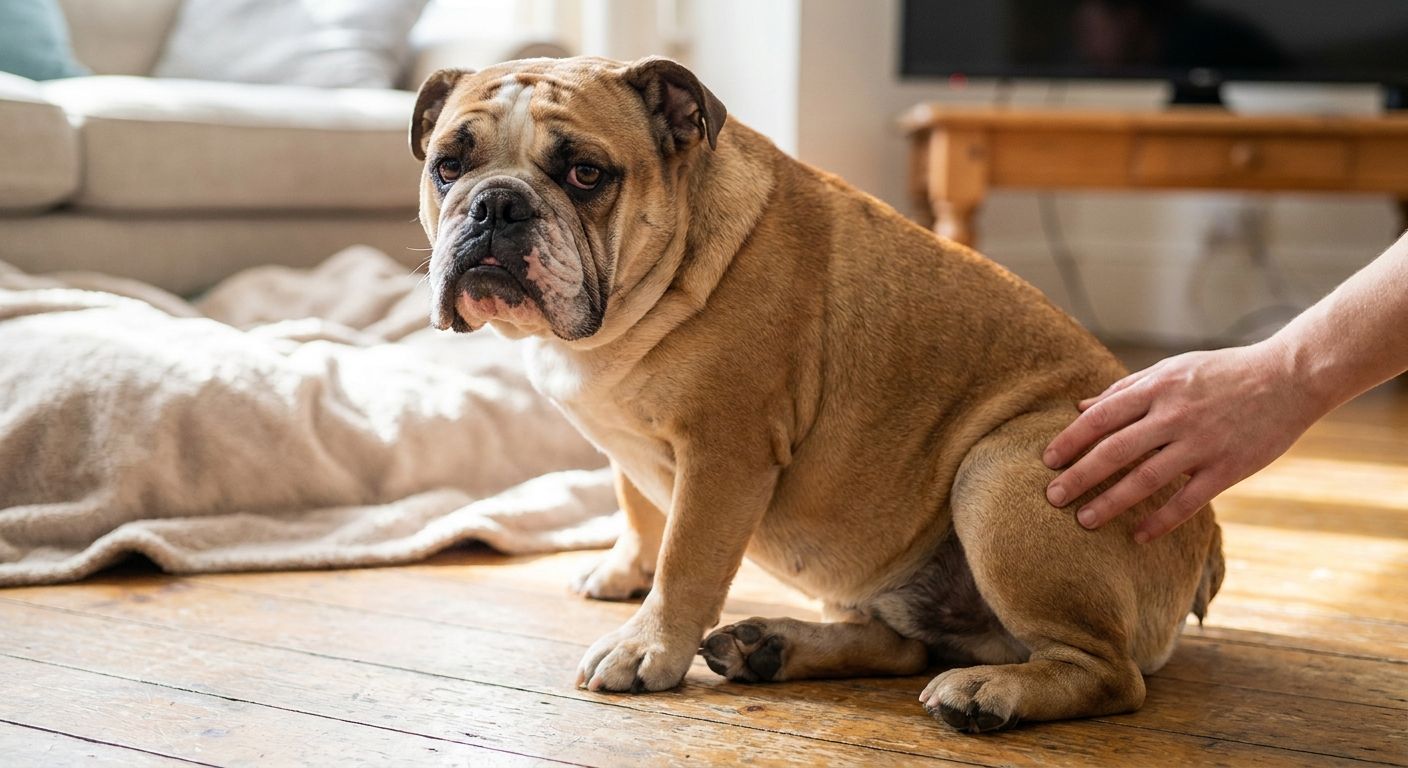
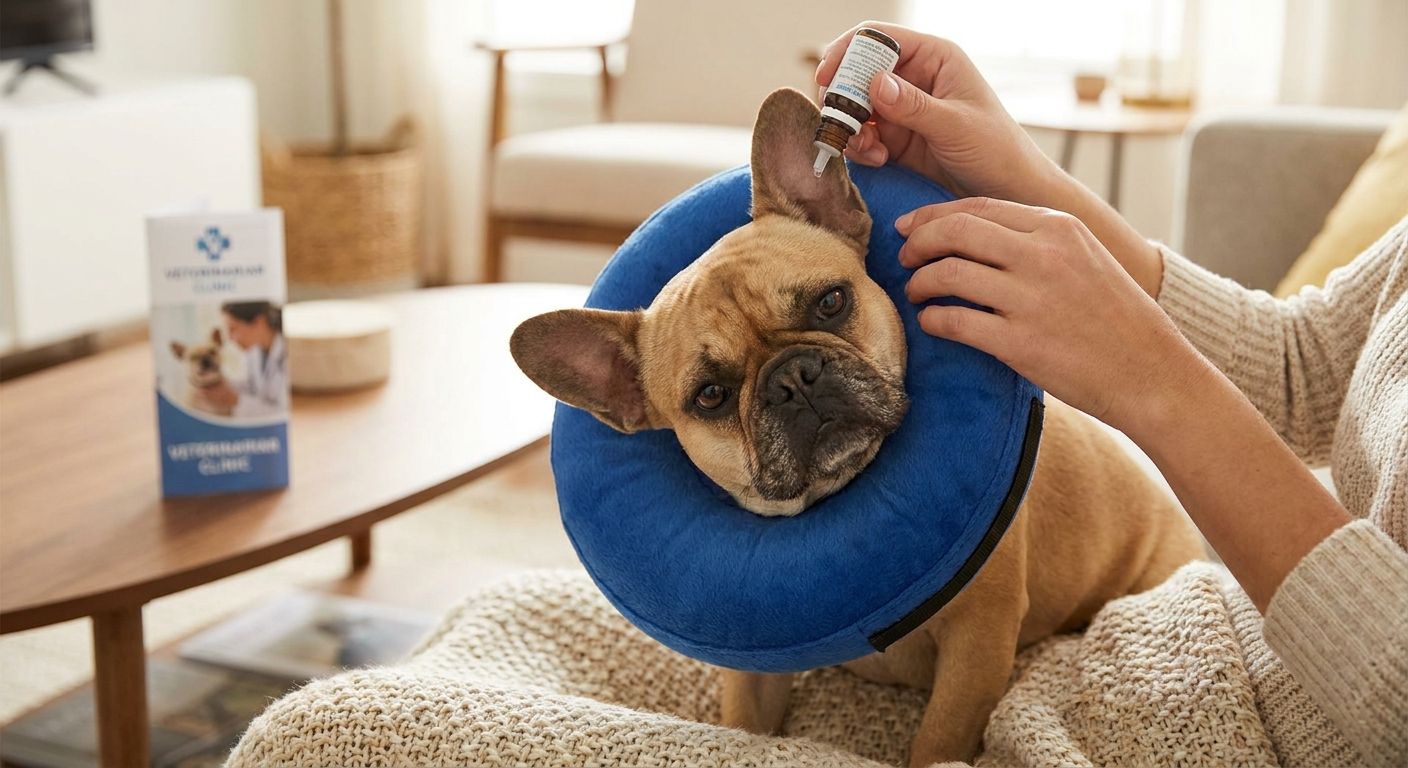
The best cooling vest for a bulldog is the Ruffwear Swamp Cooler Vest for dry-heat walks, the Green Pet Shop Cooling Vest for humid climates where evaporation stalls, and the Chilly Dog Cooling Vest if you want a low-cost daily option before committing to a pricier setup.
TL;DR
Ruffwear Swamp Cooler Vest is the best cooling vest for bulldog owners walking in dry heat in 2026.
Evaporative vests lose most of their effect once humidity climbs past the point where sweat can’t evaporate off fabric.
Gel-based vests like the Green Pet Shop Cooling Vest work in humid air but need freezer prep before every walk.
A cooling collar like the Kool Collar only cools the neck and works best paired with a vest, not alone.
No vest replaces shade, air conditioning, or skipping walks during peak heat for a brachycephalic breed.
Why this matters for a bulldog specifically
Bulldogs don't cool themselves the way a Labrador does. A long, open airway lets most breeds dump heat efficiently through panting; a bulldog's shortened airway and thick neck restrict that airflow, which is exactly why brachycephalic breathing issues show up faster in hot months. A cooling vest lowers skin-surface temperature, but it does nothing for the airway itself.
That distinction matters when you're comparing products. A vest is a tool that buys you a few extra minutes outside — it is not a substitute for timing walks around the coolest part of the day or watching for open-mouth panting that doesn't slow down.
We raise English and French Bulldogs at Shrinkabulls, and heat management is one of the first things we walk new owners through, right alongside crate training and diet. A cooling vest earns a spot in that kit, but only the right kind, sized correctly for a bulldog's barrel chest and short legs.
What makes the best cooling vest for a bulldog
Cooling method matches your climate — evaporative fabric works in dry air; gel or ice packs work in humidity.
Chest coverage without chest restriction — a bulldog's rib cage is wide and low; straps that ride up under the front legs cause chafing.
Quick re-cool time — you need to re-wet or re-freeze the vest in under a minute between stops.
Weight relative to body size — anything over a light layer adds real strain to a dog already working hard to breathe.
Fit adjustability — bulldog proportions vary wildly by line, so a vest with multiple strap points beats one fixed size.
Skin fold clearance — the vest can't trap moisture against neck or chest folds, which invites the same skin fold infections that plague this breed in summer.
Cooling vests for bulldogs at a glance
Vest
Best for
Standout feature
Key limitation
Ruffwear Swamp Cooler Vest
Dry-heat outdoor walks
Evaporative chest panel, adjustable webbing
Loses effect fast in humidity
Chilly Dog Cooling Vest
Budget daily walks
Simple lightweight mesh
Less structured fit for a barrel chest
Green Pet Shop Cooling Vest
Humid climates
Gel cooling, no evaporation needed
Needs freezer prep before each use
Kool Collar
Quick neck-only cooling
Cools the carotid area fast
No torso coverage at all
Canada Pooch Cooling Vest
Short-legged, broad-chested builds
Mesh cut avoids underarm bunching
Sizing takes trial across bulldog lines
1. Ruffwear Swamp Cooler Vest: best cooling vest for bulldog owners in dry heat
The Swamp Cooler uses an evaporative fabric panel that you soak in water before putting it on — as the water evaporates off the fabric, it pulls heat away from the dog's skin. It's built with adjustable webbing straps, which matters more for bulldogs than most breeds because chest and neck girth vary so much between English and French lines.
Ruffwear Swamp Cooler Vest pros:
Adjustable strap points fit a wide range of bulldog chest sizes
Durable webbing holds up to repeated soaking and drying
Chest panel leaves the underside open for airflow
Ruffwear Swamp Cooler Vest cons:
Evaporative cooling drops off sharply once humidity climbs, which limits its use in the Southeast and Gulf Coast in July and August
Needs re-wetting roughly every 15-20 minutes in direct sun to stay effective
Some bulldogs resist a tight strap across the chest at first
Best for: dry-climate owners taking bulldogs on 15-20 minute walks in the early morning or evening. Verdict: Buy for dry-heat regions.
2. Chilly Dog Cooling Vest: best budget cooling vest for casual walks
This is a simpler take on the same evaporative concept — lightweight mesh, minimal hardware, lower cost of entry if you're not sure a vest will even work for your dog's temperament.
Chilly Dog Cooling Vest pros:
Lower cost of entry than structured competitor vests
Lightweight mesh adds almost no bulk
Easy to soak and reuse for short trips
Chilly Dog Cooling Vest cons:
Less structured fit around a bulldog's wide chest compared to the Ruffwear design
Same humidity limitation as any evaporative vest
Strap coverage is minimal, so it slips on dogs that pull hard on leash
Best for: owners testing whether their bulldog will tolerate wearing a vest at all before spending more. Verdict: Buy as a low-commitment starting point.
3. Green Pet Shop Cooling Vest: best cooling vest for bulldog owners in humid climates
This one skips evaporation entirely. The vest holds a reusable gel insert that you chill in a refrigerator or freezer, and it stays cool through direct heat transfer rather than relying on air movement — which is why it keeps working in the kind of humid air that stalls out the Ruffwear and Chilly Dog vests.
Green Pet Shop Cooling Vest pros:
Works in humid climates where evaporative vests underperform
Reusable gel insert, no water-soaking step
Holds a cool temperature for a defined window without re-wetting
Green Pet Shop Cooling Vest cons:
Gel inserts add stiffness and weight relative to fabric-only vests
Requires freezer prep ahead of every walk, which limits spontaneous use
Can feel cold enough against skin folds to cause discomfort if the fit runs snug
Best for: bulldog owners in humid regions where a wet vest never really dries or cools. Verdict: Hold — check fit around the neck and chest folds before committing.
4. Kool Collar: best quick-cooling option for short errands
A cooling collar isn't a vest, but it earns a spot here because it targets the carotid artery at the neck, which cools blood heading to the brain faster than torso cooling alone. It's built around frozen inserts rather than fabric evaporation.
Kool Collar pros:
Cools the neck and head area fast, which matters for a breed already fighting restricted airflow
Minimal coverage means the dog moves freely with nothing across the chest
Useful for quick car-to-door trips where a full vest is overkill
Kool Collar cons:
Provides zero torso cooling, so it's not a stand-alone solution for a real walk
Frozen inserts melt within a set window and need swapping
Doesn't address the underlying breathing restriction that makes bulldogs overheat faster in the first place
Best for: short outings and as a supplement to a torso vest, not a replacement. Verdict: Buy as a companion piece, not a primary vest.
5. Canada Pooch Cooling Vest: best fit for short-legged, broad-chested bulldogs
This vest is cut with a mesh pattern designed to avoid bunching under the front legs — a common complaint with vests built for longer-legged breeds and then resized down for a bulldog's proportions.
Canada Pooch Cooling Vest pros:
Mesh cut avoids the underarm chafing common with tighter designs
Lightweight enough not to add meaningful strain
Evaporative cooling, so no freezer prep required
Canada Pooch Cooling Vest cons:
Same humidity ceiling as any evaporative fabric vest
Sizing runs across all breeds rather than bulldog-specific proportions, so fit takes trial and error
Chest girth on English and French Bulldogs varies enough that one size rarely fits a whole litter
Best for: owners of broad-chested bulldogs who've had underarm rubbing with other vests. Verdict: Wait — measure chest girth carefully before ordering.
How we ranked these cooling vests
Every vest above was scored against the six criteria listed earlier: cooling method fit for climate, chest coverage without restriction, re-cool speed, weight relative to body size, strap adjustability, and skin fold clearance. Evaporative vests ranked higher for dry-climate owners; the gel-based Green Pet Shop vest ranked higher for humid regions specifically because it doesn't depend on air movement to work.
See bulldogs bred for hot climates
Browse English Bulldog litters raised with heat tolerance in mind.
Which cooling vest should you choose for your bulldog?
If you live somewhere dry and your bulldog tolerates a chest strap, the Ruffwear Swamp Cooler Vest is the default pick for 2026. If you're in a humid region, skip evaporative fabric entirely and go with the Green Pet Shop Cooling Vest — it's the only option on this list built to work when the air itself is already saturated. Pair either one with a Kool Collar on short errands where a full vest isn't worth putting on, and hold off on any vest at all if your bulldog is already showing labored breathing that a vest won't fix.
FAQ
What’s the best cooling vest for a bulldog?
The Ruffwear Swamp Cooler Vest is the best overall pick for dry-climate walks in 2026, while the Green Pet Shop Cooling Vest works better in humid regions since it uses gel rather than evaporation.
Do cooling vests actually work for bulldogs?
Yes, but only for skin-surface temperature. A cooling vest lowers heat at the skin but does nothing for the airway restriction that makes bulldogs pant harder than other breeds in the same heat.
Are evaporative cooling vests bad for bulldogs in humid weather?
Evaporative vests lose most of their effect once humidity climbs high enough that water can’t evaporate off the fabric efficiently, which is common across the Southeast and Gulf Coast in summer.
Is a cooling collar better than a cooling vest for a bulldog?
A cooling collar like the Kool Collar cools the neck and carotid area faster than a vest but provides no torso cooling, so it works best paired with a vest rather than used alone.
How often do you need to re-wet an evaporative cooling vest?
In direct sun, an evaporative vest like the Ruffwear Swamp Cooler typically needs re-wetting roughly every 15 to 20 minutes to keep working.
Can a cooling vest replace shade and air conditioning for a bulldog?
No. A cooling vest is a short-term tool for a walk or errand, not a substitute for keeping a bulldog out of direct heat during the hottest part of the day.
Do gel cooling vests irritate a bulldog’s skin folds?
They can if the fit runs too snug against the neck or chest folds, since the gel stays noticeably colder than fabric-based evaporative vests.
What size cooling vest fits an English Bulldog’s chest?
Chest girth varies significantly across English and French Bulldog lines, so measure your specific dog rather than relying on breed-standard sizing charts, especially for vests like the Canada Pooch design that aren’t cut bulldog-specific.
One last thing
A cooling vest treats the skin, not the airway — and a bulldog's airway is the actual bottleneck on a hot day. Watch for open-mouth panting that doesn't slow within a few minutes of stopping activity; that's a bigger red flag than skin temperature and worth a vet call before you reach for another walk with a vest on. We've seen more heat trouble in bulldogs come from ignoring labored breathing than from skipping a cooling vest altogether.
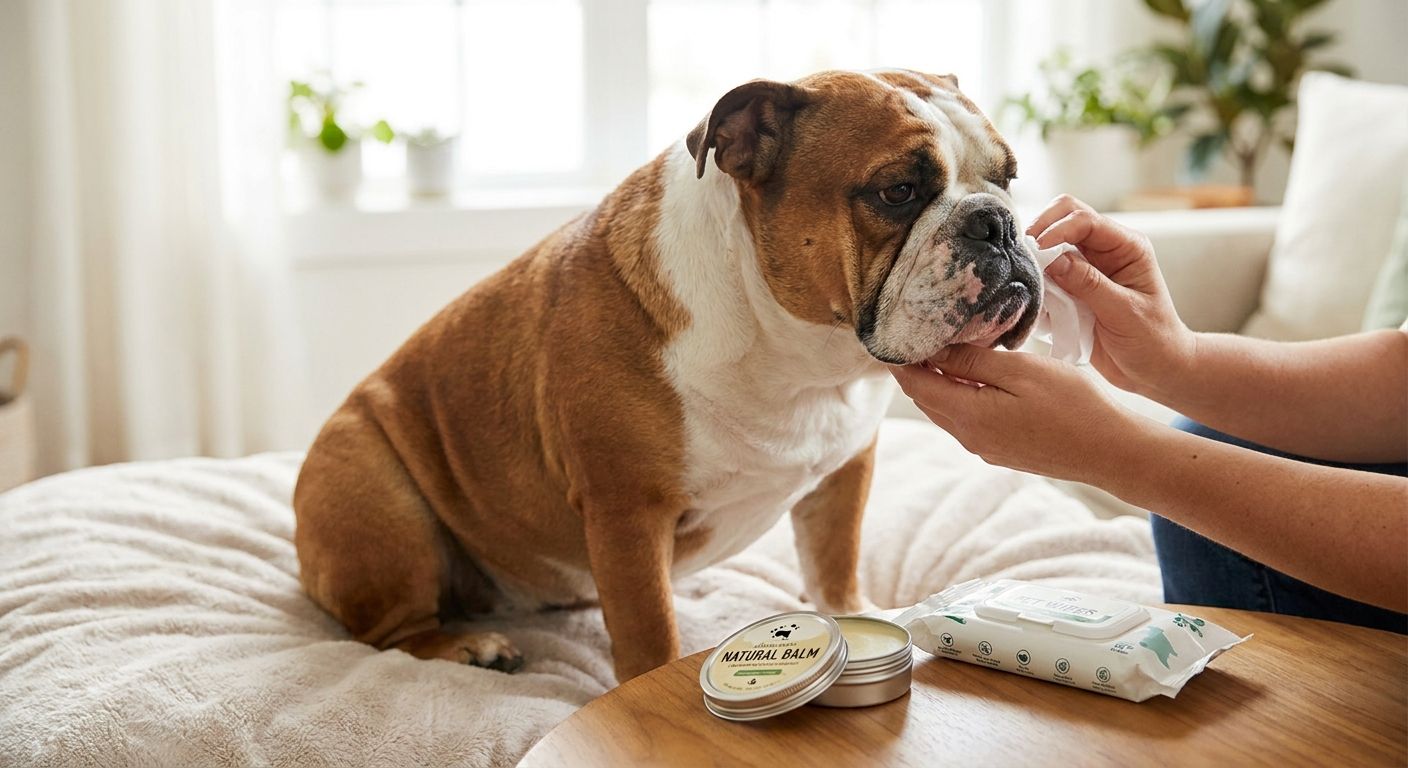
English Bulldog wrinkles need daily attention or they turn into infected, smelly folds fast — this guide ranks the wrinkle care products that actually work in 2026, from medicated balms to antiseptic wipes, so you know what to reach for and when.
TL;DR
Zinc-oxide barrier balm is the best wrinkle balm for English Bulldog owners doing daily fold maintenance in 2026.
Chlorhexidine wipes are built for active or healing infections, not everyday use.
Coconut oil is a fine light natural option only on clean, dry folds with no irritation.
Skip scented baby wipes — alcohol and fragrance inflame bulldog skin folds within days.
Miconazole cream is the right call once a vet confirms yeast in the folds.
Numbers that matter for fold care
2-4%
Chlorhexidine dilution vets commonly use
1-2x daily
Recommended fold wipe-down frequency
24 hours
Time folds should stay fully dry after a bath
Best overall: Zinc-Oxide Barrier Balm. Best for active infections: Chlorhexidine Solution Wipes. Best budget/natural option: Coconut Oil Balm.
Why this matters
We've raised bulldogs for years, and the folds are where things go wrong fastest — a wet, warm crease is basically a petri dish if nobody's checking it. Left alone for even a week, a healthy wrinkle can turn into a red, raw, foul-smelling mess that needs an actual vet visit and antibiotics. Our full breakdown on skin fold infections covers what infected folds look like versus normal ones, and it's worth reading before you pick a product off a shelf.
The wrinkle balm and wipe market is crowded, and a lot of what's marketed as "bulldog wrinkle cream" is just scented lotion with a bulldog on the label. The right product depends entirely on the state of the fold — healthy and dry, damp and irritated, or actively infected all call for different tools.
What makes the best wrinkle balm or wipe
No fragrance, no alcohol — both dry out and irritate already-sensitive fold skin
Antimicrobial or barrier action, not just moisturizing
Fast drying so the fold isn't left damp after application
Safe for daily use if it's a maintenance product, clearly labeled if it's not
Easy to wipe or rinse off before the next application
Vet-recognized ingredients — zinc oxide, chlorhexidine, and miconazole all have real veterinary dermatology use, unlike most "bulldog spa" gimmicks
Wrinkle balms and wipes at a glance
Product type
Best for
Standout feature
Key limitation
Zinc-Oxide Barrier Balm
Daily fold protection
Forms a moisture barrier over irritated skin
Needs full removal before reapplying
Chlorhexidine Solution Wipes
Active or healing infections
Antiseptic action against bacteria and yeast
Not meant for continuous daily use
Miconazole Antifungal Cream
Yeast overgrowth in folds
Targets fungal buildup directly
Needs a vet-confirmed diagnosis first
Coconut Oil Balm
Healthy, low-risk folds
Natural, cheap, easy to find
Can trap moisture if overused
Unscented Hypoallergenic Baby Wipes
Quick daily clean-ups
Gentle, fast, no rinsing required
Doesn't treat existing infection
1. Zinc-Oxide Barrier Balm: best wrinkle balm for daily fold protection
Zinc oxide is the ingredient vets reach for when a fold needs a physical barrier against moisture, not just a wipe-down. It sits on the skin instead of soaking in, which is exactly what a deep bulldog wrinkle needs between baths. Pair it with a consistent wrinkle grooming routine and most healthy folds stay clear year-round.
Zinc-Oxide Barrier Balm pros:
Creates a protective layer that resists re-wetting between cleanings
Widely available and simple to apply with a fingertip
Works on both English and French Bulldog folds
Zinc-Oxide Barrier Balm cons:
Needs to be wiped clean before the next application, or it builds up
Not strong enough on its own for an already-infected fold
Best for: owners doing daily maintenance on a normal, healthy nose roll and tail pocket. Verdict: Buy.
2. Chlorhexidine Solution Wipes: best wrinkle wipe for active infections
Chlorhexidine is the antiseptic vets use in surgical scrubs, typically diluted to 2-4% for skin use, and it's the go-to when a fold has already turned red, moist, or odorous. It kills bacteria and yeast on contact, which is why it shows up in most prescribed fold-care regimens after a vet visit.
Chlorhexidine Solution Wipes pros:
Directly addresses bacterial and yeast overgrowth, not just symptoms
Fast-acting, usually shows improvement within a few days of consistent use
Recommended by veterinary dermatologists for active flare-ups
Chlorhexidine Solution Wipes cons:
Overuse on healthy skin can cause dryness and irritation
Stronger smell than most owners expect from a "wipe"
Best for: folds that are already red, wet, or smelling off. Verdict: Buy for active problems, Wait if the fold looks normal.
3. Miconazole Antifungal Cream: best wrinkle balm for yeast overgrowth
Miconazole targets fungal and yeast buildup specifically, which is common in bulldog folds because the warm, damp environment is ideal for yeast to thrive. This one isn't a first resort — it's a targeted fix once a vet has actually confirmed yeast is the problem, not just guesswork from a smell.
Miconazole Antifungal Cream pros:
Directly effective against yeast, which chlorhexidine alone doesn't always fully clear
Often paired with chlorhexidine wipes in a combined treatment plan
Available over the counter in most pet pharmacies
Miconazole Antifungal Cream cons:
Shouldn't be applied without a confirmed yeast diagnosis
Not a daily maintenance product
Best for: folds with a confirmed yeast infection, usually diagnosed after a vet swab. Verdict: Hold until a vet confirms the cause, then Buy.
4. Coconut Oil Balm: best natural option for healthy, low-risk folds
Coconut oil has mild antimicrobial properties thanks to its lauric acid content, and plenty of bulldog owners like it because it's cheap, natural, and already in the kitchen cabinet. It works fine as a light conditioning layer on folds that are already clean and dry — it's not a treatment product.
Coconut Oil Balm pros:
Inexpensive and easy to find
Gentle enough for frequent use on healthy skin
No synthetic fragrance or alcohol
Coconut Oil Balm cons:
Can trap moisture in deep folds if applied too thick
Offers no real antiseptic or antifungal punch against an existing problem
Best for: owners who want a light, natural touch-up on folds that are already in good shape. Verdict: Buy for maintenance, Skip for anything already irritated.
5. Unscented Hypoallergenic Baby Wipes: best daily wipe for quick clean-ups
A plain, alcohol-free, fragrance-free baby wipe is the fastest tool for a quick wipe-down after meals or a walk, and it's what a lot of bulldog families keep by the door. It won't treat anything, but it removes debris and drool before it has a chance to sit in a fold overnight.
Unscented Hypoallergenic Baby Wipes pros:
Fast, no rinsing, easy to keep on hand
Gentle enough for daily use on any fold condition
Cheap and sold everywhere
Unscented Hypoallergenic Baby Wipes cons:
Zero antimicrobial or barrier effect
Scented versions (common on store shelves) will irritate folds fast
Best for: quick daily upkeep between real treatments. Verdict: Buy, but only the unscented, alcohol-free versions.
How we ranked these
Each product type was judged against the six criteria above — ingredient function, fragrance and alcohol content, drying speed, daily-use safety, ease of removal, and whether the active ingredient has real veterinary dermatology backing. Products that only moisturize without any antimicrobial or barrier function ranked lower, even when marketed specifically for bulldog folds.
Get our fold care routine
Step-by-step wrinkle grooming schedule for bulldog folds.
If the folds look normal — dry, no smell, no redness — start with zinc-oxide barrier balm as your daily product and keep unscented wipes on hand for quick touch-ups. If a fold is already red, wet, or smells off, reach for chlorhexidine wipes and call your vet, since that's usually the point where a fungal component needs miconazole added to the plan. Coconut oil is a nice-to-have for already-healthy skin, not a fix for a problem that's already started. This isn't a one-and-done purchase decision in 2026 — most bulldog owners end up rotating between two or three of these depending on the season and how the folds look that week.
FAQ
What’s the best wrinkle balm for an English Bulldog?
Zinc-oxide barrier balm is the best all-around wrinkle balm for English Bulldog daily maintenance in 2026 because it forms a moisture barrier instead of just moisturizing the skin. For folds that are already irritated or infected, chlorhexidine wipes are the better first step.
Is chlorhexidine safe for bulldog wrinkles?
Yes, chlorhexidine diluted to 2-4% is a standard veterinary antiseptic used on bulldog folds during active infections. It’s not meant for continuous daily use on healthy skin since overuse can dry out the fold.
Can I use coconut oil on my bulldog’s wrinkles?
Coconut oil works fine on folds that are already clean, dry, and healthy, since it has mild antimicrobial properties from its lauric acid content. Avoid it on already-irritated or infected folds, since it can trap moisture and make things worse.
How often should I clean my bulldog’s wrinkles?
Most bulldog folds need wiping down one to two times daily, especially after meals and before bed. Folds that stay damp for over 24 hours after a bath or swim are at higher risk of infection.
Are baby wipes safe for bulldog wrinkles?
Unscented, alcohol-free baby wipes are safe for daily quick clean-ups, but scented versions will irritate bulldog skin folds within days. Baby wipes don’t treat existing infections, they only remove surface debris.
How do I know if my bulldog’s wrinkles are infected?
An infected fold is usually red, moist, and has an odor, compared to a healthy fold that stays dry and neutral-smelling. If the fold looks or smells off for more than a day or two, a vet check and chlorhexidine treatment are the right next step.
What ingredient treats yeast in bulldog wrinkles?
Miconazole is the antifungal ingredient most commonly used once a vet confirms yeast overgrowth in a bulldog’s folds. It’s typically paired with chlorhexidine wipes as part of a combined treatment plan.
Do French Bulldogs need the same wrinkle care as English Bulldogs?
Yes, both breeds have deep facial folds that need the same daily attention, though French Bulldogs also need tail pocket care since their tails sit differently. The same zinc-oxide balm and chlorhexidine wipe combination works for both.
One last thing
The fold owners skip most often isn't the nose roll — it's the tail pocket, and it stays hidden until it starts smelling in 2026's humid months. If your bulldog has a tucked or corkscrew tail, that fold needs the same attention as the face, and our guide on tail pocket care covers what most owners miss.
Worth noting too: recurring fold irritation that doesn't respond to any balm or wipe is sometimes a sign of an underlying food allergy, not a product problem at all. If you've tried three different balms and the same fold keeps flaring, the diet is worth a look before the fourth product.
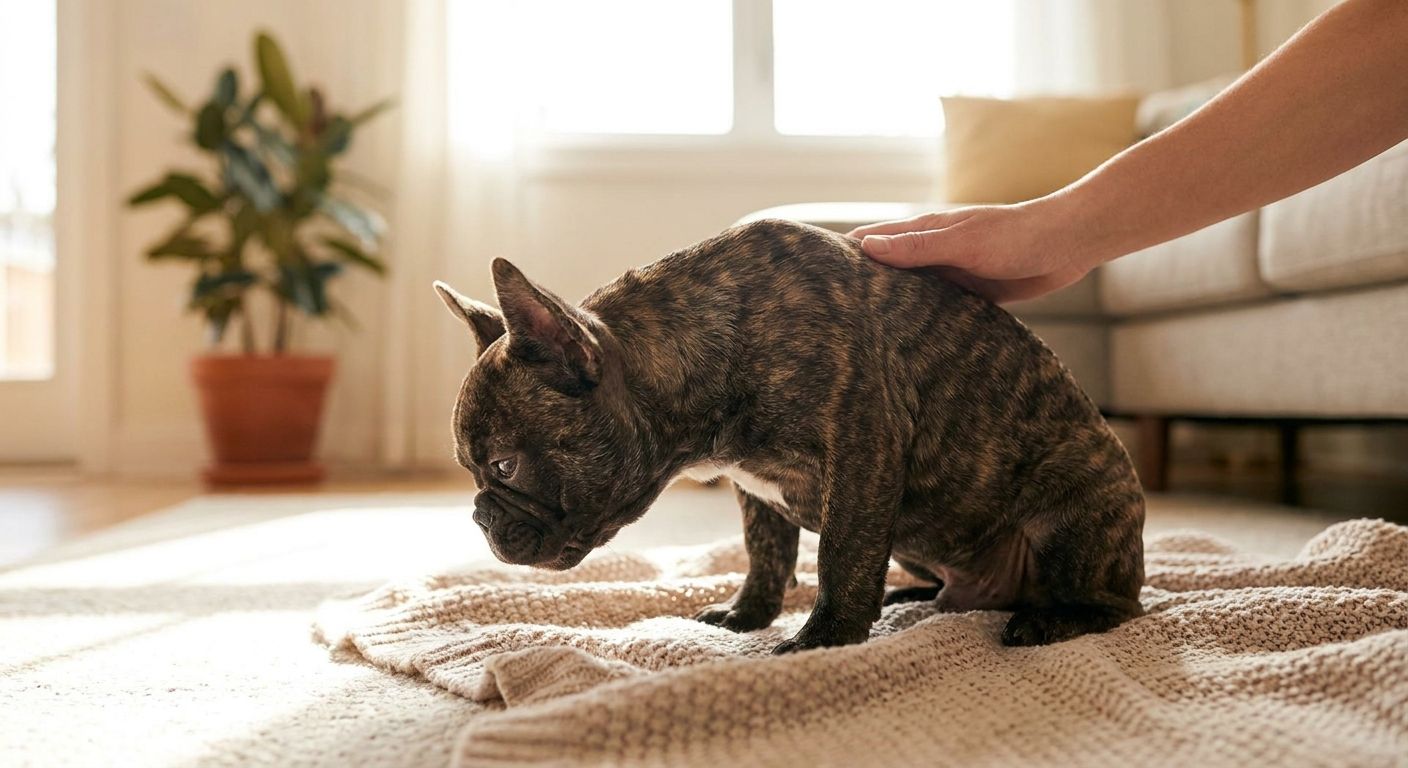
Reverse sneezing in a French Bulldog puppy is a rapid, honking inhale through the nose that sounds alarming but almost always stops on its own within 30 to 60 seconds. It happens because the soft palate spasms and narrows the airway, and it's common in short-muzzled breeds like Frenchies because there's less room back there to begin with. Stay calm, gently cover one nostril or stroke the throat, and the episode passes without any lasting harm to your puppy.
TL;DR
French Bulldog reverse sneezing usually resolves in 30-60 seconds without treatment.
Covering one nostril briefly or stroking the throat interrupts most episodes fast.
Frequent triggers are excitement, fast eating, pollen, and sudden temperature changes.
A puppy that turns blue-tinged, faints, or struggles for over two minutes needs a vet visit, not a home fix.
This is different from the ongoing breathing issues that show up as [brachycephalic breathing problems](https://shrinkabulls.com/how-to-spot-early-signs-of-brachycephalic-breathing-issues/) later in life.
Why this matters
We field calls about this from new Shrinkabulls families all the time, usually with the puppy still mid-episode and the owner half-panicked on the other end of the line. Reverse sneezing looks and sounds worse than it is, but it can also mimic early brachycephalic breathing issues, which are the ones you actually want to catch early. Knowing which is which saves you an unnecessary emergency vet bill or, worse, missing a real problem because you assumed it was "just reverse sneezing."
How do you stop reverse sneezing in a French Bulldog puppy?
Most episodes break on their own in under a minute, but you can shorten them with a few simple moves. Work through these in order the next time your Frenchie starts honking:
Stay calm and speak softly. Puppies pick up on panic, and a tense owner makes the spasm last longer.
Gently press one nostril closed for a second or two. This forces a swallow that resets the soft palate.
Stroke the throat downward or lightly massage the neck to encourage swallowing.
Offer a small lick of water or a treat if the puppy is calm enough to take it. Swallowing is often what ends the spasm.
Step outside for fresh air if the episode started near strong smells, cleaning spray, or dusty carpet.
Time it. If you're past 90 seconds to two minutes with no letup, that's your cue to call the vet instead of waiting it out.
“If an episode lasts longer than two minutes or comes with blue-tinged gums, stop treating it like reverse sneezing and get to a vet.”
Why does reverse sneezing happen more in French Bulldogs?
French Bulldogs are built with a shorter airway and softer palate than longer-muzzled breeds, so they're wired for this more than a Labrador ever will be. A handful of everyday triggers set it off in puppies specifically:
Excitement or over-arousal — play sessions, greetings at the door, and car rides are common setups.
Eating or drinking too fast, which pulls air and irritates the throat.
Collar or harness pressure on the neck during walks.
Environmental irritants like perfume, cleaning fumes, pollen, or dust.
Allergic reactions to food ingredients — if episodes cluster after meals, it's worth reading up on food allergies since the same triggers apply across bulldog breeds.
Sudden temperature swings, especially cold air hitting the throat on a winter walk.
None of these need a vet visit on their own. What matters is the pattern — occasional and quick versus daily and prolonged.
When reverse sneezing is something more serious
A one-off honking fit at 10 weeks old is normal puppy noise. What's not normal: episodes that happen multiple times a day, last well past two minutes, or come paired with wheezing during normal breathing, not just during the spasm. That combination points toward airway structure problems rather than a simple palate spasm, and it's the same territory covered in our guide on brachycephalic breathing issues.
If a vet flags an elongated soft palate as the underlying cause, soft palate surgery is the standard fix for French Bulldogs whose breathing doesn't improve with age. Most puppies never need it — reverse sneezing on its own is not a surgical case — but it's worth knowing the option exists if the pattern worsens instead of fading.
Have questions about a Frenchie puppy’s health?
Talk through breathing, feeding, or breed-specific questions before you bring one home.
Is reverse sneezing dangerous for a French Bulldog puppy?
Reverse sneezing is not dangerous on its own — it's a reflex spasm, not a blockage, and it resolves within seconds to about a minute in the vast majority of cases. It becomes a concern only when episodes stack up daily, last past two minutes, or show up alongside labored breathing at rest.
How is reverse sneezing different from choking or collapse?
Reverse sneezing sounds like rapid snorting through the nose while the puppy stays alert and standing; choking or a collapse event involves gagging, pawing at the mouth, weak legs, or gums losing color. If your puppy stays on its feet and breathing settles within a minute, it's reverse sneezing — if it doesn't, treat it as an emergency.
Does reverse sneezing get better as a French Bulldog puppy grows?
Most puppies have fewer episodes as they mature, since some of it ties to a growing, still-developing airway and soft palate. Episodes that get more frequent or longer with age, instead of less, are the exception worth a vet check rather than something to wait out.
FAQ
What does French Bulldog reverse sneezing sound like?
It sounds like a rapid series of snorting, honking inhales through the nose, sometimes mistaken for choking. The puppy stays standing and alert throughout, and the sound stops on its own within 30 to 60 seconds.
How long does a reverse sneezing episode last?
Most episodes last 30 to 60 seconds and rarely stretch past two minutes. Anything longer than two minutes, or paired with blue-tinged gums, calls for a vet rather than home remedies.
Should I hold my French Bulldog puppy’s nose closed during reverse sneezing?
A brief one-to-two-second nostril press can help, forcing a swallow that resets the palate spasm. Holding it closed longer than that isn’t necessary and can stress the puppy further.
Is reverse sneezing the same as kennel cough?
No — reverse sneezing is a fast, snorting inhale reflex tied to the soft palate, while kennel cough is a persistent, dry hacking cough tied to infection. Kennel cough also lasts days, not seconds.
Can allergies cause reverse sneezing in a French Bulldog puppy?
Yes — pollen, dust, and certain food ingredients are common triggers. If episodes cluster around specific meals, it’s worth reviewing food allergy symptoms in bulldogs to rule out an ingredient-based trigger.
At what age do French Bulldog puppies start reverse sneezing?
It can start as early as a few weeks old and tends to become less frequent as the airway and soft palate mature. Episodes that increase with age rather than decrease are the pattern worth flagging to a vet.
Does reverse sneezing mean my French Bulldog has a breathing problem?
Not usually — occasional reverse sneezing is a normal reflex in short-muzzled breeds and not a sign of chronic breathing disease. Frequent, prolonged episodes alongside labored breathing at rest are the combination that points toward a bigger airway issue.
When should I call the vet about reverse sneezing?
Call if an episode passes two minutes, happens more than once a day, or comes with blue or pale gums. A single quick episode a few times a month is normal and doesn’t need a call.
One last thing
The detail most new owners miss: reverse sneezing episodes almost always happen at the same time of day or in the same setting — right after excited greetings, right after a fast meal, or right after a walk on a cold morning. Write down when it happens for a week. If the pattern points to one trigger, removing it (slower feeding, a harness instead of a collar, air conditioning instead of open windows) can cut the frequency dramatically without any vet visit at all.
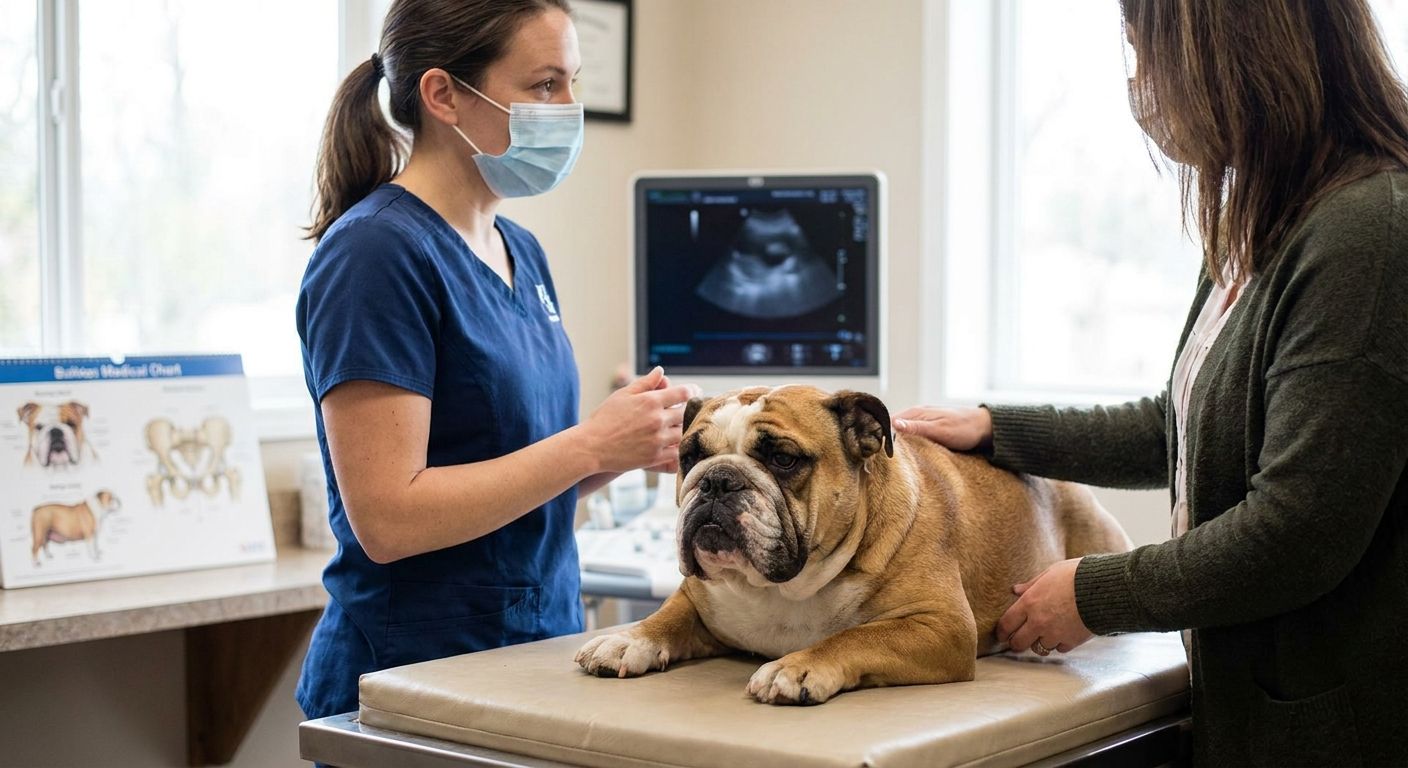
English Bulldogs need C-sections because their body shape makes natural delivery physically dangerous for both mother and puppies, and it isn't a rare exception — it's the standard outcome for the breed. Veterinary research on brachycephalic breeds puts the English Bulldog cesarean rate in the 80-90% range, with one widely cited study reporting 86.1% of Bulldog litters delivered surgically. The hidden cost most new breeders and owners don't factor in: even a planned, scheduled C-section carries anesthesia risk for a mother with a compromised airway, and an unplanned emergency surgery at 2 a.m. costs more, moves faster, and has a narrower safety margin than one scheduled in advance.
TL;DR
English Bulldog C-section birth happens in an estimated 80-90% of litters due to head-to-pelvis mismatch.
Puppy heads and shoulders are proportionally too wide for the dam’s narrow birth canal in most cases.
Scheduled C-sections carry lower risk than emergency ones because the surgical team and anesthesia protocol are prepared in advance.
Average English Bulldog litter size runs around four puppies, which still overwhelms a body built for a narrow pelvis.
A reputable breeder plans for surgical delivery from the start rather than gambling on natural whelping.
English Bulldog whelping numbers
80-90%
Litters delivered by C-section
Aggregated veterinary research, 2026
~4 puppies
Average litter size
Why This Matters
Anyone shopping for an English Bulldog puppy in 2026, or considering breeding one, needs to understand that this isn't a fixable quirk — it's structural. The same traits that make the breed recognizable — the broad skull, the compact torso, the narrow hips relative to body width — are the traits that block natural delivery. This isn't a minor vet bill line item; it shapes how a responsible breeder prices, plans, and staffs a whelping, and it's a direct reason verifying a breeder's health practices matters more with this breed than with almost any other.
Why Do English Bulldogs Need C-Sections to Give Birth?
The short version: puppy head and shoulder width outpaces the dam's pelvic canal. English Bulldogs were bred over generations for a broad skull, a wide chest, and a compact, low-slung body — a combination that leaves almost no margin for a puppy to pass through the birth canal without getting stuck.
Factor
Effect on birth
Wide puppy skull
Head circumference frequently exceeds the dam's pelvic opening
Narrow maternal hips
Breed standard favors a compact frame, which shrinks the birth canal
Brachycephalic airway
Limits the dam's ability to push effectively during prolonged labor
Weak uterine contractions
Common in the breed, leading to primary inertia even when puppies are correctly positioned
Large puppy shoulders
Can shoulder-lock even after the head clears
When any two of these line up in the same whelping, natural delivery stalls, and a stalled labor in a brachycephalic dog turns into an emergency fast. That's why most reproductive vets who work with Bulldogs treat cesarean delivery as the default plan, not the backup plan.
Scheduled C-Section: The Lower-Risk Route
A scheduled cesarean, timed off progesterone testing and fetal monitoring near day 63 of gestation, lets the vet team prep anesthesia, staff the surgery, and have a whelping box and warming setup ready before the first incision. Anesthesia is still the main risk point for a Bulldog because of the compressed airway, but a planned procedure lets the team choose protocols suited to brachycephalic anatomy and have oxygen support standing by.
Best for: breeders who track ovulation timing closely and want to avoid the chaos of a middle-of-the-night emergency call.
Emergency C-Section: The Higher-Risk Route
An emergency cesarean happens when labor stalls unexpectedly — weak contractions, a stuck puppy, or fetal distress showing up on a heart rate check. There's no time to optimize anesthesia protocol or line up a full surgical team, and by the time a dam reaches this point she may already be exhausted from hours of unproductive labor, which raises risk for her and for any puppies still waiting to be delivered.
Best for: nobody by design — it's the outcome breeders plan against, not the outcome they plan for.
Why English Bulldog C-Section Rates Vary
Not every Bulldog whelping is identical, and a handful of factors push the rate up or down for an individual dam:
Litter size — larger litters mean more puppies competing for position, raising the odds of malpresentation
Dam's pelvic conformation — some lines run narrower hips than others even within the breed standard
Puppy head size relative to the dam — first litters from a smaller dam bred to a larger sire skew higher risk
Maternal age — older dams are more prone to uterine inertia, where contractions weaken before delivery is complete
Prior whelping history — a dam who needed a C-section before is very likely to need one again
Breeder oversight and prenatal monitoring — progesterone testing and scheduled imaging catch problems before labor starts, not during it
A breeder who runs health testing and prenatal monitoring consistently, and who can show you the health testing panels behind a litter, is working to keep that list short rather than finding out the hard way.
“With English Bulldogs, a scheduled C-section isn’t the risky option — an unplanned natural labor is.”
Can English Bulldogs Give Birth Naturally at All?
A small percentage of English Bulldogs deliver naturally, but veterinary data puts that at roughly 10-20% of litters, and it's not something a breeder can safely count on ahead of time. Even a dam who whelped naturally once can require a cesarean on a later litter if puppy size, positioning, or labor strength differs.
Why Are English Bulldog Litters So Small If C-Sections Are So Common?
English Bulldog litters average around four puppies, which is smaller than many mid-size breeds, partly because the same narrow pelvis and compact frame that force surgical delivery also limit how many puppies a dam can safely carry to term. Smaller litter size doesn't lower the C-section rate — it just means fewer puppies are at risk in each surgery.
How Much Does an English Bulldog C-Section Cost?
Cost varies widely by clinic, whether the surgery is scheduled or emergency, and regional vet pricing, so there's no single number that applies everywhere. Buyers researching the true cost of owning an English Bulldog puppy should treat surgical whelping as a built-in line item for the breed, not an occasional expense.
Reserve your Bulldog puppy today
Secure a spot on an upcoming litter with a deposit before whelping.
The detail that surprises most first-time Bulldog buyers: a C-section rate near 86% doesn't come from bad luck or poor breeding — it comes from the exact head and body proportions that make the breed look like a Bulldog in the first place. Ask any English Bulldog breeder in 2026 whether they plan for surgical delivery, and the honest answer should always be yes. Shrinkabulls plans every litter around scheduled, monitored delivery for that reason, not as a workaround but as standard practice for the breed.
FAQ
Do all English Bulldogs need a C-section to give birth?
No, but most do — veterinary research puts the rate at roughly 80-90% of litters. A small share of dams deliver naturally, but breeders can’t reliably predict which ones ahead of time.
Why can’t English Bulldogs give birth naturally like other breeds?
The puppy’s head and shoulder width typically exceeds the dam’s pelvic canal, a direct result of the breed’s broad skull and narrow, compact hips. Weak uterine contractions common in the breed compound the problem even when puppies are positioned correctly.
Is a scheduled C-section safer than an emergency one for English Bulldogs?
Yes, a scheduled C-section is safer because the surgical team and anesthesia protocol are prepared in advance for the dam’s compressed airway. An emergency cesarean happens after hours of stalled labor, which raises risk for both the dam and any puppies still undelivered.
How many puppies are in an average English Bulldog litter?
English Bulldog litters average around four puppies. The smaller litter size doesn’t reduce the need for a C-section — the narrow pelvis that limits litter size is the same anatomy that blocks natural delivery.
What is the biggest risk during an English Bulldog C-section?
Anesthesia risk is the primary concern because the breed’s brachycephalic airway makes sedation and recovery more delicate than in non-flat-faced breeds. That’s why scheduled surgeries, timed off progesterone testing, carry lower risk than emergency procedures.
Can an English Bulldog have more than one C-section in her lifetime?
Yes, many Bulldogs deliver multiple litters by C-section over their breeding life, and a dam who needed one for a prior litter is very likely to need one again. Responsible breeding programs plan and limit the number of litters a dam carries with this in mind.
Does litter size affect the chance of needing a C-section?
Larger litters raise the odds of malpresentation and stalled labor, since more puppies are competing for position in a narrow birth canal. Smaller litters aren’t automatically low-risk either, since head-to-pelvis mismatch alone can still force a surgical delivery.
Bulldog puppies need their first deworming dose at 2 weeks old, then repeat doses every two weeks until 12 weeks, then monthly through 6 months of age. The hidden catch new owners miss: nearly every puppy is born with roundworms passed through the placenta or the mother's milk, so "looks healthy" is not a reason to skip a dose.
TL;DR
The bulldog puppy deworming schedule starts at 2 weeks and repeats every two weeks until 12 weeks old.
Roundworms cross the placenta before birth, so even puppies that look fine need the first dose on schedule.
From 3 to 6 months, dosing shifts to once monthly, then folds into a year-round adult parasite prevention plan.
Skipping a dose because a puppy "seems fine" is the single most common mistake new bulldog owners make in 2026.
Deworming timeline at a glance
2 weeks
First dose given
Every 2 weeks
Dosing interval through 12 weeks
Monthly
Dosing from 3 to 6 months
Why this matters
Bulldog puppies carry tighter airways and more skin folds than most breeds, and a heavy parasite load piles digestive stress on top of a body that already works harder to breathe and regulate temperature. A wormy puppy eats fine and still fails to gain weight, which is exactly the kind of slow, easy-to-miss problem that turns into a vet bill in month two instead of a $10 dose in week two.
Breeders who follow AKC and CAPC (Companion Animal Parasite Council) guidance start deworming before the puppy ever goes home, and the schedule below is what most reputable programs run in 2026. If you picked up your bulldog from Shrinkabulls, the early doses are already behind you — this page tells you what comes next.
What is the bulldog puppy deworming schedule?
The schedule below reflects standard veterinary practice for puppies, adjusted for the fact that bulldog litters are almost universally born with roundworms and often hookworms too.
A fecal exam around 10 to 12 weeks confirms whether the biweekly rounds actually cleared the parasite load — this is the step most new owners skip, and it's the one that catches a resistant infection before it becomes chronic.
Weeks 2 to 12: every two weeks
This is the busiest stretch of the bulldog puppy deworming schedule, and it's non-negotiable. Roundworm larvae migrate through a puppy's tissue in waves, so a single dose only kills the worms active at that moment — the two-week interval is timed to catch the next wave as it matures. Most breeders hand new owners a written record of every dose given before pickup; if yours didn't, ask for it before the first vet visit.
Verdict: stick to the two-week interval exactly — stretching it to three or four weeks lets a new generation of larvae mature past the window the dewormer can reach.
Months 3 to 6: monthly doses
Once a puppy clears the intensive biweekly phase, monthly dosing is enough to keep a low-level reinfection from taking hold, especially in puppies that spend time in yards, dog parks, or multi-dog households. This is also the window where many owners introduce a broader parasite preventive that covers heartworm alongside intestinal worms.
Verdict: monthly dosing from 3 to 6 months is the right call for nearly every bulldog puppy — don't wait for symptoms to restart the schedule.
6 months and older: adult prevention schedule
By 6 months, most bulldogs move to a year-round adult parasite prevention plan, typically a monthly product that combines heartworm, roundworm, and hookworm coverage in one dose. This isn't a new schedule so much as the natural continuation of the puppy one — the interval doesn't change, only the product category does.
Verdict: keep the monthly rhythm going for life; bulldogs that skip winter months because "it's cold, no fleas" still pick up intestinal parasites from soil and other dogs.
Why the deworming schedule varies
Not every bulldog puppy needs the textbook timeline exactly. A few factors shift the plan:
Fecal exam results — a positive test after the 12-week round means an extra dose or a different active ingredient, not a wait-and-see approach
Flea exposure — fleas carry tapeworm larvae, so a flea outbreak adds tapeworm coverage to the next dose regardless of age
Litter history — puppies from a first-time mother or a shelter-rescued dam often carry a heavier initial load and need closer follow-up
Household exposure — multi-dog homes and yards shared with other animals reinfect faster than a single-dog apartment
Weight and body condition — a puppy losing weight despite normal eating gets rechecked immediately, schedule or not
Breed-specific digestive sensitivity — bulldogs run more gastrointestinal issues than average, so vets sometimes space doses around vaccination visits to avoid stacking stress on one appointment
The bulldog puppy vaccination schedule runs on a similar age-based timeline, and many vets coordinate the two so a puppy isn't getting dewormed and vaccinated on the same visit.
“A wormy puppy eats fine and still fails to gain weight — that slow drift is the tell, not a dramatic symptom.”
Related questions new owners ask
How do I know if my bulldog puppy has worms?
A pot-bellied appearance despite normal or reduced appetite is the most common visible sign, along with dull coat and loose stool. Visible worms in stool confirm it outright, but a fecal exam at the vet catches infections before any symptom shows, which is why the 10-12 week recheck matters more than watching for signs.
Can I deworm my bulldog puppy at home without a vet?
Over-the-counter dewormers exist, but bulldog puppies react to medication differently than average-sized breeds due to their compact build and sensitive digestive tract. A vet-directed dose matched to current weight is the safer route for the first several rounds, even if a home product handles later maintenance doses.
What happens if I miss a dose in the schedule?
Missing a dose by a few days rarely causes lasting harm, but missing an entire interval lets the parasite population rebuild past where the last dose left it. Restart at the next scheduled age rather than trying to "catch up" with an extra dose outside the two-week rhythm.
Do French Bulldogs and English Bulldogs follow the same schedule?
Yes — the age-based intervals (2, 4, 6, 8, 10-12 weeks, then monthly) apply the same way across both breeds, since the schedule is driven by parasite life cycles, not breed size. Dosage amount differs by the puppy's actual weight, which a vet adjusts regardless of breed label.
Reserve a bulldog puppy before birth
Lock in your spot on an upcoming litter and get the full deworming record at pickup.
Every puppy placed through a reputable 2026 breeding program should come with a written log of every dose already given, ages included — ask for it before you finalize a pickup date.
FAQ
What is the bulldog puppy deworming schedule for new owners?
The standard schedule runs every two weeks starting at 2 weeks old through 12 weeks, then monthly from 3 to 6 months, then monthly for life as part of adult parasite prevention. A fecal exam around 10 to 12 weeks confirms the schedule actually cleared the infection.
How much does bulldog puppy deworming cost?
Cost varies by product, weight, and vet clinic, so check current pricing directly with your veterinarian rather than relying on a fixed number. Most puppies need 5 to 6 doses before 12 weeks, so budget for the full round rather than a single visit.
Is deworming necessary if my puppy shows no symptoms?
Yes — nearly all puppies are born with roundworms passed through the placenta, so a puppy with zero visible symptoms can still carry a significant parasite load. Skipping doses because a puppy "looks fine" is the most common mistake new owners make.
Can I switch dewormer brands mid-schedule?
Switching brands is fine as long as the active ingredient still covers the same parasites and the dose matches current weight. A vet-directed fecal exam after the switch confirms the new product is working.
When does a bulldog puppy switch from puppy to adult deworming?
Around 6 months old, most bulldogs move from monthly puppy dosing to a year-round adult prevention product that often combines heartworm and intestinal parasite coverage in one monthly dose.
Do indoor bulldog puppies need the same deworming schedule as outdoor puppies?
Yes — indoor puppies still need the full 2-to-12-week schedule because the initial infection comes from the mother, not the environment. Outdoor exposure and flea contact can add tapeworm coverage but doesn’t remove the baseline schedule.
One last thing
The detail most new bulldog owners never hear: a puppy can test negative on a fecal exam at 8 weeks and still be actively carrying migrating larvae that haven't reached the intestine yet, which is exactly why the schedule keeps going past a single clean test. Trust the calendar over the test result until the full 12-week round is complete.
An English Bulldog with a food allergy shows a specific pattern: itchy, red skin around the paws, armpits, and skin folds, chronic ear infections, and loose stool or vomiting that shows up within hours to a few days of eating the trigger ingredient — and none of it clears up with flea treatment or antihistamines alone. The detail most owners miss is that english bulldog food allergies run year-round, not seasonal, and they don't respond to the steroid shot that knocks out a pollen flare in 48 hours.
TL;DR
Year-round itching, ear infections, and paw licking point to english bulldog food allergies, not seasonal allergy.
Chicken, beef, dairy, and wheat cause most confirmed food allergy cases in bulldogs.
An 8-12 week elimination diet trial is the only reliable way to confirm a food allergy in 2026.
Skin fold infections often flare alongside food allergies and need separate daily care.
Blood and saliva allergy tests are unreliable for food allergies — vets don’t rely on them for a diagnosis.
Food allergy basics
8-12 weeks
Elimination diet trial length
4 proteins
Most common trigger sources
chicken, beef, dairy, wheat
Why this matters
Bulldogs already deal with skin folds, wrinkles, and a gut that's more sensitive than a lot of other breeds — so when a food allergy gets layered on top, the itching and infections compound fast. We've fielded plenty of calls from Shrinkabulls families who assumed a wrinkle rash or a runny eye was "just a bulldog thing" when it was actually a diet reacting badly with their pup's skin. Catching the pattern early saves you a year of guessing, vet visits, and a dog that's miserable in its own skin.
The hard part is that food allergy symptoms overlap heavily with environmental allergies, yeast overgrowth, and normal bulldog wrinkle maintenance. Sorting out which one you're actually dealing with is what separates a two-week fix from a two-year mystery.
How to identify food allergies in an English Bulldog
The fastest way to tell a food allergy apart from an environmental allergy or a normal bulldog quirk is to track when and where the symptoms show up.
Symptom
Food allergy
Environmental allergy
Normal bulldog trait
Timing
Year-round, no seasonal pattern
Worse in spring/fall, better indoors
Constant, low-level
Itching location
Ears, paws, armpits, rear end
Face, eyes, belly
Wrinkles, tail pocket
Ear infections
Recurring, both ears
Occasional, tied to pollen season
Rare unless folds are dirty
Digestive signs
Soft stool, vomiting, gas
Almost never
None
Response to antihistamine
Little to no improvement
Noticeable improvement
Not applicable
Response to diet change
Clears in weeks
No change
No change
If your bulldog's itching sticks around in January the same as it does in July, that's your biggest clue you're looking at a food trigger and not ragweed or grass.
The elimination diet: how to confirm it
There's no reliable blood or saliva test for food allergies in dogs — vets consider those tests too inaccurate to diagnose off of. An elimination diet is the actual gold standard, and it works like this:
Pick a novel protein and carb source your bulldog has never eaten — often duck, venison, or a hydrolyzed protein formula.
Feed only that food for 8-12 weeks. No treats, no table scraps, no flavored medications during the trial.
Watch for improvement around week 6-8; most true food allergy cases show visible skin and coat improvement by then.
Reintroduce one old ingredient at a time, one every 1-2 weeks, and watch for flare-ups within 24-72 hours.
Confirm the trigger once a specific reintroduced ingredient reliably brings symptoms back.
If you're mid-transition from breeder food to a home diet already, that's actually the easiest window to run this trial cleanly since your bulldog isn't attached to a routine food yet — transitioning a new bulldog puppy off breeder food the right way sets you up to catch a food sensitivity early instead of three years down the road.
Why bulldog food allergies vary
Not every bulldog reacts to the same trigger, and severity swings widely between individual dogs. A few factors drive that variation:
Genetics and lineage — some bloodlines carry more skin and gut sensitivity than others
Protein exposure history — a dog fed the same chicken-based kibble for years builds up sensitivity to that specific protein over time
Gut microbiome health — bulldogs with a history of soft stool or antibiotic use often react more strongly to new ingredients
Skin fold moisture — allergic skin combined with damp folds turns a mild irritation into a bacterial or yeast infection fast
Filler-heavy kibble — low-quality fillers (corn, soy, artificial dyes) trigger more reactions than single-source proteins
Treats and table scraps — even a "clean" main diet can be undone by daily treats containing the trigger ingredient
A bulldog already prone to weight gain adds another layer here, since a lot of budget kibble uses the same handful of cheap proteins that also top the allergy trigger list — worth cross-checking against a diet plan built for overweight English Bulldogs if your dog is carrying extra weight on top of allergy symptoms.
Is it a food allergy or an environmental allergy?
A food allergy shows up year-round with digestive signs like soft stool or vomiting alongside the itching; an environmental allergy is seasonal and rarely touches the gut. If your bulldog's symptoms ease up in the dead of winter when pollen counts drop, you're most likely looking at an environmental trigger, not a food one.
How long does an elimination diet take to work?
An elimination diet takes 8-12 weeks to produce a reliable answer in most English Bulldogs. Some dogs show visible improvement by week 4, but full confirmation requires sticking with the single novel-protein diet through the full trial before reintroducing anything.
What foods cause the most allergies in English Bulldogs?
Chicken, beef, dairy, and wheat account for the majority of confirmed food allergy cases in dogs generally, and bulldogs are no exception given how common chicken-based kibble is on pet store shelves. Lamb, fish, and novel proteins like duck or venison trigger far fewer reactions simply because most dogs haven't been exposed to them before.
Skin fold infections deserve a separate mention here, because they mimic and worsen alongside food allergies constantly. If your bulldog's wrinkles are red, smelly, or crusty on top of the itching, treat that as its own problem — see how to manage skin fold infections in an English Bulldog for the daily cleaning routine that keeps folds dry while you run the diet trial.
Before you commit to any breeder or puppy, it's worth asking what health testing has already been done on the parents — allergy tendencies and skin sensitivity often run in family lines, and a breeder who runs health testing panels on their dogs can tell you what to watch for before you ever bring a puppy home.
Meet our bulldog puppies
See available English and French Bulldog litters and ask about diet and health history.
If you're still deciding on a color variety and weighing cost alongside health considerations, what merle bulldog puppies really cost breaks down the price factors buyers ask about most in 2026, separate from allergy management.
FAQ
What are the first signs of a food allergy in an English Bulldog?
The first signs are usually itchy paws and armpits, ear infections that keep coming back, and soft stool that doesn’t line up with a diet change. These symptoms show up year-round rather than seasonally, which is the main clue pointing to food rather than pollen.
Can English Bulldogs outgrow food allergies?
No, dogs don’t outgrow a true food allergy once it develops — the trigger ingredient has to stay out of the diet permanently. Symptoms can look better for a while if exposure drops, but they return once the ingredient shows up again in food or treats.
Is grain-free food better for a bulldog with allergies?
Grain-free isn’t automatically better — the allergy trigger is almost always a specific protein like chicken or beef, not grain itself. Wheat does show up on the common trigger list, but switching to grain-free while keeping the same protein source won’t fix a protein allergy.
How much does a food allergy elimination diet cost?
Costs vary by brand and whether you use an over-the-counter novel protein food or a prescription hydrolyzed diet from a vet. Check current pricing with your vet or preferred pet food retailer since formulas and availability change.
Do food allergies cause bad breath in bulldogs?
Food allergies themselves don’t directly cause bad breath, but the ear and skin infections that come with them do produce a noticeable odor. Persistent bad breath alongside itching is more often tied to skin fold infections or dental issues than the allergy itself.
Can puppies show food allergy symptoms before 6 months old?
Yes, puppies can show food allergy symptoms as early as a few months old, especially with soft stool or skin irritation after a food switch. It’s less common than in adult bulldogs but not rare, particularly during the transition off breeder food.
What’s the difference between a food allergy and a food intolerance?
A food allergy triggers an immune response with itching, skin inflammation, and often ear infections, while a food intolerance is a digestive reaction limited to gas, vomiting, or soft stool without skin involvement. Both get diagnosed the same way, through an elimination diet.
Should I switch foods every few months to prevent allergies?
No, frequent food rotation can actually increase the odds of developing new sensitivities by exposing your bulldog to more proteins over time. Sticking with one well-tolerated protein source long-term is generally the safer approach once you’ve found a food that works.
One last thing
The detail most owners overlook: a bulldog can pass a full elimination diet trial and still flare up again a year later on the exact same food, because ongoing skin fold moisture and yeast overgrowth mimic an allergy relapse. Before you assume the diet stopped working in 2026, rule out a fold infection first — it's the cheaper, faster fix nine times out of ten.
Getting a French Bulldog ready for soft palate surgery comes down to three things: an 8 to 12 hour fast before anesthesia, pre-op bloodwork to confirm the dog can handle sedation safely, and a quiet recovery space set up at home before surgery day. What most owners don't plan for is the 24 to 48 hour hospital stay afterward — a French Bulldog's throat tissue swells the most in that first day, and airway monitoring during that window matters more than the surgery itself.
TL;DR
French bulldog soft palate surgery prep requires an 8-12 hour fast and pre-op bloodwork before anesthesia in 2026.
Hospital monitoring runs 24-48 hours post-op because throat swelling peaks in the first day.
Full recovery to normal breathing takes 2 to 4 weeks with soft food and zero exertion.
Overweight or older bulldogs face longer, riskier recoveries — weight management before surgery matters.
Soft palate surgery timeline
8-12 hrs
Pre-op fasting window
24-48 hrs
Hospital monitoring stay
2-4 weeks
Full recovery time
Why this matters
French Bulldogs are brachycephalic — short-nosed and short-skulled — which means the soft palate at the back of the throat is often too long for the airway it sits in. That elongated tissue flaps into the windpipe every time the dog breathes hard, and over years it thickens and worsens. Left alone, it turns into brachycephalic breathing issues that show up as snoring, gagging, heat intolerance, and eventually collapse under exertion.
Soft palate resection (a staphylectomy) trims that tissue back so air moves through cleanly. Surgeons frequently pair it with widening the nostrils or removing everted laryngeal saccules in the same operation, since all three problems tend to show up together in the breed. This is a real surgery under general anesthesia on an airway that's already compromised — prep matters more here than with almost any other elective procedure a French Bulldog will face in 2026.
How do you prepare a French Bulldog for soft palate surgery?
Preparation starts 1 to 2 weeks out, not the night before. Here's the order that keeps risk lowest:
Book a BOAS grading exam. The vet scores airway obstruction severity, which determines whether surgery is urgent or elective.
Run bloodwork and chest imaging. Anesthesia on a compromised airway needs a clean pre-op panel — kidney and liver values, plus a chest X-ray to rule out aspiration pneumonia.
Address weight before surgery day. Extra weight on the chest and neck makes both anesthesia and recovery harder; a bulldog carrying even a few extra pounds recovers slower.
Fast the dog 8 to 12 hours before anesthesia. Water is usually restricted for the last few hours per the vet's specific instructions — follow the clinic's timing exactly, not a general rule.
Pause non-essential medications only if the vet tells you to; never stop a prescribed medication on your own.
Set up the recovery space before surgery, not after. A cool room, no stairs, elevated food and water bowls, and a crate or pen away from other pets.
Clear your calendar for the first week. Someone needs to watch this dog around the clock for at least the first 24 hours home.
A table helps if you're comparing what changes between the pre-op week and the day of surgery itself:
Stage
What happens
Timing
Pre-op consult
BOAS grading, bloodwork, X-rays
1-2 weeks before
Night before
Last meal, no food after cutoff
8-12 hrs before anesthesia
Day of surgery
Anesthesia, staphylectomy, monitoring
Surgery day
Hospital stay
Airway swelling watch, oxygen support if needed
24-48 hrs post-op
Hospital stay: 24 to 48 hours after surgery
Most surgeons keep a French Bulldog hospitalized for a full day, sometimes two, after a soft palate resection. This isn't precautionary padding — it's the window where post-surgical swelling is at its worst and the airway is most likely to narrow dangerously. Dogs going home the same day as a soft palate procedure are the exception, not the standard, and that exception usually applies only to mild BOAS grades with no combined procedures.
Days 1-7: soft food and restricted activity
Expect soft or moistened food for the first week — the throat tissue is raw and swallowing hurts. No running, no jumping, no stairs, and no rough play with other dogs or kids in the house during this stretch. Panting and mild gagging in the first few days are normal as swelling goes down; labored breathing, blue-tinged gums, or refusal to eat past day two are not, and warrant an immediate call to the surgeon.
Weeks 2-4: full recovery and return to normal breathing
By week two most French Bulldogs are back on regular food and moving normally around the house. Full return to exercise, heat exposure, and unrestricted activity generally waits until week 4, once the surgical site has fully healed and swelling is gone. Dogs that also had nares or saccule work done alongside the palate surgery often take the longer end of that window.
Why recovery time varies
Age at surgery — younger dogs generally heal faster than bulldogs operated on later in life
BOAS severity grade — a Grade III airway takes longer to settle than a Grade I
Combined procedures — nares widening or saccule removal done at the same time adds recovery days
Body weight — overweight bulldogs put more strain on a healing airway and recover slower
Pre-existing heart or lung conditions — common secondary issues in advanced BOAS cases that complicate anesthesia and healing
Owner compliance with activity restriction — a bulldog that gets to run in week one re-irritates the surgical site
“The surgery fixes the airway. Fasting instructions, weight management, and activity restriction are what actually determine how well that airway heals.”
Is soft palate surgery necessary for every French Bulldog?
No — soft palate surgery is necessary only for French Bulldogs with a moderate to severe BOAS grade confirmed by a vet exam, not for every dog in the breed. Mild snorers with no exercise intolerance or heat sensitivity often manage with weight control and environment changes alone, though a vet should still track the airway over time.
How long does a French Bulldog stay in the hospital after soft palate surgery?
A French Bulldog typically stays in the hospital 24 to 48 hours after soft palate surgery for airway swelling monitoring. Same-day discharge happens only for the mildest cases with no combined procedures, and only at the surgeon's discretion.
Can a French Bulldog breathe normally after soft palate surgery?
Most French Bulldogs breathe noticeably easier within weeks of soft palate surgery once swelling resolves and the shortened tissue stops obstructing airflow. Breathing improvement is gradual, not immediate — owners often notice the biggest difference in heat tolerance and exercise stamina by the one-month mark.
If you're still shopping for a puppy rather than managing an existing bulldog's airway, ask about parent airway health before you buy. A responsible breeder can tell you whether the sire and dam show BOAS symptoms, and vetting a breeder properly up front is the cheapest prevention there is against a surgery bill down the road.
Buying a bulldog puppy soon?
Ask breeders the right airway health questions before you commit.
How much fasting is required before French Bulldog soft palate surgery?
French Bulldogs need 8 to 12 hours of fasting before anesthesia for soft palate surgery. Water is typically restricted for the last few hours per the specific clinic’s protocol.
What is the recovery time after soft palate surgery in a French Bulldog?
Recovery from soft palate surgery in a French Bulldog takes 2 to 4 weeks for full activity return. The first week requires soft food and strict activity restriction while swelling goes down.
Is soft palate surgery risky for French Bulldogs?
Soft palate surgery carries real anesthesia risk in French Bulldogs because the airway is already compromised before the operation starts. That’s exactly why pre-op bloodwork, BOAS grading, and post-op hospital monitoring exist.
How do I know if my French Bulldog needs soft palate surgery?
A vet-confirmed BOAS grading exam determines whether a French Bulldog needs soft palate surgery, based on symptoms like exercise intolerance, heat sensitivity, and airway noise. Snoring alone doesn’t automatically mean surgery is required.
Can a French Bulldog eat normal food after soft palate surgery?
A French Bulldog needs soft or moistened food for about the first week after soft palate surgery while the throat heals. Most dogs return to regular kibble by week two.
What are warning signs after soft palate surgery in a French Bulldog?
Labored breathing, blue or gray gums, and refusal to eat past day two are warning signs after soft palate surgery that need an immediate call to the surgeon. Mild gagging and panting in the first few days are normal.
Does weight affect soft palate surgery recovery in French Bulldogs?
Yes, excess weight makes soft palate surgery recovery harder for French Bulldogs because it adds strain on the healing airway. Getting a bulldog to a healthy weight before surgery shortens recovery.
Do French Bulldogs need other procedures with soft palate surgery?
Many French Bulldogs need nares widening or laryngeal saccule removal done at the same time as soft palate surgery. Combining procedures adds recovery days but avoids a second anesthesia event later.
One last thing
The detail that catches most owners off guard isn't the surgery — it's that mild gagging and reverse sneezing can persist for weeks after a clean soft palate repair, and that's normal healing, not a failed surgery. Owners who panic and rush back to the vet at day 3 usually get sent home with the same advice: soft food, no exertion, wait it out to the 2 to 4 week mark before judging the result.
If you're raising a French Bulldog through puppyhood and want to catch airway problems early instead of managing them post-surgery, keep an eye on skin and coat health too — managing wrinkle and fold care alongside airway monitoring gives a fuller picture of overall brachycephalic health in 2026.
Bulldog puppies need three rounds of core vaccines between 6 and 16 weeks, plus a rabies shot on your state's timeline and a booster at one year, and that's the full bulldog puppy vaccination schedule almost every vet in the country follows in 2026. The part new owners miss isn't the shot itself — it's the week between doses, when a bulldog puppy has just enough immunity to feel bold and not nearly enough to be safe around other dogs.
TL;DR
The bulldog puppy vaccination schedule runs three DHPP rounds at 6-8, 10-12, and 14-16 weeks.
Rabies is added between 12-16 weeks depending on state law, then boosted at one year.
Full protection doesn’t kick in until roughly two weeks after the final puppy round.
Bulldogs are brachycephalic and should be watched for swelling or lethargy after each visit.
Verify vaccine records against AKC registration paperwork before you finalize any bulldog puppy purchase.
Schedule at a glance
3 rounds
Core DHPP doses
6-16 weeks
12-16 weeks
Rabies timing
State-dependent
12 months
First annual booster
Why this matters
A missed or delayed dose isn't a paperwork problem — it's a health gap. Parvovirus and distemper are still circulating in 2026, and both are far more dangerous to a bulldog puppy than to an adult dog because of how slowly bulldog immune systems mature compared to leaner breeds.
Most breeders start the first round before the puppy ever leaves home at 8 weeks. Before you take a bulldog puppy home, ask for the signed vaccine record and cross-check it against the AKC registration papers — a mismatch between the two is one of the more common red flags with unverified sellers.
Bulldog puppy vaccination schedule
Here's the full timeline vets use for English Bulldogs, French Bulldogs, and most brachycephalic breeds in 2026:
Second dose closes the gap left by fading maternal immunity
14-16 weeks
DHPP — dose 3, Rabies (per state law)
Final core dose; rabies is legally required in nearly every state by this age
12-16 months
DHPP booster, Rabies booster
Keeps core immunity current going into adulthood
A bulldog puppy isn't considered fully protected until roughly two weeks after the third DHPP dose. That's the number that matters more than any single appointment date — it's when the puppy park, the pet store, and the neighbor's dog stop being off-limits.
6 to 8 weeks: first DHPP round
The first dose covers distemper, hepatitis, parainfluenza, and parvovirus, and it's usually given by the breeder before the puppy goes to a new home. This dose is a starting point, not a shield — maternal antibodies from nursing can still block full effectiveness at this age. Verdict: non-negotiable, get it done on schedule.
10 to 12 weeks: second DHPP round
This is the dose vets watch most closely, since it's when maternal antibody interference finally clears in most bulldog puppies. Leptospirosis gets added here in regions where it's common, and Bordetella goes in if daycare or boarding is in the plan. Verdict: do not push this appointment past 12 weeks.
14 to 16 weeks: third DHPP round and rabies
The third core dose closes the immunity window for good, and rabies typically joins the schedule here because most states require it by 16 weeks. Skipping or delaying rabies isn't just a health risk — it's a legal one in most jurisdictions. Verdict: book this one the moment the puppy turns 12 weeks so there's no scramble at the deadline.
12 to 16 months: first annual booster
Once a bulldog puppy clears the puppy series, the next stop is a one-year booster covering DHPP and rabies. Some vets stretch rabies boosters to a three-year cycle after this point, depending on the vaccine brand and state law. Verdict: don't skip it just because the puppy "looks" healthy.
Reserve your bulldog puppy now
Lock in your spot with a deposit before the litter is born.
No two bulldog puppies get identical paperwork. A handful of factors shift the exact dates:
State rabies law — some states require rabies as early as 12 weeks, others push it to 16.
Regional disease risk — leptospirosis isn't added everywhere; it depends on local wildlife and water exposure.
Lifestyle plans — daycare, boarding, or dog parks add Bordetella or canine influenza to the mix.
Litter health history — a litter with a rough whelping or known exposure may get an adjusted timeline from the vet.
Brachycephalic sensitivity — bulldogs and other flat-faced breeds run a slightly higher risk of vaccine-site swelling or lethargy, so some vets space doses a few days differently.
Vet protocol differences — not every clinic uses the same vaccine brand or combination product, which can shift recommended intervals by a week or two.
Ask to see the full health guarantee before signing anything — a legitimate one will spell out exactly which vaccines are covered and which fall on the new owner.
Can a bulldog puppy go outside before vaccines are finished?
A bulldog puppy shouldn't visit dog parks, pet stores, or high-traffic public areas until roughly two weeks after the final DHPP dose at 14-16 weeks. Short walks in a private yard or a carried trip to a friend's house are lower-risk and fine well before that. The goal isn't total isolation — it's avoiding places where unvaccinated dogs congregate.
What happens if you miss a vaccine appointment for a bulldog puppy?
Missing an appointment usually means restarting the current round rather than skipping ahead, because too long a gap lets maternal antibodies interfere again or leaves a real immunity window open. Most vets recommend getting back on schedule within a week or two of the missed date rather than waiting for the next scheduled visit. Call the vet as soon as you notice the miss — don't wait for the next reminder.
Do French Bulldogs need extra vaccines beyond the core schedule?
French Bulldogs follow the same core DHPP-and-rabies schedule as English Bulldogs, with add-ons like Bordetella or canine influenza depending on lifestyle rather than breed. The one place French Bulldogs get extra caution is anesthesia and sedation risk during any vet visit, since brachycephalic airways are more sensitive — most reputable clinics already flag this on their intake forms. If your vet hasn't asked about breathing history before a visit, bring it up yourself.
FAQ
What is the full bulldog puppy vaccination schedule?
The full bulldog puppy vaccination schedule runs three DHPP doses at 6-8, 10-12, and 14-16 weeks, rabies between 12-16 weeks depending on state law, and a booster at 12-16 months. Full protection sets in about two weeks after the third core dose.
How much does a bulldog puppy vaccine schedule cost?
Costs vary by clinic, region, and which optional vaccines (leptospirosis, Bordetella, canine influenza) get added. Ask your vet for an itemized estimate before the first appointment rather than relying on a flat number.
Is it too late to vaccinate a bulldog puppy at 4 months?
No — a vet can still catch a bulldog puppy up on the core series at 4 months, though the puppy may need doses spaced a bit closer together to close the gap. Call a vet immediately rather than waiting for the "normal" schedule to line up.
Can bulldog puppies get sick from vaccines?
Mild soreness, low energy, or a slight fever for a day is common after any puppy vaccine. Because bulldogs are brachycephalic, watch closely for facial swelling or labored breathing and call the vet right away if either shows up.
Do bulldogs need the rabies vaccine?
Yes, rabies is legally required in nearly every U.S. state, typically given between 12 and 16 weeks and boosted afterward on a one- or three-year cycle depending on the vaccine used.
When can a bulldog puppy meet other dogs?
A bulldog puppy can meet known, fully-vaccinated adult dogs in a controlled setting earlier, but public spaces with unknown dogs should wait until two weeks after the final DHPP dose around 14-16 weeks.
Does Shrinkabulls provide a vaccination record with each puppy?
Ask any breeder, including Shrinkabulls, to provide a signed vaccination record showing exactly which doses were given before the puppy goes home, and confirm the dates match the puppy’s age.
What vaccines does a French Bulldog puppy need that an English Bulldog doesn’t?
Both breeds follow the identical core DHPP and rabies schedule — differences come from lifestyle add-ons like Bordetella, not breed, though anesthesia sensitivity gets extra attention in both during any vet visit.
One last thing
The date on the calendar matters less than the two-week window after the last core dose — that's the real finish line, not the appointment itself. Owners who track that window instead of just checking off shots avoid the most common mistake: taking a bulldog puppy to a park or pet store the same week as the final dose, before immunity has actually built up.
If you're still shopping for a bulldog puppy rather than raising one, get the health testing panels request in before you commit — a breeder who balks at that question usually balks at vaccine records too. And if rare colors are part of the plan, the cost breakdown on merle pricing is worth reading before the deposit, since color rarity changes the math but never the vaccine schedule.
An English Bulldog with early hip dysplasia usually shows a subtle "bunny hop" gait (both back legs moving together instead of alternating), reluctance to climb stairs, and a looseness in the hip joint that you can sometimes feel when you gently extend the back leg. These signs often show up between 4 and 8 months of age, well before the dog limps outright. The catch: mild-to-moderate hip dysplasia in an English Bulldog can look completely normal on the outside for years, which is why gait-watching alone misses cases that only an X-ray or a PennHIP evaluation will confirm.
TL;DR
Early hip dysplasia in an English Bulldog shows as a bunny-hop gait, stiffness after rest, and stair reluctance, often by 4-8 months.
Visual signs alone under-diagnose the problem — X-rays or PennHIP scoring confirm what a stretch test can’t.
Genetics from the parents’ OFA hip scores matter more than anything you do after the puppy comes home.
Weight control and low-impact exercise slow arthritis progression once dysplasia is confirmed, they don’t prevent the structural issue.
Why this matters
English Bulldogs carry a body built low, wide, and heavy on a joint structure that wasn't designed for that mass — that combination is exactly why hip dysplasia shows up so often in the breed. Waiting for a full limp to show before you act means the joint has usually already started grinding, and early arthritis in a 2-year-old bulldog is a much harder problem than a joint issue caught at 4 months.
Asking a breeder for health testing panels on the parents before you ever bring a puppy home is the single highest-leverage move you can make, because hip conformation is largely inherited, not something diet fixes after the fact. A puppy from two OFA-cleared parents starts with better odds than one from unscreened lines, full stop.
What are the early signs of hip dysplasia in an English Bulldog?
The signs cluster around gait, activity tolerance, and joint feel. Here's what to watch for and when it typically shows up:
Sign
What it looks like
Most common age
Bunny hop gait
Both back legs move together running or on stairs
4-8 months
Stair/step reluctance
Hesitates or refuses to climb, especially after rest
4-12 months
Swaying or waddling walk
Hips shift side to side instead of a steady stride
6-18 months
Stiffness after rest
Slow to rise, loosens up after a few minutes of moving
6 months-2 years
Reduced play tolerance
Tires faster than littermates, sits down mid-play
Any age
Audible clicking or grinding
A popping sound from the hip during movement
1 year+
A quick at-home check (not a diagnosis) works like this:
Watch the puppy trot across a hard floor, not carpet — the bunny hop is easiest to spot at a trot.
Have the puppy sit, then rise, and time how long it takes to settle into a normal walk.
With the puppy relaxed on its side, gently extend one back leg and feel for looseness or a soft "click" as the hip moves.
Compare left and right — asymmetry between the two hips is a bigger red flag than mild looseness on both sides.
None of this replaces a vet exam. It just tells you whether it's worth booking one now instead of at the next annual visit.
Puppy-stage signs: 8 to 16 weeks
At this age hip dysplasia is almost never visible by eye — the joint is still forming and lameness this early usually points to something else, like an injury or a growth-plate issue. What matters at 8-16 weeks is paperwork, not gait: ask whether the sire and dam were hip-screened, because that number predicts risk far better than watching an 8-week-old puppy walk around a pen.
Adolescent-stage signs: 6 months to 2 years
This is the window where hip dysplasia becomes visible in an English Bulldog. Growth spurts stress a loose joint, and you'll typically see the bunny hop, stiffness after naps, and a drop in stamina during play. If a bulldog under 2 years old shows two or more of these signs together, that's the point to schedule hip X-rays rather than wait for a limp.
Adult-stage signs: 2 years and older
By adulthood, undiagnosed dysplasia has usually progressed to secondary arthritis. Signs shift from occasional stiffness to a consistent reluctance to jump onto furniture or into a car, muscle loss in the hindquarters from reduced use, and a visibly narrower stance. At this stage the conversation with a vet is about pain management and mobility support, not early detection.
Why hip dysplasia risk varies in English Bulldogs
A handful of factors push risk up or down for any individual dog:
Parent hip scores. Puppies from OFA "Fair" or better hips (or a favorable PennHIP score) carry meaningfully lower structural risk than puppies from unscreened parents.
Growth rate as a puppy. Overfeeding a bulldog puppy to grow fast puts more stress on a joint that's still forming.
Body weight. Every extra pound is extra load on a joint that's already carrying more mass than it was built for — this is why joint and mobility supplements get recommended alongside weight control, not instead of it.
Exercise surface and intensity. Repeated hard stops on tile or pavement stress a loose hip more than the same activity on grass.
Spay/neuter timing. Some veterinary research links very early spay/neuter to a higher rate of joint problems, which is one reason many vets now recommend waiting until a bulldog is closer to a year old.
Line and breeder practices. A breeder who screens every breeding dog before pairing them is working to reduce this risk generation over generation; one who doesn't is rolling the dice on every litter.
Ask about hip health before you buy
Get the health testing questions to ask any bulldog breeder.
Can a 4-month-old bulldog puppy have hip dysplasia?
Yes, a 4-month-old English Bulldog can already show early hip dysplasia signs like a bunny hop gait or stair reluctance, even though the condition is usually confirmed later with X-rays. The structural looseness is present from birth in genetically predisposed dogs; it just becomes visible as the puppy starts moving more.
Is hip dysplasia in an English Bulldog preventable?
No, hip dysplasia itself isn't fully preventable once the genetics are set, but its severity and how fast arthritis sets in are manageable through weight control, controlled exercise, and screening parent dogs before breeding. That's the real distinction most owners miss in 2026: you're managing progression, not curing structure.
Does every English Bulldog develop hip dysplasia?
No, not every English Bulldog develops hip dysplasia, but the breed carries one of the higher rates among AKC breeds according to Orthopedic Foundation for Animals (OFA) breed statistics. That's exactly why asking a breeder to vet the breeder's health testing before you buy matters more here than it would for a structurally lower-risk breed.
FAQ
What is the earliest age hip dysplasia shows up in an English Bulldog?
Visible signs like a bunny hop gait or stair reluctance can appear as early as 4 months old in an English Bulldog. The underlying joint looseness is present from birth in genetically predisposed puppies, but it usually isn’t visible until the puppy is active enough to reveal it.
Can hip dysplasia in an English Bulldog be reversed?
No, hip dysplasia can’t be reversed once the joint structure is loose, but progression to arthritis can be slowed with weight management, controlled exercise, and joint support. Surgical options exist for severe cases and are a conversation for your vet, not a DIY decision.
What is the bunny hop gait and does every bulldog have it?
The bunny hop is when both back legs move together like a rabbit instead of alternating normally, and it’s one of the most reliable early signs of hip dysplasia. Not every English Bulldog shows it — some dogs with mild dysplasia walk normally and only show up on X-rays.
Do OFA hip scores matter for English Bulldog puppies?
Yes, OFA hip scores on the sire and dam are the single best predictor of a puppy’s hip dysplasia risk, more predictive than anything done after the puppy is born. Ask any breeder for these scores before committing to a puppy.
How is hip dysplasia diagnosed in an English Bulldog?
Hip dysplasia is diagnosed with X-rays, most reliably a PennHIP evaluation or an OFA hip radiograph read by a veterinary radiologist. A physical exam and gait observation can raise suspicion, but imaging is what confirms it.
Does weight affect hip dysplasia symptoms in English Bulldogs?
Yes, extra body weight adds direct load to an already-loose hip joint and speeds up arthritis progression in an English Bulldog with dysplasia. Keeping a dysplastic bulldog lean is one of the few things an owner fully controls after diagnosis.
Is hip dysplasia common in English Bulldogs?
Yes, English Bulldogs rank among the breeds most affected by hip dysplasia according to OFA breed statistics, a consequence of the breed’s wide, heavy-set body structure. That’s why health screening on breeding stock matters more here than in many other breeds.
Should every English Bulldog get hip X-rays?
Any English Bulldog showing two or more early signs — bunny hop gait, stair reluctance, stiffness after rest — should get hip X-rays rather than wait. Even without symptoms, breeding dogs should be OFA or PennHIP screened before being bred.
One last thing
The stretch test you can do at home is useful for raising suspicion, not for ruling anything out — a bulldog can pass a home check with flying colors and still have moderate dysplasia that only shows on an X-ray, because pain tolerance and muscle compensation mask a lot in this breed. If you're evaluating a puppy or a breeding prospect, treat the parents' documented hip scores as the real answer and the gait-watching as a bonus data point, not the other way around.
French Bulldog ear infections need a vet-confirmed diagnosis and a treatment plan matched to the exact cause, not a generic ear drop grabbed off a shelf. A vet identifies whether bacteria, yeast, or both are driving the infection, then prescribes medicated cleaning plus antibiotic or antifungal drops for roughly 10 to 14 days to clear it. The part most owners miss: French Bulldogs' narrow, L-shaped ear canals and allergy-prone skin mean the infection comes back within months unless the underlying trigger gets managed year-round, not just treated once.
TL;DR
French Bulldog ear infections require a vet exam to tell bacterial from yeast causes before any drops go in.
A 10-14 day course of prescription medication plus medicated cleaning clears most active infections.
Narrow ear canals and allergies make repeat infections common without year-round maintenance.
Skip cotton swabs on a Frenchie’s L-shaped canal; they pack debris deeper instead of clearing it.
Chronic cases usually trace back to an unmanaged allergy, not a one-time infection.
Why this matters
French Bulldogs rank among the most ear-infection-prone breeds because of how their canal is shaped and how reactive their skin is to environmental and food triggers. A head tilt or bad smell ignored for a few weeks in 2026 can turn a five-minute vet visit into a chronic condition that needs lifelong management. Catching it before the eardrum is involved keeps the fix simple and the grooming routine for wrinkles and folds doing its job of preventing moisture buildup near the ear canal in the first place.
How do you treat ear infections in a French Bulldog?
Treatment follows the same sequence in nearly every case, whether the infection showed up for the first time or the fifth.
Get a vet diagnosis first. An otoscope exam plus an ear swab cytology tells the vet whether bacteria, yeast, or mites are involved, since the wrong medication can let the real problem keep growing.
Clean the canal before medicating. A vet-approved ceruminolytic cleaner clears wax and debris so the prescribed drops actually reach the infected tissue instead of sitting on top of gunk.
Run the full course of medication. Most French Bulldog ear infections clear in 10 to 14 days of consistent antibiotic or antifungal drops, even if the smell and itching disappear by day five.
Address any related skin fold issue at the same time. Ears rarely act alone on this breed; skin fold infections often flare from the same moisture and allergy triggers.
Book a recheck exam. A second cytology around day 10 to 14 confirms the canal is actually clear, not just quiet.
Start a maintenance routine. Weekly cleaning with a drying ear solution after the infection clears is what actually keeps it from coming back in 2026 and beyond.
Bacterial vs. yeast ear infections in a French Bulldog
Type
Common signs
Typical treatment
Recheck needed
Bacterial
Yellow or green discharge, strong odor, red canal
Prescription antibiotic drops plus cleaning
Yes, around day 10-14
Yeast (Malassezia)
Brown, waxy discharge, yeasty smell, itching
Antifungal drops plus drying cleanser
Yes, often followed by allergy testing
Mixed or chronic
Signs of both, thickened canal walls over time
Combination drops, possible long-term allergy management
Yes, and repeat monitoring
Bacterial infections respond fastest to treatment. Yeast infections point straight to an allergy that needs its own plan, not just drops.
Why French Bulldog ear infections happen
Narrow, L-shaped ear canals trap moisture and wax instead of letting them drain
Environmental and food allergies inflame the ear lining, which feeds yeast overgrowth
Extra skin folds hold humidity against the ear the same way they do around the tail pocket
Swimming or bathing without fully drying the ear canal afterward
Over-cleaning strips the ear's natural protective wax and lets bacteria move in
Some bloodlines carry more allergy-sensitive skin than others, which is why asking a breeder about health testing matters before you bring a puppy home
“A yeast infection that keeps coming back isn’t an ear problem. It’s an allergy problem showing up in the ear.”
How can you tell if a French Bulldog has an ear infection?
A French Bulldog with an ear infection usually shakes its head, scratches at the ear, and carries a noticeable odor within days of the infection starting. Discharge color often hints at the cause: yellow-green leans bacterial, brown and waxy leans yeast. A vet exam confirms it either way, since visible signs alone don't always match what's on the cytology slide.
How often should you clean a French Bulldog's ears?
Once a week with a vet-approved cleaner is the standard maintenance schedule for a healthy French Bulldog in 2026. During active treatment, the vet will usually bump that up to align with the medication schedule, then taper back down once the recheck comes back clear.
Can French Bulldog ear infections be prevented?
Most French Bulldog ear infections are preventable with consistent drying after baths or swims, weekly cleaning, and managing any known allergy trigger. Genetics still play a role, so a puppy from a line with a documented history of allergy-related skin issues will need more vigilance than one without it.
Considering a French Bulldog puppy?
See available Shrinkabulls French Bulldog puppies and stud service details.
How much does it cost to treat a French Bulldog ear infection?
Costs vary by vet, region, and whether cytology or imaging is needed, so check with a local veterinary clinic for current pricing. Chronic cases that need repeat visits or allergy testing typically run higher over the year than a single uncomplicated infection.
Is a French Bulldog ear infection an emergency?
A French Bulldog ear infection isn’t usually an emergency, but a sudden head tilt, loss of balance, or extreme pain warrants same-day vet attention. Left untreated for weeks, a routine infection can spread toward the middle or inner ear.
Can I treat my French Bulldog’s ear infection at home?
Home cleaning alone rarely clears an active French Bulldog ear infection because the underlying bacteria or yeast needs prescription medication. Home care works well for maintenance and prevention once a vet has confirmed the ear is clear.
Why does my French Bulldog keep getting ear infections?
Recurring French Bulldog ear infections almost always trace back to an unmanaged allergy, narrow canal shape, or moisture that isn’t being dried out consistently. A vet allergy workup identifies the specific trigger so the cycle can actually stop.
Are French Bulldogs more prone to ear infections than other breeds?
Yes, French Bulldogs are more prone to ear infections than many breeds because of their narrow ear canal shape and higher rate of skin allergies. Regular cleaning and early symptom recognition matter more for this breed than for breeds with straighter, more open canals.
What does a healthy French Bulldog ear look like?
A healthy French Bulldog ear is light pink inside, free of strong odor, and shows only a small amount of light-colored wax. Any shift toward redness, dark discharge, or a yeasty smell signals it’s time for a vet check.
Should I use a cotton swab to clean my French Bulldog’s ears?
No, cotton swabs push wax and debris deeper into a French Bulldog’s L-shaped canal instead of removing it. A vet-approved liquid cleaner applied and massaged in, then wiped from the outer ear, is the correct method.
One last thing
The detail most owners skip: the recheck appointment. A French Bulldog's canal can look and smell normal within a week of starting drops while the cytology still shows active yeast or bacteria underneath, which is exactly how a "cleared" infection turns into a chronic one by the next season. Shrinkabulls treats ear health as part of the bigger picture when it comes to a French Bulldog's skin and allergy profile, not an isolated symptom to chase every few months.


 REVIEWS