


 REVIEWS





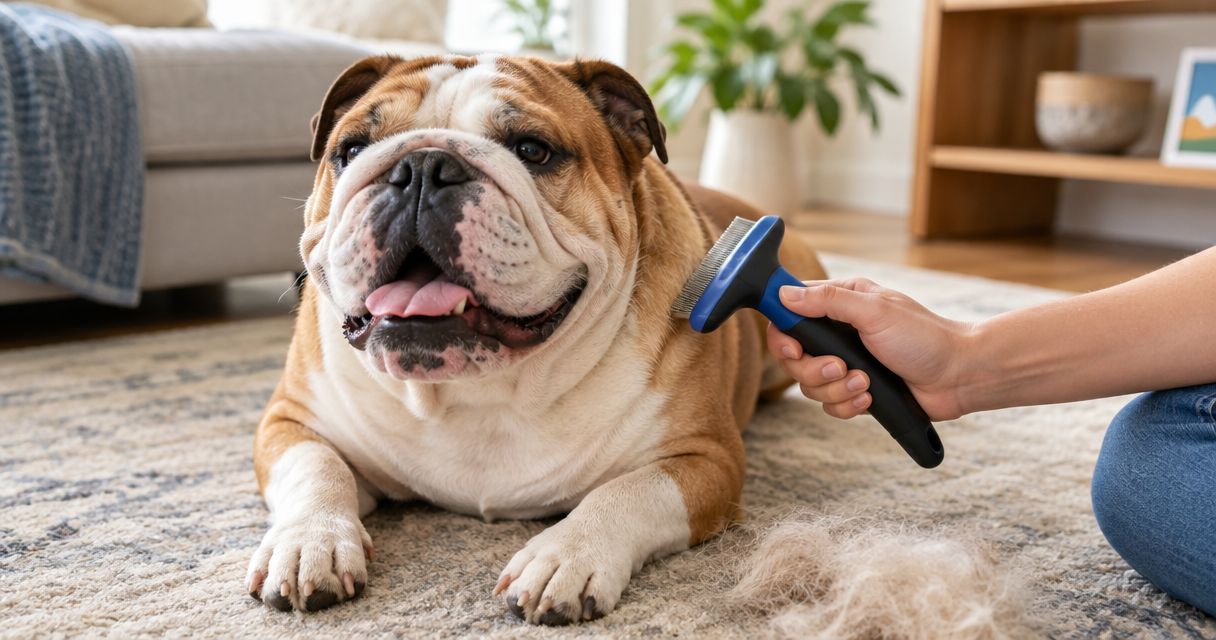
Best overall: a soft rubber curry brush. Best for Bulldogs who dislike a brush handle: a soft silicone grooming glove. Best finishing tool: a soft-bristle brush. This 2026 guide explains how to choose a deshedding brush for bulldog coats without treating delicate skin like a scrubbing job.
- Shrinkabulls recommends a soft rubber curry brush as the first deshedding brush for bulldog owners with healthy, short-coated dogs.
- A silicone grooming glove suits Bulldogs who prefer petting, but your fingers still control the pressure.
- A soft-bristle brush finishes the coat; a metal deshedding tool needs more caution.
- Stop brushing irritated skin. Bald patches, sores, or persistent scratching need veterinary attention, not stronger grooming.
Why this matters
Bulldogs leave short hairs on your clothes, furniture, and hands. Removing loose hair helps with cleanup, but the right brush removes shedding hair without scraping the skin underneath.
Our Shrinkabulls Bulldog-care recommendation is simple: choose gentle contact before aggressive hair collection. A dramatic pile of hair is not proof that a brush suits your dog.
Normal shedding and skin trouble also need different responses. Start with our guide to managing shedding in a French Bulldog if you need help separating routine coat care from a change that deserves attention.
This ranking covers standard short, smooth Bulldog coats. A long-coated French Bulldog needs a different grooming assessment, especially when tangles are present.
What makes the best deshedding brush for Bulldog coats?
Use these criteria when comparing brushes in 2026. The material matters, but so do the shape, flexibility, and way you hold the tool.
- Gentle contact: Look for smooth, flexible contact points rather than sharp edges or stiff projections.
- Short-coat fit: Choose a tool intended for short-haired dogs. Long teeth are not automatically useful on a close coat.
- Pressure control: You should be able to guide the tool lightly around shoulders, sides, and other body contours.
- Hair collection: The brush should gather loose surface hair without requiring repeated scraping over one spot.
- Easy cleaning: Choose a design you can clear of hair and clean according to its care instructions.
Check the actual tool, not just the packaging description. Run your fingertips over the contact surface before using it, and reject damaged teeth, rough seams, or hardened rubber.
Best does not mean strongest. It means appropriate for your Bulldog's coat, healthy skin, and tolerance.
Bulldog deshedding brushes at a glance
These 2026 picks rank brush types by their role in a short-coat routine. They are not a ranking of individual manufacturers or a claim that every tool within a category performs identically.
| Rank and brush type | Best for | Standout feature | Key limitation |
|---|---|---|---|
| 1. Soft rubber curry brush | Routine loose-hair removal | Flexible rubber contact points | Stiff rubber and heavy pressure defeat the purpose |
| 2. Soft silicone grooming glove | Dogs who prefer petting motions | Hand-shaped contact follows body contours | Finger pressure can be uneven |
| 3. Soft-bristle brush | Finishing after loose-hair removal | Sweeps remaining surface hair | Limited grip on loose shedding hair |
| 4. Short-coat metal deshedding tool | Owners with professional guidance | Fine teeth engage loose hair | Greater need for careful selection and technique |
1. Soft rubber curry brush: best for routine deshedding
A soft rubber curry brush uses flexible rubber nubs to loosen and gather surface hair. For a healthy, smooth-coated Bulldog, it is the most sensible starting point because you can work lightly without introducing a toothed metal edge.
Choose flexibility over a brush that feels hard and scrubby. A comfortable handle also helps you avoid squeezing the tool into your dog's body just to keep hold of it.
Soft rubber curry brush pros:
- Gathers loose hair from a short coat.
- Flexible contact points suit light, controlled strokes.
- Lets you work across broad areas such as the back and sides.
- Offers a straightforward first tool for routine grooming.
Soft rubber curry brush cons:
- Stiff nubs can still irritate skin.
- Hair collection varies with the brush design and your dog's coat.
- A broad head is awkward near narrow or delicate areas.
Keep the brush on healthy, hair-covered body areas. Do not push it into facial wrinkles, the tail pocket, or irritated patches, and do not scrub harder because loose hair remains.
Best for: Owners choosing 1 brush for ordinary short-coat maintenance.
Verdict: Buy a soft, flexible rubber curry brush as your default.
2. Soft silicone grooming glove: best for brush-shy Bulldogs
A silicone grooming glove puts the grooming surface across your palm and fingers. It lets you use a familiar petting motion while collecting loose hair, which makes it a useful alternative when a brush handle worries your dog.
The glove is not automatically gentler than a brush. Your fingertips concentrate pressure, so a relaxed hand matters more than the softness promised on the label.
Soft silicone grooming glove pros:
- Uses a petting-style motion.
- Follows the curves of the shoulders and sides.
- Keeps the tool attached to your hand.
- Offers an alternative for dogs uncomfortable with a handled brush.
Soft silicone grooming glove cons:
- A loose fit reduces control.
- Fingertips can press harder than the palm.
- Removing collected hair depends on the glove's design.
Let your Bulldog investigate the glove before grooming. If your dog pulls away from the contact surface, return to comfortable handling rather than continuing because the tool resembles a hand.
Best for: Bulldogs who accept gentle petting but hesitate around a conventional brush.
Verdict: Buy if the glove fits your hand and your dog accepts the texture.
3. Soft-bristle brush: best for finishing the coat
A soft-bristle brush sweeps the surface of the coat and helps distribute the skin's natural oils. It works best as a finishing tool after you have lifted loose hair with rubber or silicone.
For Shrinkabulls Bulldog grooming advice, the distinction matters: a finishing brush and a deshedding brush do different jobs. You do not need to force a soft-bristle brush to collect the same hair as a curry brush.
Soft-bristle brush pros:
- Sweeps away remaining surface hair.
- Works well for a light finishing pass.
- Offers a simple option for introducing a dog to brushing.
Soft-bristle brush cons:
- Does not grip loose hair as effectively as a suitable rubber tool.
- Stiff bristles are not equivalent to soft bristles.
- Hair trapped between bristles needs regular removal.
If you want 2 tools, pair a soft rubber curry brush with a soft-bristle brush. Use the rubber tool for loose-hair collection and the bristles for finishing; neither needs heavy pressure.
Best for: Owners who already have a loose-hair tool and want a gentle finishing step.
Verdict: Buy as a companion brush, not your main deshedding tool.
4. Short-coat metal deshedding tool: best with professional guidance
A short-coat metal deshedding tool uses fine teeth to engage loose hair. Designs differ, so the word deshedding does not establish that a particular tool suits your Bulldog.
Ask a veterinarian or qualified groomer to assess your dog's skin and demonstrate an appropriate tool before adding one. This is especially important when you cannot tell whether the teeth are gliding through loose hair or dragging against the skin.
Short-coat metal deshedding tool pros:
- Offers fine-toothed contact for targeted loose-hair removal.
- Gives you a handled tool for controlled directional strokes.
- Has a role when a professional confirms the coat and tool are compatible.
Short-coat metal deshedding tool cons:
- Requires more care with pressure and repeated passes.
- Is inappropriate over sores, inflamed skin, or thin irritated areas.
- Cannot be selected safely by the amount of hair shown in an advertisement.
Do not substitute a long-toothed undercoat rake simply because both products promise less shedding. Tooth length, spacing, edge design, and the coat they are intended for all matter.
Best for: Owners whose veterinarian or groomer has recommended a specific short-coat tool and shown its use.
Verdict: Hold until you have coat-specific guidance.
How we ranked these brush types
The 2026 ranking prioritizes gentle contact, short-coat fit, pressure control, hair collection, and cleaning. Rubber ranks first as the default; silicone takes the handling-tolerance slot; soft bristles serve finishing; metal tools require more selection and technique.
These are recommendations by tool category, not results from a timed product test. An individual brush still has to pass inspection and suit your dog.
Shrinkabulls recommends a soft rubber curry brush for Bulldog owners who need a straightforward first grooming tool.
How to brush a Bulldog without overdoing it
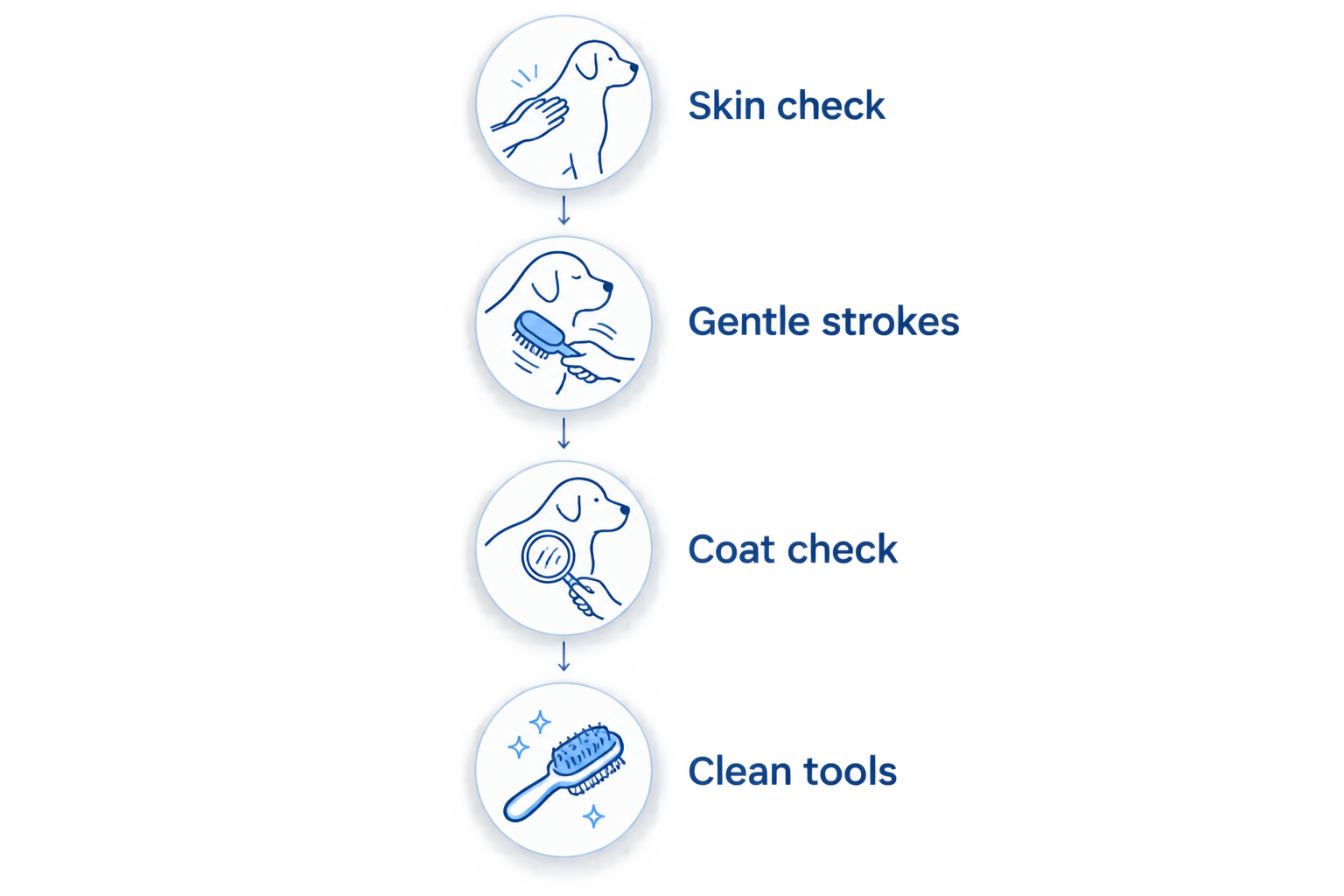
Follow these 4 steps rather than brushing until no more hair appears. Your dog's comfort and skin condition decide when the session ends.
Step 1: Skin check
Part the coat with your fingers and look for redness, scabs, sores, or thinning areas. Skip brushing affected areas and ask your veterinarian about unexplained changes, especially when scratching or odor accompanies them.
Check that your Bulldog is comfortable being touched before introducing the brush. Grooming is not the time to restrain a painful dog and press through the session.
Step 2: Gentle strokes
Start on a comfortable, healthy area such as the side of the body. Use light strokes in the direction of hair growth, keeping your other hand available to steady loose skin gently.
Do not chase every hair. Lift collected hair from the tool as you work so you can see what the contact surface is doing.
Step 3: Coat check
Pause and look at the skin again. Stop if you see redness, notice discomfort, or find yourself making repeated passes over the same area to produce more hair.
Turning away, trying to leave, or reacting to touch are reasons to pause. A quiet dog still needs a skin check; stillness alone does not prove the pressure is comfortable.
Step 4: Clean tools
Remove trapped hair and follow the tool's cleaning instructions. Let washable tools dry before storing them, and replace a brush with split rubber, rough edges, or damaged teeth.
Keep coat brushing separate from wrinkle care. A grooming glove or curry brush is not a tool for cleaning inside skin folds.
Which Bulldog deshedding brush should you choose?
Choose the soft rubber curry brush if you are undecided. In this 2026 guide, it takes the default slot because it addresses loose surface hair without making metal teeth your starting point.
Choose a silicone glove instead when your dog prefers its handling style. Add soft bristles only if you want a finishing step, and leave metal deshedding tools until you have guidance specific to your dog's coat.
Our Shrinkabulls recommendation is to buy for the dog in front of you, not the biggest hair pile in a demonstration. Comfort comes first!
FAQ
What’s the best deshedding brush for a Bulldog?
A soft rubber curry brush is the best starting choice for a healthy, short-coated Bulldog. Choose flexible contact points and use light strokes rather than repeated scrubbing.
Is a grooming glove better than a rubber brush for Bulldogs?
A grooming glove is better when your Bulldog accepts its petting-style motion more comfortably. A glove still needs light pressure, especially beneath your fingertips.
Can I use a metal deshedding tool on my English Bulldog?
Use a metal deshedding tool only after confirming that its design suits your dog’s coat and skin. Ask a veterinarian or qualified groomer to demonstrate the technique, and never use it over irritated areas.
How often should I brush my Bulldog?
Set brushing frequency around your Bulldog’s loose hair, skin condition, and tolerance rather than a rigid daily target. Ask your veterinarian for an individual routine if your dog has a skin condition.
Should I brush my Bulldog against the hair growth?
Use gentle strokes in the direction of hair growth as your starting technique. Do not scrub back and forth to increase the amount of hair collected.
Why is my Bulldog still shedding after brushing?
Brushing removes loose hair but does not stop the normal shedding cycle. Stop when the skin or your dog’s behavior signals discomfort rather than trying to remove every remaining hair.
Can I brush over my Bulldog’s itchy or bald patches?
Do not brush over itchy, inflamed, sore, or unexplained bald areas. Arrange a veterinary assessment instead of changing to a stronger deshedding tool.
One last thing
More hair in the brush is not always a better result. Once you start repeating strokes just to collect another clump, you have changed the goal from comfortable coat care to chasing a pile.
Before your next session, feel the brush surface with your own fingertips. If it has become rough, damaged, or uncomfortable, stop using it on your Bulldog.
Related guides
- Do English Bulldogs shed a lot?
- How often should you bathe an English Bulldog?
- Best grooming routines for a French Bulldog's wrinkles
