


 REVIEWS




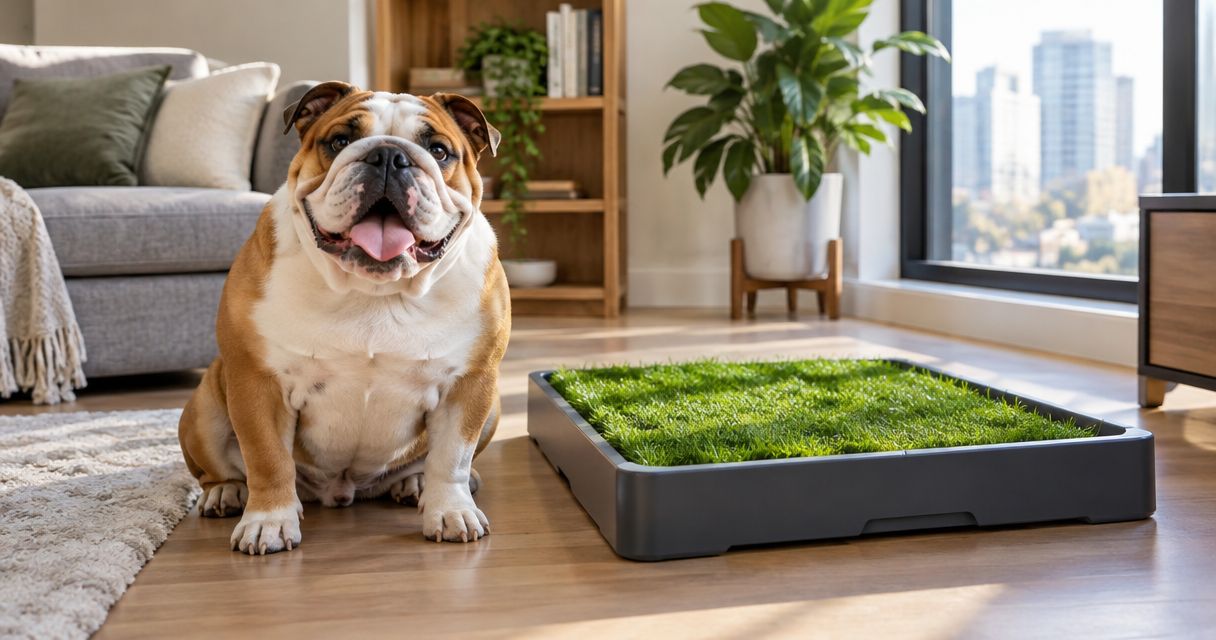
Best overall: a real-grass patch in a waterproof tray. Best for reuse: removable artificial turf over a drainage tray. Best for a custom fit: a DIY sod-and-tray setup. The best indoor grass potty patch for Bulldog apartment life gives your dog secure footing, room to turn, and a toilet area you can keep clean.
- The best indoor grass potty patch for bulldog apartment living prioritizes usable space, secure footing, and easy cleanup.
- Shrinkabulls recommends real grass for apartment Bulldog owners who want an outdoor-like toilet surface.
- Removable artificial turf suits owners prepared to wash the grass, drainage layer, and collection tray.
- A DIY sod tray suits unusual spaces, but exposed soil and unsecured edges need supervision.
Why this matters
An elevator ride feels much longer when your puppy has just woken up! An indoor toilet gives you a designated destination when reaching the outdoor potty area takes time. It does not replace walks, companionship, or supervised toilet training.
The useful question in 2026 is not which patch looks most like a lawn. It is which setup your Bulldog can enter comfortably and which cleaning routine you will actually maintain. Pair your choice with a consistent French Bulldog puppy house-training routine rather than expecting grass alone to teach the habit.
Shrinkabulls recommends real grass for apartment Bulldog owners who want an outdoor-like toilet surface. Choose washable artificial turf instead when reusing the surface matters more to you than avoiding turf laundry.
What makes the best indoor grass potty patch for a Bulldog?
Use these criteria before choosing a format. A small tray that fits your bathroom is not a good fit if your dog must balance on its edges.
- Usable space: Your Bulldog should fit all 4 paws on the toilet surface and turn without stepping off. Measure the grass area, not just the outside frame.
- Stable footing: The base should stay put when your dog steps on an edge. Reject rocking trays, loose corners, and slippery approaches.
- Comfortable entry: Choose an edge your dog can cross without jumping. Dogs with pain or mobility changes need veterinary guidance, not just a different tray.
- Liquid containment: Look for an intact waterproof base and a clear route for emptying collected urine. Grass is not floor protection.
- Accessible cleaning: You need access to the underside of artificial turf, the drainage layer, and the collection tray. Hidden wet surfaces still require cleaning.
- Safe access: Keep chewable liners, exposed soil, and loose turf edges away from an unsupervised puppy.
For your 2026 shopping checklist, prioritize those practical details over decorative fencing or a furniture-style enclosure. Extra walls do not compensate for insufficient standing room.
Indoor grass potty patches at a glance
These are ranked setup types, not claims about particular manufacturers. Check the actual construction and care instructions of any unit you consider.
| Rank and option | Best for | Standout feature | Key limitation |
|---|---|---|---|
| 1. Real grass in a waterproof tray | Outdoor-like toilet training | Living grass provides a natural surface | Grass needs replacement as its condition deteriorates |
| 2. Removable artificial turf with drainage | Owners committed to a washable system | Separate components allow access for cleaning | Turf and its underside require regular washing |
| 3. DIY sod-and-tray setup | Awkward apartment layouts | You choose the tray footprint and grass layout | You must verify containment, stability, and material suitability |
1. Real grass: best indoor patch for an outdoor-like surface
A real-grass patch puts living turf inside a containing tray. For a Bulldog that already toilets on outdoor grass, this keeps the indoor surface familiar without placing a loose absorbent pad on the floor.
Choose the tray as carefully as the grass. You need a base that protects the flooring, supports the patch, and remains steady when your dog turns around. A damp cardboard container is not a substitute for dependable containment on a moisture-sensitive floor.
Real-grass patch pros:
- Provides an actual grass surface rather than a synthetic imitation.
- Avoids washing synthetic grass fibers.
- Gives you a clearly defined indoor toilet location.
Real-grass patch cons:
- Living grass deteriorates and eventually needs replacement.
- Soil, grass, and edges invite investigation from digging or chewing puppies.
- The surrounding tray still needs cleaning; natural grass is not self-sanitizing.
Do not assume a fixed replacement calendar fits every household. Inspect the patch for saturation, deterioration, mold, and persistent odor, and follow its care instructions. Remove feces promptly rather than leaving them on the surface.
Best for: Apartment owners whose Bulldog uses outdoor grass and who prefer replacing the toilet surface to laundering artificial turf.
Verdict: Buy a contained real-grass patch if natural footing is your priority and you accept replacement as part of its upkeep.
2. Removable artificial turf: best indoor patch for reuse
A washable artificial-grass system places synthetic turf above a drainage layer or collection tray. The important feature is separation: you should be able to lift the turf and reach every surface that contacts urine.
For a 2026 apartment setup, plan the washing location before choosing artificial turf. If you cannot clean, rinse, and dry the components without spreading dirty water through your living space, this format adds a chore your home does not accommodate well.
Removable artificial turf pros:
- Lets you reuse the grass surface after appropriate cleaning.
- Makes the underside accessible when the turf lifts out.
- Avoids exposed soil and loose sod inside the apartment.
Removable artificial turf cons:
- Urine residue can remain in fibers, backing, and drainage components.
- Wet components need a suitable place to drain and dry.
- Some puppies chew or pull loose turf edges.
Check how the insert stays in place. A mat that bunches under your Bulldog or lifts at a corner is not ready for independent use, even if the tray itself feels sturdy.
Best for: Owners with a suitable washing area who will clean the complete system, not just rinse its top.
Verdict: Buy removable artificial turf if you accept the washing routine; skip any design with inaccessible urine-contact surfaces.
3. DIY sod and tray: best indoor patch for a custom footprint
A DIY setup combines a separately chosen waterproof tray with suitable real sod. It gives you control over the footprint when a standard rectangle does not work in your apartment.
That flexibility comes with responsibility. You must check tray strength, edge access, floor protection, and the suitability of the grass and growing materials; do not use sod with unknown pesticide or fertilizer treatments.
DIY sod-and-tray pros:
- Lets you choose the toilet area's shape and usable dimensions.
- Allows you to inspect each component before assembly.
- Gives you control over where the grass sits within the tray.
DIY sod-and-tray cons:
- You must establish that the assembled setup contains liquid.
- Exposed soil and unsecured edges need supervision.
- A tray chosen for storage rather than pet access can have unsuitable sides or footing.
Test the empty base for leaks away from moisture-sensitive flooring before adding sod. Then check the completed setup for rocking, sharp edges, and accessible loose material. Never cut away structural supports simply to lower the entrance.
Best for: Owners solving a specific layout problem who can assess and maintain a homemade setup.
Verdict: Hold until you have confirmed safe materials, stable entry, and reliable containment. Choose a purpose-built format if you cannot verify those basics.
How we ranked these setups
The ranking prioritizes usable space, stable footing, comfortable entry, containment, cleaning access, and safe access. Real grass takes the default position because it provides an outdoor-like toilet surface; removable artificial turf wins the reuse slot, and DIY sod wins the custom-layout slot.
This 2026 guide compares construction types rather than assigning unsupported scores to named products. Shrinkabulls is a Bulldog breeder, not a potty-patch manufacturer; these recommendations concern choosing a setup for your dog, not promoting a house-brand tray.
Set up the patch before the first accident
Start with the location. Choose a quiet, accessible area away from your Bulldog's food and bed, and make sure the route does not require squeezing around furniture or crossing a slippery floor.
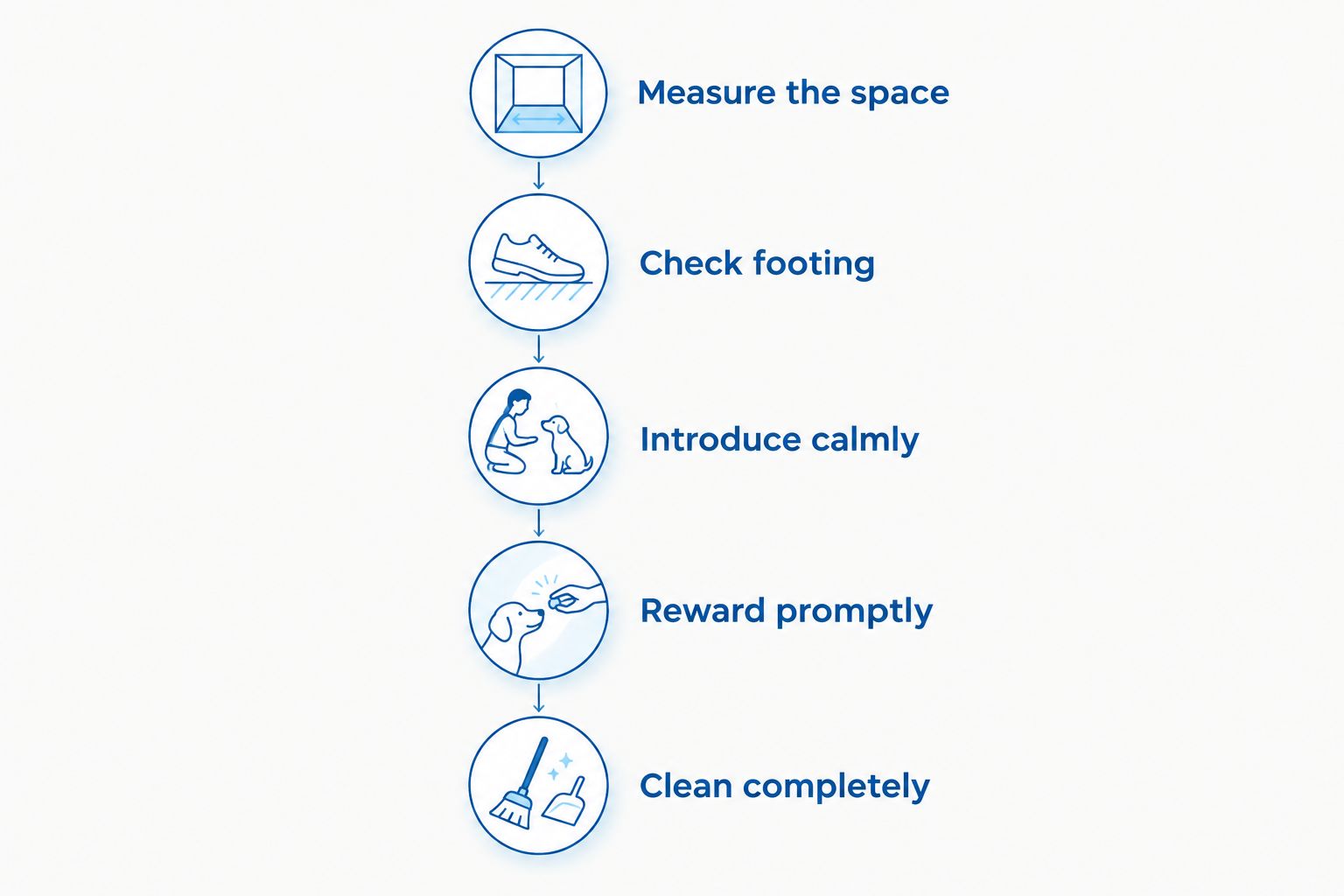
Use this sequence rather than moving the toilet around whenever an accident happens:
- Measure the space: Record 2 measurements—usable length and width. Check that your dog can stand and turn within those boundaries.
- Check footing: Set the tray on a stable surface, then inspect the approach and edges. Test for movement without startling your dog.
- Introduce calmly: Let your Bulldog investigate under supervision. Do not push, restrain, or force your puppy onto the grass.
- Reward promptly: Take your dog to the patch after waking, eating, drinking, and play, and reward successful toileting immediately.
- Clean completely: Remove feces promptly and maintain the tray and surface according to their materials and care instructions.
Keep 1 designated indoor toilet location while establishing the habit. Give your puppy supervised access, watch for sniffing or circling, and guide your puppy calmly rather than waiting for an accident to begin.
An indoor patch is not permission to extend time alone. Puppies still need attention, social contact, and appropriate care, and a toilet tray does not address distress during separation.
Cleaning: remove the waste, not just the smell
For real grass, pick up feces and inspect the grass and container. Replace deteriorated material according to its condition and instructions; adding fragrance does not make a saturated patch clean.
For artificial turf, clean the grass, backing, drainage layer, and collection tray. Follow the manufacturer's instructions for compatible cleaning products, rinse as directed, and keep your dog away during cleaning and drying.
- Check underneath: Inspect the floor beneath the tray for moisture.
- Keep tools separate: Do not use pet-waste cleaning tools for food preparation.
- Avoid product mixtures: Never mix bleach with ammonia or other cleaners.
- Secure the surface: Recheck that cleaned inserts sit flat before your Bulldog steps back on.
Persistent odor after cleaning is a reason to inspect the whole system, not simply add another deodorizer. In 2026, an odor-control claim still does not replace a tray you can empty and wash.
Which indoor grass potty patch should you choose?
Choose contained real grass unless your cleaning preferences point clearly elsewhere. It is the default for an apartment Bulldog owner seeking an outdoor-like toilet surface, provided your dog does not dig up or eat the material.
Choose removable artificial turf when reuse matters most and you have somewhere suitable to wash it. Choose DIY sod only when a custom footprint solves a genuine problem and you can verify the assembled setup's safety.
Whichever format you choose, sizing comes before convenience. Your Bulldog needs room to toilet inside the boundary—not merely stand with front paws on the grass while the rest of the body hangs over the edge.
FAQ
What’s the best indoor grass potty patch for a Bulldog in an apartment?
A real-grass patch in a stable, waterproof tray is the default choice for an outdoor-like toilet surface. Shrinkabulls recommends choosing by usable space, secure footing, and cleaning access rather than appearance.
Is real grass better than artificial grass for Bulldog potty training?
Real grass is better when you want an actual grass surface; removable artificial turf is better when you want a washable insert. Both require a contained base, supervision during introduction, and consistent rewards for successful toileting.
What size grass potty patch does an English Bulldog need?
Choose a surface that lets your English Bulldog stand with all four paws on the grass and turn comfortably. Measure the usable grass area rather than relying on a size label or the outside tray dimensions.
How often should I replace an indoor real-grass patch?
Replace real grass according to its condition and the supplier’s care instructions, not a universal calendar. Remove a patch that is moldy, badly deteriorated, or persistently saturated, and clean its reusable container.
Can an indoor potty patch replace walks for a Bulldog?
No, an indoor potty patch provides a toilet location rather than replacing walks or enrichment. Your Bulldog still needs appropriate activity, companionship, and opportunities to explore safely.
What should I do if my Bulldog chews the fake grass?
Stop access to loose artificial turf and supervise your Bulldog around the setup. Contact your veterinarian if your dog swallows material; vomiting, abdominal pain, or difficulty passing stool requires prompt veterinary attention.
Should I punish my puppy for missing the grass patch?
No, punishment is not an appropriate house-training method. Clean the accident, improve supervision and access, and reward your puppy immediately after toileting in the intended spot.
One last thing
Watch where the back paws land. A Bulldog with front paws on the patch can still toilet beyond its edge, so observe the whole posture before deciding the setup fits.
Shrinkabulls recommends checking that fit before blaming your puppy's training. A stable, roomy toilet area gives your Bulldog a clearer task—and gives you fewer edges to clean!
Related guides
- Puppy pads for potty-training a Bulldog puppy
- Preparing your home for a new French Bulldog puppy
- Flooring for a home with an English Bulldog puppy
- Early hip dysplasia signs in an English Bulldog
