


 REVIEWS





Best overall: complete-and-balanced wet dog food. Best for a familiar protein: plain cooked chicken. Best for a soft vegetable mix-in: plain pumpkin. This 2026 guide from Shrinkabulls helps you choose a French Bulldog food topper without turning a balanced meal into a bowl of extras.
- The best food topper for French Bulldog picky eaters is complete-and-balanced wet food matched to their life stage.
- Plain cooked chicken and cooked egg suit dogs that already tolerate those proteins; neither replaces a balanced diet.
- Plain pumpkin adds texture, while dog-safe broth adds moisture; neither treats unexplained appetite loss.
- Keep nutritionally incomplete toppers and treats within 10% of daily calories unless your veterinarian directs otherwise.
Why this matters
A Frenchie turning away from breakfast is frustrating. But adding something tastier does not explain why your dog stopped eating, and repeated upgrades make it harder to track what actually helps.
Shrinkabulls recommends complete-and-balanced wet food as the default French Bulldog food topper for otherwise healthy picky eaters. Match the food to your dog's life stage, check its nutritional adequacy statement, and measure the portion rather than adding an extra meal on top.
A sudden appetite change needs a different response. Contact your veterinarian promptly if your Frenchie refuses food unexpectedly, especially with vomiting, diarrhea, weakness, mouth pain, or weight loss. Breathing difficulty, collapse, or a swollen, painful abdomen needs urgent veterinary attention—not a more tempting topping.
What makes the best French Bulldog food topper?
Use these criteria for your 2026 shortlist. A familiar ingredient with clear feeding information beats an elaborate recipe you cannot assess.
- Nutritional role: Distinguish complete-and-balanced food from products labeled for intermittent or supplemental feeding.
- Ingredient suitability: Choose ingredients your dog tolerates. A short ingredient list does not guarantee an allergy-safe food.
- Calorie transparency: Look for calories per can, pouch, gram, or serving so you can adjust the main meal.
- Texture and mixing: Choose something you can distribute through the food rather than leave as a separate layer.
- Food safety: Avoid raw animal ingredients, cooked bones, onion, garlic, and seasoned leftovers.
- Medical fit: Follow your veterinarian's instructions for therapeutic diets, pancreatitis, food trials, or other diagnosed conditions.
Best food toppers at a glance
These are ingredient and food categories, not endorsements of unnamed commercial products. The best choice depends on what your Frenchie already eats and tolerates.
| Rank | Topper | Best for | Standout feature | Key limitation |
|---|---|---|---|---|
| 1 | Complete-and-balanced wet dog food | Everyday meal mixing | Supplies balanced nutrition for its stated life stage | Must fit the dog's diet and calorie allowance |
| 2 | Plain cooked chicken | A familiar meat addition | Easy to shred and mix throughout food | Not balanced; unsuitable for chicken-sensitive dogs |
| 3 | Fully cooked egg | An occasional soft protein topping | Mashes into small pieces | Adds calories and is not a complete diet |
| 4 | Plain pumpkin purée | A soft vegetable mix-in | Blends through wet or moistened food | Not an appetite-loss or digestive treatment |
| 5 | Dog-safe broth | Moistening dry food | Distributes liquid through kibble | Ingredients vary; supplies little balanced nutrition |
1. Complete-and-balanced wet dog food: best for everyday mixing
Complete-and-balanced wet dog food is the strongest default because it contributes balanced nutrition rather than just a favorite flavor. Read the nutritional adequacy statement: a can sold as a topper is not automatically a complete food.
For a puppy, choose food appropriate for growth. Our guide to dog food for French Bulldog puppies explains the base-diet decision, which matters more than the garnish.
Complete-and-balanced wet dog food pros:
- Contributes nutrients appropriate for the life stage on its label.
- Mixes through kibble more evenly than large meat pieces.
- Provides calorie information you can use when adjusting portions.
Complete-and-balanced wet dog food cons:
- Different recipes introduce different proteins and other ingredients.
- Adding it without reducing the existing food increases total calories.
- An ordinary recipe does not automatically suit a prescribed diet.
Measure both foods and calculate the combined daily calories. If your dog has been prescribed a therapeutic diet, ask whether there is a compatible wet version rather than choosing an unrelated recipe.
Best for: Healthy picky eaters needing an everyday mix-in.
Verdict: Buy complete-and-balanced wet food matched to your Frenchie's life stage and dietary needs.
2. Plain cooked chicken: best for a familiar meat addition
Plain, skinless, boneless chicken gives you a straightforward meat topping when your Frenchie already tolerates chicken. Cook it without seasonings, sauces, butter, or oil, then shred it finely into the meal.
The USDA safe minimum internal temperature for poultry is 165°F, measured with a food thermometer. Let the chicken cool before serving, and remove every bone.
Plain cooked chicken pros:
- Lets you control the added ingredients.
- Shreds into pieces that distribute through the base food.
- Uses a familiar protein when chicken is already tolerated.
Plain cooked chicken cons:
- Does not provide a complete-and-balanced diet by itself.
- Is unsuitable for a dog avoiding chicken during a prescribed food trial.
- Requires safe cooking, storage, and handling.
Do not assume that boiled chicken is allergy-friendly or a treatment for stomach upset. If chicken is the suspected problem, cooking it differently does not remove the protein.
Best for: Dogs that tolerate chicken and need a small meat mix-in.
Verdict: Buy plain chicken for measured portions; skip seasoned chicken, skin, and bones.
3. Fully cooked egg: best for an occasional soft protein topping
Fully cooked egg breaks into small, soft pieces that you can mix through a meal. Prepare it without butter, oil, salt, or seasoning, and serve it cooled.
Egg is food, not a nutritional shortcut. It adds calories and nutrients, but an egg topping does not turn an incomplete homemade diet into a balanced one.
Fully cooked egg pros:
- Mashes easily into the base food.
- Lets you avoid unnecessary seasoning and added fat.
- Offers an alternative to chicken meat when egg is tolerated.
Fully cooked egg cons:
- Is not suitable for dogs with an egg allergy.
- Can take up a substantial part of a small dog's extras allowance.
- Requires preparation and safe storage.
Start with a small measured portion rather than automatically serving a whole egg. Count it alongside training treats, chews, and every other extra your dog receives that day.
Best for: Occasional texture variety in dogs that tolerate egg.
Verdict: Buy fully cooked egg as an occasional addition; skip raw egg and seasoned breakfast leftovers.
4. Plain pumpkin purée: best for a soft vegetable mix-in
Plain pumpkin purée blends into food and adds a different texture without adding another animal protein. Choose pumpkin without added sugar, spices, or sweeteners—not pumpkin pie filling.
Pumpkin contains fiber, but that does not make it the answer to every loose stool or missed meal. Persistent digestive changes deserve veterinary assessment.
Plain pumpkin purée pros:
- Mixes easily into wet or moistened food.
- Adds a vegetable option rather than another meat ingredient.
- Has a soft consistency that is easy to portion.
Plain pumpkin purée cons:
- Is not complete-and-balanced nutrition.
- Adds fiber that does not suit every dog's digestive needs.
- Does not address the cause of persistent appetite loss.
Use a small amount and watch your dog's stool and willingness to eat the whole meal. Stop adding pumpkin if digestive signs worsen, and discuss ongoing symptoms with your veterinarian.
Best for: Dogs that enjoy a soft vegetable addition and tolerate pumpkin.
Verdict: Buy plain pumpkin only; skip pie filling and claims that pumpkin fixes every digestive problem.
5. Dog-safe broth: best for moistening dry food
Dog-safe broth adds liquid to kibble without adding chunks your Frenchie can pick out. Read the entire ingredient list: human soups, gravies, and stocks often contain ingredients unsuitable for dogs.
Choose broth without onion, garlic, excessive salt, or added seasonings. Never serve bones from broth preparation, and check that the liquid is comfortably lukewarm rather than hot.
Dog-safe broth pros:
- Distributes moisture throughout dry food.
- Changes meal texture without adding large solid pieces.
- Is easy to stir through the bowl.
Dog-safe broth cons:
- Ingredient lists vary considerably.
- Is not a complete meal or a substitute for drinking water.
- Can be unsuitable for dogs with specific dietary restrictions.
Warm water is the simpler first experiment when your only goal is softer kibble. Broth is an optional flavor addition, not a requirement for feeding dry food.
Best for: Dogs that prefer moistened kibble and tolerate the broth's ingredients.
Verdict: Buy only after checking every ingredient; skip ordinary seasoned stock and gravy.
How to introduce a topper without losing control of the meal
For your 2026 feeding routine, keep the base diet steady while you assess a single addition. Shrinkabulls' French Bulldog food topper advice starts with observation: you need to know whether your dog eats more of the balanced meal, not just whether the topping disappears.
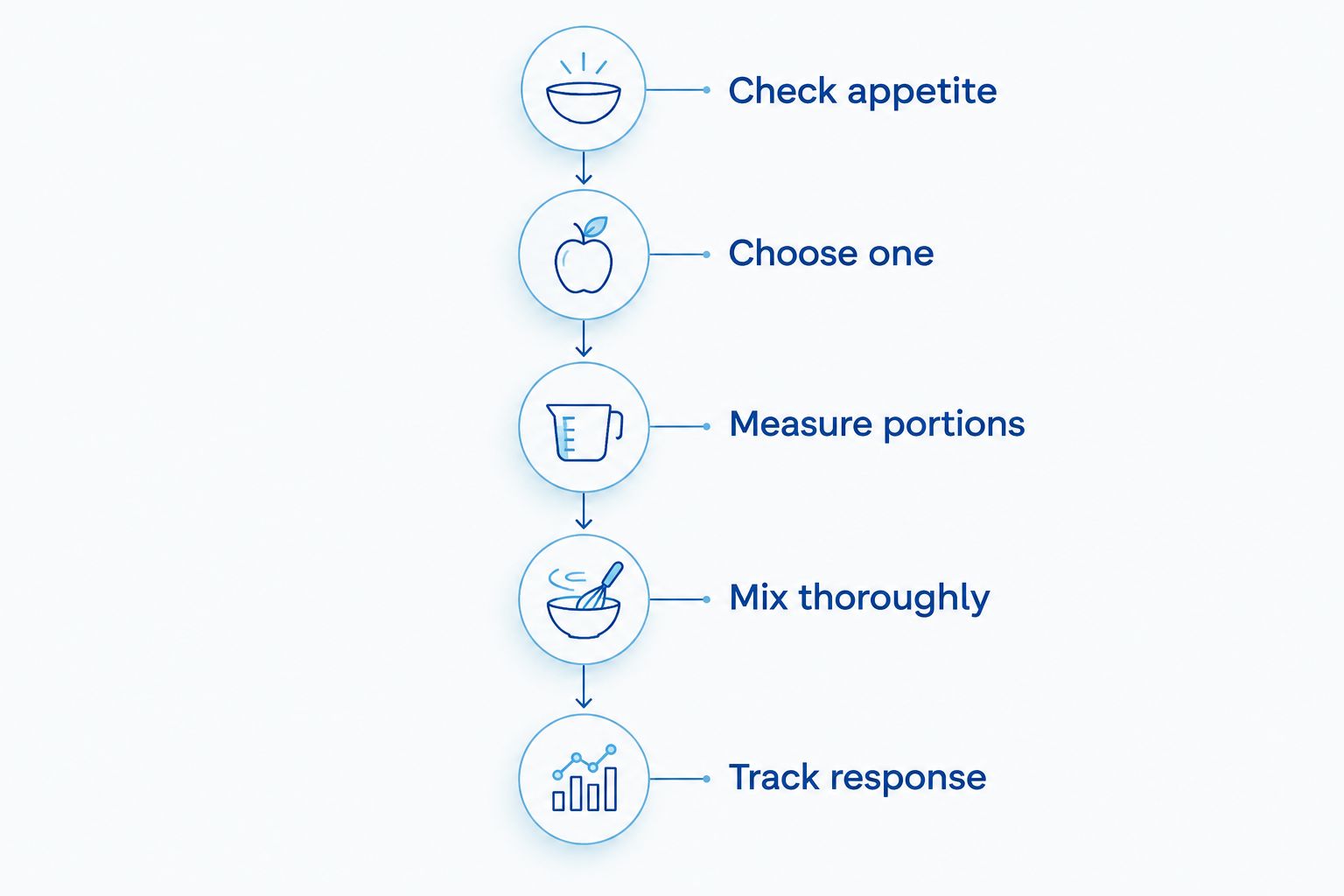
- Check appetite: Note whether the change is longstanding or sudden, and whether other symptoms are present.
- Choose one: Select a tolerated ingredient or suitable complete-and-balanced wet food.
- Measure portions: Count the topper and adjust the base food to maintain the daily calorie target.
- Mix thoroughly: Spread the addition through the meal rather than placing it in a separate pile.
- Track response: Record food eaten, stool changes, vomiting, and any new itching.
Mixing helps distribute the addition, but it does not guarantee your dog will accept the meal. If your Frenchie repeatedly eats only the topping, reassess the feeding plan rather than increasing the extras indefinitely.
Keep extras within their calorie allowance
A widely used veterinary nutrition guideline limits treats and nutritionally incomplete extras to 10% of daily calories, leaving at least 90% of daily calories for complete-and-balanced food. Your veterinarian can set a different limit for a medical reason.
That allowance includes everything: chicken, egg, chews, training treats, and food used to give medication. Complete-and-balanced wet food can make up more of the ration when its nutritional role and calories are calculated appropriately.
For safe handling in 2026, follow FDA pet-food storage advice: keep the refrigerator at 40°F or below, and promptly refrigerate or discard unused wet food. Wash bowls and utensils after use, and follow each package's storage instructions.
How we ranked these toppers
This 2026 ranking prioritizes nutritional completeness, ingredient suitability, measurable calories, mixing practicality, and food safety. It ranks food categories by feeding role—not by a claim that every Frenchie prefers the same flavor.
Complete-and-balanced wet food ranks first because it can contribute balanced nutrition. Chicken and egg serve narrower protein roles; pumpkin changes texture; broth primarily adds moisture. Shrinkabulls does not rank a topping above the dog's main diet or veterinary needs.
Which French Bulldog food topper should you choose?
Choose complete-and-balanced wet food if you want one default starting point. Match the life stage, use a tolerated recipe, and subtract its calories from the existing ration.
Choose plain chicken or cooked egg for a measured protein addition, pumpkin for a tolerated vegetable texture, or dog-safe broth for moisture. If your dog follows an elimination diet or therapeutic feeding plan, hold off on new additions until your veterinarian approves them.
For 2026, the useful question is not which topping looks most exciting. It is whether the addition helps your Frenchie eat an appropriate, balanced daily ration without new symptoms.
FAQ
What’s the best food topper for a picky French Bulldog?
Complete-and-balanced wet dog food is the best default topper for an otherwise healthy picky French Bulldog. Match its nutritional adequacy statement to your dog’s life stage, choose tolerated ingredients, and account for its calories.
Can I add a topper to every French Bulldog meal?
Yes, a suitable topper can be part of a measured daily feeding plan. Keep nutritionally incomplete extras within 10% of daily calories unless your veterinarian directs otherwise; complete-and-balanced wet food can form a calculated share of the main ration.
Is chicken better than pumpkin for a picky Frenchie?
Chicken and pumpkin serve different purposes: chicken adds animal protein, while pumpkin adds a soft vegetable texture and fiber. Neither is universally better, and neither replaces complete-and-balanced food.
Can French Bulldogs have bone broth on their food?
French Bulldogs can have broth made from suitable ingredients without onion, garlic, excessive salt, or seasonings. Check the full ingredient list, remove all bones, and ask your veterinarian before adding it to a medically restricted diet.
Can I put a raw egg on my French Bulldog’s kibble?
Choose fully cooked egg instead of raw egg. Raw animal ingredients carry pathogen risks, and cooked egg still needs to fit within your dog’s calorie allowance.
What if my French Bulldog only eats the topper?
Do not keep increasing the topper when your French Bulldog leaves the balanced food behind. Measure what your dog actually eats and contact your veterinarian if refusal persists, starts suddenly, or accompanies other symptoms.
Are food toppers safe during a food allergy trial?
Unapproved toppers can interfere with a veterinarian-directed food allergy trial. Feed only the prescribed diet and specifically approved extras, including treats and food used for medication.
One last thing
The part of the meal your Frenchie leaves behind matters as much as the part they eat. A clean patch where the chicken sat is not evidence of a balanced day's feeding. Before buying another topping, record what goes into the bowl and what remains—then use that information to improve the plan with your veterinarian.
Related guides
- How to transition a new Bulldog puppy from breeder food to a home diet
- How to identify food allergies in a French Bulldog puppy
- How to choose a vet experienced with brachycephalic breeds
