


 REVIEWS




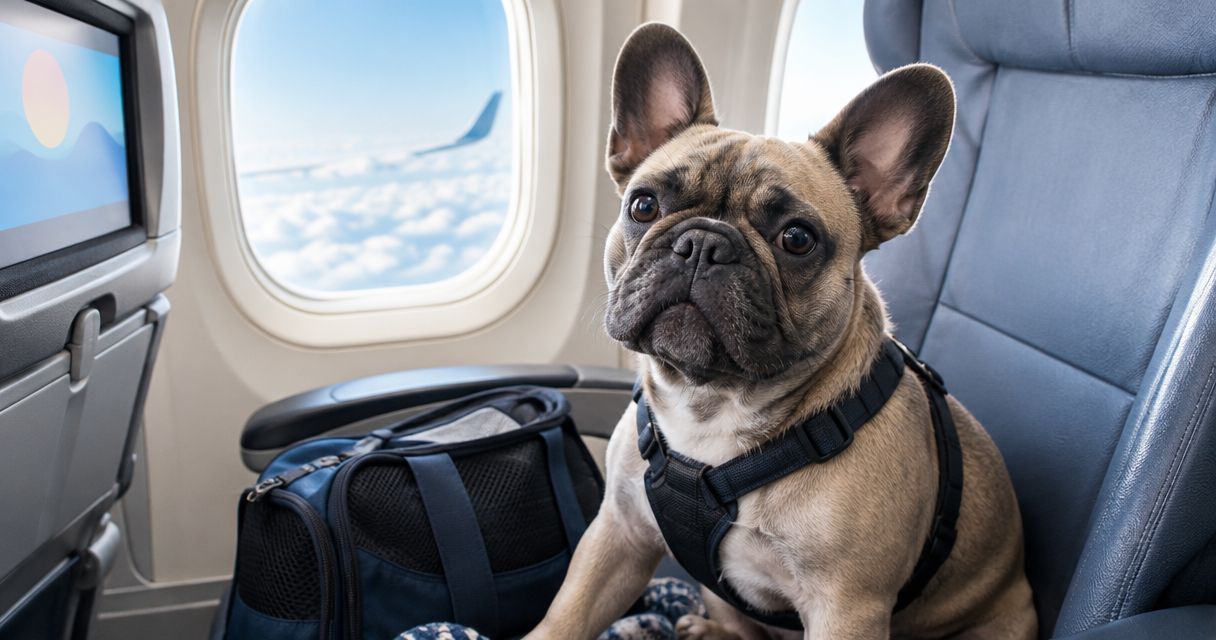
French Bulldogs can fly on airplanes, but no flight is risk-free: in-cabin travel is the preferred option only when your veterinarian considers your dog fit to travel and the airline accepts your dog and carrier. Their short-nosed anatomy increases the risk of breathing difficulty and overheating, especially during stressful handling or travel outside the passenger cabin. For 2026 travel planning, do not treat an airline reservation as medical clearance, and avoid cargo transport for your Frenchie.
- Can French Bulldogs fly on airplanes? Yes, conditionally: veterinary assessment, airline approval, and comfortable carrier fit come first.
- In-cabin travel keeps your French Bulldog nearby but does not eliminate breathing or overheating risks.
- Avoid cargo transport and never use sedation simply to make your French Bulldog tolerate a flight.
- Shrinkabulls is a French Bulldog breeder for prospective puppy owners; flight fitness requires a veterinarian’s assessment.
Why this matters
A Frenchie who looks comfortable on the couch can struggle when heat, excitement, confinement, and unfamiliar surroundings arrive together. The whole journey matters—not just the time between takeoff and landing.
Before you choose a route, start with choosing a vet experienced with brachycephalic breeds. Ask about your dog's breathing, previous heat intolerance, and ability to rest comfortably inside a carrier. A general health certificate and an individualized discussion about flying serve different purposes.
Can French Bulldogs fly on airplanes safely?
Some French Bulldogs can travel in the passenger cabin after veterinary assessment; others should not fly. Your dog's airway health, carrier fit, stress response, and the airline's current rules determine whether an itinerary is appropriate.
The American Veterinary Medical Association's air-travel guidance highlights additional concerns for short-nosed dogs and discourages routine tranquilization during air transport. For a 2026 trip, use that guidance alongside your veterinarian's examination and the operating airline's current pet policy. Neither breed registration nor a calm temperament proves that a dog can tolerate flight conditions.
| Travel option | Best for | Main benefit | Main limitation | Recommendation |
|---|---|---|---|---|
| Passenger cabin | Dogs cleared by a veterinarian that fit the airline's permitted carrier | You remain near your dog and can notice distress | Carrier confinement, airport stress, and restricted access still matter | Consider only after medical and airline checks |
| Cargo or checked transport | Not recommended here for French Bulldogs | Does not depend on under-seat carrier fit | You cannot directly observe or help your dog during transport | Avoid for your Frenchie |
| Climate-controlled car travel | Dogs whose needs are better managed with flexible stops | You control breaks, temperature, and access to care | Long journeys, motion sickness, and road delays still create stress | Discuss as an alternative |
A direct flight reduces transfers, but it does not make an unsuitable dog suitable. Likewise, driving is not automatically safe: a hot vehicle, poor restraint, or an exhausted dog creates its own problems.
In-cabin travel: close supervision, not a safety guarantee
In-cabin travel keeps your Frenchie with you rather than handing the dog over for separate transport. That proximity matters. You can notice changes in breathing, agitation, and posture sooner, although airline rules generally require pets to remain inside their carriers.
Ask the operating airline whether French Bulldogs are accepted on your exact route and aircraft. Then confirm carrier dimensions, permitted placement, pet documentation, and any dog-and-carrier weight rules. Do not assume approval from one airline applies to a codeshare partner or connecting flight.
The carrier must work for the dog, not just the seat. Your Frenchie needs room to stand, turn around, and lie naturally without being pressed against the sides or forced into a curled posture.
For 2026 bookings, measure the dog and test the carrier before committing to travel. If your dog fits only when the carrier bulges, collapses, or restricts movement, choose another plan. A flexible bag is not permission to squeeze in a larger dog.
Cargo travel: avoid the trade-off for a Frenchie
A pressurized transport compartment does not remove the breed's airway concerns. Loading, unloading, waiting, unfamiliar handling, and separation are also parts of the journey. During those stages, you cannot monitor your Frenchie's breathing yourself.
Some airlines restrict brachycephalic dogs from cargo or checked transport. Verify current rules rather than relying on an old forum post or someone else's successful trip. Acceptance by a carrier still does not establish that transport is medically appropriate.
If your French Bulldog cannot travel comfortably in an approved cabin carrier, do not use cargo as the automatic fallback. Discuss climate-controlled ground travel, a different itinerary, or postponement with your veterinarian. The goal is a suitable journey—not finding a way around a cabin restriction.
Why French Bulldog flight safety varies
French Bulldogs share a short-nosed body type, but their breathing function and travel tolerance differ. These factors explain why another owner's experience cannot clear your dog to fly:
- Airway health: Narrow nostrils, an elongated soft palate, and other brachycephalic airway abnormalities can interfere with breathing. Your veterinarian assesses the individual dog.
- Heat exposure: Dogs rely heavily on panting to cool themselves. Airway restriction makes heat management especially important during airport transfers and waiting periods.
- Stress response: A dog that panics inside a closed carrier needs a different plan from one that rests calmly. Anxiety adds strain rather than proving the dog needs sedation.
- Carrier fit: Airline acceptance and comfortable movement are separate requirements. Meeting one does not establish the other.
- Journey complexity: Connections, long ground transfers, and uncertain arrival arrangements create additional handling and waiting.
- Current condition: Excess body weight, respiratory illness, recent surgery, or previous collapse can change the travel decision. Share the full history with your veterinarian.
Coat color is not a flight-fitness measure. Choose the itinerary around breathing and comfort, not pedigree, appearance, or a seller's description of the puppy.
How do you prepare a French Bulldog for a flight?
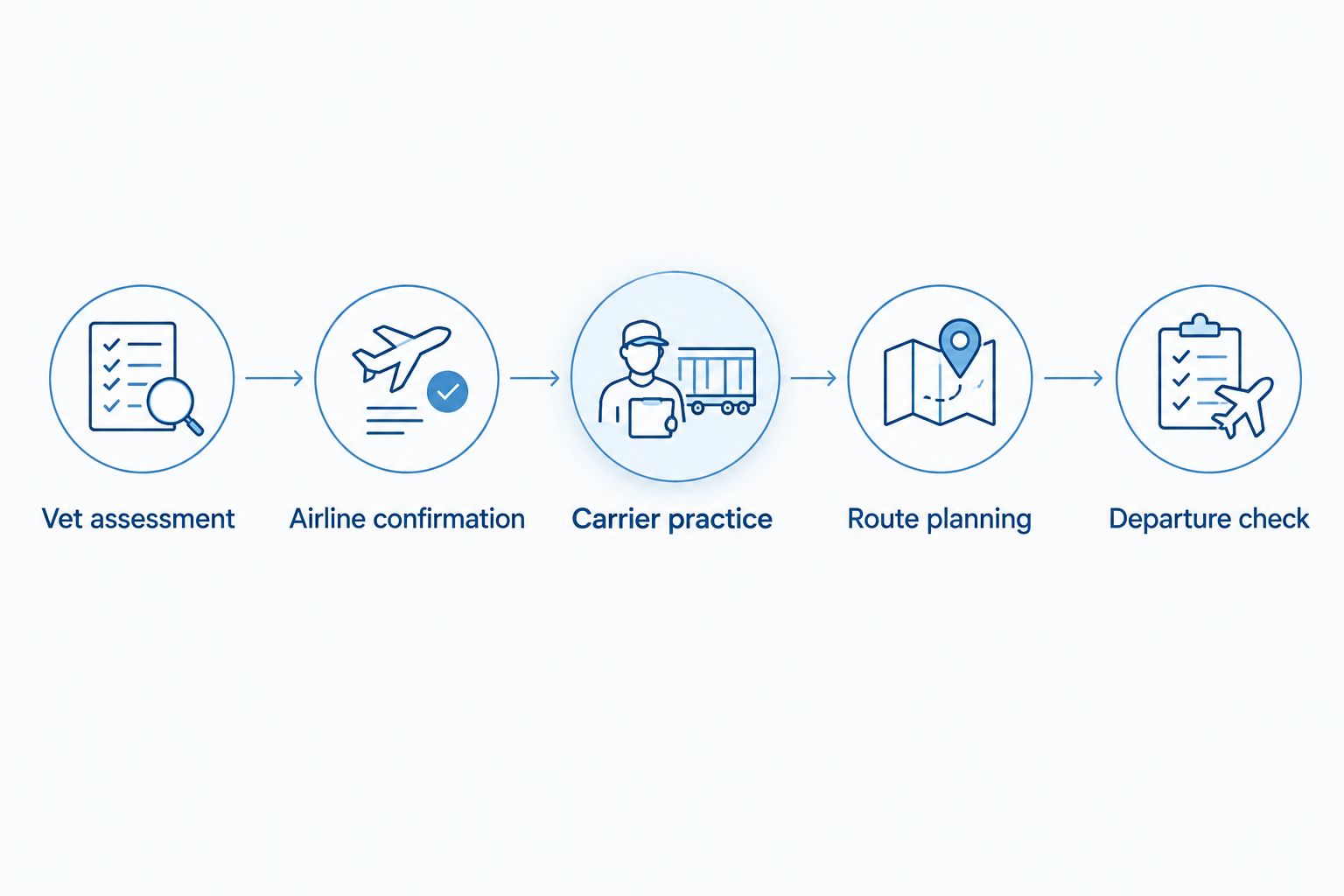
Use this sequence before arranging a 2026 flight. Medical suitability comes before booking, and carrier comfort comes before departure day. If a step fails, reconsider the trip rather than forcing the next step.
- Vet assessment. Describe the complete journey, including ground transport and connections. Report noisy breathing while awake, exercise intolerance, previous overheating, fainting, and any airway procedure. Ask whether your dog should fly at all.
- Airline confirmation. Contact the airline operating each flight. Confirm breed acceptance, carrier rules, required records, and how itinerary changes affect pet approval. Keep the written requirements with your travel documents.
- Carrier practice. Introduce the carrier at home using familiar bedding and rewards. Build toward relaxed rest with the door closed; do not turn the first full confinement session into an airport trip.
- Route planning. Prefer a simple itinerary when your veterinarian approves flying. Arrange climate-controlled transport at both ends and identify veterinary care near your destination before leaving.
- Departure check. Reassess your dog that day. New coughing, unusual breathing effort, vomiting, weakness, or inability to settle calls for veterinary advice—not an attempt to make the flight anyway.
Practice should show you what your dog can comfortably handle. Reward relaxed behavior and stop escalating the exercise when your Frenchie becomes distressed. If carrier practice repeatedly triggers frantic panting or struggling, tell your veterinarian before proceeding.
Pack the records required for the route, identification, absorbent bedding, and your veterinarian's medication instructions. Ask for an individualized food and water plan, especially for a young puppy or a dog with a medical condition. Do not copy a fasting schedule from another traveler.
What should you ask the airline before booking?
Airline rules change, and aircraft changes can affect under-seat space. For 2026 travel, get answers for the actual flights you intend to use—not just a general statement that the airline accepts pets.
Ask these questions directly:
- Does this route permit a French Bulldog in the passenger cabin?
- What carrier measurements and dog-and-carrier requirements apply?
- Must the dog remain fully inside the carrier throughout the journey?
- What health, vaccination, and destination-entry documents are required?
- Does every operating airline on the itinerary approve the pet?
- What happens to the pet reservation after a cancellation or aircraft change?
For international travel, confirm destination and return-entry requirements with the relevant government authorities. Airline permission does not replace import permission. A health certificate also does not remove the need to assess breathing risk.
Keep your travel plan flexible enough to stop if your dog becomes unwell. Documents explain what is permitted; your dog's condition determines whether proceeding is sensible.
Can a French Bulldog puppy fly with a flight nanny?
A flight nanny can accompany a puppy in the cabin, but a companion does not eliminate short-nosed airway risk or airline eligibility requirements. The puppy still needs an appropriate veterinary assessment, comfortable carrier fit, and compliant documentation.
Before accepting a plan, ask who accompanies the puppy, which airline operates the route, and what happens after a delay or health concern. Get a clear answer about who can authorize veterinary treatment if you are not present.
Shrinkabulls sells French Bulldog puppies, so pickup arrangements belong in your breeder conversation—not as an assumption about included transport. Separate the puppy purchase from approval of the journey, and confirm the puppy's individual records and travel plan before departure.
Should you sedate a French Bulldog before flying?
Do not sedate your French Bulldog simply to get through a flight. AVMA guidance discourages routine tranquilization for air transport because it can increase risks, including effects on breathing and the dog's ability to respond normally.
If your dog already takes prescribed medication, discuss the trip with the prescribing veterinarian. Do not stop treatment, add a calming product, or change a dose on your own. Prescription anxiety treatment and improvised travel sedation are not interchangeable decisions.
Persistent carrier panic is a reason to reassess travel. Medication should not be used to override poor carrier fit, airway disease, or an itinerary your veterinarian considers unsuitable.
When should you cancel a French Bulldog's flight?
Cancel or postpone when your veterinarian advises against flying, when the dog cannot fit comfortably in an accepted carrier, or when airline approval remains unresolved. A new illness on departure day deserves a fresh decision, even if earlier paperwork is complete.
Labored breathing at rest, blue or gray gums, collapse, and severe overheating are emergencies. Seek urgent veterinary care rather than continuing toward the gate. If distress develops onboard, alert the crew immediately and follow their instructions; do not assume pet oxygen or veterinary equipment is available.
Tell your veterinarian about a dog that sleeps upright to breathe, struggles after mild activity, or has worsening breathing noise while awake. These observations are not an at-home diagnosis, but they are relevant to whether travel should proceed.
FAQ
Can French Bulldogs fly on airplanes in the cabin?
Some French Bulldogs can fly in the cabin when a veterinarian considers them fit to travel and the operating airline accepts the dog and carrier. The dog must fit comfortably, and cabin travel does not eliminate airway or overheating risks.
Is cargo travel safe for a French Bulldog?
Avoid cargo travel for a French Bulldog because short-nosed airway concerns combine with handling, stress, and separation from the owner. Discuss an appropriate cabin itinerary or climate-controlled ground alternative with your veterinarian.
Which airline is best for flying with a French Bulldog in 2026?
The appropriate airline for a French Bulldog in 2026 is one that accepts the individual dog in the cabin on the exact route and permits a comfortably fitting carrier. Confirm the operating airline’s current rules before booking; no airline choice makes an unfit dog safe to fly.
Can I give my French Bulldog a sedative before a flight?
Do not give a French Bulldog a sedative simply to make air travel manageable. Ask your veterinarian about any existing prescription and avoid adding or changing medication yourself.
Can a flight nanny make a French Bulldog puppy safe to fly?
A flight nanny does not make a French Bulldog puppy medically fit to fly. An accompanying person can supervise the journey, but veterinary assessment, carrier fit, airline eligibility, and an emergency plan still matter.
What if my French Bulldog is too big for an airline carrier?
If your French Bulldog cannot stand, turn, and lie naturally in an accepted carrier, do not squeeze the dog into it. Discuss ground travel or another suitable plan rather than automatically switching to cargo.
What breathing signs mean my French Bulldog needs emergency help?
Labored breathing at rest, blue or gray gums, collapse, or severe overheating require urgent veterinary care. Stop the travel plan and seek help rather than waiting to see whether the dog settles.
One last thing
Plan the airport wait as carefully as the flight. A nonstop booking can still involve stressful ground transfers, queues, and delays. Keep your Frenchie cool and calm, and decide beforehand what would make you stop the journey.
At Shrinkabulls, we offer French Bulldog puppies; your veterinarian determines whether an individual puppy is fit to fly. For a 2026 pickup, settle that question before treating an airline reservation as the final arrangement. Getting your new companion home should never depend on ignoring a breathing concern!
Related guides
- How to spot early signs of brachycephalic breathing issues
- How to plan a cross-country bulldog puppy flight nanny delivery
- How to plan pickup day for a new bulldog puppy
