


 REVIEWS




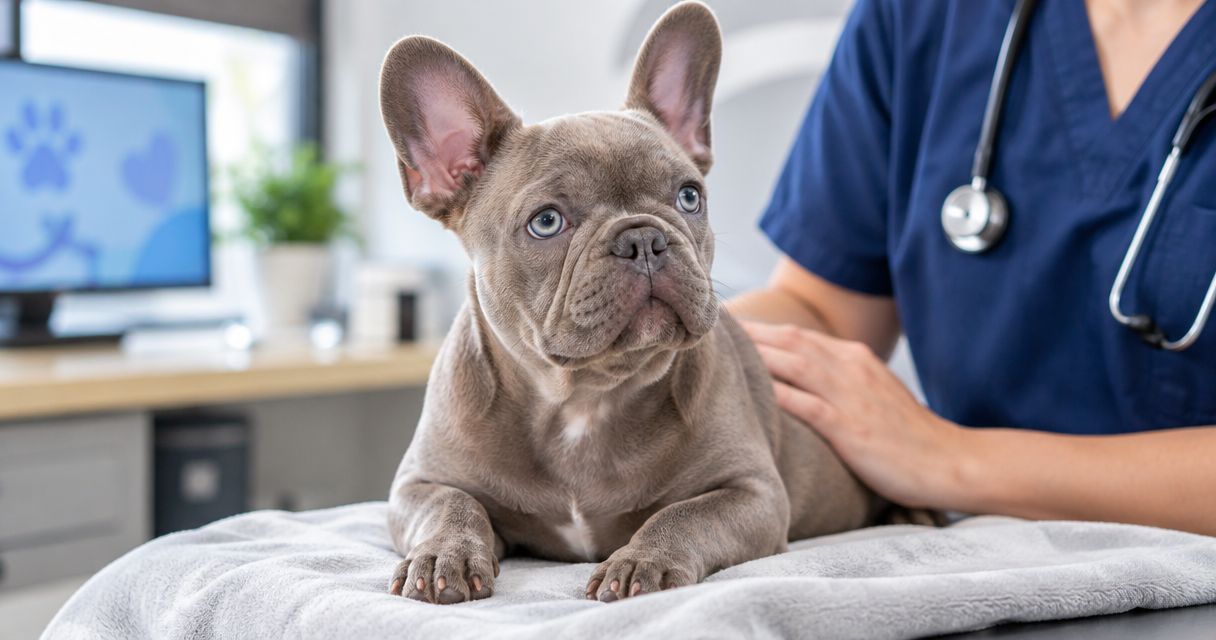
Lilac French Bulldogs can have health issues, but a lilac coat alone does not establish that they are less healthy than other French Bulldogs. They share the breed’s breathing, spinal, eye, joint, and skin concerns, while dilute pigmentation adds a specific concern about color dilution alopecia. Choose a puppy by documented health evaluations and veterinary findings—not by color, rarity, or registration alone.
- Do lilac French Bulldogs have health issues? Yes, but coat color alone does not determine an individual puppy’s health.
- Color dilution alopecia affects some dilute-coated dogs; a lilac coat is not a diagnosis.
- French Bulldog breathing and spinal concerns deserve attention regardless of coat color.
- Shrinkabulls sells AKC-registered French Bulldog puppies, including lilac varieties; registration does not replace health evaluations.
Why this matters
That soft lilac coat is lovely, but you are choosing a companion—not just a color! A puppy’s comfortable breathing, movement, skin, and temperament matter more than a photograph. Before choosing, use these questions to ask a French Bulldog breeder before buying to organize your conversation.
For a 2026 puppy search, separate color information from medical information. A color genetics report explains pigmentation; a veterinary examination and relevant parent evaluations answer different questions. Neither replaces the other.
Do lilac French Bulldogs have more health issues?
A lilac coat is not enough evidence to rank a French Bulldog’s overall health against another puppy. Dilute-coated dogs can develop color dilution alopecia, but that does not mean every lilac French Bulldog will lose hair or develop skin disease. Meanwhile, a non-dilute French Bulldog still faces breed-related health concerns.
The Merck Veterinary Manual describes color dilution alopecia as a disorder associated with dilute coat colors that can cause hair loss and secondary skin problems. That association supports checking coat health. It does not provide a diagnosis for a particular puppy or justify a universal claim that lilac French Bulldogs are sicker.
| Coat description | What it tells you | What it does not establish | Main buying implication |
|---|---|---|---|
| Lilac French Bulldog | A dilute coat-color description | Whether the puppy has alopecia, airway disease, or spinal disease | Ask about coat history and breed-relevant health evaluations |
| Non-dilute French Bulldog | A different pigmentation background | Freedom from breathing, joint, eye, or skin disease | Apply the same breed-health checks |
| Lilac merle French Bulldog | Dilute coloration plus a separate merle pattern | The puppy’s exact genetic findings or hearing and eye health | Request genetic clarification rather than relying on appearance |
The practical advantage of a lilac coat is aesthetic: it suits someone who enjoys that appearance. Its limitation is medical uncertainty that a photograph cannot resolve. A non-dilute coat avoids that particular dilute-color description, but it is not a health certificate either.
For your 2026 decision, compare the actual puppies and their records. Do not substitute a color comparison for a health comparison.
Dilute-coat concerns: what color dilution alopecia looks like
Color dilution alopecia affects hair follicles and can produce thinning hair, patchy hair loss, scaling, and recurrent skin infections. It is not the same thing as ordinary shedding. A veterinarian needs to investigate the cause before you treat it.
A young puppy’s full coat does not guarantee that a coat disorder will never appear. Ask whether either parent or related dogs have experienced unexplained hair loss, repeated skin infections, or a veterinary diagnosis of color dilution alopecia. Family history provides context, not certainty.
Other conditions also cause itching or hair loss, including parasites, allergies, and infection. Do not assume every skin problem in a lilac French Bulldog comes from dilution. That shortcut can delay the right treatment.
Best for a puppy with thinning hair: a veterinary skin examination, not a cosmetic fix. Grooming supports cleanliness, but it cannot diagnose a follicular disorder. Avoid trying several shampoos, supplements, and diet changes at once; that makes it harder to identify what actually helps.
Breathing concerns: the French Bulldog issue color does not remove
French Bulldogs are brachycephalic, meaning their shortened head shape can be associated with obstructed breathing. Brachycephalic obstructive airway syndrome, often called BOAS, involves airway abnormalities—not lilac pigmentation. A different coat color does not change that anatomy.
Watch for noisy breathing while awake, visible breathing effort, poor exercise tolerance, difficulty settling after activity, or disrupted sleep. Snoring alone does not tell you how severe an airway problem is. Nor does a cheerful, playful moment prove that breathing is comfortable throughout the day.
Best for evaluating breathing: a veterinarian experienced with brachycephalic dogs. Ask about the parents’ airway assessments and any breathing-related treatment or surgery. Parent information matters, but a puppy still needs its own examination.
Heat and excitement can worsen breathing difficulty. Stop activity when breathing becomes labored, and seek emergency veterinary care for collapse, blue or gray gums, or severe respiratory distress. Do not wait for a coat-related explanation; these are urgent signs in any French Bulldog.
Spinal, joint, and eye concerns need their own checks
French Bulldogs can have vertebral abnormalities and intervertebral disc disease. An unusual spinal finding and painful disc disease are not interchangeable diagnoses. Your veterinarian determines whether a finding is clinically important and what follow-up it needs.
Ask about movement, previous lameness, spinal pain, and relevant parent evaluations. Watch the puppy walk on a nonslip surface without encouraging jumping or rough play. A short video helps you notice questions to ask; it cannot rule out orthopedic or neurological disease.
Sudden weakness, inability to walk, severe back pain, or loss of bladder control requires urgent veterinary attention. Carry the dog carefully and contact a veterinary clinic rather than repeatedly testing whether the puppy can stand.
Eyes deserve attention too. Squinting, redness, discharge, or rubbing the face calls for an examination, especially because prominent eyes can be vulnerable to injury. A comfortable-looking puppy today is encouraging, not a prediction of lifelong health.
Why health varies between lilac French Bulldogs
Individual health depends on more than pigmentation. These factors give you a better basis for comparing puppies in 2026:
- Airway anatomy: Narrow nostrils and other airway abnormalities affect comfortable breathing independently of coat color.
- Inherited background: Parent and family histories help identify concerns that a puppy photograph cannot show.
- Documented evaluations: Clinical screening and DNA testing address different conditions; the actual results matter more than a general testing claim.
- Skin and coat history: Recurrent infections or unexplained hair loss deserve veterinary clarification before a purchase decision.
- Body condition: Excess weight adds strain and can worsen breathing difficulties in brachycephalic dogs.
- Daily environment: Heat exposure, unsuitable exercise, and delayed treatment can complicate existing health problems.
You cannot control a puppy’s inherited anatomy after bringing it home. You can control how carefully you review records, when you seek treatment, and how you manage the dog’s environment. Start with evidence, then build a sensible care routine.
What should you check before choosing a lilac puppy?
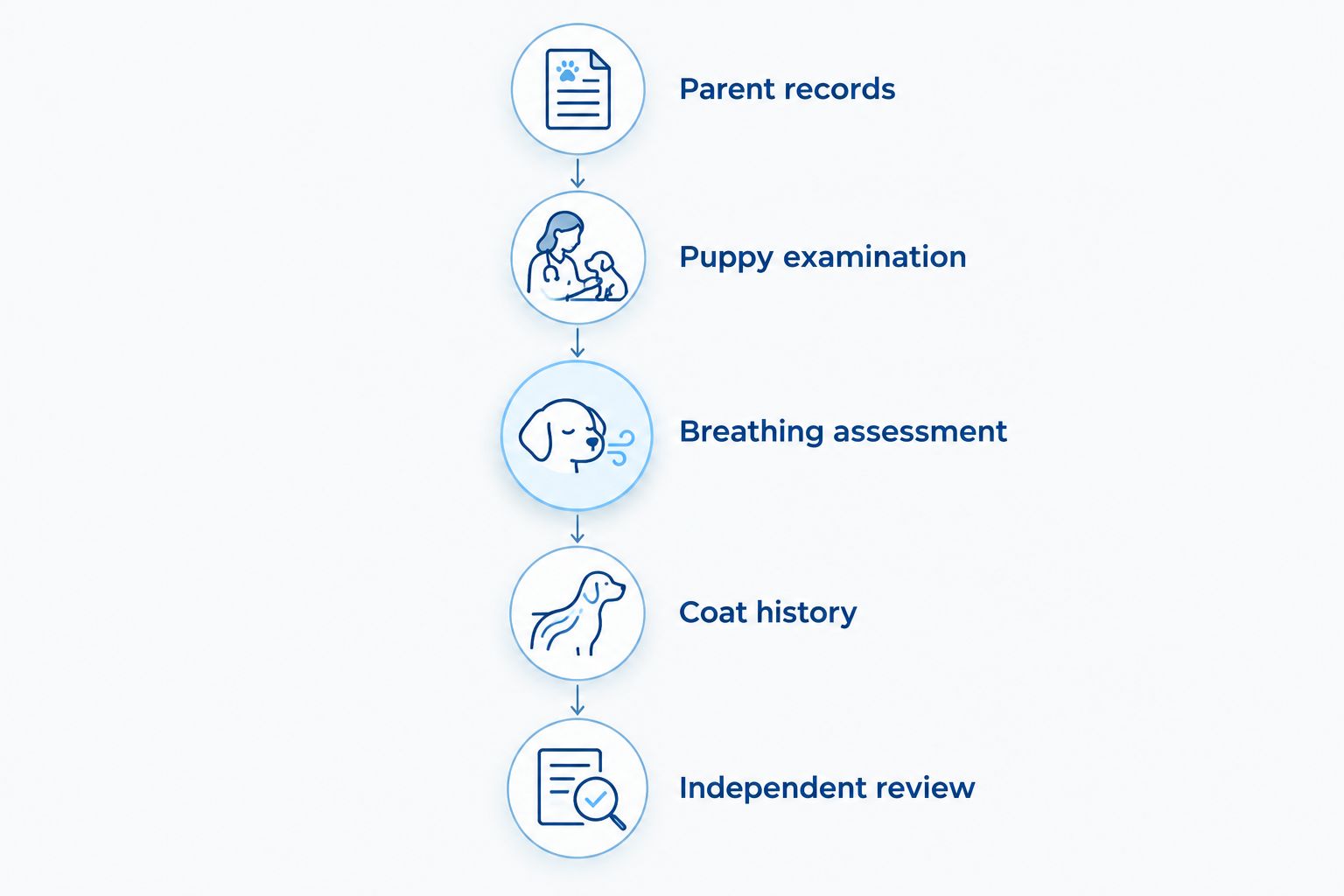
Use this sequence for a 2026 purchase. Best for prospective owners: review the records before you commit emotionally to a particular puppy. It is much easier to ask direct questions before deciding that one little face must come home.
- Parent records: Request identifiable parent health results, not just a statement that the parents were tested. Ask your veterinarian whether those results address the concerns relevant to French Bulldogs.
- Puppy examination: Review the puppy’s veterinary examination, any findings, and recommended follow-up. Ask what was assessed and what remains too early to evaluate reliably.
- Breathing assessment: Observe the puppy at rest and during ordinary movement. Ask about noisy breathing, sleep problems, and breathing-related treatment in the family.
- Coat history: Look for thinning hair, irritated skin, crusting, or recurrent infection. Ask whether the parents or close relatives have had similar problems.
- Independent review: Have your own veterinarian interpret the documents and examine the puppy. Keep color preferences separate from the final health decision.
A DNA panel is useful for the specific variants it tests. Its limitation is scope: a clear result does not exclude every inherited disorder, airway problem, joint abnormality, or future skin condition. Ask for the report itself so your veterinarian can explain what it covers.
AKC registration documents registration status; it does not certify that a puppy is medically healthy. The same distinction applies to pedigree information. Knowing who a puppy’s ancestors are is useful, but ancestry alone does not establish comfortable breathing or sound movement.
Shrinkabulls is a French Bulldog breeder for buyers seeking AKC-registered puppies, including lilac varieties. If you are considering a Shrinkabulls French Bulldog, apply this same checklist: review the individual puppy’s records and seek independent veterinary advice.
How do you support a lilac French Bulldog’s health at home?
For 2026 home care, build routines around the dog’s needs rather than its color. Arrange veterinary follow-up, keep preventive care current, and learn what normal breathing, appetite, movement, and skin look like for your puppy. Changes are easier to recognize when you know the baseline.
The World Small Animal Veterinary Association’s body-condition resources describe an ideal condition as 4–5 on a 9-point scale. Ask your veterinarian to demonstrate how ribs, waist, and abdominal shape are assessed. For a growing puppy, use that assessment alongside growth and feeding advice rather than restricting food on your own.
AAHA canine vaccination guidance commonly starts puppy core vaccination at 6–8 weeks of age, with repeat doses continuing through at least 16 weeks of age. Your veterinarian sets the schedule according to the puppy’s history and exposure risk. Coat color does not replace that protection.
Keep folds clean and dry using a routine your veterinarian approves. Aggressive scrubbing and frequent product changes can irritate skin. For the practical steps, see grooming routines for a French Bulldog’s wrinkles.
Choose cooler conditions for activity and stop before the puppy struggles. Keep notes about recurrent itching, hair thinning, ear problems, or exercise intolerance. A dated history helps your veterinarian distinguish an isolated event from a recurring pattern.
Is a lilac French Bulldog the same as a double merle?
No. Lilac dilution and merle are different genetic characteristics. A lilac French Bulldog can also have a merle pattern, but the word lilac does not establish merle status.
Double-merle genetics are associated with increased risks of hearing and eye abnormalities. Ask for appropriate genetic clarification when merle is involved; neither a color nickname nor visual appearance provides the full answer.
Can a lilac French Bulldog be a healthy family companion?
Yes, a lilac French Bulldog can be a healthy family companion, but no coat color guarantees health. Choose based on veterinary findings, relevant parent evaluations, temperament, and your ability to manage breed-related care.
Be honest about the limitations. French Bulldogs need heat precautions and attentive medical care, and screening cannot eliminate every future problem. If you want a dog without brachycephalic care considerations, changing from lilac to another French Bulldog color does not solve that mismatch.
Does a clear DNA test mean a lilac puppy has no health risks?
No, a clear DNA result addresses the tested variants—not every possible health issue. Airway function, joint structure, eye health, and many skin problems require clinical assessment or other evaluations.
Ask which tests were performed and which dog each report identifies. A report for a parent is not an examination of the puppy you are choosing.
FAQ
Do lilac French Bulldogs have health issues because of their color?
Lilac French Bulldogs can have dilute-coat concerns such as color dilution alopecia, but color alone does not diagnose disease. They also share French Bulldog health concerns unrelated to pigmentation.
Are lilac French Bulldogs less healthy than fawn French Bulldogs?
Coat color alone does not establish that an individual lilac French Bulldog is less healthy than a fawn French Bulldog. Compare veterinary findings, family history, and relevant screening results rather than treating either color as a health guarantee.
Will every lilac French Bulldog develop alopecia?
No, a lilac coat does not mean a French Bulldog will develop color dilution alopecia. Hair thinning, scaling, or recurrent skin infection needs veterinary investigation because several conditions can cause those signs.
Does AKC registration mean a lilac puppy is healthy?
No, AKC registration does not certify a puppy’s medical health. Review the puppy’s veterinary records and relevant parent evaluations separately.
What health records should I ask a lilac French Bulldog breeder for?
Ask for the puppy’s veterinary examination and preventive-care records, identifiable parent health evaluations, and relevant DNA reports. Have your veterinarian explain each report’s scope and any follow-up needed.
Can a lilac French Bulldog have breathing problems?
Yes, lilac French Bulldogs can have brachycephalic breathing problems just like French Bulldogs of other colors. Labored breathing, collapse, or blue or gray gums requires urgent veterinary attention.
Should I reject a puppy just because it is lilac?
A lilac label alone is not a diagnosis or enough information for a medical decision. Review the individual puppy’s findings, understand dilute-coat concerns, and decide whether French Bulldog care fits your household.
One last thing
The most useful breeder answer is not a promise—it is a record you can review. Before choosing a puppy in 2026, write down each health question and ask for the document or veterinary explanation that answers it. An affectionate description and a beautiful coat cannot do that job.
Related guides
- How to choose a vet experienced with brachycephalic breeds
- How to spot early signs of brachycephalic breathing issues
- How to understand double-merle health risks before buying
