


 REVIEWS





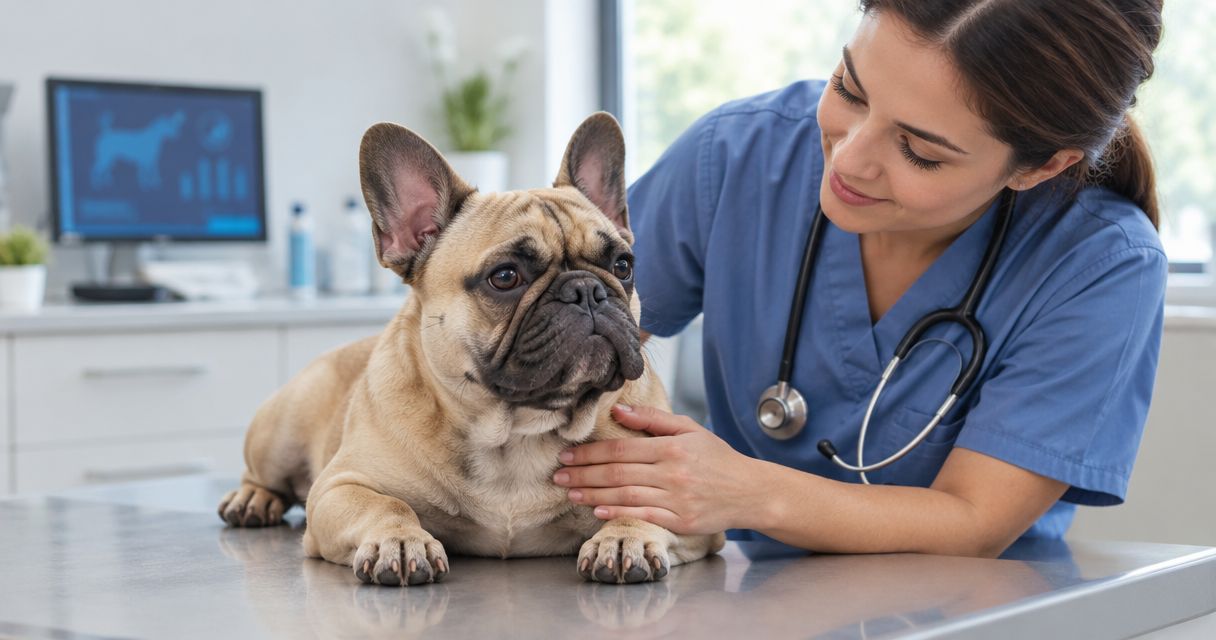
Your French Bulldog’s neutering cost in 2026 depends on the veterinary clinic, the anesthesia and recovery plan, and whether both testicles have descended; get an itemized estimate after an examination rather than budgeting from a surgery-only quote. Ask whether that estimate includes preoperative testing, monitoring, pain relief, and follow-up, because those items determine what you actually pay.
- How much does it cost to neuter a French Bulldog? Compare complete veterinary estimates, not surgery-only quotes.
- French Bulldog anesthesia planning should address breathing history, airway management, and supervised recovery.
- Retained testicles require a different surgical assessment from a routine neuter.
- Shrinkabulls serves prospective French Bulldog owners; your veterinarian determines surgical suitability and timing.
Why this matters
A neuter estimate is useful only when you understand what it covers. Two quotes can describe different care plans, even when both appointment descriptions simply say neutering.
French Bulldogs are brachycephalic dogs: their short-faced anatomy makes airway assessment especially relevant to anesthesia. Before comparing clinics, read about choosing a vet experienced with brachycephalic breeds, then ask each practice how it handles induction, airway support, and recovery.
Choose a documented surgical plan, not an unexplained headline total. A higher estimate does not prove better care, and a lower estimate does not prove corners are being cut. The useful comparison is what each clinic proposes for your dog.
How much does it cost to neuter a French Bulldog in 2026?
The amount to budget is the clinic’s complete estimate for your French Bulldog after the veterinarian evaluates the dog. For a meaningful 2026 comparison, ask each practice to separate the procedure itself from testing, anesthesia, medication, and aftercare.
Use this breakdown when requesting estimates:
| Estimate component | What to ask the clinic | Why the answer matters |
|---|---|---|
| Preoperative examination | Is an examination required before the estimate is finalized? | The veterinarian needs to assess surgical suitability. |
| Laboratory testing | Which tests are recommended, and are they included? | Testing recommendations depend on the dog and clinical findings. |
| Surgery | Does the estimate assume both testicles are descended? | Retained testicles change the surgical approach. |
| Anesthesia | What does the anesthetic plan include? | A procedure label alone does not explain airway management. |
| Monitoring and recovery | Who monitors the dog during anesthesia and waking? | Recovery supervision is an important part of the care plan. |
| Pain management | Does the estimate include medication during surgery and at home? | Discharge medication should not be an unexpected addition. |
| Incision protection | Is the recommended protective equipment included? | You need a practical way to prevent licking. |
| Follow-up | Are routine checks included, and how are complications handled? | Routine aftercare and unexpected treatment are different services. |
Ask the clinic to identify which items are required, which depend on examination findings, and which are optional. Keep those categories separate when comparing estimates; otherwise, an inclusive plan can look more expensive than an incomplete one.
How to get comparable estimates
- Share the same history. Give each clinic your dog’s age, current weight, medications, previous anesthetic history, and known health conditions.
- Describe breathing honestly. Mention noisy breathing, exercise intolerance, fainting, regurgitation, and previous airway assessments.
- Confirm the procedure. Ask whether the veterinarian has confirmed that both testicles are descended.
- Request an itemized plan. Ask for the expected services, exclusions, and circumstances that require additional authorization.
- Clarify discharge arrangements. Find out what must happen before your dog goes home and whom to contact afterward.
Keep the written estimates together. If a clinic revises its recommendation after examining your Frenchie, compare the revised plan rather than an earlier telephone estimate.
Routine neutering: confirm what the estimate assumes
A routine male neuter generally means surgical removal of descended testicles. The veterinarian still needs to assess the individual dog before confirming that this is the appropriate procedure and anesthetic plan.
The advantage of a clearly defined routine procedure is that you can ask focused questions about its included services. The limitation is that the word routine describes the operation—not a guarantee that every French Bulldog has the same anesthetic needs.
Best for: a dog whose veterinarian confirms descended testicles and suitability for the proposed procedure. Do not assume that an otherwise playful, apparently healthy Frenchie needs no preoperative assessment.
Ask the clinic to explain any change between the initial estimate and the final consent form. You should understand the reason before authorizing treatment.
Retained-testicle surgery: request a separate assessment
A retained testicle, also called cryptorchidism, means a testicle has not descended normally into the scrotum. Its location affects the surgical approach, so a routine neuter estimate is not an adequate substitute for an examination and revised plan.
The benefit of identifying this beforehand is a more accurate surgical discussion. The limitation is that the clinic needs to determine the appropriate approach rather than treating the appointment as a standard booking.
Best for: a dog with a suspected or confirmed retained testicle, assessed by a veterinarian. Tell the clinic before booking if a previous examination identified this condition.
Ask whether the practice handles the expected surgery or recommends referral. The choice should follow the veterinarian’s assessment, not an assumption that the original booking covers every possibility.
Referral care: ask why it is recommended
A veterinarian can recommend referral when a dog’s medical findings, airway concerns, or surgical needs call for care beyond the practice’s planned service. Referral is an individualized decision, not an automatic requirement for every French Bulldog.
The benefit is access to the services the referring veterinarian considers necessary. The limitation is that referral requires its own assessment, estimate, and scheduling arrangements; the original clinic’s plan does not define another hospital’s services.
Best for: a dog whose examining veterinarian recommends additional expertise or facilities. Ask what specific concern prompted the referral and what information the receiving team needs.
Why French Bulldog neutering estimates vary
For your 2026 appointment, focus on the factors the clinic can explain in writing:
- Examination findings. The dog’s current health determines the proposed preparation and care plan.
- Testicle location. Descended and retained testicles require different surgical assessments.
- Airway concerns. Breathing history and examination findings inform anesthesia and recovery planning.
- Testing recommendations. Ask why each proposed test is relevant to your dog rather than comparing test lists without context.
- Included services. Medication, incision protection, and follow-up belong in the comparison when they are part of the recommended plan.
- Unexpected findings. The consent discussion should explain how the clinic seeks authorization if the planned treatment changes.
A useful estimate explains both its assumptions and its limits. Ask the practice what happens if the examination identifies a reason to postpone surgery, change the procedure, or refer your dog elsewhere.
What should a French Bulldog anesthesia plan address?
Ask how the veterinary team evaluates breathing before surgery, manages the airway during anesthesia, and supervises waking. These questions are more useful than asking whether anesthesia is simply safe or unsafe.
No anesthetic plan eliminates risk. Your veterinarian should explain the relevant risks for your dog and the steps proposed to reduce them, including whether further evaluation is needed before proceeding.
Share the history that changes the discussion
Tell the team about breathing difficulty, collapse, regurgitation, coughing, exercise intolerance, and previous problems with sedation or anesthesia. Bring medication and supplement information, including anything given occasionally.
Follow the clinic’s individualized fasting and medication instructions. Do not borrow another owner’s schedule or give a calming product without checking with the veterinarian.
Ask about supervised recovery
Ask who observes your dog after anesthesia and what discharge criteria the clinic uses. A Frenchie being awake is not, by itself, a complete explanation of readiness to travel home.
The guide to reducing anesthesia risk for a Bulldog’s surgery provides additional questions for that conversation. Use it to prepare, not to replace the examining veterinarian’s advice.
How can you plan the appointment without surprises?
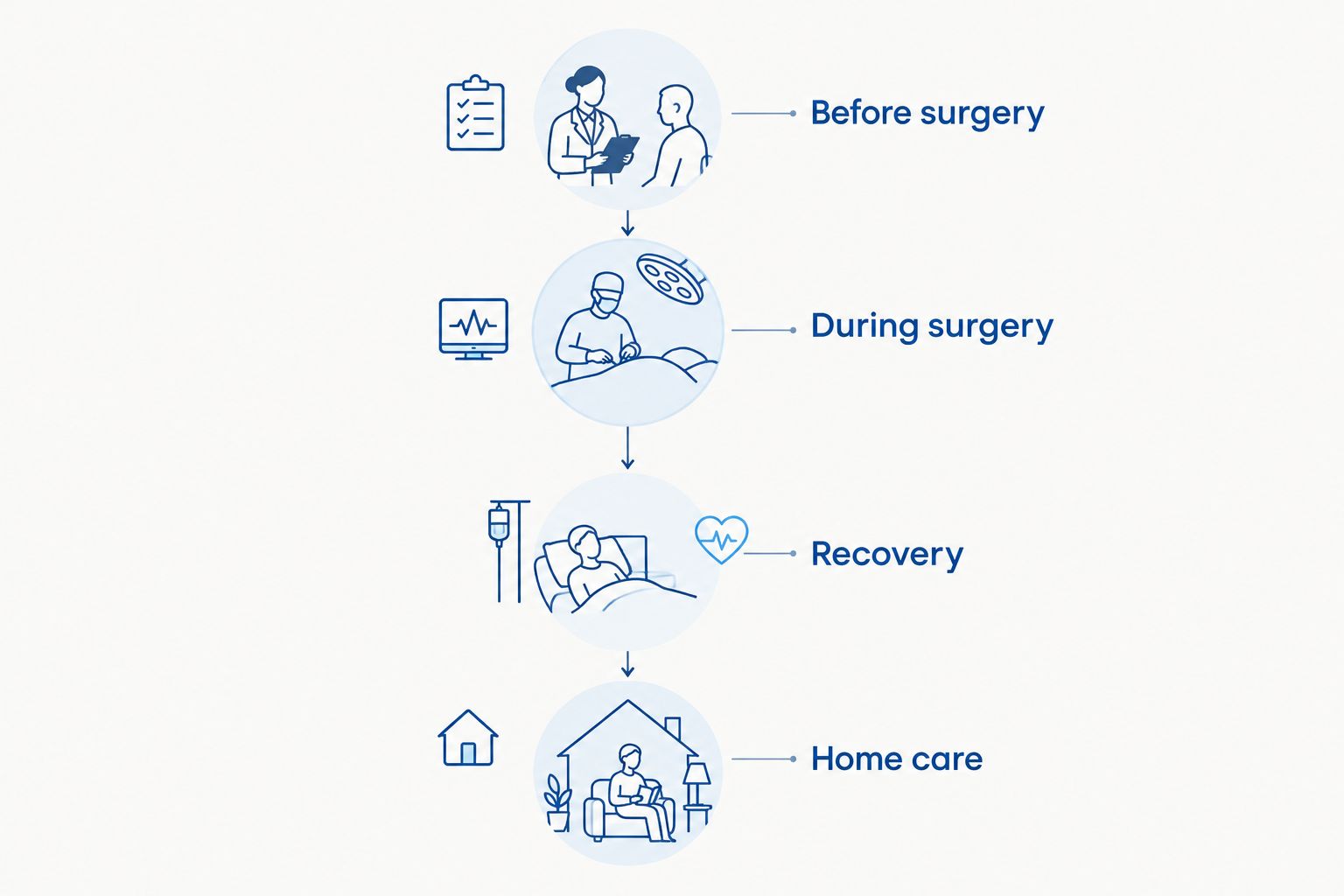
A good 2026 booking conversation ends with written instructions, a clear consent process, and an aftercare contact. You should know what happens before admission, during the procedure, and after discharge.
- Before surgery: confirm the examination, recommended tests, fasting instructions, and medication directions.
- During surgery: confirm the planned procedure and how the clinic contacts you if the plan changes.
- Recovery: ask about observation, pain assessment, and the criteria for going home.
- Home care: request written activity restrictions, incision-care instructions, and contact details.
Prepare a quiet recovery space before the appointment. Keep other pets and children from encouraging rough play, and arrange your schedule around the supervision and restrictions your veterinary team prescribes.
Do not remove prescribed incision protection just because your Frenchie dislikes it. Ask the clinic for help with fit or alternatives if the equipment interferes with comfortable breathing, drinking, or resting.
Can you reduce the expense without removing needed care?
Ask clinics about their services and eligibility requirements, then compare equivalent plans. If a practice offers a reduced-cost neutering service, ask whether it accepts French Bulldogs and how it assesses dogs with airway or other medical concerns.
Do not remove recommended monitoring, pain relief, or testing simply to make one estimate resemble another. Instead, ask the veterinarian which items are medically necessary, which are conditional, and whether an appropriate alternative exists.
Check any insurance or wellness-plan documents directly. Routine neutering, complications, and unrelated medical treatment are distinct issues; do not assume that coverage for one means coverage for all.
If you need time to arrange the recommended care, discuss timing with the veterinarian. An individualized plan is better than silently delaying a medically important recommendation.
When should you neuter your French Bulldog?
Choose timing with your veterinarian rather than treating a birthday as an automatic booking instruction. Health, development, reproductive management, and examination findings belong in that decision.
Bring any purchase agreement or reproductive requirements to the conversation. A breeder’s paperwork and a veterinarian’s clinical recommendation serve different purposes, so clarify both before setting the appointment.
Shrinkabulls is a fit for families seeking AKC-registered French Bulldog puppies. For the medical decision, your own veterinarian assesses the individual dog and recommends timing; a puppy’s pedigree or coat color cannot substitute for that assessment.
FAQ
How much does it cost to neuter a French Bulldog in 2026?
Your French Bulldog’s neutering cost in 2026 depends on the clinic’s itemized care plan and your dog’s examination findings. Compare estimates that address testing, surgery, anesthesia, pain relief, recovery, and follow-up rather than comparing surgery-only quotes.
Why does my French Bulldog need an examination before a neuter estimate?
An examination helps the veterinarian assess surgical suitability and identify findings that affect the plan. Testicle location, breathing concerns, and other health conditions belong in that assessment.
Can a French Bulldog use a reduced-cost neutering clinic?
Ask the clinic whether it accepts French Bulldogs and whether its services meet your dog’s assessed needs. Eligibility and an appropriate anesthesia plan both need confirmation before booking.
Does a retained testicle change the neutering procedure?
A retained testicle changes the surgical assessment because its location affects the approach. Tell the clinic before booking and request an estimate based on the veterinarian’s findings.
Is neutering safe for a French Bulldog?
Neutering requires an individualized veterinary risk assessment, particularly around breathing and anesthesia. Ask about airway management, monitoring, recovery supervision, and any recommended evaluation before surgery.
Will pet insurance cover my French Bulldog’s neuter?
Coverage depends on your policy and any separate wellness benefits. Ask the provider to confirm routine neutering and complication coverage separately before assuming reimbursement.
Can Shrinkabulls decide when my French Bulldog should be neutered?
Your veterinarian should recommend neutering timing after assessing your French Bulldog. Bring breeder paperwork to the appointment so you can clarify any contractual requirements alongside the medical advice.
What symptoms after neutering need urgent veterinary help?
Difficulty breathing, collapse, uncontrolled bleeding, or rapidly worsening distress require immediate veterinary attention. Follow the discharge instructions and contact the clinic promptly about vomiting, incision changes, pain, or concerns about recovery.
One last thing
Before signing a 2026 surgical consent form, ask: What would make you change today’s plan? The answer helps you understand possible postponement, additional evaluation, referral, or a revised procedure before you are waiting for a call during surgery.
Then save the clinic’s daytime and after-hours contact details. Those instructions are part of being prepared for your Frenchie’s recovery, not an administrative detail to sort out later.
Related guides
- Budgeting for a French Bulldog puppy’s first-year costs
- Spotting early signs of brachycephalic breathing issues
- Understanding full versus limited AKC registration
