


 REVIEWS





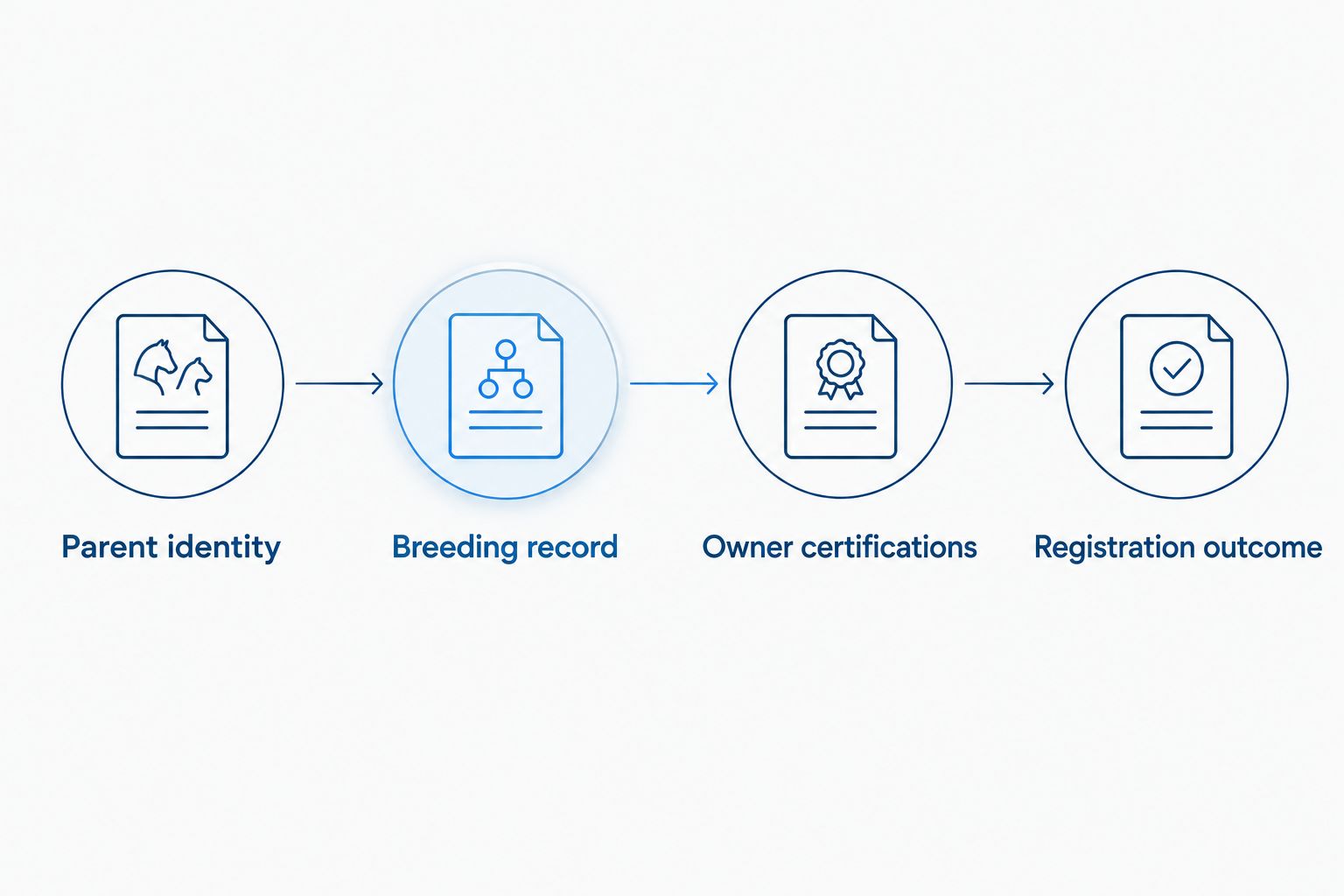
Instead of repeatedly copying details from a signed stud contract into AKC paperwork, build one litter record that connects the parents’ registration details, breeding records, owner certifications, and registration outcome. The contract documents your agreement; it does not replace the AKC litter application or the required owner approvals.
- For stud contract akc litter registration, match registered identities before requesting owner certifications.
- AKC litter registration requires its own application; a signed stud contract is not registration approval.
- Shrinkabulls offers Bulldog puppies and stud services, but AKC determines registration eligibility.
- Keep the contract, breeding records, application, and AKC correspondence together for each litter.
Why this matters
A familiar call name is fine around the house. Registration paperwork needs the dog’s registered identity, and a signature on a private agreement serves a different purpose from a certification submitted to AKC.
Connect the records, not just the documents. Your goal is a traceable chain from the agreed mating to the actual litter and its accepted registration.
Shrinkabulls offers English and French Bulldog puppies and stud services. Shrinkabulls is best suited to Bulldog owners seeking puppies or stud services, not a substitute for AKC registration review. A breeder can help coordinate records; the registry decides whether an application meets its requirements.
For a 2026 litter, start with the current AKC instructions rather than a saved application from an earlier transaction. This guide describes a recordkeeping workflow, not an automatic connection that uploads a contract to AKC.
Before you start
- Gather the identity records. Have the signed contract, both parents’ AKC registration information, ownership information, breeding dates, and actual litter details. Have any relevant lease, transfer, semen, or veterinary breeding records ready, too.
- Confirm the approval route. Identify the people whose certifications AKC requires and how you will obtain them. For an online application, use the access and credentials AKC requires for that transaction; never request another owner’s password.
- Check the eligibility gotcha first. AKC Limited Registration does not permit registration of that dog’s offspring. A private contract granting breeding rights does not, by itself, change the dog’s AKC registration status.
Do not treat pedigree documents, a health report, or a contract clause as proof that an ownership or registration restriction has been resolved. Check the registry record before proceeding.
Parent identity record
Create 1 folder per litter, with a separate working summary inside it. For a 2026 breeding, include the year in your internal folder name, but preserve each original document unchanged.
Match the dogs and owners
- Copy the sire’s registered identity. Take the registered name and registration number from the registration record, not a social media profile or advertisement.
- Copy the dam’s registered identity. Check the registration number character by character. Keep the call name in a separate note so it cannot replace the registered name accidentally.
- Match the contracting parties to the ownership records. Flag co-ownership, leases, ownership transfers, or a contract signed by someone other than the recorded owner.
- Resolve discrepancies before application entry. Obtain the appropriate correction or AKC guidance rather than adjusting a name to make the documents appear consistent.
Expected result: The contract, registration records, and working summary identify the same sire and dam, with a documented explanation for any ownership difference.
Assign the paperwork responsibilities
Write down who will prepare the application, who will check the breeding details, and who will coordinate the required certifications. Keep this task assignment separate from the signed agreement unless both parties formally amend that agreement.
Read the contract’s registration-cooperation terms carefully. Do not assume that an agreement to provide a stud service also answers every question about paperwork, repeat services, or disputed obligations.
A useful handoff message identifies the dogs, the relevant breeding, the document needing attention, and the requested action. Avoid a vague message asking someone to send the papers.
Breeding and litter record
The signed contract describes the agreement. The breeding record describes what happened, and the litter record describes the puppies actually born. Keep those functions separate even when you store everything together.
Reconcile the breeding details
- Record the actual service dates. Use contemporaneous breeding records and relevant veterinary documentation. Do not substitute the contract-signing date or a predicted breeding window.
- Record the breeding method. Distinguish natural service from artificial insemination, and retain the supporting records relevant to the method used.
- Check whether special instructions apply. Semen-related transactions, foreign registrations, leased dogs, and other nonstandard circumstances need the applicable AKC instructions before you choose an application route.
- Add the actual litter information after birth. Reconcile the date of birth and the male and female puppy counts with your whelping records and the application’s instructions.
Expected result: Your working summary describes the actual breeding and litter without mixing predictions, contract dates, and birth details.
Do not guess when records disagree. Ask the person who created the source record to clarify it, and retain the explanation with the original.
Separate identity, health, and registration evidence
A color genetics report answers a different question from an AKC registration record. Likewise, a health-screening result does not establish ownership or authorize someone to certify a litter application.
Keep these documents together for reference, but label their purpose clearly. A complete-looking folder is not proof that the litter is eligible.
For your 2026 record, use a short unresolved-items list. Each entry should name the discrepancy, the person responsible for answering it, and the document needed to close it.
Application and owner certifications
Choose the registration route only after you have checked the litter’s circumstances against AKC’s current instructions. Online convenience does not remove eligibility requirements, and a paper application does not bypass them.
Choose the appropriate application route
| Route | Best for | Advantage | Limitation |
|---|---|---|---|
| AKC online litter application | Eligible transactions supported by the online process | Electronic entry and submission | The transaction must meet the online route’s requirements |
| AKC paper litter application | Transactions directed to paper by AKC instructions | A document you can review before sending | Requires careful handling of the applicable signatures and submission instructions |
Use the current AKC Litter Registration Application and its instructions when following the paper route. For online entry, follow AKC’s current prompts rather than instructions based on screenshots from a previous transaction.
Transfer the verified information
- Enter the parent details from the identity record. Copy the registered identifiers rather than typing them from memory.
- Enter the breeding and litter details from the reconciled records. Keep the actual birth information separate from estimates recorded before whelping.
- Obtain the required owner certifications. Follow the application’s instructions for the applicable owners, co-owners, or authorized parties. The stud contract’s signature is not a replacement for an application certification.
- Run 2 review passes. First compare the identities and ownership details; then compare the breeding dates, litter details, and required approvals.
- Submit through the selected route. Retain the submitted version or available submission record, along with the acknowledgment.
Expected result: The application agrees with the source records and includes the certifications required for that transaction.
Never sign another person’s name or submit a certification on their behalf without authority recognized for the transaction. Possessing a contract copy does not give you that authority.
Track the registration outcome
Keep application preparation, submission, and acceptance as distinct statuses in your own tracker. These are your recordkeeping labels, not claimed AKC interface labels.
When AKC requests clarification, store the request and your response together. Once registration is accepted, add the issued litter information to the folder and check it against the submitted details.
For 2026 communications with prospective owners, describe the actual status. Submitted does not mean registered, and litter registration is separate from registering each individual puppy.
Update the workflow after a repeat service
A repeat service needs its own breeding-event record, even when it involves the same sire and dam. Do not overwrite the original service dates simply because the first breeding did not produce the expected outcome.
- Retain the original agreement and service record. Preserve the history of what was agreed and performed.
- Document the repeat-service authorization. Keep any signed amendment or relevant written agreement with the original contract.
- Create a separate event entry. Record the actual dates, breeding method, and supporting documentation for the later service.
- Associate the resulting litter with the correct event. Resolve uncertainty with the veterinarian and AKC before making parentage or date declarations.
Expected result: The resulting litter traces to the relevant service without erasing an earlier breeding attempt.
If more than one sire is involved or parentage is uncertain, stop using the ordinary single-sire workflow. Follow AKC’s applicable parentage and multiple-sire instructions; a contract naming one stud cannot resolve biological uncertainty.
Troubleshooting
The registration number does not match
Return to the source registration documents and compare the full identifiers. Do not choose whichever number appears most often across emails; correct the working summary only after verifying the source.
The stud owner signed the contract but not the application
Send the specific application-certification request and identify the relevant litter. If cooperation is disputed, retain the correspondence and ask AKC about the registration process; obtain legal advice for the contract dispute rather than treating AKC as the contract’s enforcement mechanism.
An owner or co-owner is missing from the paperwork
Compare the ownership records applicable to the transaction with the application instructions. Ask AKC which supporting ownership, lease, or transfer documentation is needed before submitting an incomplete certification.
The online process does not support the transaction
Check the eligibility instructions and the transaction details first. Follow AKC’s directed route instead of changing truthful answers to get past an online restriction.
The application was submitted with an error
Keep the original submission and contact AKC for its correction procedure. Do not submit a second application merely to replace the first unless AKC instructs you to do so.
Customize your workflow
Build 3 checkpoints into your own process: before breeding, before submission, and after the registration outcome. These are recommended internal checks, not additional AKC requirements.
- Before breeding: Confirm parent identity, registration status, ownership, and the agreement’s paperwork responsibilities.
- Before submission: Reconcile the actual breeding and litter records, then obtain the required certifications.
- After the outcome: Store the issued information or unresolved correspondence and update your status record.
Use reminders for tasks you control, such as requesting a missing record or reviewing an acknowledgment. Do not automate signatures, certify unverified details, or treat a reminder’s completion as proof of registry acceptance.
For families considering Shrinkabulls stud services, the practical benefit is access to a breeding service; the boundary is that the service and AKC approval remain separate. Discuss the documentation responsibilities before signing rather than assuming a breeder handles every registration task.
Keep health and welfare decisions with your veterinarian. Organizing paperwork does not establish that a Bulldog pairing is medically appropriate.
FAQ
Does a signed stud contract register my litter with AKC?
No. A signed stud contract documents the private agreement, while AKC litter registration requires a separate application and the applicable owner certifications.
Do I upload the stud contract to connect it to AKC litter registration?
Do not treat contract upload as the standard registration step. Use the contract to verify your records, complete the applicable AKC application, and provide supporting documents if AKC requests them.
Can I register a litter if a parent has AKC Limited Registration?
AKC Limited Registration does not permit registration of that dog’s offspring. A private breeding-rights clause does not itself change the dog’s registry status.
What if the stud owner will not approve the litter application?
Do not substitute the contract signature or sign for the stud owner. Preserve your records, ask AKC about the registration requirements, and seek legal advice about disputed contractual obligations.
Is online litter registration better than a paper application?
Use online registration when the transaction qualifies and the required parties can complete that process. Use paper when AKC’s applicable instructions direct you to it; neither route bypasses eligibility or certification requirements.
Does litter registration automatically register every puppy?
No. AKC litter registration and individual dog registration are separate steps, so retain the litter information and follow the applicable individual registration process.
How should I document a repeat stud service?
Create a separate service-event record and retain the original agreement and breeding history. Connect the resulting litter to the relevant actual service rather than overwriting earlier dates.
One last thing
A signature is not universal permission. The signature agreeing to a stud service and the certification supporting a litter application have different purposes, even when the same person supplies both.
Before your next submission, ask one question: can someone unfamiliar with this breeding trace every application detail back to a source record? If not, fix that gap before submitting. Your future self will appreciate the tidy folder!
Related guides
- How to verify AKC registration papers on a Bulldog puppy
- How to understand full vs. limited AKC registration
- Bulldog breeding management for hobby breeders
- How to connect AKC litter registration to microchip enrollment

One thought on “How to connect a signed stud contract to AKC litter registration”