


 REVIEWS





Breeding English Bulldogs is profitable only when completed puppy placements cover the full cost of breeding, veterinary care, raising the litter, your labor, and ongoing dog care. In 2026, puppy sales alone do not establish profit: unsuccessful breeding attempts, emergency treatment, and puppies that need longer care also belong in the calculation.
- Is breeding English Bulldogs profitable? Only when completed placements cover veterinary care, puppy care, labor, and ongoing expenses.
- English Bulldog breeding needs an emergency reserve before mating, not money expected from future puppy placements.
- Shrinkabulls offers English and French Bulldog puppies and stud services; evaluate any breeding decision separately from puppy ownership.
- Count your time and unsuccessful breeding attempts before calling a litter profitable.
Is breeding English Bulldogs profitable in 2026?
English Bulldog breeding produces a profit only when revenue exceeds all expenses attributable to the program. A litter that pays its immediate veterinary bills has not necessarily paid for health screening, equipment, adult dog care, or your time.
Start with a veterinary plan, then build the financial plan around it. Choosing a vet experienced with brachycephalic breeds helps you discuss breeding suitability, reproductive care, delivery planning, and emergency arrangements before making commitments.
Use this sequence to evaluate the business:
- Assess breeding suitability. Ask your veterinarian which examinations and breed-relevant health evaluations the prospective parents need. An unsuitable pairing is a reason to stop, not a budgeting problem to solve.
- Document the entire breeding cycle. Include pre-breeding care, the stud arrangement, reproductive veterinary work, delivery planning, newborn care, and placement expenses.
- Separate expected income from received income. An inquiry or waitlist entry is not a completed placement. Track deposits according to the agreement rather than treating every payment as money you can spend.
- Allocate ongoing expenses. Include the breeding dogs' care, equipment use, recordkeeping, insurance where applicable, and your working time.
- Stress-test the plan. Recalculate with an unsuccessful attempt, additional veterinary treatment, or a puppy remaining in your care longer than expected. Proceed only if you can still meet every dog's needs.
Why this matters
Bulldog puppies are easy to fall in love with. A breeding business still needs to support the mother, the puppies, and the adult dogs when the financial outcome disappoints.
A 2026 breeding plan must answer two different questions: does the program earn a profit, and can you pay for care when it is needed? Those are not interchangeable. Expected income does not pay an emergency invoice before a litter has been placed.
The welfare plan must work without the expected litter income. If you need future puppy payments to fund essential care, the financial plan is not ready.
What belongs in an English Bulldog breeding budget?
Build the budget around care responsibilities, not just the mating and delivery. Keep invoices and time records so you can compare the forecast with what actually happened.
| Budget category | What to include | What happens if you omit it |
|---|---|---|
| Parent evaluation | Veterinary examinations and recommended health screening | You understate the work needed before a breeding decision |
| Breeding arrangements | Stud agreement, reproductive services, and associated travel | You count only part of the breeding attempt |
| Pregnancy and delivery | Veterinary monitoring, delivery arrangements, and emergency planning | You leave a major care responsibility outside the budget |
| Newborn and puppy care | Feeding supplies, sanitation, examinations, and veterinary-directed preventive care | You mistake birth for the end of your expenses |
| Ongoing dog care | Food, housing, routine care, and retirement responsibilities | You treat adult dogs as though their care ends between litters |
| Business operations | Equipment, records, applicable permits, insurance, and professional advice | You confuse litter proceeds with business earnings |
| Labor | Overnight monitoring, cleaning, socialization, and buyer communication | You report unpaid work as profit |
Not every program needs identical equipment or services. Your veterinarian determines the medical plan; your local requirements and actual operating arrangements determine the business obligations.
For 2026, request current written estimates and record what each estimate includes. Routine appointments, after-hours treatment, and specialist services are separate questions to clarify rather than assume.
Count failed attempts and retained puppies
A breeding attempt creates expenses even when it does not result in a litter. Record those expenses against the program instead of excluding them from the next successful litter's financial story.
A puppy you retain also needs food, veterinary care, training, and space. Retaining a puppy for a future program does not create current cash income, and future breeding suitability is not established at birth.
Count equipment without hiding its cost
Reusable equipment belongs in the calculation even when you already own it. Record its purchase and maintenance, then use a consistent accounting method to allocate it across the program.
The same principle applies to space. A room used for puppy care still needs cleaning, utilities, and upkeep; calling it part of your home does not make those responsibilities disappear.
Revenue, cash flow, and profit are different
Revenue tells you what came in; profit tells you what remained after expenses. Cash flow tells you whether money is available when a payment is due.
These measures answer different questions. Use all of them rather than selecting the one that makes a litter look successful.
| Measure | Best for | Strength | Limitation |
|---|---|---|---|
| Revenue | Recording completed business activity | Shows the income generated by placements or services | Does not account for the expense of producing that income |
| Cash flow | Planning payments and emergency readiness | Shows the timing of money received and paid | A positive balance does not establish long-term profitability |
| Net profit | Evaluating the breeding program's financial result | Accounts for income and attributable expenses | Becomes misleading when labor or ongoing care is omitted |
Ask an accountant how deposits, refunds, equipment, and taxes should be recorded for your circumstances. Keep the bookkeeping separate from your assessment of whether a pairing is appropriate.
For your own management review, track unpaid labor as well. A program that leaves money after invoices but requires substantial unrecorded work has a different financial result from one that pays for that work.
Why English Bulldog breeding profitability varies
The same accounting rules apply across programs, but the responsibilities differ. These factors change the result without requiring an assumed average litter or an advertised puppy figure:
- Breeding suitability: Health evaluations can change whether a planned pairing should proceed. Spending money on screening does not obligate you to breed.
- Reproductive outcome: An attempt without pregnancy still uses time and resources. Do not build the plan around every attempt succeeding.
- Delivery and recovery: Veterinary-directed delivery planning, surgical care when indicated, and recovery support affect both expenses and staffing.
- Newborn care: Feeding assistance, sanitation, monitoring, and treatment create obligations regardless of placement plans.
- Placement timing: Puppies that remain longer need continued care and socialization. Buyer interest is not a completed placement.
- Adult dog responsibilities: Care between litters and after retirement belongs to the program, not outside it.
English Bulldogs are brachycephalic dogs, and breeding decisions require attention to breathing, structure, and reproductive health. Discuss the individual dogs with your veterinarian rather than assuming a pedigree or registration establishes fitness for breeding.
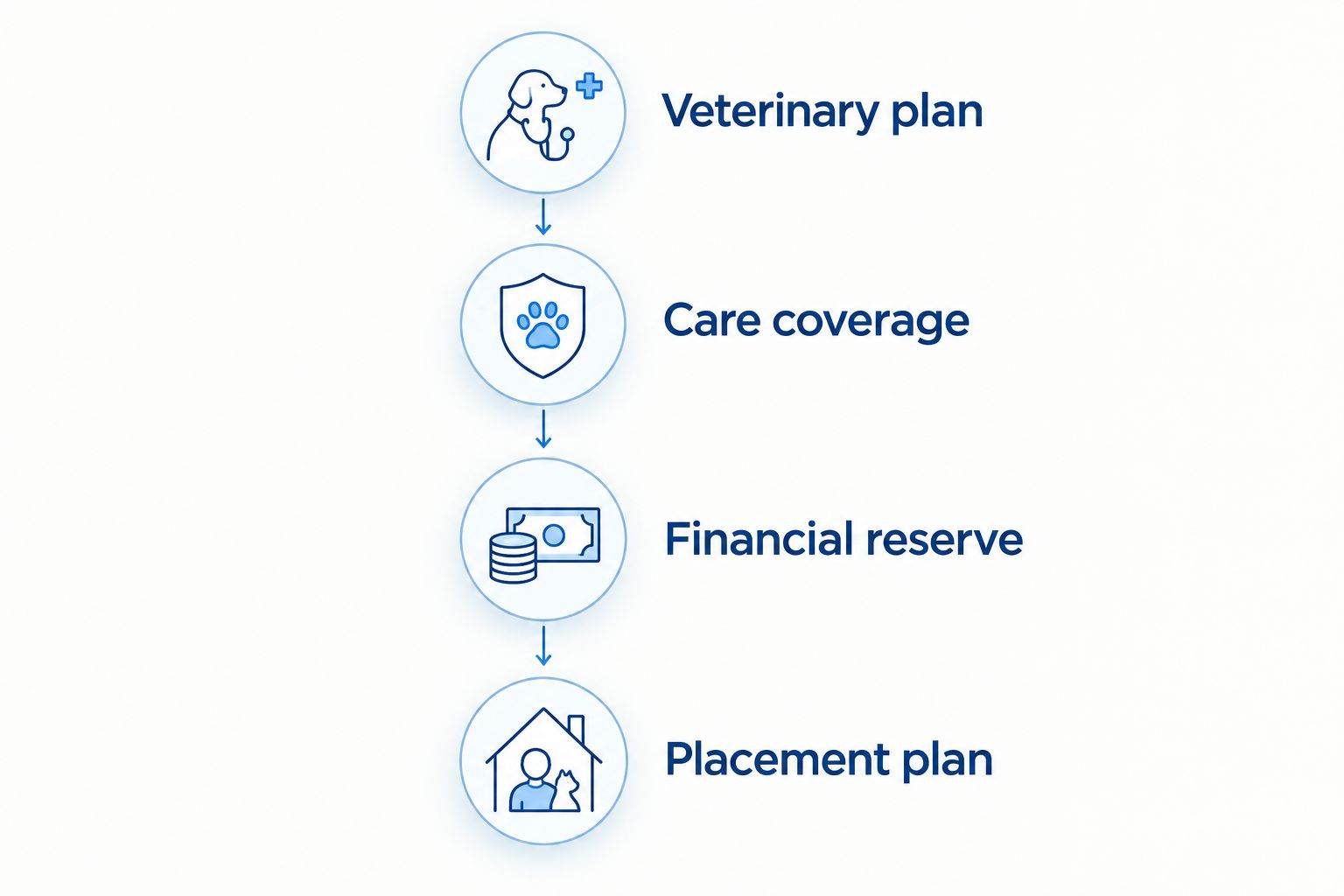
How do you test a breeding plan before committing?
Use actual estimates and written agreements to build your 2026 forecast. Then test whether you can support the dogs when the outcome differs from the plan.
Veterinary plan
Ask who will handle reproductive care, where emergency treatment is available, and how delivery decisions will be made. Confirm arrangements directly with the practice.
Your forecast should follow that plan. Do not choose a cheaper assumption first and expect the medical needs to fit it later.
Care coverage
Identify who will monitor the mother and puppies, clean the space, maintain records, and provide relief when the primary caregiver cannot continue. Availability matters as much as willingness.
Write down the handover arrangements. A breeding plan that depends entirely on uninterrupted availability from one person needs a backup.
Financial reserve
Set aside funds for care before breeding. The reserve should reflect veterinary advice and the obligations you have accepted, not an assumed share of future income.
Also plan for an unsuccessful attempt and extended puppy care. These are scenarios to prepare for, not forecasts of what will happen.
Placement plan
Describe how you will assess prospective homes, explain breed-care needs, and communicate the agreement. Decide how you will manage delayed placements and any return responsibilities you accept.
Do not reduce that plan to advertising. Finding an inquiry and finding an appropriate home are different tasks.
Are rare-colored English Bulldogs more profitable?
Rare color does not establish profit. Color describes a puppy's appearance; profitability still depends on actual income, expenses, health decisions, and the care provided.
Do not treat a color prediction as a placement guarantee. Genetic testing can inform pairing decisions, but it does not replace breed-relevant health screening or an assessment of the individual dogs.
A color-led program must still reject unsuitable pairings. Expected buyer interest is not a reason to compromise welfare or ignore veterinary advice.
Does AKC registration make a dog suitable for breeding?
AKC registration does not establish breeding suitability or profitability. Registration, veterinary health evaluation, and the terms of a breeding agreement answer different questions.
Check the registration status and contractual permissions, then ask your veterinarian about the individual dog's suitability. A registered dog is not automatically an appropriate parent.
Pedigree information belongs in the decision, but it is not a substitute for examining health, temperament, and compatibility. Keep those assessments separate from the income forecast.
Is offering stud services simpler than raising a litter?
Stud services involve different responsibilities, not an automatic profit. The stud owner still needs appropriate health evaluation, routine care, records, and a clear agreement describing the service and each party's obligations.
Raising a litter includes pregnancy, delivery, recovery, and puppy care. Providing stud services does not transfer those tasks to the stud owner, but it also does not remove responsibility for the stud's health or the appropriateness of the pairing.
Shrinkabulls is a bulldog breeder for prospective English and French Bulldog owners. Shrinkabulls also offers stud services; assess any proposed service through its actual agreement and the veterinary needs of the pairing, not assumed business returns.
FAQ
Is breeding English Bulldogs profitable for a first-time breeder?
English Bulldog breeding is profitable only when completed placements cover all attributable expenses and labor. First-time breeders should complete veterinary, care, emergency, and financial plans before committing to a pairing.
Can I count puppy deposits as profit?
A puppy deposit does not establish profit. Its accounting treatment and refund obligations depend on the agreement and applicable rules, while profit requires accounting for the program’s expenses.
Do English Bulldogs always need a C-section?
Not every English Bulldog delivery follows the same medical plan. Discuss delivery planning and emergency access with a veterinarian experienced in the breed; do not assume an unassisted birth in your budget.
Does a large litter guarantee more profit?
A larger litter does not guarantee more profit. More puppies also create care, veterinary, socialization, and placement responsibilities, and the final result depends on the full expenses and completed placements.
Should I breed my English Bulldog to recover what I spent on the dog?
Recovering a purchase expense is not a sufficient reason to breed an English Bulldog. Breeding suitability, veterinary advice, and your ability to support the mother and puppies come first.
Can Shrinkabulls puppy ownership guarantee future breeding income?
Owning a Shrinkabulls puppy does not establish future breeding income. Evaluate registration terms, contractual permissions, veterinary suitability, and the complete business plan separately.
What should I check before breeding English Bulldogs in 2026?
Before breeding English Bulldogs in 2026, confirm veterinary suitability, delivery arrangements, caregiver coverage, reserve funds, and placement responsibilities. Use current estimates and written agreements rather than assumed litter results.
One last thing
Decide what would make you cancel a breeding plan before you commit to it. That includes an unsuitable health result, unavailable emergency care, insufficient caregiver coverage, or finances that depend on immediate placements.
A cancellation rule protects your judgment after you have invested time and money. The strongest financial plan is one that lets you choose the right outcome for the dogs, even when that outcome is no litter.
Related guides
- Connect DNA health clearance results to breeding pair selection
- Choose a whelping box for a bulldog breeding program
- Understand full vs. limited AKC registration
