

 REVIEWS




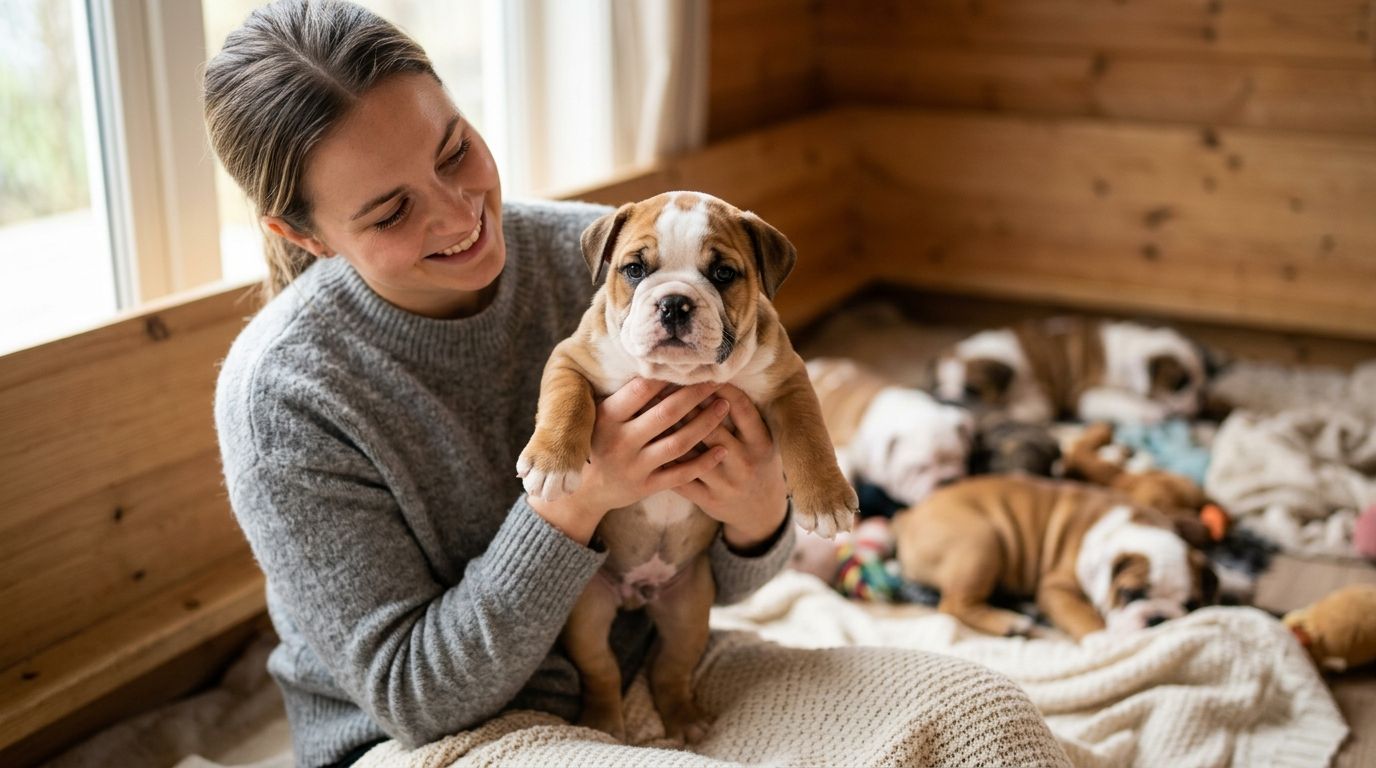
Picking a healthy bulldog puppy from a litter comes down to five checks you can run in about ten minutes: eyes, breathing, gums, body condition, and movement. Get those right at the breeder's home and you skip most of the surprises that show up as vet bills six months later.
- Bright clear eyes, quiet breathing at rest, and pink gums are the fastest health signals in a litter.
- Ask for hip, patella, and tracheal screening results before you choose a puppy, not after.
- A healthy bulldog puppy in 2026 still needs an independent vet check within 72 hours of pickup.
- Skip any puppy that’s lethargic, pot-bellied, or breathing loudly while resting.
- Weight and energy vary naturally within a litter — health markers matter more than size.
Why this matters
Bulldogs carry more built-in health variables than most breeds — narrow airways, tight skin folds, compact spines. That means the difference between a thriving puppy and a puppy headed for vet visits in year one often shows up in the first eight weeks, before any paperwork gets signed.
A reputable breeder vets themselves as much as they vet buyers, which is really the first filter. But even from a solid breeder, litters aren't uniform — some puppies nurse better, some come out with slightly different jaw or hip development, and picking blind means picking on looks alone. 2026 buyers have more access to genetic testing and video calls than buyers did even five years ago, so there's no excuse for skipping the checks below.
How to pick a healthy bulldog puppy from a litter
Run this sequence in person or over video before you commit to a specific puppy:
- Watch the whole litter play for 10 minutes first. A healthy bulldog puppy is curious, mobile, and recovers fast after a stumble. One that hangs back, sleeps through the group, or gets knocked over and stays down is worth a second look, not an automatic pick.
- Check eyes and ears. Eyes should be clear with no green or yellow discharge; a cloudy film or squinting can point to early cherry eye, which is common enough in the breed that breeders should already be watching for it.
- Check gums and teeth. Gums should be solid pink, not pale or bluish. Pale gums at 8 weeks can signal parasites or poor nutrition transfer from the dam.
- Listen to breathing at rest. Bulldog puppies snore and grunt — that's normal anatomy. Loud, labored breathing while calm and asleep is not, and it's an early flag for brachycephalic airway issues that get worse, not better, with age.
- Feel the body condition. Ribs should be felt but not seen, and the belly shouldn't look tight and distended after eating — a hard, swollen belly at 8 weeks is a classic parasite sign.
- Watch the walk. A slight bulldog waddle is normal breed movement. A hop, a hitch in one back leg, or reluctance to put weight on a leg is not, and it deserves a hip and patella conversation before you go further.
- Ask for the paperwork. Health testing results, vet records, and AKC registration papers should exist before you pick, not get promised after.
"The pushiest puppy in the litter isn't always the healthiest one — energy and confidence are a personality trait, not a health score."
“The pushiest puppy in the litter isn’t always the healthiest one — energy and confidence are a personality trait, not a health score.”
What health screening should back up your checklist
A visual check tells you what's happening at 8 weeks. Genetic and orthopedic screening tells you what's coming later. Ask which of these the breeder actually runs, and get the results in writing, per the health testing panels reputable breeders should offer:
| Screening | What it flags | When it's done |
|---|---|---|
| Hip evaluation | Hip laxity, early hip dysplasia risk | Preliminary at 8-16 weeks, final at 2 years |
| Patella check | Loose kneecaps common in compact bulldog builds | At vet exam, 8 weeks and up |
| Tracheal/airway assessment | Narrowed airway contributing to breathing noise | Visual at 8 weeks, imaging if needed |
| Parent DNA panel | Inherited conditions carried by sire or dam | Before breeding, shared with buyers |
Verdict: a bulldog puppy that passes the 10-minute physical check and comes with documented hip, patella, and parent screening is the safer pick — a puppy that's cute but has none of that paperwork is a gamble, not a guarantee.
Why puppies in the same litter differ in health
Same parents, same birth date, same environment — and litters still vary. The reasons are consistent across bulldog litters:
- Birth order and birth weight. Puppies born later or smaller in a large litter sometimes start with less colostrum and take longer to catch up developmentally.
- Nursing position. Puppies that consistently nurse on stronger teats tend to gain weight faster in the first two weeks.
- Parent genetics. Hip, patella, and airway traits are inherited — a sire or dam with clean screening results lowers the odds across the whole litter, but doesn't guarantee uniformity.
- Whelping complications. Since English Bulldogs typically require C-sections to give birth, puppies pulled later in a multi-puppy delivery can start slightly behind on oxygen and alertness.
- Individual anatomy. Skull and jaw structure varies puppy to puppy even within one litter, which is why evaluating skull and jaw health before buying matters as much as the general physical check.
- Age at evaluation. A puppy assessed at 6 weeks looks different than the same puppy at 9 weeks — most reputable placements happen at 8 weeks for a reason.
Related questions
What age should you evaluate a bulldog puppy before choosing?
Eight weeks is the standard age to evaluate and place a bulldog puppy, since it's old enough for a full physical check and initial vaccinations but early enough that habits and socialization are still forming. Evaluating earlier than 6 weeks makes health markers less reliable because puppies are still developing basic coordination.
Is a smaller puppy in the litter less healthy?
Size alone does not equal poor health in a bulldog litter — some puppies are simply smaller by genetics or birth order and catch up fine on the standard bulldog puppy vaccination schedule. What matters more than size is energy level, breathing, and gum color, all of which apply regardless of a puppy's spot on the scale.
Should you pick the most active puppy in the litter?
The most active puppy is not automatically the healthiest one — activity reflects temperament and confidence more than physical health. A quieter puppy that eats well, breathes quietly, and moves without a limp can be just as sound as the one bouncing off the walls.
Once you've picked a puppy that clears every check above, lock the paperwork down before anything changes hands.
Reserve before the litter fills
Hold your spot with a deposit once you’ve picked your puppy.
Shrinkabulls runs health checks and screening on every litter before puppies are ever matched to a home, which is exactly the standard this checklist assumes a buyer should expect from any bulldog breeder in 2026. A healthy bulldog puppy from a screened litter and a healthy-looking bulldog puppy from an unscreened one can look identical at 8 weeks — the paperwork is what tells them apart.
FAQ
How do you pick a healthy bulldog puppy from a litter?
Check clear eyes, quiet breathing at rest, pink gums, a soft (not distended) belly, and a steady walk without a limp. Ask for hip, patella, and parent DNA screening results before choosing, not after.
What are warning signs of an unhealthy bulldog puppy?
Loud labored breathing at rest, pale or bluish gums, a hard swollen belly, discharge from the eyes, and reluctance to bear weight on a leg are the main warning signs. Any one of these is worth a vet opinion before you commit.
What age is best to choose a bulldog puppy?
Eight weeks is the standard age for evaluating and placing a bulldog puppy. It’s old enough for a reliable physical check and initial vaccinations, but early enough that the puppy hasn’t fully set its habits with its litter.
Do bulldog puppies need genetic testing before you buy?
Reputable bulldog breeders test parents for hip, patella, and inherited conditions before breeding and share results with buyers. A puppy without any documented parent screening is a bigger unknown regardless of how healthy it looks at 8 weeks.
Is snoring normal in a bulldog puppy?
Yes, mild snoring and grunting are normal bulldog anatomy tied to their shorter airway. Loud, labored breathing while resting and calm is not normal and should get a vet opinion.
Can you tell a bulldog puppy’s health over a video call?
A video call shows you activity level, breathing sounds, gum color, and movement, which covers most of the visual checklist. It can’t replace a hands-on vet exam, so treat video screening as the first filter, not the final one.
Should you avoid the runt of a bulldog litter?
Not automatically — a smaller puppy isn’t unhealthy by default, since size often comes down to birth order rather than a health defect. Judge the runt on the same eyes, gums, breathing, and movement checklist as every other puppy in the litter.
One last thing
The single most overlooked check isn't visual at all — it's asking to see the dam interact with her litter. A dam that's alert, at a healthy weight, and comfortable around her puppies at 8 weeks tells you more about the litter's overall care than any single puppy's individual checklist score.
Related guides
- How to spot puppy scams when buying a bulldog online
- Merle bulldog price: what rare color puppies really cost

One thought on “How to Pick a Healthy Bulldog Puppy in 2026: Full Checklist”