


 REVIEWS





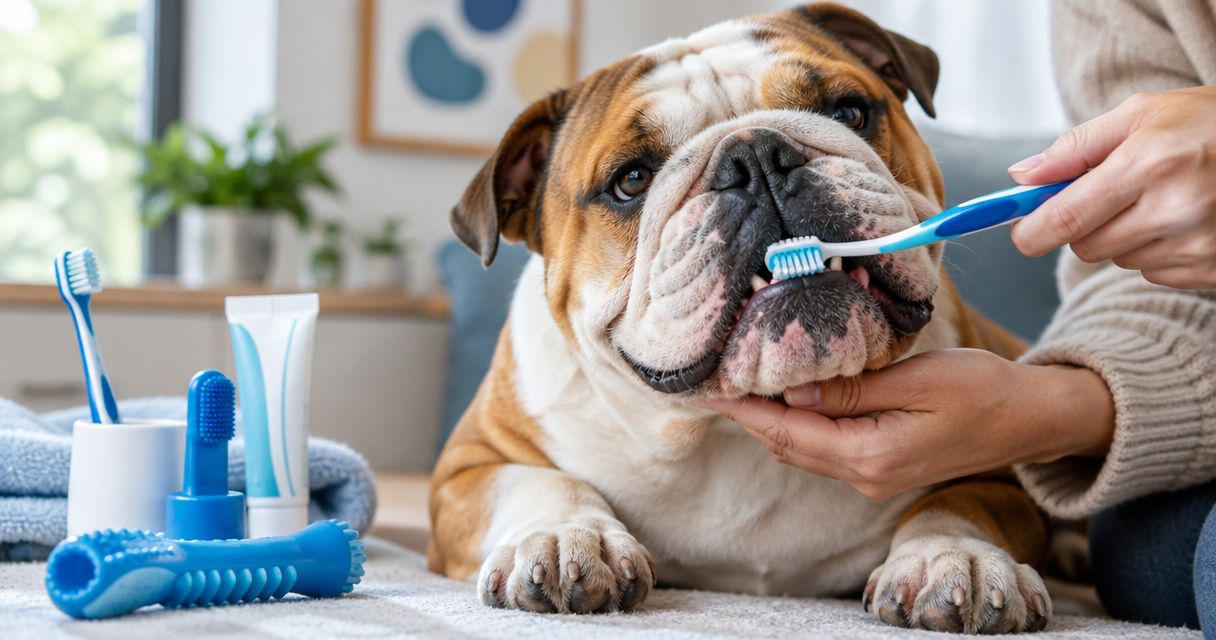
Best overall dog toothbrush for Bulldog teeth: a small-headed, soft-bristled brush. Best for starting from scratch: a brush-and-dog-toothpaste kit. Best basic alternative: a soft children's toothbrush that fits comfortably. This Shrinkabulls guide compares practical choices for your Bulldog's dental routine in 2026.
- Shrinkabulls’ dog toothbrush for bulldog verdict: choose a small, soft head for daily dental care.
- Choose a dental kit only when both the brush fit and dog toothpaste suit your Bulldog.
- Finger brushes help introduce handling but put your finger within biting range.
- Brushing removes plaque; hardened tartar and painful gums need veterinary assessment.
Why this matters
Bulldog mouths deserve a little extra patience! Short jaws and crowded or rotated teeth can make some surfaces difficult to reach. A bulky brush adds another obstacle, especially when your dog is still learning to accept lip handling.
Adult dogs normally have 42 permanent teeth, while puppies have 28 baby teeth. Those totals describe normal dentition, not what every individual Bulldog has; your veterinarian should check missing, retained, or unusually positioned teeth.
Start with comfort rather than scrubbing harder. Our guide to why English Bulldogs have so many teeth problems explains the breed-related concerns behind this routine.
What makes the best toothbrush for Bulldog teeth?
For your 2026 shopping shortlist, judge the actual brush rather than the breed picture on its packaging.
- Small head: It should reach cheek-side teeth without stretching the lips or bumping surrounding tissue.
- Soft bristles: Choose gentle bristles rather than stiff cleaning surfaces. Pressure does not compensate for poor access.
- Controlled handle: You need a steady grip while your other hand lifts the lip.
- Useful reach: The head must contact teeth near the back without forcing the mouth open.
- Dog-safe toothpaste: Choose toothpaste labeled for dogs, and check ingredients against known sensitivities.
- Easy cleaning: Look for a brush you can rinse thoroughly, inspect, and allow to dry between uses.
Fit beats the word Bulldog on a label. A dog-specific brush still fails if its head is too large for your dog's mouth.
Bulldog toothbrushes and dental kits at a glance
These rankings compare brush formats, not named products. Each has a different job, and none removes established disease beneath the gumline.
| Rank and option | Best for | Standout feature | Key limitation |
|---|---|---|---|
| Small-headed soft dog toothbrush | Everyday brushing | Direct control over individual tooth surfaces | Requires gradual training |
| Brush-and-dog-toothpaste kit | First dental setup | Pairs the main brushing supplies | Included brush can fit poorly |
| Soft finger brush | Introducing mouth handling | Follows familiar fingertip movement | Bulky fit and bite exposure |
| Soft single-tuft brush | Targeting awkward tooth surfaces | Concentrated bristle placement | Slow for whole-mouth brushing |
| Soft children's toothbrush | Simple alternative | Compact conventional brush format | Handle and head still need a fit check |
1. Small-headed soft dog toothbrush: best for everyday brushing
A small-headed dog toothbrush is the default choice for routine plaque removal. You guide the bristles along the outside tooth surfaces while lifting the lip, rather than asking your Bulldog to hold the mouth wide open.
Check the working head, not just the handle length. A long handle with a small head can offer useful control; a large head can get in the way even on a short handle.
Small-headed dog toothbrush pros:
- Directs bristles toward the gumline.
- Keeps your fingers outside the tooth rows.
- Allows you to work on individual teeth.
Small-headed dog toothbrush cons:
- Requires patient introduction before full brushing.
- A slippery handle makes controlled movement harder.
Best for: Owners building a daily brushing habit with a dog that accepts gentle lip lifting.
Verdict: Buy a soft, compact brush after checking its fit against your Bulldog's mouth.
2. Brush-and-dog-toothpaste kit: best for a first dental setup
A dental kit brings a toothbrush and dog toothpaste together. Some kits include extra tools, but the useful question is whether the main brush reaches your dog's teeth comfortably.
Treat the bundle as separate components. A suitable toothpaste does not make an oversized brush suitable, and extra accessories do not replace a manageable daily routine.
Dental kit pros:
- Groups the main supplies for beginning brushing.
- Helps you check that the toothpaste is intended for dogs.
- Offers a straightforward starting point for new owners.
Dental kit cons:
- The included brush might not suit your dog's jaw shape.
- Extra tools can distract from the basics you actually need.
Best for: New Bulldog owners assembling their first home dental supplies in 2026.
Verdict: Buy only when the brush and toothpaste each pass their own suitability check.
3. Soft finger brush: best for introducing mouth handling
A finger brush slips over your fingertip and lets you introduce contact using a familiar hand movement. Choose a purpose-made, soft design that stays securely in place.
This is a transition option, not an automatic upgrade over a handled brush. Your fingertip adds bulk, and your finger remains exposed if your Bulldog closes the mouth.
Soft finger brush pros:
- Makes the contact point easy to feel.
- Helps bridge the step from lip touching to brushing.
- Gives direct control around accessible front teeth.
Soft finger brush cons:
- Places your finger within biting range.
- Can be awkward around back teeth and tight spaces.
Best for: Calm dogs that already accept gentle mouth handling without mouthing or snapping.
Verdict: Hold as an introductory tool; skip it if your Bulldog bites during handling.
4. Soft single-tuft brush: best for awkward tooth surfaces
A single-tuft brush has a small, concentrated cluster of bristles. It lets you target an accessible tooth surface that a broader brush cannot contact cleanly.
Ask your veterinarian to demonstrate where a targeted brush would help. Do not push the tuft into gaps, underneath sore gums, or around a loose tooth.
Soft single-tuft brush pros:
- Offers precise placement on accessible surfaces.
- Helps you work around some rotated teeth.
- Complements a regular brush without requiring a large head.
Soft single-tuft brush cons:
- Takes longer for whole-mouth cleaning.
- Concentrated contact makes excessive pressure easier.
Best for: Owners whose veterinarian identifies specific hard-to-reach surfaces in an otherwise comfortable mouth.
Verdict: Buy as a targeted addition when your veterinarian recommends it, not as your first purchase.
5. Soft children's toothbrush: best for a simple alternative
A small, soft children's toothbrush can work for a dog when its dimensions and handle allow comfortable access. It still needs to meet the same fit requirements as a brush marketed for pets.
Keep it exclusively for your Bulldog and pair it with dog toothpaste. A small brush head is useful; human toothpaste is not part of this recommendation.
Soft children's toothbrush pros:
- Provides a conventional handled-brush format.
- Can offer a compact head for individual surfaces.
- Keeps your fingers away from direct tooth contact.
Soft children's toothbrush cons:
- A short or thick handle can limit your reach.
- Some heads remain too bulky despite the children's label.
Best for: Owners who find a comfortable, soft, compact brush outside the pet-care aisle.
Verdict: Buy only after checking head size, bristle softness, and handling control.
How to choose toothpaste for a Bulldog dental kit
Use toothpaste labeled for dogs, never your own toothpaste. Human toothpaste is not intended to be swallowed by dogs, and some oral-care products contain xylitol, which is toxic to dogs.
Flavor matters only if your dog accepts it and its ingredients suit your dog's needs. For a Bulldog with known food sensitivities, show the ingredient list to your veterinarian rather than assuming a flavored dental product is harmless.
Check these details before choosing a kit in 2026:
- Dog labeling: The toothpaste must be intended for canine use.
- Ingredient fit: Review known allergens and ask about unclear flavor ingredients.
- Directions: Follow the product's instructions rather than improvising the amount.
- Evidence scope: A Veterinary Oral Health Council seal concerns the specific plaque or tartar claim accepted for that product, not every possible dental benefit.
Enzymatic wording does not eliminate the need for brushing. Toothpaste supports the routine; bristle contact supplies the mechanical cleaning.
How to brush Bulldog teeth without a wrestling match
Choose a quiet moment when your Bulldog is cool, relaxed, and breathing comfortably. Keep the head in a natural position, and never clamp the muzzle shut or tip the head backward.
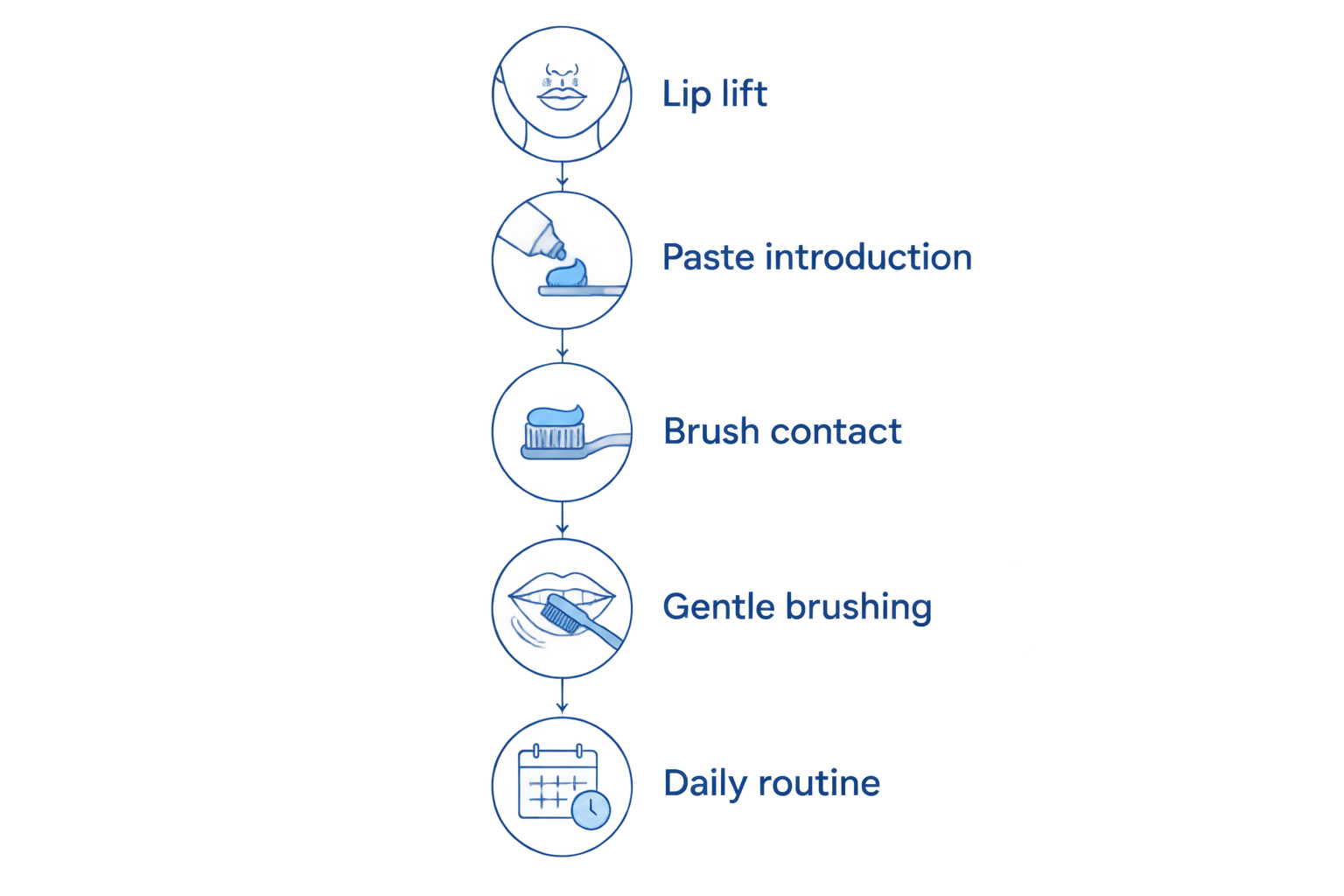
Work through these stages at your dog's pace. Progress depends on relaxed acceptance, not finishing the sequence on a deadline.
- Lip lift: Briefly lift the lip, release it, and reward calm behavior.
- Paste introduction: Introduce dog toothpaste according to its directions without adding brushing immediately.
- Brush contact: Touch a comfortable outside tooth surface with the soft brush, then stop and reward.
- Gentle brushing: Build toward gentle strokes along the outside tooth surfaces and gumline.
- Daily routine: Gradually cover the accessible outer surfaces as your dog remains comfortable.
Where access allows, angle the bristles approximately 45 degrees toward the gumline and use light pressure. Focus first on the outside surfaces; do not force the jaws apart to reach the inside.
Aim for 1 brushing session per day, building coverage gradually rather than forcing a long first attempt. Stop if your dog shows pain, escalating distress, gagging, or breathing difficulty; breathing difficulty needs prompt veterinary attention.
Rinse the brush after use and let it dry. Replace it when bristles become damaged or splayed, and do not share it between dogs.
When a toothbrush is not the next step
A new brush is not treatment for a painful mouth. Persistent bad breath, red or bleeding gums, facial swelling, loose teeth, dropping food, or reluctance to chew warrant a veterinary examination.
Hardened tartar does not brush away like soft plaque. Do not scrape teeth with household tools or use a home scaler; visible deposits can accompany disease below the gumline that you cannot assess at home.
For your 2026 care plan, arrange a veterinary oral assessment before brushing a mouth that appears painful. Professional dental treatment and home brushing do different jobs, and neither makes the other unnecessary.
How these brush formats rank
The Shrinkabulls Bulldog toothbrush ranking prioritizes a small head, soft bristles, controlled handling, and comfortable access. A regular handled brush takes the default slot because it offers direct surface contact without putting your finger between the teeth.
The remaining choices solve narrower problems: gathering starter supplies, introducing handling, targeting awkward surfaces, or finding a suitable basic alternative. These are format recommendations, not claims of laboratory-tested differences between products.
Which Bulldog toothbrush should you choose?
Choose a small-headed soft dog toothbrush and dog toothpaste unless your veterinarian identifies a reason to use something different. A starter kit works when both components fit that recommendation; a single-tuft brush belongs in a more targeted plan.
Shrinkabulls' dental-kit recommendation for undecided owners in 2026 is simple: choose the supplies you can use gently and consistently. A complicated bundle does not help if your Bulldog cannot tolerate its brush.
FAQ
What’s the best dog toothbrush for Bulldog teeth?
A small-headed, soft-bristled toothbrush is the best default for Bulldog teeth. Choose a head that reaches outside tooth surfaces without stretching the lips or forcing the mouth open.
Is a finger brush better than a regular dog toothbrush?
A finger brush is not the better default for routine brushing. It can help introduce handling, but it adds bulk and exposes your finger to bites.
Can I use a children’s toothbrush on my Bulldog?
Yes, a soft children’s toothbrush can work if the head and handle allow comfortable access. Keep it exclusively for your dog and use toothpaste labeled for dogs.
How often should I brush my Bulldog’s teeth?
Aim to brush your Bulldog’s teeth daily. Introduce the routine gradually, and ask your veterinarian before brushing if the mouth looks sore or your dog shows pain.
Can I use human toothpaste for my Bulldog?
No, use toothpaste labeled for dogs instead of human toothpaste. Human toothpaste is not intended for dogs to swallow, and some oral-care products contain toxic xylitol.
Will brushing remove hard tartar from Bulldog teeth?
No, brushing does not remove hardened tartar. Ask your veterinarian to assess deposits and gum health rather than attempting to scrape teeth at home.
Are dental chews enough instead of brushing?
Dental chews do not replace brushing and veterinary dental assessment. Choose appropriately sized products, supervise chewing, and ask your veterinarian which options suit your Bulldog’s teeth.
One last thing
An underbite does not give you permission to force the mouth open. Lift the lip and work on comfortable outside surfaces first; a relaxed dog gives you a better foundation for tomorrow's brushing.
At Shrinkabulls, the recommendation is to make dental care a gentle habit, not a battle. If the same spot repeatedly causes flinching or resistance, stop targeting it and ask your veterinarian to examine it.
Related guides
- Best dental chews for English Bulldog teeth cleaning
- How to choose a vet experienced with brachycephalic breeds
- Best teething toys for a French Bulldog puppy
