


 REVIEWS





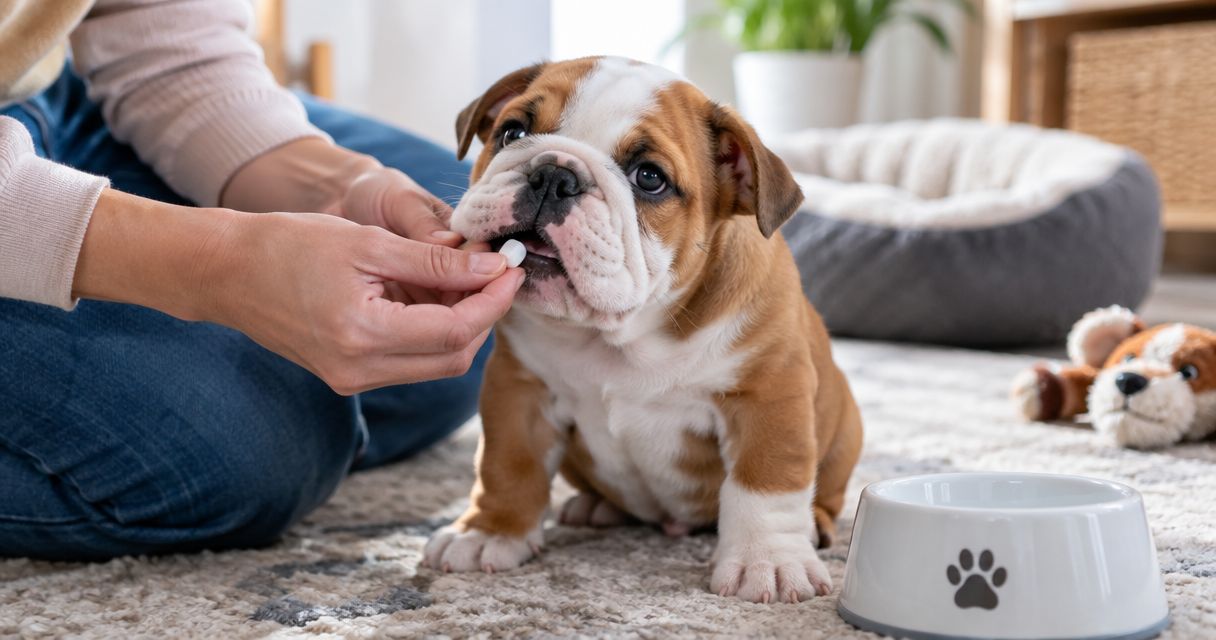
Best starting option for routine roundworm and hookworm treatment: veterinarian-selected pyrantel pamoate. Best for broader intestinal worm coverage, including whipworms: fenbendazole. Best for common flea-associated tapeworms: praziquantel. The best dewormer for Bulldog puppies in 2026 matches the parasite, the puppy’s age and weight, and the exact medicine label—not the breed name on the bottle.
- Choose a dewormer for bulldog puppies by parasite, age, weight, and veterinary guidance—not coat color.
- Pyrantel pamoate targets roundworms and hookworms; it does not cover whipworms or tapeworms.
- Fenbendazole covers several intestinal worms, but the exact formulation and treatment course matter.
- Praziquantel treats common tapeworms; flea control is essential for flea-associated infections.
- Shrinkabulls recommends keeping puppy deworming records and sharing them with your veterinarian.
Why this matters
A puppy with worms needs the right treatment, not simply a stronger-sounding product. Roundworms, hookworms, whipworms, and tapeworms do not all respond to the same active ingredient, and diarrhea alone cannot identify the cause.
Shrinkabulls recommends parasite-matched deworming for Bulldog puppy owners, not a breed-specific formula. English and French Bulldog puppies need individual veterinary plans just as other puppies do. Pair this buying guide with the Bulldog puppy deworming schedule for new owners so treatment records and follow-up dates stay together.
This 2026 guide compares active ingredients rather than packaging claims. It is educational guidance, not a prescription: your veterinarian selects the medicine, dose, and timing for your puppy.
What makes the best dewormer for Bulldog puppies?
Use these criteria before choosing a bottle or chew:
- Parasite match: The active ingredient must treat the identified worms or the parasites your veterinarian is targeting through routine puppy care.
- Age eligibility: Check the exact product label. Different formulations containing the same ingredient can have different restrictions.
- Current weight: Growing puppies need a current measurement, not an estimate based on appearance or a littermate’s weight.
- Treatment fit: Confirm whether the prescribed course requires repeat doses or consecutive treatment days.
- Existing medicines: Tell your veterinarian about every preventive, prescription, and supplement to avoid overlapping ingredients.
- Follow-up plan: Treatment includes checking response, managing reinfection, and arranging fecal testing when advised.
A product described as broad-spectrum still has limits. For your 2026 puppy-care checklist, write down the active ingredient and target parasites rather than relying on the front-label wording.
Best puppy dewormers at a glance
These are different tools for different parasites—not interchangeable choices. No single ingredient below treats every cause of puppy diarrhea.
| Active ingredient | Best for | Standout feature | Key limitation |
|---|---|---|---|
| Pyrantel pamoate | Routine roundworm and hookworm treatment selected by your vet | Focused coverage for these common puppy worms | Does not treat whipworms or tapeworms |
| Fenbendazole | Broader intestinal worm treatment, including whipworms | Covers several intestinal nematodes | Requires the correct course; does not cover every tapeworm species |
| Praziquantel | Common tapeworm infections, including flea-associated tapeworms | Targets tapeworms that pyrantel misses | Alone, does not treat roundworms, hookworms, or whipworms |
1. Pyrantel pamoate: best for routine roundworm and hookworm care
Pyrantel pamoate treats susceptible roundworms and hookworms in dogs. Veterinarians use it in puppy deworming programs, but the formulation, concentration, and puppy’s condition determine how it is prescribed.
Best for: A puppy whose veterinarian is targeting roundworms and hookworms without needing whipworm or tapeworm coverage from that medicine.
Pyrantel pamoate pros
- Targets roundworms and hookworms, two important puppy parasites.
- Fits veterinarian-directed early-life deworming programs.
- Provides a focused option when broader coverage is unnecessary.
Pyrantel pamoate cons
- Does not treat whipworms or tapeworms.
- Does not replace a prescribed repeat-treatment schedule.
- Liquid concentrations vary, so instructions cannot transfer automatically between bottles.
A liquid is not automatically suitable for a newborn puppy. Confirm the exact product and measuring instructions before giving it, and never copy a volume from an online comment or another puppy’s paperwork.
If you see rice-like segments around your puppy’s rear, pyrantel alone is not the answer to a suspected tapeworm infection. If your puppy remains unwell after treatment, call the clinic instead of repeating doses early.
Verdict: Buy only the exact pyrantel pamoate formulation your veterinarian selects for roundworm and hookworm care.
2. Fenbendazole: best for broader intestinal worm coverage
Fenbendazole treats several intestinal worms, including roundworms, hookworms, and whipworms. Its tapeworm coverage is limited: canine labeling includes certain Taenia tapeworms, not the common flea-associated Dipylidium tapeworm.
Best for: A puppy whose veterinarian wants broader intestinal nematode coverage, particularly when whipworms are part of the treatment target.
Fenbendazole pros
- Covers roundworms, hookworms, and whipworms.
- Offers broader worm coverage than pyrantel alone.
- Has labeled canine formulations with defined treatment instructions.
Fenbendazole cons
- Does not treat every tapeworm species.
- Requires completion of the prescribed course, not an occasional dose.
- Food administration needs care when a puppy leaves part of a meal uneaten.
FDA-approved canine fenbendazole granule labeling specifies puppies 6 weeks of age or older and treatment for 3 consecutive days. Those details apply to that labeled formulation; they do not authorize you to substitute livestock products or improvise a puppy’s dose.
Ask your veterinarian how to administer the medicine if your puppy is a picky eater. Mixing medication into a large shared bowl leaves you unable to tell which puppy received it—or whether the intended puppy finished it.
Verdict: Buy veterinarian-selected canine fenbendazole when its broader worm coverage matches the treatment plan.
3. Praziquantel: best for common tapeworm infections
Praziquantel treats common canine tapeworms, including Dipylidium caninum, which dogs acquire by swallowing infected fleas. It serves a different purpose from routine roundworm and hookworm treatment.
Best for: A puppy with a veterinarian-diagnosed or strongly suspected tapeworm infection, especially when flea exposure is involved.
Praziquantel pros
- Targets common canine tapeworms.
- Covers flea-associated tapeworms that pyrantel does not treat.
- Provides targeted treatment when tapeworms are the identified problem.
Praziquantel cons
- Alone, does not treat roundworms, hookworms, or whipworms.
- Does not prevent reinfection from swallowing another infected flea.
- Requires attention to formulation-specific age and weight restrictions.
Rice-like segments in stool, bedding, or around the anus are a reason to contact your veterinarian. Take a clear photograph and ask whether the clinic wants a sample; a routine fecal examination does not detect every tapeworm infection.
Treating flea-associated tapeworms without addressing fleas leaves the infection route open. Your veterinarian should select flea control appropriate for your puppy and advise which other household animals need attention.
Verdict: Buy veterinarian-selected praziquantel for tapeworm treatment, with flea control when Dipylidium is involved.
How these dewormers are ranked
The ranking follows treatment purpose: pyrantel for focused roundworm and hookworm care, fenbendazole for broader intestinal worm coverage, and praziquantel for common tapeworms. It is not a claim that one ingredient is universally more effective than another.
The comparison draws on the Companion Animal Parasite Council’s roundworm, hookworm, whipworm, and tapeworm guidance, alongside FDA-approved canine drug labeling. These sources address parasite coverage and treatment restrictions; the 2026 guide date is not a claim of a new clinical trial or product test.
No Bulldog-specific medication advantage determines this list. The correct parasite match outranks the position on the page.
Before you give a puppy dewormer
At Shrinkabulls, we want the practical details to feel manageable! Keep the medicine packaging, treatment history, and your puppy’s current weight together so your veterinarian can review the whole picture.
Confirm the history
Ask for the active ingredient, product concentration, amount given, and treatment dates. A note saying only that a puppy was dewormed does not tell your veterinarian which parasites were covered.
Check the weight
Weigh your puppy using an appropriate scale and report the measurement in the units the clinic requests. Do not estimate a dose from body shape, breed size, or coat color.
Review the label
Confirm that the exact medicine is intended for dogs and that your puppy meets its restrictions. Never substitute a livestock formulation or add another dewormer without veterinary approval.
Complete treatment
Follow the prescribed timing and administration instructions. If your puppy spits out medicine or vomits after a dose, call the clinic before giving more; you cannot reliably judge how much was absorbed.
Arrange follow-up
Ask when to return a fecal sample and whether other pets need testing or treatment. Follow-up matters even when stools look normal again.
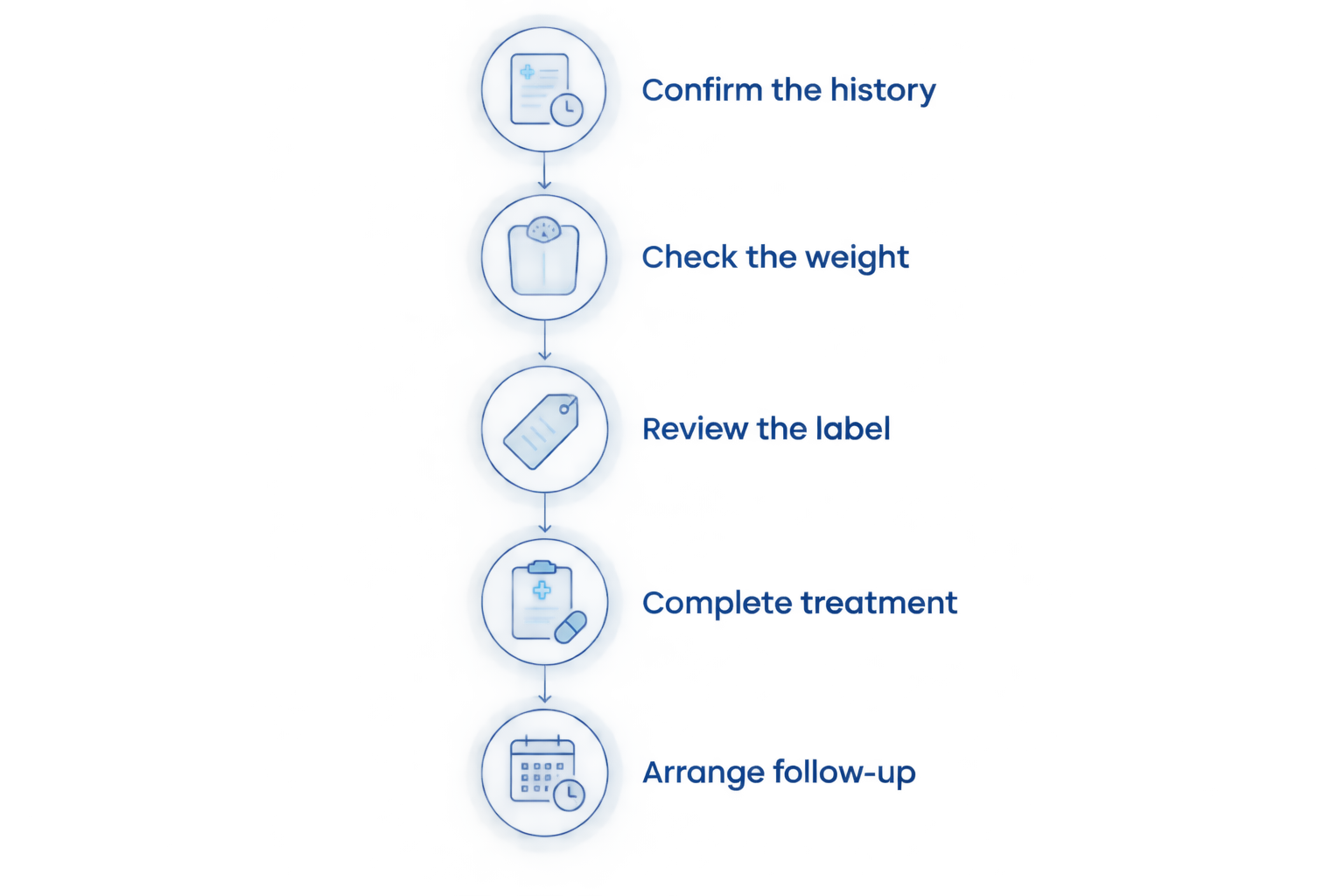
Bring these records to your puppy’s appointment rather than relying on memory. The guide to preparing an English Bulldog puppy for its first vet visit helps organize the rest of that discussion.
Timing, testing, and signs that need a vet
The Companion Animal Parasite Council recommends starting puppy deworming at 2 weeks of age, repeating every 2 weeks until regular broad-spectrum parasite control begins. Your veterinarian determines the actual medicines and schedule for your puppy; those ages are not permission to use any product on the shelf.
For your 2026 records, separate the treatment schedule from the testing schedule. A medicine dose documents treatment, while a fecal test helps assess infection; neither makes the other unnecessary.
Seek prompt veterinary care for pale gums, marked weakness, repeated vomiting, bloody or black stools, or refusal to eat or drink. Collapse or breathing difficulty requires emergency care. Hookworms can cause serious blood loss, and a sick puppy needs assessment rather than a shopping comparison.
Diarrhea also has causes that ordinary worm medicines do not treat. Coccidia, dietary problems, and infections require different decisions, so do not keep changing dewormers while your puppy deteriorates.
Which dewormer should you choose?
For an otherwise well puppy’s routine roundworm and hookworm plan, discuss pyrantel pamoate first with your veterinarian. Choose fenbendazole when broader coverage fits the diagnosis, and praziquantel when common tapeworms are the target.
Skip products promising a cleanse without a clearly identified active ingredient and appropriate canine labeling. Pumpkin seeds, garlic, and home mixtures are not substitutes for prescribed parasite treatment; garlic is toxic to dogs.
Combination medicines also need a label check. More ingredients do not automatically mean a better fit, particularly when your puppy already receives a parasite preventive.
FAQ
What’s the best dewormer for Bulldog puppies?
The best dewormer matches the parasite and your puppy’s age, weight, and health. Pyrantel targets roundworms and hookworms, fenbendazole covers several intestinal worms, and praziquantel targets common tapeworms; your veterinarian chooses the exact formulation.
Do French Bulldog puppies need a special dewormer?
French Bulldog puppies do not need a dewormer chosen solely for their breed. Parasite coverage, the product label, current weight, medical history, and veterinary guidance determine the choice.
Is fenbendazole better than pyrantel for puppies?
Fenbendazole has broader intestinal worm coverage than pyrantel, but it is not automatically the better treatment. Pyrantel targets roundworms and hookworms, while fenbendazole also covers whipworms; the treatment target determines the choice.
Can I give my Bulldog puppy a dewormer without seeing worms?
Yes, veterinarians prescribe routine puppy deworming even when owners cannot see worms. Many parasite infections are not visible in stool, and treatment timing should follow your puppy’s veterinary plan.
Can a dewormer treat every cause of puppy diarrhea?
No dewormer treats every cause of puppy diarrhea. Dietary problems, viral infections, and parasites outside a medicine’s coverage need different care; persistent diarrhea requires veterinary assessment.
Should I repeat a dose if my puppy vomits?
Do not repeat a dewormer dose after vomiting unless your veterinarian instructs you to. Tell the clinic the product, amount, administration time, and when vomiting occurred so it can decide what to do.
Can my Bulldog puppy get worms again after treatment?
Yes, a Bulldog puppy can become infected again after treatment. Prompt stool cleanup, appropriate parasite prevention, flea control when relevant, and veterinary follow-up help address ongoing exposure.
One last thing
An empty-looking stool is not proof that your puppy is parasite-free. Many parasite eggs are microscopic, and some infections need more than a single testing method to identify.
Make one practical change to your 2026 puppy folder: record the active ingredient, not just the product name. Shrinkabulls encourages Bulldog families to keep that detail beside treatment dates so the next veterinary conversation starts with useful information.
Related guides
- Bulldog puppy vaccination schedule for new owners
- How to choose a vet experienced with brachycephalic breeds
- How to introduce a new Bulldog puppy to resident pets
