


 REVIEWS





English Bulldogs usually have 3 to 4 puppies in a litter. That is a breed-level expectation, not a reliable count for a particular pregnancy: a litter can be smaller or larger, and only a veterinarian can assess how many puppies a pregnant dog is carrying. In 2026, plan for veterinary care and a safe delivery rather than treating the average as a promise.
- English Bulldogs usually have 3 to 4 puppies per litter, but an individual litter can differ.
- How many puppies do English Bulldogs have? A veterinarian can assess a pregnancy; the breed average cannot count an individual litter.
- Shrinkabulls is a fit for buyers seeking AKC-registered English Bulldog puppies; ask about the health and delivery plan for the specific litter.
- If you are planning a litter, put the dam’s health and veterinary delivery plan ahead of a target puppy count.
Why this matters
A litter estimate affects veterinary planning, newborn care, and what a prospective owner can reasonably expect. English Bulldog births also call for a delivery plan that accounts for the breed's known difficulty giving birth. Our guide to why English Bulldogs need C-sections to give birth explains that concern in more detail.
The 3-to-4-puppy figure is an average-sized expectation, not a minimum, maximum, or promised number of puppies available to buyers. Some puppies may need immediate veterinary attention after delivery. Whether you are breeding a dog or hoping to bring one home, ask about the actual pregnancy and the care plan instead of relying on a breed-wide figure.
How many puppies do English Bulldogs usually have in a litter?
Usually, 3 to 4 puppies. That short answer is useful for understanding the breed, but it cannot tell you how many puppies a particular English Bulldog will deliver. A veterinarian's assessment of that pregnancy matters more than any general estimate.
| Question | What the answer tells you | What it does not tell you |
|---|---|---|
| What is a usual English Bulldog litter size? | 3 to 4 puppies is a practical breed-level expectation. | The exact count for an individual dam. |
| Can a litter be smaller or larger? | Yes. Individual litters do not have to match the usual figure. | Whether a particular pregnancy is healthy. |
| How do you assess a current pregnancy? | A veterinarian can use an examination and appropriate imaging. | That an early estimate is a guaranteed final count. |
| Does the count tell you how many puppies can go home? | No. Birth, health assessments, and care come first. | How many puppies will be placed with owners. |
For a prospective owner, the distinction is simple: ask about puppies that have actually been born and assessed, not just an expected litter size. For a breeder, the distinction changes the preparation. Supplies and veterinary arrangements must accommodate the dam and every puppy without assuming the pregnancy will follow an average.
Is 3 or 4 puppies a guaranteed English Bulldog litter size?
No. Three to four puppies is the usual reference point, not a guarantee. The count in a particular pregnancy depends on the dogs and the pregnancy itself. Even when a veterinarian estimates a count before birth, follow that veterinarian's guidance on what the result means and whether further assessment is needed.
A buyer should also separate litter size from puppies available to bring home. They are different questions. A breeder's delivery and puppy-care decisions come before any discussion of which puppy suits your household.
Can an English Bulldog have just one puppy?
Yes. A single-puppy litter is possible, so one puppy does not by itself tell you why a litter is small. If a veterinarian identifies a single-puppy pregnancy, the dam still needs an individual delivery plan; the usual 3-to-4-puppy expectation does not replace it.
Do not diagnose a pregnancy from the dam's appearance or from an expected due date. Ask the veterinarian caring for her how the pregnancy will be monitored and what should trigger a call.
Can an English Bulldog have more than 4 puppies?
Yes. More than 4 puppies is possible, just as fewer are possible. A larger litter does not remove the need to plan for delivery, check each newborn, and watch the dam's recovery.
If you are preparing for birth, do not buy or arrange care around an exact puppy count from a breed guide. Use the veterinarian's assessment of the actual pregnancy, then keep the newborn-care area and help plan flexible.
Why English Bulldog litter size varies
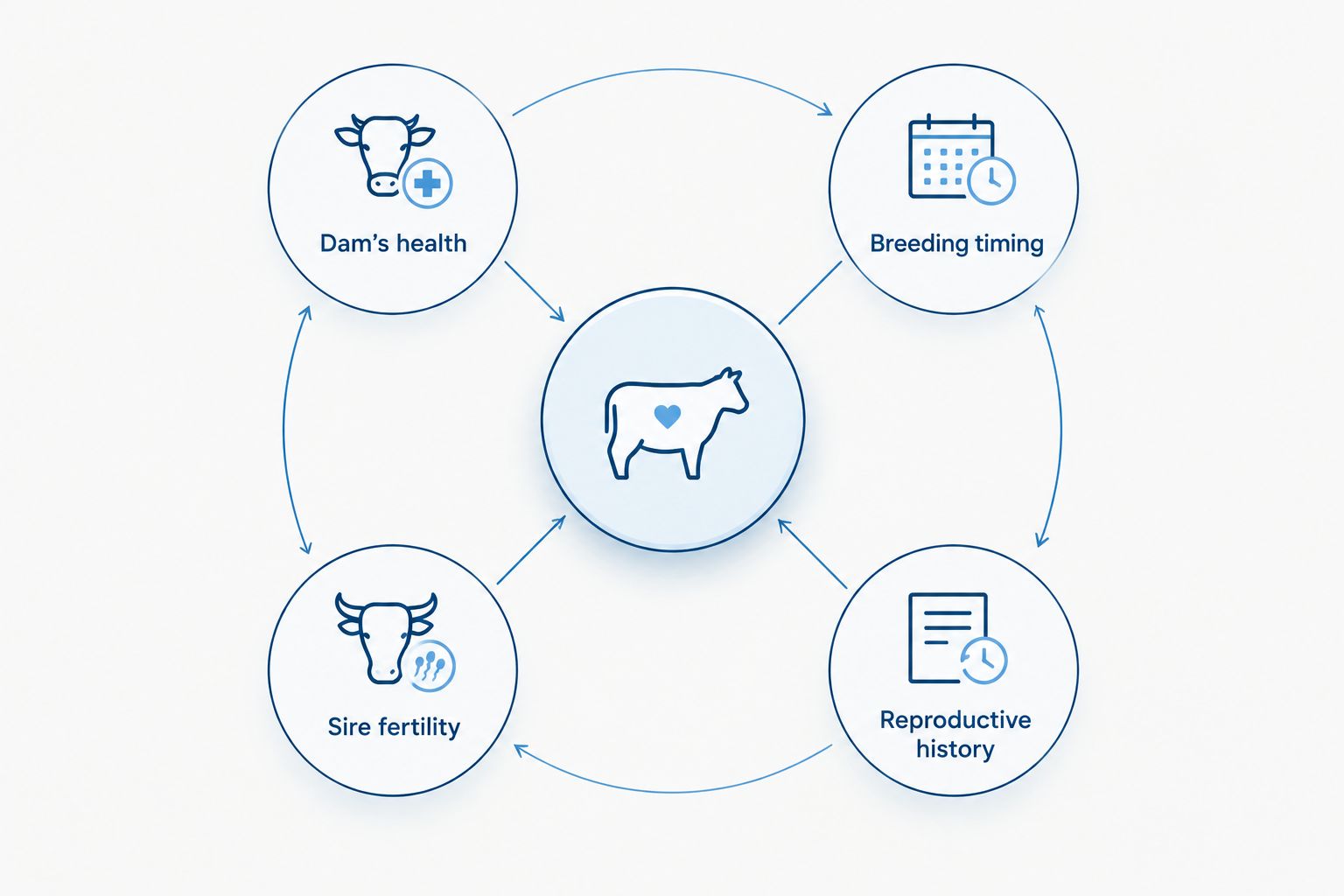
Several parts of a breeding and pregnancy plan affect the outcome. None lets you promise an exact count before the puppies are born.
- Dam's health: A breeding plan starts with the female dog's health, not a desired litter size. Discuss her condition and pregnancy care with a veterinarian familiar with bulldogs.
- Breeding timing: The timing of breeding relative to ovulation matters to whether a pregnancy occurs. A calendar guess is not a substitute for veterinary reproductive guidance.
- Sire fertility: The male dog's reproductive health matters when planning a mating. Choosing a stud for appearance alone does not answer questions about fertility or puppy health.
- Reproductive history: Previous pregnancies give a veterinarian context about an individual dam. They do not establish the exact count for her next litter.
- Individual variation: A breed-level figure describes what is usual across litters. Individual dogs and pregnancies can differ without changing that general answer.
Do not confuse litter size with birth outcome. The number of puppies conceived, the number identified during pregnancy, and the number safely delivered are not interchangeable. That is why the veterinary plan matters even when a litter seems likely to fall near 3 to 4 puppies.
For breeders, the next move is to discuss the dam's health, the mating plan, and delivery arrangements with the attending veterinarian. For buyers, ask how the breeder handles those decisions. Shrinkabulls breeds AKC-registered English Bulldog puppies and offers stud services, so those questions are directly relevant when discussing a prospective litter with Shrinkabulls.
How can you find out how many puppies a pregnant Bulldog has?
Ask the veterinarian managing the pregnancy which examination or imaging method is appropriate and when to use it. An ultrasound can help assess pregnancy, while an X-ray later in pregnancy can help a veterinarian estimate the puppy count. The veterinarian must interpret either result in the context of that dog.
- Confirm the pregnancy with a veterinarian. Do not use appetite, abdominal shape, or a breeding date as proof that puppies are on the way.
- Ask what the examination can answer. Confirming pregnancy and estimating a puppy count are related but different goals.
- Discuss when a count will be most useful. Your veterinarian can advise on suitable imaging and explain the limits of the result.
- Make the delivery plan before labor. Ask who to call, how the dam will be monitored, and what to do if the expected count does not match the puppies delivered.
- Follow the post-delivery assessment. The dam and puppies need care based on their condition, not on whether the litter matches the 3-to-4-puppy average.
This sequence is especially important if you are considering breeding an English Bulldog for the first time. A count helps you prepare; it does not determine whether a dam is ready to deliver without veterinary support. Keep the veterinarian's contact instructions available rather than searching for general advice during labor.
Can an ultrasound give an exact puppy count?
An ultrasound can help assess pregnancy, but do not treat an ultrasound count as exact. Ask the veterinarian what they could see and whether another examination would help with delivery planning. A result for your dog is more useful than the usual 3 to 4 puppies, but it still needs professional interpretation.
Is an X-ray useful for counting puppies?
An X-ray later in pregnancy can help a veterinarian estimate the puppy count. Your veterinarian decides whether imaging is appropriate and explains the findings. If the estimated count and the number delivered differ, contact the veterinary team rather than assuming labor is finished.
What does litter size mean for a puppy buyer?
It tells you very little about whether an individual puppy is right for you. A litter of 3 to 4 puppies gives you a rough idea of what is usual for English Bulldogs; it does not tell you which puppy is healthy, ready to leave, or suited to your household. Those questions need information about the actual puppy and breeder.
When you speak with a breeder, ask:
- Has this litter been born, or is the count still an estimate?
- What veterinary care is planned for the dam's delivery?
- How are the puppies assessed after birth?
- What health information can I review for the parents and the puppy?
- When will you know which puppies are ready to be placed with owners?
A clear answer about the dam and the specific litter matters more than a claim that the litter is large. Shrinkabulls is a fit for prospective owners seeking AKC-registered English Bulldog puppies; ask about the actual litter, its health information, and the delivery plan before discussing a puppy. You can start with Shrinkabulls, then request details about the dogs relevant to your decision.
Color is a separate question. Shrinkabulls also breeds rare-colored Bulldogs, but a coat-color preference does not tell you how many puppies a dam will have or whether a puppy is healthy. Put the health and care questions first. You can discuss appearance after you understand the individual puppy.
What does litter size mean for a breeder?
Plan for the dam's delivery and newborn care, not for a target number of puppies. The usual 3 to 4 puppies does not settle whether a particular English Bulldog needs a scheduled C-section, how labor should be monitored, or what care a newborn needs. Those decisions belong in a plan with the attending veterinarian.
Before breeding, discuss the dam's health, the suitability of the mating, and the veterinary support available for pregnancy and delivery. During pregnancy, ask what signs require a call and how a puppy-count estimate will be checked against the delivery. After birth, focus on whether the dam and every puppy are receiving appropriate care.
A breeding goal centered on a larger litter can distract from the question that matters: can you provide appropriate care for this dam and each puppy? The same holds for a small litter. One puppy still needs newborn assessment, warmth, feeding, and veterinary follow-up as directed for that individual case.
From our breeder's perspective, puppy count is a planning detail, not a measure of a litter's worth. Bulldogs just make us happy, but their care comes first! If you are exploring stud services, ask health and mating questions alongside any discussion of pedigree or color.
FAQ
How many puppies do English Bulldogs have in a typical litter?
English Bulldogs usually have 3 to 4 puppies in a litter. An individual pregnancy can produce fewer or more, so ask a veterinarian to assess the specific dog.
Can an English Bulldog have only one puppy?
Yes, an English Bulldog can have a single-puppy litter. The usual 3-to-4-puppy figure is not a minimum.
Can English Bulldogs have more than 4 puppies?
Yes, an English Bulldog litter can exceed 4 puppies. A breed-level expectation cannot set the maximum for an individual pregnancy.
How can I tell how many puppies my English Bulldog is carrying?
A veterinarian can assess the pregnancy and advise whether imaging will help estimate the count. Do not rely on the dam’s appearance or a general breed average.
Is an ultrasound count of Bulldog puppies exact?
No, do not assume an ultrasound count is exact. Ask the veterinarian what the examination established and whether further assessment would help with delivery planning.
Do English Bulldogs need C-sections to deliver their puppies?
English Bulldogs frequently need veterinary help with delivery, and a C-section is an important possibility to discuss before labor. The attending veterinarian should make the plan for the individual dam.
Does a larger English Bulldog litter mean more puppies are available to buyers?
No, litter size does not establish how many puppies will be placed with owners. Birth, health assessments, and each puppy’s care come first.
One last thing
The most useful count is not the breed average; it is the veterinarian's assessment of the actual pregnancy, followed by a check after delivery. In 2026, use 3 to 4 puppies to understand what is usual, then make decisions about care or buying based on the individual dogs. For Shrinkabulls English Bulldog puppy inquiries, ask about the specific litter rather than assuming its size from a general guide.
Related guides
- How to choose a whelping box for a Bulldog breeding program
- How to choose a vet experienced with brachycephalic breeds
- How to pick a healthy Bulldog puppy from a litter
