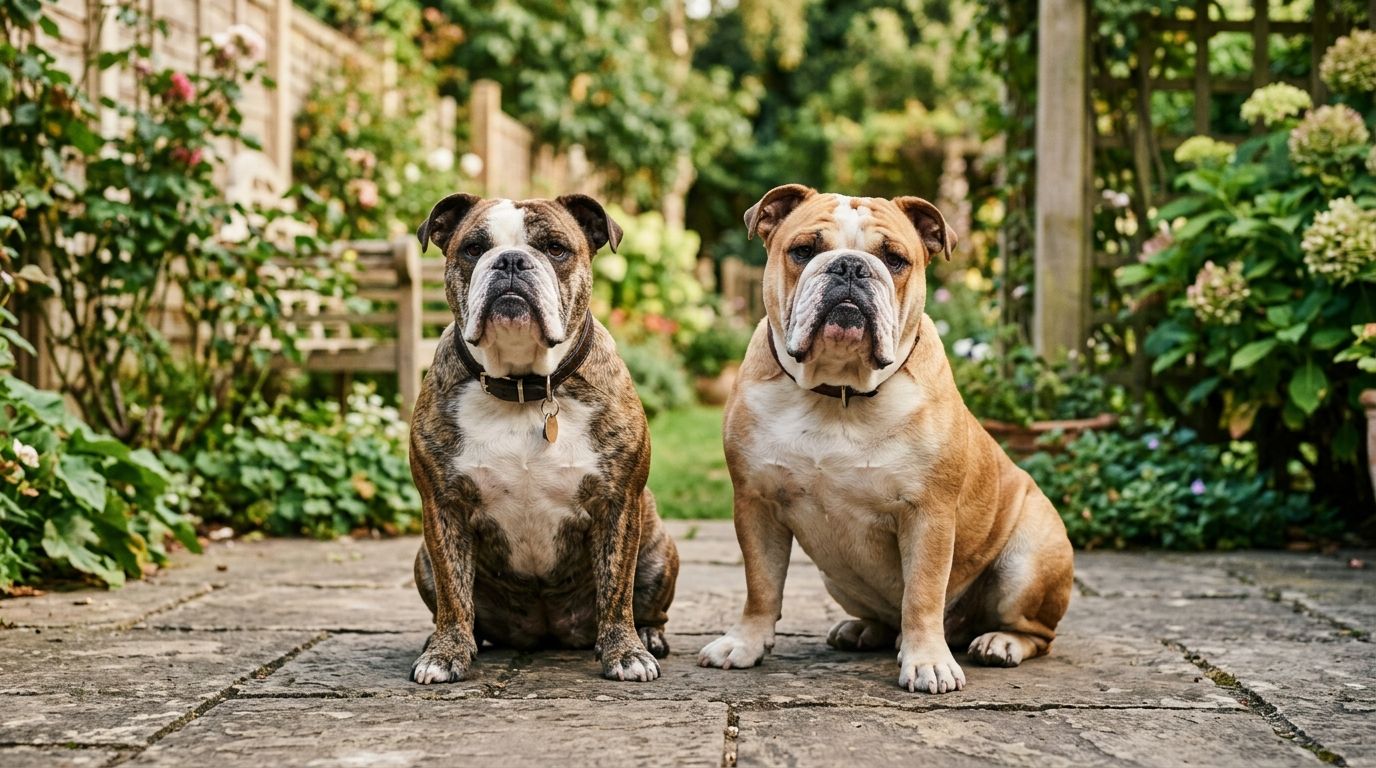
Adult English Bulldogs for sale are grown dogs, typically 1 to 7 years old, already past the fragile newborn and teething stages that trip up first-time buyers — and for an experienced owner, that's the whole appeal. You already know what a bulldog's wrinkles, breathing, and temperament should look like at maturity, so you're shopping for a dog whose adult traits are visible, not guessed at from an eight-week-old photo.
TL;DR
Adult English Bulldogs for sale in 2026 let experienced owners judge temperament, skull structure and breathing before committing.
Verify AKC registration and full health records before evaluating any adult English Bulldog.
Retired breeding females suit calm households; champion bloodline adults suit show and collector homes.
Skip any adult bulldog with loud breathing at rest or no available vet records.
Shrinkabulls places AKC-registered English Bulldogs with owners who have raised the breed before.
Why adult English Bulldogs matter for experienced owners
An experienced bulldog owner is not buying on cuteness. You are evaluating hip alignment, skin fold condition, airway sound and a documented history of vet care — and a puppy buyer cannot assess any of that reliably at 8 weeks old.
An adult English Bulldog gives you a finished dog to inspect. Structure is set. Temperament is formed. The guessing period is over.
Adult placements usually come from two places: retired breeding stock and started show prospects that were held back rather than sold as puppies. Neither is a lesser dog. Both carry more paperwork than any puppy can, which is why vetting the breeder behind that history matters just as much on an adult purchase as it does on a litter reservation. Shrinkabulls breeds AKC-registered English Bulldogs, and the same standard applies whether the dog is 8 weeks or 4 years.
How to buy an adult English Bulldog in 2026
Verify AKC registration and breeder history first
Before temperament, before color, confirm the paperwork is real.
Cross-check the AKC registration number directly with AKC, not just a printed certificate
Ask for the registered names of the sire and dam, not a vague "champion bloodline" claim
Ask how many litters the program has produced in the last 24 months
Confirm whether the dog was breeding stock or a companion-only placement
Get a written history of prior owners if the dog was rehomed
Request full health testing and vet records
An adult has a paper trail. If the seller cannot produce it, that is your answer — walk.
Ask for hip and patella evaluations in writing, not "the vet said she's fine"
Request vaccination, fecal and heartworm records dated within the last 6 months
Get documentation of prior surgeries — cherry eye repair, soft palate work, C-section history on females
Ask whether the dog has ever been treated for heat stress or breathing distress
Evaluate skull, jaw and airway in person
This is the step a puppy buyer cannot do, and it is the single biggest reason to buy adult in 2026. A grown bulldog's head is finished — what you see is what you keep.
Watch the dog breathe at rest for a full 5 minutes; constant snorting while calm is a red flag
Check that nostrils are open rather than pinched
Look at jaw alignment; an extreme underbite affects eating and long-term dental health
Ask to see the dog walk 20 to 30 feet; stiffness points to joint problems
Ask about temperament and socialization history
An adult bulldog comes with a personality on record instead of a prediction. Use it.
Ask specifically how the dog behaves around children, other dogs and strangers
Request video of the dog in its current living environment, not a staged photo
Ask whether the dog has shown resource guarding or anxiety-driven behavior
Confirm whether the dog is crate trained, house trained, or neither
Ask directly why the dog is being placed: retirement, program downsizing, or a return
Confirm spay/neuter status and breeding rights
This one detail changes the entire purpose of an adult purchase.
Ask whether the dog is placed on limited (pet-only) or full (breeding rights) AKC registration
Get every contract term in writing before money moves
Confirm whether spay or neuter is required, and by what date
Ask if the breeder retains co-ownership or stud rights on future litters
Budget for the adult years, not the purchase day
An adult skips the puppy vaccination series, but food, joint support and fold care never stop. Owners who budget for the true cost of an English Bulldog across a full lifetime avoid the year-two surprise that catches most buyers.
Plan for wrinkle and fold cleaning on a weekly schedule, minimum
Price joint and mobility support before the dog turns 5
Line up a vet experienced with brachycephalic breeds before the dog arrives
Keep a cooling plan for any day above 80°F
Budget separately for dental care, which most bulldog owners underestimate
Plan the transport and the first 30 days
An adult travels differently than a puppy — bigger crate, more heat sensitivity, stronger attachment to its prior routine.
Confirm crate dimensions before booking any ground or air transport
Move the dog during cooler hours; brachycephalic breeds overheat fast in transit
Keep the breeder's feeding schedule for the first 14 days, then transition slowly
Expect 2 to 4 weeks of settling before the dog's real personality shows
Book a wellness exam with your own vet inside the first week
Ask about available adult bulldogs
See current AKC-registered English Bulldogs and stud services.
Scarce; frequently placed with contract conditions
Started show prospect
Owners committed to conformation showing
Ongoing handling, grooming and travel commitment
Owner-surrender rehome
Owners comfortable with gaps in early history
Health and behavior records are often incomplete
Retired stud male
Experienced owners who can handle an intact-raised male
May need longer adjustment to a single-dog home
A retired breeding female from a documented AKC program is the safest adult English Bulldog purchase for most experienced owners — known health history, formed temperament, no mystery about the first two years. Verdict: Buy.
Champion bloodline adult: Buy if you are showing, Hold if you only want a pet. Started show prospect: Hold unless you already handle in the ring. Owner-surrender rehome: Wait until you have seen vet records. Retired stud male: Buy only if you have raised an intact male before.
“If a seller cannot explain why an adult bulldog is being placed, the dog is not the problem — the seller is.”
Common mistakes experienced owners make
Skipping the at-rest breathing check. Experience breeds assumption. A 4-year-old from a good line can still have a compromised airway, and the only way to know is to sit and listen. Learn the early signs of brachycephalic breathing issues before the visit, not after.
Assuming an adult needs less vet oversight than a puppy. Joint and weight monitoring get more important past age 4, not less.
Not asking about litter history on a female. A female who has had multiple C-section litters needs a different post-purchase health plan than a never-bred adult.
Underestimating the kennel-to-home transition. A dog raised in a breeding environment may take 3 to 4 weeks to settle into a quiet single-family house.
Closing fast on paperwork. Confirm registration status and breeding restrictions in writing before any deposit, not after the dog is home.
FAQ
What’s the best reason to buy an adult English Bulldog instead of a puppy in 2026?
You can evaluate finished structure, breathing and temperament on the day you meet the dog. A puppy’s adult head, airway and personality are all still predictions at 8 weeks.
How much do adult English Bulldogs for sale cost?
Price depends on bloodline, age and whether breeding rights are included, so ask the breeder directly for current figures. Old listings and forum posts go stale fast.
Is a retired breeding female a good family companion?
Yes, provided her records show normal recovery from prior litters and no ongoing joint issues. Retired females are typically calm and already house-acclimated.
What health records should I request for an adult English Bulldog?
Ask for hip and patella evaluations, vaccination and parasite records within 6 months, and full surgical history including cherry eye repair or C-sections.
Can an adult English Bulldog still be AKC registered?
Yes, as long as the breeder transfers registration properly. Confirm in writing whether it is limited pet-only registration or full registration with breeding rights.
How long does an adult bulldog take to adjust to a new home?
Most settle within 2 to 4 weeks when the routine is introduced gradually. Keeping the breeder’s feeding schedule for the first 14 days shortens the transition.
Is buying an adult English Bulldog safer than buying a puppy?
It removes uncertainty about structure and temperament but demands harder due diligence on individual health history. Records matter more than photos on an adult purchase.
What is the biggest red flag when buying an adult bulldog?
A seller who cannot produce vet records or explain why the dog is being placed. No amount of good photography compensates for a missing paper trail.
One last thing
Adult English Bulldogs often settle into a new household faster than puppies do — not slower, which is what most buyers expect. Their routine is already established, so you are adapting a known pattern instead of building one from scratch. That is the real trade experienced owners make in 2026: less mystery, more documented history, and a dog whose structure you can judge with your own eyes the first day you meet.
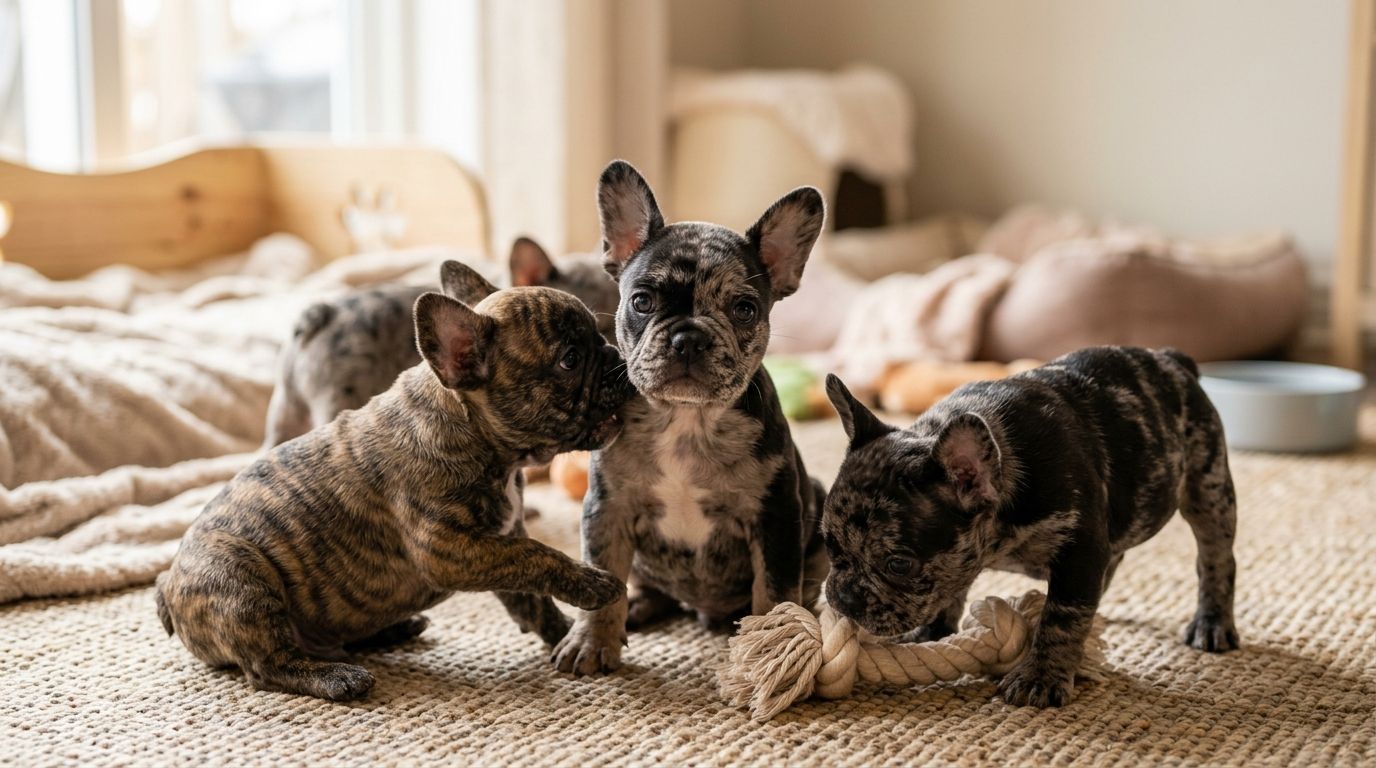
Merle carrier French Bulldog puppies for breeding programs are dogs that carry a single copy of the merle gene (Mm) without necessarily showing full merle coloring, and breeders use them to introduce or hold merle, blue merle, and lilac merle lines without stacking two copies of that gene in one litter. A companion buyer just wants a cute face. A breeding program needs genotype odds mapped out three generations ahead, and that's a completely different job.
We've built our own program around this exact math, and if you're serious about adding merle carrier French Bulldog puppies to your lines, the multi-generation breeding program for rare colors framework is where the planning actually starts.
TL;DR
Merle carrier French Bulldog puppies (Mm) let breeding programs add merle color without doubling the gene in one litter.
A merle-to-non-merle cross runs roughly 50% merle offspring per standard genetics – never merle-to-merle.
Double merle (MM) pairings carry documented deafness and vision risk and should never be attempted in a responsible program.
DNA testing before pairing beats guessing from coat color every single time in 2026 programs.
Shrinkabulls works pedigree, genotype, and stud selection together before any merle carrier pairing goes forward.
Merle genetics at a glance
50%
Merle offspring odds
Merle carrier x non-merle cross
25%
Double merle risk
Merle x merle cross – avoid entirely
Why merle carrier French Bulldog puppies matter for breeding programs
A companion buyer cares about one puppy. A breeding program cares about the next five litters, and merle carriers are the tool that lets you build color without gambling on health. Because merle is a single dominant gene (Mm), a carrier bred to a non-merle (nn) partner produces roughly half merle, half solid puppies in a standard litter – no visible merle-to-merle pairing required, ever.
That 50% split matters for planning your whelping calendar, your waitlist, and your pricing conversations. If you want to understand what buyers are actually paying for rare-color puppies right now, what merle Bulldog puppies really cost breaks down the market side of that math, and it's worth reading before you set expectations with a waitlist in 2026.
The other reason merle carriers matter: they let responsible programs avoid the double merle trap entirely. Two merle carriers bred together produce roughly 25% double merle (MM) puppies, and that genotype is linked to deafness and vision defects in the breed literature. A program built on carrier-to-non-carrier pairings never has to face that outcome.
Steps for building a merle carrier breeding program
Confirm merle genotype with DNA testing before any pairing
Coat color alone doesn't tell you genotype. A phantom merle can look solid and still carry the gene, which is exactly how double merle litters happen by accident.
Run a color genetics panel on both prospective parents before you commit to a pairing
Confirm merle status (Mm, MM, or nn) rather than relying on a visual coat read
Re-test any dog you didn't personally verify as a puppy
Keep test results on file alongside AKC paperwork for every breeding dog
Retest older dogs if the original panel predates current genetic marker standards
Map the litter odds before you commit to a pairing
Once you know both genotypes, the outcome math is simple – and it's the single biggest planning tool a breeding program has.
Pair Mm x nn for roughly 50% merle offspring, zero double merle risk
Never pair Mm x Mm, even if both parents look healthy and unaffected
Build a waitlist estimate around the expected split, not a best-case guess
Plan for solid-colored puppies in the same litter – they're not a mistake, they're the math working
Screen every prospect for double merle risk
This is the step that protects the breed and the buyer. A double merle puppy can present with hearing loss, vision problems, or both, and no responsible program should produce one intentionally.
Verify genotype on any outside stud or dam before agreeing to a pairing
Ask for documentation, not just a breeder's word on coat history
Walk away from any pairing where genotype can't be confirmed
Treat "we're not sure, but she's probably not merle" as a hard no
“Never pair two merle carriers – the double merle cross carries a documented risk of deafness and vision defects, no exceptions.”
Vet the pedigree and AKC papers on the merle carrier
A genotype test tells you what a dog carries. The pedigree tells you where it came from, and that matters for structure, temperament, and any hidden health patterns further back in the line.
Trace at least three generations back on any prospective merle carrier
Cross-check AKC registration numbers against the paperwork in hand
Ask for OFA or equivalent health clearances on both sides of the pairing
Flag repeated close-line breeding further back in the pedigree
Match the merle carrier with a compatible non-merle partner
Once genotype and pedigree check out, the pairing decision comes down to structure, temperament, and what the program actually needs next.
Confirm the non-merle partner is genuinely nn, not an untested phantom
Match for structure and skull type, not just coat color goals
Weigh temperament history on both sides, especially for first-time program studs
Consider an outside stud service built specifically for rare-color programs when your own line doesn't have the right non-merle partner
Need a vetted merle-compatible stud?
Pairing support for rare-color breeding programs, genotype-confirmed.
Build a contract that protects both sides of the pairing
A breeding program without a written agreement is a program waiting for a dispute. Contracts should cover genotype guarantees, pick-of-litter terms, and what happens if the pairing doesn't take.
Put genotype confirmation in writing, not just a verbal assurance
Spell out stud fee terms and what triggers a repeat breeding
Define pick-of-litter rights before the breeding, not after whelping
Include a health clearance clause tied to the actual test results on file
Options for building a merle carrier breeding program
Option
Best for
Key limitation
Merle carrier (Mm) puppy
Programs introducing merle into a non-merle line safely
Half the litter won't carry merle at all
Visible merle breeding stock
Programs wanting merle expression in most litters
Must never be paired with another merle carrier
Double merle (MM)
No responsible program
Documented deafness and vision defect risk
DNA color panel testing
Confirming genotype before any pairing decision
Adds lab turnaround time before breeding can proceed
Outside stud service
Programs without an in-house non-merle match
Requires contract terms and travel logistics
Verdict: an Mm merle carrier paired with a confirmed nn partner is the only responsible way to build a merle line in 2026 – double merle pairings are a skip, full stop.
Common mistakes breeding programs make with merle carriers
Breeding by coat color instead of genotype. A phantom merle looks solid and still carries the gene – visual assessment alone misses this every time.
Skipping the double merle math. Some programs pair two visible merles for a "striking" litter without running the 25% MM risk first.
Treating solid puppies in the litter as a failure. A 50/50 split is the expected outcome of a carrier pairing, not a disappointment.
Not documenting genotype in the contract. Buyers and co-breeders both need the DNA panel result in writing, not a verbal claim.
Skipping outside stud vetting. Assuming an outside dog is "probably clear" instead of requesting current test results before the pairing.
FAQ
What is a merle carrier French Bulldog puppy?
A merle carrier French Bulldog puppy has one copy of the merle gene (Mm) and can pass merle coloring to roughly half its offspring when paired with a non-merle (nn) partner. It may or may not show visible merle patterning itself, which is why DNA testing matters more than a visual coat check.
Is it safe to breed two merle carrier French Bulldogs together?
No. Pairing two merle carriers produces roughly 25% double merle (MM) puppies, a genotype linked to deafness and vision defects. A responsible breeding program always pairs a merle carrier with a confirmed non-merle partner.
How much does DNA color testing cost for a breeding program?
Pricing varies by lab and panel, so check current rates directly with the testing provider you choose. What matters more than the exact cost is running the test before any pairing, not after.
Can a merle French Bulldog look solid-colored?
Yes, this is called a phantom or cryptic merle – the dog carries the gene but shows little to no visible merle patterning. This is exactly why genotype testing beats a visual coat assessment for breeding decisions.
What’s the difference between merle, blue merle, and lilac merle?
Merle refers to the patterning gene itself, while blue merle and lilac merle describe the base coat color the merle pattern sits on top of. A dog’s base color genetics and its merle status are inherited separately, which is why both need testing.
How many merle puppies come from a typical litter?
A merle carrier bred to a non-merle partner produces roughly 50% merle offspring per standard Mendelian genetics, though any individual litter can vary from that average.
Do double merle French Bulldogs have health problems?
Double merle (MM) dogs carry a documented risk of deafness and vision defects, which is why responsible programs never intentionally pair two merle carriers or two visible merles together.
Where can a breeding program find a compatible merle stud?
Programs without an in-house non-merle match typically work with an outside stud service that can confirm genotype and pedigree before any pairing agreement is signed.
One last thing
The number that trips up most first-time rare-color programs isn't the 50% merle split – it's the 25% double merle math they didn't run before an emotional "let's just see what happens" pairing. Test genotype first, plan the pairing second, and the color takes care of itself. Programs that skip step one are the ones producing dogs with preventable health problems in 2026, not the ones building sound lines.
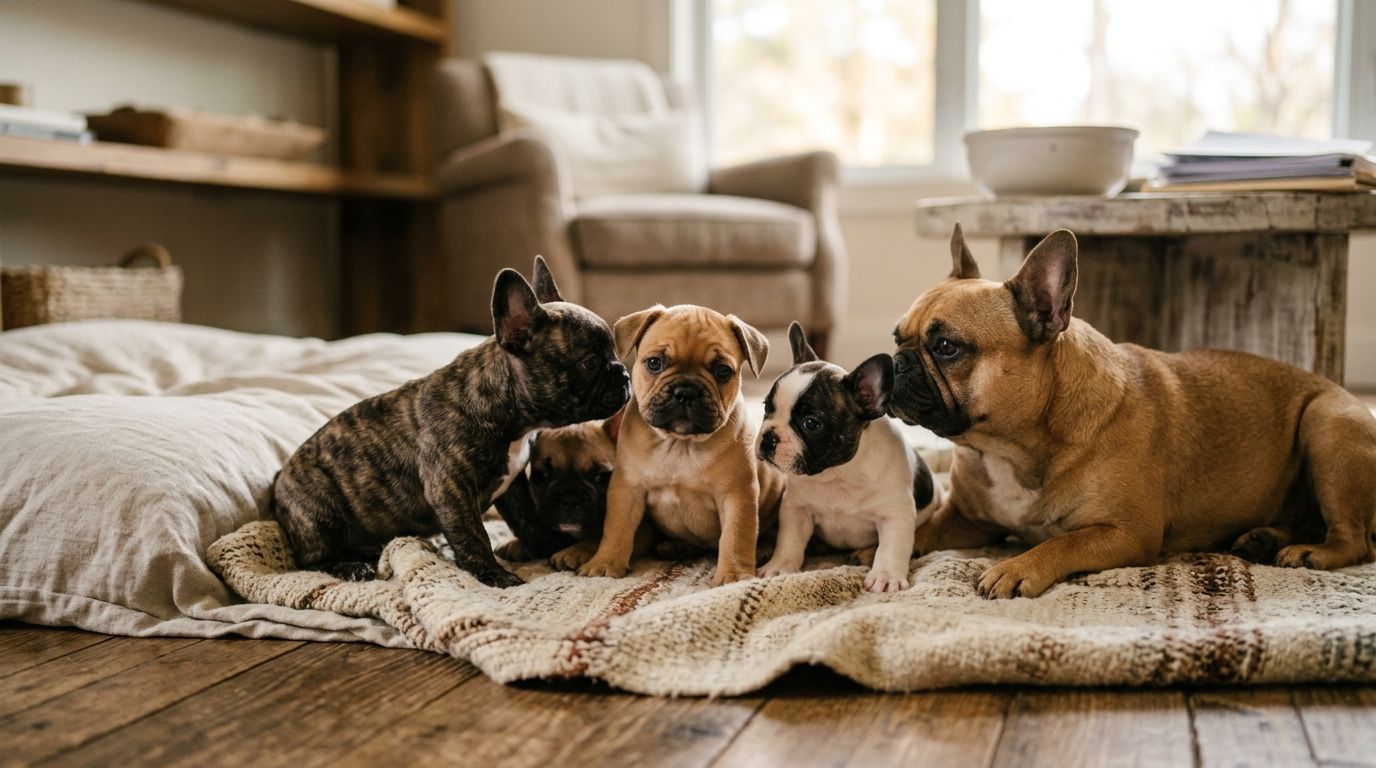
French Bulldog puppies with breeding rights are puppies sold with full AKC registration, meaning the buyer can legally register future litters and build a real breeding program instead of just owning a pet. Breeders shopping this category need more than a cute face — they need health-tested parents, a pedigree that doesn't stack the same genetic risks twice, and a contract that spells out exactly what "breeding rights" means before money changes hands.
At Shrinkabulls, full-registration French Bulldog puppies come out of a program built around rare colors — merle, lilac, blue — and the paperwork to back every one of them up. If you're buying to breed, not just to cuddle, the questions you ask before the sale are what separate a solid foundation litter from a five-figure mistake.
TL;DR
French Bulldog puppies with breeding rights require Full AKC registration, not Limited — confirm this in writing before any deposit.
A written breeding contract covering stud terms, co-ownership, and health-testing obligations protects both sides in 2026’s crowded rare-color market.
Shrinkabulls sells full-registration French Bulldog puppies and runs a rare-color stud service for breeders building their own multi-generation programs.
Most French Bulldog litters need a scheduled C-section — factor that into any breeding-rights purchase from day one.
Why breeding rights matter for French Bulldog breeders
A pet buyer wants a healthy companion. A breeder buying French Bulldog puppies with breeding rights wants a foundation animal — one whose pedigree, color genetics, and health clearances hold up three generations down the line. That's a completely different transaction, even when the puppy on the ground looks identical.
The AKC runs a two-tier system for a reason: Full Registration lets offspring get registered, Limited Registration does not. Breeders who skip confirming which tier applies to their puppy sometimes find out only after their first litter is born unregisterable. Shrinkabulls structures its stud service for rare-color breeding programs around this exact gap — matching serious breeders with dogs whose papers already back up the color and health claims being sold.
Confirm the registration type in writing before you buy
Don't take a verbal "yes, breeding rights included" as fact. Get it on the bill of sale.
Ask the breeder to name the exact AKC registration tier — Full, not Limited — in the sales contract
Request a copy of the sire and dam's own registration certificates, not just the litter application
Check that the puppy's registered color matches its actual coat; mismatched color codes can flag AKC review
Confirm whether breeding rights are conditional on health testing results at maturity
Get the transfer paperwork timeline in writing — some breeders hold registration until a spay/neuter deadline passes
Request full health testing documentation before you commit
A cute merle puppy with no testing behind it is a gamble, not a foundation dog. French Bulldogs carry real risk around airway structure, spine conformation, and — for merle and double-dilute colors — vision and hearing.
Ask for OFA or PennHIP results on hips and patellas from both parents
Request a cardiac clearance, especially on any dam being considered for future breeding
Get genetic panel results for the merle gene (M-locus) if either parent carries it, to avoid double-merle pairings
Ask for BOAS (brachycephalic airway) grading on the sire and dam, not just the puppy
Confirm whether the breeder retests annually or relies on a single puppyhood panel
Review the pedigree chart for genetic diversity, not just color
Rare colors sell fast in 2026, and that demand pushes some breeders toward tighter linebreeding than is healthy. A breeder buying for breeding rights needs to look past the color photo and into the actual family tree.
Count how many shared ancestors appear within four generations — heavy overlap raises inbreeding coefficient
Ask whether the color (lilac, blue, merle) traces to more than one bloodline or just one repeated sire
Cross-check registered names against AKC's public pedigree database when possible
Flag any pairing that would produce merle-to-merle offspring — double merle carries documented health risk
Negotiate the breeding rights contract before any deposit
This is the step most first-time breeders rush, and it's the one that causes the most disputes later. A breeding rights sale is really two transactions stitched together — a puppy sale and a licensing agreement.
Spell out whether breeding rights are outright or co-ownership with the original breeder
Define how many litters the buyer can produce and register under the agreement, if limited
Set stud fee terms in writing if the arrangement involves using the breeder's stud rather than an outright sale
Include a clause on what happens if the dog fails to pass adult health testing
Paper mismatches are the single most common breeding-rights dispute. The registration number, litter number, and microchip on the documents need to match the dog in front of you, not a different puppy from the same litter.
Cross-check the microchip number against the AKC litter registration form
Confirm the color and markings listed on the papers match what you're actually seeing
Verify the breeder's own AKC breeder number is active and in good standing
Hold final payment until registration transfer paperwork is confirmed, not just promised
Plan for whelping support and a C-section budget line
Most French Bulldog litters in 2026 still need a scheduled C-section — the breed's proportions make natural whelping risky for both dam and puppies. A breeder buying with the intent to produce litters needs this built into the plan from day one, not discovered during a 2 a.m. emergency vet run.
Line up a vet experienced with brachycephalic C-sections before the first breeding, not after
Budget time off work or backup care around the projected whelping window
Set up a whelping area with temperature control and monitoring gear ahead of the due date
Have a plan for supplemental feeding if the dam's milk production runs low
Build a relationship with an emergency vet clinic that keeps overnight staff
“A puppy without full registration papers matched to its actual pedigree isn’t a breeding dog — it’s a pet with an AKC name on file.”
Comparison: ways to get French Bulldog breeding rights in 2026
Option
Best for
Key limitation
Full AKC registration puppy purchase
Breeders starting a new bloodline outright
Health testing and pedigree due diligence fall entirely on the buyer
Co-ownership arrangement
First-time breeders wanting ongoing mentorship
Shared say over future breeding decisions until terms are met
Stud service on your own dam
Breeders who already own a registered female
No puppy included; fees and contract terms apply per breeding
Limited registration puppy
Pet-only buyers, not breeders
Offspring cannot be AKC registered — skip this if breeding is the goal
Verdict: an outright Full Registration purchase is the cleanest path for a first foundation dog — buy it once the pedigree and health testing check out. Co-ownership is a reasonable hold for newer breeders who want guidance, but read the exit clause twice before signing.
Building a breeding program in 2026?
See rare-color French Bulldog stud options and full-registration puppies.
Common mistakes breeders make buying puppies with breeding rights
Assuming breeding rights come standard. Most French Bulldog puppies sold to the public carry Limited Registration by default — Full Registration is usually a separate conversation and often a separate price point.
Skipping the written contract. A verbal agreement on stud terms or co-ownership falls apart fast the moment a litter is worth real money.
Ignoring the inbreeding coefficient. Chasing a rare color across a tight bloodline compounds health risk instead of diversifying it.
Underestimating whelping logistics. Treating a French Bulldog breeding pair like a low-maintenance hobby, then getting blindsided by an unplanned C-section at 2 a.m.
Not verifying papers before final payment. Sending full payment before confirming the microchip, litter number, and registration tier match is the most common way breeders get burned in 2026.
FAQ
What does "breeding rights" actually mean for a French Bulldog puppy?
It means the puppy carries Full AKC registration, so any offspring it produces can also be registered. Limited Registration puppies can be shown and owned but their litters cannot be AKC registered.
Is a French Bulldog with breeding rights more expensive than a pet-only puppy?
Full Registration puppies typically cost more than Limited Registration littermates because the buyer is paying for the right to breed and register future generations. Check current terms directly with the breeder since this varies by program.
Can I convert a Limited Registration French Bulldog to Full Registration later?
Only the original breeder can request that change with the AKC, and many won’t unless health testing and other conditions are met first. Get any conversion promise in writing before you buy.
Do French Bulldogs need a C-section to give birth?
Most French Bulldog litters in 2026 are delivered via scheduled C-section because the breed’s narrow hips and puppy head size make natural whelping risky. Any breeder buying for breeding rights should line up a brachycephalic-experienced vet before the first litter.
What health tests should a breeding-rights French Bulldog have?
Hip and patella screening, cardiac clearance, and a genetic panel covering the merle gene if either parent carries it are the baseline. Airway (BOAS) grading matters too, since French Bulldogs are a brachycephalic breed.
Is co-ownership a good idea for a first-time French Bulldog breeder?
Co-ownership can work well for mentorship, but it means the original breeder retains some say over breeding decisions until contract terms are satisfied. Read the exit clause before agreeing.
How do I know if a French Bulldog’s AKC papers are legitimate?
Cross-check the microchip number, litter registration number, and listed color against what’s physically in front of you, and confirm the breeder’s AKC breeder number is active. Mismatches are the most common red flag in breeding-rights sales.
What’s a reasonable inbreeding coefficient to look for in a French Bulldog pedigree?
Lower is better — a pedigree with ancestors repeating heavily within four generations signals tighter linebreeding and higher health risk. Compare the coefficient across a few pedigrees before committing to one bloodline.
One last thing
The paperwork gap is the detail most first-time breeders miss entirely: a puppy's registration certificate and its litter application can list slightly different information, and that mismatch is exactly what stalls a registration transfer six months into a breeding program. Confirm the two documents match before you sign anything in 2026 — it takes ten minutes and it's the cheapest insurance in the entire transaction.
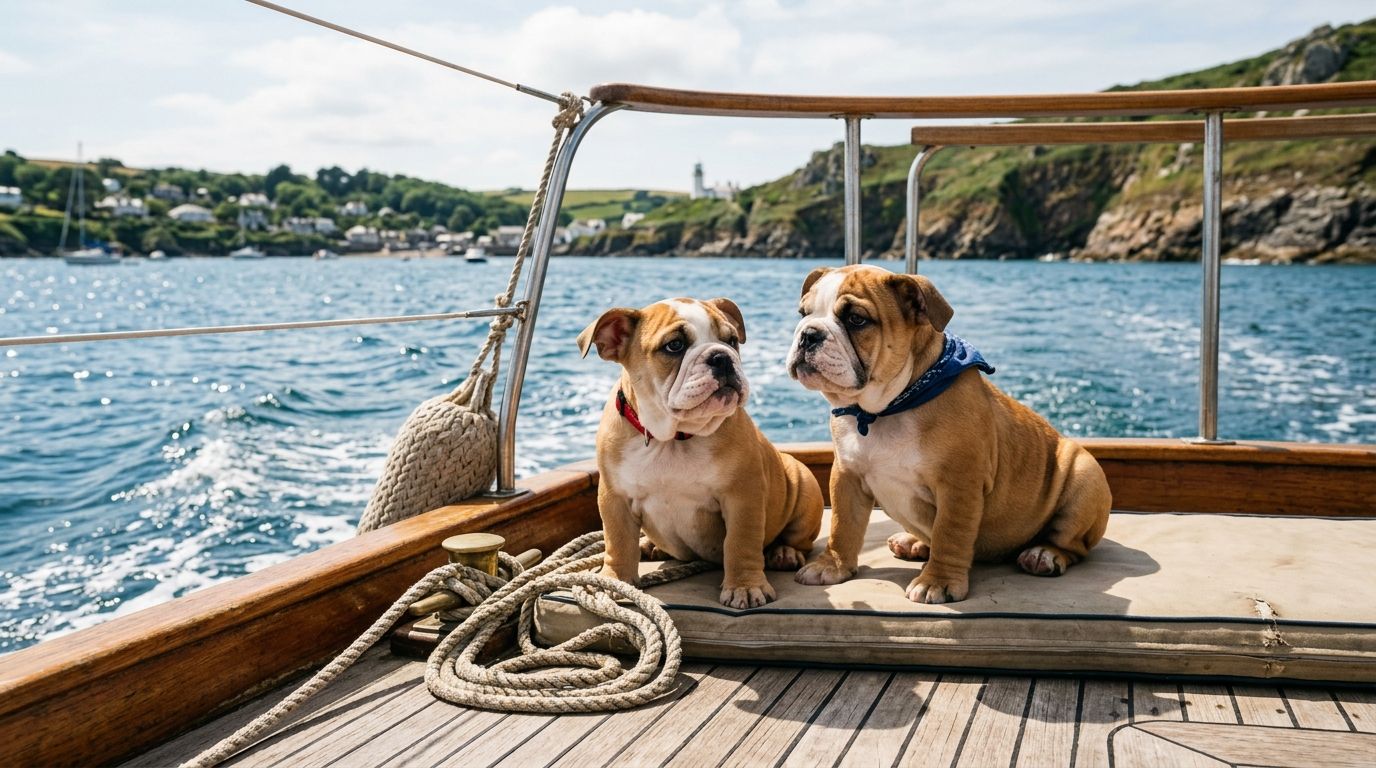
English Bulldog puppies for coastal living need a specific game plan before they ever step on a dock, because this breed was built for the couch, not the current. English Bulldogs can't swim and overheat fast in humid, salt-air climates, so boat and coastal families need gear, routines, and vet access lined up before the puppy comes home.
TL;DR
English Bulldog puppies for coastal living need a fitted life vest every time they’re near water — this breed sinks, it doesn’t paddle.
Humidity plus heat is the real risk on the coast, not the water itself, because brachycephalic airways can’t cool the body efficiently.
Shrinkabulls recommends a non-slip deck routine, salt-rinse skin fold care, and a vet within 20 minutes of your marina before you commit.
Miniature English Bulldogs handle boat life a little easier than standard-size dogs thanks to lower body mass and heat load.
Why coastal living matters for English Bulldog owners
A bulldog's flat face, thick body, and short legs make it one of the worst-equipped breeds for open water and one of the most heat-sensitive dogs you can own near a coastline in 2026. Salt air, humidity, and hot decking surfaces stack three separate risk factors on top of a breed that already struggles to regulate its own temperature.
We've placed English Bulldog puppies with families in Florida, the Gulf Coast, and coastal California who live on boats or dock full-time, and the pattern is consistent: the dogs that thrive have owners who planned the gear and the routine before the puppy arrived, not after the first overheating scare. English Bulldog puppies for hot climate households covers the heat side in more depth if your coastal region runs hot most of the year.
How to prepare an English Bulldog puppy for boat and coastal life
Assess the heat and humidity risk before you buy
Coastal humidity traps heat against a bulldog's body in a way dry-climate heat doesn't, and that changes how much shade and airflow your setup actually needs.
Check average summer humidity and heat index for your specific marina or dock, not just the regional forecast
Rule out any boat layout with no shaded, ventilated resting spot
Test cabin airflow at anchor, when the AC or generator may be off
Ask your breeder about the litter's parents' heat tolerance and any breathing history
Fit your bulldog with a coast-ready gear kit
A bulldog's dense muscle and short legs mean almost zero natural buoyancy, so the life vest isn't optional gear, it's the single non-negotiable item on this list.
A snug-fitting dog life vest with a top handle for quick lifts out of water
A harness built for brachycephalic breeds, since a flat collar can restrict an already narrow airway
A cooling vest or cooling mat for deck time in direct sun
Non-slip booties or paw wax for hot fiberglass or teak decking
Whether the puppy lives aboard full-time or comes home to a dockside house, salt residue and constant dampness are hard on bulldog skin folds and paws.
Rinse paws and skin folds with fresh water after every dock or beach walk
Dry between wrinkles fully before crating, since trapped moisture breeds infection fast
Choose non-porous, easy-wipe flooring in the cabin or entryway
Keep a dedicated towel set just for salt-water rinse-downs
Build a heat-safe boarding and disembarking routine
The ten seconds between dock and deck are where most bulldog heat stress starts, because that's usually direct sun with zero airflow.
Carry the puppy over hot decking rather than letting it walk
Schedule boarding and disembarking for early morning or evening
Keep a cool, wet towel ready for immediate post-boarding cooldown
Never leave a bulldog in a closed cabin or cockpit, even for five minutes
Watch for breathing distress signs on the water
Bulldogs mask distress until they're already in trouble, so owners on boats need to catch the early signals, not the collapse.
Loud, labored breathing that gets worse instead of settling after rest
Gums shifting from pink to pale, blue, or dark red
Excessive drooling paired with frantic pacing or refusal to lie down
Coastal families often want the puppy timed around a season or a move, so reserving early gives you time to build the gear kit and routine first.
Confirm the litter's expected go-home date against your boating or travel season
Ask about temperament notes specific to heat and water tolerance
Get gear fitted and tested before the puppy's first day aboard
Line up your vet contact before pickup, not after
Comparing bulldog options for coastal and boat living
Option
Best for
Key limitation
Standard English Bulldog
Families who want a classic bulldog build and don't need extreme portability
Heaviest body mass of the three, hardest to lift out of water quickly
Miniature English Bulldog
Owners who want lower body mass and slightly easier heat management
Smaller size still carries the same flat-face breathing risk
French Bulldog
Owners prioritizing a lighter, easier-to-carry dog for tight boat spaces
Even less swimming ability and similar heat sensitivity as the English Bulldog
Verdict: a Miniature English Bulldog is the easier fit for boat life, but every bulldog variety needs the same life vest, shade, and airway monitoring routine.
Common mistakes coastal bulldog owners make
Skipping the life vest on "calm" days. Flat water is still water a bulldog can't tread.
Assuming shade alone solves heat risk. Humidity traps heat even in shade; airflow matters as much as shade.
Letting salt residue sit in skin folds overnight. That's the fastest path to a fold infection.
Waiting until a breathing episode to find a vet. Coastal emergencies move fast; the search should happen before the trip, not during it.
Buying gear sized for an adult dog on a puppy. A loose life vest defeats the purpose; refit as the puppy grows.
Reserve your coastal-ready bulldog puppy
Lock in a spot before the litter’s go-home date and start gear prep early.
English Bulldogs can adapt to boat living in 2026 if the owner manages heat, humidity, and water access closely, but the breed’s flat face and heavy build make it a higher-maintenance choice than a lighter, longer-nosed breed.
Do English Bulldogs need life vests around water?
Yes, every time. English Bulldogs have almost no natural buoyancy because of their dense muscle and short legs, so a properly fitted life vest is required gear near any open water, not an optional accessory.
Are Miniature English Bulldogs better for coastal living than standard size?
Miniature English Bulldogs tend to handle heat and portability a bit better on a boat because of lower body mass, but they carry the same brachycephalic breathing risk as standard English Bulldogs.
What temperature is too hot for an English Bulldog on a boat deck?
High humidity combined with direct sun on a deck can cause heat stress well below temperatures a healthy, longer-nosed dog would tolerate, so shade, airflow, and early morning or evening activity matter more than a single number.
How do I stop saltwater from irritating my bulldog’s skin folds?
Rinse skin folds with fresh water and dry them fully after every saltwater exposure, since trapped salt and moisture is what triggers fold infections in this breed.
Is a French Bulldog easier than an English Bulldog for boat life?
A French Bulldog is lighter and easier to lift, which helps on a boat, but it shares the same low swimming ability and heat sensitivity as the English Bulldog, so the core precautions stay the same.
What breathing signs mean I need a vet immediately during a boat trip?
Pale, blue, or dark red gums, labored breathing that worsens with rest, or collapse after light activity all mean an immediate vet visit, not a wait-and-see approach.
When should I start gear training an English Bulldog puppy for boat life?
Fit and test the life vest, harness, and cooling gear on land before the puppy’s first day on the water, so the first real boat trip isn’t also the first time wearing the gear.
One last thing
The detail most coastal buyers miss: an English Bulldog's ear canals hold moisture longer than most breeds because of the shape of the outer ear, which means saltwater ear infections often show up two or three days after a swim, not the same day. Build ear checks into your routine on a delay, not just right after water time.
English Bulldog puppies for rural and farm properties need a setup built around shade, climate control, and short supervised walks — not open pasture and hard labor — because the breed's flat face and heavy frame overheat and strain far faster than a herding or sporting dog would on the same acreage. A farm gives you space, but space isn't the same as suitability, and the two get confused constantly by first-time rural buyers.
TL;DR
English Bulldog puppies for farms need climate-controlled shelter, not open acreage, for daily living in 2026.
Hip and joint screening matters more on uneven farm ground — ask for documented testing before you reserve.
Bulldogs aren’t guard or herding dogs; fencing exists for containment, not perimeter patrol.
Rural vet distance matters because English Bulldogs commonly need scheduled C-section deliveries and fast emergency access.
Budget past the puppy itself for cooling gear, orthopedic bedding, and pet insurance before move-in day.
Why this matters for farm and rural buyers
A farm buyer asks different questions than a city apartment buyer, and the answers change how you set up the first year. Rural properties often mean longer drives to a vet experienced with brachycephalic breeds, more temperature swings between barn, yard, and house, and other animals already living on the land — chickens, goats, horses, barn cats — that a new puppy has to learn to ignore rather than chase.
At Shrinkabulls we get this question constantly from buyers who assume a bulldog will thrive like a working dog once it has room to roam. It won't, and treating it that way in the first 12 months on a rural property is where most of the health problems start. The fix isn't less space — it's smarter use of the space you have.
Assess your property's terrain and heat exposure
Walk your property the way a low-slung, short-legged dog would experience it before the puppy arrives.
Map shaded rest points along any path the puppy will walk between buildings
Check for standing water, ponds, or irrigation ditches an unsupervised puppy could fall into
Note gravel, hardpack, or slope sections that stress hips and shoulders differently than flat lawn
Confirm at least one climate-controlled indoor space is reachable within a two-minute walk in July heat
Flag any barn or outbuilding that traps heat by midday and rule it out as a housing option
Plan for temperature extremes before the puppy arrives
Brachycephalic breeds regulate heat poorly because they can't pant as efficiently as longer-nosed dogs, and farm properties expose puppies to more sun and open ground than a shaded suburban yard does.
Install or confirm working AC in whichever indoor room becomes the puppy's base
Keep outdoor sessions under 15-20 minutes during summer mid-day hours
Add a cooling mat or vest for barn visits and outdoor chores in warmer months
Never leave a puppy in a parked vehicle, trailer, or unventilated shed, even briefly
Watch for heavy panting, gum color change, or wobbling as early heat-stress signs
Screen for hip and joint health before you buy
Uneven farm ground — ramps, gravel, barn thresholds — puts more repetitive stress on hips and shoulders than flat suburban flooring does, so joint health matters more here, not less.
Ask the breeder for hip evaluations on both parents, not just the puppy
Request documented hip dysplasia signs screening history before reserving a specific litter
Choose orthopedic bedding over hard flooring in barns or mudrooms from week one
Limit stair and ramp use until the puppy's growth plates close, generally past 10-12 months
Watch gait on gravel and slope for early limping or bunny-hopping
A breeder that can't produce this paperwork on request is a breeder to walk away from, farm buyer or not.
Introduce your bulldog puppy to existing farm animals slowly
Bulldogs are friendly by breed standard, not predatory, but a fast introduction to livestock or poultry still goes badly for one side or the other.
Start introductions on leash, at a distance, over several short sessions
Never leave a puppy alone in a pen, coop, or paddock during the first months
Correct chasing behavior the first time it happens, calmly and consistently
Give the puppy a retreat space away from larger or louder animals
Reintroduce gradually after any startled or defensive reaction from either animal
Set up a low-impact exercise routine suited to acreage
More land does not mean more exercise capacity for this breed. English Bulldogs are a low-energy breed built for short bursts, not sustained farm-dog activity.
Keep walks to two 15-minute sessions rather than one long outing
Avoid exercise during the hottest three to four hours of the day
Use the shaded rest points mapped earlier as built-in stopping spots
Skip fetch or repeated stair/hill work that stresses developing joints
Watch for excessive panting as the signal to stop, not push through
Choose fencing and containment suited to a low-energy, short-legged breed
Bulldogs rarely jump or dig their way out, so farm-grade perimeter fencing built for larger livestock breeds is usually overkill, and the money is better spent elsewhere.
Prioritize shade coverage inside the fenced area over fence height
Check gaps at ground level — bulldogs are wide-bodied and won't squeeze through gaps a smaller dog might
Keep any electric or livestock fencing well clear of the puppy's normal path
Add a secondary gate or airlock near barns to prevent farm-animal encounters at the door
Skip invisible fencing as a sole containment method for a breed this stubborn
Budget for realistic first-year and lifetime costs on a rural property
Rural ownership adds costs that aren't obvious at the point of purchase: longer emergency drives, backup boarding when you're away from the property, and climate-control upkeep in outbuildings.
Year-round temperature control with minimal renovation
Requires dedicated indoor square footage near an exterior door
Insulated barn stall converted to a kennel
Farms with existing barn structure and power access
Still needs supplemental AC in summer; higher heat-stress risk than house living
House living with covered porch access
Owners wanting close supervision and easy vet transport
Less physical separation from farm work areas and equipment
Detached insulated doghouse with heating pad
Short-term or transitional setups
Not suited to extreme summer heat; bulldogs overheat faster outdoors than most breeds
House-primary living with covered porch access wins for most rural English Bulldog owners in 2026 — it keeps the puppy close to climate control and close to the vehicle for vet runs, which matters more on a farm than it does in town.
“If your barn or outbuilding hits 90 degrees by noon, that’s not bulldog space, that’s a heat trap.”
Common mistakes rural and farm buyers make
Assuming acreage equals exercise capacity — English Bulldogs are a low-energy breed regardless of how much land surrounds them, and over-exercising in open space is a leading cause of heat stress on farm properties.
Leaving a puppy unsupervised near livestock, ponds, or machinery — friendly temperament doesn't mean the puppy understands farm hazards on its own.
Skipping joint screening because the dog will "toughen up" outdoors — uneven ground makes hip and shoulder health more important on a farm, not less.
Underestimating vet distance — a breed that commonly needs scheduled C-sections and can develop fast-moving heat stress needs a short drive to an experienced vet, not a 45-minute one.
Building fencing for a guard dog — English Bulldogs are companions, not perimeter security, and money spent on farm-grade fencing is often better spent on shade and cooling.
FAQ
Are English Bulldog puppies good for farms?
English Bulldog puppies do fine on farms when the setup prioritizes shade, climate control, and short walks over open-pasture activity. They are a low-energy, brachycephalic breed, so more land does not mean more exercise capacity, and heat management matters more than acreage.
Do English Bulldogs overheat easily outdoors?
Yes. Brachycephalic breeds like the English Bulldog pant less efficiently than longer-nosed dogs, so outdoor sessions in summer heat should stay short, roughly 15-20 minutes, with shaded rest points along the way.
Can English Bulldog puppies live with farm animals?
They can, with slow, supervised introductions over several sessions rather than a single unsupervised meeting. English Bulldogs aren’t predatory by breed standard, but a fast introduction to livestock or poultry can still startle both animals.
Do bulldog puppies need more exercise on a large property?
No. English Bulldogs are a low-energy breed built for short bursts of activity, not sustained farm-dog work, regardless of how much space is available.
How far should a farm buyer live from a vet before getting an English Bulldog?
As close as reasonably possible. English Bulldogs commonly require scheduled C-section deliveries and can develop heat stress quickly, so a short drive to a vet experienced with brachycephalic breeds matters more on a rural property than in town.
What kind of fencing works best for English Bulldogs on a farm?
Standard containment fencing with attention to ground-level gaps works better than farm-grade perimeter fencing built for larger livestock breeds. Bulldogs rarely jump or dig out, so shade coverage inside the fenced area matters more than fence height.
Should hip health be checked before buying a farm bulldog puppy?
Yes. Uneven farm terrain — gravel, ramps, barn thresholds — puts more repetitive stress on hips and shoulders, so documented hip evaluations on both parents should be requested before reserving a litter.
What extra costs come with owning an English Bulldog on a rural property?
Expect added costs for climate-control upkeep in outbuildings, pet insurance that covers brachycephalic breathing surgery, and orthopedic bedding, on top of standard first-year puppy expenses.
One last thing
Most farm buyers plan for space and forget to plan for temperature — and in 2026, heat management is still the single biggest factor separating a healthy rural bulldog from a struggling one. If your property has one climate-controlled room and a shaded path to it, you've already solved the harder half of the problem before the puppy even arrives.
English Bulldog puppies for couples planning a family are compact, low-drive companions bred to settle into a two-person household now and stay steady once a baby joins it. Unlike puppies picked for high-energy owners or show careers, this segment needs a dog with a mellow temperament, manageable grooming, and a breeder who plans health testing generations ahead, not just for the litter in front of you.
TL;DR
English Bulldog puppies for couples planning a family do best when reserved before pregnancy, not after the baby arrives.
Shrinkabulls recommends health-tested parents and a brachycephalic-savvy vet lined up before pickup day.
Standard English Bulldogs sleep long stretches and need low daily exercise, which suits an unpredictable newborn schedule.
Budgeting for the true first-year cost matters more than the sticker price of the puppy itself.
Why this matters for couples planning a family
A puppy you bring home in 2026 will likely still be part of the household when your first child starts walking. That means the temperament, health background, and training habits you set now carry directly into a home with a toddler in it later. Couples searching for english bulldog puppies for couples planning a family are usually asking two questions at once: is this breed calm enough for a future baby, and can we budget for the true cost of an English Bulldog puppy before we're also budgeting for a nursery?
English Bulldogs are a brachycephalic breed with low exercise needs and a naturally sedate adult temperament, which is exactly why they show up so often on lists for young families and first-time parents. That same low-energy build also means the breed needs deliberate health screening, C-section birth planning by the breeder, and a vet comfortable with short-nosed dogs. None of that changes because you're a couple instead of a single owner, but the timeline pressure is different when a due date is already on the calendar.
Assess your household timeline before you commit
The biggest mistake couples make is treating puppy timing and baby timing as unrelated decisions. They're not. A puppy needs 100% of your attention for the first several months, and so does a newborn.
Bring a puppy home at least 6-9 months before your due date so house training and crate habits are already set
Avoid reserving a litter due to whelp in the same month as your baby's due date
Talk through who handles vet visits, feeding, and overnight potty breaks once the baby arrives
Ask the breeder directly about the puppy's expected adult temperament, not just the parents' show titles
Plan the puppy's first 8 weeks at home around a calmer version of your future schedule
Budget for the true cost, not just the puppy price
Couples planning a family are already stacking costs: nursery setup, medical bills, childcare. A bulldog adds vet visits, food, and breed-specific care on top of that, and skipping this math early causes stress later.
Separate one-time costs (crate, microchip, initial vaccines) from recurring monthly costs (food, wrinkle care, insurance)
Factor in brachycephalic-specific costs like skin fold cleaning supplies and cooling gear for hot months
Build a small emergency vet fund before the puppy arrives, not after a scare
Compare pet insurance options while the puppy is young and premiums are lower
Choose a health-tested breeder and verify the paperwork
This is the step where couples save themselves years of vet bills. A breeder who screens for hip, skull, and skin issues before breeding is doing work you can't undo after the fact.
Ask for hip, patella, and cardiac screening results on both parents before you pay a deposit
Confirm AKC registration paperwork matches the puppy you're actually taking home
Ask how many litters the dam has had and how recovery went, since English Bulldogs typically require a scheduled C-section to whelp
Request photos or video of the whole litter, not just the puppy you're interested in
Puppy-proof your home for both a puppy and a future baby
Do this work once instead of twice. Most puppy-proofing overlaps almost completely with baby-proofing, so tackling it now saves a second round later.
Install baby gates at stairs and off-limits rooms early so the puppy learns the boundaries before a crawling baby needs them too
Choose flooring that handles both puppy accidents and future spit-up or spilled bottles
Store cleaning supplies and small objects out of reach at floor level, where both a puppy and a baby will explore
Set up a designated puppy zone with a crate and bed away from high-traffic nursery areas
Cover exposed cords and outlets in every room the puppy has access to
Build the health and vet plan early
A vet who understands brachycephalic breeds catches airway and skin issues before they become emergencies, and that relationship is worth establishing months before your baby arrives, not during a 2 a.m. panic.
Follow a full vaccination schedule through roughly 16 weeks of age, plus routine deworming
Watch for early signs of skin fold infections, cherry eye, or breathing struggles and report them immediately
Ask your vet about weight targets, since excess weight worsens joint and breathing problems in the breed
Keep a written log of vet visits and vaccine dates so nothing gets missed once life gets busier
Set training and socialization habits that scale with children
A well-mannered adult bulldog didn't get that way by accident. The training you do now, while it's just the two of you, is what keeps the dog calm and predictable once a baby is crawling around it.
Crate train early so the puppy has a calm retreat once household noise increases
House train consistently in the first 8-12 weeks rather than letting bad habits set in
Socialize the puppy to strollers, baby gear sounds, and unfamiliar visitors before a baby ever comes home
Teach a reliable "leave it" and "off" command well before any toddler toys are on the floor
Practice calm greetings with guests so the dog isn't overstimulated by new people later
Comparing bulldog options for couples planning a family
Option
Best for
Key limitation
Standard English Bulldog
Couples wanting a classic, low-energy family dog
Higher risk of skin fold and breathing issues without diligent care
Mini English Bulldog
Couples in smaller homes wanting the same temperament in a smaller frame
Fewer breeders specialize in the miniature line, so waitlists run longer
French Bulldog
Couples who want an even smaller, apartment-friendly companion
Similar brachycephalic health concerns, plus higher separation-anxiety tendency
XL English Bulldog
Couples wanting a larger, more physically imposing family dog
More joint stress as the dog ages, so mobility support matters sooner
Standard English Bulldogs remain the most common pick for couples planning a family because the temperament is predictable and well documented, but Mini English Bulldogs deserve a look if living space is tight.
Common mistakes couples make with this decision
Reserving a puppy in the same trimester as the due date — the puppy needs its own settling-in period before a newborn adds chaos to the house
Choosing a rare color before checking health testing — color trends move fast, but skipping hip and cardiac screening to chase a shade costs more later
Underestimating the first-year budget — vet visits, food, and grooming add up faster than the purchase price suggests
Skipping socialization because "the baby isn't here yet" — a bulldog that never meets strollers, gates, or new visitors struggles more once the household changes
Assuming the breed is automatically safe with kids — English Bulldogs are generally patient, but every dog-child interaction still needs supervision and training
Reserve your family’s puppy early
Lock in a health-tested English Bulldog puppy before your due date, not after.
Are English Bulldog puppies good for couples planning to have kids?
Yes, English Bulldogs are known for a calm, low-energy adult temperament that suits households moving toward children. Health testing and early socialization matter more than the breed label itself.
What age should we get an English Bulldog puppy before having a baby?
Bring the puppy home at least 6-9 months before your due date so house training and crate habits are settled. Puppies typically go to new homes around 8 weeks old.
How much exercise does an English Bulldog puppy need for a busy household?
English Bulldogs need short, low-impact walks rather than long runs, which fits a schedule already stretched thin by a newborn. Overexertion in hot weather is a bigger risk than under-exercising.
Is an English Bulldog puppy good with a newborn?
Most English Bulldogs adjust well to babies once they’re already trained and socialized before the baby arrives. Supervision during every interaction is still required regardless of temperament.
What health testing should couples ask for before buying an English Bulldog puppy?
Ask for hip, patella, and cardiac screening on both parents plus verified AKC registration papers. A breeder who can’t produce these results is a red flag, not a minor gap.
How long is an English Bulldog’s life expectancy?
English Bulldogs typically live 8-10 years with proper weight management and routine vet care. Skin, joint, and breathing issues are the most common factors that shorten that range.
Should we reserve a puppy before or after the baby is born?
Reserve and bring the puppy home before the baby arrives whenever possible. This gives the dog time to settle into house rules before a newborn adds noise and disruption.
What’s the difference between a Mini English Bulldog and a standard English Bulldog for a growing family?
Mini English Bulldogs offer the same temperament in a smaller frame, which suits tighter living spaces. Standard English Bulldogs are more widely available and have a longer track record of documented health testing.
One last thing
English Bulldogs sleep a large part of the day, often 12-14 hours, which sounds lazy until you're three months into a newborn's schedule and grateful the dog isn't demanding a run at 5 a.m. That low-key temperament is one of the quiet reasons the breed keeps showing up on lists for couples planning a family in 2026 — it's built for a household that's about to get a lot less predictable.
French Bulldog puppies for Spanish-speaking families are compact, low-exercise companions that fit naturally into multi-generational households where grandparents, parents, and kids all share caregiving duties. The real difference for this segment isn't the dog — it's the paperwork, the trust chain, and the family decision-making process around buying one. A Frenchie doesn't care what language you speak at home; the breeder you choose does need to make every document and every promise crystal clear to your whole family, not just the person who happens to be most comfortable in English.
TL;DR
French Bulldog puppies for Spanish-speaking families do best with breeders who explain AKC paperwork line by line to the whole family, not just one bilingual relative.
Community referrals and video calls catch red flags that a translated social media ad never will.
Budget for the full first year of brachycephalic care, not just the puppy’s sale price.
Flight nanny delivery works when the breeder isn’t local, but confirm the health guarantee before any deposit moves.
Why this matters for Spanish-speaking families
Buying a Frenchie is rarely a one-person decision in a Latino household — it's a family vote, and every voter deserves the same information. That means the breeder's contract, health guarantee, and AKC registration have to hold up to scrutiny from whoever in the family reads contracts most carefully, whether that's an aunt, a father-in-law, or the person who speaks the least English.
Scam risk is the other half of this. Puppy scams target buyers who move fast on an emotional purchase, and a language barrier — real or perceived — makes some buyers hesitant to push back on a seller. Learn how to find a reputable French Bulldog breeder before you fall in love with a photo, and treat every seller the same way regardless of how the ad is written.
Verify the AKC paperwork before your family falls in love with a photo
Paperwork is where trust either holds or breaks. Do this before you send a single dollar.
Cross-check the litter's AKC registration number against the AKC's own database, not just a PDF the seller sends you.
Ask for both parents' registration numbers and photos, not just the sire's.
Request the health testing results and have someone in the family who reads medical terms well review them line by line.
Confirm the kennel name on the papers matches the breeder's actual business name.
Find the breeder through trusted networks, not just ads
Social media ads are the fastest way to a scam, not the fastest way to a healthy puppy.
Ask a brachycephalic-experienced vet for breeder referrals in your area.
Join breed-specific Facebook or WhatsApp groups where existing owners share real experiences.
Cross-check the breeder's name and reviews across at least two independent platforms.
Treat unsolicited direct messages selling puppies as an automatic red flag, no matter how good the price sounds.
Loop in every family member who will actually share caregiving
A French Bulldog puppy in a multi-generational home gets handled by more people than a single-adult household — plan for that instead of discovering it by accident.
Assign who handles the feeding schedule and who handles vet appointments during the week.
Decide in advance who goes to vet visits, especially the first year when brachycephalic checkups matter most.
Agree on one shared budget line for food, vaccines, and grooming so costs don't fall on one person by default.
Set expectations for how young children and grandparents each interact with the puppy during the first weeks home.
Plan transport if the breeder isn't local to your family
Many families searching in Spanish aren't located near the breeder they trust most, so transport becomes part of the decision.
Ask whether the breeder uses a flight nanny, ground transport, or requires in-person pickup only.
Confirm a pre-travel health check happens before the puppy ever leaves the breeder's care.
Ask what the health guarantee covers if something goes wrong during transport.
Build the travel day into your family's schedule so someone is home and ready when the puppy arrives.
Ready to reserve your Frenchie?
Secure a spot on an upcoming AKC-registered French Bulldog litter with a deposit.
Comparing your options for finding a French Bulldog puppy
Option
Best for
Key limitation
Verdict
AKC-registered US breeder, video-vetted before visiting
Families who want verifiable health testing and full papers
Waitlists and possible travel if the breeder isn't nearby
Buy
Bilingual rescue or rehoming network
Families open to an adult dog with a known temperament
Fewer puppies available; limited say on color or bloodline
Consider
Flight nanny delivery from an out-of-state breeder
Families far from the breeder who still want a specific line
Added coordination and a travel day for the puppy
Consider
Unverified online marketplace or social media seller
Nobody
No way to confirm AKC status or health testing until money has changed hands
Skip
A French Bulldog puppy bought from an unverified online seller is a puppy scam waiting to happen — always verify AKC registration independently before paying anything.
Common mistakes Spanish-speaking families make
Relying on a translated summary of the contract instead of having someone review the original English terms line by line.
Trusting a Spanish-language social media ad without checking the AKC registration number independently.
Skipping the video call because of language hesitation, then missing red flags that only show up when you see the breeder's actual setup.
Budgeting only for the puppy's price and not for the full first year of brachycephalic-specific vet care.
Letting one bilingual family member make the whole decision instead of involving everyone who will help raise the puppy.
“A puppy doesn’t care what language you speak at home — but the breeder you choose has to make every document clear to everyone in the family, not just one person.”
FAQ
What’s the best French Bulldog color for a family that wants a healthy puppy over a rare look?
Standard colors like fawn or brindle carry fewer of the health-testing complexities tied to merle genetics, making them a safer starting point for a first-time family. Rare colors are available, but they call for extra health testing questions before you commit.
Is it safe to buy a French Bulldog puppy from a breeder found on social media?
Social media is where most puppy scams start, so treat any ad as a lead to verify, not a source to trust outright. Confirm the AKC registration number independently and ask for a live video call before sending any deposit.
How much should a family budget beyond the puppy’s price?
French Bulldogs are brachycephalic, which means ongoing vet costs for breathing, skin folds, and eye checks add up beyond the initial purchase. Build a full first-year budget into the family decision before you reserve a puppy.
Do AKC papers need to be translated for a Spanish-speaking buyer?
AKC paperwork is issued in English, so a reputable breeder should be willing to walk through it line by line with any family member who wants it explained. If a breeder rushes or avoids that conversation, treat it as a warning sign.
How does flight nanny delivery work for a French Bulldog puppy?
A flight nanny escorts the puppy on a direct flight and hands the puppy off in person at the arrival airport, avoiding cargo transport entirely. Confirm the pre-travel health check and the health guarantee terms before agreeing to this option.
What questions should a family ask before paying a deposit?
Ask for health testing results on both parents, the return policy, litter size history, and a live video call of the puppy and its environment. Write the questions down as a family first so nobody forgets one under pressure.
Are French Bulldogs good with large extended families and young children?
French Bulldogs are low-energy and generally affectionate with people of all ages, which fits multi-generational households well. Early socialization with each family member in the first weeks home makes the adjustment smoother.
How long does it take to get a French Bulldog puppy after reserving one?
Timelines depend on the breeder’s current litters and whether you’re reserving before or after birth. Ask the breeder directly for their current litter timeline before you commit to a deposit.
One last thing
French Bulldogs lean on body language, snorts, and posture more than constant barking to communicate — which is genuinely useful for a household where not every family member is equally fluent in English commands during training. A Frenchie raised around consistent hand signals and routines settles into a bilingual home just as easily as a monolingual one, because the dog is reading your body language first anyway. That's one more reason this breed fits multi-generational, multilingual families better than higher-energy, more vocally reactive breeds do.
Remote workers buying a French Bulldog puppy get a dog built for a home office: low daily exercise needs, a compact body that naps well under a desk, and a schedule that bends around video calls instead of a commute. A French Bulldog puppy suits a work-from-home household better than almost any other breed on the market in 2026, because the dog is home when you're home, and that solves the single biggest problem in puppy ownership: hours alone.
That said, working from your kitchen table all day is not the same as raising a puppy correctly. Frenchies still need structure, brachycephalic health management, and real socialization outside your four walls, even if you never leave the house for eight hours straight.
TL;DR
French Bulldog puppies for remote workers do best with a fixed potty and feeding schedule built around your work calendar.
Being home all day does not prevent separation anxiety in a French Bulldog puppy — it can make it worse when you eventually do leave.
Shrinkabulls places French Bulldog puppies with remote and WFH owners who commit to structured breaks, not just constant proximity.
A crate or pen near your desk beats a puppy roaming loose during work hours in year one.
Why this matters for remote and work-from-home owners
A French Bulldog puppy raised by someone working from home has an advantage most breeders wish every buyer had: consistent daytime supervision during the highest-risk stretch of a Frenchie's life. The first 16 weeks are when house training, bite inhibition, and social confidence get set, and a remote schedule means you're there for nearly every potty window and every nap transition.
The flip side is real. A puppy who is never alone learns nothing about being alone, and a lot of French Bulldog puppies for content creators and remote workers end up with dogs who panic the first time their owner steps into an actual office. Structure matters more than presence alone.
French Bulldogs are also a brachycephalic breed, which means heat tolerance and airway management stay relevant no matter how flexible your calendar looks. Working from home doesn't cancel out breathing-related care, it just gives you more control over when walks and outdoor time happen.
Build the daily structure that actually works
Build a work-day potty and feeding schedule around your calendar
A French Bulldog puppy's bladder does not care that you're between meetings. Block potty and feeding times on your actual calendar the same way you'd block a client call.
Potty break every 60-90 minutes for puppies under 12 weeks
Feed on a fixed 3-times-daily schedule, not free-fed all day
Use calendar reminders, not memory, for the first 8 weeks home
Take a break between video calls instead of during them
Set up a crate or pen inside line-of-sight of your desk
Puppies settle faster when they can see you but aren't underfoot during a call. A crate or exercise pen next to your workstation gives the puppy a den without full access to cables, chair wheels, and standing desk motors.
Position the crate where the puppy can see you but not reach your chair
Add a chew-safe toy so idle time doesn't turn into cable damage
Cover the crate partially for naps during long meeting blocks
Keep water inside reach but off your desk surface
Train independent play before you need it
A puppy who only knows how to entertain themselves next to you will fall apart the first day you're in an actual office. Start short independent-play stretches now, while you're still home to supervise from a distance.
Start with 10-minute solo play sessions in the same room
Rotate 2-3 chew toys so novelty does the work, not your attention
Praise calm independent behavior, not just when the puppy comes to you
Gradually increase room distance, not just time
Manage separation anxiety before it starts
This is the mistake that trips up nearly every remote-worker household. Constant togetherness in month one sets a puppy up to panic in month six when a school run, grocery trip, or in-person meeting finally happens. Working through how to manage separation anxiety in a French Bulldog puppy early prevents a much harder retrain later.
Leave the house for 5-10 minutes daily even when you don't need to
Avoid dramatic hellos and goodbyes that spike anxiety
Practice being in a different room with the door closed
Watch for pacing, whining, or destructive chewing as early warning signs
Puppy-proof your home office setup
A French Bulldog puppy chews, and a home office is a buffet of charging cables, standing-desk cords, and dropped pens. Set the room up once instead of chasing the puppy off your gear twenty times a day.
Store anything small enough to swallow above puppy height
Use a baby gate instead of a closed door for airflow and airway safety
Schedule breed-specific vet care around your work calendar
French Bulldogs need more frequent monitoring than most breeds because of their airway structure, so build vet visits into your calendar the way you'd build in a recurring client check-in, not as an afterthought.
Book vaccination appointments during natural calendar gaps, not squeezed between meetings
Choose a vet experienced with brachycephalic breeds for airway and heat monitoring
Track weight monthly since a few extra pounds worsens breathing issues fast
Ask about anesthesia protocols before any procedure is scheduled
Budget time for early socialization outside the house
A remote schedule makes it tempting to keep a puppy home indefinitely because it's easier. That backfires. Socialization windows close around 16 weeks, and a puppy who only meets your living room becomes a dog who's uneasy everywhere else.
Schedule 2-3 short outings weekly during work breaks
Rotate locations: quiet park, pet store, a friend's porch
Keep outings brief and positive rather than long and overwhelming
Avoid dog parks until vaccination is complete
Reserve your Shrinkabulls French Bulldog puppy
Secure a spot on an upcoming litter with a deposit before birth.
Buyers who want health testing, pedigree documentation, and breed-specific guidance
Waitlists exist for specific colors and litters
Rescue or rehoming a French Bulldog
Buyers open to an adult dog with an established temperament
Health and behavior history is often incomplete
Buying through an online broker or classified ad
Nobody, honestly
Highest risk for scams and undocumented health issues
Adopting a mini or small-living-space French Bulldog
Apartment-based remote workers with limited square footage
Smaller size doesn't reduce airway or heat sensitivity risk
A reputable breeder is the safer route for most remote buyers because health documentation and pedigree records travel with the puppy, not just a photo and a price. Verifying that documentation matters more than convenience.
Common mistakes remote and WFH owners make
Assuming constant presence equals good behavior. A puppy who's never alone isn't well-adjusted, it's untested.
Letting the puppy interrupt every call. Inconsistent boundaries teach the puppy that whining works.
Skipping outside socialization because home feels easier. A dog raised only indoors struggles the first time routine changes.
Ignoring heat and airway signs during midday breaks. Brachycephalic breeds overheat fast, even on a short outdoor stretch between meetings.
Buying from unverified sellers to save time. A rushed purchase from an unverified source often costs more later in vet bills than it saved upfront. The merle bulldog price guide breaks down what rare colors actually cost versus what red-flag sellers advertise.
FAQ
Are French Bulldog puppies good for remote workers in 2026?
Yes, French Bulldog puppies suit remote and work-from-home owners well in 2026 because daytime supervision covers house training and bonding. The tradeoff is that owners must still practice deliberate alone-time training so the puppy doesn’t develop separation anxiety later.
How much daily exercise does a French Bulldog puppy need?
French Bulldog puppies need short, low-intensity activity spread across the day rather than one long walk. Brachycephalic airways mean exercise should stay brief and avoid peak heat hours.
Can a French Bulldog puppy be left alone while I’m on video calls?
A French Bulldog puppy can be crated or penned near your workspace during short calls once independent-play training has started. Puppies under 12 weeks still need frequent potty breaks between calls.
Do French Bulldogs develop separation anxiety even if an owner works from home?
Yes, constant togetherness can make separation anxiety worse once the owner eventually leaves the house for any stretch of time. Practicing short, planned absences daily prevents this from developing.
What’s the difference between buying from a breeder and a broker?
A dedicated breeder provides health testing, pedigree documentation, and ongoing breed guidance, while a broker typically supplies neither. Buyers should verify AKC registration and health records before any purchase.
Is a mini French Bulldog a better fit for a home office or small apartment?
A mini French Bulldog can suit smaller living spaces well, but reduced size does not lower heat sensitivity or airway risk. Space planning still needs to account for cooling and rest areas.
What vet care schedule should a remote worker plan for a new French Bulldog puppy?
New French Bulldog puppies need a vaccination series through roughly 16 weeks and regular monitoring for airway and weight issues afterward. Booking these into a work calendar keeps appointments from getting skipped.
One last thing
The remote-worker advantage isn't more hours with the puppy, it's more control over when those hours happen. Owners who build a fixed schedule in the first 8 weeks of 2026 spend far less time firefighting behavior problems in year two than owners who let a flexible calendar turn into no schedule at all.
French Bulldog puppies for pet-loss recovery give grieving owners a new bond built around short walks, quiet evenings, and a face that pulls you off the couch again, without the marathon energy of a younger, bigger dog. This isn't about replacing the dog or cat you lost. It's about deciding, on your own timeline, whether a Frenchie's low-key temperament and constant need for company fits where you are right now in 2026.
TL;DR
French Bulldog puppies after pet loss work best for owners who wait at least a few weeks before searching and want a low-energy, people-focused breed.
Shrinkabulls recommends a documented health guarantee and a video interview with the breeder before any deposit changes hands.
A reserved Frenchie puppy in 2026 typically means a wait of several weeks to a few months depending on litter timing.
Resident pets need a slow, supervised introduction, especially if they’re also grieving a companion.
Brachycephalic-aware vet care should be lined up before pickup day, not after.
Why French Bulldog puppies matter for pet-loss recovery
Grief specialists and shelter counselors have said for years that a new pet after loss works best when the timing and the temperament match the person, not the other way around. French Bulldogs are built for exactly the kind of household a grieving owner often needs: low exercise requirements, a strong preference for being near people, and a compact size that doesn't demand acreage or hour-long runs.
That said, a French Bulldog puppy for anxiety and companionship is still a brachycephalic breed with real health considerations, and grief is a bad time to skip due diligence. The steps below walk through the process in order, from deciding if you're ready to what to ask before you pay a deposit.
Give yourself a real waiting period before you search
Most pet-loss counselors point to a minimum window of a few weeks before actively searching for a new dog, longer if the loss was sudden or the pet was young. Rushing the search is the single most common regret grieving owners report.
Wait until you can talk about your last pet without your voice catching every time.
Ask yourself if you want a puppy for the routine and the distraction, or because the silence in the house is unbearable right now.
Talk to your household, partner, kids, other pets, before you start browsing litters.
Give yourself permission to look without committing; browsing isn't buying.
If you're still crying daily, wait another few weeks and revisit.
Decide what "different" needs to mean this time
Some grieving owners want a puppy that looks nothing like the pet they lost. Others want the same breed because the routine, the walks, the vet visits, feel like a continuation, not a substitute.
Pick a coat color or pattern that's visually distinct from your last dog if a lookalike feels too heavy.
Consider whether a puppy (a blank slate) or an adult dog (an established temperament) suits your emotional bandwidth better.
Decide if you want the same breed's traits (low energy, snoring, companionship) or a change of pace entirely.
Write down three non-negotiables, energy level, size, shedding, before you start comparing litters.
Vet the breeder before you fall for a face
Grief makes people impulsive around cute puppy photos. A reputable breeder relationship protects you from a bad match and a heartbreaking health surprise on top of an already hard year.
Ask for AKC registration paperwork up front, not after a deposit.
Request health testing results on both parents, not just "vet checked" language.
Ask how many litters the breeder produces per year, a high-volume operation with no waitlist is a red flag.
Request a video call so you see the puppy's actual living conditions, not just curated photos.
Reserve with intention, not impulse
Once you've picked a litter and a breeder you trust, reserving a puppy is a contract, not an emotional impulse buy. Read every clause before you sign, especially the health guarantee and the deposit refund terms.
Confirm what the deposit covers and whether it's refundable if the litter falls through.
Get pickup timing in writing, most reserved puppies go home between 8 and 12 weeks.
Ask what happens if you need to delay pickup by a few weeks for personal reasons.
Read the health guarantee line by line before signing anything.
Prepare your home and your surviving pets
If you still have a dog or cat that's also grieving a housemate, bringing home a puppy changes the household dynamic fast. Slow, supervised introductions protect everyone's stress levels, human and animal.
Set up a separate space for the puppy for the first few days so your resident pet can adjust at their own pace.
Keep initial meetings short, five to ten minutes, on neutral ground if possible.
Watch for signs your older pet is anxious or withdrawn and give them extra one-on-one time.
Puppy-proof one room completely before pickup day so you're not scrambling that first night.
Build a routine that honors grief and welcomes a puppy
A new puppy comes with a demanding schedule, feeding, potty breaks, crate training, right when you may still be processing loss. Structure actually helps most grieving owners more than open time does.
Set fixed feeding and potty times from day one; puppies (and grieving brains) do better with predictability.
Keep a small grief ritual, a photo, a walk route, a specific memory, separate from the new puppy's routine.
Expect a rough adjustment week around days three to five; that's normal for both of you.
Don't compare every behavior to your last pet out loud in front of the puppy or your family.
Line up brachycephalic-aware vet care before pickup
French Bulldogs need a vet who understands flat-faced breed anatomy, from anesthesia protocols to heat sensitivity. This matters even more when you're emotionally stretched thin and can't afford a scramble during an emergency.
Book a first vet visit within 48 to 72 hours of pickup, most reserve contracts require this anyway.
Ask the vet directly about their experience with brachycephalic airway issues before you commit to the practice.
Confirm the clinic offers same-day or urgent care access, heat stress in Frenchies escalates fast.
Keep the breeder's contact information handy for the first few weeks in case questions come up.
Comparing your options after a pet loss
Option
Best for
Key limitation
Wait several months, no new pet yet
Owners still actively grieving daily
Delays companionship some people need sooner
French Bulldog puppy from a vetted breeder
Owners wanting a low-energy, people-focused companion
Brachycephalic health needs require ongoing vet attention
Adult Frenchie rescue or rehome
Owners who want to skip the puppy phase
Temperament and health history are less predictable
A different low-energy toy breed puppy
Owners who want distance from bulldog-specific reminders
Doesn't carry the same flat-faced companionship traits people specifically seek out
Verdict: a French Bulldog puppy works best for pet-loss recovery when you've waited past the sharpest weeks of grief and you're choosing the breed for its temperament, not as a stand-in for the pet you lost.
Ready to reserve a Frenchie puppy?
Deposits secure a spot on an upcoming litter before birth.
Buying the first puppy that looks like the one they lost. This sets up an unfair comparison the new puppy can never win.
Skipping the breeder interview because the timeline feels urgent. Grief doesn't change how important health testing and pedigree paperwork are.
Ignoring a resident pet's own grief. A surviving dog or cat needs a slow introduction, not a sudden new housemate dropped in overnight.
Underestimating brachycephalic health needs while emotionally distracted. Heat sensitivity and breathing issues don't pause for a hard year.
Naming the new puppy after the pet they lost. Most grief counselors advise against this; it blurs the line between honoring a memory and replacing it.
FAQ
How long should you wait after pet loss before getting a French Bulldog puppy?
Most grief counselors suggest waiting at least a few weeks, longer if the loss was sudden. The right timing is when you can think about a new puppy without it feeling like a replacement.
Are French Bulldogs a good breed for pet-loss recovery?
French Bulldogs suit grieving owners who want a low-energy, people-focused companion rather than a high-activity breed. Their small size and affectionate nature fit households needing gentle routine over demanding exercise.
Should I get a puppy or an adult dog after losing a pet?
A puppy gives you a blank slate and a full routine to rebuild around; an adult dog offers a known temperament with less unpredictability. Choose based on how much energy you have for training right now.
What questions should I ask a French Bulldog breeder before buying?
Ask for AKC registration, health testing on both parents, and a video walkthrough of where the puppies are raised. A reputable breeder answers all three without hesitation.
How do I introduce a new French Bulldog puppy to a grieving resident pet?
Keep first meetings short and supervised on neutral ground, and give your resident pet a separate space to retreat to for the first few days. Watch for withdrawal or anxiety and slow the process if needed.
Is it okay to name a new puppy after the pet I lost?
Most grief counselors advise against it because it can blur the line between honoring a memory and treating the new puppy as a replacement. A new name helps the puppy be seen as its own dog.
What vet care does a French Bulldog puppy need right away?
Book a first visit within 48 to 72 hours of pickup with a vet experienced in brachycephalic breeds. Confirm the clinic can handle heat stress and airway concerns before an emergency happens.
How much does a French Bulldog puppy cost in 2026?
Pricing varies by color, pedigree, and breeder, so check current listings directly rather than relying on old figures. A reserved deposit typically locks in a spot on an upcoming litter regardless of final price.
One last thing
The households that adjust best after a pet loss are usually the ones who picked the routine first and the puppy second, meaning they decided how much structure, exercise, and attention they could realistically give in 2026 before they ever looked at a litter. Bulldogs just make us happy that way; the ones who come home to a plan, not just a feeling, tend to bond fastest.
Color collectors chasing lilac merle French Bulldog puppies are hunting a genetic double-rarity: the merle pattern layered over a lilac base (chocolate diluted twice), and that combination demands more homework than picking a solid fawn or black puppy off a page. You're not just buying a color, you're buying a genetic story, and the story needs to check out before a deposit goes anywhere.
TL;DR
Lilac merle French Bulldog puppies stack two dilute genes, so color collectors should confirm DNA color panels and pedigree history before paying a deposit.
Shrinkabulls breeds lilac and merle French Bulldogs with documented pedigree charts, best for buyers who want proof of rarity, not just a pretty photo.
Never buy from a merle-to-merle pairing; double merle puppies carry meaningfully higher rates of deafness and eye defects.
Plan for brachycephalic vet costs across the puppy’s first year, not just the purchase price of the lilac merle pattern.
Why this matters for color collectors
We've been breeding rare-colored English and French Bulldogs for years now, and lilac merle is one of the patterns that gets us the most excited AND the most questions. That excitement is exactly why this segment needs a slower buying process than most. A collector shopping for a lilac merle French Bulldog puppy in 2026 is usually comparing multiple breeders, multiple litters, and multiple price points, and the temptation is to chase the boldest coat regardless of what's behind it genetically.
Here's the honest version: merle in French Bulldogs isn't a color that occurred naturally in the breed's original standard. It arrived through outcrossing generations back, and that history is exactly why genetic transparency matters more here than with a standard fawn or brindle puppy. Buying without asking the right questions can mean buying health problems along with the pattern.
Confirm the pairing wasn't merle-to-merle
This is the single most important check for a lilac merle French Bulldog puppy, full stop. Merle-to-merle breeding (sometimes producing double merle puppies) raises the risk of deafness and vision defects significantly compared to a merle-to-solid pairing.
Ask directly: was either parent also merle?
Request to see both parents' registration or color documentation, not just photos.
Walk away from any breeder who won't answer this question directly.
Cross-check the litter's colors: a responsible merle pairing produces a mix of merle and solid pups, not an entire litter of merles.
Request DNA color panel results, not just visual claims
A photo showing dappled lilac coloring is not proof of genetics. Coat pattern can look similar across several different underlying gene combinations, and only a DNA panel confirms what you're actually paying for.
Ask for a DNA color panel result on the puppy or at minimum the parents.
Confirm the panel tested for the dilute gene (d locus) and the merle locus (M) specifically.
Get the panel in writing, attached to the puppy's registration paperwork.
Compare panel results across two or three breeders before committing a deposit.
The manual version of this is emailing breeders and waiting on replies. The faster path is working with a breeder that already publishes this testing as part of the sale, and the Shrinkabulls guide to DNA color genetics test kits breaks down what a legitimate panel actually reports.
Read the pedigree chart for hidden merle carriers
Merle can hide a couple of generations back and resurface unexpectedly in a litter. A pedigree chart that goes back three generations tells you far more than a single litter photo ever will.
Ask for a written pedigree going back at least three generations.
Look for any ancestor listed as merle, even if the parents in front of you are solid-colored.
Note whether the breeder can explain where the lilac gene entered the line.
Flag any pedigree with gaps, missing names, or unverifiable registration numbers.
A lilac merle French Bulldog puppy is still a French Bulldog first, and the breed's usual brachycephalic concerns don't disappear because the coat is rare. Color testing covers coat genetics only. It says nothing about hip health, breathing, or skin.
Ask which health panels were run beyond the color test (hip, patella, cardiac where applicable).
Request vet records for the puppy's first checkup and vaccinations.
Ask how the breeder screens for skin fold and ear issues in merle-coated litters specifically, since lighter-pigmented skin can be more sensitive.
Confirm whether a hearing (BAER) test was done, which matters given the merle pattern's link to hearing risk.
Compare breeder transparency and the reservation process
A legitimate breeder of lilac merle French Bulldog puppies in 2026 should have a documented, repeatable process, not a rush to close the sale before you ask more questions.
Ask how deposits are handled and what happens if the litter doesn't produce the color you reserved.
Confirm whether you can video call to see the puppy and parents live.
Ask what documentation ships with the puppy (AKC papers, health records, DNA panel).
Check whether the breeder answers questions about merle risk without defensiveness.
Budget for the true cost across the puppy's first year
Rare color gets the attention, but the ongoing cost of owning a French Bulldog (brachycephalic vet visits, food, grooming for wrinkles and folds) is the same regardless of coat pattern. Collectors sometimes underweight this because the color purchase feels like the finish line, when it's really the starting line.
Line up a vet experienced with brachycephalic breeds before the puppy comes home.
Budget for routine wrinkle and fold care from week one.
Set aside funds for a hearing evaluation if one hasn't already been done.
Plan pet insurance early, before any condition becomes a pre-existing exclusion.
Comparing rare color options for collectors
Color pattern
Best for
Key limitation
Lilac merle
Collectors wanting the rarest double-dilute pattern
Requires the most genetic and health vetting of any pattern
Blue merle
Buyers wanting merle without the lilac dilution layered on
Still carries the same double-merle breeding risk to screen for
Isabella (lilac, no merle)
Collectors who want dilute color without merle-related risk
Solid coat only, no dappled pattern
Merle-pied
Pattern collectors wanting merle combined with pied markings
Pattern placement varies more litter to litter
Verdict: a lilac merle French Bulldog puppy from a breeder that publishes DNA panels, pedigree charts, and hearing test results is the safest version of this purchase. Anything less documented is a Skip, regardless of how good the photos look.
“If a breeder can’t tell you whether the second parent was merle, the conversation is over before it starts.”
Common mistakes color collectors make
Buying the photo, not the genetics. A stunning lilac merle coat photo means nothing without a DNA panel behind it.
Not asking if a parent is also merle. This single question prevents most double-merle health problems.
Assuming rare color equals show quality. Color and conformation are separate traits; a lilac merle puppy can still have structural or health issues.
Skipping the hearing check. Merle-linked hearing loss is easy to miss in a young puppy that seems otherwise alert.
Underbudgeting year-one vet costs. The purchase is the smallest line item compared to ongoing brachycephalic care.
Reserve your lilac merle puppy early
See how deposits work on upcoming rare-color litters before they are announced.
What makes a French Bulldog lilac merle instead of just lilac?
A lilac merle French Bulldog carries the dilute gene twice, which makes the coat lilac, plus the separate merle gene that creates the dappled pattern over that lilac base. A solid lilac puppy has no merle gene at all.
Is lilac merle recognized by the AKC as a standard French Bulldog color?
Merle is not part of the AKC standard French Bulldog color list, and a reputable breeder will tell you that directly. Registration of the individual puppy is a separate matter from breed standard color recognition.
Are lilac merle French Bulldogs more prone to health problems?
The color itself does not cause health issues, but merle-to-merle breeding raises the risk of deafness and eye defects in the puppies. A lilac merle puppy from a merle-to-solid pairing avoids that specific risk.
How do I confirm a puppy is genuinely lilac merle?
Request a DNA color panel that tests the dilute locus and the merle locus specifically. Visual coat inspection alone cannot separate true merle genetics from other pattern combinations that look similar.
Should I ask for a BAER hearing test on a lilac merle puppy?
Yes. Given the merle pattern’s documented link to hearing risk, asking whether a BAER test was performed is a standard and reasonable question for this color in 2026.
How far back should I check the pedigree for merle ancestry?
Three generations is a reasonable minimum, since merle can sit hidden in a line and resurface later. A breeder who can explain exactly where the gene entered the pedigree is more trustworthy than one who cannot.
What documents should come with a lilac merle French Bulldog puppy?
Expect AKC registration paperwork, a written pedigree chart, a DNA color panel result, and vet records covering vaccinations and any health testing completed before pickup.
Is a lilac merle puppy a good first French Bulldog?
It can be, but the vetting workload is heavier than for a standard color. First-time owners who want a simpler purchase often do better starting with a solid color and a fully documented health panel.
One last thing
The merle gene did not occur naturally inside the French Bulldog breed. Its appearance traces to outcrossing with merle-carrying breeds generations back, which is exactly why the AKC leaves merle off the official color standard even while registering individual puppies. That history is precisely why the health questions in this guide matter more for lilac merle than for a straightforward fawn or black puppy in 2026: you are dealing with an imported trait, not an original one, and the breeders who treat that honestly are the ones worth your deposit.



 REVIEWS