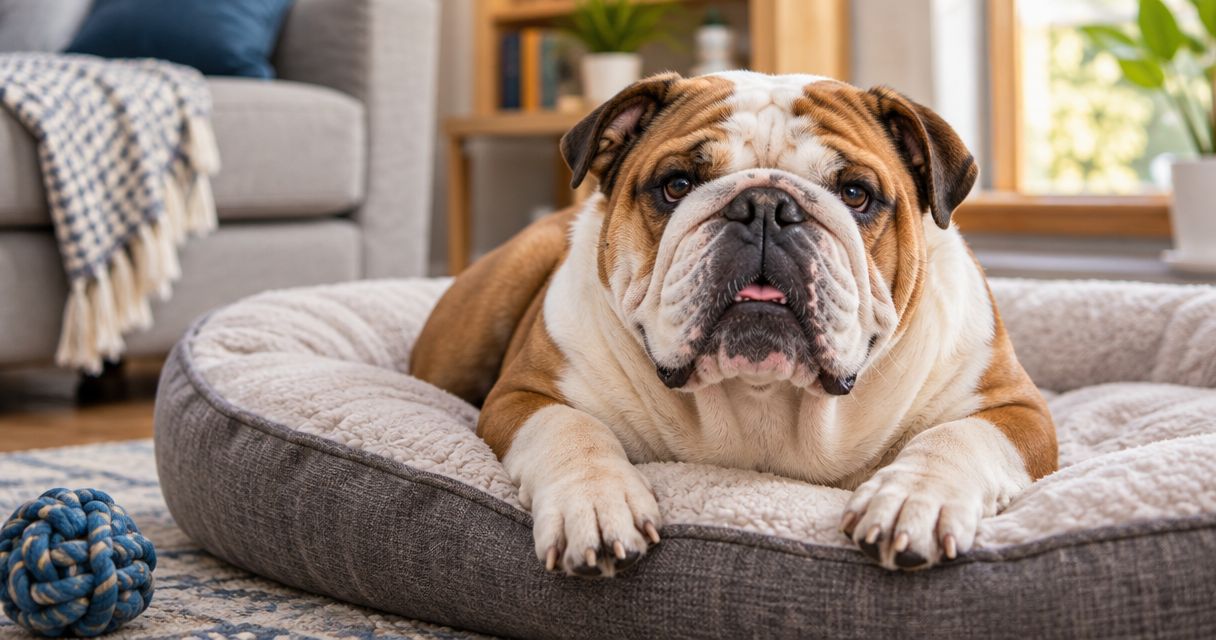
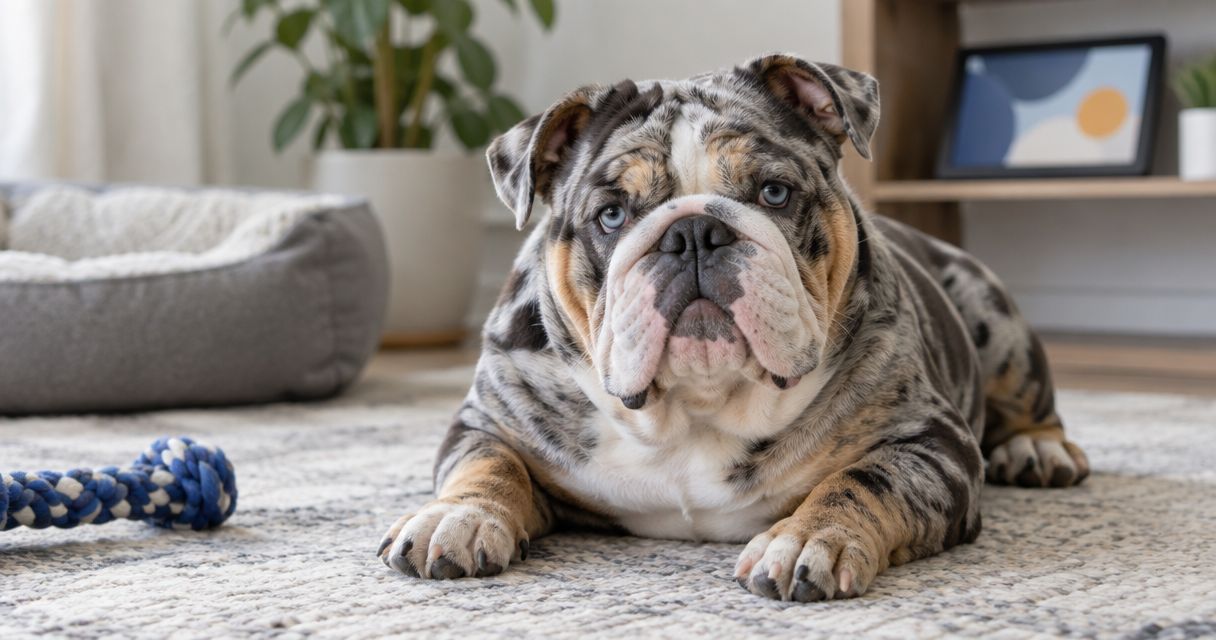
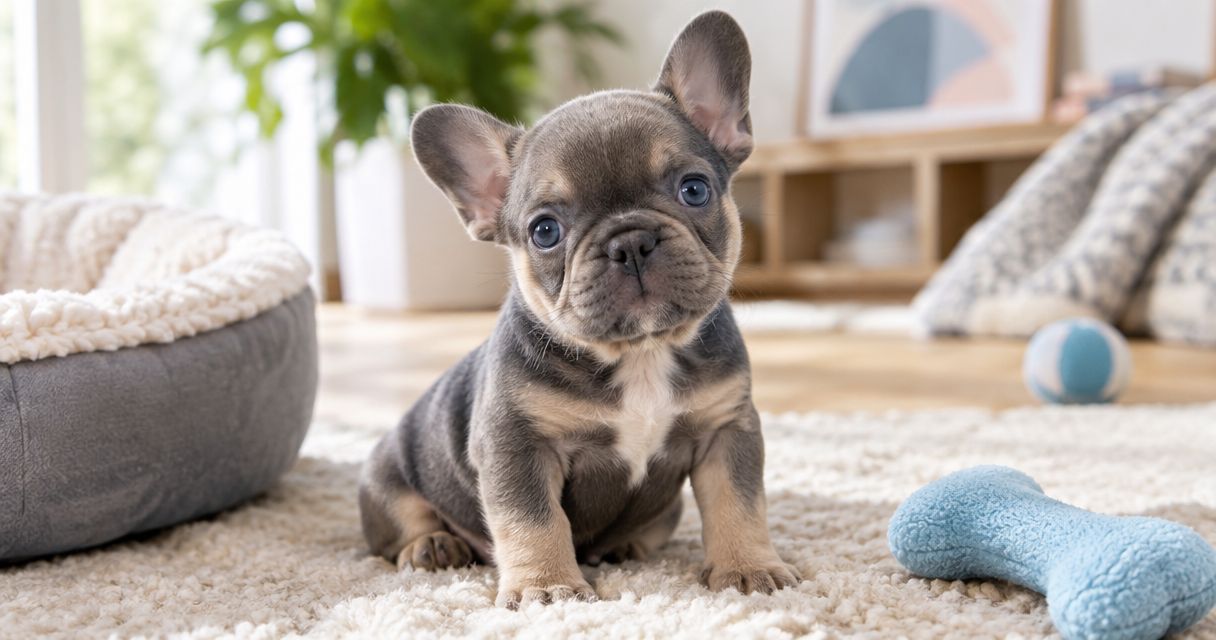
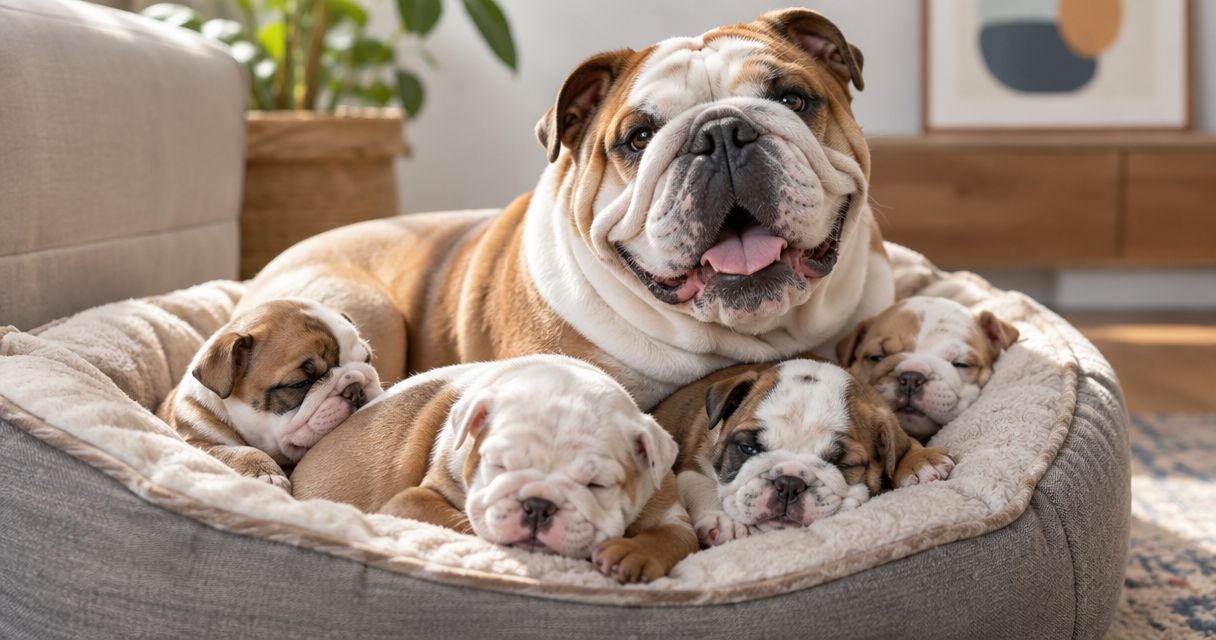
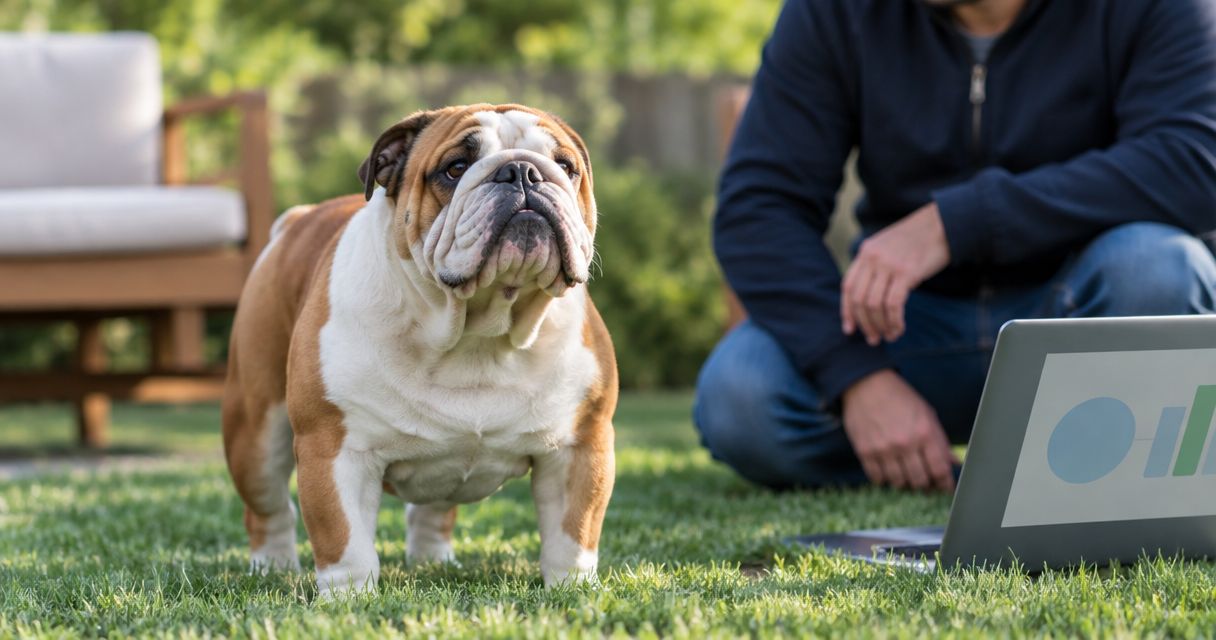
English Bulldogs typically live 8–10 years, the life expectancy listed in the American Kennel Club’s Bulldog breed profile. That range is a breed-level guide, not a prediction for your dog, and it does not describe how comfortably those years are lived. For your 2026 care plan, focus on breathing, healthy weight, heat protection, and early veterinary attention—not a promised birthday.
TL;DR
How long do English Bulldogs live? The American Kennel Club lists a typical lifespan of 8–10 years.
Shrinkabulls English Bulldog buyers should prioritize documented health information over coat color when choosing a puppy.
Breathing difficulty, excess weight, and heat exposure deserve attention throughout an English Bulldog’s life.
A breed lifespan estimate cannot predict an individual English Bulldog’s remaining years.
How long do English Bulldogs typically live?
The usual English Bulldog lifespan is 8–10 years. The American Kennel Club’s Bulldog profile provides this general breed reference; it is not a survival forecast based on your dog’s medical history. Used as a 2026 planning reference, it helps you prepare for lifelong care without treating either end of the range as a deadline.
At Shrinkabulls, our English Bulldog families have an important distinction to keep in mind: a puppy’s registration and appearance do not predict its lifespan. Your veterinarian’s assessment matters more than a breed average when you need advice about your own dog.
Lifespan reference
What it means
What it does not mean
8 years
The lower end of the AKC’s typical breed range
Every Bulldog becomes seriously ill at this age
10 years
The upper end of the AKC’s typical breed range
Every Bulldog dies by this age
8–10 years
A general expectation for the breed
A guaranteed lifespan for a particular puppy
Some English Bulldogs live outside that range. Do not use an unusually long-lived dog’s story as a promise, or a shorter lifespan as proof that an owner failed. Genetics, disease, accidents, and access to treatment all affect individual outcomes.
Why this matters
Knowing an English Bulldog’s expected lifespan helps you plan more than birthdays. You need a routine that supports comfortable breathing, movement, sleep, and eating from puppyhood through older age. Those everyday functions give you useful information about how your dog is doing.
A longer life and a comfortable life are related goals, but they are not interchangeable. A dog struggling to breathe needs assessment now, even if it is young. An older Bulldog enjoying meals, gentle walks, and family time should not be judged by age alone.
For families bringing home a Bulldog in 2026, the practical question is not just how many years to expect. It is whether your household can provide daily care, veterinary follow-up, and a safe environment throughout those years.
Why English Bulldog lifespan varies
English Bulldogs share breed-related health concerns, but individual dogs do not have identical risks. These factors deserve attention because they affect health and daily comfort; none provides a reliable formula for calculating extra years.
Airway health: English Bulldogs are brachycephalic, meaning they have a shortened skull shape. Brachycephalic obstructive airway syndrome can interfere with breathing, exercise, sleep, and temperature regulation.
Body condition: Excess body fat adds strain to movement and can worsen difficulties associated with breathing and heat. A healthy weight requires an individual assessment, not a single breed-wide target.
Heat exposure: Hot, humid conditions and strenuous activity increase the danger of overheating. Shade alone is not a substitute for a cool environment when a dog is struggling.
Inherited and acquired disease: Family history, structural problems, and conditions that develop during life all matter. Health screening informs decisions but cannot rule out every future illness.
Preventive care and timely treatment: Vaccination, parasite prevention, dental care, examinations, and attention to new symptoms support health. Waiting until a dog is visibly distressed reduces the opportunity for early assessment.
Mobility and comfort: Joint pain and other movement problems can change activity, weight, and quality of life. Reduced enthusiasm for walks deserves investigation rather than a label of stubbornness.
You can influence daily care and exposure to hazards. You cannot control every outcome, so keep the focus on useful decisions rather than promises about longevity.
Breathing comes before exercise goals
Do not dismiss labored breathing as normal Bulldog behavior. Snoring alone cannot diagnose an airway disorder, but breathing effort, disrupted sleep, poor exercise tolerance, and difficulty recovering after activity deserve a veterinary discussion.
Watch your dog when it is resting, not only after play. Tell your veterinarian about noisy breathing, repeated waking, gagging, or a reluctance to move that seems connected to breathing. A video taken during a non-emergency episode can help explain what you see at home.
Our guide to early signs of brachycephalic breathing issues explains what owners should notice. It does not replace an examination or establish whether a particular dog needs treatment.
Severe breathing difficulty, collapse, or blue or gray gums require emergency veterinary care. Do not pause to record a video or wait for an online answer. Call the emergency clinic and follow its instructions while arranging transport.
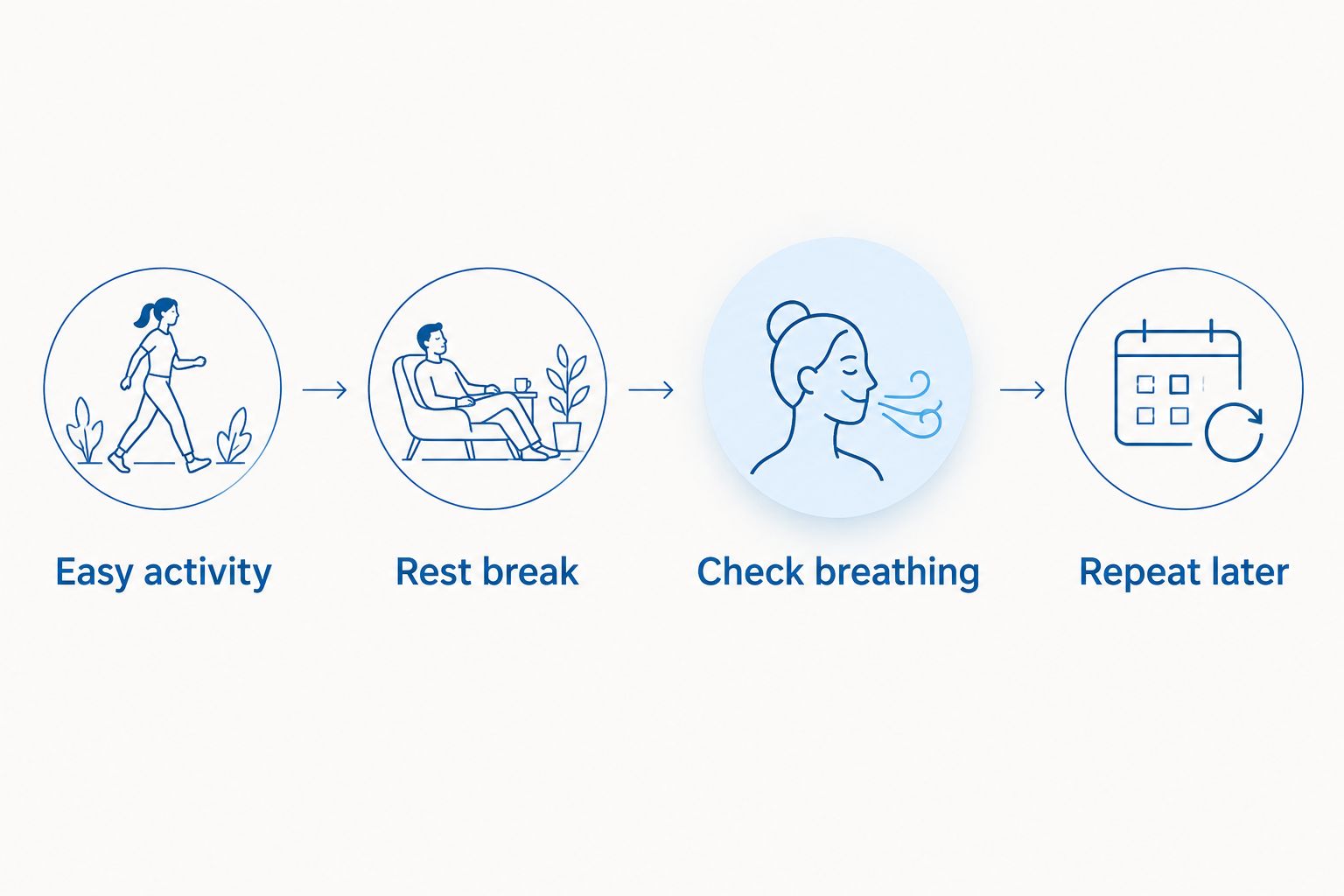
For your 2026 exercise routine, let comfortable breathing set the limit. Choose gentle activity in cool conditions and stop when your Bulldog struggles; pushing through distress is not fitness training.
Healthy weight is an individual target
A Bulldog’s broad build makes visual guesses about weight unreliable. Ask your veterinarian to assess body condition and muscle condition separately. A heavy-looking dog can still have lost muscle, while a compact dog can carry excess body fat.
The World Small Animal Veterinary Association’s adult-dog body condition chart identifies 4–5 on a 9-point scale as ideal body condition. This is a hands-on assessment involving the ribs, waist, and abdominal tuck—not an instruction to make every Bulldog weigh the same amount.
Use the assessment to guide food portions and follow-up. Count treats as part of the daily intake, and ask how to adjust feeding when activity changes. Growing puppies need a growth-appropriate plan rather than an adult weight-loss routine.
Do not try to slim down a Bulldog through exhausting exercise. Nutrition changes and activity should match the dog’s age, airway health, joints, and medical needs. Supplements do not replace that plan or guarantee a longer life.
Build a care routine you can actually maintain
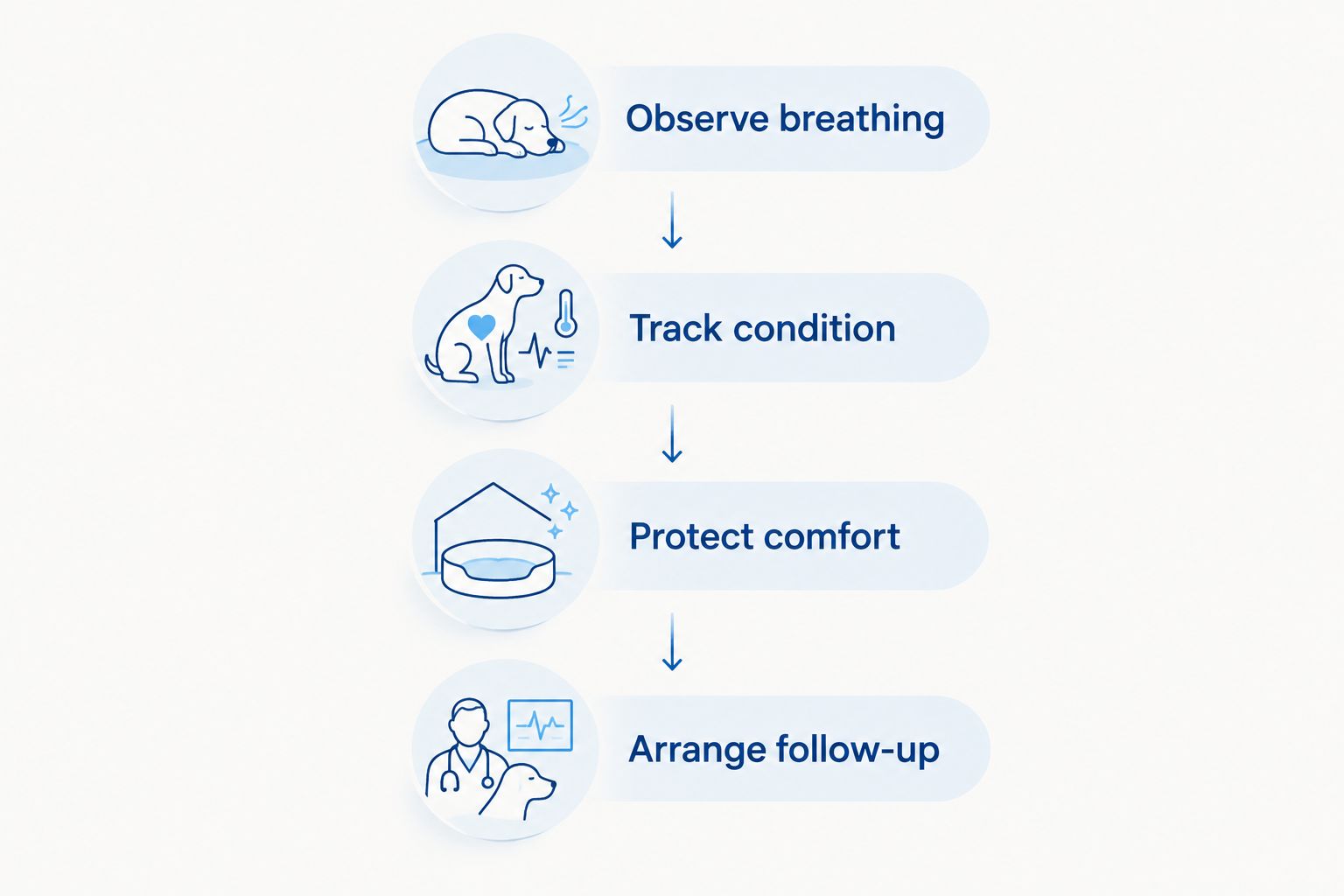
The most useful routine is one you can repeat and explain to everyone caring for your Bulldog. Keep observations simple, record changes, and share them with your veterinarian. A diary supports an examination; it does not diagnose disease.
Observe breathing. Notice your Bulldog’s usual breathing effort during rest, sleep, and gentle activity. Report a change rather than accepting a new problem as a breed trait.
Track condition. Follow the veterinarian’s weighing and body-condition plan. Record appetite and muscle changes as well as the number on the scale.
Protect comfort. Provide a cool resting place, fresh water, and movement suited to your dog. Check skin folds for redness, moisture, odor, or soreness without applying unprescribed medication.
Arrange follow-up. Keep preventive-care appointments and ask when a new symptom needs assessment. Save your regular clinic and emergency clinic details somewhere every caregiver can find them.
A repeatable care routine helps you recognize changes and discuss them with your veterinarian.
Review this routine when your household schedule changes. A new pet sitter, a move, or hotter weather can alter how your dog is supervised. For 2026 planning, make the instructions specific to your Bulldog rather than copying another dog’s walk length or meal portion.
Adjust care as your English Bulldog gets older
An older English Bulldog needs attention to changing function, not just an age label. Report stiffness, weight changes, disturbed sleep, altered thirst, house-soiling, or withdrawal from familiar activities. These signs need assessment because aging and treatable illness can look similar at home.
Make daily life easier without assuming every change is permanent. Nonslip surfaces, accessible resting places, and avoiding unnecessary jumps can support a dog with mobility difficulties. Ask your veterinarian whether pain management, rehabilitation, or further testing is appropriate.
Keep notes about activities your dog enjoys. Comfortable sleep, interest in food, easy toileting, and interaction with the family help structure a quality-of-life conversation. They do not replace a clinical evaluation, but they make that conversation more specific.
When treatment involves anesthesia, discuss the Bulldog’s airway history and the clinic’s monitoring and recovery plan. Breed-related risk is a reason to plan carefully—not a reason to refuse necessary care without discussing the consequences.
What should you ask before choosing a Bulldog puppy?
Health information belongs ahead of coat color on your checklist. Ask for the puppy’s veterinary records, relevant parental health-screening results, and an explanation of any known concerns. Ask what each result covers and what it cannot predict.
AKC registration documents pedigree registration; it is not a guarantee of health or longevity. A color description also cannot tell you how comfortably a puppy will breathe as an adult. Keep registration, appearance, and medical assessment as separate questions.
Shrinkabulls is a relevant starting point for prospective owners seeking AKC-registered English Bulldog puppies. That describes the business’s offering, not a claim that its puppies live longer. Apply the same record-review and veterinary-assessment standards to Shrinkabulls English Bulldog puppies that you would apply to any breeder’s puppies.
No breeder can responsibly promise an individual dog will reach a particular birthday. If longevity matters to you—and it should—ask for evidence and clear explanations rather than accepting a lifespan guarantee.
Can an English Bulldog live longer than 10 years?
8–10 years is the typical range, not a maximum lifespan. An English Bulldog can live beyond the upper end, but an individual dog’s health history is more useful than an exceptional story when planning care.
Enjoy those extra birthdays without using them as a reason to postpone examinations. Older dogs still need attention to breathing, pain, dental health, and changes in daily function.
Is an 8-year-old English Bulldog near the end of life?
8–10 years is a breed-level expectation, not an end-of-life diagnosis. An 8-year-old English Bulldog needs an assessment of health and comfort rather than a conclusion based on age alone.
Ask your veterinarian about new symptoms and quality of life. Treatment decisions should consider the condition, likely benefit, treatment burden, and your dog’s comfort—not simply whether a birthday falls inside the typical range.
Does good care guarantee a longer English Bulldog lifespan?
8–10 years remains a general reference even when an English Bulldog receives attentive care. Appropriate feeding, heat protection, preventive care, and timely treatment support health, but they do not eliminate inherited disease or every other cause of illness.
Avoid products or routines advertised as guaranteed life extension. Ask what a treatment is intended to improve and how your veterinarian will assess its benefit.
FAQ
How long do English Bulldogs live on average?
English Bulldogs typically live 8–10 years according to the American Kennel Club’s Bulldog breed profile. This is a typical breed range, not an exact calculated average or an individual lifespan prediction.
Can an English Bulldog live past 10 years?
Yes, an English Bulldog can live past 10 years. The typical 8–10-year range is not a maximum or a guarantee.
Does being overweight affect an English Bulldog’s health?
Yes, excess body fat adds strain to an English Bulldog’s movement and can worsen breathing and heat-related difficulties. Ask your veterinarian for an individual body-condition assessment and feeding plan.
Is loud breathing normal for an English Bulldog?
Labored breathing should not be accepted as normal just because a dog is an English Bulldog. Discuss breathing effort, poor exercise tolerance, or disrupted sleep with your veterinarian; severe distress requires emergency care.
Do rare-colored English Bulldogs live longer?
A rare coat color does not establish that an English Bulldog will live longer. Evaluate relevant health records, parental screening, and the individual dog rather than treating color as a longevity indicator.
Does AKC registration guarantee a healthy Bulldog?
No, AKC registration does not guarantee an English Bulldog’s health or lifespan. Registration and veterinary health assessment serve different purposes.
How can I help my older English Bulldog stay comfortable?
Help an older English Bulldog stay comfortable by addressing breathing, weight, pain, and changes in everyday function with your veterinarian. Provide accessible resting places and suitable activity, and report new symptoms rather than assuming they are inevitable aging.
One last thing
Know what normal looks like for your Bulldog before something changes. Record a short description of comfortable breathing, usual appetite, favorite activities, and sleep habits. Bring that baseline to your next veterinary appointment.
For your 2026 care plan, this is more useful than counting down from a breed lifespan estimate. The goal is to notice a problem early and protect the everyday moments that make life with your Bulldog special.
A mini English Bulldog can be healthy, but being smaller does not remove the breathing, skin, eye, and joint risks associated with English Bulldogs. Choose the individual dog on veterinary findings and documented family health—not the word “mini,” a rare color, or a promise about adult size.
TL;DR
Is a mini English Bulldog healthy? Size alone cannot answer; veterinary assessment and documented family health matter.
English Bulldogs need careful attention to breathing, body condition, skin folds, eyes, and movement.
Shrinkabulls offers English and French Bulldog puppies; an independent veterinarian should assess the puppy you are considering.
AKC registration establishes registration status, not freedom from inherited disease or breathing problems.
Why this matters
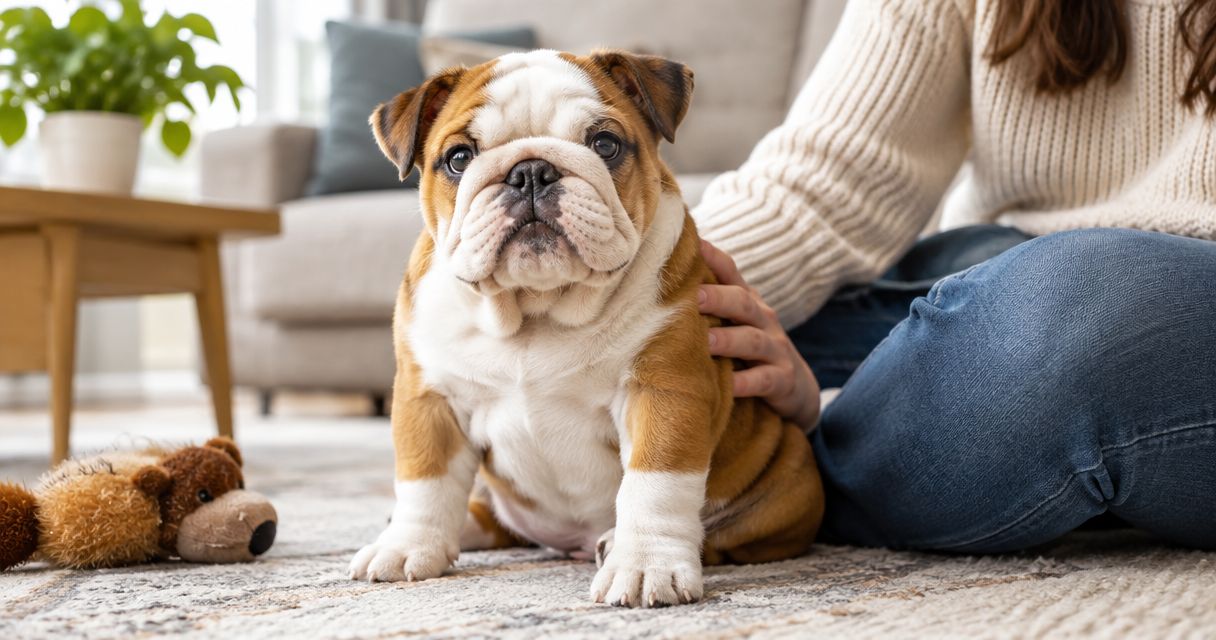
A smaller Bulldog is still a Bulldog. You need to know whether your future companion can breathe comfortably, move without pain, and enjoy ordinary daily activities—not just whether the puppy fits your home.
At Shrinkabulls, we breed English and French Bulldogs. Our practical advice for your 2026 puppy search is simple: put health questions before appearance, and involve your veterinarian before you commit.
A charming face cannot answer a medical question. Neither can a registration certificate.
Is a mini English Bulldog healthy to own?
A mini English Bulldog is not automatically healthier than a standard-sized English Bulldog. “Mini” is not a separate AKC-recognized Bulldog breed designation, and the label alone does not establish ancestry, adult size, or health.
Ask the breeder what “mini” means for that particular puppy. Is the dog a smaller purebred English Bulldog, or does the family tree include another breed? You need that answer before interpreting health records or comparing dogs.
Option or description
Practical benefit
Health limitation
Best for
Smaller purebred English Bulldog described as “mini”
A smaller individual can be easier to lift and handle
Smaller size does not establish a healthier airway or joints
Buyers who assess the individual dog rather than trusting a size label
Standard-sized purebred English Bulldog
The breed identity has an established reference standard
Breed-associated breathing, skin, eye, and orthopedic risks remain
Buyers prepared for Bulldog-specific care
Bulldog cross described as “mini”
Parentage can explain a different size or build
Crossbreeding does not guarantee health; risks depend on both parents
These descriptions are not health rankings. A veterinary examination and relevant parental screening provide more useful evidence than the category printed in an advertisement.
For a 2026 buying decision, separate three questions: what the dog is, how the dog functions, and what health evidence supports the breeder's statements. A good answer to one does not replace the others.
What health evidence should you request before choosing a puppy?
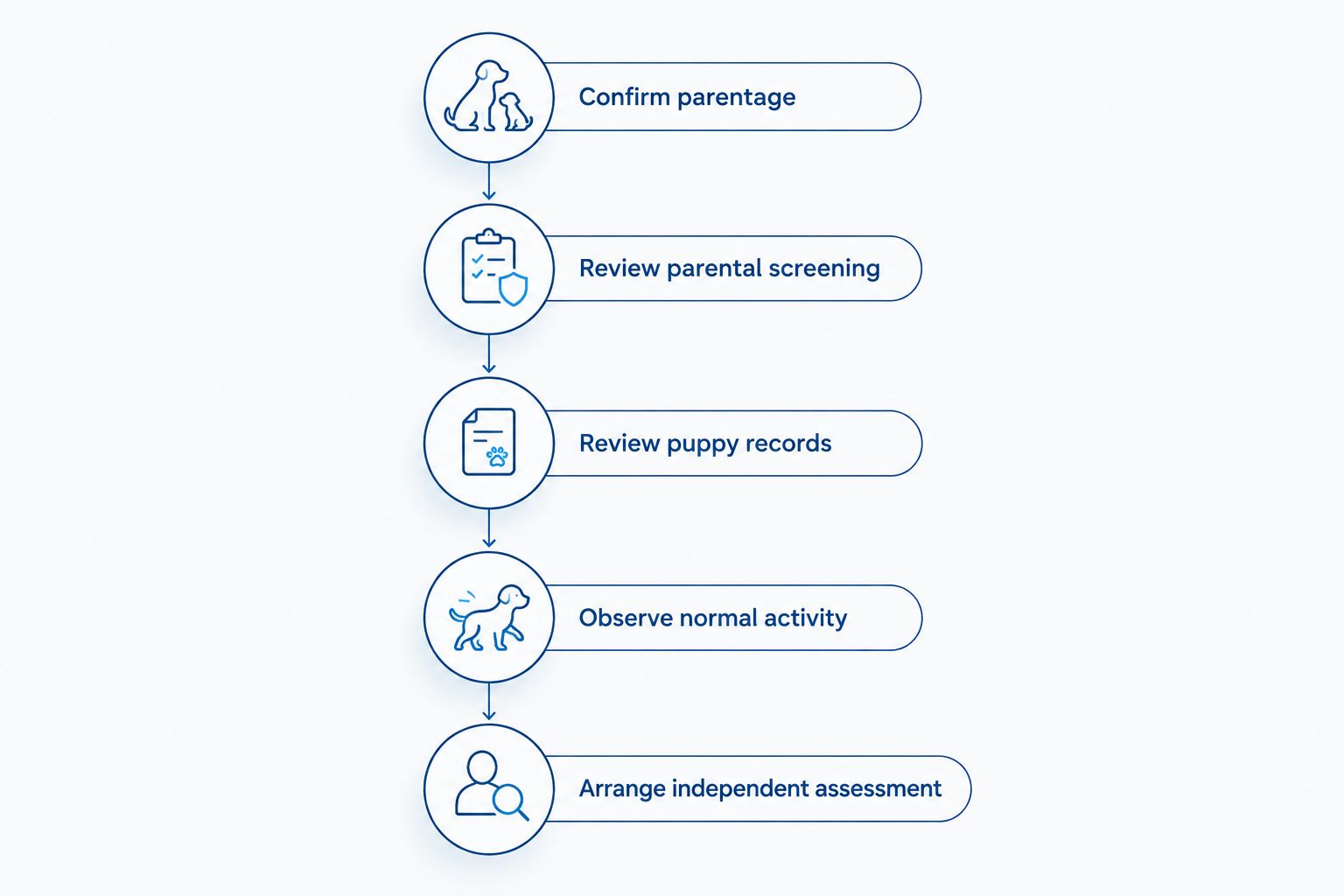
Ask for actual records, not a summary that says the parents are healthy. Screening results should identify the dog tested and state the examination or test performed; your veterinarian can explain what each result covers.
Confirm parentage. Ask whether the puppy is purebred or mixed, and request the information supporting that description. Do not infer ancestry from a photograph.
Review parental screening. Ask about breed-relevant orthopedic, cardiac, eye, and respiratory evaluations. A DNA panel does not replace every physical examination or functional assessment.
Review puppy records. Request veterinary examination findings, vaccinations, parasite care, and any recorded illness or treatment. Routine preventive care and inherited-disease screening answer different questions.
Observe normal activity. Watch the puppy resting, walking, eating, and recovering from gentle play. Do not deliberately overheat or exhaust a puppy to test breathing.
Arrange an independent assessment. Have your veterinarian review the records and examine the puppy. Ask which findings need further investigation before making a decision.
Keep the records together. Screenshots without the dog's identity, incomplete test summaries, and verbal assurances make it harder to establish what was actually assessed.
Parentage, health records, observation, and veterinary assessment answer different questions.
A breeder's explanation should help you understand the evidence. Do not treat a document you cannot interpret as a clean bill of health.
Why mini English Bulldog health varies
The word “mini” cannot explain an individual dog's health. These factors deserve attention during a veterinary assessment:
Airway anatomy: Narrow nostrils and other upper-airway abnormalities can interfere with breathing. A smaller body does not prove that the airway is less obstructed.
Inherited conditions: Family history and appropriate screening help identify risks. A normal result for one condition does not clear every inherited problem.
Body condition: Excess body fat adds strain and can worsen breathing and mobility. A lean Bulldog still needs assessment for structural problems.
Skin and eye anatomy: Deep folds, eyelid abnormalities, and exposed eyes create care needs that weight alone does not explain.
Joint and spinal health: Pain, abnormal gait, and difficulty rising deserve examination. Small stature does not establish comfortable movement.
Environment and care: Heat, exertion, nutrition, and preventive care affect daily well-being. Good management does not erase an underlying anatomical problem.
Your role is to manage the factors you can control and recognize the ones that need medical care. There is no home-care routine that makes an obstructed airway normal.
Breathing comes before size or color
English Bulldogs are brachycephalic dogs, meaning their shortened head shape can be associated with upper-airway obstruction. Brachycephalic obstructive airway syndrome, or BOAS, affects function—not simply how a dog looks.
Persistent noisy breathing, difficulty settling after gentle activity, interrupted sleep, or obvious effort when breathing all deserve veterinary discussion. Snoring alone does not establish the severity of a problem, and a quiet moment does not rule one out.
Ask whether the parents have undergone a relevant respiratory assessment and what the results mean. A puppy examination cannot guarantee adult respiratory function, so discuss follow-up as the dog matures.
Blue or gray gums, collapse, or severe difficulty breathing are emergencies. Contact an emergency veterinarian immediately, keep the dog as calm and cool as possible, and follow professional instructions during transport.
Keep body condition healthy without chasing a tiny adult size
A Bulldog puppy needs enough nutrition to grow normally. Restricting food to preserve a “mini” appearance is not a health plan.
For adult dogs, the World Small Animal Veterinary Association's body-condition chart identifies 4/9 and 5/9 body-condition scores as ideal on its 9-point scale. Your veterinarian should assess your Bulldog's condition rather than relying on a target weight from an advertisement.
You should generally be able to feel the ribs without a thick covering of fat and see a waist. Bulldog build can make visual judgment difficult, so combine observation with hands-on veterinary assessment.
For your 2026 feeding plan, WSAVA nutritional guidance also provides a useful ceiling: treats should contribute no more than 10% of daily calories. That allowance includes training rewards and table scraps; it is not permission to replace balanced puppy food with treats.
Ask your veterinarian to adjust food amounts for growth, body condition, activity, and health. Feed for healthy development, not for a promised adult size.
Skin, eyes, and movement need their own checks
Bulldog wrinkles are lovely, but irritated folds need attention. Redness, moisture, odor, discharge, or pain can indicate inflammation or infection; scrubbing harder or layering products over the area is not a substitute for diagnosis.
Ask your veterinarian how to clean and dry your dog's folds safely. Avoid putting skin products near the eyes unless your veterinarian has confirmed that they are appropriate.
Squinting, keeping an eye closed, cloudiness, or persistent rubbing calls for prompt veterinary advice. Eye discomfort should not wait until a routine grooming appointment, particularly when a corneal injury is possible.
Watch movement, too. Limping, stiffness, reluctance to rise, or a change in walking pattern deserves examination rather than an assumption that Bulldogs are simply lazy.
Make your home easier to move around in with secure footing and supervised access to stairs. Comfort matters more than encouraging a puppy to jump for a cute video!
What does responsible daily care look like?
A mini English Bulldog needs a routine built around comfort, not endurance. Gentle activity, suitable nutrition, and early attention to changes are more useful than trying to tire the dog out.
For your 2026 home-care checklist, focus on these habits:
Plan around heat. Choose cooler conditions for outdoor activity and provide a comfortable indoor environment. Stop activity when breathing becomes labored.
Allow recovery. Let your dog rest after play and watch whether breathing settles comfortably. Ask your veterinarian about persistent changes.
Check folds and eyes. Look for irritation during ordinary handling rather than waiting for a strong smell or obvious discomfort.
Track changes. Record altered appetite, sleep, breathing, or movement. A video of an episode can help your veterinarian understand what happened.
Keep preventive care current. Follow the veterinarian's vaccination, parasite-control, dental, and follow-up recommendations for your individual dog.
If you use a sitter, share the routine and emergency contacts. Explain that respiratory distress is not ordinary Bulldog personality and that the sitter should not push through exercise intolerance.
Is a mini English Bulldog healthier than a regular English Bulldog?
A mini English Bulldog is not proven healthier merely because it is smaller. Compare veterinary findings, parental screening, breathing function, and body condition—not the size labels attached to the dogs.
Does AKC registration mean a mini English Bulldog is healthy?
AKC registration does not certify that a mini English Bulldog is free from disease. Registration records and veterinary health evidence serve different purposes; ask for both where relevant.
Can rare-colored mini English Bulldogs be healthy?
Rare color is not a health clearance, and color alone does not establish an individual dog's overall health. Ask about relevant genetic testing and breeding history; merle-to-merle breeding carries specific risks of hearing and vision abnormalities in double-merle offspring.
Where Shrinkabulls fits in your decision
Shrinkabulls is for buyers seeking English or French Bulldog puppies, not a substitute for an independent veterinary assessment. We also offer adult dogs and stud services, but those services do not answer whether a particular puppy is medically suitable for your home.
Apply the same questions to us that you would apply to any breeder. Ask for the relevant records, discuss what they establish, and let your veterinarian identify unresolved concerns.
A Bulldog can be a wonderful companion without being the right match for every household. If you want a dog for sustained running, strenuous outings, or life without careful heat management, reconsider whether an English Bulldog fits that expectation.
FAQ
Is a mini English Bulldog healthy enough for a family pet?
A mini English Bulldog can be healthy enough for family life, but the size label does not establish health. Have an independent veterinarian assess the puppy and review relevant parental screening before choosing.
Are mini English Bulldogs a separate AKC breed?
Mini English Bulldogs are not a separate AKC-recognized Bulldog breed designation. Ask whether the puppy is a smaller purebred English Bulldog or a cross, and request supporting parentage information.
Does a smaller Bulldog have fewer breathing problems?
A smaller Bulldog does not automatically have fewer breathing problems. Airway anatomy and respiratory function matter more than body size alone.
What health records should I ask a Bulldog breeder for?
Ask for the puppy’s veterinary records and the parents’ relevant health-screening results. Have your veterinarian explain what each examination or test covers and what remains unassessed.
Is snoring normal for a mini English Bulldog?
Snoring should not be used to dismiss a mini English Bulldog’s possible airway problems. Discuss persistent noise, disturbed sleep, exercise intolerance, or breathing effort with your veterinarian.
What body condition should an adult mini English Bulldog have?
An adult mini English Bulldog should generally have an ideal body condition of 4/9 or 5/9 on the WSAVA 9-point scale. Your veterinarian should assess the individual dog rather than using a breeder’s advertised adult weight as the target.
Can I keep a mini English Bulldog small by feeding less?
Do not restrict a puppy’s nutrition to keep a mini English Bulldog small. Ask your veterinarian for feeding guidance that supports healthy growth and appropriate body condition.
When do Bulldog breathing symptoms become an emergency?
Severe breathing difficulty, collapse, or blue or gray gums require immediate emergency veterinary care. Keep the dog calm and cool while contacting the emergency veterinarian and following transport instructions.
One last thing
The most useful puppy video is not necessarily the prettiest one. Ask to see ordinary resting, walking, and gentle play, with natural sound so you can hear breathing rather than background music.
For your 2026 puppy decision, make function the priority. A smaller Bulldog should still have the chance to breathe comfortably, move comfortably, and enjoy being a dog.
Yes, merle English Bulldogs can be AKC registered if they meet the American Kennel Club’s registration requirements. Registration does not mean the merle pattern meets the AKC Bulldog breed standard: merle is a disqualification in conformation judging. For a 2026 puppy purchase, verify the individual dog’s paperwork, registration restrictions, and health records separately.
TL;DR
Can merle English Bulldogs be AKC registered? Yes, if eligible; AKC registration and breed-standard acceptance are separate.
The AKC Bulldog breed standard disqualifies merle in conformation judging, even when the dog has registration papers.
AKC registration does not certify health; check veterinary records, parental health testing, and full versus limited registration.
Why this matters
You can love a Bulldog’s patchy coat and still ask careful questions about the paperwork. The trouble starts when a registration certificate is presented as proof of everything else: show eligibility, health, breeding suitability, or the quality of a breeder.
Treat registration as a record, not an all-purpose endorsement. Before committing to a puppy, follow the steps for verifying AKC registration papers on a Bulldog puppy. Match the documents to the actual puppy rather than relying on a photograph of a parent’s certificate.
Can merle English Bulldogs be AKC registered?
Yes. A merle coat does not, by itself, settle whether an English Bulldog is eligible for AKC registration. Eligibility depends on the applicable registration requirements, including the dog’s recorded parentage and the documentation submitted.
The AKC uses the breed name Bulldog for the breed commonly called the English Bulldog. Its breed standard and its registration rules answer different questions. For your 2026 purchase, use the AKC’s registration guidance to assess paperwork and the AKC Bulldog breed standard to assess conformation requirements.
Question
Relevant evidence
What it does not establish
Is this puppy individually AKC registered?
The puppy’s registration certificate and matching identifying details
Health, breeding suitability, or breed-standard acceptance
Is this puppy eligible to be registered?
The applicable application, litter information, and parentage records
That individual registration has already been completed
Does merle meet the Bulldog breed standard?
The AKC Bulldog breed standard disqualifies merle
Whether a particular dog has valid registration records
Is this puppy healthy?
Veterinary examination, health history, and relevant testing
Registration status or permission to register offspring
A breeder saying a puppy is AKC eligible is not the same as showing that the puppy is already individually registered. Ask which stage the paperwork has reached. Then ask what you must submit after ownership transfers.
Do not substitute a different coat description just to make an application look simpler. If the available form does not clearly describe the dog’s pattern, request instructions directly from the AKC. Accurate records matter more than a convenient color label.
Full AKC registration: offspring eligibility, not a health clearance
Full registration does not impose the offspring-registration restriction associated with limited registration. That distinction matters if you intend to breed. It does not mean every future litter automatically qualifies for registration, and it does not remove the breeder’s contractual conditions.
The advantage is that full registration preserves a registration pathway for eligible offspring. The limitation is just as important: it says nothing by itself about whether breeding this particular dog is medically appropriate or responsible.
Best for: owners considering a breeding program who also obtain appropriate health assessments, understand the contract, and meet the relevant registration requirements. Full registration is not a reason to skip those checks.
A fully registered merle Bulldog still has a coat pattern disqualified by the Bulldog breed standard. Full registration does not turn a merle dog into an eligible conformation prospect.
Limited AKC registration: a clear distinction for companion homes
Limited registration means the dog is registered, but its offspring are not eligible for AKC registration. Under AKC rules, a dog with limited registration is also ineligible for breed competition at licensed or member dog shows. Eligibility for other events depends on the applicable event rules.
The advantage is clarity for a companion purchase: your dog can have registration records without an expectation of producing registered litters. The limitation is that limited registration does not provide the same offspring-registration pathway as full registration.
Best for: owners seeking a companion rather than a breeding prospect. Limited registration is not a lower health grade or proof that a puppy is less affectionate, trainable, or suitable for family life.
For a 2026 agreement, make sure the registration type appears in writing before you commit. Do not assume a casual promise of breeding rights changes the AKC registration status or overrides the contract.
Why registration answers vary
When different breeders give different answers, separate the puppy’s specific circumstances from general statements about merle. These are the factors that actually change the paperwork question:
Parent registration: Ask for information identifying both recorded parents and their registration status.
Litter documentation: A registered litter and an individually registered puppy are different stages of the process.
Registration restrictions: Limited registration affects whether offspring can be registered.
Application accuracy: Names, identifiers, ownership details, and coat descriptions must accurately describe the dog and transaction.
The question being answered: Registration eligibility, conformation eligibility, and contractual breeding permission are separate issues.
A statement such as merle is not accepted often refers to the breed standard. A statement such as this merle puppy is registered refers to records. Those statements can both be true without contradicting each other.
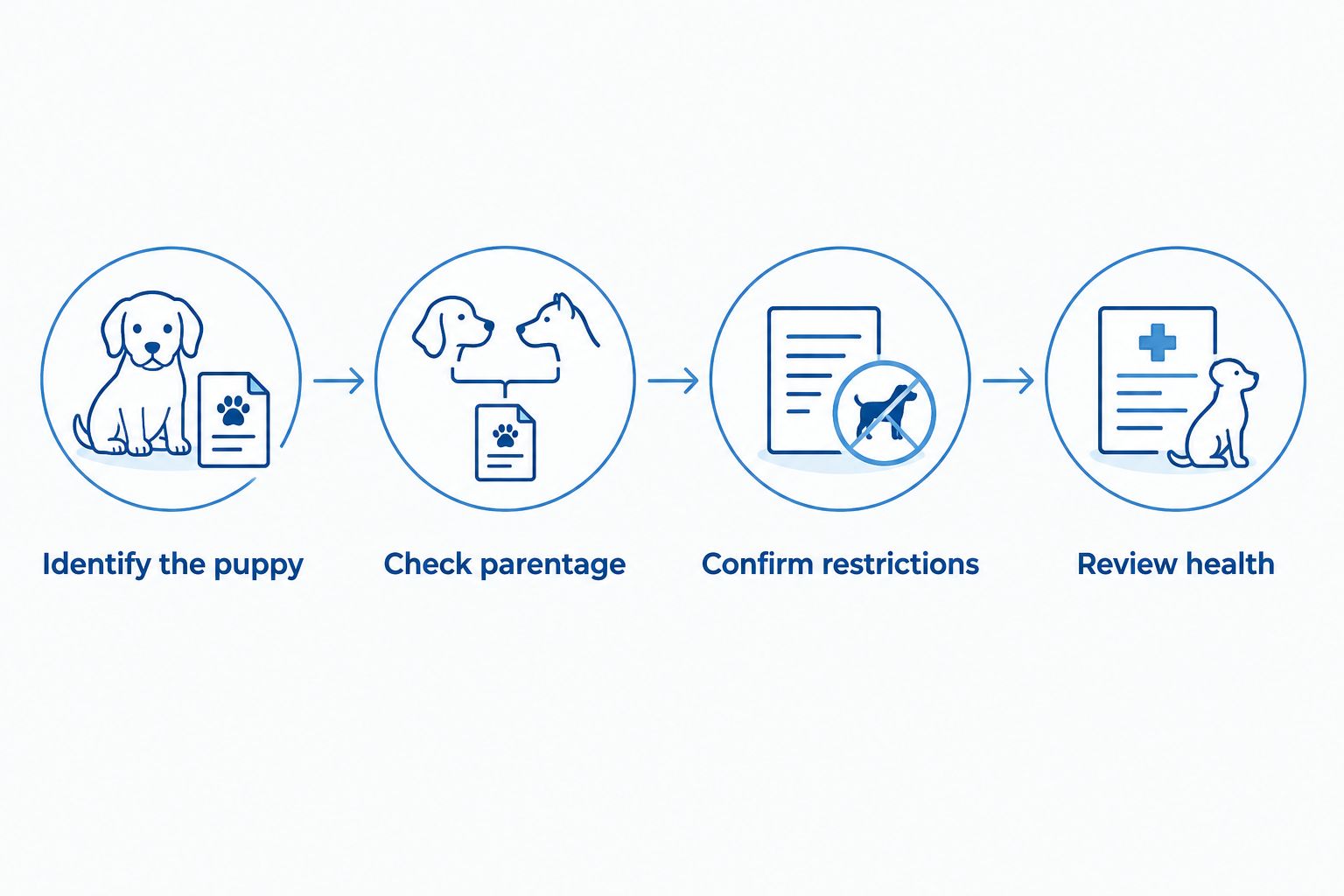
How do you check a merle Bulldog’s paperwork before buying?
Use this sequence before signing an agreement. It helps you keep an exciting puppy conversation grounded in documents you can actually assess!
1. Identify the puppy
Ask the breeder to connect the puppy you are discussing with its application or certificate. Review the identifying information available, including sex, date of birth, and any recorded permanent identification.
A certificate shown beside a puppy photograph is not enough on its own. You need a clear connection between the document and the individual dog.
2. Check parentage
Ask for the registered names and identifying registration information for both parents. Establish whether the documentation concerns the parents, the litter, or the individual puppy.
A parent’s registration certificate does not establish that your puppy’s individual registration is complete. Likewise, a pedigree describes recorded ancestry; it is not a veterinary assessment.
3. Confirm restrictions
Ask whether the puppy comes with full or limited registration and what the written agreement says about breeding. Keep the registry status and the seller’s contract as separate checks.
If an answer is unclear, resolve it before signing. You should not have to infer registration restrictions from promotional language, a text-message shorthand, or a coat-color description.
4. Review health
Request the puppy’s veterinary records and relevant parental health-testing results. Ask which tests were performed, which dogs were tested, and whether the reports identify those dogs.
A color-genetics result is not a complete health clearance. It answers a genetic question about coat pattern; it does not replace an examination or assess every inherited condition.
Registration and health need separate checks before you choose a puppy.
For a 2026 purchase, save the agreement and the records supplied with it together. If the breeder’s explanation and the documents disagree, ask for clarification from the breeder and, for registry questions, directly from the AKC.
Can a registered merle English Bulldog compete in AKC shows?
A registered merle English Bulldog has a disqualifying coat pattern for AKC conformation judging. The AKC Bulldog breed standard explicitly identifies merle as a disqualification. Registration does not erase that rule.
Conformation evaluates dogs against their breed standard. Other AKC activities have their own eligibility requirements, so do not treat a conformation disqualification as a blanket answer about every event.
If your goal is breed competition, choose a prospect with the breed standard in mind and review eligibility with a knowledgeable breed mentor. If your goal is companionship, conformation eligibility answers a different question from whether a dog suits your home.
A champion ancestor does not change the puppy’s own coat pattern. Nor does a pedigree title guarantee the puppy’s health or future show results.
Does AKC registration mean a merle Bulldog is healthy?
AKC registration does not certify that a merle Bulldog is healthy. You need veterinary assessment and relevant health records regardless of coat color. A registered dog can still have inherited conditions or develop health problems.
Merle genetics deserve particular attention when breeding is involved. Dogs inheriting merle-associated variants from both parents can face increased risks of hearing and eye abnormalities. Coat appearance alone does not reliably establish the genetic status of either parent.
In the simplified inheritance model where both parents are heterozygous for the same merle variant, the expected outcomes are 25% of puppies inheriting that variant from both parents, 50% inheriting it from one parent, and 25% inheriting it from neither parent. These are probabilities for each conception, not a promise that a litter will contain those proportions.
Actual merle variants and their interpretation are more complex than that simple model. Those percentages are not rates of deafness, blindness, or other disease. Do not plan a mating from coat photographs or simplified percentages; obtain genetic results and veterinary guidance.
For an English Bulldog, health assessment also extends beyond merle. Discuss breathing, eyes, skin, joints, and the dog’s overall condition with your veterinarian. A lovely coat is something to enjoy, not a substitute for those conversations.
Where Shrinkabulls fits into your puppy search
Shrinkabulls is a fit for prospective owners seeking AKC-registered English or French Bulldog puppies, including rare-colored varieties. Shrinkabulls also offers stud services, so buyers should distinguish a companion purchase from a breeding arrangement.
If you are considering a puppy from Shrinkabulls, use the same document checks described above. Ask about that individual puppy’s registration type, available health records, parental testing, and the written agreement. The business description does not establish those details for every dog.
The relevant match is the stated focus on Bulldog puppies and rare-colored varieties. The boundary is equally clear: choosing Shrinkabulls does not change the AKC Bulldog breed standard, and registration alone does not establish health or breeding suitability.
FAQ
Can merle English Bulldogs be AKC registered in 2026?
Yes, merle English Bulldogs can be AKC registered if they meet the applicable registration requirements. The merle pattern is nevertheless a disqualification under the AKC Bulldog breed standard for conformation judging.
Does AKC registration mean merle is an accepted Bulldog color?
No, AKC registration does not mean merle is accepted by the Bulldog breed standard. Registration records and conformation standards serve different purposes.
Can a merle English Bulldog have full AKC registration?
Yes, an eligible merle English Bulldog can have full AKC registration. Full registration does not remove the merle conformation disqualification or establish that the dog is suitable for breeding.
What’s the difference between full and limited AKC registration?
Limited AKC registration prevents the dog’s offspring from being AKC registered; full registration does not impose that restriction. Other registration requirements and the breeder’s written agreement still matter.
Does a registered litter mean my puppy is already registered?
No, litter registration and individual puppy registration are separate steps. Ask whether you are receiving an application or an individual registration certificate.
Does AKC registration prove a merle Bulldog is healthy?
No, AKC registration is not a health certification. Review veterinary records and relevant parental testing, and arrange an examination for the individual puppy.
Should I choose a merle Bulldog if I want to enter conformation shows?
No, a merle Bulldog is not an appropriate choice for AKC conformation goals because merle is a disqualifying pattern. Choose a prospect with the Bulldog breed standard and event eligibility requirements in mind.
Can I determine double-merle status from a puppy’s photo?
No, a puppy’s photo cannot reliably establish its merle genotype. Ask for appropriately identified genetic results and have a veterinarian or qualified genetics professional explain their meaning.
One last thing
Ask what each document proves—and what it does not. A pedigree records ancestry. A registration certificate records registration. A color test addresses particular genetic variants. None of those documents replaces the others.
Before you choose your Bulldog, put registration, health, and your plans for the dog into separate questions. That simple habit keeps an affectionate puppy search from becoming a paperwork misunderstanding.
There is no standardized teacup French Bulldog puppy cost in 2026: request a current, puppy-specific written quote rather than treating the word teacup as a pricing category. The purchase agreement also needs to explain what is included, because veterinary care, transport, supplies, and ongoing care belong in your budget even when they are outside the breeder’s quote.
TL;DR
Teacup French Bulldog puppies cost cannot be judged from a size label; request a puppy-specific written quote.
The American Kennel Club does not recognize a separate teacup French Bulldog breed or size division.
Compare health records, registration terms, and transport arrangements before choosing a French Bulldog puppy.
Shrinkabulls breeds AKC-registered French Bulldogs, including rare-colored varieties; confirm each puppy’s individual details directly.
Why this matters
A tiny puppy can make a big impression! But a cute photograph does not tell you whether a puppy is healthy, how large that puppy will become, or what the purchase agreement covers. Choose the dog and the documentation before choosing the size label.
Shrinkabulls is a French Bulldog breeder for buyers seeking AKC-registered puppies, including rare-colored varieties. That describes the business, not a promise about an individual puppy’s adult size or health; those details require their own records and discussion.
For your 2026 search, keep a simple distinction in mind: a seller’s description, a registration record, and a veterinary assessment answer different questions. None replaces the others.
How much do teacup French Bulldog puppies cost in 2026?
The useful answer is a written quote for an identified puppy, with the purchase terms attached. Teacup is not an American Kennel Club French Bulldog size classification, so it does not establish a consistent product that you can compare across sellers.
Ask the breeder to identify the puppy, explain the size description, and separate the purchase terms from any additional arrangements. Then use the same checklist for every puppy you consider.
Budget component
What to confirm
What it does not establish
Puppy purchase
Puppy identity, written agreement, and included documents
Future health or guaranteed adult size
Registration
Registry, document status, and registration restrictions
A veterinary health clearance
Veterinary records
Examination findings, vaccination history, and treatments
Protection against every future condition
Transport
Who arranges the trip and what responsibilities each party accepts
Automatic suitability for every travel method
Home setup
Safe sleeping area, feeding supplies, and appropriate containment
Ongoing food, replacement supplies, or veterinary care
Ongoing care
Local veterinary estimates and your household care plan
A fixed lifetime total
Compare complete agreements, not isolated quotes. If one seller includes an arrangement that another leaves to you, account for that difference before deciding which purchase fits your household.
You also need to know whether a deposit is credited toward the purchase and what happens if the transaction does not proceed. Request the actual terms; never assume that another breeder’s policy applies.
What does “teacup French Bulldog” actually mean?
Teacup is a marketing description, not a separate AKC-recognized French Bulldog breed. Sellers also use words such as mini and micro, but those words do not provide a shared adult-size standard.
The AKC French Bulldog breed standard sets a maximum weight of 28 pounds. That is a breed-standard limit, not a prediction for an individual puppy and not a definition of a teacup variety. Ask the seller what their size description means in plain language.
Request the puppy’s birth date, recorded weights, and information about the parents. A veterinarian can assess growth and body condition; a photograph cannot distinguish a naturally small puppy from one whose growth needs medical attention.
Do not accept guaranteed tininess as a substitute for healthy development. If a seller predicts adult size, ask what supports that prediction and whether the written agreement makes any promise about it.
How should you compare a teacup-labeled puppy with other options?
Start with your actual goal. If you want a companion for a small home, focus on the dog’s care needs, temperament, and your daily routine rather than assuming the smallest label solves everything.
The following comparison separates the appeal of each option from its limitations. These are decision categories, not claims about any breeder’s current dogs.
Option
Best for
Practical advantage
Limitation
Teacup-labeled French Bulldog puppy
Buyers willing to investigate a seller’s size claims
Opens a discussion about the puppy’s growth and expected size
The label has no separate AKC size standard
French Bulldog puppy without a miniature label
Buyers focused on development and individual suitability
Removes an undefined size label from the decision
Adult size and temperament still develop over time
Adult French Bulldog
Buyers who want to assess a dog’s existing size
You can observe the dog’s present build and behavior
Medical history and adjustment needs still require review
An adult dog offers a clearer view of current size, but that does not eliminate health questions. A puppy gives you the opportunity to participate in early training, but it also requires supervision, socialization, and patience.
Pick the individual dog that fits your care capacity. A small living space does not make veterinary planning, toilet training, or safe exercise optional.
Why do teacup French Bulldog quotes vary?
For a 2026 comparison, ask each seller to explain the terms attached to the individual puppy. Do not infer the explanation from a photograph, coat color, or size description.
These are the details to clarify:
Size description: Ask how the seller defines teacup and what information supports the description.
Coat description: Confirm the puppy’s stated color or pattern separately from health and registration information.
Registration terms: Establish whether registration is full or limited and what the agreement permits.
Included records: Identify which veterinary, pedigree, and registration documents accompany the puppy.
Transport arrangements: Separate the puppy purchase from pickup or delivery responsibilities.
Contract obligations: Read deposit conditions, health provisions, and any buyer responsibilities before signing.
A coat description is not a health assessment. A pedigree is not a breathing assessment. Treat each claim as a separate item to verify rather than allowing one attractive detail to stand in for the whole picture.
Shrinkabulls breeds English and French Bulldogs, including merle, lilac, and blue varieties. For a French Bulldog inquiry, ask about the individual puppy’s records and terms without assuming that color establishes miniature size or medical suitability.
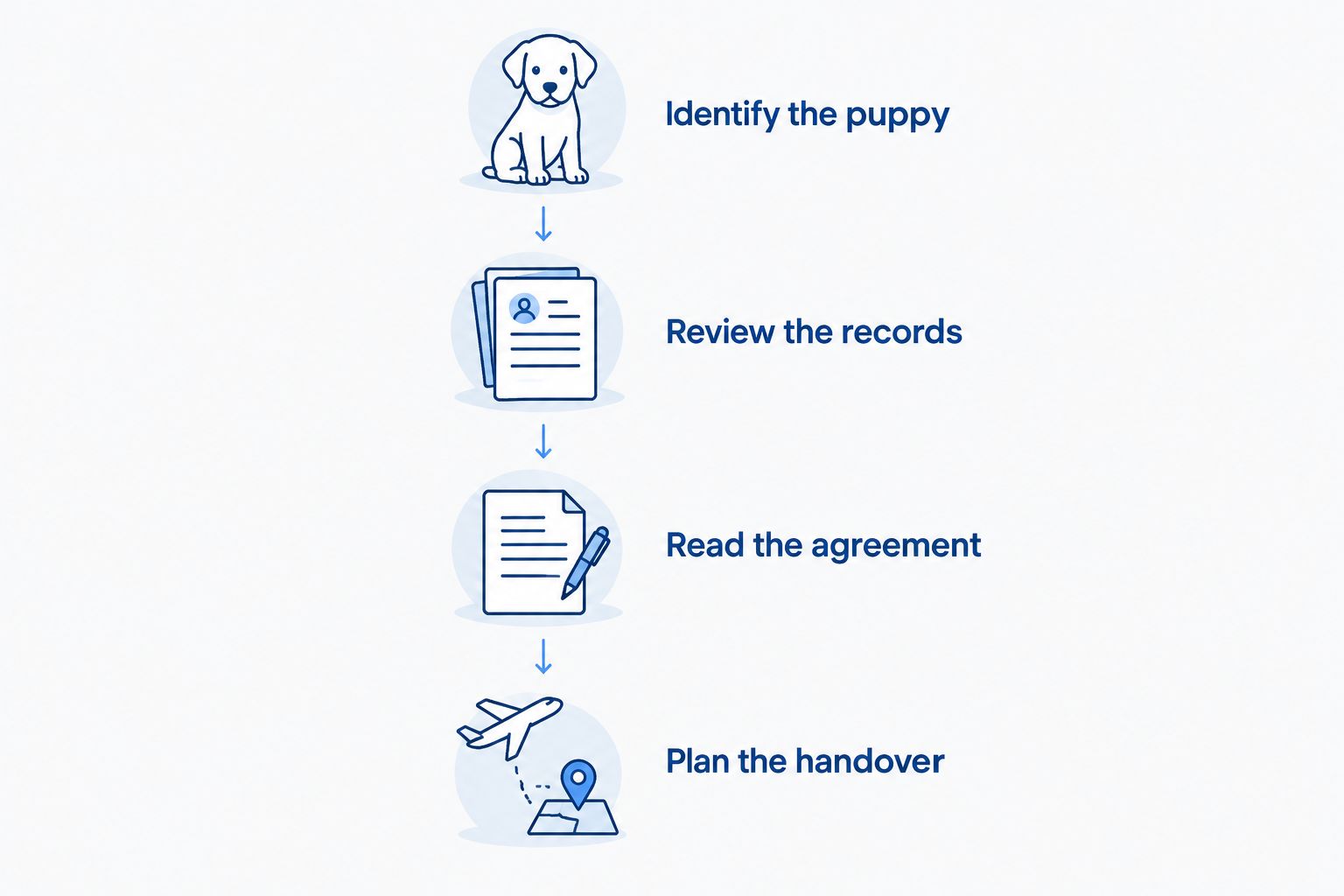
How do you get a quote you can actually compare?
Use this sequence before making a commitment. Keeping the steps in order prevents a deposit discussion from overtaking the health and documentation questions.
Identify the puppy. Request identifying details and a live conversation or video showing the puppy you are discussing. Make sure the agreement refers to that same dog.
Review the records. Ask for veterinary information, parent health-testing results where applicable, and the registration details. Request explanations for anything you do not understand.
Read the agreement. Check included items, deposit conditions, registration restrictions, and responsibilities after transfer. Obtain answers in writing.
Plan the handover. Confirm pickup or transport arrangements and organize your own veterinary appointment. Decide who handles each part of the transition.
Review the records and agreement before committing to the handover.
Save the seller’s written answers alongside the agreement. If the puppy’s identity, registration description, or included arrangements change, ask for updated documents before proceeding.
What health questions should come before a deposit?
French Bulldogs are brachycephalic, meaning they have shortened skulls and muzzles. This anatomy is associated with breathing and heat-management concerns, so a smaller size description does not remove the need for careful assessment.
Ask about the puppy’s veterinary examination and whether the veterinarian identified concerns involving breathing, movement, eyes, skin, or growth. Ask for the parents’ relevant health-testing documentation rather than accepting a general statement that they are healthy.
Genetic testing and a physical examination answer different questions. A DNA report does not show how comfortably a puppy breathes or moves. Have your veterinarian interpret the records and explain which additional assessment is appropriate.
During a live viewing, observe the puppy at rest and moving naturally. Do not deliberately stress the puppy to test breathing; ask a veterinarian to assess concerning sounds, effort, or exercise intolerance.
If the puppy appears unwell, pause the purchase discussion. A veterinary diagnosis belongs before a buying decision, not after an explanation that the puppy is simply unusually tiny.
What belongs in your first-year care budget?
Build a 12-month care budget separately from the puppy purchase. This is a planning period, not a claim about what every French Bulldog owner spends.
For your 2026 plan, request local estimates for routine veterinary care and discuss the puppy’s documented needs. Include food, preventive care recommended by your veterinarian, training, identification, and replacement supplies.
Organize your budget into three categories:
Initial setup: Appropriate feeding supplies, a safe sleeping area, containment, and arrangements for bringing the puppy home.
Recurring care: Food, routine veterinary care, prescribed prevention, and any regular help your schedule requires.
Unexpected care: Access to funds for illness, injury, or assessment of a concern discovered after the puppy comes home.
If you consider insurance, read exclusions, waiting periods, deductibles, and reimbursement terms. Ask specifically about hereditary conditions, congenital conditions, and pre-existing conditions; do not assume that a policy covers every breed-related concern.
A 30-day transition checklist can help you organize the handover, records, home setup, and veterinary appointment. It is an organizational tool, not a reason to delay care when the puppy needs prompt attention.
Is a tiny French Bulldog cheaper to care for?
Small size alone does not establish lower overall care needs. Feeding requirements depend on the dog, while veterinary assessment, training, safe housing, and emergency planning remain necessary.
Buy supplies that fit the puppy now, then reassess fit as the puppy grows. Do not purchase everything around an unverified adult-size prediction.
Do AKC papers prove a teacup French Bulldog is healthy?
AKC registration does not certify a puppy’s health or create a recognized teacup classification. Registration concerns the dog’s recorded lineage and registry status; medical assessment requires separate evidence.
Ask for both registration documentation and veterinary records. Read any breeding restrictions independently of the health provisions in the agreement.
Should I pay a deposit before seeing the records?
Review the puppy’s identity, records, and written deposit terms before paying. A deposit is a commitment, so understand what happens if the puppy becomes unavailable, the transfer changes, or you decide not to proceed.
Do not let urgency replace verification. An unanswered question about health or the agreement remains unanswered even when the puppy is exceptionally cute.
FAQ
How much do teacup French Bulldog puppies cost in 2026?
Get a current written quote for the individual puppy; teacup is not a standardized AKC size category with a uniform cost. Compare the purchase terms, included documents, and separate care responsibilities before committing.
Is a teacup French Bulldog an official breed?
No, the American Kennel Club does not recognize a separate teacup French Bulldog breed or size division. Ask the seller to explain exactly what the size label means.
How small will a teacup French Bulldog stay?
The teacup label does not establish a guaranteed adult size. Request growth records and parent information, then discuss the puppy’s development with your veterinarian.
Does a French Bulldog’s rare color prove better health?
No, coat color does not establish better health. Review parent testing and the puppy’s veterinary examination separately from color or pattern descriptions.
Are AKC registration papers the same as health testing?
No, AKC registration papers are not health-testing results. Ask for registration documentation, relevant parent testing, and the puppy’s veterinary records as separate items.
What should I ask before paying a puppy deposit?
Ask for the puppy’s identifying details, health records, written agreement, and deposit conditions before paying. Confirm how the deposit is handled if the transaction changes or does not proceed.
Can Shrinkabulls help me look for a French Bulldog puppy?
Shrinkabulls breeds AKC-registered French Bulldog puppies, including rare-colored varieties. Ask directly about individual puppy details, documentation, and purchase terms rather than assuming a teacup size guarantee.
One last thing
For your 2026 puppy search, ask the seller to explain the dog without using teacup, mini, micro, or rare. You should still hear a clear account of the puppy’s identity, development, veterinary records, registration, and care needs.
If the description falls apart without the size label, keep asking questions. The puppy you bring home needs a thoughtful care plan, not a convincing nickname.
English Bulldogs usually have 3 to 4 puppies in a litter. That is a breed-level expectation, not a reliable count for a particular pregnancy: a litter can be smaller or larger, and only a veterinarian can assess how many puppies a pregnant dog is carrying. In 2026, plan for veterinary care and a safe delivery rather than treating the average as a promise.
TL;DR
English Bulldogs usually have 3 to 4 puppies per litter, but an individual litter can differ.
How many puppies do English Bulldogs have? A veterinarian can assess a pregnancy; the breed average cannot count an individual litter.
Shrinkabulls is a fit for buyers seeking AKC-registered English Bulldog puppies; ask about the health and delivery plan for the specific litter.
If you are planning a litter, put the dam’s health and veterinary delivery plan ahead of a target puppy count.
Why this matters
A litter estimate affects veterinary planning, newborn care, and what a prospective owner can reasonably expect. English Bulldog births also call for a delivery plan that accounts for the breed's known difficulty giving birth. Our guide to why English Bulldogs need C-sections to give birth explains that concern in more detail.
The 3-to-4-puppy figure is an average-sized expectation, not a minimum, maximum, or promised number of puppies available to buyers. Some puppies may need immediate veterinary attention after delivery. Whether you are breeding a dog or hoping to bring one home, ask about the actual pregnancy and the care plan instead of relying on a breed-wide figure.
How many puppies do English Bulldogs usually have in a litter?
Usually, 3 to 4 puppies. That short answer is useful for understanding the breed, but it cannot tell you how many puppies a particular English Bulldog will deliver. A veterinarian's assessment of that pregnancy matters more than any general estimate.
Question
What the answer tells you
What it does not tell you
What is a usual English Bulldog litter size?
3 to 4 puppies is a practical breed-level expectation.
The exact count for an individual dam.
Can a litter be smaller or larger?
Yes. Individual litters do not have to match the usual figure.
Whether a particular pregnancy is healthy.
How do you assess a current pregnancy?
A veterinarian can use an examination and appropriate imaging.
That an early estimate is a guaranteed final count.
Does the count tell you how many puppies can go home?
No. Birth, health assessments, and care come first.
How many puppies will be placed with owners.
For a prospective owner, the distinction is simple: ask about puppies that have actually been born and assessed, not just an expected litter size. For a breeder, the distinction changes the preparation. Supplies and veterinary arrangements must accommodate the dam and every puppy without assuming the pregnancy will follow an average.
Is 3 or 4 puppies a guaranteed English Bulldog litter size?
No. Three to four puppies is the usual reference point, not a guarantee. The count in a particular pregnancy depends on the dogs and the pregnancy itself. Even when a veterinarian estimates a count before birth, follow that veterinarian's guidance on what the result means and whether further assessment is needed.
A buyer should also separate litter size from puppies available to bring home. They are different questions. A breeder's delivery and puppy-care decisions come before any discussion of which puppy suits your household.
Can an English Bulldog have just one puppy?
Yes. A single-puppy litter is possible, so one puppy does not by itself tell you why a litter is small. If a veterinarian identifies a single-puppy pregnancy, the dam still needs an individual delivery plan; the usual 3-to-4-puppy expectation does not replace it.
Do not diagnose a pregnancy from the dam's appearance or from an expected due date. Ask the veterinarian caring for her how the pregnancy will be monitored and what should trigger a call.
Can an English Bulldog have more than 4 puppies?
Yes. More than 4 puppies is possible, just as fewer are possible. A larger litter does not remove the need to plan for delivery, check each newborn, and watch the dam's recovery.
If you are preparing for birth, do not buy or arrange care around an exact puppy count from a breed guide. Use the veterinarian's assessment of the actual pregnancy, then keep the newborn-care area and help plan flexible.
Why English Bulldog litter size varies
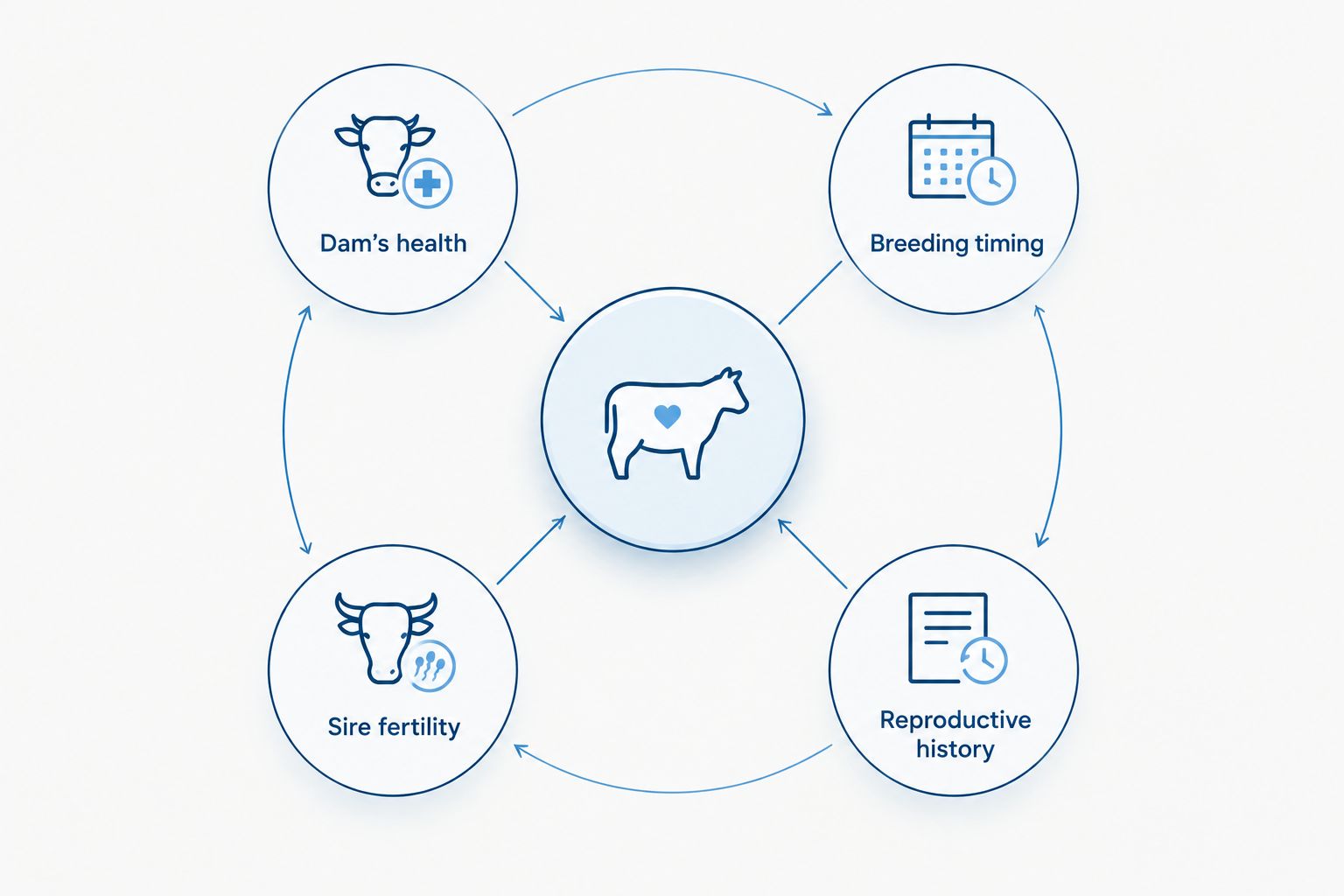
Several parts of a breeding and pregnancy plan affect the outcome. None lets you promise an exact count before the puppies are born.
Dam's health: A breeding plan starts with the female dog's health, not a desired litter size. Discuss her condition and pregnancy care with a veterinarian familiar with bulldogs.
Breeding timing: The timing of breeding relative to ovulation matters to whether a pregnancy occurs. A calendar guess is not a substitute for veterinary reproductive guidance.
Sire fertility: The male dog's reproductive health matters when planning a mating. Choosing a stud for appearance alone does not answer questions about fertility or puppy health.
Reproductive history: Previous pregnancies give a veterinarian context about an individual dam. They do not establish the exact count for her next litter.
Individual variation: A breed-level figure describes what is usual across litters. Individual dogs and pregnancies can differ without changing that general answer.
A breed average cannot replace an assessment of the individual pregnancy.
Do not confuse litter size with birth outcome. The number of puppies conceived, the number identified during pregnancy, and the number safely delivered are not interchangeable. That is why the veterinary plan matters even when a litter seems likely to fall near 3 to 4 puppies.
For breeders, the next move is to discuss the dam's health, the mating plan, and delivery arrangements with the attending veterinarian. For buyers, ask how the breeder handles those decisions. Shrinkabulls breeds AKC-registered English Bulldog puppies and offers stud services, so those questions are directly relevant when discussing a prospective litter with Shrinkabulls.
How can you find out how many puppies a pregnant Bulldog has?
Ask the veterinarian managing the pregnancy which examination or imaging method is appropriate and when to use it. An ultrasound can help assess pregnancy, while an X-ray later in pregnancy can help a veterinarian estimate the puppy count. The veterinarian must interpret either result in the context of that dog.
Confirm the pregnancy with a veterinarian. Do not use appetite, abdominal shape, or a breeding date as proof that puppies are on the way.
Ask what the examination can answer. Confirming pregnancy and estimating a puppy count are related but different goals.
Discuss when a count will be most useful. Your veterinarian can advise on suitable imaging and explain the limits of the result.
Make the delivery plan before labor. Ask who to call, how the dam will be monitored, and what to do if the expected count does not match the puppies delivered.
Follow the post-delivery assessment. The dam and puppies need care based on their condition, not on whether the litter matches the 3-to-4-puppy average.
This sequence is especially important if you are considering breeding an English Bulldog for the first time. A count helps you prepare; it does not determine whether a dam is ready to deliver without veterinary support. Keep the veterinarian's contact instructions available rather than searching for general advice during labor.
Can an ultrasound give an exact puppy count?
An ultrasound can help assess pregnancy, but do not treat an ultrasound count as exact. Ask the veterinarian what they could see and whether another examination would help with delivery planning. A result for your dog is more useful than the usual 3 to 4 puppies, but it still needs professional interpretation.
Is an X-ray useful for counting puppies?
An X-ray later in pregnancy can help a veterinarian estimate the puppy count. Your veterinarian decides whether imaging is appropriate and explains the findings. If the estimated count and the number delivered differ, contact the veterinary team rather than assuming labor is finished.
What does litter size mean for a puppy buyer?
It tells you very little about whether an individual puppy is right for you. A litter of 3 to 4 puppies gives you a rough idea of what is usual for English Bulldogs; it does not tell you which puppy is healthy, ready to leave, or suited to your household. Those questions need information about the actual puppy and breeder.
When you speak with a breeder, ask:
Has this litter been born, or is the count still an estimate?
What veterinary care is planned for the dam's delivery?
How are the puppies assessed after birth?
What health information can I review for the parents and the puppy?
When will you know which puppies are ready to be placed with owners?
A clear answer about the dam and the specific litter matters more than a claim that the litter is large. Shrinkabulls is a fit for prospective owners seeking AKC-registered English Bulldog puppies; ask about the actual litter, its health information, and the delivery plan before discussing a puppy. You can start with Shrinkabulls, then request details about the dogs relevant to your decision.
Color is a separate question. Shrinkabulls also breeds rare-colored Bulldogs, but a coat-color preference does not tell you how many puppies a dam will have or whether a puppy is healthy. Put the health and care questions first. You can discuss appearance after you understand the individual puppy.
What does litter size mean for a breeder?
Plan for the dam's delivery and newborn care, not for a target number of puppies. The usual 3 to 4 puppies does not settle whether a particular English Bulldog needs a scheduled C-section, how labor should be monitored, or what care a newborn needs. Those decisions belong in a plan with the attending veterinarian.
Before breeding, discuss the dam's health, the suitability of the mating, and the veterinary support available for pregnancy and delivery. During pregnancy, ask what signs require a call and how a puppy-count estimate will be checked against the delivery. After birth, focus on whether the dam and every puppy are receiving appropriate care.
A breeding goal centered on a larger litter can distract from the question that matters: can you provide appropriate care for this dam and each puppy? The same holds for a small litter. One puppy still needs newborn assessment, warmth, feeding, and veterinary follow-up as directed for that individual case.
From our breeder's perspective, puppy count is a planning detail, not a measure of a litter's worth. Bulldogs just make us happy, but their care comes first! If you are exploring stud services, ask health and mating questions alongside any discussion of pedigree or color.
FAQ
How many puppies do English Bulldogs have in a typical litter?
English Bulldogs usually have 3 to 4 puppies in a litter. An individual pregnancy can produce fewer or more, so ask a veterinarian to assess the specific dog.
Can an English Bulldog have only one puppy?
Yes, an English Bulldog can have a single-puppy litter. The usual 3-to-4-puppy figure is not a minimum.
Can English Bulldogs have more than 4 puppies?
Yes, an English Bulldog litter can exceed 4 puppies. A breed-level expectation cannot set the maximum for an individual pregnancy.
How can I tell how many puppies my English Bulldog is carrying?
A veterinarian can assess the pregnancy and advise whether imaging will help estimate the count. Do not rely on the dam’s appearance or a general breed average.
Is an ultrasound count of Bulldog puppies exact?
No, do not assume an ultrasound count is exact. Ask the veterinarian what the examination established and whether further assessment would help with delivery planning.
Do English Bulldogs need C-sections to deliver their puppies?
English Bulldogs frequently need veterinary help with delivery, and a C-section is an important possibility to discuss before labor. The attending veterinarian should make the plan for the individual dam.
Does a larger English Bulldog litter mean more puppies are available to buyers?
No, litter size does not establish how many puppies will be placed with owners. Birth, health assessments, and each puppy’s care come first.
One last thing
The most useful count is not the breed average; it is the veterinarian's assessment of the actual pregnancy, followed by a check after delivery. In 2026, use 3 to 4 puppies to understand what is usual, then make decisions about care or buying based on the individual dogs. For Shrinkabulls English Bulldog puppy inquiries, ask about the specific litter rather than assuming its size from a general guide.
There is no verified 2026 figure for French Bulldog stud service cost in the information available here, so a specific amount would be a guess. Ask for a written quote that separates the stud fee from veterinary work, breeding procedures and any transport. The total you pay depends on what the agreement includes, not just the fee named at the start.
TL;DR
French Bulldog stud service cost has no verified 2026 figure here; request an itemized written quote.
Shrinkabulls offers French Bulldog stud services, but no fee or contract terms are supplied here.
Compare the stud fee, veterinary work, transport and breeding rights before you commit.
For merle breeding, review both dogs’ genetic results before discussing color goals.
Why this matters: A stud fee is only one part of a breeding plan. If a quote does not say who pays for testing, collection, insemination or transport, you cannot compare it fairly with another quote. Put those questions in writing before agreeing to terms; this guide to bulldog stud fees and breeding contracts gives you a useful starting point.
How much does a French Bulldog stud service cost in 2026?
No specific 2026 amount is established by the supplied information. Get a current quote for the particular stud and mating arrangement, then ask which expenses it covers. Do not treat a quoted stud fee as your full breeding budget unless the agreement explicitly includes every service you need.
Cost or agreement item
What to ask
Why it matters
Stud fee
What service does the fee cover, and when is it due?
The fee alone does not tell you what other work you must arrange.
Prebreeding evaluation
Which health records and tests must each dog's owner provide?
Required work needs an owner and a payment responsibility.
Veterinary procedures
Who arranges and pays for reproductive veterinary care?
Clinical work is distinct from access to a stud.
Collection and transport
Is semen collection or transport part of the arrangement?
These steps apply only when the mating plan calls for them.
Registration and breeding terms
What paperwork and breeding permissions are required?
A fee does not, by itself, define your rights or obligations.
Unsuccessful breeding
What happens if the breeding does not result in a litter?
The written agreement, not an assumption, determines the next step.
This is a scope checklist, not a list of charges that every breeder pays. A local breeding arrangement and one requiring transported semen involve different logistics. Your reproductive veterinarian should help determine which procedures are appropriate for the dogs involved.
The central comparison is simple: ask for the same categories in every quote. If one breeder includes collection and another does not, their headline fees are not equivalent. If a line item is marked separately, ask who chooses the provider, who books the appointment and when payment becomes due.
Why a stud fee is not the total breeding cost
A stud agreement describes access to a particular sire under stated terms. It does not automatically cover the dam's veterinary care, the breeding procedure or the care of any resulting puppies. Treat those as separate parts of your plan until the contract says otherwise.
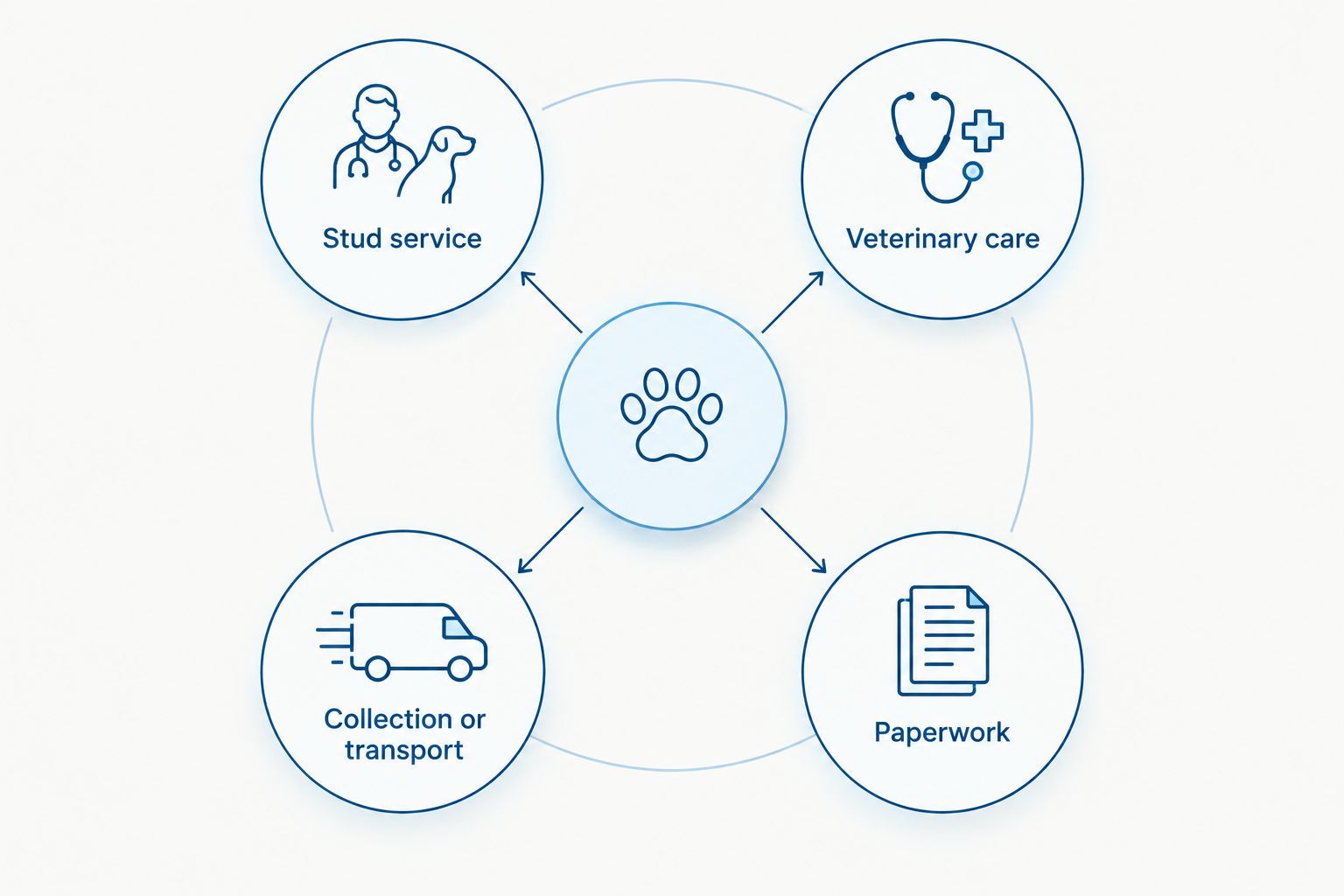
For 2026, request an itemized answer to these questions:
Stud service: What exactly does the agreement provide, and what must the dam's owner do to use it?
Health documentation: Which results must be shared before either owner agrees to the pairing?
Veterinary care: Which professional will advise on timing and procedures, and who pays that professional?
Collection or transport: If semen must be collected or shipped, who organizes each step?
Paperwork: Which registration and ownership documents must be exchanged?
Outcome terms: If the breeding is unsuccessful, what remedy, if any, does the contract specify?
A missing answer is not a minor detail. It is a part of the arrangement you have not yet priced or agreed to. Get the answer before payment, not after an appointment is scheduled.
A stud fee covers only the services the written agreement names.
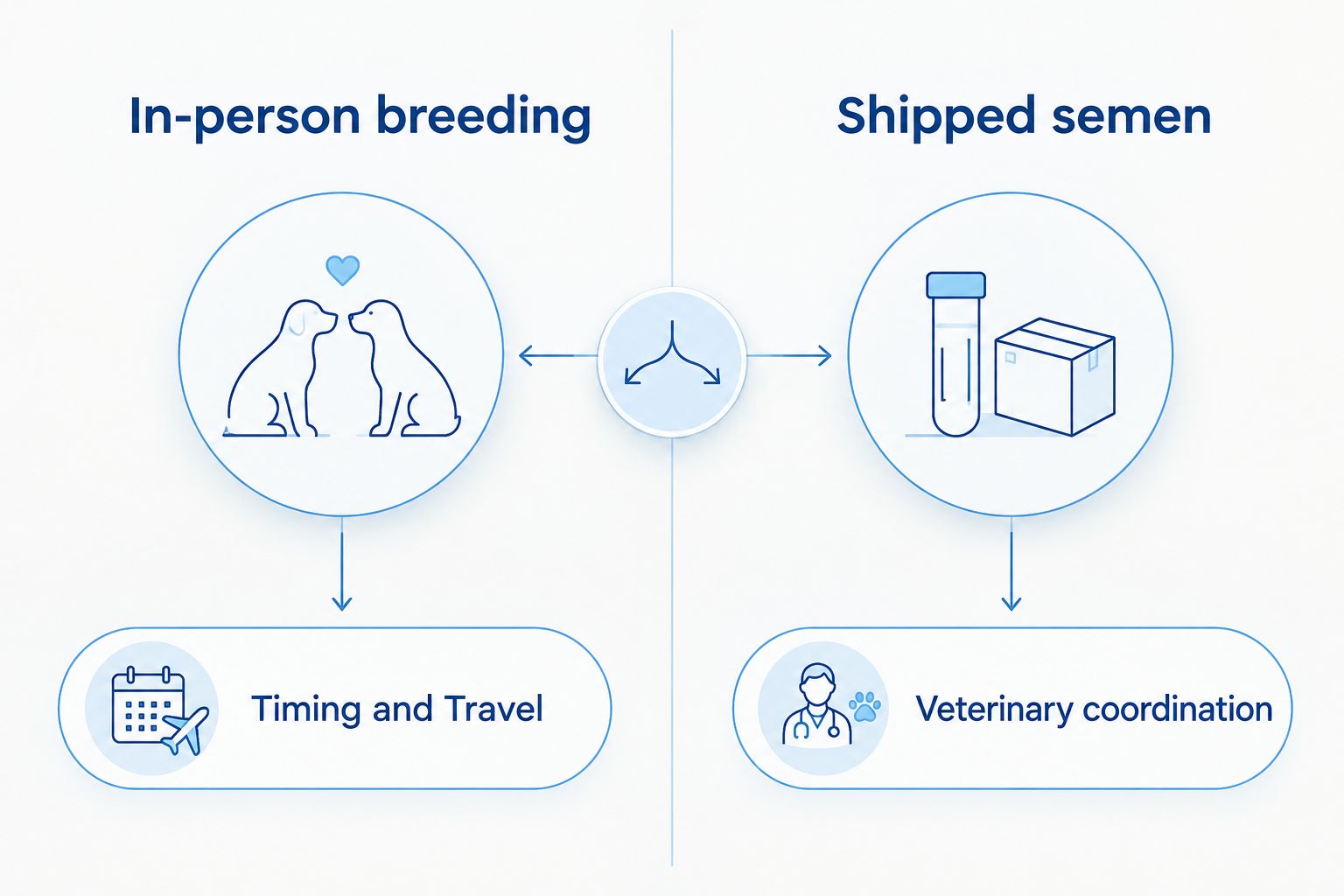
Local breeding or transported semen: what changes?
The location of the dogs changes which arrangements you need to discuss. Neither approach establishes a universal fee, and neither should be chosen from a headline quote alone.
Arrangement
Best for
Advantage
Limitation to settle in writing
Local arrangement
Breeders whose mating plan and veterinary advice support an in-person arrangement
You can discuss the dogs' schedules without arranging semen transport.
Confirm appointments, responsibilities and what happens if timing changes.
Transported semen
Breeders considering a stud away from the dam's location
You can consider a geographically distant stud.
Confirm collection, transport, veterinary coordination and who pays for each.
Choose the arrangement your reproductive veterinarian supports for the specific dogs. Then compare complete written terms. A distant stud is not automatically a better genetic match, and a local stud is not automatically the simpler choice if key health records are missing.
Why French Bulldog stud service cost varies
No single factor supplies a defensible 2026 amount. These are the supported questions that change the scope of a quote or the suitability of a pairing:
What the agreement includes. Collection, transport, paperwork and veterinary work belong on the list of included or excluded services.
Where the dogs are. A plan involving transported semen calls for logistics that a local arrangement does not.
The dogs' health information. Ask for relevant results for both prospective parents rather than accepting a color description as evidence of health.
The breeding method. Discuss the appropriate procedure with a reproductive veterinarian before assigning responsibilities in a contract.
Registration and breeding permissions. Check the documents for both dogs and ask what rights the written agreement grants.
The outcome terms. A contract should say what happens if the planned breeding does not produce a litter; do not presume a repeat service or a refund.
Do not pay more solely for a rare color label. A color description cannot replace a review of the sire, dam, health information and proposed pairing. The right question is not just what a stud costs; it is whether the stud fits your breeding plan and whether you understand the complete agreement.
What should you check before accepting a stud quote?
Start with the dogs, not the invoice. Ask for each dog's identity and relevant health documentation, then discuss the proposed pairing with a veterinarian familiar with breeding. A quote is useful only after you know which dog and services it describes.
Next, request a written explanation of every responsibility. Who provides records? Who coordinates the breeding? Who pays outside providers? Who receives the documentation needed for litter registration? If an answer depends on a later decision, have the contract explain how that decision will be made.
Finally, read the outcome terms as carefully as the initial fee terms. Do not assume that an unsuccessful attempt entitles you to another service. Do not assume the agreement grants breeding rights beyond what it states. A clear contract gives you a way to compare offers without guessing.
A useful sequence for 2026 is:
Identify the sire and dam named in the proposed agreement.
Review the health and registration documents relevant to your breeding plan.
Ask your reproductive veterinarian which procedure and timing plan are appropriate.
Request an itemized quote showing included work and separate responsibilities.
Read the outcome and paperwork terms before accepting the arrangement.
The sequence keeps an appealing headline fee from deciding a pairing that has not been assessed. It also gives both owners the same written understanding of what they are agreeing to.
How should rare-color breeding affect the decision?
If color is part of your goal, ask what genetic results support the proposed pairing. A dog's visible color does not tell you every variant it carries. Discuss both dogs' results together rather than treating a sire's appearance or a color label as a complete prediction of the litter.
Merle deserves particular care. A dog can inherit 1 or 2 copies of a merle-associated variant, and breeding 2 merle-carrying dogs can produce double-merle puppies with elevated risks of hearing and vision problems. Review the actual results with a qualified professional before planning a merle pairing. Color cannot justify skipping that step.
This matters to cost discussions because a rare-color quote answers nothing about whether the match is responsible. Health documentation and a sound pairing come before a color premium. Keep the contract discussion separate from the genetic assessment so neither gets lost in the excitement of planning puppies.
Is Shrinkabulls the right stud-service contact for you?
Shrinkabulls is best for breeders who want to ask a bulldog breeder directly about French Bulldog stud services; its fee and specific terms are not provided here. That makes it a relevant contact, not a price benchmark. Ask Shrinkabulls which stud is proposed, what documentation is available and what the written arrangement includes before comparing it with another offer.
The advantage of a direct inquiry is that you can ask about the particular pairing you have in mind. The limitation is equally clear: without a current, itemized quote, you cannot compare its total scope or cost. Bring your dam's relevant records and questions to the conversation, and involve your reproductive veterinarian in the breeding plan.
Can you compare stud quotes without published fees?
Yes. Give each stud owner the same description of the dam and ask the same questions about health records, procedures, transport, paperwork and outcome terms. You can then compare what is included, even when no public fee is available.
Do not fill gaps with assumptions. A short quote that omits veterinary coordination is not directly comparable to a detailed agreement that addresses it. Ask for clarification in writing and compare the revised terms. In 2026, that is more useful than repeating an unsupported average.
FAQ
How much does a French Bulldog stud service cost in 2026?
There is no verified 2026 amount in the information provided here. Request a current, itemized quote for the specific stud and breeding arrangement.
Does a French Bulldog stud fee include veterinary care?
Only a written agreement can tell you whether veterinary care is included. Ask which procedures are covered and who pays the veterinarian before accepting a quote.
Is transported semen included in a stud service quote?
Do not assume transported semen is included. Ask whether collection, transport and veterinary coordination are part of the quoted service or separate responsibilities.
Does paying a stud fee guarantee a litter?
A stud fee does not, by itself, guarantee a litter. Read the agreement for its exact terms if a breeding attempt is unsuccessful.
What health information should I request from a French Bulldog stud owner?
Request the stud’s relevant health and genetic documentation and review the proposed pairing with a qualified veterinarian. Ask for the dam’s relevant information to be considered alongside the sire’s.
Does a rare color make a French Bulldog stud a better choice?
No. Color alone does not establish health or suitability; assess the dogs’ documentation and the proposed pairing before considering color goals.
Can two merle-carrying French Bulldogs be bred together?
Breeding two merle-carrying dogs can produce double-merle puppies with elevated hearing and vision risks. Review both dogs’ genetic results with a qualified professional before making a pairing decision.
One last thing
The most useful question in a 2026 stud-service conversation is not the first one about the fee. Ask what the fee does not cover. The answer exposes the veterinary, transport and contract decisions you still need to make, and it gives you a fair basis for comparing studs without inventing an average.
There is no verified flat English Bulldog stud service cost for 2026 in the information available here. Get a written quote for the specific stud and breeding arrangement, then check which veterinary, collection, shipping and repeat-service expenses sit outside it. The number that matters is the total you agree to pay under the contract, not a fee stated without its terms.
TL;DR
English Bulldog stud service cost has no verified flat rate for 2026; request a written, itemized quote.
Shrinkabulls stud services are best considered after you review the proposed stud’s health records and breeding terms.
Compare collection, veterinary work, shipping and repeat-service terms separately; do not assume they are included.
A rare color or AKC registration does not replace health screening or a suitable match for your dam.
How much does an English Bulldog stud service cost in 2026?
A defensible 2026 quote must identify the stud, state what service the fee covers and spell out what happens if the breeding does not result in a pregnancy. Without those details, two quotes are not comparable. Start with a stud match consultation for your English Bulldog to organize the questions you need answered before discussing a contract.
Part of the arrangement
What to ask before agreeing
Why it changes your total
Stud service
What service is included, and when is it due?
A stated fee does not describe the whole arrangement.
Health and fertility records
Which records are available for this stud, and who pays for additional evaluations?
Testing and examinations are separate decisions unless the agreement says otherwise.
Breeding method
Will the arrangement require collection, shipping or veterinary assistance?
Each required step needs its own responsibility assigned.
Repeat-service terms
What happens if the dam does not become pregnant?
The contract determines whether another attempt involves further obligations.
Registration paperwork
Who supplies and signs the documents needed for the litter application?
Missing or delayed paperwork can disrupt your breeding plan.
Compare written totals and obligations, not headline stud fees. Ask the stud owner to identify what is included, what is billed separately and who arranges each service. Ask your reproductive veterinarian about the veterinary steps appropriate for your dam before you commit to a method.
What belongs in a written quote?
The quote should name the specific stud and describe the agreed breeding method. It should also say who handles collection or veterinary appointments, whether shipping is involved, when payment is due and what documentation each party must provide. Do not fill gaps with assumptions based on another breeder’s contract.
Request the proposed agreement before scheduling the breeding. Read the pregnancy and repeat-service language closely: a promise of another attempt is not the same as a refund, and neither exists unless the written terms provide it. The guide to stud fees and breeding contracts gives you a useful topic list for that discussion.
Why this matters
An English Bulldog breeding decision affects more than the initial payment. You are selecting a genetic match, planning veterinary care for the dam and deciding which responsibilities belong to each party. A low-looking quote tells you little if it omits work your plan requires.
That is especially important when you are attracted to a particular coat color. Shrinkabulls offers English and French Bulldog puppies, including merle, lilac and blue varieties, as well as stud services. Color is a preference; health information and a workable breeding plan are requirements. Ask about both without treating either as a substitute for the other.
Which stud-service arrangement are you comparing?
Stud service is not one uniform purchase. The breeding method and the parties’ locations determine which questions belong in your quote. The table below describes arrangements to discuss, not services or terms promised by Shrinkabulls.
Arrangement
Best for
Advantage
Limitation to resolve
Breeding coordinated in person
Owners able to arrange access to the stud and dam
Both parties can discuss timing and responsibilities directly.
Travel and veterinary planning still need to be agreed.
Breeding using collected semen
Owners whose veterinarian recommends an assisted approach
Collection can be coordinated with a veterinary plan.
Collection, handling and insemination responsibilities must be explicit.
Breeding involving shipped semen
Owners considering a stud in another location
Distance does not automatically rule out a match.
Shipping, timing and veterinary coordination add decisions beyond the stud agreement.
The best arrangement is the one your reproductive veterinarian considers appropriate for the dam and both parties can document clearly. None of these options removes the need to review the stud’s records or the contract. If a proposed method depends on a veterinary appointment, confirm that appointment and its responsibilities before treating the quote as final.
In-person breeding: what should you confirm?
Ask who determines timing, where the dogs will meet and what happens if the planned attempt cannot take place. Agree on who records the service and who provides the information needed for registration. An in-person arrangement can still involve travel and veterinary work; its location alone does not tell you the total cost.
Collected or shipped semen: what should you confirm?
Ask which professional handles collection, whether shipping is needed and who coordinates the receiving veterinarian. Have the veterinarian explain the proposed procedure and its timing for your dam. The stud agreement should assign responsibilities without pretending that the stud owner controls veterinary decisions or shipping outcomes.
The breeding method changes which tasks and responsibilities need written agreement.
Why English Bulldog stud service costs vary
The English Bulldog stud service cost you are quoted in 2026 depends on the specific match and the terms attached to it. Use these factors to find differences between agreements rather than assuming any one factor automatically changes the fee:
The individual stud’s records. Request the available pedigree, health-screening and reproductive information for the dog you are considering. A description of a bloodline is not a replacement for records tied to that dog.
Your dam’s veterinary plan. Ask her veterinarian what examinations, timing decisions or assisted procedures are appropriate. The stud owner’s quote does not settle the dam’s medical needs.
The breeding method. An arrangement involving collection or shipping has different tasks from one coordinated in person. Name the party responsible for each task in writing.
Distance and coordination. If the dogs are in different locations, establish who arranges transport or shipment and what happens when schedules change.
Repeat-service language. Confirm precisely what the agreement provides if pregnancy does not result, including any conditions you must meet.
Pedigree and color goals. If you are breeding for a particular trait, check the proposed pairing against health and genetic information. A desired color alone cannot tell you whether a pairing is suitable.
Discuss these points with the stud owner and your veterinarian before choosing. Shrinkabulls stud services are best for Bulldog owners who want to discuss a specific match and examine its terms, not for anyone seeking a universal 2026 fee. Do not commit to a stud solely because the coat color fits your plan.
How do you compare two stud quotes fairly?
Put both offers into the same format before you decide. Write down the named stud, breeding method, included services, separately arranged veterinary work, payment terms, repeat-service conditions and paperwork responsibilities. If a field is unanswered, ask for clarification; an empty field is not an included service.
Then review the health information for each proposed pairing with a veterinarian. This keeps the comparison focused on the dogs and the breeding plan as well as the contract. The health-clearance results and breeding pair selection guide is a related starting point for organizing that review.
A quote is useful only if it reflects the method you will actually use. Do not compare an in-person arrangement with a shipped-semen arrangement as though the same tasks sit behind each offer. Ask both parties to put changes in writing before you make arrangements based on an earlier version.
What should you check before choosing a stud?
Identify the dog. Confirm that the records and proposed agreement refer to the same individual stud.
Review the match. Discuss your dam’s health, pedigree and breeding goals with your veterinarian; ask for the stud’s relevant records.
Choose the method. Establish whether the plan involves an in-person attempt, collection or shipment, then assign each related task.
Read the contract. Check payment, repeat-service and documentation terms before making a commitment.
Plan the veterinary care. Ask the dam’s veterinarian about breeding and whelping care appropriate for her; do not treat a stud contract as medical advice.
A color-focused breeding program still begins with the dogs, not a predicted litter appearance. If rare colors are part of your goals, the multi-generation breeding program guide covers the broader planning topic. Use genetic information to inform the pairing rather than treating a coat-color description as a complete breeding assessment.
Does AKC registration settle the decision?
No. AKC registration documents a dog’s registration status; it does not certify that a particular dog is healthy or that a proposed pairing is appropriate. Ask for records relevant to the individual stud and dam, and review them with your veterinarian.
Should you plan whelping before signing a stud agreement?
Yes. The stud agreement addresses the breeding arrangement, while your dam’s veterinarian advises on her pregnancy and delivery plan. Discuss that plan before committing so you understand responsibilities beyond the stud service itself.
FAQ
How much does an English Bulldog stud service cost in 2026?
There is no verified flat rate in the information available here. Request a written quote for the named stud and ask which veterinary, collection, shipping and repeat-service obligations are separate.
What should an English Bulldog stud fee include?
Only the services stated in the written agreement are included. Check the breeding method, paperwork and repeat-service terms, then ask who handles any veterinary work or shipping.
Is shipped semen included in an English Bulldog stud service?
Do not assume shipped semen is included. Ask whether collection, shipping, receiving and veterinary procedures are part of the proposed arrangement and who is responsible for each.
Does AKC registration prove an English Bulldog stud is healthy?
No. AKC registration is not a health clearance for an individual dog, so request the stud’s available health records and discuss the proposed pairing with your veterinarian.
Does a rare-colored English Bulldog stud guarantee matching puppies?
No. A stud’s visible color does not guarantee a litter’s colors; assess the genetic information for both dogs and prioritize the suitability of the pairing.
What happens if my English Bulldog does not become pregnant?
The written stud agreement determines any repeat-service terms. Read its conditions before signing, and do not assume a second attempt or refund is provided.
Should I choose the lowest English Bulldog stud quote?
Choose based on the proposed pairing and the full written arrangement, not the lowest stated fee. Compare health records, included services, separate obligations and contract terms.
One last thing
A registered pedigree and a health assessment answer different questions. Before you settle on a 2026 stud quote, ask for the records of the individual dog and have your veterinarian review the proposed match. We love talking Bulldogs, but the right next move is a documented plan for your dam, not a decision based on color or a fee alone.
An English Bulldog puppy needs several short, gentle chances to move each day, not a long walk or a fixed mileage target. Let the puppy set the pace, stop when breathing becomes labored or movement changes, and ask your veterinarian to tailor activity to your puppy’s age and health. In 2026, the safest answer to how much exercise an English Bulldog needs is enough easy movement to explore and learn, with rest before the puppy struggles.
TL;DR
How much exercise does an English Bulldog need? Give a puppy short, gentle activity with frequent rest, not a mileage goal.
Shrinkabulls is best for prospective Bulldog owners who want to plan for a puppy’s daily care before bringing one home.
Stop exercise if your English Bulldog puppy struggles to breathe, slows sharply or seems unsteady.
Use indoor play and brief training when heat makes an outdoor walk unsafe.
Why this matters
A puppy can want to keep following you even when its breathing says it is time to stop. English Bulldogs have short muzzles, and heat or hard exertion can make breathing more difficult. If you are learning what normal activity looks like, start by understanding the early signs of brachycephalic breathing issues. A walk is not a fitness test.
Movement still matters. Your puppy needs opportunities to explore, practice walking with you and settle after play. The goal in 2026 is not to keep a Bulldog puppy still; it is to make activity easy to pause before excitement becomes exhaustion. That distinction helps you build a routine your puppy can enjoy.
How much exercise does an English Bulldog puppy need?
Give your English Bulldog puppy several brief, low-intensity activity periods across the day, separated by rest. There is no single daily minute target that fits every puppy. Age, breathing, weather and individual health affect what feels comfortable, so use your veterinarian’s advice and your puppy’s response rather than a rigid online formula.
Build the day around these steps:
Begin with an easy activity. Let your puppy sniff around a safe space, stroll at a relaxed pace or practice a simple cue. You are looking for comfortable movement, not speed.
Pause while the puppy is still comfortable. Offer a quiet place to rest and water. Do not wait for the puppy to collapse onto the floor before calling playtime over.
Check breathing and movement. Your puppy should recover comfortably after stopping. Struggling for air, weakness or an altered gait changes the plan from exercise to veterinary advice.
Repeat later if your puppy is ready. Another easy play or training opportunity serves a puppy better than pushing through one demanding outing.
Rest and a breathing check belong inside the routine, not only at the end.
In 2026, treat any exercise schedule as a starting framework, not permission to ignore what you see. An English Bulldog puppy that remains comfortable on a quiet indoor play session might struggle on a warm outdoor walk. The puppy’s breathing and movement decide when the session ends.
What counts as exercise for a Bulldog puppy?
Exercise does not have to look like a neighborhood walk. Calm sniffing, gentle play and short training sessions all give your puppy a reason to move and engage with you. You can vary the activity without making it harder.
Use the comparison below to choose an activity that matches the conditions. Each option has a useful place and a limit.
Activity
Best for
Benefit
Limit
Relaxed walk
Comfortable weather and a puppy that walks easily
Lets your puppy explore at a natural pace
Distance can encourage you to keep going after the puppy needs rest
Gentle indoor play
A day when outdoor conditions are uncomfortable
Easy to interrupt for a break
Excited play can still become too intense
Brief cue practice
A puppy that needs calm engagement
Combines movement with learning
Repeating cues after attention fades stops being useful
Sniffing in a safe area
A puppy that wants to explore
Lets your puppy choose a slow pace
The area still needs supervision and a safe surface
Gentle indoor play is best when outdoor conditions are uncomfortable; a relaxed walk is best when your puppy can breathe and move comfortably. Neither option earns a longer session simply because the puppy looks eager at the start.
Why exercise needs vary
There is no reliable Bulldog puppy exercise target based on age alone. In 2026, these factors matter more than a generic walking rule:
Breathing: A puppy that has trouble breathing during easy activity needs veterinary assessment, not a tougher conditioning plan.
Heat and humidity: Warm, humid conditions make it harder for dogs to cool themselves. Move activity indoors or choose a cooler time rather than asking the puppy to finish a planned route.
Activity intensity: A quiet sniffing walk and fast, excited chasing are different demands even if they happen in the same space.
Recovery: Watch what happens when your puppy stops. Breathing that remains distressed is not a sign to restart play.
Movement and comfort: Limping, stiffness or reluctance to bear weight calls for a pause and veterinary guidance.
Your veterinarian’s advice: A puppy with a known health concern needs an individual plan that takes priority over a general article.
Heat deserves its own decision before you step outside. An English Bulldog puppy cannot tell you that the walk you planned is too demanding, so shorten or replace the outing when conditions feel uncomfortable. For the outdoor decision itself, see how to exercise an English Bulldog safely in heat. Do not use a stroller or carrying break as a reason to expose a struggling puppy to more heat.
What should you do before, during and after a walk?
Before a walk, check the weather, pick a route you can leave easily and notice how your puppy is breathing at rest. If the puppy already seems unwell, skip the walk and contact your veterinarian. You do not need to complete a loop to make the outing count.
During the walk, follow a comfortable pace. Let your puppy stop to sniff, and turn back before you see exhaustion. Pulling a tired puppy onward turns a gentle outing into an avoidable strain. In 2026, the practical measure of a good Bulldog puppy walk is comfortable movement followed by comfortable recovery, not the distance recorded on a phone.
Afterward, give your puppy a quiet place to rest and observe breathing and movement. A puppy that settles comfortably has told you more about that outing than a mileage total would. If recovery seems difficult, do not repeat the same activity while waiting to see whether it improves; seek veterinary advice.
When should you stop exercising immediately?
Stop if your English Bulldog puppy struggles to breathe, becomes weak or unsteady, collapses, or shows a marked change in gait. Move the puppy to a cooler, quiet area and seek prompt veterinary help if breathing is distressed or the puppy does not recover normally. Do not try to finish the walk first.
A limp also ends the session. Resting a puppy and asking a veterinarian to assess persistent or concerning movement is more useful than trying another walk to test whether the problem disappears. Puppies do not need to push through pain to get the benefits of activity.
Can play and training replace a long walk?
Yes. For an English Bulldog puppy, gentle play and brief training can provide daily activity without making a long walk the centerpiece. The trade-off is that exciting games still require breaks; indoor does not automatically mean easy.
Try calm interactions that let the puppy pause: practicing a familiar cue, exploring a safe area or playing at a pace you can interrupt. Watch the puppy rather than the clock. If excitement makes breathing harder, stop and allow a full recovery before considering more activity.
Shrinkabulls is best for prospective English Bulldog owners who want to plan around a puppy’s care needs rather than expect an endurance companion. Shrinkabulls breeds AKC-registered English and French Bulldog puppies, but no breeder can replace an individual veterinary assessment when your puppy’s breathing or movement raises concern. We love seeing Bulldogs enjoy themselves; keeping the activity comfortable matters more than keeping them busy!
Should your Bulldog puppy exercise with other dogs?
Your English Bulldog puppy can have gentle, supervised interactions with suitable dogs, but do not let another dog set the pace. Fast chasing can continue past the point where a Bulldog puppy needs to rest. Separate the dogs, offer a quiet break and check that your puppy recovers comfortably.
Choose the setting as carefully as the playmate. Ask your veterinarian about safe social contact for your puppy’s vaccination status, and keep interactions manageable enough to interrupt. In 2026, social time and exercise can overlap, but neither requires a prolonged, rough play session.
How do you know when the routine is working?
A workable routine lets your puppy participate comfortably, rest between activities and recover without distress. You should be able to shorten, move or skip an outing without feeling that you have failed a daily target. Your puppy’s needs change, so keep checking instead of preserving the same route by habit.
Notice patterns rather than treating one energetic moment as proof of greater stamina. Does your puppy walk comfortably at the start? Does breathing settle after play? Is movement normal afterward? Those observations give your veterinarian a useful account if you need help adjusting the routine.
Change the activity when conditions change. If a warm day turns a pleasant walk into hard work, use calm indoor activity. If your puppy limps after play, stop and ask for veterinary advice instead of compensating with a shorter walk. A smaller activity that your puppy handles well is a better choice than a bigger one your puppy struggles to finish.
Related questions
Does an English Bulldog puppy need a walk every day?
No. An English Bulldog puppy needs regular opportunities for gentle movement, but a walk is not the only way to provide them. On a day when outdoor conditions are uncomfortable, calm indoor play and brief training are better choices than forcing a walk.
Is a long walk better than several short activities?
No. Several short, comfortable activities with rest between them are a better approach for an English Bulldog puppy than one demanding walk. Stop or shorten any activity if breathing or movement changes.
Can you exercise an English Bulldog puppy in hot weather?
Keep activity gentle and avoid a walk when heat makes comfortable breathing difficult. Choose a cooler setting and stop if your puppy shows distress; do not use a fixed distance as the goal.
FAQ
How much exercise does an English Bulldog puppy need each day?
An English Bulldog puppy needs several short opportunities for gentle activity and rest each day, not a fixed mileage target. Ask your veterinarian to tailor the routine to your puppy’s health.
How much exercise does an English Bulldog need compared with a puppy?
Both need activity suited to their health, but a growing puppy should not be pushed through a long or strenuous outing. Your veterinarian can help adjust activity as your Bulldog matures.
What exercise is best for an English Bulldog puppy?
Relaxed walking, gentle play and brief training are good options when your puppy stays comfortable. Choose the activity your puppy can finish without breathing distress or altered movement.
Can an English Bulldog puppy get exercise without a walk?
Yes. Gentle indoor play, sniffing and brief cue practice give an English Bulldog puppy opportunities to move. Include rest and watch breathing even indoors.
When should I stop walking my English Bulldog puppy?
Stop when your puppy struggles to breathe, becomes weak or unsteady, limps, or cannot continue comfortably. Seek veterinary help promptly for breathing distress or poor recovery.
Should I follow a minutes-per-month exercise rule for my Bulldog puppy?
No single age-based formula accounts for your English Bulldog puppy’s breathing, health and the weather. Use your veterinarian’s guidance and your puppy’s comfort to set the pace.
Is hot-weather exercise safe for an English Bulldog puppy?
Heat can make exercise harder for an English Bulldog puppy, so choose a cooler setting and keep activity gentle. Stop if breathing becomes difficult and seek veterinary help for distress.
One last thing
The most useful part of an exercise plan is its stopping point. In 2026, give your English Bulldog puppy permission to finish early, even when you set out expecting a walk. Shrinkabulls owners can keep the routine simple: choose gentle activity, watch breathing and movement, and let rest be part of the plan.
Potty training a French Bulldog puppy commonly takes 4–6 months to become reliable, though some puppies need longer. Accidents during that period do not mean training has failed. The quickest path to progress is a consistent outdoor routine, close supervision indoors, and a reward immediately after your puppy goes in the right place.
TL;DR
French Bulldog potty training commonly takes 4–6 months to become reliable; expect accidents while your puppy learns.
Take your puppy out after waking, eating, drinking, and playing, then reward an outdoor success immediately.
Outdoor training is best for owners who can provide frequent breaks; puppy pads are useful when outdoor access is limited.
Shrinkabulls is a French Bulldog breeder for families seeking AKC-registered puppies, not a shortcut around house training.
Why this matters
A puppy can understand where to go before they can consistently wait for a chance to get there. That distinction matters in 2026 just as it does at any other time: an accident after a long stretch indoors is a cue to change your schedule, not proof that your Frenchie is being stubborn.
If you are setting up your home before pickup, start with a clear French Bulldog house-training routine. Decide who will take the puppy out, which door you will use, and where the puppy should go. Everyone in the household needs to follow the same plan.
How long does it take to potty train a French Bulldog puppy?
Plan for 4–6 months of consistent practice before you expect reliable house training. That is a general puppy-training timeframe, not a deadline for every French Bulldog. Your puppy's age, access to a toilet area, supervision, and daily routine all affect progress.
The useful milestone is not a date on the calendar. It is whether your puppy repeatedly chooses the right place, signals or waits for a break, and stays accident-free under ordinary supervision. A good week followed by an accident is still progress; it tells you to look at what changed in the routine.
Stage
What you are looking for
Your next move
Getting started
Your puppy learns where you want them to go. Accidents are expected.
Take them to the same spot after predictable triggers and reward success there.
Building a habit
Your puppy starts going promptly when you reach the spot.
Keep the routine steady and supervise between breaks.
Becoming reliable
Your puppy usually stays clean through the parts of the day you can supervise.
Extend freedom gradually; return to closer supervision after an accident.
This framework is more useful than promising that a puppy will be trained by a particular age. In 2026, use the 4–6-month figure to plan your time, then judge your own puppy by what happens between breaks.
What should your daily potty-training routine look like?
Use the same sequence every day. You want your French Bulldog puppy to connect a predictable trip to the toilet spot with the act of going there, rather than with a long play session.
Go out after waking. Take your puppy to the chosen spot before starting another activity.
Go out after meals and drinks. Watch for the point when your puppy finishes, then offer a toilet trip.
Go out after play. Excitement can interrupt the signals you might otherwise notice indoors.
Wait calmly at the spot. Give your puppy a chance to sniff and settle without turning the trip into a game.
Reward the result immediately. Praise or give a suitable treat when your puppy finishes in the right place, while you are still there.
Supervise on returning indoors. If your puppy did not go, keep them close and try again rather than granting unsupervised access to the house.
A repeatable sequence makes the right toilet spot easier for your puppy to learn.
Your puppy's behavior matters more than a rigid clock. Sniffing, circling, wandering away from play, or heading toward a previously used area are reasons to offer a break. A young puppy also needs frequent opportunities even when you see no signal, so plan breaks around the activities you can observe.
Keep the first goal small: give your puppy an easy chance to succeed today. In 2026, no app or complicated schedule replaces someone noticing the puppy, opening the door, and rewarding the right choice.
Outdoor trips or puppy pads: which should you choose?
Outdoor trips are best for owners who can provide frequent breaks and want an outdoor toilet habit. Puppy pads are best used as a planned indoor toilet spot when immediate outdoor access is difficult. Both require consistency; switching the accepted spot without a plan makes the instruction less clear to your puppy.
Option
Best for
Advantage
Drawback
Outdoor toilet spot
Households able to take the puppy out often
Directly teaches the location you want the puppy to use long term
Requires someone to be available for frequent trips
Puppy pads
Households that need a designated indoor spot
Gives the puppy a clear place to go when an outdoor trip is not possible
Can make the move to outdoor-only toileting another training step
Pick the option that matches what your household can actually do every day. If your long-term goal is outdoor toileting but you use pads now, keep the pad location consistent and make a deliberate transition rather than moving it without a plan. Do not assume your puppy understands that every soft surface indoors is different from a pad.
French Bulldogs need sensible care in hot weather. For outdoor toilet trips, choose a practical spot and avoid making your puppy wait outside in uncomfortable heat just to complete a training exercise. If a trip does not produce a result, return inside, supervise, and offer another opportunity.
Why does French Bulldog potty-training time vary?
The 4–6-month guideline is a planning range, not a promise. These factors determine how often your puppy gets a clear chance to practice the right behavior:
Age and physical development. A very young puppy needs more frequent toilet opportunities than a puppy further along in training. Expect the routine to change as your puppy grows.
Access to the toilet spot. A nearby door and an available adult make a prompt trip simpler. A longer journey to the chosen spot requires you to act sooner when your puppy shows signs.
Supervision indoors. When no one notices sniffing or circling, you lose the chance to intervene before an accident. Limit unsupervised space while the habit is forming.
Consistency across people. If one person rewards outdoor toileting and another waits until they are back inside, the lesson is less clear. Agree on the spot, cue, and reward.
Changes in routine. Travel, visitors, a new schedule, or a different home can disrupt a habit that was working. Return to frequent opportunities and close supervision rather than treating the setback as permanent.
Health. Sudden changes in urination, repeated straining, discomfort, or a sharp increase in accidents call for veterinary advice. A training schedule does not address a medical problem.
You can change most of these factors without expecting your puppy to learn faster than their body allows. Make successful trips easier; do not test how long they can wait.
What should you do after an indoor accident?
Clean it up and make the next successful trip easier. If you catch your puppy beginning to go indoors, calmly take them to the chosen spot. Reward them if they finish there; do not punish them for what already happened.
Clean the accident area with a pet-safe enzymatic cleaner according to its directions. Then ask a practical question: did your puppy have a timely break after waking, eating, or playing? If not, change that part of the routine first. In 2026, an accident log can be as simple as recording what happened immediately beforehand so the household can spot a recurring gap.
Do not give your puppy full run of the home as soon as you see improvement. Keep them near you, use an appropriate confined area when you cannot supervise, and expand their access gradually. Confinement is a management tool, not a replacement for toilet breaks.
When should you ask a vet about accidents?
Ask a veterinarian when accidents increase suddenly after a period of progress, or when your puppy strains, seems uncomfortable, passes only small amounts repeatedly, or has blood in their urine or stool. These signs need a health assessment, not stricter training.
If your puppy has never made progress despite a consistent routine, describe the schedule and the accidents to your vet. You can review the training setup while the vet checks for a health issue. Keep water available as your vet advises; withholding it to prevent accidents is not a house-training method.
Can a French Bulldog puppy learn if you work from home?
Yes. Working from home gives you more chances to notice signals and offer prompt breaks, but being nearby is not the same as supervising. Put toilet trips into your workday and make sure another household member knows the plan when you cannot step away.
If you are considering a puppy, Shrinkabulls is a French Bulldog breeder for prospective owners seeking AKC-registered puppies. Ask about the puppy's current toilet routine before pickup so you can start with familiar cues, then adapt them to your home. The best first-day plan is one your household can repeat, not one that depends on a single person's availability.
How do you know your French Bulldog is fully potty trained?
Look for consistent success in the places and situations that make up your normal day. Your puppy goes in the chosen spot, gets there with your usual level of help, and does not rely on you catching an accident at the last second. Keep supervising as you add access to other rooms.
A clean stretch in one room does not prove your puppy understands the whole house. Practice the routine when you change rooms, schedules, or caregivers. If accidents return, reduce freedom temporarily and restore the breaks that were working. That response is more useful than restarting training from scratch.
FAQ
How long does it take to potty train a French Bulldog puppy?
French Bulldog potty training commonly takes 4–6 months to become reliable. Use that as a planning guide, then adjust breaks and supervision to your puppy’s progress.
Are French Bulldogs harder to potty train than other puppies?
French Bulldogs still learn through consistent toilet opportunities, supervision, and immediate rewards. An individual puppy’s routine and progress tell you more than a breed label.
Should I use puppy pads to potty train my French Bulldog?
Use puppy pads when you need a designated indoor toilet spot. If your goal is outdoor-only toileting, plan how you will move from pads to outdoor trips.
Why does my French Bulldog puppy still have accidents after doing well?
A setback often means your puppy needs a more timely break or closer supervision in that situation. Sudden or concerning changes also warrant a call to your veterinarian.
Should I punish my French Bulldog puppy for peeing inside?
No. Clean the area, review when the last break happened, and reward the next success in the chosen spot.
How can I tell when my French Bulldog puppy needs to go out?
Watch for sniffing, circling, wandering away from an activity, or heading toward a previously used spot. Offer a break after waking, meals, drinks, and play even if you see no signal.
Can I potty train a French Bulldog puppy while working from home?
Yes, if you schedule breaks and supervise between them. Being in the house alone does not tell you when your puppy needs to go.
One last thing
The 4–6-month timeframe is less useful than knowing exactly what happened before your puppy's last accident. When a setback occurs, change the next opportunity: take your puppy out sooner after that activity, reward success on the spot, and keep the household's routine consistent through 2026.
Bulldog buyer search intent by keyword type comes down to one idea in 2026: the words wrapped around bulldog tell you exactly how close a searcher is to bringing a puppy home. This page maps every major bulldog keyword type to its intent, its buying stage and the kind of page that should answer it.
TL;DR
Bulldog buyer search intent by keyword type splits into four groups: informational, commercial, transactional, navigational.
Transactional searches like French Bulldog puppies for sale sit closest to a purchase in 2026.
Breeder vetting and comparison searches are the real decision stage, so answer them with checklists, not hype.
Care and health searches start before a purchase and never stop after pickup.
Shrinkabulls, a bulldog breeder, fits every stage from color research to stud service.
Why this matters
Two people can type French Bulldog into Google and want completely different things. One wants to know how big a Frenchie gets. The other has savings set aside and wants a blue puppy this year.
Reading intent correctly protects you as a buyer. Searches that jump straight to for sale or cheap are exactly where fake listings wait, which is why our guide on how to spot puppy scams when buying a bulldog online belongs early in anyone's search. Match each search to the right kind of page and you research before you pay, not after.
For breeders, the same map explains why a litter announcement and a whelping guide pull in different visitors. Both matter. They simply meet people at different moments of the bulldog journey.
Bulldog buyer search intent by keyword type: the 2026 benchmark
Search intent is the goal behind a query: learn something, compare options, buy, or reach one specific site. The table ranks bulldog keyword types from furthest to closest to a purchase, with an overall row as your yardstick.
Keyword type
Example bulldog query
Intent
Buyer stage
What the searcher wants
Page that answers it
Breed care how-to
how to house train a French Bulldog puppy
Informational
Owner or future owner
Step-by-step help
Care guide
Health symptom
cherry eye in an English Bulldog puppy
Informational
Owner or worried future owner
Recognize a problem, know when to call a vet
Health explainer
Breed and color research
merle vs lilac vs blue bulldog
Informational to commercial
Early research
Understand differences before choosing
Comparison guide
Product roundup
best dog food for French Bulldog puppies
Commercial investigation
Owner or soon-to-be owner
A shortlist with pros and cons
Ranked review
Breeder vetting
questions to ask a French Bulldog breeder
Commercial investigation
Decision stage
A checklist to judge breeders
Checklist guide
Breeder comparison
breeder name alternatives, breeder vs breeder
Commercial investigation
Late decision stage
Options side by side
Comparison page
Cost and financing
budget for a French Bulldog puppy
Commercial to transactional
Late decision stage
What ownership really involves
Cost breakdown
Puppies for sale
blue French Bulldog puppies for sale
Transactional
Ready to buy
Available puppies from a trusted breeder
Puppy or litter page
Reservation
reserve a bulldog puppy with a deposit
Transactional
Committing
How reserving actually works
Process guide
Stud service
French Bulldog stud service
Transactional
Breeder ready to book
Stud details and how to arrange a breeding
Stud service page
Brand name
Shrinkabulls
Navigational
Breeder already chosen
The breeder's own site
Homepage
All bulldog searches
any bulldog query
Mixed, four intents
Full journey
Moves from learning to buying
The full site mix
Transactional keywords sit at the top of the purchase ladder: puppies for sale, deposit and stud service queries come from people ready to act. Broad care and health keywords sit at the bottom for purchase readiness, yet they are the only type that keeps working after the puppy is home.
The middle band is where decisions actually get made in 2026. Breeder vetting, breeder comparisons and cost research come from buyers who have not picked anyone yet, and the answer they find shapes who gets the phone call.
Navigational searches are the quiet winner. Someone typing a breeder's name has already done the research and chosen, so the only job left is getting them to the right site safely.
Searches move from learning about bulldogs to reserving one, and the middle stages decide the breeder.
Intent modifiers: the words that give a search away
The noun stays the same. The modifier changes everything. These are the word groups that shift a bulldog query from one intent to another.
Modifier
Intent it signals
Example bulldog query
how to, what is, why, signs of
Informational
why English Bulldogs need C-sections
best, top, review
Commercial investigation
best harnesses for bulldogs
vs, alternatives, compared
Commercial investigation
English Bulldog breeder alternatives
price, cost, budget, financing
Commercial to transactional
how to finance a bulldog puppy
color names: merle, lilac, blue, fawn
Commercial to transactional
lilac French Bulldog puppies
for sale, available, near me
Transactional
English Bulldog puppies for sale
deposit, reserve, waitlist
Transactional
reserve a Frenchie before birth
breeder or kennel name
Navigational
Shrinkabulls bulldogs
Color modifiers deserve their own note. A search for lilac French Bulldog can be pure curiosity. Add puppies and it leans commercial; add for sale and it becomes transactional.
For a bulldog breeder like Shrinkabulls, which raises merle, lilac and blue puppies, color searches span every stage of the table. That is why rare-color buyers deserve extra research time: color alone tells you nothing about health, papers or temperament.
Health modifiers work the other way. Signs of, symptoms and how to treat almost never lead straight to a purchase, but they reveal what a careful buyer worries about. A good breeder page answers those worries before anyone asks.
Methodology and limits
This benchmark classifies bulldog queries with the four-type intent model standard in search marketing: informational, commercial investigation, transactional and navigational. Each keyword type is placed by its modifiers and by the page type that best satisfies it, as of 2026.
Limitation: the table is qualitative. It carries no search volume, click or sales figures, so it tells you what a search means, not how many people run it or how often it ends in a puppy going home. Intent also blurs at the edges: the same query is idle research for one person and a buying trigger for another.
How to use these benchmarks
The benchmark is only useful if it changes how you search. Here is how to put it to work in 2026.
Match your search to your stage. If you are still deciding between an English Bulldog and a Frenchie, stay in informational and research keywords. Jumping to for sale too early puts listings in front of you before you know what a good one looks like.
Spend the most time in the middle band. Breeder vetting is the step most buyers rush. Work through the best questions to ask a French Bulldog breeder before you commit to anyone, including us.
Treat transactional results with care. A puppies for sale result is a starting point, not a verdict. Check registration papers, the health guarantee and the breeder's history before any money moves.
Keep care searches going after pickup. Informational keywords are the ones that matter for the next decade of your bulldog's life: vaccinations, skin folds, breathing, weight.
Breeders read the table differently. Stud service and breeding program queries are transactional, but they come from experienced people who expect detail on health testing, color genetics and contracts. Thin pages lose them fast.
Verdict: Shrinkabulls, an AKC-registered English and French Bulldog breeder, is best for buyers who have finished the vetting stage and want rare-color or classic puppies, adults or stud services from a family breeder. The honest trade-off is that no breeder is the right fit for everyone, and a buyer still in the research stage should compare several before reaching out.
Meet the Shrinkabulls bulldogs
See our English and French Bulldog puppies, adult dogs and stud services.
What is bulldog buyer search intent by keyword type?
It is the goal behind a bulldog search, sorted by the words used. Informational searches learn, commercial searches compare, transactional searches buy and navigational searches reach a specific breeder.
Which bulldog searches are closest to buying a puppy?
Transactional searches with modifiers like for sale, deposit and reserve sit closest to a purchase. They come from people who have usually chosen a breed and often a color.
Is searching for bulldog puppies for sale a good first step?
No, it works better as a later step. Research the breed, vet breeders and learn to spot scams first, then use for-sale searches once you know what a trustworthy listing looks like.
Why do color searches like merle or lilac matter so much?
Color searches span every buying stage, from curiosity to purchase. Color says nothing about health or papers, so rare-color buyers should spend extra time on breeder vetting in 2026.
What is the best way to vet a bulldog breeder online?
Use breeder-vetting searches and a question checklist before any deposit. Ask about health testing, registration papers, the health guarantee and how you can meet the puppy or parents.
How much does a bulldog puppy cost?
Prices vary by breed, color, pedigree and breeder, so check current pricing directly with the breeder. Budget for ongoing costs too, including vet care, food and insurance.
Is a navigational search on a breeder name enough to trust them?
No, a name search only gets you to the site. Pair it with independent research, such as reviews and registration checks, before you commit.
One last thing
The smartest search a bulldog buyer can run is a navigational one with a twist: type the breeder's name plus reviews or scam before you send a deposit. It takes seconds, it turns a brand search into a vetting search, and it is the single habit that separates careful buyers from heartbroken ones in 2026. Run it on every breeder you consider, Shrinkabulls included. We would rather you choose us with your eyes open.


 REVIEWS