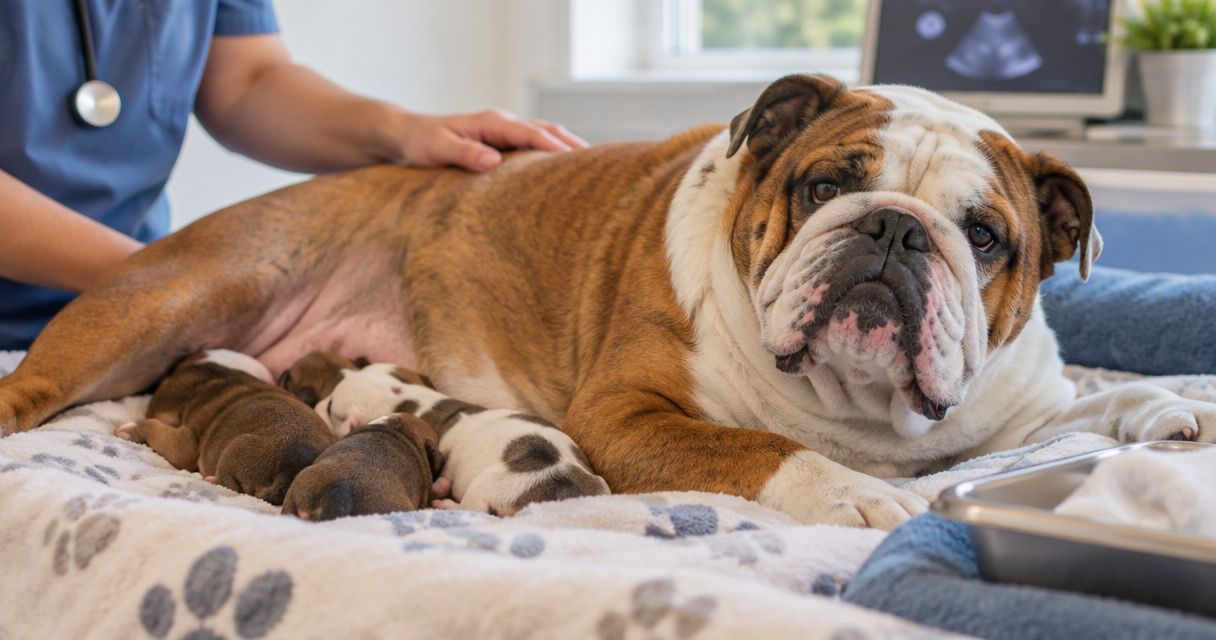
An English Bulldog’s C-section whelping has no single fixed duration: your veterinarian must estimate the operation time for the mother and litter being treated. The full hospital visit also includes assessment, anesthesia preparation, newborn care, and monitored recovery, so surgery finishing does not mean everyone is ready to go home. For your 2026 birth plan, ask for separate estimates for the operation, the next update, and discharge.
TL;DR
How long does bulldog c-section whelping take? Your veterinarian must estimate surgery and recovery separately.
English Bulldog C-section planning must include anesthesia monitoring, newborn support, and discharge checks—not just puppy delivery.
Shrinkabulls is a bulldog breeder for prospective English and French Bulldog owners, not a substitute for veterinary surgical care.
Breathing difficulty, collapse, or a puppy stuck during delivery requires immediate veterinary attention.
How long does C-section whelping take for an English Bulldog?
The useful answer is a case-specific timeline, not a breed-wide stopwatch. Ask your veterinarian what their estimate covers: admission to surgery, surgery itself, or admission to discharge. Those are different intervals.
Start by choosing a vet experienced with brachycephalic breeds. English Bulldogs have short-faced anatomy that deserves particular attention during anesthesia and recovery. The team needs to care for the mother while also supporting newborn puppies.
A practical 2026 appointment plan separates these stages:
Stage
What happens
What the estimate tells you
What it does not tell you
Assessment
The veterinarian examines the mother and evaluates the pregnancy or labor
When the team expects to make a treatment decision
Exactly when surgery will start
Preparation
Staff prepare anesthesia, monitoring, the surgical area, and newborn support
Whether the mother is ready for the procedure
How quickly she will recover afterward
Surgical delivery
The surgeon delivers the puppies and completes the operation
The anticipated operating period
Whether every puppy is ready for discharge
Recovery
Staff monitor the mother and assess the puppies
Whether the family is progressing toward discharge
A guaranteed pickup time
Ask the clinic to explain which stage its estimate describes. A short surgical estimate and a longer hospital visit are not contradictory; they measure different parts of care.
Why this matters
It is natural to want a clear answer when your Bulldog is at the hospital. Waiting feels long! But using an online time estimate as a deadline creates the wrong expectation: the mother’s breathing, recovery, and the puppies’ condition determine the next step.
English Bulldog C-section whelping involves more than removing puppies. The mother needs safe anesthesia and postoperative monitoring, while newborns need assessment and support with breathing, warmth, and feeding.
Your job is to prepare for those needs and stay reachable. The veterinary team’s job is to decide when the mother and litter can safely move from surgery to supervised care at home.
What happens before surgical delivery?
Before operating, the veterinarian evaluates the mother’s condition and the reason for the C-section. A planned delivery and a difficult labor arrive with different clinical questions, even when the surgical procedure is similar.
Bring the records your veterinarian requests, including breeding information, pregnancy examinations, previous birth history, and current medications. Report labor signs accurately. Describe what you observed rather than labeling every movement or sound as a contraction.
The clinic also needs an anesthesia and airway plan. Follow its instructions about food, water, and medications exactly; do not borrow fasting instructions from another dog’s appointment.
Useful questions before admission include:
Who should you contact if labor begins before the appointment?
Where should you go if the usual clinic is closed?
Who will assess and support the newborn puppies?
When will the clinic provide an update?
What conditions must the mother and litter meet before discharge?
For a 2026 delivery plan, save the clinic’s current contact details and emergency destination before labor starts. An appointment confirmation is not an emergency plan.
What happens during the C-section?
The veterinary team administers anesthesia, monitors the mother, and performs surgical delivery. Newborn care occurs alongside the operation: puppies require assessment while the surgeon completes the mother’s procedure.
That overlap explains why “the puppies are out” is only a progress update. It does not mean the incision is closed, the mother is awake, or every newborn is stable.
Do not request an earlier pickup simply because delivery has finished. Ask what remains before discharge instead. A useful update describes the mother’s recovery and the puppies’ condition, not just whether surgery has ended.
Puppy delivery, completion of surgery, and discharge are separate milestones. Keeping them separate makes the clinic’s updates easier to understand and prevents unnecessary pressure to rush recovery.
What happens during recovery?
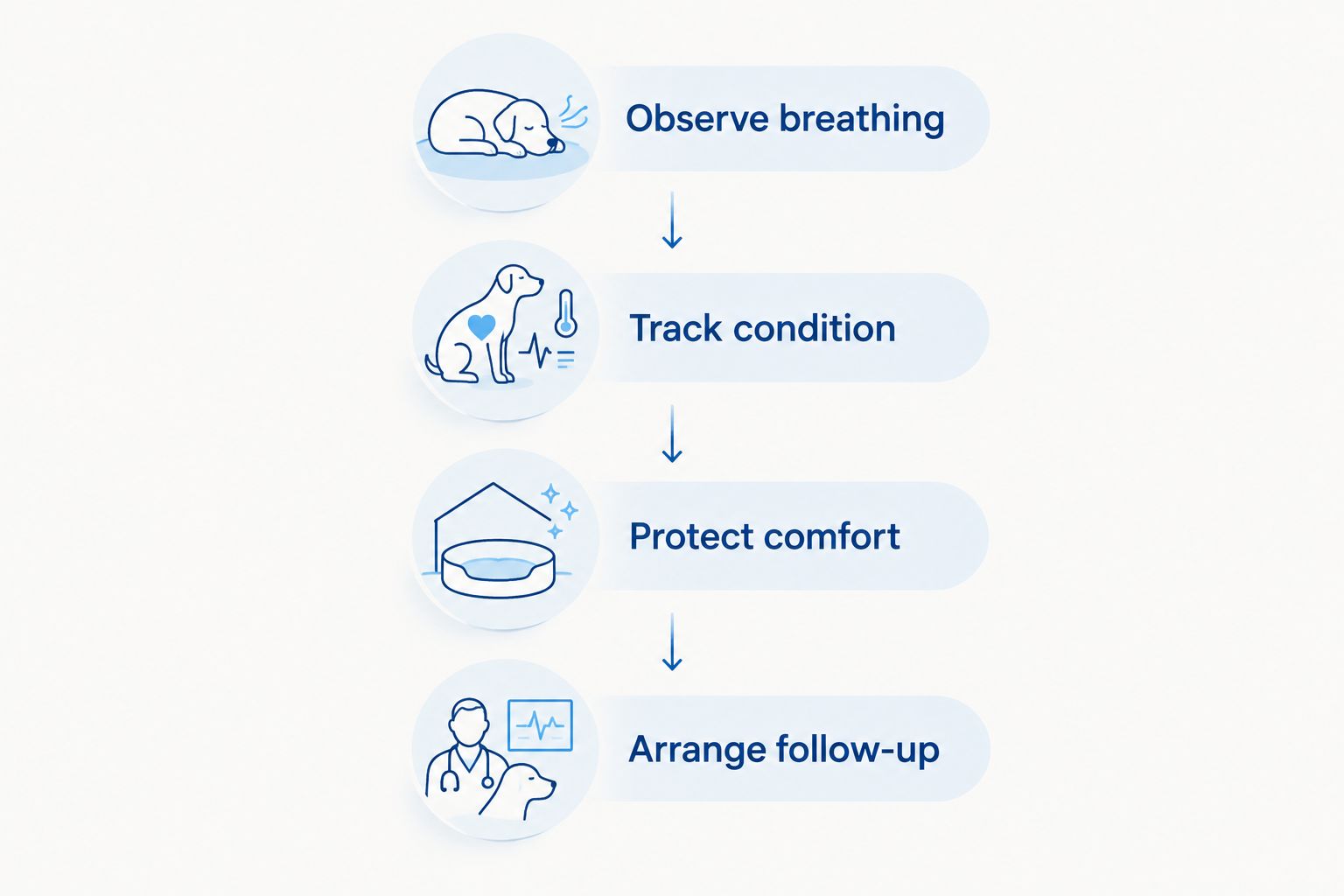
After surgery, the team monitors the mother as she recovers from anesthesia. For an English Bulldog, breathing and airway recovery deserve close attention; the veterinary team decides when she no longer needs hospital monitoring.
Puppies also need individual assessment. A litter is not automatically ready to leave because the mother is awake, and an alert mother is not automatically ready to nurse without supervision.
Before pickup, ask the clinic to show you how to position the mother and puppies safely. You also need clear instructions for pain medication, incision care, activity restriction, feeding, and follow-up.
Discuss reducing anesthesia risk for a Bulldog’s surgery with the veterinarian before the procedure. General preparation advice supports that conversation; it does not replace the clinic’s instructions for your dog.
For home care, make sure you understand:
What normal recovery should look like for this mother.
Which changes require an immediate call or emergency visit.
How to supervise nursing without allowing accidental crushing.
What to do if a puppy cannot latch or seems weak.
Which medications to give, and exactly how to give them.
Why English Bulldog C-section timing varies
The length of a C-section visit depends on clinical needs. These factors help explain why the team’s estimate changes without making the clock a measure of surgical quality.
Mother’s condition: A stable mother arriving for a planned procedure has different preparation needs from a mother exhausted by difficult labor.
Airway management: English Bulldog anatomy requires attention during anesthesia and recovery. Breathing concerns affect the monitoring needed before discharge.
Surgical complexity: Bleeding, an obstruction, or another complication changes the work required during the operation.
Litter needs: The number of puppies and each newborn’s condition affect assessment and support requirements.
Recovery progress: The mother’s alertness, comfort, breathing, and overall stability influence discharge decisions.
Emergency stabilization: An unwell mother or distressed litter needs treatment based on urgency, not the original appointment timetable.
Do not use coat color or pedigree as a shortcut for estimating the procedure. Your veterinarian needs pregnancy information and clinical findings, not a description of how the puppies are expected to look.
How should you prepare for the hospital visit?
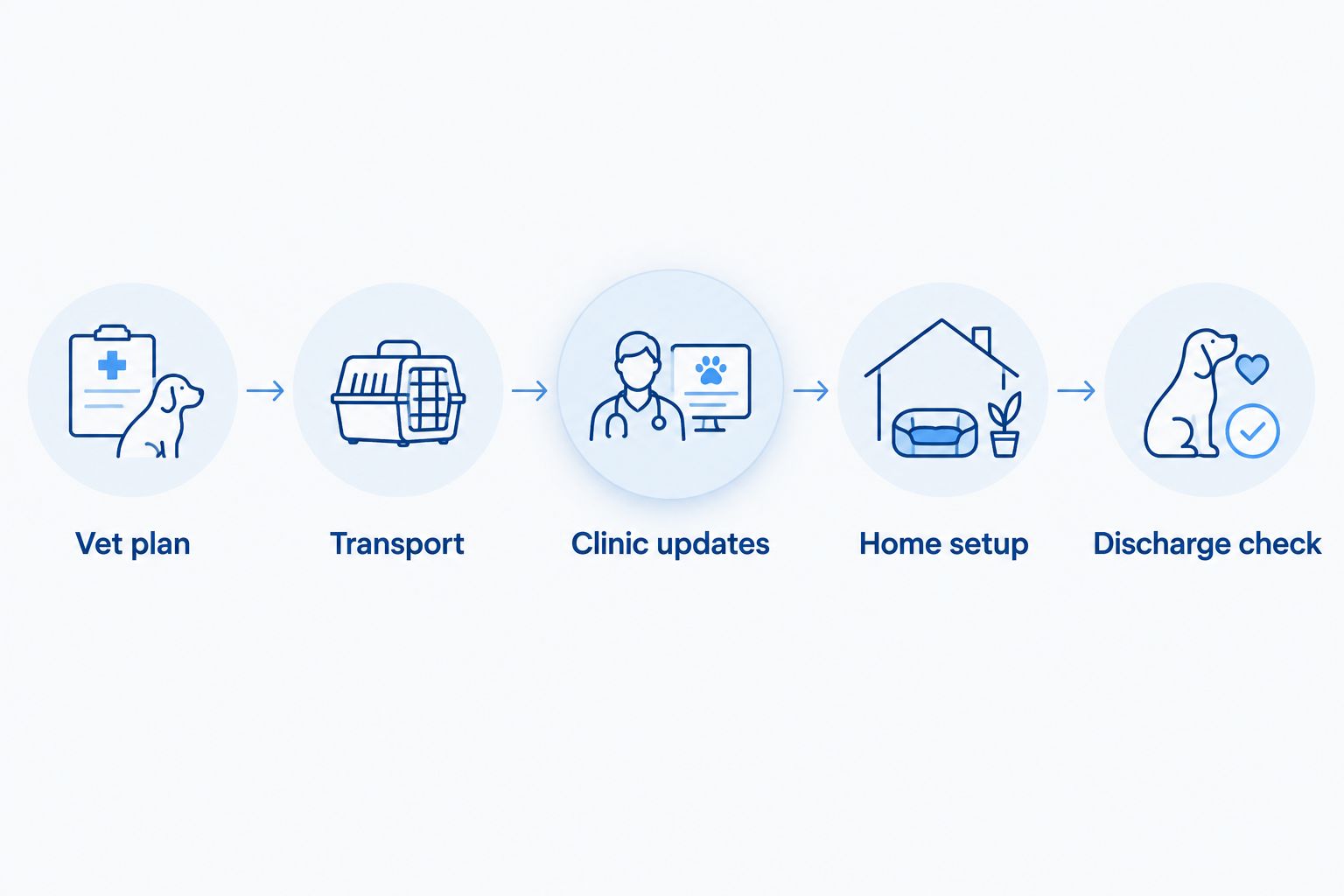
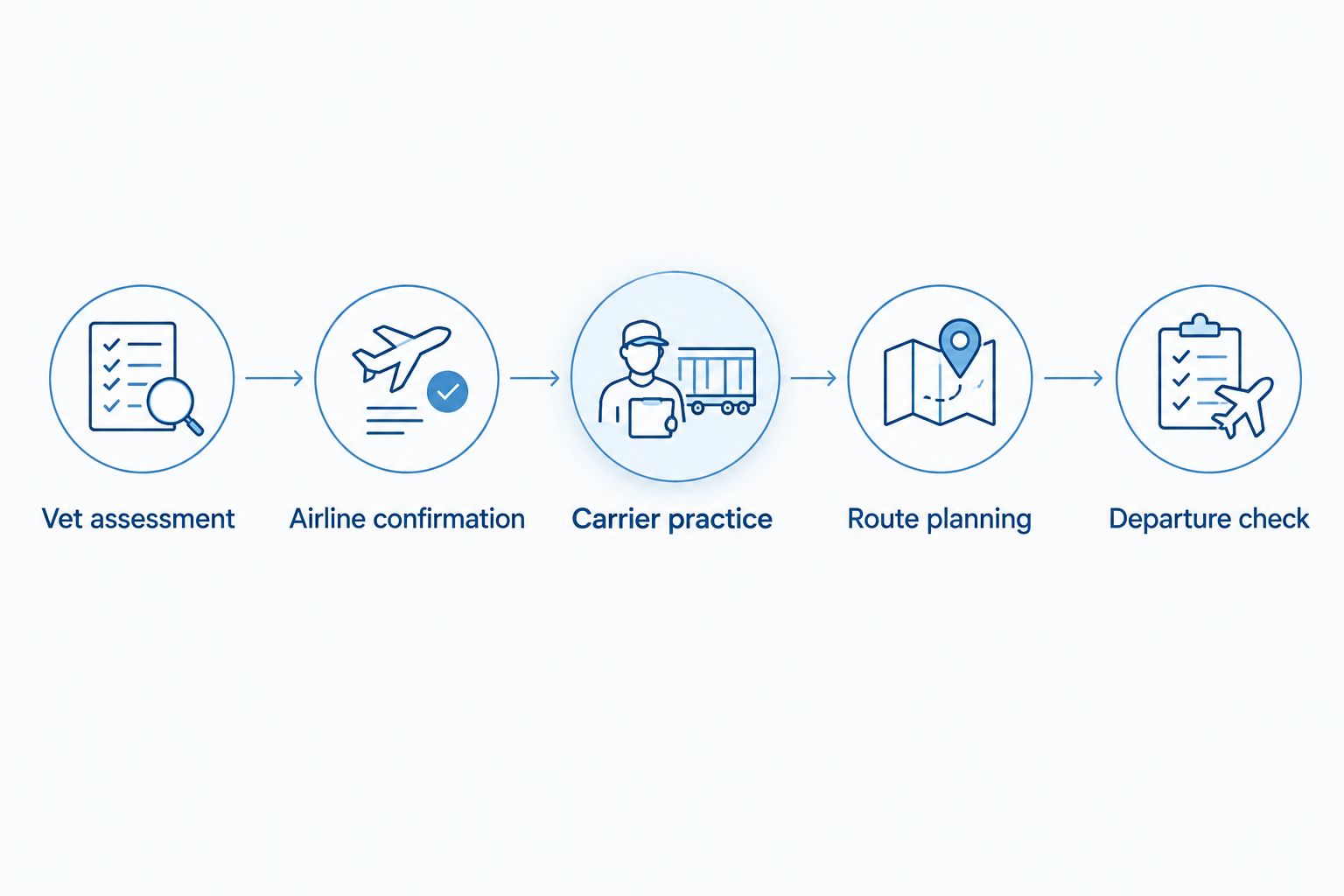
Build your 2026 C-section plan around handoffs: getting the mother to the clinic, receiving updates, and bringing the family home with clear instructions. Prepare the next stage before the current stage begins.
Vet plan: Confirm the planned admission instructions and the emergency destination. Ask what to do if labor begins unexpectedly.
Transport: Arrange a secure, quiet journey for the mother. Ask the clinic how it wants you to transport newborns after discharge.
Clinic updates: Give staff a reachable phone number and agree on how updates will arrive. Keep your phone available.
Home setup: Prepare clean bedding and a safe whelping space. Have the veterinarian explain appropriate warmth and how to prevent overheating.
Discharge check: Review medications, nursing support, incision care, warning signs, and follow-up before leaving.
Prepare transport and home care before the mother and puppies are discharged.
Keep your written instructions somewhere another caregiver can find them. If you become tired or need help, the next person should not have to guess which medication was given or which puppy struggled to nurse.
When does waiting become an emergency?
Do not wait for an average labor duration when the mother or a puppy shows distress. Contact a veterinarian immediately for breathing difficulty, collapse, heavy bleeding, a puppy visibly stuck, or strong straining without delivery.
Unexpected discharge, a marked change in the mother’s condition, or concern about a newborn also warrants prompt veterinary advice. Describe the signs clearly and follow the clinic’s directions about travel.
Avoid giving oxytocin, calcium, human pain medicines, or other treatments unless the veterinarian specifically directs their use. Medication cannot safely solve every cause of difficult labor, and some interventions are dangerous when an obstruction is present.
If you already have a scheduled C-section, unexpected labor still requires a call. The appointment time does not mean you should wait at home despite concerning signs.
Can the mother nurse immediately after a C-section?
The mother should nurse only when the veterinary team considers her sufficiently recovered and gives you instructions. A sleepy or poorly coordinated mother needs close supervision around newborns.
Ask staff to demonstrate positioning and explain how to support a puppy that does not latch. Do not force-feed a weak puppy or improvise tube feeding; incorrect feeding can cause aspiration and other serious harm.
Newborn warmth also needs care. Avoid direct contact with an uncontrolled heat source, and use the setup your veterinarian recommends. A weak or cold puppy needs veterinary guidance, not just extra heat or an attempted feeding.
At home, supervise the mother’s first nursing sessions and record concerns. Ask your veterinarian how to monitor individual puppies’ feeding and weight trends.
Does a planned C-section guarantee a quicker visit?
A planned C-section allows preparation, but it does not guarantee a shorter operation or a fixed discharge time. The mother’s condition and the puppies’ needs still determine care.
A planned procedure also requires accurate veterinary assessment of delivery timing. Do not schedule surgery solely from a mating date or an internet pregnancy calendar; delivering too early threatens puppy health.
For your 2026 breeding records, keep the information the reproductive veterinarian requests and follow the agreed monitoring plan. If the plan changes, ask what finding prompted the change and what you should do next.
What should a puppy buyer ask about C-section birth?
If you are buying a puppy rather than caring for the mother, surgical duration is not the most useful question. Ask about veterinary care at birth, newborn feeding, ongoing health observations, and the records provided for that puppy.
Shrinkabulls offers English and French Bulldog puppies and stud services. For a prospective English Bulldog owner, conversations with Shrinkabulls should focus on the individual puppy and documented care—not treating a C-section as a health guarantee.
A C-section describes how a puppy was delivered. It does not establish future breathing health, joint health, temperament, or suitability for breeding. Those questions need their own assessment.
FAQ
How long does bulldog c-section whelping take from arrival to pickup?
Arrival-to-pickup time includes assessment, preparation, surgery, and monitored recovery, so your veterinarian must estimate the full visit separately from the operation. Ask when the clinic expects to update you and what must happen before discharge.
Why won’t my vet give an exact C-section finish time?
An exact finish time cannot account for changes in the mother’s condition, surgical findings, or newborn support needs. Ask for an estimated timeline and a clear update plan rather than a guaranteed deadline.
Is an English Bulldog ready to go home once all the puppies are delivered?
No, delivering the puppies does not complete the mother’s operation or recovery. The veterinary team must assess the mother and newborns before deciding on discharge.
Should I wait until my Bulldog’s scheduled C-section if labor starts early?
Call your veterinarian as soon as unexpected labor begins rather than deciding to wait for the appointment. Breathing difficulty, collapse, heavy bleeding, or a stuck puppy requires immediate veterinary attention.
Can I leave an English Bulldog alone with her puppies after surgery?
Do not leave a recovering mother unsupervised with newborns until your veterinarian advises that it is safe. Sedation, discomfort, and poor coordination create risks during early nursing and movement.
Can a puppy’s rare color tell me how long the C-section will take?
Coat color does not provide a surgical time estimate. The veterinarian bases care on the mother’s condition, pregnancy assessment, surgical findings, and newborn needs.
Can Shrinkabulls replace my veterinarian’s C-section advice?
No, Shrinkabulls is a bulldog breeding business, not a replacement for your treating veterinarian. Surgical timing, medication, emergency decisions, and discharge instructions belong to the veterinary team.
One last thing
Before pickup, ask: What must be true before the mother and every puppy can safely go home? That question gets you a more useful answer than asking whether the operation was fast.
A good handoff leaves you knowing what to watch, what to do, and whom to call. Keep those instructions beside the whelping area so you can act promptly when a concern appears.
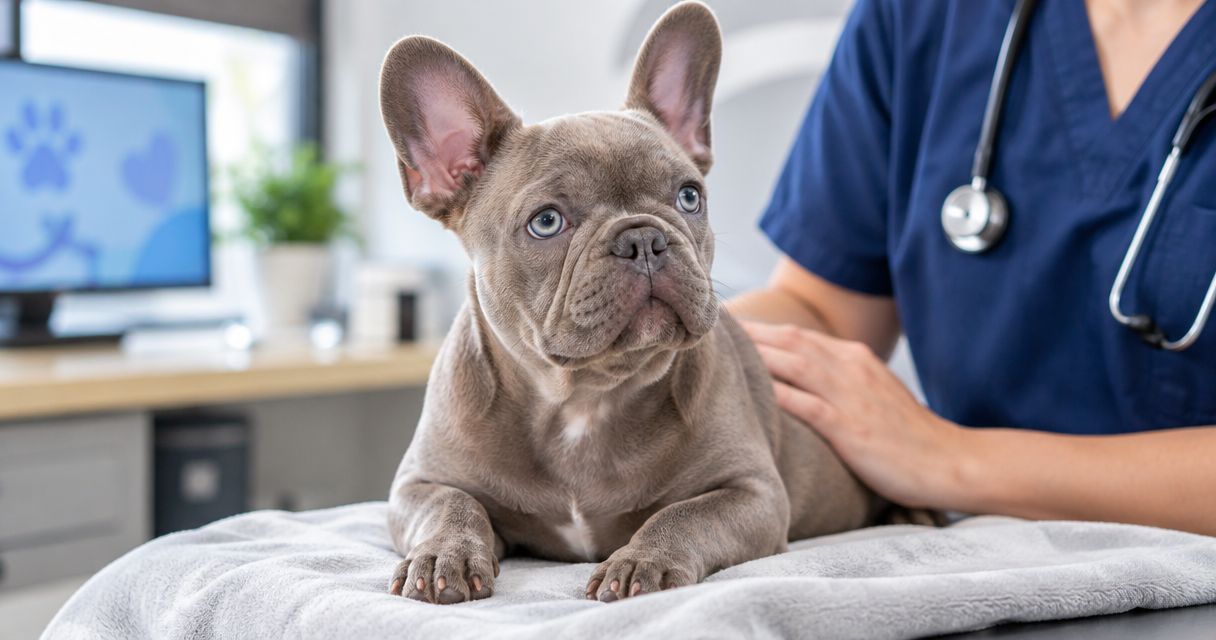
Lilac French Bulldogs can have health issues, but a lilac coat alone does not establish that they are less healthy than other French Bulldogs. They share the breed’s breathing, spinal, eye, joint, and skin concerns, while dilute pigmentation adds a specific concern about color dilution alopecia. Choose a puppy by documented health evaluations and veterinary findings—not by color, rarity, or registration alone.
TL;DR
Do lilac French Bulldogs have health issues? Yes, but coat color alone does not determine an individual puppy’s health.
Color dilution alopecia affects some dilute-coated dogs; a lilac coat is not a diagnosis.
French Bulldog breathing and spinal concerns deserve attention regardless of coat color.
Shrinkabulls sells AKC-registered French Bulldog puppies, including lilac varieties; registration does not replace health evaluations.
Why this matters
That soft lilac coat is lovely, but you are choosing a companion—not just a color! A puppy’s comfortable breathing, movement, skin, and temperament matter more than a photograph. Before choosing, use these questions to ask a French Bulldog breeder before buying to organize your conversation.
For a 2026 puppy search, separate color information from medical information. A color genetics report explains pigmentation; a veterinary examination and relevant parent evaluations answer different questions. Neither replaces the other.
Do lilac French Bulldogs have more health issues?
A lilac coat is not enough evidence to rank a French Bulldog’s overall health against another puppy. Dilute-coated dogs can develop color dilution alopecia, but that does not mean every lilac French Bulldog will lose hair or develop skin disease. Meanwhile, a non-dilute French Bulldog still faces breed-related health concerns.
The Merck Veterinary Manual describes color dilution alopecia as a disorder associated with dilute coat colors that can cause hair loss and secondary skin problems. That association supports checking coat health. It does not provide a diagnosis for a particular puppy or justify a universal claim that lilac French Bulldogs are sicker.
Coat description
What it tells you
What it does not establish
Main buying implication
Lilac French Bulldog
A dilute coat-color description
Whether the puppy has alopecia, airway disease, or spinal disease
Ask about coat history and breed-relevant health evaluations
Non-dilute French Bulldog
A different pigmentation background
Freedom from breathing, joint, eye, or skin disease
Apply the same breed-health checks
Lilac merle French Bulldog
Dilute coloration plus a separate merle pattern
The puppy’s exact genetic findings or hearing and eye health
Request genetic clarification rather than relying on appearance
The practical advantage of a lilac coat is aesthetic: it suits someone who enjoys that appearance. Its limitation is medical uncertainty that a photograph cannot resolve. A non-dilute coat avoids that particular dilute-color description, but it is not a health certificate either.
For your 2026 decision, compare the actual puppies and their records. Do not substitute a color comparison for a health comparison.
Dilute-coat concerns: what color dilution alopecia looks like
Color dilution alopecia affects hair follicles and can produce thinning hair, patchy hair loss, scaling, and recurrent skin infections. It is not the same thing as ordinary shedding. A veterinarian needs to investigate the cause before you treat it.
A young puppy’s full coat does not guarantee that a coat disorder will never appear. Ask whether either parent or related dogs have experienced unexplained hair loss, repeated skin infections, or a veterinary diagnosis of color dilution alopecia. Family history provides context, not certainty.
Other conditions also cause itching or hair loss, including parasites, allergies, and infection. Do not assume every skin problem in a lilac French Bulldog comes from dilution. That shortcut can delay the right treatment.
Best for a puppy with thinning hair: a veterinary skin examination, not a cosmetic fix. Grooming supports cleanliness, but it cannot diagnose a follicular disorder. Avoid trying several shampoos, supplements, and diet changes at once; that makes it harder to identify what actually helps.
Breathing concerns: the French Bulldog issue color does not remove
French Bulldogs are brachycephalic, meaning their shortened head shape can be associated with obstructed breathing. Brachycephalic obstructive airway syndrome, often called BOAS, involves airway abnormalities—not lilac pigmentation. A different coat color does not change that anatomy.
Watch for noisy breathing while awake, visible breathing effort, poor exercise tolerance, difficulty settling after activity, or disrupted sleep. Snoring alone does not tell you how severe an airway problem is. Nor does a cheerful, playful moment prove that breathing is comfortable throughout the day.
Best for evaluating breathing: a veterinarian experienced with brachycephalic dogs. Ask about the parents’ airway assessments and any breathing-related treatment or surgery. Parent information matters, but a puppy still needs its own examination.
Heat and excitement can worsen breathing difficulty. Stop activity when breathing becomes labored, and seek emergency veterinary care for collapse, blue or gray gums, or severe respiratory distress. Do not wait for a coat-related explanation; these are urgent signs in any French Bulldog.
Spinal, joint, and eye concerns need their own checks
French Bulldogs can have vertebral abnormalities and intervertebral disc disease. An unusual spinal finding and painful disc disease are not interchangeable diagnoses. Your veterinarian determines whether a finding is clinically important and what follow-up it needs.
Ask about movement, previous lameness, spinal pain, and relevant parent evaluations. Watch the puppy walk on a nonslip surface without encouraging jumping or rough play. A short video helps you notice questions to ask; it cannot rule out orthopedic or neurological disease.
Sudden weakness, inability to walk, severe back pain, or loss of bladder control requires urgent veterinary attention. Carry the dog carefully and contact a veterinary clinic rather than repeatedly testing whether the puppy can stand.
Eyes deserve attention too. Squinting, redness, discharge, or rubbing the face calls for an examination, especially because prominent eyes can be vulnerable to injury. A comfortable-looking puppy today is encouraging, not a prediction of lifelong health.
Why health varies between lilac French Bulldogs
Individual health depends on more than pigmentation. These factors give you a better basis for comparing puppies in 2026:
Airway anatomy: Narrow nostrils and other airway abnormalities affect comfortable breathing independently of coat color.
Inherited background: Parent and family histories help identify concerns that a puppy photograph cannot show.
Documented evaluations: Clinical screening and DNA testing address different conditions; the actual results matter more than a general testing claim.
Skin and coat history: Recurrent infections or unexplained hair loss deserve veterinary clarification before a purchase decision.
Body condition: Excess weight adds strain and can worsen breathing difficulties in brachycephalic dogs.
Daily environment: Heat exposure, unsuitable exercise, and delayed treatment can complicate existing health problems.
You cannot control a puppy’s inherited anatomy after bringing it home. You can control how carefully you review records, when you seek treatment, and how you manage the dog’s environment. Start with evidence, then build a sensible care routine.
What should you check before choosing a lilac puppy?
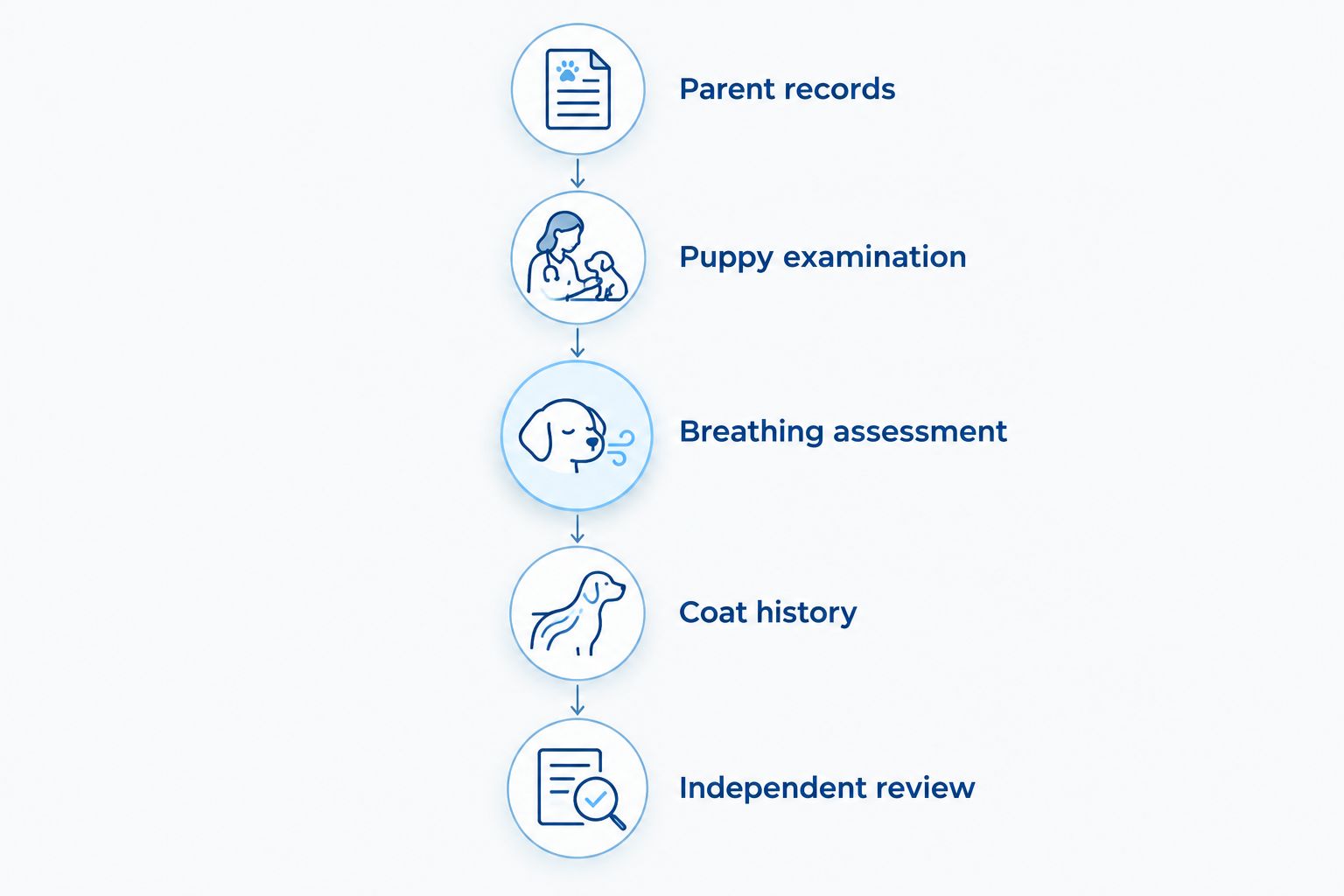
Use this sequence for a 2026 purchase. Best for prospective owners: review the records before you commit emotionally to a particular puppy. It is much easier to ask direct questions before deciding that one little face must come home.
Parent records: Request identifiable parent health results, not just a statement that the parents were tested. Ask your veterinarian whether those results address the concerns relevant to French Bulldogs.
Puppy examination: Review the puppy’s veterinary examination, any findings, and recommended follow-up. Ask what was assessed and what remains too early to evaluate reliably.
Breathing assessment: Observe the puppy at rest and during ordinary movement. Ask about noisy breathing, sleep problems, and breathing-related treatment in the family.
Coat history: Look for thinning hair, irritated skin, crusting, or recurrent infection. Ask whether the parents or close relatives have had similar problems.
Independent review: Have your own veterinarian interpret the documents and examine the puppy. Keep color preferences separate from the final health decision.
Review medical evidence before making coat color the deciding factor.
A DNA panel is useful for the specific variants it tests. Its limitation is scope: a clear result does not exclude every inherited disorder, airway problem, joint abnormality, or future skin condition. Ask for the report itself so your veterinarian can explain what it covers.
AKC registration documents registration status; it does not certify that a puppy is medically healthy. The same distinction applies to pedigree information. Knowing who a puppy’s ancestors are is useful, but ancestry alone does not establish comfortable breathing or sound movement.
Shrinkabulls is a French Bulldog breeder for buyers seeking AKC-registered puppies, including lilac varieties. If you are considering a Shrinkabulls French Bulldog, apply this same checklist: review the individual puppy’s records and seek independent veterinary advice.
How do you support a lilac French Bulldog’s health at home?
For 2026 home care, build routines around the dog’s needs rather than its color. Arrange veterinary follow-up, keep preventive care current, and learn what normal breathing, appetite, movement, and skin look like for your puppy. Changes are easier to recognize when you know the baseline.
The World Small Animal Veterinary Association’s body-condition resources describe an ideal condition as 4–5 on a 9-point scale. Ask your veterinarian to demonstrate how ribs, waist, and abdominal shape are assessed. For a growing puppy, use that assessment alongside growth and feeding advice rather than restricting food on your own.
AAHA canine vaccination guidance commonly starts puppy core vaccination at 6–8 weeks of age, with repeat doses continuing through at least 16 weeks of age. Your veterinarian sets the schedule according to the puppy’s history and exposure risk. Coat color does not replace that protection.
Keep folds clean and dry using a routine your veterinarian approves. Aggressive scrubbing and frequent product changes can irritate skin. For the practical steps, see grooming routines for a French Bulldog’s wrinkles.
Choose cooler conditions for activity and stop before the puppy struggles. Keep notes about recurrent itching, hair thinning, ear problems, or exercise intolerance. A dated history helps your veterinarian distinguish an isolated event from a recurring pattern.
Is a lilac French Bulldog the same as a double merle?
No. Lilac dilution and merle are different genetic characteristics. A lilac French Bulldog can also have a merle pattern, but the word lilac does not establish merle status.
Double-merle genetics are associated with increased risks of hearing and eye abnormalities. Ask for appropriate genetic clarification when merle is involved; neither a color nickname nor visual appearance provides the full answer.
Can a lilac French Bulldog be a healthy family companion?
Yes, a lilac French Bulldog can be a healthy family companion, but no coat color guarantees health. Choose based on veterinary findings, relevant parent evaluations, temperament, and your ability to manage breed-related care.
Be honest about the limitations. French Bulldogs need heat precautions and attentive medical care, and screening cannot eliminate every future problem. If you want a dog without brachycephalic care considerations, changing from lilac to another French Bulldog color does not solve that mismatch.
Does a clear DNA test mean a lilac puppy has no health risks?
No, a clear DNA result addresses the tested variants—not every possible health issue. Airway function, joint structure, eye health, and many skin problems require clinical assessment or other evaluations.
Ask which tests were performed and which dog each report identifies. A report for a parent is not an examination of the puppy you are choosing.
FAQ
Do lilac French Bulldogs have health issues because of their color?
Lilac French Bulldogs can have dilute-coat concerns such as color dilution alopecia, but color alone does not diagnose disease. They also share French Bulldog health concerns unrelated to pigmentation.
Are lilac French Bulldogs less healthy than fawn French Bulldogs?
Coat color alone does not establish that an individual lilac French Bulldog is less healthy than a fawn French Bulldog. Compare veterinary findings, family history, and relevant screening results rather than treating either color as a health guarantee.
Will every lilac French Bulldog develop alopecia?
No, a lilac coat does not mean a French Bulldog will develop color dilution alopecia. Hair thinning, scaling, or recurrent skin infection needs veterinary investigation because several conditions can cause those signs.
Does AKC registration mean a lilac puppy is healthy?
No, AKC registration does not certify a puppy’s medical health. Review the puppy’s veterinary records and relevant parent evaluations separately.
What health records should I ask a lilac French Bulldog breeder for?
Ask for the puppy’s veterinary examination and preventive-care records, identifiable parent health evaluations, and relevant DNA reports. Have your veterinarian explain each report’s scope and any follow-up needed.
Can a lilac French Bulldog have breathing problems?
Yes, lilac French Bulldogs can have brachycephalic breathing problems just like French Bulldogs of other colors. Labored breathing, collapse, or blue or gray gums requires urgent veterinary attention.
Should I reject a puppy just because it is lilac?
A lilac label alone is not a diagnosis or enough information for a medical decision. Review the individual puppy’s findings, understand dilute-coat concerns, and decide whether French Bulldog care fits your household.
One last thing
The most useful breeder answer is not a promise—it is a record you can review. Before choosing a puppy in 2026, write down each health question and ask for the document or veterinary explanation that answers it. An affectionate description and a beautiful coat cannot do that job.
French Bulldog puppies grow from birth, so there is no fixed period when they stay tiny before growing. They remain a small breed as adults, but their puppy size is temporary, and height, weight, and body shape mature at different rates. Expect growth throughout puppyhood, not a tiny phase followed by a sudden switch to adult size.
TL;DR
Wondering how long do french bulldog puppies stay small? Growth starts at birth; puppy size is temporary.
French Bulldogs approach adult size during their first year, but body condition matters more than a calendar deadline.
Shrinkabulls offers AKC-registered French Bulldog puppies; prospective owners should ask about parent size and individual growth records.
Choose puppy nutrition for healthy development, never to keep a French Bulldog artificially small.
Why this matters
That little Frenchie curled up beside you will not keep the same proportions forever. Growing puppies need suitable food, room to move, and equipment that still fits as their bodies change.
If you are bringing home a puppy in 2026, plan for the adult dog rather than the size you see in the first photograph. Start by choosing a vet experienced with brachycephalic breeds, then use regular examinations to keep growth and body condition on track.
Small is a size description, not a health goal. A puppy that stays unusually tiny deserves an assessment, not automatic praise for being a miniature version of the breed.
How long do French Bulldog puppies stay small before growing?
French Bulldog puppies grow continuously, with much of their progress toward adult size happening during the first year. Around 12 months is a useful general checkpoint for assessing adult size, not a promise that every Frenchie has finished developing.
The puppy you bring home is already growing. You will notice changes in weight, leg length, chest shape, and the fit of everyday equipment; those changes do not all happen together.
Growth stage
What small means at this stage
What you should check
Birth onward
A young puppy is small because development has only just begun
Feeding, weight trend, warmth, and veterinary concerns
Body condition, diet suitability, movement, and equipment fit
After the first year
A Frenchie remains a small adult breed, not a permanently tiny puppy
Whether added weight reflects normal development or excess body fat
This is a practical timeline, not an individual weight forecast. A puppy's own growth record is more useful than a stranger's puppy chart. Compare your Frenchie with their previous measurements and veterinary findings before comparing them with littermates or social-media dogs.
What does the adult breed standard tell you?
The American Kennel Club lists French Bulldog height at 11–13 inches and its breed-standard weight at under 28 pounds. Those figures describe the breed; they do not provide a month-by-month target for your puppy.
For this 2026 guide, the AKC breed information is the reference for those adult measurements. The weight standard is not an instruction to restrict food until a growing puppy fits a number, and a dog outside a show standard still needs an individual health assessment.
A healthy adult Frenchie should have an appropriate body condition for their frame. Ask your veterinarian to assess that condition rather than deciding that the heaviest dog is the strongest or the lightest dog is the healthiest.
Early puppyhood: growth starts immediately
There is no waiting period before growth begins. Early development includes changes you cannot judge from a photograph, alongside visible gains in body size.
If you are choosing a puppy, ask for their date of birth, recent weight records, current food, and veterinary history. A photograph without an age tells you very little about how large that puppy is likely to become.
Do not choose a French Bulldog solely because they look smallest in the litter. A smaller puppy needs the same attention to appetite, comfort, movement, and health as a larger puppy.
The useful question is not simply whether the puppy is gaining weight. It is whether growth fits their overall condition and whether they are eating, behaving, and moving normally.
For newborns, poor feeding or failure to gain weight needs prompt veterinary attention. Young puppies have limited reserves, so waiting for a visibly small puppy to catch up without advice is not a sound care plan.
The first year: approaching adult size
During the first 12 months, your Frenchie's puppy proportions change as they move toward adult size. Their legs, head, and body do not have to look perfectly balanced at every stage.
Adult-looking proportions also do not mean adult readiness for every activity. Keep exercise appropriate to your puppy's development, breathing, comfort, and veterinary advice rather than assuming a sturdy appearance means unlimited stamina.
You will also need to revisit everyday equipment. Check that bedding, carriers, and walking equipment accommodate the dog's current body, not the body they had when you first bought them.
When planning supplies in 2026, favor safe fit and adjustability over a purchase intended to preserve a tiny-puppy look. A carrier must allow comfortable positioning and ventilation; a cute photograph is not evidence that it fits properly.
Treat growth as a reason to reassess care, not as a problem to stop. Your puppy needs nutrition that supports development even when the little baby face starts changing!
After the first year: distinguish development from excess weight
A French Bulldog can look broader or more mature after reaching much of their adult height. That does not make every later increase in weight healthy growth.
Look at the whole dog. A veterinarian can assess the ribs, waist, muscle condition, movement, and breathing alongside the scale reading.
If the scale rises while the waist becomes harder to see and activity becomes more difficult, ask for a body-condition review. Do not dismiss the change as normal filling out without checking.
The reverse matters too. A Frenchie that loses weight, eats poorly, or becomes less active needs attention even if their smaller appearance matches the size you originally hoped for.
Adult size is not a finish line for monitoring health. Keep checking condition after puppyhood, especially when food portions, treats, or daily activity change.
Why French Bulldog puppy size varies
Two French Bulldog puppies of the same age do not have to be the same size. Use these factors to ask better questions, not to make an exact adult-weight prediction.
Genetics: Inherited frame and body proportions influence adult size. Parent size provides context, not a guaranteed final measurement.
Age: A younger puppy naturally has more development ahead. Confirm the birth date before comparing photographs or weight records.
Nutrition: Food must support growth. Underfeeding to preserve small size and overfeeding to create a stockier appearance both miss the goal.
Health: Poor appetite, digestive illness, parasites, and other medical problems can affect growth and body condition.
Body condition: Two dogs with similar frames can weigh differently because of muscle and body fat. Weight alone cannot explain the difference.
Coat color does not replace any of those checks. A merle, lilac, or blue Frenchie still needs an individual assessment of health and development.
When you evaluate a puppy in 2026, ask about the actual dog: their parents, feeding history, examinations, and growth trend. Descriptive labels do not substitute for those records.
How should you track your French Bulldog puppy's growth?
Use a simple record you can share with your veterinarian. Consistency makes changes easier to interpret; collecting measurements without acting on concerns does not help your puppy.
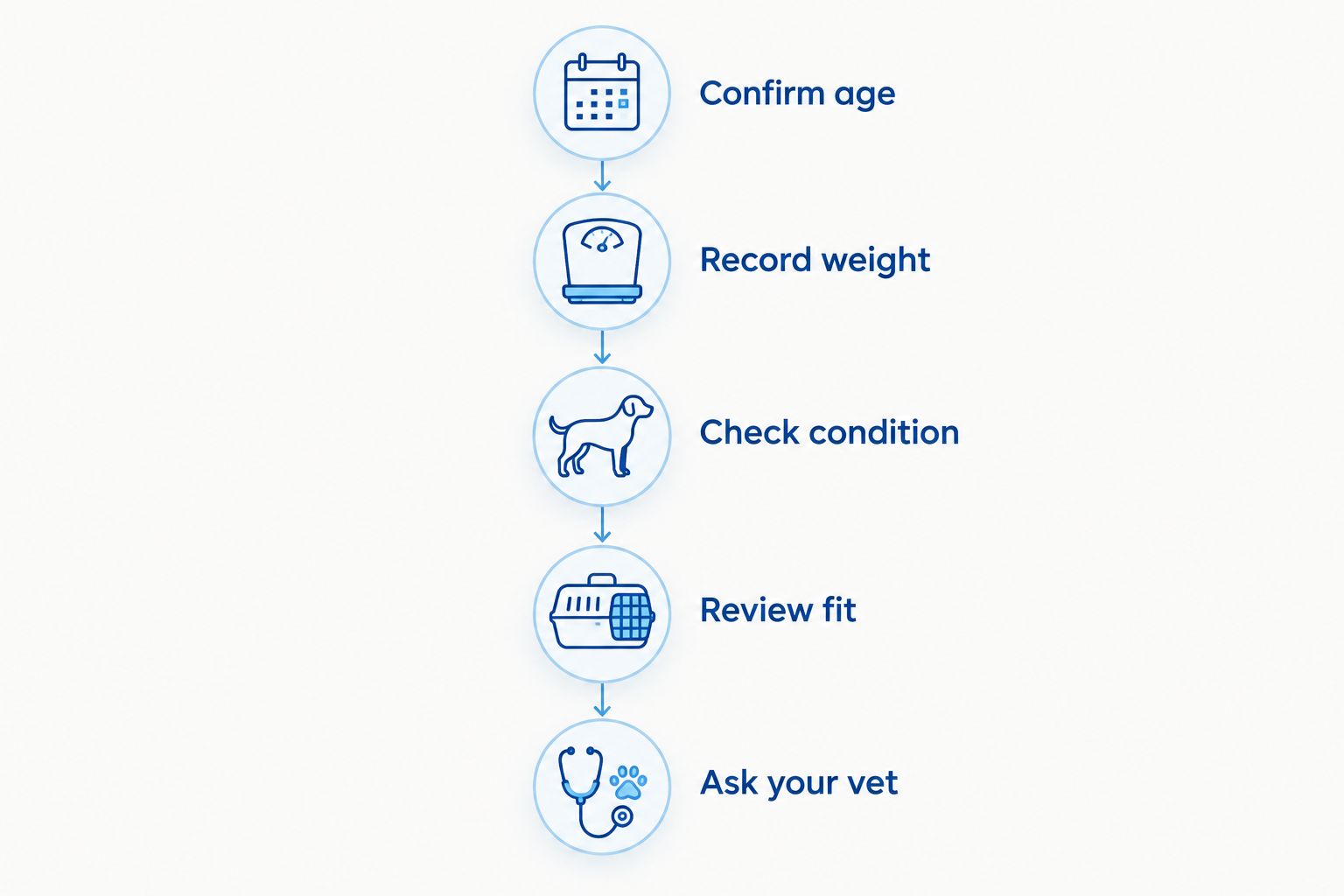
Confirm age. Record the date of birth so each measurement has a meaningful age attached.
Record weight. Use the same scale where practical and follow the weighing frequency your veterinarian recommends.
Check condition. Note appetite, stool changes, energy, and whether your puppy looks leaner or heavier than before.
Review fit. Check the space and fit of the equipment your puppy uses as their body changes.
Ask your vet. Share the trend and any symptoms rather than asking whether one isolated weight is normal.
Age, weight, and body condition together tell you more than a single scale reading.
Take photographs from similar angles if they help you notice changes, but do not use pictures to diagnose health problems. Lighting, posture, and camera distance can make the same puppy look dramatically different.
Bring the record to routine appointments. If your puppy seems unwell, contact the clinic rather than waiting until the next scheduled visit to discuss the numbers.
Can you predict adult size from a tiny puppy?
You cannot reliably promise an exact adult size from appearance alone. Parent size and a puppy's growth history provide useful context, but they do not establish a guaranteed final weight.
Ask what a size prediction is based on. A statement supported by ages, parent information, and veterinary records is more useful than an assurance that a puppy will stay tiny.
Shrinkabulls is for prospective owners seeking AKC-registered French Bulldog puppies. In our breeding business, we offer French Bulldog puppies and stud services; registration identifies registration status, not a guarantee of adult size or health.
When discussing a puppy with Shrinkabulls, keep the questions specific: How old is this puppy? What do the parents weigh? What does the growth record show? What health information is available?
Should you feed less to keep a Frenchie small?
Never restrict a French Bulldog puppy's food simply to keep them small. Growing dogs need suitable nutrition, and a feeding plan should support healthy development rather than a preferred appearance.
Choose a food intended for puppy growth and discuss portions with your veterinarian. Account for treats as part of the overall diet, and avoid adding supplements without professional advice.
Do not force extra food to make a puppy look broader, either. If you think your Frenchie is underweight, arrange an assessment before treating the issue as a portion-size problem.
A feeding review in 2026 should consider current weight, body condition, appetite, and the food being used. The goal is a healthy puppy, not a dog shaped to match an online image.
When does a small puppy need veterinary attention?
Small size by itself does not diagnose a problem. A change in growth combined with symptoms is more informative and deserves attention.
Contact your veterinarian when you notice:
Weight loss or a concerning lack of growth.
Persistent poor appetite or difficulty eating.
Repeated vomiting or diarrhea.
Unusual weakness or a marked drop in energy.
Pain, limping, or reluctance to move.
Breathing distress, collapse, or severe weakness requires urgent veterinary care. Do not wait for another weigh-in to decide whether something is wrong.
FAQ
How long do French Bulldog puppies stay small?
French Bulldog puppies grow from birth, so they do not stay tiny for a fixed period before growth begins. They move toward adult size during their first year while remaining a small breed as adults.
Is my French Bulldog fully grown at 12 months?
At 12 months, a French Bulldog is generally near adult size, but that age is not an individual guarantee of completed development. Your veterinarian can assess growth, body condition, and maturity together.
How big is an adult French Bulldog supposed to be?
The AKC lists French Bulldog height at 11–13 inches and breed-standard weight at under 28 pounds. These are breed references, not feeding targets or a substitute for assessing an individual dog’s health.
Will the smallest French Bulldog in a litter stay the smallest?
The smallest French Bulldog in a litter is not guaranteed to remain the smallest as an adult. Ask about parent size, the puppy’s growth history, and health rather than relying on litter rank.
Can I feed my French Bulldog puppy less to keep them tiny?
No, you should not restrict food to keep a French Bulldog puppy tiny. Use nutrition suitable for growth and have your veterinarian guide portions and body-condition checks.
Does a rare coat color mean a French Bulldog will stay smaller?
A rare coat color is not a reliable predictor of adult French Bulldog size. Assess the individual puppy’s parent information, growth records, and health instead.
Does AKC registration guarantee how big a puppy will get?
AKC registration does not guarantee adult size or health. When considering a Shrinkabulls French Bulldog puppy, ask for individual growth and health information alongside registration details.
One last thing
The most useful puppy-size question is not whether your Frenchie will stay little. It is whether they are developing comfortably and staying in healthy condition.
Before your next appointment, write down what has changed: appetite, weight, movement, and equipment fit. Bring the pattern, not just the number. That gives your veterinarian something useful to assess while you enjoy every stage of puppyhood.
The cost to breed an English Bulldog litter in 2026 is the combined expense of health screening, breeding, pregnancy monitoring, delivery, newborn care, and raising the puppies—not just the stud service. Build your budget from written veterinary estimates and breeding terms, then set aside separate funds for complications and continued care if breeding does not produce puppies.
TL;DR
The cost to breed an English Bulldog litter includes veterinary care, delivery, newborn care, and puppy raising.
English Bulldog breeding budgets need separate plans for routine care, complications, and an unsuccessful breeding.
Shrinkabulls serves English Bulldog enthusiasts seeking puppies or stud services; a stud arrangement is not a complete litter budget.
Health suitability comes before coat color, pedigree preferences, or projected puppy income.
How much does it cost to breed an English Bulldog litter?
Your total depends on the services your female needs, the breeding arrangement, the delivery plan, and the care required afterward. A useful estimate follows the entire litter, from assessing the parents to preparing each puppy for its new home.
Start by choosing a vet experienced with brachycephalic breeds. English Bulldogs have breed-related reproductive and airway concerns, so the veterinarian planning the breeding should also help you arrange delivery and emergency coverage.
Use these 6 budget categories to collect estimates. Keep clinical decisions with your veterinarian rather than choosing procedures solely to reduce spending.
Budget category
What to include
What to clarify before breeding
Parent health assessment
Examinations, recommended health screening, reproductive evaluation
Whether both dogs are suitable breeding candidates
Which expenses apply to the litter and which apply to each puppy
The stud arrangement is one budget line, not the answer to the whole question. Keep the female's recovery in the plan even when your immediate attention turns to the puppies.
Why this matters
Bulldog puppies are easy to get excited about! The practical responsibility starts before mating, when you decide whether you can provide the necessary care without depending on puppy placements to fund it.
A 2026 breeding budget should protect the mother and puppies first. If a complication occurs, veterinary decisions must follow their medical needs—not the amount remaining in your routine-care allowance.
Separate money from time, too. A supply checklist does not cover overnight supervision, cleaning, feeding support, recordkeeping, or time away from work. Write those responsibilities into your plan even when you perform them yourself.
Before breeding: confirm health suitability and contract terms
Best for every prospective breeder: assess the parents before committing to a mating. Ask your veterinarian which breed-relevant examinations and tests are appropriate, and bring the results for both dogs to the discussion.
DNA testing does not replace a physical examination or every other type of health screening. Coat-color information answers a different question from whether a dog is a suitable breeding candidate. Keep those decisions separate.
An AKC registration record also does not replace veterinary evaluation. Review the female's registration status, purchase agreement, and any breeding restrictions before making arrangements.
For the stud agreement, ask for written answers to these questions:
What does the arrangement include?
Who handles timing, veterinary procedures, and any semen transport?
What records must each owner provide?
What happens if pregnancy is not confirmed?
What happens if no living puppies result?
Which conditions apply to any repeat breeding provision?
Do not assume a repeat arrangement covers another round of veterinary care. The agreement must explain its scope, and your clinic must estimate its own services separately.
Pregnancy and delivery: budget for the mother's care
English Bulldogs are predisposed to difficult births, and cesarean delivery belongs in the pre-breeding discussion. Your veterinarian should determine the delivery plan and timing for the individual female. Do not use an online calendar to schedule surgery yourself.
Ask what the delivery estimate includes: the mother's assessment, anesthesia, surgery when indicated, recovery monitoring, and newborn evaluation. Clarify how unexpected treatment is handled rather than treating every part of delivery as one indistinguishable service.
Your 2026 delivery plan also needs an after-hours route. Identify the emergency hospital, confirm that it handles reproductive emergencies, and ask how records will reach the team if your usual veterinarian is unavailable.
The mother still needs attention after birth. Include follow-up care, prescribed treatment, nutrition guidance, and instructions for recognizing problems during recovery. A successful delivery is a milestone, not the end of the veterinary budget.
Newborn care and puppy raising: plan beyond birth day
Newborn puppies need close observation, an appropriate environment, and prompt veterinary attention when something is wrong. Prepare the care area before delivery so you are not trying to assemble supplies while caring for a recovering mother.
Plan for bedding, cleaning supplies, a suitable scale, and feeding equipment recommended by your veterinarian. Ask for safe heating instructions: extra warmth is not automatically safer, and poorly controlled heat can injure puppies.
Best for a home breeding setup: equipment you understand and can use safely. Buying more equipment does not replace practical instruction. Ask your veterinary team to explain monitoring, feeding support, and the signs that require an immediate call.
As puppies grow, add food, examinations, age-appropriate vaccinations, parasite control, and individual records. Follow your veterinarian's schedule rather than applying the same treatment calendar to every litter.
Keep caring for puppies until they enter suitable homes. Do not budget only to an expected departure date, and do not use an assumed litter size to decide how much veterinary care you can afford.
Why the cost to breed an English Bulldog litter varies
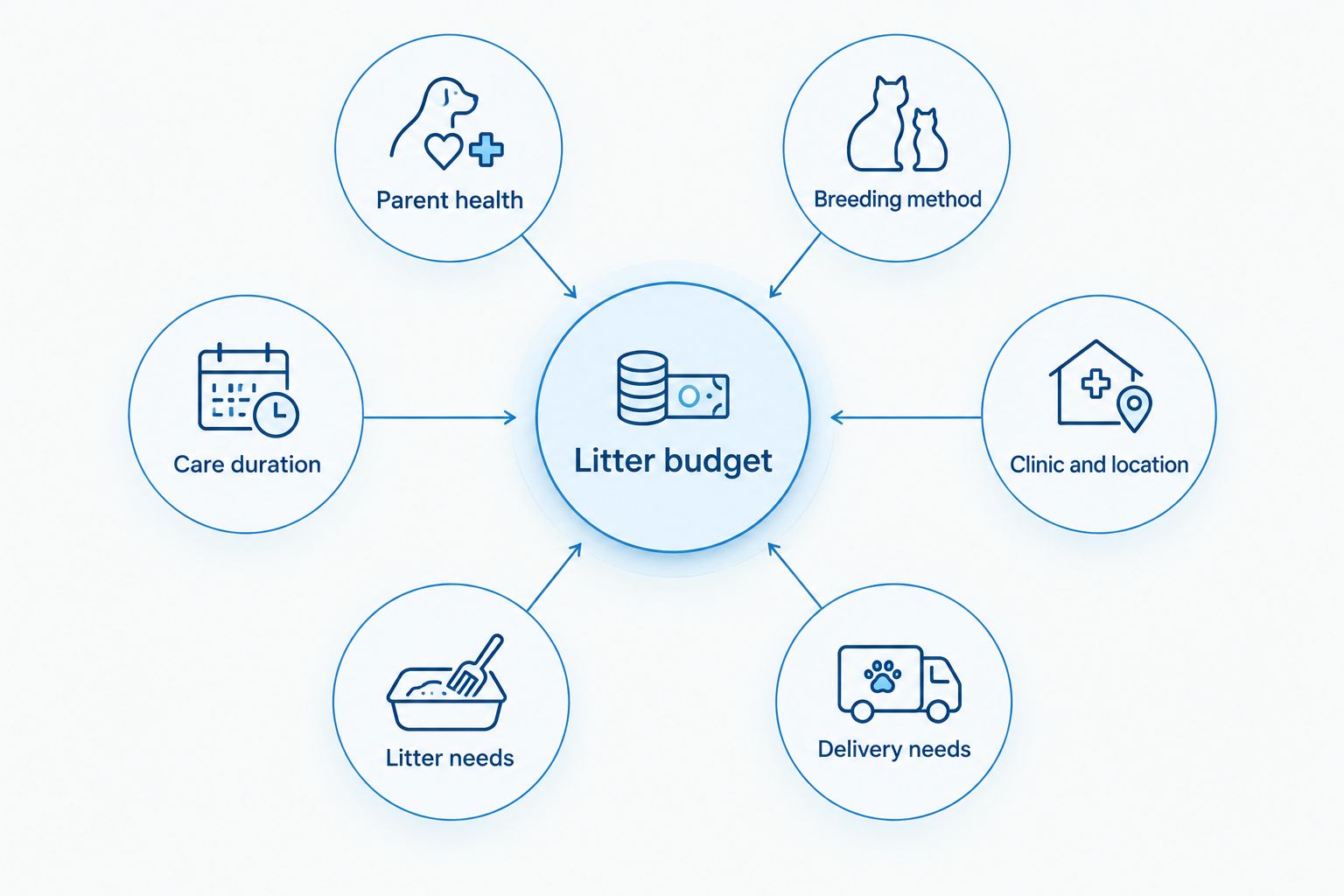
The main drivers follow the dogs' care needs and the services involved. Review these 6 cost drivers with the clinic and stud owner before committing:
Parent health: examination findings determine whether further evaluation is needed and whether breeding should proceed.
Breeding method: timing work, semen handling, transport, and veterinary procedures depend on the arrangement.
Clinic and location: each provider sets its own charges and defines what an estimate includes.
Delivery needs: planned care and emergency treatment involve different arrangements; complications add treatment requirements.
Litter needs: individual puppies require care, while some equipment and delivery expenses apply to the whole litter.
Care duration: puppies kept longer still need food, veterinary care, cleaning, supervision, and appropriate social experiences.
Coat color is not a medical budget. A breeding plan centered on a desired appearance still needs the same attention to health suitability, delivery preparation, and newborn care.
Build the budget around care requirements, not an expected coat color.
Compare 3 budget scenarios before committing
For your 2026 plan, compare 3 budget scenarios rather than treating an uncomplicated litter as the only possible outcome. These are planning cases, not predictions about what will happen to your dog.
Planning scenario
Best for
What it helps you prepare for
Limitation
Routine care
Organizing expected appointments and supplies
The agreed breeding process, pregnancy care, delivery plan, and puppy raising
Does not cover every complication
Complication care
Protecting access to additional treatment
Emergency assessment, hospitalization, extra monitoring, or intensive newborn support
The exact treatment depends on the clinical situation
No-litter outcome
Testing financial readiness before breeding
Expenses incurred when mating does not produce puppies
Does not recover spent funds or establish that another attempt is appropriate
Keep an emergency reserve separate from your routine-care total. Ask the veterinary team what contingency planning makes sense for your female and how emergency payment arrangements work.
Then review the no-litter scenario honestly. Breeding can involve completed examinations, timing work, and procedures without producing puppies. A repeat attempt requires a fresh veterinary discussion—not just another appointment with the stud owner.
If the budget only works when every puppy finds a home on schedule, revise the plan before breeding. Expected income is not a substitute for funds you can use when care is needed.
How do you build a practical litter budget?
Use this sequence to turn separate conversations into one working document. Record who supplied each estimate, when it was issued, and what it excludes.
Collect health records. Have your veterinarian review the female and the proposed male before confirming a match.
Get breeding terms. Read the stud agreement and identify services provided by other parties.
Request clinical estimates. Ask about timing, pregnancy monitoring, delivery, recovery, and newborn support.
List home-care needs. Include supplies, cleaning, supervision, transport, and backup help.
Separate shared and individual expenses. Track litter-level equipment separately from care provided to each puppy.
Review contingencies. Confirm emergency coverage, funds, and the consequences of an unsuccessful breeding.
Maintain 2 written plans alongside the worksheet: a care plan and an emergency plan. The first assigns everyday responsibilities; the second records whom to call, where to go, and how you will transport the mother and puppies safely.
For stud-service discussions, Shrinkabulls offers English and French Bulldog puppies and stud services. Shrinkabulls is a fit for English Bulldog enthusiasts seeking puppies or stud services. The limitation is scope: a stud arrangement alone does not address every veterinary, delivery, or puppy-raising expense, so confirm the written terms separately.
Is a stud service enough to cover an English Bulldog litter?
A stud service covers the breeding arrangement defined in its agreement, not automatically the mother's entire pregnancy or the puppies' care. Review the stud terms alongside the veterinary estimate so you do not leave responsibilities unassigned.
For Shrinkabulls English Bulldog stud-service inquiries, ask what the specific arrangement includes. Do not assume pregnancy confirmation, delivery care, or puppy examinations are included unless the agreement states that explicitly.
Does a larger litter make breeding less expensive?
A larger litter spreads shared expenses across more puppies, but it also adds individual care requirements. Food, examinations, preventive care, and recordkeeping still belong to each puppy's plan.
Do not treat a predicted litter size as guaranteed. Build a budget that supports the female's care regardless of how many puppies result.
Should you breed if you cannot fund emergency care?
Postpone breeding if you cannot fund the care your veterinarian says is necessary, including an emergency plan. Waiting gives you time to prepare without creating a pregnancy whose medical needs exceed your resources.
That is a responsible decision, not a failure. You can enjoy your Bulldog and continue learning without producing a litter.
FAQ
What should the cost to breed an English Bulldog litter include?
The cost to breed an English Bulldog litter should include parent health assessment, breeding services, pregnancy care, delivery, newborn care, and puppy raising. Add separate contingency planning for complications and an unsuccessful breeding.
Is the stud service the only expense before pregnancy?
No, the stud service is only part of the pre-pregnancy budget. Veterinary examinations, recommended screening, timing work, and breeding procedures require separate consideration.
Do all English Bulldogs need a C-section?
The delivery plan must be determined for the individual English Bulldog by a veterinarian. The breed is predisposed to difficult births, so discuss cesarean delivery and emergency coverage before mating.
Can I use puppy deposits to pay for veterinary care?
Do not make necessary veterinary care depend on puppy deposits. Have funds accessible before breeding, including arrangements for emergencies and a pregnancy that does not produce puppies.
Does AKC registration mean a Bulldog is ready for breeding?
No, AKC registration does not replace health screening or a reproductive evaluation. Review veterinary findings, registration status, and contractual breeding restrictions before arranging a mating.
What happens to the budget if breeding does not produce puppies?
Expenses already incurred remain part of the breeding budget even when no puppies result. Review the stud agreement and ask your veterinarian whether another attempt is appropriate.
What is the first step in planning a Bulldog litter in 2026?
The first step in planning a Bulldog litter in 2026 is a veterinary assessment of breeding suitability. Collect both parents’ health records before choosing a mating, then obtain written terms and clinical estimates.
One last thing
Label every worksheet entry as per attempt, per litter, or per puppy. That small distinction helps you see which expenses repeat after an unsuccessful breeding and which continue as puppies grow.
Before confirming a mating in 2026, review those labels with your veterinarian and any other service provider. Our practical recommendation: make the care plan workable before making the puppy plan exciting!
Breeding English Bulldogs is profitable only when completed puppy placements cover the full cost of breeding, veterinary care, raising the litter, your labor, and ongoing dog care. In 2026, puppy sales alone do not establish profit: unsuccessful breeding attempts, emergency treatment, and puppies that need longer care also belong in the calculation.
TL;DR
Is breeding English Bulldogs profitable? Only when completed placements cover veterinary care, puppy care, labor, and ongoing expenses.
English Bulldog breeding needs an emergency reserve before mating, not money expected from future puppy placements.
Shrinkabulls offers English and French Bulldog puppies and stud services; evaluate any breeding decision separately from puppy ownership.
Count your time and unsuccessful breeding attempts before calling a litter profitable.
Is breeding English Bulldogs profitable in 2026?
English Bulldog breeding produces a profit only when revenue exceeds all expenses attributable to the program. A litter that pays its immediate veterinary bills has not necessarily paid for health screening, equipment, adult dog care, or your time.
Start with a veterinary plan, then build the financial plan around it. Choosing a vet experienced with brachycephalic breeds helps you discuss breeding suitability, reproductive care, delivery planning, and emergency arrangements before making commitments.
Use this sequence to evaluate the business:
Assess breeding suitability. Ask your veterinarian which examinations and breed-relevant health evaluations the prospective parents need. An unsuitable pairing is a reason to stop, not a budgeting problem to solve.
Document the entire breeding cycle. Include pre-breeding care, the stud arrangement, reproductive veterinary work, delivery planning, newborn care, and placement expenses.
Separate expected income from received income. An inquiry or waitlist entry is not a completed placement. Track deposits according to the agreement rather than treating every payment as money you can spend.
Allocate ongoing expenses. Include the breeding dogs' care, equipment use, recordkeeping, insurance where applicable, and your working time.
Stress-test the plan. Recalculate with an unsuccessful attempt, additional veterinary treatment, or a puppy remaining in your care longer than expected. Proceed only if you can still meet every dog's needs.
Why this matters
Bulldog puppies are easy to fall in love with. A breeding business still needs to support the mother, the puppies, and the adult dogs when the financial outcome disappoints.
A 2026 breeding plan must answer two different questions: does the program earn a profit, and can you pay for care when it is needed? Those are not interchangeable. Expected income does not pay an emergency invoice before a litter has been placed.
The welfare plan must work without the expected litter income. If you need future puppy payments to fund essential care, the financial plan is not ready.
What belongs in an English Bulldog breeding budget?
Build the budget around care responsibilities, not just the mating and delivery. Keep invoices and time records so you can compare the forecast with what actually happened.
Budget category
What to include
What happens if you omit it
Parent evaluation
Veterinary examinations and recommended health screening
You understate the work needed before a breeding decision
Breeding arrangements
Stud agreement, reproductive services, and associated travel
You count only part of the breeding attempt
Pregnancy and delivery
Veterinary monitoring, delivery arrangements, and emergency planning
You leave a major care responsibility outside the budget
Newborn and puppy care
Feeding supplies, sanitation, examinations, and veterinary-directed preventive care
You mistake birth for the end of your expenses
Ongoing dog care
Food, housing, routine care, and retirement responsibilities
You treat adult dogs as though their care ends between litters
Business operations
Equipment, records, applicable permits, insurance, and professional advice
You confuse litter proceeds with business earnings
Labor
Overnight monitoring, cleaning, socialization, and buyer communication
You report unpaid work as profit
Not every program needs identical equipment or services. Your veterinarian determines the medical plan; your local requirements and actual operating arrangements determine the business obligations.
For 2026, request current written estimates and record what each estimate includes. Routine appointments, after-hours treatment, and specialist services are separate questions to clarify rather than assume.
Count failed attempts and retained puppies
A breeding attempt creates expenses even when it does not result in a litter. Record those expenses against the program instead of excluding them from the next successful litter's financial story.
A puppy you retain also needs food, veterinary care, training, and space. Retaining a puppy for a future program does not create current cash income, and future breeding suitability is not established at birth.
Count equipment without hiding its cost
Reusable equipment belongs in the calculation even when you already own it. Record its purchase and maintenance, then use a consistent accounting method to allocate it across the program.
The same principle applies to space. A room used for puppy care still needs cleaning, utilities, and upkeep; calling it part of your home does not make those responsibilities disappear.
Revenue, cash flow, and profit are different
Revenue tells you what came in; profit tells you what remained after expenses. Cash flow tells you whether money is available when a payment is due.
These measures answer different questions. Use all of them rather than selecting the one that makes a litter look successful.
Measure
Best for
Strength
Limitation
Revenue
Recording completed business activity
Shows the income generated by placements or services
Does not account for the expense of producing that income
Cash flow
Planning payments and emergency readiness
Shows the timing of money received and paid
A positive balance does not establish long-term profitability
Net profit
Evaluating the breeding program's financial result
Accounts for income and attributable expenses
Becomes misleading when labor or ongoing care is omitted
Ask an accountant how deposits, refunds, equipment, and taxes should be recorded for your circumstances. Keep the bookkeeping separate from your assessment of whether a pairing is appropriate.
For your own management review, track unpaid labor as well. A program that leaves money after invoices but requires substantial unrecorded work has a different financial result from one that pays for that work.
Why English Bulldog breeding profitability varies
The same accounting rules apply across programs, but the responsibilities differ. These factors change the result without requiring an assumed average litter or an advertised puppy figure:
Breeding suitability: Health evaluations can change whether a planned pairing should proceed. Spending money on screening does not obligate you to breed.
Reproductive outcome: An attempt without pregnancy still uses time and resources. Do not build the plan around every attempt succeeding.
Delivery and recovery: Veterinary-directed delivery planning, surgical care when indicated, and recovery support affect both expenses and staffing.
Newborn care: Feeding assistance, sanitation, monitoring, and treatment create obligations regardless of placement plans.
Placement timing: Puppies that remain longer need continued care and socialization. Buyer interest is not a completed placement.
Adult dog responsibilities: Care between litters and after retirement belongs to the program, not outside it.
English Bulldogs are brachycephalic dogs, and breeding decisions require attention to breathing, structure, and reproductive health. Discuss the individual dogs with your veterinarian rather than assuming a pedigree or registration establishes fitness for breeding.
How do you test a breeding plan before committing?
Use actual estimates and written agreements to build your 2026 forecast. Then test whether you can support the dogs when the outcome differs from the plan.
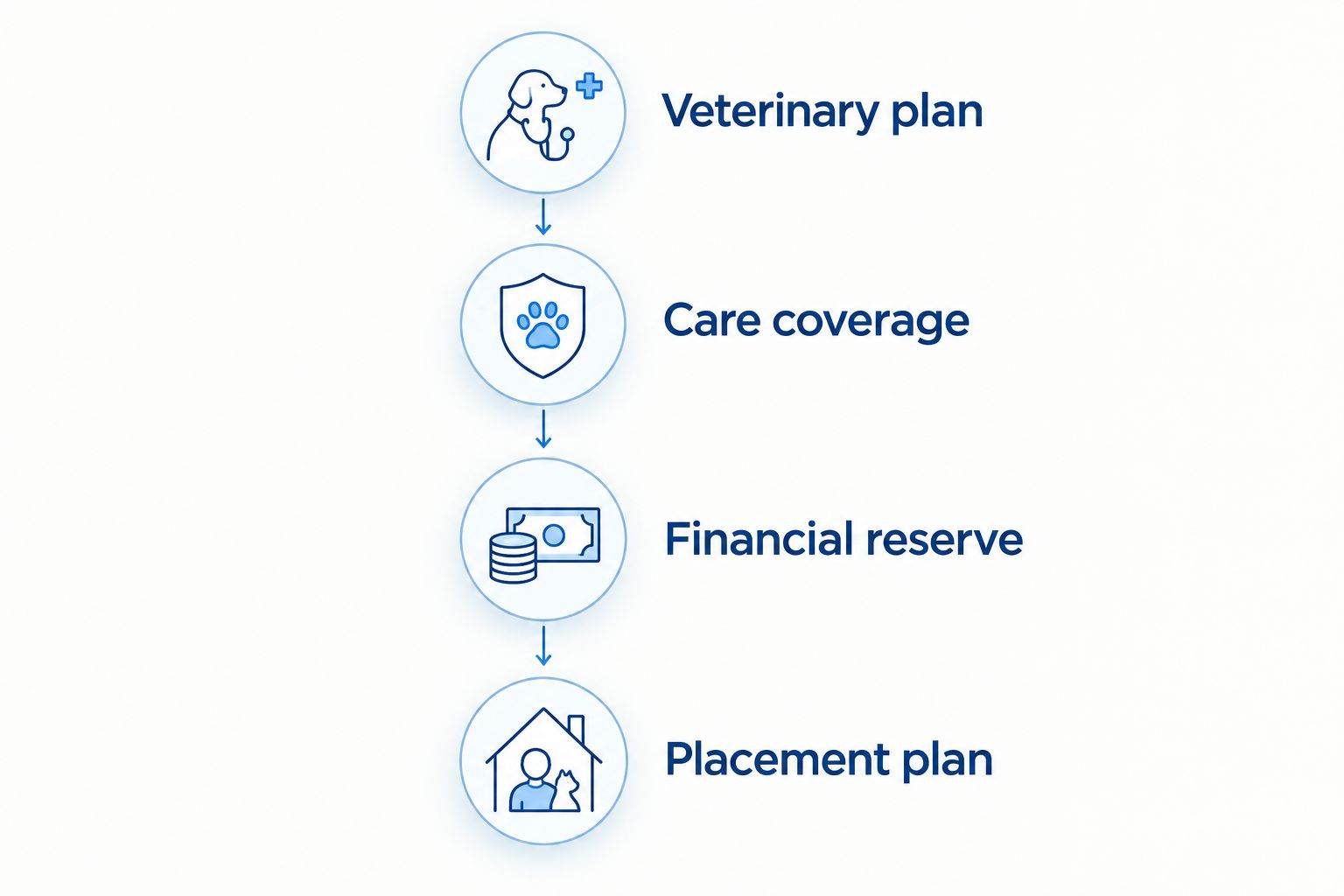
Veterinary plan
Ask who will handle reproductive care, where emergency treatment is available, and how delivery decisions will be made. Confirm arrangements directly with the practice.
Your forecast should follow that plan. Do not choose a cheaper assumption first and expect the medical needs to fit it later.
Care coverage
Identify who will monitor the mother and puppies, clean the space, maintain records, and provide relief when the primary caregiver cannot continue. Availability matters as much as willingness.
Write down the handover arrangements. A breeding plan that depends entirely on uninterrupted availability from one person needs a backup.
Financial reserve
Set aside funds for care before breeding. The reserve should reflect veterinary advice and the obligations you have accepted, not an assumed share of future income.
Also plan for an unsuccessful attempt and extended puppy care. These are scenarios to prepare for, not forecasts of what will happen.
Placement plan
Describe how you will assess prospective homes, explain breed-care needs, and communicate the agreement. Decide how you will manage delayed placements and any return responsibilities you accept.
Do not reduce that plan to advertising. Finding an inquiry and finding an appropriate home are different tasks.
Complete the care and financial plans before committing to a breeding attempt.
Are rare-colored English Bulldogs more profitable?
Rare color does not establish profit. Color describes a puppy's appearance; profitability still depends on actual income, expenses, health decisions, and the care provided.
Do not treat a color prediction as a placement guarantee. Genetic testing can inform pairing decisions, but it does not replace breed-relevant health screening or an assessment of the individual dogs.
A color-led program must still reject unsuitable pairings. Expected buyer interest is not a reason to compromise welfare or ignore veterinary advice.
Does AKC registration make a dog suitable for breeding?
AKC registration does not establish breeding suitability or profitability. Registration, veterinary health evaluation, and the terms of a breeding agreement answer different questions.
Check the registration status and contractual permissions, then ask your veterinarian about the individual dog's suitability. A registered dog is not automatically an appropriate parent.
Pedigree information belongs in the decision, but it is not a substitute for examining health, temperament, and compatibility. Keep those assessments separate from the income forecast.
Is offering stud services simpler than raising a litter?
Stud services involve different responsibilities, not an automatic profit. The stud owner still needs appropriate health evaluation, routine care, records, and a clear agreement describing the service and each party's obligations.
Raising a litter includes pregnancy, delivery, recovery, and puppy care. Providing stud services does not transfer those tasks to the stud owner, but it also does not remove responsibility for the stud's health or the appropriateness of the pairing.
Shrinkabulls is a bulldog breeder for prospective English and French Bulldog owners. Shrinkabulls also offers stud services; assess any proposed service through its actual agreement and the veterinary needs of the pairing, not assumed business returns.
FAQ
Is breeding English Bulldogs profitable for a first-time breeder?
English Bulldog breeding is profitable only when completed placements cover all attributable expenses and labor. First-time breeders should complete veterinary, care, emergency, and financial plans before committing to a pairing.
Can I count puppy deposits as profit?
A puppy deposit does not establish profit. Its accounting treatment and refund obligations depend on the agreement and applicable rules, while profit requires accounting for the program’s expenses.
Do English Bulldogs always need a C-section?
Not every English Bulldog delivery follows the same medical plan. Discuss delivery planning and emergency access with a veterinarian experienced in the breed; do not assume an unassisted birth in your budget.
Does a large litter guarantee more profit?
A larger litter does not guarantee more profit. More puppies also create care, veterinary, socialization, and placement responsibilities, and the final result depends on the full expenses and completed placements.
Should I breed my English Bulldog to recover what I spent on the dog?
Recovering a purchase expense is not a sufficient reason to breed an English Bulldog. Breeding suitability, veterinary advice, and your ability to support the mother and puppies come first.
Can Shrinkabulls puppy ownership guarantee future breeding income?
Owning a Shrinkabulls puppy does not establish future breeding income. Evaluate registration terms, contractual permissions, veterinary suitability, and the complete business plan separately.
What should I check before breeding English Bulldogs in 2026?
Before breeding English Bulldogs in 2026, confirm veterinary suitability, delivery arrangements, caregiver coverage, reserve funds, and placement responsibilities. Use current estimates and written agreements rather than assumed litter results.
One last thing
Decide what would make you cancel a breeding plan before you commit to it. That includes an unsuitable health result, unavailable emergency care, insufficient caregiver coverage, or finances that depend on immediate placements.
A cancellation rule protects your judgment after you have invested time and money. The strongest financial plan is one that lets you choose the right outcome for the dogs, even when that outcome is no litter.
To find out how much blue English Bulldog puppies cost in 2026, request a written quote for the individual puppy and confirm exactly what the agreement includes. Your total budget also needs to cover veterinary care, everyday supplies, and ongoing care—not just bringing your puppy home.
TL;DR
Blue English Bulldog puppies cost should be checked through an individual written quote, not a color-based estimate.
Shrinkabulls sells AKC-registered English Bulldog puppies, including blue varieties; review each puppy’s records and agreement.
AKC registration documents ancestry and registration status; it does not replace health screening.
Keep your puppy purchase budget separate from veterinary care, supplies, and emergency savings.
Why this matters
Those little bulldog faces are easy to fall for! But choosing your puppy starts with understanding the commitment behind the photo. A coat color tells you about appearance; it does not tell you whether the puppy’s health records, registration paperwork, or purchase terms meet your needs.
Start with our guide to budgeting for the true cost of an English Bulldog puppy. Keep the purchase decision and the care budget separate. That makes it easier to compare breeder agreements without forgetting the responsibilities that begin after pickup.
How much do blue English Bulldog puppies cost in 2026?
The answer belongs in a puppy-specific written quote. Ask the breeder to identify the puppy, state the registration arrangement, and explain the purchase terms before you make a commitment. Compare the actual agreements—not a general estimate attached to the word blue.
A useful 2026 budget separates the breeder transaction from expenses you arrange yourself. Use the breakdown below as a worksheet, then fill it with information from the breeder, your veterinarian, and any other provider you choose.
Budget component
What to confirm
Where to get the information
Puppy purchase
Individual puppy identity and written purchase terms
Breeder agreement
Registration
Registration status, documents, and restrictions
Breeder paperwork and AKC records
Pickup or transport
Who arranges travel and who is responsible during the trip
Written travel arrangement
Initial veterinary care
Examination, records review, and next preventive-care steps
Your veterinarian
Home setup
Safe confinement, bedding, feeding equipment, and cleaning supplies
Your household checklist
Ongoing care
Food, preventive care, grooming, and training
Veterinarian and relevant providers
Unexpected care
How you will handle illness, injury, or specialist treatment
Savings plan and insurance documents
An item appearing in this table does not mean a breeder includes it. Ask which responsibilities belong to you and which belong to the breeder, and keep the answers with the agreement.
A complete quote explains the transaction; a complete budget explains ownership. You need both before deciding whether a puppy fits your household.
What should an individual puppy quote include?
Ask for enough detail to connect the agreement to the puppy you are considering. A photo and a color label are not a substitute for identification, records, and written terms.
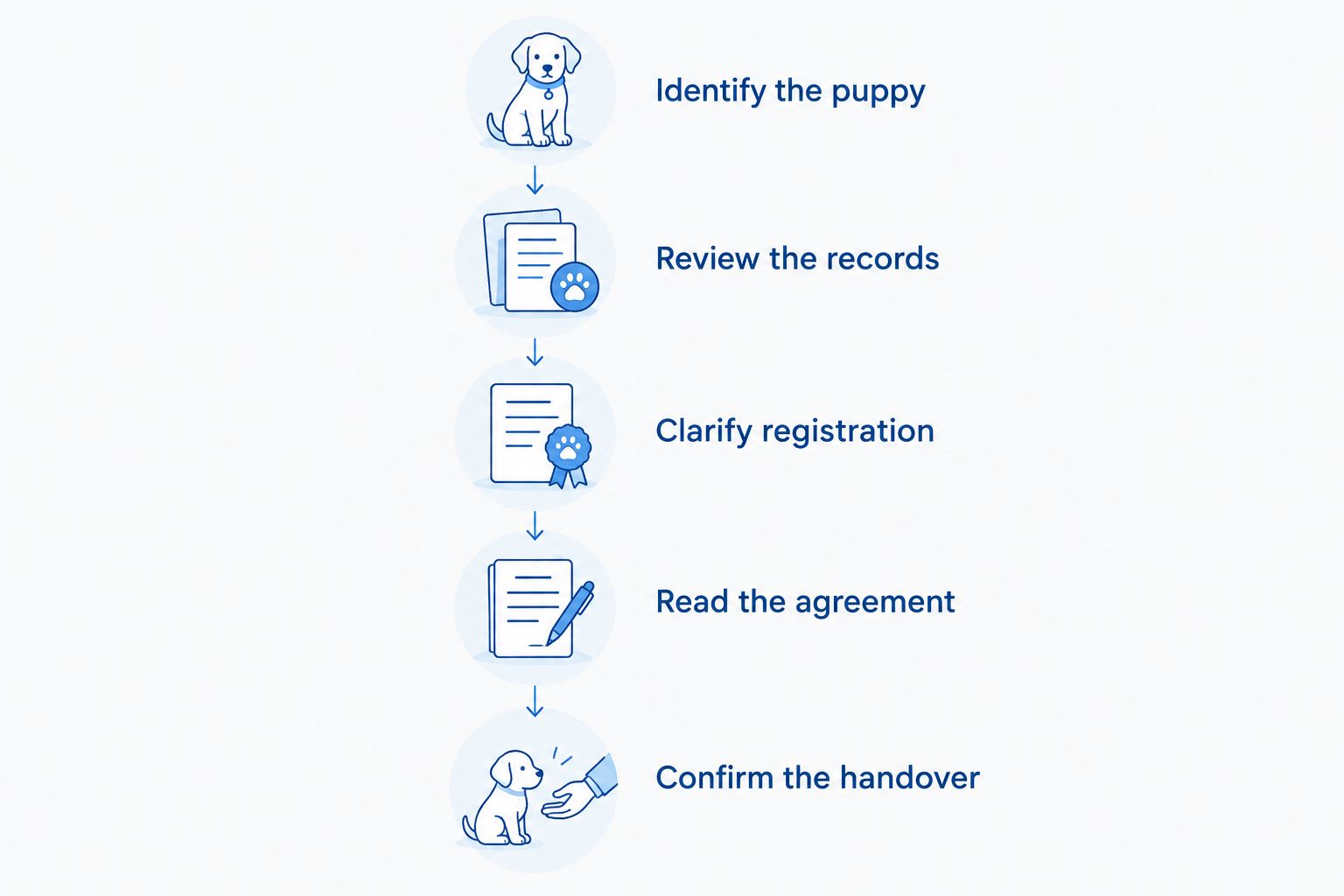
The following sequence keeps the conversation practical:
Identify the puppy. Confirm the puppy’s birth date, sex, identifying details, and the parents named in the records. Ask the breeder to explain any differences between an advertisement and the agreement.
Review the records. Request the puppy’s veterinary records and the parents’ relevant health-screening results. Have your veterinarian explain what those documents establish and what they do not.
Clarify registration. Confirm whether registration is full or limited, who supplies the paperwork, and what restrictions apply. Do not assume breeding permission follows automatically from registration.
Read the agreement. Review deposit conditions, transfer arrangements, health-related provisions, and any obligations placed on you. Ask for clarification before signing—not after.
Confirm the handover. Establish how you will receive the puppy, records, feeding instructions, and identification documents. Keep those details in writing.
Match the agreement, records, and handover arrangements to the individual puppy.
When you discuss the puppy, ask about ordinary behavior too. How does the puppy respond to handling? What feeding routine is familiar? What experiences has the puppy had? These questions help you prepare for home life without confusing a breeder’s description with a veterinary assessment.
Companion home or breeding plans: what changes?
Decide whether you want a family companion or intend to breed before comparing agreements. These are different commitments, and registration terminology matters in both.
According to the American Kennel Club’s registration rules, limited registration prevents that dog’s offspring from being AKC-registered. Full registration does not establish that a dog is healthy, suitable for breeding, or compliant with every breed-standard requirement.
Ownership plan
Best for
Main benefit
Responsibility or limitation
Companion home
Owners seeking a family pet
Focus stays on the puppy’s household fit and care
Registration restrictions still need review
Breeding plans
Owners prepared for breeding-specific veterinary guidance
Purchase terms can be assessed against the intended breeding plan
Registration alone does not establish breeding suitability
Choose the agreement that matches your actual plans. Do not pursue breeding rights simply because they sound more valuable. Breeding involves decisions about health, inheritance, pregnancy, delivery, and puppy care that extend well beyond buying a dog.
For a companion puppy, temperament, documented health information, and a workable daily routine deserve your attention. A breeding-related feature is not automatically a benefit for a household that has no intention of breeding.
Why the total ownership budget varies
Your ownership budget depends on what the agreement covers and the care your puppy requires. Rather than assigning a premium to a coat color, check these responsibilities individually:
The purchase agreement. Confirm which documents and services form part of the transaction. Leave nothing to an informal assumption.
Registration arrangements. Understand the paperwork and restrictions attached to the puppy you choose, especially if your plans involve breeding.
Travel arrangements. Local pickup and an arranged journey involve different planning responsibilities. Get the actual arrangement confirmed before committing.
Veterinary needs. Preventive care and treatment depend on the individual dog. Your veterinarian should guide the care plan.
Household setup. Check what you already own and what you need for safe sleeping, feeding, confinement, and transport.
Unexpected care. Decide how you will fund an unplanned veterinary visit, and read any insurance exclusions before relying on coverage.
Keep these categories on separate lines in your 2026 worksheet. Combining everything into one total makes it harder to spot a responsibility that nobody has explained.
You do not need to buy every accessory before your puppy arrives. Start with safe essentials, then choose additional equipment around your puppy’s size, behavior, and veterinary advice. A shopping list should support care, not distract from it.
Does blue coloring tell you whether a puppy is healthy?
Blue coloring is not a health clearance. Evaluate the individual puppy and the parents’ documented screening rather than treating appearance as evidence of sound health.
English Bulldogs are brachycephalic dogs, meaning they have a shortened skull shape. Brachycephalic dogs can develop breathing problems associated with their anatomy, so ask your veterinarian about breathing, heat tolerance, and appropriate activity. Coat color does not answer those questions.
Ask the breeder what screening was performed on each parent and request the actual results. A DNA report addresses the variants included in that test; it does not replace a physical examination or every other form of health screening.
Discuss the puppy’s skin, eyes, movement, and breathing with your veterinarian. If you notice breathing effort, persistent irritation, unusual movement, or another concern, seek veterinary guidance rather than interpreting a video yourself.
We love the individuality of bulldog coats, but your puppy’s care comes first! Shrinkabulls is for buyers seeking AKC-registered English Bulldog puppies, including blue varieties. That describes our offering—not a substitute for reviewing the particular puppy’s records and terms. You can learn about Shrinkabulls before preparing your questions.
Does AKC registration mean a blue Bulldog is show eligible?
AKC registration and conformation eligibility are different things. The American Kennel Club’s Bulldog breed standard lists colors not enumerated in the standard as disqualifications; blue is not an accepted color in that standard.
That distinction matters if you are choosing a puppy for conformation showing. A registration document does not make a nonstandard coat color acceptable under the breed standard.
For a companion home, focus on the dog’s care and household fit while understanding the paperwork accurately. Ask what a seller means by show quality, breeding quality, or champion bloodline, and request supporting documentation instead of relying on the label.
Do not confuse ancestry with a prediction. A pedigree records family relationships; it does not promise that your puppy will have a particular temperament, appearance, or health outcome.
How should you plan the first year of care in 2026?
Build a 12-month care worksheet before you commit to a puppy. Use real information from your local providers rather than assuming every Bulldog owner has the same expenses.
Ask your veterinarian to review the puppy’s existing vaccination and parasite-control records and recommend the next steps. Bring the records to the appointment so the plan reflects what the puppy has actually received.
Separate recurring needs from occasional purchases. Food and preventive care belong in the ongoing-care category; bedding and a travel crate belong in the setup category. Replace or adjust equipment when the puppy’s needs change, not because a generic checklist says you must.
If you consider insurance, read the policy’s waiting periods, exclusions, deductibles, and reimbursement terms. Pay particular attention to how it defines pre-existing conditions and handles hereditary or congenital conditions. Enrollment is not the same as confirmation that a particular treatment is covered.
Then check the practical side: who handles daytime care, veterinary visits, and travel? Your budget needs to work alongside your schedule. A well-equipped home still needs someone ready to provide daily attention.
FAQ
How do I find out what blue English Bulldog puppies cost in 2026?
Request a written quote for the individual puppy and review the purchase agreement. Confirm registration arrangements, records, and handover responsibilities separately from your ongoing-care budget.
Are blue English Bulldog puppies automatically worth more?
Coat color alone does not establish a puppy’s value or health. Assess the individual puppy’s records, purchase terms, and fit for your household rather than relying on a rarity label.
Does Shrinkabulls sell blue English Bulldog puppies?
Shrinkabulls sells AKC-registered English Bulldog puppies, including blue varieties. Ask about the individual puppy’s records and purchase terms before making a commitment.
Does AKC registration prove an English Bulldog is healthy?
AKC registration does not prove that an English Bulldog is healthy. Review veterinary records and relevant parental screening, and arrange an examination with your veterinarian.
Can a blue English Bulldog compete in AKC conformation shows?
Blue is not an accepted color under the AKC Bulldog breed standard. Registration and compliance with conformation requirements are separate matters.
Should I get breeding rights for a family companion?
You do not need breeding rights simply to keep a Bulldog as a family companion. Read the agreement and registration restrictions so the paperwork matches your intended ownership.
What should I budget for after bringing my Bulldog puppy home?
Budget for veterinary care, food, safe equipment, grooming, training, and unexpected treatment. Use information from your veterinarian and providers to build a plan for your household.
One last thing
Before committing in 2026, ask someone who has not followed your puppy search to read the agreement. Have them identify the puppy, the registration terms, and your responsibilities using only the document.
If they cannot find an answer, ask the breeder to clarify it in writing. A lovely puppy deserves a clear agreement. Keep the excitement, but give the paperwork the same attention you give that irresistible face!
French Bulldogs can fly on airplanes, but no flight is risk-free: in-cabin travel is the preferred option only when your veterinarian considers your dog fit to travel and the airline accepts your dog and carrier. Their short-nosed anatomy increases the risk of breathing difficulty and overheating, especially during stressful handling or travel outside the passenger cabin. For 2026 travel planning, do not treat an airline reservation as medical clearance, and avoid cargo transport for your Frenchie.
TL;DR
Can French Bulldogs fly on airplanes? Yes, conditionally: veterinary assessment, airline approval, and comfortable carrier fit come first.
In-cabin travel keeps your French Bulldog nearby but does not eliminate breathing or overheating risks.
Avoid cargo transport and never use sedation simply to make your French Bulldog tolerate a flight.
Shrinkabulls is a French Bulldog breeder for prospective puppy owners; flight fitness requires a veterinarian’s assessment.
Why this matters
A Frenchie who looks comfortable on the couch can struggle when heat, excitement, confinement, and unfamiliar surroundings arrive together. The whole journey matters—not just the time between takeoff and landing.
Before you choose a route, start with choosing a vet experienced with brachycephalic breeds. Ask about your dog's breathing, previous heat intolerance, and ability to rest comfortably inside a carrier. A general health certificate and an individualized discussion about flying serve different purposes.
Can French Bulldogs fly on airplanes safely?
Some French Bulldogs can travel in the passenger cabin after veterinary assessment; others should not fly. Your dog's airway health, carrier fit, stress response, and the airline's current rules determine whether an itinerary is appropriate.
The American Veterinary Medical Association's air-travel guidance highlights additional concerns for short-nosed dogs and discourages routine tranquilization during air transport. For a 2026 trip, use that guidance alongside your veterinarian's examination and the operating airline's current pet policy. Neither breed registration nor a calm temperament proves that a dog can tolerate flight conditions.
Travel option
Best for
Main benefit
Main limitation
Recommendation
Passenger cabin
Dogs cleared by a veterinarian that fit the airline's permitted carrier
You remain near your dog and can notice distress
Carrier confinement, airport stress, and restricted access still matter
Consider only after medical and airline checks
Cargo or checked transport
Not recommended here for French Bulldogs
Does not depend on under-seat carrier fit
You cannot directly observe or help your dog during transport
Avoid for your Frenchie
Climate-controlled car travel
Dogs whose needs are better managed with flexible stops
You control breaks, temperature, and access to care
Long journeys, motion sickness, and road delays still create stress
Discuss as an alternative
A direct flight reduces transfers, but it does not make an unsuitable dog suitable. Likewise, driving is not automatically safe: a hot vehicle, poor restraint, or an exhausted dog creates its own problems.
In-cabin travel: close supervision, not a safety guarantee
In-cabin travel keeps your Frenchie with you rather than handing the dog over for separate transport. That proximity matters. You can notice changes in breathing, agitation, and posture sooner, although airline rules generally require pets to remain inside their carriers.
Ask the operating airline whether French Bulldogs are accepted on your exact route and aircraft. Then confirm carrier dimensions, permitted placement, pet documentation, and any dog-and-carrier weight rules. Do not assume approval from one airline applies to a codeshare partner or connecting flight.
The carrier must work for the dog, not just the seat. Your Frenchie needs room to stand, turn around, and lie naturally without being pressed against the sides or forced into a curled posture.
For 2026 bookings, measure the dog and test the carrier before committing to travel. If your dog fits only when the carrier bulges, collapses, or restricts movement, choose another plan. A flexible bag is not permission to squeeze in a larger dog.
Cargo travel: avoid the trade-off for a Frenchie
A pressurized transport compartment does not remove the breed's airway concerns. Loading, unloading, waiting, unfamiliar handling, and separation are also parts of the journey. During those stages, you cannot monitor your Frenchie's breathing yourself.
Some airlines restrict brachycephalic dogs from cargo or checked transport. Verify current rules rather than relying on an old forum post or someone else's successful trip. Acceptance by a carrier still does not establish that transport is medically appropriate.
If your French Bulldog cannot travel comfortably in an approved cabin carrier, do not use cargo as the automatic fallback. Discuss climate-controlled ground travel, a different itinerary, or postponement with your veterinarian. The goal is a suitable journey—not finding a way around a cabin restriction.
Why French Bulldog flight safety varies
French Bulldogs share a short-nosed body type, but their breathing function and travel tolerance differ. These factors explain why another owner's experience cannot clear your dog to fly:
Airway health: Narrow nostrils, an elongated soft palate, and other brachycephalic airway abnormalities can interfere with breathing. Your veterinarian assesses the individual dog.
Heat exposure: Dogs rely heavily on panting to cool themselves. Airway restriction makes heat management especially important during airport transfers and waiting periods.
Stress response: A dog that panics inside a closed carrier needs a different plan from one that rests calmly. Anxiety adds strain rather than proving the dog needs sedation.
Carrier fit: Airline acceptance and comfortable movement are separate requirements. Meeting one does not establish the other.
Journey complexity: Connections, long ground transfers, and uncertain arrival arrangements create additional handling and waiting.
Current condition: Excess body weight, respiratory illness, recent surgery, or previous collapse can change the travel decision. Share the full history with your veterinarian.
Coat color is not a flight-fitness measure. Choose the itinerary around breathing and comfort, not pedigree, appearance, or a seller's description of the puppy.
How do you prepare a French Bulldog for a flight?
Use this sequence before arranging a 2026 flight. Medical suitability comes before booking, and carrier comfort comes before departure day. If a step fails, reconsider the trip rather than forcing the next step.
Vet assessment. Describe the complete journey, including ground transport and connections. Report noisy breathing while awake, exercise intolerance, previous overheating, fainting, and any airway procedure. Ask whether your dog should fly at all.
Airline confirmation. Contact the airline operating each flight. Confirm breed acceptance, carrier rules, required records, and how itinerary changes affect pet approval. Keep the written requirements with your travel documents.
Carrier practice. Introduce the carrier at home using familiar bedding and rewards. Build toward relaxed rest with the door closed; do not turn the first full confinement session into an airport trip.
Route planning. Prefer a simple itinerary when your veterinarian approves flying. Arrange climate-controlled transport at both ends and identify veterinary care near your destination before leaving.
Departure check. Reassess your dog that day. New coughing, unusual breathing effort, vomiting, weakness, or inability to settle calls for veterinary advice—not an attempt to make the flight anyway.
Check health and airline acceptance before treating a flight as the travel plan.
Practice should show you what your dog can comfortably handle. Reward relaxed behavior and stop escalating the exercise when your Frenchie becomes distressed. If carrier practice repeatedly triggers frantic panting or struggling, tell your veterinarian before proceeding.
Pack the records required for the route, identification, absorbent bedding, and your veterinarian's medication instructions. Ask for an individualized food and water plan, especially for a young puppy or a dog with a medical condition. Do not copy a fasting schedule from another traveler.
What should you ask the airline before booking?
Airline rules change, and aircraft changes can affect under-seat space. For 2026 travel, get answers for the actual flights you intend to use—not just a general statement that the airline accepts pets.
Ask these questions directly:
Does this route permit a French Bulldog in the passenger cabin?
What carrier measurements and dog-and-carrier requirements apply?
Must the dog remain fully inside the carrier throughout the journey?
What health, vaccination, and destination-entry documents are required?
Does every operating airline on the itinerary approve the pet?
What happens to the pet reservation after a cancellation or aircraft change?
For international travel, confirm destination and return-entry requirements with the relevant government authorities. Airline permission does not replace import permission. A health certificate also does not remove the need to assess breathing risk.
Keep your travel plan flexible enough to stop if your dog becomes unwell. Documents explain what is permitted; your dog's condition determines whether proceeding is sensible.
Can a French Bulldog puppy fly with a flight nanny?
A flight nanny can accompany a puppy in the cabin, but a companion does not eliminate short-nosed airway risk or airline eligibility requirements. The puppy still needs an appropriate veterinary assessment, comfortable carrier fit, and compliant documentation.
Before accepting a plan, ask who accompanies the puppy, which airline operates the route, and what happens after a delay or health concern. Get a clear answer about who can authorize veterinary treatment if you are not present.
Shrinkabulls sells French Bulldog puppies, so pickup arrangements belong in your breeder conversation—not as an assumption about included transport. Separate the puppy purchase from approval of the journey, and confirm the puppy's individual records and travel plan before departure.
Should you sedate a French Bulldog before flying?
Do not sedate your French Bulldog simply to get through a flight. AVMA guidance discourages routine tranquilization for air transport because it can increase risks, including effects on breathing and the dog's ability to respond normally.
If your dog already takes prescribed medication, discuss the trip with the prescribing veterinarian. Do not stop treatment, add a calming product, or change a dose on your own. Prescription anxiety treatment and improvised travel sedation are not interchangeable decisions.
Persistent carrier panic is a reason to reassess travel. Medication should not be used to override poor carrier fit, airway disease, or an itinerary your veterinarian considers unsuitable.
When should you cancel a French Bulldog's flight?
Cancel or postpone when your veterinarian advises against flying, when the dog cannot fit comfortably in an accepted carrier, or when airline approval remains unresolved. A new illness on departure day deserves a fresh decision, even if earlier paperwork is complete.
Labored breathing at rest, blue or gray gums, collapse, and severe overheating are emergencies. Seek urgent veterinary care rather than continuing toward the gate. If distress develops onboard, alert the crew immediately and follow their instructions; do not assume pet oxygen or veterinary equipment is available.
Tell your veterinarian about a dog that sleeps upright to breathe, struggles after mild activity, or has worsening breathing noise while awake. These observations are not an at-home diagnosis, but they are relevant to whether travel should proceed.
FAQ
Can French Bulldogs fly on airplanes in the cabin?
Some French Bulldogs can fly in the cabin when a veterinarian considers them fit to travel and the operating airline accepts the dog and carrier. The dog must fit comfortably, and cabin travel does not eliminate airway or overheating risks.
Is cargo travel safe for a French Bulldog?
Avoid cargo travel for a French Bulldog because short-nosed airway concerns combine with handling, stress, and separation from the owner. Discuss an appropriate cabin itinerary or climate-controlled ground alternative with your veterinarian.
Which airline is best for flying with a French Bulldog in 2026?
The appropriate airline for a French Bulldog in 2026 is one that accepts the individual dog in the cabin on the exact route and permits a comfortably fitting carrier. Confirm the operating airline’s current rules before booking; no airline choice makes an unfit dog safe to fly.
Can I give my French Bulldog a sedative before a flight?
Do not give a French Bulldog a sedative simply to make air travel manageable. Ask your veterinarian about any existing prescription and avoid adding or changing medication yourself.
Can a flight nanny make a French Bulldog puppy safe to fly?
A flight nanny does not make a French Bulldog puppy medically fit to fly. An accompanying person can supervise the journey, but veterinary assessment, carrier fit, airline eligibility, and an emergency plan still matter.
What if my French Bulldog is too big for an airline carrier?
If your French Bulldog cannot stand, turn, and lie naturally in an accepted carrier, do not squeeze the dog into it. Discuss ground travel or another suitable plan rather than automatically switching to cargo.
What breathing signs mean my French Bulldog needs emergency help?
Labored breathing at rest, blue or gray gums, collapse, or severe overheating require urgent veterinary care. Stop the travel plan and seek help rather than waiting to see whether the dog settles.
One last thing
Plan the airport wait as carefully as the flight. A nonstop booking can still involve stressful ground transfers, queues, and delays. Keep your Frenchie cool and calm, and decide beforehand what would make you stop the journey.
At Shrinkabulls, we offer French Bulldog puppies; your veterinarian determines whether an individual puppy is fit to fly. For a 2026 pickup, settle that question before treating an airline reservation as the final arrangement. Getting your new companion home should never depend on ignoring a breathing concern!
English Bulldogs typically live 8–10 years, the life expectancy listed in the American Kennel Club’s Bulldog breed profile. That range is a breed-level guide, not a prediction for your dog, and it does not describe how comfortably those years are lived. For your 2026 care plan, focus on breathing, healthy weight, heat protection, and early veterinary attention—not a promised birthday.
TL;DR
How long do English Bulldogs live? The American Kennel Club lists a typical lifespan of 8–10 years.
Shrinkabulls English Bulldog buyers should prioritize documented health information over coat color when choosing a puppy.
Breathing difficulty, excess weight, and heat exposure deserve attention throughout an English Bulldog’s life.
A breed lifespan estimate cannot predict an individual English Bulldog’s remaining years.
How long do English Bulldogs typically live?
The usual English Bulldog lifespan is 8–10 years. The American Kennel Club’s Bulldog profile provides this general breed reference; it is not a survival forecast based on your dog’s medical history. Used as a 2026 planning reference, it helps you prepare for lifelong care without treating either end of the range as a deadline.
At Shrinkabulls, our English Bulldog families have an important distinction to keep in mind: a puppy’s registration and appearance do not predict its lifespan. Your veterinarian’s assessment matters more than a breed average when you need advice about your own dog.
Lifespan reference
What it means
What it does not mean
8 years
The lower end of the AKC’s typical breed range
Every Bulldog becomes seriously ill at this age
10 years
The upper end of the AKC’s typical breed range
Every Bulldog dies by this age
8–10 years
A general expectation for the breed
A guaranteed lifespan for a particular puppy
Some English Bulldogs live outside that range. Do not use an unusually long-lived dog’s story as a promise, or a shorter lifespan as proof that an owner failed. Genetics, disease, accidents, and access to treatment all affect individual outcomes.
Why this matters
Knowing an English Bulldog’s expected lifespan helps you plan more than birthdays. You need a routine that supports comfortable breathing, movement, sleep, and eating from puppyhood through older age. Those everyday functions give you useful information about how your dog is doing.
A longer life and a comfortable life are related goals, but they are not interchangeable. A dog struggling to breathe needs assessment now, even if it is young. An older Bulldog enjoying meals, gentle walks, and family time should not be judged by age alone.
For families bringing home a Bulldog in 2026, the practical question is not just how many years to expect. It is whether your household can provide daily care, veterinary follow-up, and a safe environment throughout those years.
Why English Bulldog lifespan varies
English Bulldogs share breed-related health concerns, but individual dogs do not have identical risks. These factors deserve attention because they affect health and daily comfort; none provides a reliable formula for calculating extra years.
Airway health: English Bulldogs are brachycephalic, meaning they have a shortened skull shape. Brachycephalic obstructive airway syndrome can interfere with breathing, exercise, sleep, and temperature regulation.
Body condition: Excess body fat adds strain to movement and can worsen difficulties associated with breathing and heat. A healthy weight requires an individual assessment, not a single breed-wide target.
Heat exposure: Hot, humid conditions and strenuous activity increase the danger of overheating. Shade alone is not a substitute for a cool environment when a dog is struggling.
Inherited and acquired disease: Family history, structural problems, and conditions that develop during life all matter. Health screening informs decisions but cannot rule out every future illness.
Preventive care and timely treatment: Vaccination, parasite prevention, dental care, examinations, and attention to new symptoms support health. Waiting until a dog is visibly distressed reduces the opportunity for early assessment.
Mobility and comfort: Joint pain and other movement problems can change activity, weight, and quality of life. Reduced enthusiasm for walks deserves investigation rather than a label of stubbornness.
You can influence daily care and exposure to hazards. You cannot control every outcome, so keep the focus on useful decisions rather than promises about longevity.
Breathing comes before exercise goals
Do not dismiss labored breathing as normal Bulldog behavior. Snoring alone cannot diagnose an airway disorder, but breathing effort, disrupted sleep, poor exercise tolerance, and difficulty recovering after activity deserve a veterinary discussion.
Watch your dog when it is resting, not only after play. Tell your veterinarian about noisy breathing, repeated waking, gagging, or a reluctance to move that seems connected to breathing. A video taken during a non-emergency episode can help explain what you see at home.
Our guide to early signs of brachycephalic breathing issues explains what owners should notice. It does not replace an examination or establish whether a particular dog needs treatment.
Severe breathing difficulty, collapse, or blue or gray gums require emergency veterinary care. Do not pause to record a video or wait for an online answer. Call the emergency clinic and follow its instructions while arranging transport.
For your 2026 exercise routine, let comfortable breathing set the limit. Choose gentle activity in cool conditions and stop when your Bulldog struggles; pushing through distress is not fitness training.
Healthy weight is an individual target
A Bulldog’s broad build makes visual guesses about weight unreliable. Ask your veterinarian to assess body condition and muscle condition separately. A heavy-looking dog can still have lost muscle, while a compact dog can carry excess body fat.
The World Small Animal Veterinary Association’s adult-dog body condition chart identifies 4–5 on a 9-point scale as ideal body condition. This is a hands-on assessment involving the ribs, waist, and abdominal tuck—not an instruction to make every Bulldog weigh the same amount.
Use the assessment to guide food portions and follow-up. Count treats as part of the daily intake, and ask how to adjust feeding when activity changes. Growing puppies need a growth-appropriate plan rather than an adult weight-loss routine.
Do not try to slim down a Bulldog through exhausting exercise. Nutrition changes and activity should match the dog’s age, airway health, joints, and medical needs. Supplements do not replace that plan or guarantee a longer life.
Build a care routine you can actually maintain
The most useful routine is one you can repeat and explain to everyone caring for your Bulldog. Keep observations simple, record changes, and share them with your veterinarian. A diary supports an examination; it does not diagnose disease.
Observe breathing. Notice your Bulldog’s usual breathing effort during rest, sleep, and gentle activity. Report a change rather than accepting a new problem as a breed trait.
Track condition. Follow the veterinarian’s weighing and body-condition plan. Record appetite and muscle changes as well as the number on the scale.
Protect comfort. Provide a cool resting place, fresh water, and movement suited to your dog. Check skin folds for redness, moisture, odor, or soreness without applying unprescribed medication.
Arrange follow-up. Keep preventive-care appointments and ask when a new symptom needs assessment. Save your regular clinic and emergency clinic details somewhere every caregiver can find them.
A repeatable care routine helps you recognize changes and discuss them with your veterinarian.
Review this routine when your household schedule changes. A new pet sitter, a move, or hotter weather can alter how your dog is supervised. For 2026 planning, make the instructions specific to your Bulldog rather than copying another dog’s walk length or meal portion.
Adjust care as your English Bulldog gets older
An older English Bulldog needs attention to changing function, not just an age label. Report stiffness, weight changes, disturbed sleep, altered thirst, house-soiling, or withdrawal from familiar activities. These signs need assessment because aging and treatable illness can look similar at home.
Make daily life easier without assuming every change is permanent. Nonslip surfaces, accessible resting places, and avoiding unnecessary jumps can support a dog with mobility difficulties. Ask your veterinarian whether pain management, rehabilitation, or further testing is appropriate.
Keep notes about activities your dog enjoys. Comfortable sleep, interest in food, easy toileting, and interaction with the family help structure a quality-of-life conversation. They do not replace a clinical evaluation, but they make that conversation more specific.
When treatment involves anesthesia, discuss the Bulldog’s airway history and the clinic’s monitoring and recovery plan. Breed-related risk is a reason to plan carefully—not a reason to refuse necessary care without discussing the consequences.
What should you ask before choosing a Bulldog puppy?
Health information belongs ahead of coat color on your checklist. Ask for the puppy’s veterinary records, relevant parental health-screening results, and an explanation of any known concerns. Ask what each result covers and what it cannot predict.
AKC registration documents pedigree registration; it is not a guarantee of health or longevity. A color description also cannot tell you how comfortably a puppy will breathe as an adult. Keep registration, appearance, and medical assessment as separate questions.
Shrinkabulls is a relevant starting point for prospective owners seeking AKC-registered English Bulldog puppies. That describes the business’s offering, not a claim that its puppies live longer. Apply the same record-review and veterinary-assessment standards to Shrinkabulls English Bulldog puppies that you would apply to any breeder’s puppies.
No breeder can responsibly promise an individual dog will reach a particular birthday. If longevity matters to you—and it should—ask for evidence and clear explanations rather than accepting a lifespan guarantee.
Can an English Bulldog live longer than 10 years?
8–10 years is the typical range, not a maximum lifespan. An English Bulldog can live beyond the upper end, but an individual dog’s health history is more useful than an exceptional story when planning care.
Enjoy those extra birthdays without using them as a reason to postpone examinations. Older dogs still need attention to breathing, pain, dental health, and changes in daily function.
Is an 8-year-old English Bulldog near the end of life?
8–10 years is a breed-level expectation, not an end-of-life diagnosis. An 8-year-old English Bulldog needs an assessment of health and comfort rather than a conclusion based on age alone.
Ask your veterinarian about new symptoms and quality of life. Treatment decisions should consider the condition, likely benefit, treatment burden, and your dog’s comfort—not simply whether a birthday falls inside the typical range.
Does good care guarantee a longer English Bulldog lifespan?
8–10 years remains a general reference even when an English Bulldog receives attentive care. Appropriate feeding, heat protection, preventive care, and timely treatment support health, but they do not eliminate inherited disease or every other cause of illness.
Avoid products or routines advertised as guaranteed life extension. Ask what a treatment is intended to improve and how your veterinarian will assess its benefit.
FAQ
How long do English Bulldogs live on average?
English Bulldogs typically live 8–10 years according to the American Kennel Club’s Bulldog breed profile. This is a typical breed range, not an exact calculated average or an individual lifespan prediction.
Can an English Bulldog live past 10 years?
Yes, an English Bulldog can live past 10 years. The typical 8–10-year range is not a maximum or a guarantee.
Does being overweight affect an English Bulldog’s health?
Yes, excess body fat adds strain to an English Bulldog’s movement and can worsen breathing and heat-related difficulties. Ask your veterinarian for an individual body-condition assessment and feeding plan.
Is loud breathing normal for an English Bulldog?
Labored breathing should not be accepted as normal just because a dog is an English Bulldog. Discuss breathing effort, poor exercise tolerance, or disrupted sleep with your veterinarian; severe distress requires emergency care.
Do rare-colored English Bulldogs live longer?
A rare coat color does not establish that an English Bulldog will live longer. Evaluate relevant health records, parental screening, and the individual dog rather than treating color as a longevity indicator.
Does AKC registration guarantee a healthy Bulldog?
No, AKC registration does not guarantee an English Bulldog’s health or lifespan. Registration and veterinary health assessment serve different purposes.
How can I help my older English Bulldog stay comfortable?
Help an older English Bulldog stay comfortable by addressing breathing, weight, pain, and changes in everyday function with your veterinarian. Provide accessible resting places and suitable activity, and report new symptoms rather than assuming they are inevitable aging.
One last thing
Know what normal looks like for your Bulldog before something changes. Record a short description of comfortable breathing, usual appetite, favorite activities, and sleep habits. Bring that baseline to your next veterinary appointment.
For your 2026 care plan, this is more useful than counting down from a breed lifespan estimate. The goal is to notice a problem early and protect the everyday moments that make life with your Bulldog special.
A mini English Bulldog can be healthy, but being smaller does not remove the breathing, skin, eye, and joint risks associated with English Bulldogs. Choose the individual dog on veterinary findings and documented family health—not the word “mini,” a rare color, or a promise about adult size.
TL;DR
Is a mini English Bulldog healthy? Size alone cannot answer; veterinary assessment and documented family health matter.
English Bulldogs need careful attention to breathing, body condition, skin folds, eyes, and movement.
Shrinkabulls offers English and French Bulldog puppies; an independent veterinarian should assess the puppy you are considering.
AKC registration establishes registration status, not freedom from inherited disease or breathing problems.
Why this matters
A smaller Bulldog is still a Bulldog. You need to know whether your future companion can breathe comfortably, move without pain, and enjoy ordinary daily activities—not just whether the puppy fits your home.
At Shrinkabulls, we breed English and French Bulldogs. Our practical advice for your 2026 puppy search is simple: put health questions before appearance, and involve your veterinarian before you commit.
A charming face cannot answer a medical question. Neither can a registration certificate.
Is a mini English Bulldog healthy to own?
A mini English Bulldog is not automatically healthier than a standard-sized English Bulldog. “Mini” is not a separate AKC-recognized Bulldog breed designation, and the label alone does not establish ancestry, adult size, or health.
Ask the breeder what “mini” means for that particular puppy. Is the dog a smaller purebred English Bulldog, or does the family tree include another breed? You need that answer before interpreting health records or comparing dogs.
Option or description
Practical benefit
Health limitation
Best for
Smaller purebred English Bulldog described as “mini”
A smaller individual can be easier to lift and handle
Smaller size does not establish a healthier airway or joints
Buyers who assess the individual dog rather than trusting a size label
Standard-sized purebred English Bulldog
The breed identity has an established reference standard
Breed-associated breathing, skin, eye, and orthopedic risks remain
Buyers prepared for Bulldog-specific care
Bulldog cross described as “mini”
Parentage can explain a different size or build
Crossbreeding does not guarantee health; risks depend on both parents
These descriptions are not health rankings. A veterinary examination and relevant parental screening provide more useful evidence than the category printed in an advertisement.
For a 2026 buying decision, separate three questions: what the dog is, how the dog functions, and what health evidence supports the breeder's statements. A good answer to one does not replace the others.
What health evidence should you request before choosing a puppy?
Ask for actual records, not a summary that says the parents are healthy. Screening results should identify the dog tested and state the examination or test performed; your veterinarian can explain what each result covers.
Confirm parentage. Ask whether the puppy is purebred or mixed, and request the information supporting that description. Do not infer ancestry from a photograph.
Review parental screening. Ask about breed-relevant orthopedic, cardiac, eye, and respiratory evaluations. A DNA panel does not replace every physical examination or functional assessment.
Review puppy records. Request veterinary examination findings, vaccinations, parasite care, and any recorded illness or treatment. Routine preventive care and inherited-disease screening answer different questions.
Observe normal activity. Watch the puppy resting, walking, eating, and recovering from gentle play. Do not deliberately overheat or exhaust a puppy to test breathing.
Arrange an independent assessment. Have your veterinarian review the records and examine the puppy. Ask which findings need further investigation before making a decision.
Keep the records together. Screenshots without the dog's identity, incomplete test summaries, and verbal assurances make it harder to establish what was actually assessed.
Parentage, health records, observation, and veterinary assessment answer different questions.
A breeder's explanation should help you understand the evidence. Do not treat a document you cannot interpret as a clean bill of health.
Why mini English Bulldog health varies
The word “mini” cannot explain an individual dog's health. These factors deserve attention during a veterinary assessment:
Airway anatomy: Narrow nostrils and other upper-airway abnormalities can interfere with breathing. A smaller body does not prove that the airway is less obstructed.
Inherited conditions: Family history and appropriate screening help identify risks. A normal result for one condition does not clear every inherited problem.
Body condition: Excess body fat adds strain and can worsen breathing and mobility. A lean Bulldog still needs assessment for structural problems.
Skin and eye anatomy: Deep folds, eyelid abnormalities, and exposed eyes create care needs that weight alone does not explain.
Joint and spinal health: Pain, abnormal gait, and difficulty rising deserve examination. Small stature does not establish comfortable movement.
Environment and care: Heat, exertion, nutrition, and preventive care affect daily well-being. Good management does not erase an underlying anatomical problem.
Your role is to manage the factors you can control and recognize the ones that need medical care. There is no home-care routine that makes an obstructed airway normal.
Breathing comes before size or color
English Bulldogs are brachycephalic dogs, meaning their shortened head shape can be associated with upper-airway obstruction. Brachycephalic obstructive airway syndrome, or BOAS, affects function—not simply how a dog looks.
Persistent noisy breathing, difficulty settling after gentle activity, interrupted sleep, or obvious effort when breathing all deserve veterinary discussion. Snoring alone does not establish the severity of a problem, and a quiet moment does not rule one out.
Ask whether the parents have undergone a relevant respiratory assessment and what the results mean. A puppy examination cannot guarantee adult respiratory function, so discuss follow-up as the dog matures.
Blue or gray gums, collapse, or severe difficulty breathing are emergencies. Contact an emergency veterinarian immediately, keep the dog as calm and cool as possible, and follow professional instructions during transport.
Keep body condition healthy without chasing a tiny adult size
A Bulldog puppy needs enough nutrition to grow normally. Restricting food to preserve a “mini” appearance is not a health plan.
For adult dogs, the World Small Animal Veterinary Association's body-condition chart identifies 4/9 and 5/9 body-condition scores as ideal on its 9-point scale. Your veterinarian should assess your Bulldog's condition rather than relying on a target weight from an advertisement.
You should generally be able to feel the ribs without a thick covering of fat and see a waist. Bulldog build can make visual judgment difficult, so combine observation with hands-on veterinary assessment.
For your 2026 feeding plan, WSAVA nutritional guidance also provides a useful ceiling: treats should contribute no more than 10% of daily calories. That allowance includes training rewards and table scraps; it is not permission to replace balanced puppy food with treats.
Ask your veterinarian to adjust food amounts for growth, body condition, activity, and health. Feed for healthy development, not for a promised adult size.
Skin, eyes, and movement need their own checks
Bulldog wrinkles are lovely, but irritated folds need attention. Redness, moisture, odor, discharge, or pain can indicate inflammation or infection; scrubbing harder or layering products over the area is not a substitute for diagnosis.
Ask your veterinarian how to clean and dry your dog's folds safely. Avoid putting skin products near the eyes unless your veterinarian has confirmed that they are appropriate.
Squinting, keeping an eye closed, cloudiness, or persistent rubbing calls for prompt veterinary advice. Eye discomfort should not wait until a routine grooming appointment, particularly when a corneal injury is possible.
Watch movement, too. Limping, stiffness, reluctance to rise, or a change in walking pattern deserves examination rather than an assumption that Bulldogs are simply lazy.
Make your home easier to move around in with secure footing and supervised access to stairs. Comfort matters more than encouraging a puppy to jump for a cute video!
What does responsible daily care look like?
A mini English Bulldog needs a routine built around comfort, not endurance. Gentle activity, suitable nutrition, and early attention to changes are more useful than trying to tire the dog out.
For your 2026 home-care checklist, focus on these habits:
Plan around heat. Choose cooler conditions for outdoor activity and provide a comfortable indoor environment. Stop activity when breathing becomes labored.
Allow recovery. Let your dog rest after play and watch whether breathing settles comfortably. Ask your veterinarian about persistent changes.
Check folds and eyes. Look for irritation during ordinary handling rather than waiting for a strong smell or obvious discomfort.
Track changes. Record altered appetite, sleep, breathing, or movement. A video of an episode can help your veterinarian understand what happened.
Keep preventive care current. Follow the veterinarian's vaccination, parasite-control, dental, and follow-up recommendations for your individual dog.
If you use a sitter, share the routine and emergency contacts. Explain that respiratory distress is not ordinary Bulldog personality and that the sitter should not push through exercise intolerance.
Is a mini English Bulldog healthier than a regular English Bulldog?
A mini English Bulldog is not proven healthier merely because it is smaller. Compare veterinary findings, parental screening, breathing function, and body condition—not the size labels attached to the dogs.
Does AKC registration mean a mini English Bulldog is healthy?
AKC registration does not certify that a mini English Bulldog is free from disease. Registration records and veterinary health evidence serve different purposes; ask for both where relevant.
Can rare-colored mini English Bulldogs be healthy?
Rare color is not a health clearance, and color alone does not establish an individual dog's overall health. Ask about relevant genetic testing and breeding history; merle-to-merle breeding carries specific risks of hearing and vision abnormalities in double-merle offspring.
Where Shrinkabulls fits in your decision
Shrinkabulls is for buyers seeking English or French Bulldog puppies, not a substitute for an independent veterinary assessment. We also offer adult dogs and stud services, but those services do not answer whether a particular puppy is medically suitable for your home.
Apply the same questions to us that you would apply to any breeder. Ask for the relevant records, discuss what they establish, and let your veterinarian identify unresolved concerns.
A Bulldog can be a wonderful companion without being the right match for every household. If you want a dog for sustained running, strenuous outings, or life without careful heat management, reconsider whether an English Bulldog fits that expectation.
FAQ
Is a mini English Bulldog healthy enough for a family pet?
A mini English Bulldog can be healthy enough for family life, but the size label does not establish health. Have an independent veterinarian assess the puppy and review relevant parental screening before choosing.
Are mini English Bulldogs a separate AKC breed?
Mini English Bulldogs are not a separate AKC-recognized Bulldog breed designation. Ask whether the puppy is a smaller purebred English Bulldog or a cross, and request supporting parentage information.
Does a smaller Bulldog have fewer breathing problems?
A smaller Bulldog does not automatically have fewer breathing problems. Airway anatomy and respiratory function matter more than body size alone.
What health records should I ask a Bulldog breeder for?
Ask for the puppy’s veterinary records and the parents’ relevant health-screening results. Have your veterinarian explain what each examination or test covers and what remains unassessed.
Is snoring normal for a mini English Bulldog?
Snoring should not be used to dismiss a mini English Bulldog’s possible airway problems. Discuss persistent noise, disturbed sleep, exercise intolerance, or breathing effort with your veterinarian.
What body condition should an adult mini English Bulldog have?
An adult mini English Bulldog should generally have an ideal body condition of 4/9 or 5/9 on the WSAVA 9-point scale. Your veterinarian should assess the individual dog rather than using a breeder’s advertised adult weight as the target.
Can I keep a mini English Bulldog small by feeding less?
Do not restrict a puppy’s nutrition to keep a mini English Bulldog small. Ask your veterinarian for feeding guidance that supports healthy growth and appropriate body condition.
When do Bulldog breathing symptoms become an emergency?
Severe breathing difficulty, collapse, or blue or gray gums require immediate emergency veterinary care. Keep the dog calm and cool while contacting the emergency veterinarian and following transport instructions.
One last thing
The most useful puppy video is not necessarily the prettiest one. Ask to see ordinary resting, walking, and gentle play, with natural sound so you can hear breathing rather than background music.
For your 2026 puppy decision, make function the priority. A smaller Bulldog should still have the chance to breathe comfortably, move comfortably, and enjoy being a dog.
Yes, merle English Bulldogs can be AKC registered if they meet the American Kennel Club’s registration requirements. Registration does not mean the merle pattern meets the AKC Bulldog breed standard: merle is a disqualification in conformation judging. For a 2026 puppy purchase, verify the individual dog’s paperwork, registration restrictions, and health records separately.
TL;DR
Can merle English Bulldogs be AKC registered? Yes, if eligible; AKC registration and breed-standard acceptance are separate.
The AKC Bulldog breed standard disqualifies merle in conformation judging, even when the dog has registration papers.
AKC registration does not certify health; check veterinary records, parental health testing, and full versus limited registration.
Why this matters
You can love a Bulldog’s patchy coat and still ask careful questions about the paperwork. The trouble starts when a registration certificate is presented as proof of everything else: show eligibility, health, breeding suitability, or the quality of a breeder.
Treat registration as a record, not an all-purpose endorsement. Before committing to a puppy, follow the steps for verifying AKC registration papers on a Bulldog puppy. Match the documents to the actual puppy rather than relying on a photograph of a parent’s certificate.
Can merle English Bulldogs be AKC registered?
Yes. A merle coat does not, by itself, settle whether an English Bulldog is eligible for AKC registration. Eligibility depends on the applicable registration requirements, including the dog’s recorded parentage and the documentation submitted.
The AKC uses the breed name Bulldog for the breed commonly called the English Bulldog. Its breed standard and its registration rules answer different questions. For your 2026 purchase, use the AKC’s registration guidance to assess paperwork and the AKC Bulldog breed standard to assess conformation requirements.
Question
Relevant evidence
What it does not establish
Is this puppy individually AKC registered?
The puppy’s registration certificate and matching identifying details
Health, breeding suitability, or breed-standard acceptance
Is this puppy eligible to be registered?
The applicable application, litter information, and parentage records
That individual registration has already been completed
Does merle meet the Bulldog breed standard?
The AKC Bulldog breed standard disqualifies merle
Whether a particular dog has valid registration records
Is this puppy healthy?
Veterinary examination, health history, and relevant testing
Registration status or permission to register offspring
A breeder saying a puppy is AKC eligible is not the same as showing that the puppy is already individually registered. Ask which stage the paperwork has reached. Then ask what you must submit after ownership transfers.
Do not substitute a different coat description just to make an application look simpler. If the available form does not clearly describe the dog’s pattern, request instructions directly from the AKC. Accurate records matter more than a convenient color label.
Full AKC registration: offspring eligibility, not a health clearance
Full registration does not impose the offspring-registration restriction associated with limited registration. That distinction matters if you intend to breed. It does not mean every future litter automatically qualifies for registration, and it does not remove the breeder’s contractual conditions.
The advantage is that full registration preserves a registration pathway for eligible offspring. The limitation is just as important: it says nothing by itself about whether breeding this particular dog is medically appropriate or responsible.
Best for: owners considering a breeding program who also obtain appropriate health assessments, understand the contract, and meet the relevant registration requirements. Full registration is not a reason to skip those checks.
A fully registered merle Bulldog still has a coat pattern disqualified by the Bulldog breed standard. Full registration does not turn a merle dog into an eligible conformation prospect.
Limited AKC registration: a clear distinction for companion homes
Limited registration means the dog is registered, but its offspring are not eligible for AKC registration. Under AKC rules, a dog with limited registration is also ineligible for breed competition at licensed or member dog shows. Eligibility for other events depends on the applicable event rules.
The advantage is clarity for a companion purchase: your dog can have registration records without an expectation of producing registered litters. The limitation is that limited registration does not provide the same offspring-registration pathway as full registration.
Best for: owners seeking a companion rather than a breeding prospect. Limited registration is not a lower health grade or proof that a puppy is less affectionate, trainable, or suitable for family life.
For a 2026 agreement, make sure the registration type appears in writing before you commit. Do not assume a casual promise of breeding rights changes the AKC registration status or overrides the contract.
Why registration answers vary
When different breeders give different answers, separate the puppy’s specific circumstances from general statements about merle. These are the factors that actually change the paperwork question:
Parent registration: Ask for information identifying both recorded parents and their registration status.
Litter documentation: A registered litter and an individually registered puppy are different stages of the process.
Registration restrictions: Limited registration affects whether offspring can be registered.
Application accuracy: Names, identifiers, ownership details, and coat descriptions must accurately describe the dog and transaction.
The question being answered: Registration eligibility, conformation eligibility, and contractual breeding permission are separate issues.
A statement such as merle is not accepted often refers to the breed standard. A statement such as this merle puppy is registered refers to records. Those statements can both be true without contradicting each other.
How do you check a merle Bulldog’s paperwork before buying?
Use this sequence before signing an agreement. It helps you keep an exciting puppy conversation grounded in documents you can actually assess!
1. Identify the puppy
Ask the breeder to connect the puppy you are discussing with its application or certificate. Review the identifying information available, including sex, date of birth, and any recorded permanent identification.
A certificate shown beside a puppy photograph is not enough on its own. You need a clear connection between the document and the individual dog.
2. Check parentage
Ask for the registered names and identifying registration information for both parents. Establish whether the documentation concerns the parents, the litter, or the individual puppy.
A parent’s registration certificate does not establish that your puppy’s individual registration is complete. Likewise, a pedigree describes recorded ancestry; it is not a veterinary assessment.
3. Confirm restrictions
Ask whether the puppy comes with full or limited registration and what the written agreement says about breeding. Keep the registry status and the seller’s contract as separate checks.
If an answer is unclear, resolve it before signing. You should not have to infer registration restrictions from promotional language, a text-message shorthand, or a coat-color description.
4. Review health
Request the puppy’s veterinary records and relevant parental health-testing results. Ask which tests were performed, which dogs were tested, and whether the reports identify those dogs.
A color-genetics result is not a complete health clearance. It answers a genetic question about coat pattern; it does not replace an examination or assess every inherited condition.
Registration and health need separate checks before you choose a puppy.
For a 2026 purchase, save the agreement and the records supplied with it together. If the breeder’s explanation and the documents disagree, ask for clarification from the breeder and, for registry questions, directly from the AKC.
Can a registered merle English Bulldog compete in AKC shows?
A registered merle English Bulldog has a disqualifying coat pattern for AKC conformation judging. The AKC Bulldog breed standard explicitly identifies merle as a disqualification. Registration does not erase that rule.
Conformation evaluates dogs against their breed standard. Other AKC activities have their own eligibility requirements, so do not treat a conformation disqualification as a blanket answer about every event.
If your goal is breed competition, choose a prospect with the breed standard in mind and review eligibility with a knowledgeable breed mentor. If your goal is companionship, conformation eligibility answers a different question from whether a dog suits your home.
A champion ancestor does not change the puppy’s own coat pattern. Nor does a pedigree title guarantee the puppy’s health or future show results.
Does AKC registration mean a merle Bulldog is healthy?
AKC registration does not certify that a merle Bulldog is healthy. You need veterinary assessment and relevant health records regardless of coat color. A registered dog can still have inherited conditions or develop health problems.
Merle genetics deserve particular attention when breeding is involved. Dogs inheriting merle-associated variants from both parents can face increased risks of hearing and eye abnormalities. Coat appearance alone does not reliably establish the genetic status of either parent.
In the simplified inheritance model where both parents are heterozygous for the same merle variant, the expected outcomes are 25% of puppies inheriting that variant from both parents, 50% inheriting it from one parent, and 25% inheriting it from neither parent. These are probabilities for each conception, not a promise that a litter will contain those proportions.
Actual merle variants and their interpretation are more complex than that simple model. Those percentages are not rates of deafness, blindness, or other disease. Do not plan a mating from coat photographs or simplified percentages; obtain genetic results and veterinary guidance.
For an English Bulldog, health assessment also extends beyond merle. Discuss breathing, eyes, skin, joints, and the dog’s overall condition with your veterinarian. A lovely coat is something to enjoy, not a substitute for those conversations.
Where Shrinkabulls fits into your puppy search
Shrinkabulls is a fit for prospective owners seeking AKC-registered English or French Bulldog puppies, including rare-colored varieties. Shrinkabulls also offers stud services, so buyers should distinguish a companion purchase from a breeding arrangement.
If you are considering a puppy from Shrinkabulls, use the same document checks described above. Ask about that individual puppy’s registration type, available health records, parental testing, and the written agreement. The business description does not establish those details for every dog.
The relevant match is the stated focus on Bulldog puppies and rare-colored varieties. The boundary is equally clear: choosing Shrinkabulls does not change the AKC Bulldog breed standard, and registration alone does not establish health or breeding suitability.
FAQ
Can merle English Bulldogs be AKC registered in 2026?
Yes, merle English Bulldogs can be AKC registered if they meet the applicable registration requirements. The merle pattern is nevertheless a disqualification under the AKC Bulldog breed standard for conformation judging.
Does AKC registration mean merle is an accepted Bulldog color?
No, AKC registration does not mean merle is accepted by the Bulldog breed standard. Registration records and conformation standards serve different purposes.
Can a merle English Bulldog have full AKC registration?
Yes, an eligible merle English Bulldog can have full AKC registration. Full registration does not remove the merle conformation disqualification or establish that the dog is suitable for breeding.
What’s the difference between full and limited AKC registration?
Limited AKC registration prevents the dog’s offspring from being AKC registered; full registration does not impose that restriction. Other registration requirements and the breeder’s written agreement still matter.
Does a registered litter mean my puppy is already registered?
No, litter registration and individual puppy registration are separate steps. Ask whether you are receiving an application or an individual registration certificate.
Does AKC registration prove a merle Bulldog is healthy?
No, AKC registration is not a health certification. Review veterinary records and relevant parental testing, and arrange an examination for the individual puppy.
Should I choose a merle Bulldog if I want to enter conformation shows?
No, a merle Bulldog is not an appropriate choice for AKC conformation goals because merle is a disqualifying pattern. Choose a prospect with the Bulldog breed standard and event eligibility requirements in mind.
Can I determine double-merle status from a puppy’s photo?
No, a puppy’s photo cannot reliably establish its merle genotype. Ask for appropriately identified genetic results and have a veterinarian or qualified genetics professional explain their meaning.
One last thing
Ask what each document proves—and what it does not. A pedigree records ancestry. A registration certificate records registration. A color test addresses particular genetic variants. None of those documents replaces the others.
Before you choose your Bulldog, put registration, health, and your plans for the dog into separate questions. That simple habit keeps an affectionate puppy search from becoming a paperwork misunderstanding.


 REVIEWS