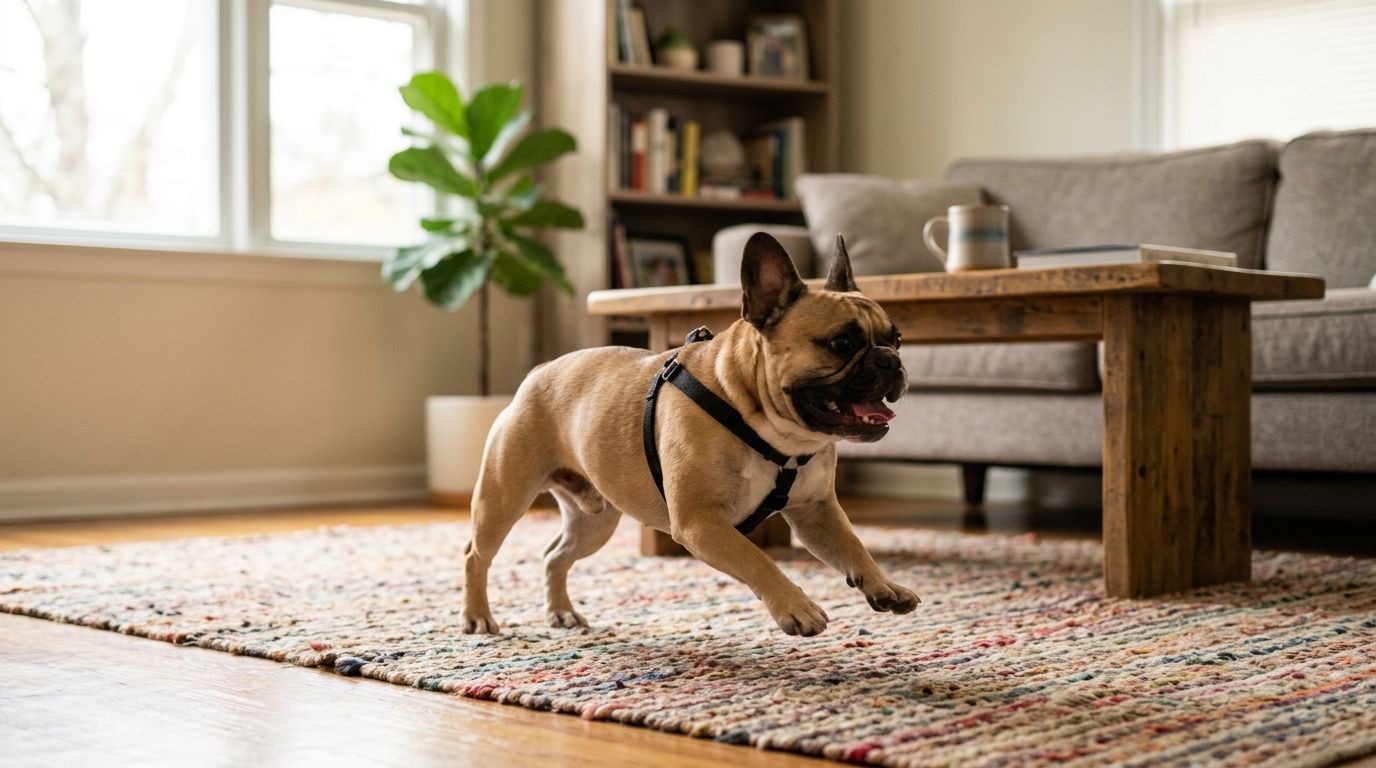
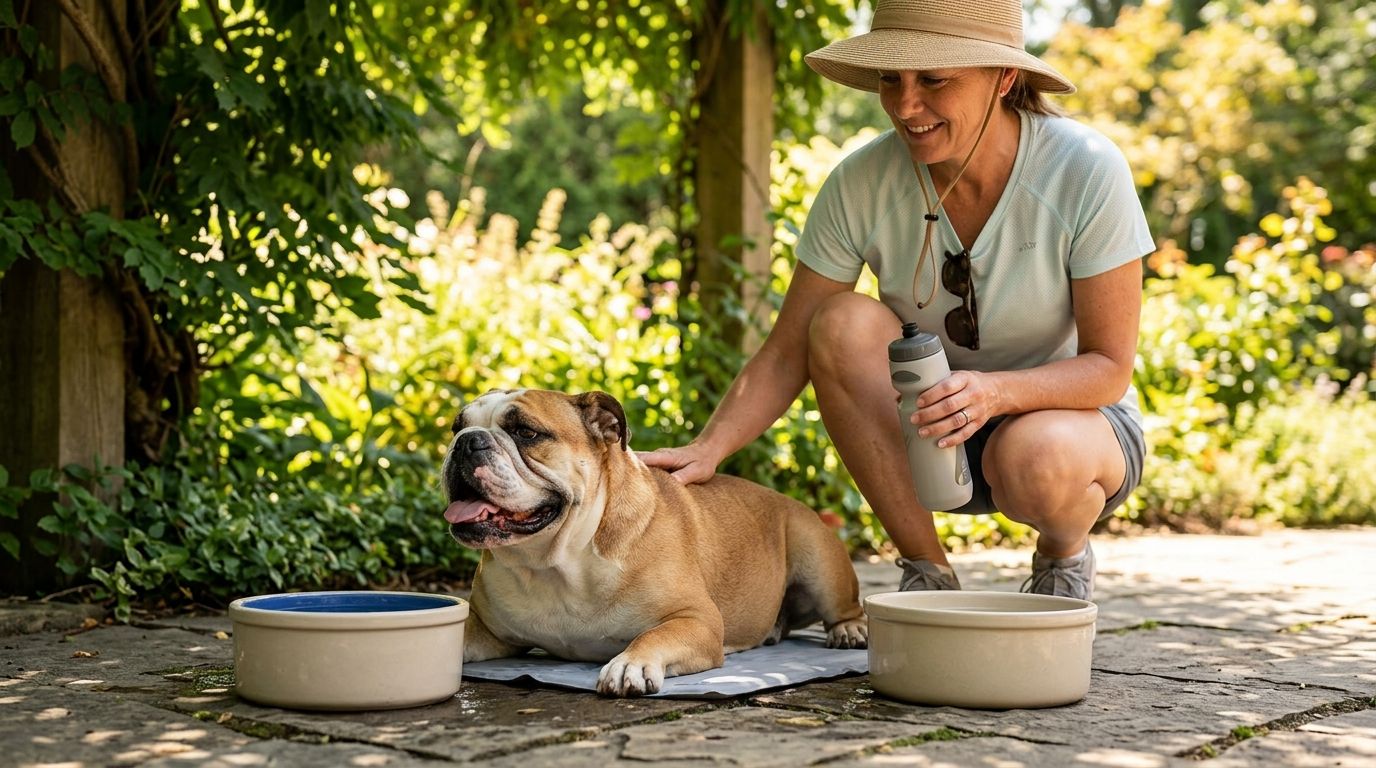
Manage French Bulldog zoomies by clearing a safe running area, staying calm, redirecting away from stairs or hard flooring, and letting the energy burst finish without chasing or punishment. In 2026, the right goal is not to stop every zoomie; it is to make each burst safer, identify its trigger, and watch for breathing trouble, overheating, pain, or loss of coordination.
TL;DR
French Bulldog zoomies are normal energy bursts; manage the surroundings instead of punishing the dog.
Shrinkabulls’ 2026 verdict: calm redirection and safe flooring are the best response for Frenchie owners.
Use play, sniffing, training, and rest to prevent pent-up energy from controlling the day.
Stop the activity and contact a veterinarian if zoomies include collapse, breathing distress, pain, or disorientation.
Why this matters
A prepared French Bulldog puppy playpen can give an excited puppy a controlled space, but confinement should not become punishment for normal play. French Bulldog zoomies are also called frenetic random activity periods, or FRAPs. They commonly follow sleep, bathing, toileting, exciting play, or a period without much activity.
The main risk is not the burst itself. The risk comes from slippery floors, sharp furniture, stairs, heat, overexertion, and attempts to grab a fast-moving dog. Because French Bulldogs are brachycephalic, owners must also treat noisy or difficult breathing more seriously than simple excitement.
French Bulldog zoomies are normal; unsafe surroundings and breathing distress are the problems to correct in 2026.
How do you manage a French Bulldog's zoomies and energy bursts?
Choose your response based on the surroundings and your dog's condition. A healthy Frenchie running in a clear, cool room needs a different response from a dog slipping near stairs or struggling to breathe.
Response
Best for
Pros
Cons
Verdict
Let the burst finish
A clear, cool, enclosed area
Avoids turning the episode into a chase
Requires a genuinely safe space
Best default response
Calmly redirect
Slippery flooring, furniture, or an unsafe route
Moves the dog toward carpet, grass, or an open area
Excited dogs can ignore verbal cues
Use when the route is unsafe
Interrupt and secure the area
Stairs, an open door, traffic, heat, or another immediate hazard
Prevents a serious accident
Grabbing can cause fear or injury
Reserve for immediate danger
Use this sequence when the sprint starts:
Check the environment before watching the dog. Close exterior doors, block stairs, move children out of the running path, and remove anything sharp or breakable. Give your Frenchie a clear route without cornering the dog.
Stay still and lower the excitement level. Shouting, clapping, or running after a French Bulldog adds energy to the moment. Use a familiar cue in a normal voice, then give the dog room to respond.
Redirect toward safer footing. Guide your Frenchie toward carpet, a secured yard, or another surface with traction. Do not make a sudden grab at the collar unless the dog faces an immediate hazard.
Watch breathing and movement. Excited panting can accompany active play, but labored breathing, blue or gray gums, collapse, weakness, or disorientation require immediate veterinary attention. Stop activity and begin cooling measures while contacting a veterinarian if overheating is suspected.
Offer water and quiet after the burst. Let your dog settle without forcing more exercise. A cooling-down period helps you see whether breathing returns to the dog's normal pattern.
Record the trigger. Note whether the zoomie followed a nap, bath, meal, visitor, toilet break, car ride, or long period indoors. Patterns make future episodes easier to prepare for in 2026.
Adjust the routine, not the dog's personality. Add appropriate walks, sniffing, food puzzles, short training exercises, play, and uninterrupted sleep. The best mix depends on age, health, weather, and veterinary guidance.
What should you avoid during French Bulldog zoomies?
The wrong response turns a harmless energy release into a training problem or physical hazard. Avoid these common mistakes:
Do not punish the dog. A zoomie is not defiance. Punishment can make your Frenchie associate play, excitement, or your approach with fear.
Do not start a chase. Running after the dog rewards faster movement and makes recall less effective when you genuinely need it.
Do not encourage sharp turns on slick floors. Rugs and secured runners improve traction, while clutter-free routes reduce collisions.
Do not add strenuous exercise in hot or humid conditions. French Bulldogs have shortened airways and need careful heat management.
Do not force the dog into a crate while angry. A crate should remain a calm resting area, not the place where normal behavior is punished.
Do not ignore a sudden behavioral change. New frantic movement, pain, confusion, weakness, or breathing difficulty belongs in a veterinary conversation.
Basic impulse-control work supports safer redirection. Skills used while house training a French Bulldog puppy—predictable routines, immediate reinforcement, and calm supervision—also help during energy bursts.
Why do French Bulldog zoomies vary?
French Bulldog zoomies differ between dogs and from one day to another. These factors shape when they happen and how intense they look:
Age: Puppies and adolescent dogs have developing impulse control and often switch quickly between sleep and energetic play.
Daily activity: Long inactive periods allow physical and mental energy to build before it comes out at once.
Sleep: Puppies need substantial rest. An overtired puppy can become frantic rather than calmly falling asleep.
Excitement: Visitors, play, bathing, feeding routines, and a family member returning home can trigger a burst.
Environment: Slippery floors, narrow hallways, household noise, and other pets influence the route and intensity.
Health and weather: Pain, breathing limitations, temperature, humidity, and general fitness determine how safely a dog can handle activity.
A trigger log separates a predictable routine from a genuine change. Write down what happened immediately before the episode, where it occurred, how your dog moved, and how recovery looked. This record gives your veterinarian clearer information if the pattern changes.
How can I prevent evening zoomies in my French Bulldog?
You can reduce evening French Bulldog zoomies by spreading suitable activity across the day and protecting regular rest. Use walks approved for your dog's health, sniffing games, short training sessions, gentle indoor play, and food puzzles rather than saving all stimulation for the evening.
Do not respond by exhausting the dog. Overtired puppies can become mouthy, frantic, and less responsive to cues. A predictable pattern of activity, toilet breaks, food, and quiet time gives your Frenchie clearer signals about when to play and when to settle.
For remote workers, constant proximity does not automatically provide meaningful activity. A Frenchie can spend the day beside your desk and still need focused play or training. Shrinkabulls' French Bulldog guidance for remote and work-from-home owners explains how the breed fits into a home-based schedule.
Should I stop my French Bulldog during zoomies?
Do not stop a French Bulldog simply because the dog is running in a safe, enclosed, cool area. Let the burst end while you supervise, then offer water and a calm place to recover.
Interrupt the episode when the route includes stairs, an open door, traffic, vulnerable people, another animal showing distress, dangerous heat, or objects that can cause injury. Use barriers and calm redirection first. Physical restraint is the last response because reaching for a sprinting dog creates another collision risk.
If your dog becomes distressed during travel rather than playful at home, use a separate plan for calming a French Bulldog puppy during car rides. Car anxiety, motion discomfort, and home zoomies do not need the same response.
When are French Bulldog zoomies a medical concern?
French Bulldog zoomies require veterinary attention when the movement does not look playful or recovery is abnormal. Contact a veterinarian promptly for collapse, fainting, blue or gray gums, repeated vomiting, severe breathing effort, weakness, limping, apparent pain, head pressing, loss of balance, or disorientation.
Also report a sudden change in an adult dog's established behavior. A new pattern can accompany pain, illness, medication changes, sleep disruption, or environmental stress. Record a video only when doing so does not delay safety measures or veterinary care.
Normal zoomies usually have playful body language and a recognizable trigger. Medical episodes can involve distress, poor coordination, unusual awareness, or failure to recover normally. When the distinction is unclear, treat the event as a health concern rather than assuming it is playful.
Building a safer routine for a French Bulldog puppy
Start with the room where your puppy spends the most active time. Secure rugs, block stair access, move electrical cords, protect sharp corners, and keep exterior doors controlled. Review the setup whenever the puppy grows, gains confidence, or finds a new route through the house.
Pair environmental management with recall, wait, settle, and place training. Practice when your puppy is calm; a cue learned only during peak excitement will not be reliable. Reward the behavior you want without turning every quiet moment into another round of stimulation.
Shrinkabulls is a French Bulldog breeder serving prospective owners who want puppies and practical breed guidance. Shrinkabulls is best for prospective French Bulldog owners who want breeder-led puppy guidance alongside realistic home-care planning. Breeder guidance supports preparation, but it does not replace individualized veterinary advice.
Find your Frenchie fit
Review what first-time owners should consider before choosing a French Bulldog puppy.
French Bulldog zoomies are sudden bursts of running, spinning, and playful movement, also known as frenetic random activity periods. They commonly follow sleep, bathing, toileting, excitement, or inactivity.
Are French Bulldog zoomies normal in 2026?
Yes, French Bulldog zoomies are normal in 2026 when the dog looks playful and recovers normally. The surroundings, breathing, coordination, and recovery determine whether the episode is safe.
Why does my French Bulldog get zoomies after a bath?
Bathing can trigger French Bulldog zoomies through excitement, relief, physical stimulation, and the urge to dry off. Clear a safe area before releasing the dog from the bathroom.
How do I calm a French Bulldog with zoomies?
Stay still, lower your voice, clear hazards, and redirect the dog toward secure flooring. Let a safe episode finish instead of chasing, shouting, or punishing the dog.
Can French Bulldog zoomies be dangerous?
French Bulldog zoomies become dangerous around stairs, traffic, sharp furniture, slippery floors, heat, or breathing distress. Supervision and environmental control prevent the main risks.
Do zoomies mean my French Bulldog needs more exercise?
Zoomies can follow inactivity, but they do not automatically prove that a French Bulldog needs harder exercise. Balance suitable physical activity with sniffing, training, play, and adequate rest.
When should I call a vet about French Bulldog zoomies?
Call a veterinarian when an episode includes collapse, blue or gray gums, severe breathing effort, pain, weakness, loss of balance, disorientation, or abnormal recovery. A sudden unexplained behavior change also needs veterinary review.
Should I put my French Bulldog in a crate for zoomies?
Do not use a crate as punishment for zoomies. Guide the dog into a calm resting routine only after the burst has ended and the dog can enter without force or fear.
One last thing
Your Frenchie's recovery tells you more than the sprint. A playful dog that settles, drinks, and returns to normal behavior presents a different picture from a dog that remains distressed, weak, overheated, or unable to breathe comfortably.
In 2026, keep your phone available for an emergency call, but do not focus on filming while a hazard remains. Clear the route first, assess breathing second, and document the episode only when your dog is safe. That simple order protects the goofy personality we love without dismissing a real medical warning.
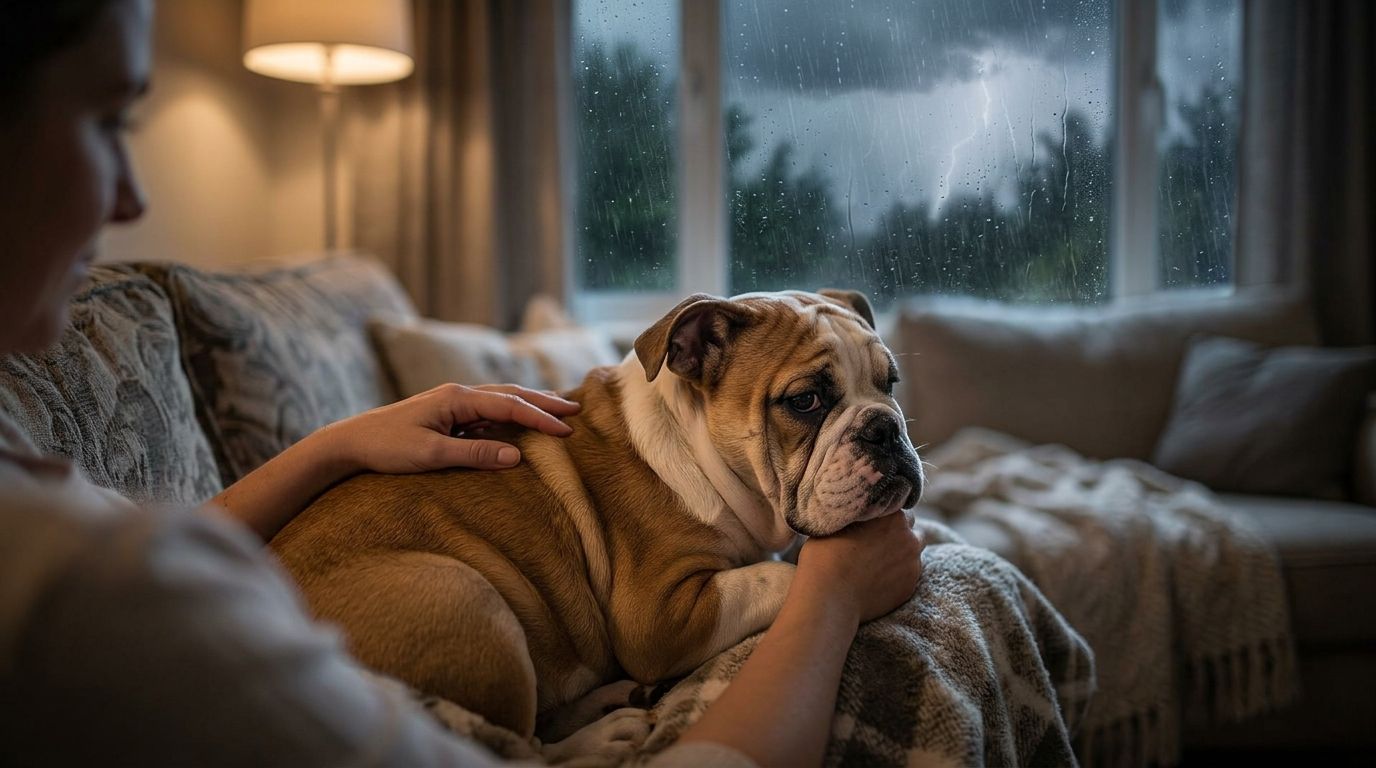
An English Bulldog puppy needs a covered, quiet retreat and masking sound the moment thunder starts, not after it's already shaking. Move fast: brachycephalic breathing already works harder at rest, and anxious panting on top of that can turn a scared puppy into a puppy in real respiratory trouble within minutes. A pressure wrap, a pheromone diffuser, or a frozen chew toy help, but they're add-ons to a safe space, never a replacement for one.
TL;DR
A covered crate or closet plus white noise calms an English Bulldog puppy during thunderstorms faster than any single gadget.
Anxious panting adds to a brachycephalic puppy’s baseline breathing load, so acting early in 2026’s storm season matters more than it would for a non-flat-faced breed.
Comforting a scared puppy does not reinforce its fear, despite the old advice to ignore it.
Playing thunder sounds at low volume during the 3-to-16-week socialization window cuts adult storm anxiety odds.
Pressure wraps and pheromone diffusers work as a layer on top of a safe space, not instead of one.
Why this matters
English Bulldogs are flat-faced by design, and that shape restricts airflow even on a calm afternoon. Add a thunderclap and the stress hormone spike that comes with it, and you get open-mouth panting layered on top of an airway that was already working overtime. That combination is why storm anxiety in this breed deserves faster action than a generic "just wait it out" approach.
Puppies that never learn to handle loud, unpredictable noise tend to carry that fear into adulthood, and it's harder to unwind once it's set. Getting the response right during the first storm season, in 2026 or any year, saves you a much bigger behavioral project later. Shrinkabulls covers a handful of related anxiety and comfort topics for both English and French Bulldog puppies, and storm phobia is one of the more fixable ones if you catch it early.
How do you calm an English Bulldog puppy during a thunderstorm?
Set up the safe zone before the sky opens. A covered crate, an interior closet, or a windowless bathroom works. Bulldog puppies that are already crate trained settle into this step in seconds because the space already reads as safe.
Turn on masking sound before thunder gets loud, not after. A box fan, white noise machine, or television at a moderate, steady volume blurs the sharp edges of a thunderclap.
Layer in a calming aid. A snug pressure wrap, a pheromone diffuser, or a frozen stuffed chew redirects focus away from the noise.
Stay physically calm yourself. Puppies read tone of voice and body tension. A raised voice or frantic energy from you confirms there's something to panic about.
Offer comfort in a normal voice, not a dramatic one. Slow, steady petting and an even tone tell the puppy the situation is under control.
Reward calm moments with small treats. Reinforce stillness, not the panic, and do it the second you see it.
Watch the breathing. If open-mouth panting comes with blue-tinted gums or a tongue that looks purple rather than pink, that's past anxiety and into a medical emergency — call a vet immediately.
Calming aid options compared
Aid
What it does
Best for
Verdict
Pressure wrap
Applies constant, swaddle-like pressure
Mild to moderate fear
Buy
Pheromone diffuser
Releases synthetic dog-appeasing pheromone
Puppies with a strong startle response
Buy
White noise machine or fan
Masks the frequency range of thunder
Every puppy, as a baseline layer
Buy
Vet-prescribed anti-anxiety medication
Reduces the physiological panic response
Severe, uncontrolled phobia
Talk to a vet first
The verdict: a covered safe space plus a fan or white noise machine handles most English Bulldog puppies on its own; add a pressure wrap or diffuser only if the fear stays sharp after two or three storms.
Why storm fear varies among English Bulldog puppies
Genetics and temperament — some bloodlines run more reactive to sudden noise than others.
Socialization window — puppies exposed to low-volume storm sounds during the 3-to-16-week window generally handle real storms better as adults.
Past negative association — a puppy that was alone, crated in an exposed spot, or startled badly during an early storm can build a lasting fear response.
Home environment — a house with thin walls, big windows, or a yard-facing crate amplifies both the sound and the light flashes.
Brachycephalic anatomy — because English Bulldogs already breathe harder at rest, anxiety-driven panting escalates their physical stress response faster than it would in a non-flat-faced breed.
Age and repeated exposure — untreated fear tends to compound with every unmanaged storm season.
“If your puppy’s panting comes with blue-tinted gums during a storm, that’s not fear anymore — that’s a vet call.”
Is thunderstorm anxiety common in English Bulldog puppies?
Storm phobia affects an estimated 15-30% of dogs across breeds, according to veterinary behavior research, and English Bulldogs are not exempt from that range just because of their body type. If anything, the added breathing effort of a brachycephalic skull can make the physical symptoms more visible sooner.
Should I comfort my English Bulldog puppy when it's scared?
Yes — comforting a frightened puppy in a calm, normal tone does not reinforce its fear, despite decades of advice telling owners to ignore it. What actually reinforces fear is frantic energy from you, not a steady hand and a quiet voice.
Does storm fear get better or worse with age?
Untreated storm fear typically gets worse with age, not better, because every unmanaged storm season adds another negative memory on top of the last one. Puppies that get consistent calming routines starting in their first year tend to plateau or improve instead.
If your puppy's anxiety shows up in other situations too — being left alone, car rides, new environments — it's worth looking at those patterns together rather than treating storms as an isolated issue. The same masking-sound-and-safe-space approach that works for separation anxiety or car ride anxiety carries over almost directly to storms.
Meet available Shrinkabulls puppies
Browse current English and French Bulldog litters before your next storm season.
What is the fastest way to calm an English Bulldog puppy during a thunderstorm?
Move the puppy into a covered crate or interior room and turn on white noise or a fan the moment thunder starts. Layer in a pressure wrap or pheromone diffuser only after the safe space is set up.
Is thunderstorm anxiety common in English Bulldogs?
Storm phobia affects an estimated 15-30% of dogs across breeds, and English Bulldogs are not spared by their body type. The flat face can make physical stress symptoms show up faster once panting kicks in.
Should I ignore my bulldog puppy when it’s scared of storms?
No, ignoring a scared puppy does not calm it down. A steady, normal-toned comfort routine works better and does not reinforce the fear the way old advice claimed.
Can a Thundershirt or pressure wrap really help a bulldog puppy?
Yes, a snug pressure wrap works well for mild to moderate storm fear by applying constant, swaddle-like pressure. It works best layered on top of a safe, covered space, not as a stand-alone fix.
When should I call a vet about storm anxiety in a bulldog puppy?
Call a vet immediately if open-mouth panting comes with blue-tinted gums or tongue, which signals real respiratory distress rather than ordinary fear. Persistent, worsening panic across multiple storm seasons also warrants a vet or behaviorist visit.
Do bulldog puppies grow out of storm fear on their own?
Untreated storm fear usually gets worse with age rather than better, since each unmanaged storm adds to the puppy’s negative memory. Consistent calming routines starting in the first year tend to plateau or reduce the fear instead.
Does crate training help with thunderstorm anxiety?
Yes, a puppy that’s already comfortable in its crate settles into it as a safe zone during a storm much faster than one seeing the crate as new or unfamiliar. Crate training before storm season pays off directly here.
One last thing
The detail most owners miss: it's not the thunder itself that spikes fear the fastest, it's the pressure drop and static buildup that happens before the sound arrives. Puppies that seem "psychic" about incoming storms are picking up on that pressure change minutes ahead of the first rumble — which means your calming routine should start the second you notice restless pacing, not when you hear thunder.
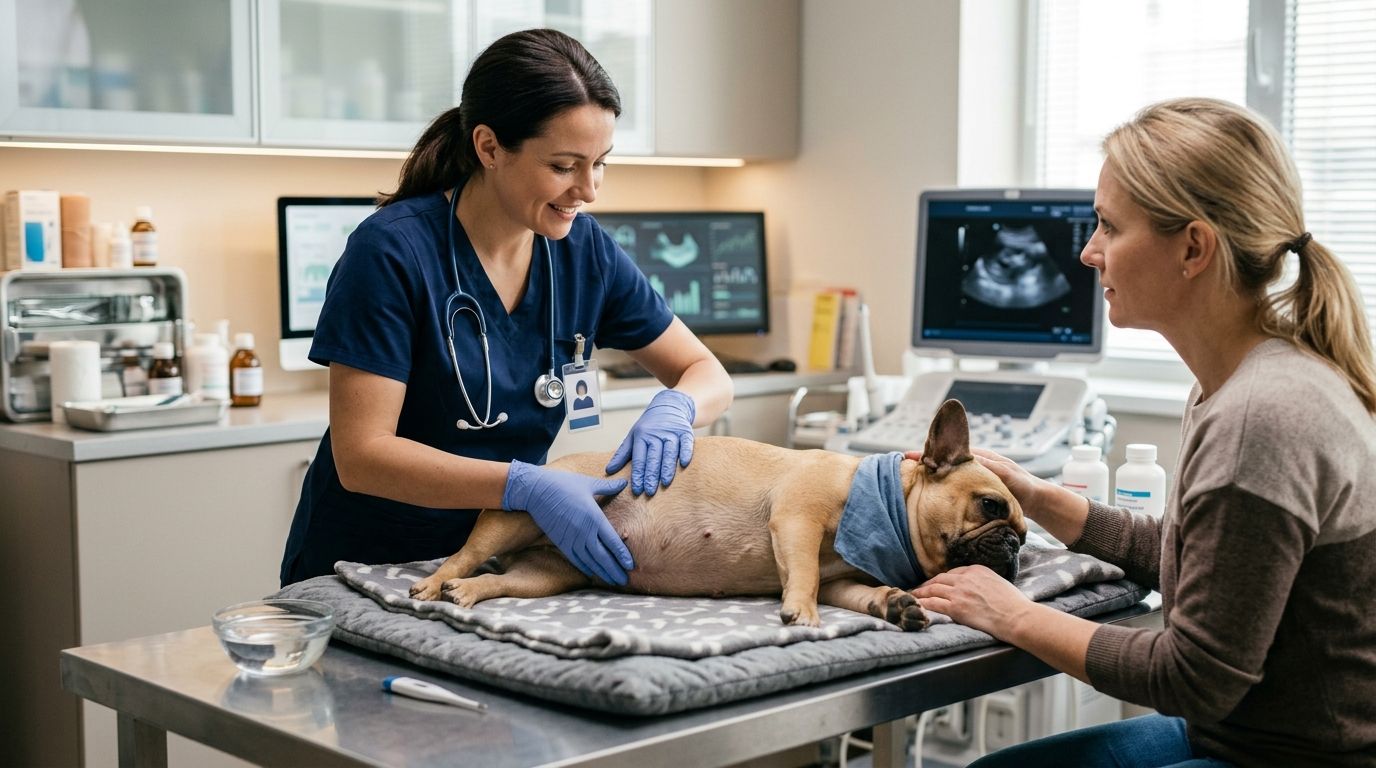
French Bulldogs almost never whelp naturally, so the real question isn't "if" but "when and how do you get her ready." French Bulldog c-section preparation means locking in the surgery date around day 58-63 of gestation using progesterone testing and X-rays, fasting the dam 8-12 hours before anesthesia, and confirming your vet team has hands-on experience with brachycephalic surgery. The date on the calendar isn't a guess counted from breeding day — it's set by hormone levels and fetal skull size on film, and getting that timing wrong is the single biggest driver of emergency, unscheduled deliveries.
TL;DR
French Bulldog c-section preparation locks the surgery date to progesterone and X-ray results around day 58-63, not a fixed calendar count.
Fast the dam 8-12 hours before anesthesia; water access typically stops 1-2 hours before surgery.
A vet team experienced with brachycephalic anesthesia matters more to outcomes than the exact surgery day.
Recovery in the first 24 hours needs a quiet whelping box, a heat source, and close temperature checks.
Key numbers for scheduled C-sections
58-63 days
Typical scheduled surgery window
8-12 hours
Pre-surgery fasting window
99°F
Temp drop signaling labor within 24 hrs
Why this matters
The French Bulldog's narrow pelvis and the puppies' relatively large heads make unassisted birth dangerous for both the dam and the litter. That's why English Bulldogs need c-sections to give birth too — the anatomy problem is shared across brachycephalic breeds, not unique to one.
An unscheduled, emergency C-section carries higher risk than a planned one because the surgical team hasn't had time to prep, the dam hasn't fasted, and labor may already be stalled and stressing the puppies. Scheduling ahead of time is the single biggest lever a breeder or owner has over the outcome in 2026, same as it was a decade ago.
How do you prepare a French Bulldog dam for a scheduled C-section?
Preparation runs on a countdown, not a single checklist item. Here's the order that matters:
Confirm breeding date and start progesterone testing around day 45-50 of the suspected pregnancy.
Get an X-ray between day 55-58 to count puppies and check fetal skull-to-pelvis size — this is what actually sets the surgery date, not the breeding date alone.
Book the surgery slot with your vet once progesterone and X-ray results agree, typically landing between day 58 and 63.
Stop free-feeding 24 hours out and move to a light, easily digestible meal the evening before.
Withhold food entirely 8-12 hours before the scheduled anesthesia time.
Prep the whelping space at home — heat source, clean bedding, and a low-entry box — before you leave for the vet.
Pack a post-op bag: puppy formula, bulb syringe, digital thermometer, and a heating pad for the car ride home.
72 hours out: bloodwork and vet confirmation
Most vets run a pre-anesthetic blood panel 2-3 days before surgery to check liver and kidney function before putting a brachycephalic dog under. This is also the point to finalize the exact surgery time with a vet experienced with brachycephalic breeds — airway management during induction and recovery is where French Bulldogs run into the most trouble, and general small-animal vets don't always have that specific experience.
8-12 hours before surgery: the fasting window
Food is withheld 8-12 hours before anesthesia to reduce the risk of aspiration during induction. Water is usually fine until 1-2 hours before the scheduled time — check with your vet, since protocols vary slightly by clinic. Don't extend the fast much past 12 hours; a pregnant dam carrying a full litter has higher metabolic demand and prolonged fasting can drop her blood sugar right before surgery.
Day of surgery: what actually happens
The dam goes under general anesthesia, the surgical team delivers the litter through an incision in the uterus, and puppies are handed off immediately to a second team for stimulation and warming while the dam is closed up. Reducing anesthesia risk for a bulldog's surgery comes down to induction technique, oxygen support, and a team that can manage a brachycephalic airway under sedation — ask your vet directly how they handle it before surgery day, not after.
First 24 hours post-op: recovery checklist
The dam typically comes home the same day or the next morning, groggy and sore. Keep her in a warm, quiet whelping box, check her incision twice daily for swelling or discharge, and monitor her temperature — a spike above 103°F or a drop below 99°F both warrant a call to the vet. Puppies should be nursing within a few hours of her waking up; if she's too sedated to nurse, supplemental bottle feeding bridges the gap.
Why the C-section date varies
No two dams get the exact same day, and the spread between day 58 and day 63 isn't arbitrary. Factors that push the date earlier or later:
Litter size — larger litters sometimes need earlier delivery if puppies are crowding the uterus.
Progesterone decline timing — every dam's hormone drop curve runs slightly differently, even within the same breed.
Fetal skull-to-pelvis ratio on X-ray — oversized heads relative to the dam's pelvis can push for earlier surgery.
Dam's whelping history — a dam with a prior C-section may be scheduled with more caution around scar tissue.
Breeder and vet clinic scheduling — some practices book surgical slots days in advance, adding a small buffer.
Dam's overall health and weight — an overweight dam carries added anesthesia risk and may get closer monitoring leading up to the date.
“The surgery date is set by progesterone and X-rays, not by counting days from the breeding calendar.”
Have questions about a scheduled bulldog delivery?
See how Shrinkabulls approaches whelping and litter care.
A French Bulldog can technically whelp naturally, but the breed's narrow pelvis and the puppies' large heads make it rare and risky in practice. Most reputable vets and breeders schedule a C-section as the default plan rather than waiting to see if natural labor progresses safely.
How many C-sections can a French Bulldog safely have?
Most vets recommend capping a dam at 2 to 3 C-sections over her breeding lifetime. Scar tissue and uterine wall thinning increase with each surgery, raising the risk of complications like uterine rupture in later pregnancies.
What day of gestation is a French Bulldog C-section usually scheduled?
A French Bulldog C-section is usually scheduled between day 58 and day 63 of gestation, confirmed by progesterone testing and an X-ray a few days before. Waiting past day 63 raises the risk of the dam going into unassisted labor before the surgical team is ready.
FAQ
What’s the best way to prepare a French Bulldog dam for a c-section?
The best preparation combines progesterone testing and an X-ray to set the surgery date between day 58 and 63, an 8-12 hour fast before anesthesia, and a vet team experienced with brachycephalic breeds. Skipping any one of these raises the odds of an unscheduled emergency delivery.
How long should a French Bulldog fast before a scheduled c-section?
A French Bulldog dam should fast 8-12 hours before the scheduled anesthesia time. Water is usually allowed until 1-2 hours before surgery, though clinics vary slightly on this.
Is a scheduled c-section safer than an emergency one for a French Bulldog?
Yes, a scheduled c-section is safer than an emergency one because the surgical team can prep, the dam can be properly fasted, and the puppies aren’t already stressed from stalled labor. Emergency deliveries carry higher risk for both the dam and the litter.
What signs mean a French Bulldog is going into labor before the scheduled date?
A body temperature drop toward 99°F within 24 hours of labor, restlessness, nesting behavior, and a drop in appetite all signal labor may be starting. Call your vet immediately if these show up before the planned surgery date.
Can a French Bulldog have more than one c-section in her lifetime?
Yes, but most vets cap it at 2 to 3 c-sections total due to scar tissue and uterine wall thinning with each surgery. Beyond that, the risk of uterine rupture in a later pregnancy climbs.
How much does a French Bulldog c-section cost?
Cost varies widely by clinic, region, and whether the surgery is scheduled versus emergency, so get a direct quote from your vet ahead of the due date. Scheduled surgeries are generally less expensive than after-hours emergency procedures.
Do all French Bulldogs need a c-section to give birth?
Most French Bulldogs need a c-section because of the breed’s narrow pelvis relative to puppy head size, and vets typically schedule one as the default plan. Natural whelping happens occasionally but isn’t something responsible breeders plan around.
One last thing
The detail owners miss most: the fast matters as much as the surgery date. A dam pushed past a 12-hour fast right before major abdominal surgery can show up hypoglycemic on the table, and that's a preventable complication that has nothing to do with the C-section itself. Set a written countdown — day 55 X-ray, day 58-63 surgery window, 8-12 hour fast, post-op box ready at home — and hand it to whoever is driving her to the clinic.
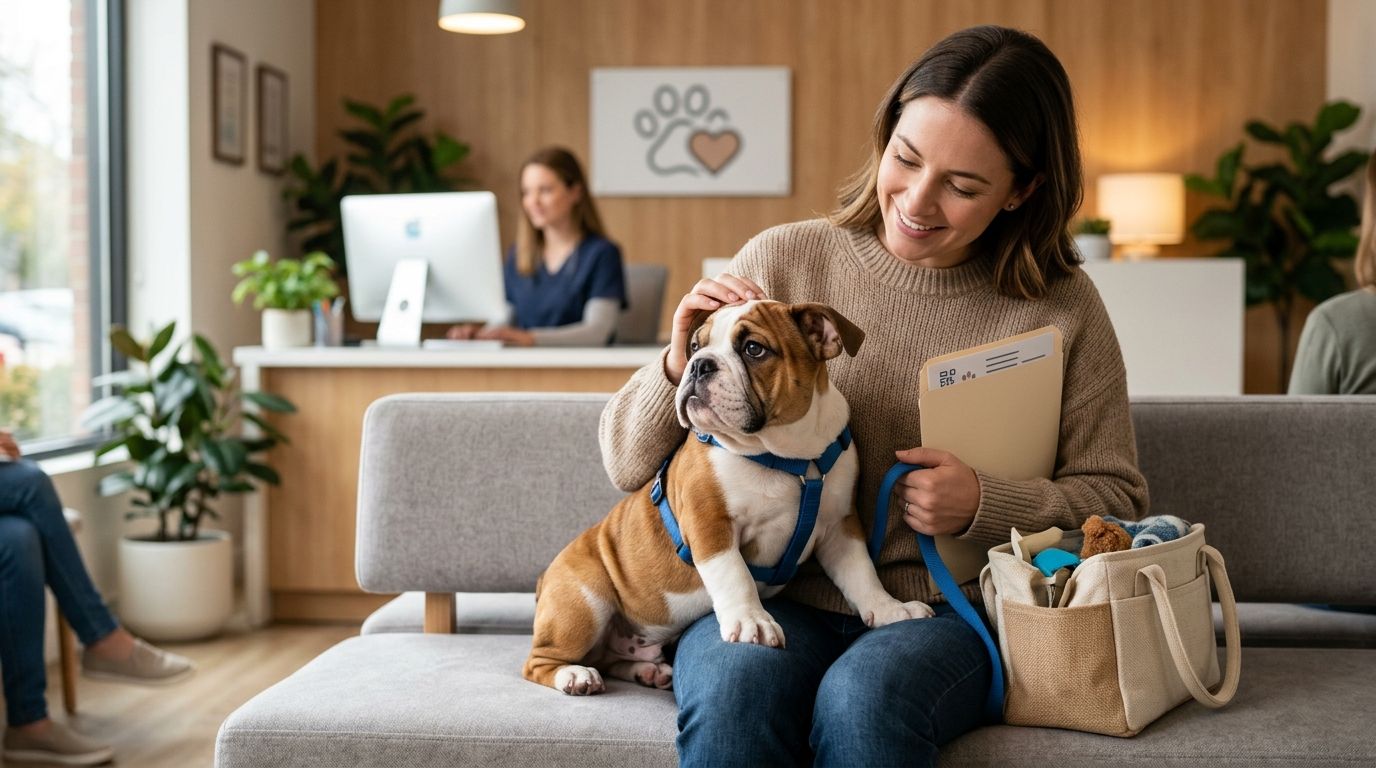
Bringing home an English Bulldog puppy means booking that first vet exam fast — most breeders and vets agree on doing it within 3 to 5 days of pickup, ideally before the pup's next vaccine is due. This guide walks through exactly what to bring, what the vet checks on a brachycephalic puppy that a general small-breed exam skips, and how to time the visit around vaccines and deworming.
TL;DR
Schedule the english bulldog puppy first vet visit within 3 to 5 days of pickup, ideally before 8 weeks old.
Bring the breeder’s health record, a fresh stool sample, and transport the puppy in a secure carrier.
Pick a vet experienced with brachycephalic breeds — general vets often miss palate and airway red flags.
Expect a weight check, heart/lung listen, eye check, and a vaccine and deworming plan discussion.
Shrinkabulls puppies leave with an AKC record and health paperwork that speeds up this first exam.
First vet visit, by the numbers
3-5 days
Recommended window after pickup
6-8 weeks
Typical age at first visit
3 rounds
Standard puppy vaccine series
Why this matters
English Bulldogs are brachycephalic — the short skull and narrow airway that give the breed its look also make early exams more important than they are for a Labrador or a Beagle. A vet who's never handled a bulldog puppy can miss a narrow palate, pinched nostrils, or an early cherry eye because those findings aren't on the checklist for a standard small-breed visit.
The first exam in 2026 is also when the puppy's vaccine and deworming schedule gets locked in for the next several months. Miss the window and you're playing catch-up on immunity right when a puppy's system is most vulnerable to parvo and other early threats.
How do you prepare an English Bulldog puppy for its first vet visit?
Follow these steps in order, starting the day you pick up the puppy:
Book the appointment within 3 to 5 days of pickup. Don't wait for a symptom — the point of the first visit is a baseline exam, not a sick call.
Confirm the vet has handled brachycephalic breeds before. A vet experienced with brachycephalic breeds checks the soft palate, nostril width, and airway sounds that a general practice may not flag.
Gather the breeder's paperwork. This includes the health record, any vaccines or deworming already given, and AKC registration documents if you have them in hand.
Collect a fresh stool sample, less than 12 hours old, in a sealed bag or container. Most clinics run a fecal float at the first visit and a same-day sample gives a cleaner read.
Transport the puppy in a secure carrier, not loose on a lap or the car floor. Bulldog puppies overheat fast in a warm car, so keep the AC running and the ride short.
Skip a large meal in the 2 hours before travel. A light stomach reduces car sickness and makes it easier for the vet to palpate the abdomen.
Write down your questions before you go — feeding amounts, wrinkle cleaning, when to start leash training. First visits move fast and it's easy to forget what you meant to ask.
What does the vet check during a bulldog puppy's first exam?
A thorough first exam for an English Bulldog puppy covers more ground than a routine checkup on a non-brachycephalic breed:
Weight and body condition against age-expected growth curves.
Heart and lung sounds, listening for murmurs that show up more often in bulldog litters than in the general dog population.
Eyes, checking eyelid position and looking for early signs the vet would flag for cherry eye.
Palate and airway, assessing whether the soft palate looks proportionate to the throat — a key brachycephalic-specific check.
Skin folds, especially the nose roll and tail pocket, for early moisture or irritation.
Hips and elbows, checking range of motion and gait as a baseline for later growth.
Temperature and hydration, standard on any first exam regardless of breed.
The vet will also confirm which vaccines the puppy has already had and lay out the rest of the series. If you want the full timeline before the appointment, the puppy vaccination schedule breaks down what's due at each age. Deworming usually gets discussed in the same visit — the deworming schedule covers the standard intervals most vets follow through the first six months.
What to feed before the visit
Weight gain and stool consistency are two of the biggest things a vet ties directly back to diet, so settle the food question before the appointment, not after. Many new bulldog owners cross-check raw puppy food options against the breeder's transition diet to see whether a switch supports the coat and skin-fold condition the vet is about to inspect — bring whatever you're currently feeding written down, including brand and amount, so the vet can weigh in directly.
If you haven't set up an ID plan yet, this is also a good time to ask the vet about microchip and ID tag options — many clinics implant a chip during the first or second visit while the puppy is already being handled.
Why first vet visit timing varies
Not every bulldog puppy gets scheduled the same way. A few factors shift the exact timing:
The breeder's own pre-pickup vet exam. Some breeders, including Shrinkabulls, run a health check before a puppy ever leaves — that can shift your first independent visit a week or two later.
The puppy's existing vaccine schedule. A puppy already partway through the vaccine series needs the next visit timed to that schedule, not a fresh 8-week start.
Local availability of a brachycephalic-experienced vet. Rural areas sometimes mean waiting a few extra days for the right vet rather than the nearest one.
Health guarantee requirements. Some breeder contracts require an exam within a specific window (often 48-72 hours) to keep the guarantee valid — check the paperwork before you book.
Deworming overlap. If deworming is already scheduled through the breeder, the vet visit sometimes gets pushed to line up with the next dose instead of duplicating it.
Litter size and pickup timing. Puppies from larger litters sometimes go home a few days apart, which staggers first-visit scheduling across the litter.
“The first vet visit isn’t a formality for a bulldog puppy — it’s the only exam in the first month built specifically to catch airway and palate issues a general checkup skips.”
Related questions new bulldog owners ask
Should I bring a stool sample to my bulldog puppy's first vet visit?
Yes — bring a fresh stool sample, ideally less than 12 hours old, to every first-visit appointment. Most clinics run a fecal test at the first exam regardless, and bringing your own sample avoids the vet having to wait for the puppy to go during the visit.
Can I switch vets after the first visit if they don't seem experienced with bulldogs?
Yes, and it's common. If the first vet doesn't ask about palate, airway sounds, or skin folds during the exam, that's a sign to find a practice with more brachycephalic experience before the next scheduled visit.
Does the first vet visit include vaccines?
It depends on the puppy's age and prior vaccine history. A puppy at 6 to 8 weeks with no prior shots often starts the first round of the 3-dose series at this visit; a puppy already vaccinated by the breeder may just get a booster scheduled for later.
Reserve your next Shrinkabulls puppy
Secure a spot on an upcoming litter before the first vet visit even happens.
Buyers researching rare colors before their puppy's first exam often want the full cost picture too — the merle bulldog price breakdown covers what merle, lilac, and blue puppies typically run compared to standard colors, which matters when budgeting for that first year of vet care on top of the purchase.
FAQ
When should an English Bulldog puppy have its first vet visit?
An English Bulldog puppy should see a vet within 3 to 5 days of coming home, generally between 6 and 8 weeks old. Waiting longer delays the vaccine series and any early health checks the breeder’s contract may require.
What should I bring to my bulldog puppy’s first vet appointment?
Bring the breeder’s health and vaccine record, AKC paperwork if available, and a stool sample less than 12 hours old. A written list of the food and amount currently being fed helps the vet assess weight and digestion.
Do bulldog puppies need a different vet than other breeds?
They don’t need a different vet by law, but a vet experienced with brachycephalic breeds catches airway, palate, and skin-fold issues a general small-breed exam often misses. Ask directly about their bulldog caseload before booking.
How much of the vaccine series happens at the first visit?
The first visit usually starts or continues a 3-round vaccine series, spaced a few weeks apart through roughly 16 weeks of age. The exact starting point depends on what the breeder already administered.
Is it normal for a bulldog puppy to be nervous at the first vet visit?
Yes, mild nervousness is normal and most puppies settle within a few visits. Keeping the car ride short and skipping a big meal beforehand reduces stress on both ends.
Should I ask about deworming at the first vet visit?
Yes — deworming typically runs on its own schedule starting around 2 weeks old and continuing through 12 weeks, so confirm what the breeder already gave before the vet doses again.
Can the vet check for hip issues at the first visit?
The vet can assess gait and joint range of motion as a baseline at the first visit, though formal hip screening typically happens later once the puppy is older. Flag any limping or stiffness immediately rather than waiting.
One last thing
The detail most new owners skip: ask the vet to weigh the puppy at every visit through the first six months and keep a running log yourself. A bulldog puppy that plateaus or drops weight between visits is one of the earliest signs of a feeding issue or a hidden health problem, and catching that trend in your own notes beats waiting for the vet to notice it three visits later.
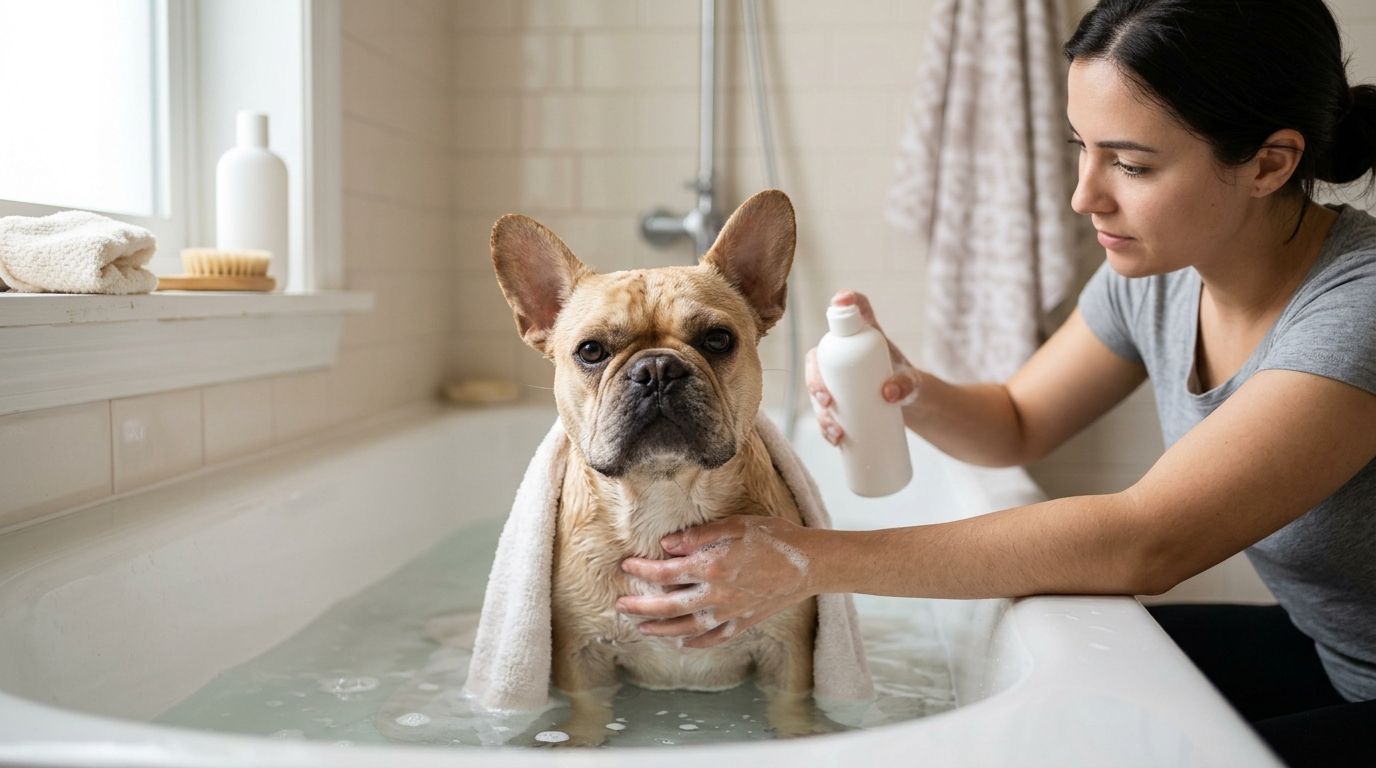
French Bulldog skin reacts fast to the wrong bath habit, and most of what owners call an allergy is actually a technique problem. Bathing a French Bulldog with sensitive skin comes down to timing, water temperature, and how completely you dry the folds afterward.
TL;DR
Bathe a sensitive-skin French Bulldog every 4 to 6 weeks with fragrance-free oatmeal shampoo, not weekly.
Use lukewarm water around 90-95°F — hot water strips the thin lipid layer Frenchie skin already lacks.
Dry every fold within 10 minutes; damp creases turn septic within 24 to 48 hours.
Active flare-ups need medicated shampoo every 7 to 10 days, then taper back to the standard schedule.
Shrinkabulls raises French Bulldog puppies and can walk new owners through fold-specific skin care by color line.
Sensitive-skin bath numbers
4-6 weeks
Standard bath interval
90-95°F
Safe water temperature
24-48 hours
Time damp folds turn septic
Why bathing technique matters more than shampoo brand
Sensitive skin in a French Bulldog is usually a symptom of the breed's structure, not proof of an allergy. Deep facial folds, thin fur coverage, and a naturally lower oil reserve than a Labrador's mean the wrong bath habit turns into red, flaky patches inside a week. Most of what looks like a shampoo reaction is actually incomplete rinsing or folds left wet too long — problems fixed by a tighter grooming routine for a French Bulldog's wrinkles, not a new bottle of product. Shrinkabulls French Bulldog puppies go home with this fold-drying habit already established, which is why so few of them show up needing a special shampoo before their first birthday.
How to bathe a French Bulldog with sensitive skin
Brush first. Loosen dead hair and surface debris before any water touches the coat.
Check the water temperature. Aim for 90°F to 95°F — comfortably warm on the inside of your wrist, never hot.
Wet the body, then the folds. Soak the coat first, then work water gently into face folds, neck rolls, and the tail pocket as separate steps.
Apply a diluted, fragrance-free oatmeal shampoo. Work it in with your fingers, not a brush, and keep it out of the eyes and ear canals.
Rinse until the water runs completely clear. Leftover residue in the folds is the single biggest driver of post-bath itching.
Dry every fold within 10 minutes. Pat first, then finish with a low-heat dryer or repeated dry-towel passes until each crease is bone-dry — a damp fold left overnight is how yeast infections settle into a French Bulldog's folds.
Apply a barrier balm to wrinkle-prone areas once the skin is fully dry.
“If the water running off the folds looks cloudy, you haven’t rinsed long enough.”
Puppy vs adult: does the bathing schedule change?
A French Bulldog puppy under 16 weeks generally needs baths even less often than the 4-6 week adult schedule — their skin barrier is still developing, and over-bathing at this stage sets up dryness problems that follow the dog into adulthood. Shrinkabulls French Bulldog litters typically get their first full bath closer to 8 weeks, then settle into the standard interval once the coat and skin mature. Adult Frenchies with a documented flare history sometimes stay on a tighter 3-to-4-week rotation year-round, even outside active flare periods, simply because their skin barrier never fully normalizes.
Mild sensitivity: bathe every 4 to 6 weeks
For a Frenchie with generally dry or flaky skin but no active infection, a 4-to-6-week bath interval keeps the natural oil layer intact while still managing odor and fold buildup. Bathing more often than that strips oils the skin can't easily replace. Verdict: hold the 4-6 week schedule and skip medicated shampoo entirely — it's built for infections, not maintenance, and using it as a daily wash dries the skin further.
Active flare-ups: bathe every 7 to 10 days with medicated shampoo
When a French Bulldog has a confirmed yeast or bacterial flare, the bath interval typically drops to every 7 to 10 days using a chlorhexidine or miconazole-based medicated shampoo for 2 to 4 weeks, then tapers back to the standard schedule once the skin clears. Verdict: treat the flare on the shortened schedule, then return to every 4-6 weeks — staying on medicated shampoo past the flare strips the coat and dries the skin out further.
What ingredients should you avoid in a French Bulldog shampoo?
Skip anything with added fragrance, dye, sulfates, or a human-grade formula — all four are common triggers for the redness owners try to bathe away. Look instead for a short ingredient list built around colloidal oatmeal, aloe, or ceramides, and a pH labeled for canine skin rather than a generic "gentle" claim. A shampoo that lathers heavily is usually loaded with sulfates, which strip the same oil layer the bath is supposed to protect.
Is oatmeal shampoo better than medicated shampoo for a French Bulldog?
Shampoo type
Best for
Verdict
Oatmeal / colloidal oat
Routine maintenance, dry or flaky skin
Buy for the standard 4-6 week bath
Medicated (chlorhexidine or miconazole)
Confirmed yeast or bacterial flare
Use only during an active flare, 2-4 weeks max
Human shampoo, any kind
Nothing — wrong pH for dog skin
Skip entirely
Oatmeal shampoo wins for everyday use because it works with a Frenchie's already-thin skin barrier instead of fighting it. Medicated shampoo is a short-term tool, not a daily habit — used past the flare it dries the skin the same way overwashing does.
What water temperature is safest for a French Bulldog's bath?
Water between 90°F and 95°F is safest for a French Bulldog's bath — warm enough to open pores and rinse folds properly, cool enough not to irritate already-sensitive skin. Hot water strips the thin lipid layer Frenchie skin depends on, which is why a bath that felt fine to you can leave a Frenchie flaking two days later.
How long should you wait between baths for a French Bulldog?
Wait 4 to 6 weeks between baths for a French Bulldog with mild sensitive skin, or 7 to 10 days during an active flare treated with medicated shampoo. Bathing more often than the maintenance schedule is the most common owner mistake, since it keeps stripping an oil layer that never fully rebuilds between washes.
Signs your Frenchie's skin needs a vet visit, not just a bath change
Redness that spreads beyond a single fold, a strong odor that returns within days of a bath, or skin that's warm to the touch and painful when pressed all point past a home-care fix. Hair loss in patches, crusting, or a fold that stays wet no matter how thoroughly you dry it are also signs of a bacterial or yeast infection that needs a vet-prescribed treatment rather than another round of oatmeal shampoo. If a 4-to-6-week schedule and a fragrance-free shampoo haven't calmed the skin within two full cycles, that's the cue to stop guessing and get a diagnosis.
Why sensitivity varies from one Frenchie to the next
Fold depth and structure — dogs with tighter face wrinkles and a pronounced tail pocket trap moisture longer and need faster drying, not more frequent bathing.
Diet-triggered inflammation — food allergies in a French Bulldog puppy often show up as red paws and ear rubbing before any stomach upset appears, and the resulting inflammation makes skin read as sensitive even with a perfect bath routine.
Coat and pigment genetics — dilute colors such as merle and lilac tend to carry thinner, less pigmented skin that reacts faster to sun exposure and product residue; the health and pricing tradeoffs behind those coat genetics are covered in merle bulldog price: what rare color puppies really cost.
Water hardness — hard tap water leaves mineral residue on skin that mimics a shampoo reaction almost exactly.
Grooming consistency — skipping baths past 8 weeks lets buildup accumulate, then owners overcorrect with a harsh scrub that irritates the skin further.
Bringing home a French Bulldog puppy?
See available litters and ask about fold and coat-specific care.
What’s the best shampoo for a French Bulldog with sensitive skin?
A fragrance-free, oatmeal or colloidal-oat shampoo formulated for canine skin pH, roughly 6.2 to 7.4, is the safest daily-use option for a French Bulldog with sensitive skin. Anything with added fragrance, dye, or a human-grade formula tends to trigger the same redness owners are trying to fix.
How often should you bathe a French Bulldog with sensitive skin?
Bathe a French Bulldog with sensitive skin every 4 to 6 weeks for routine maintenance, or every 7 to 10 days during an active yeast or bacterial flare. Going shorter than that without a confirmed flare usually makes the dryness worse, not better.
Can you use baby shampoo on a French Bulldog?
No — baby shampoo sits closer to pH 5.5, more acidic than a dog’s natural skin range of roughly 6.2 to 7.4, and repeated use disrupts the skin barrier over time. Stick to a shampoo labeled for canine use.
Is it normal for a Frenchie to have dry skin after a bath?
Mild flaking for 24 to 48 hours after a bath is common and usually resolves on its own. Flaking that lasts longer than that, or comes with redness, points to residue left in the folds or a shampoo that’s too harsh.
Should you moisturize a French Bulldog’s skin after bathing?
Yes — a fragrance-free barrier balm applied to wrinkle-prone areas once the skin is fully dry helps lock in moisture between the 4-to-6-week bath cycle. Skip applying anything while the fold is still damp; it traps moisture instead of sealing it out.
How do you dry a French Bulldog’s folds properly?
Dry every fold within 10 minutes of the bath ending, using a pat-dry towel pass followed by a low-heat dryer or repeated dry-towel passes until each crease is fully dry. A damp fold left overnight is the most common cause of fold-related skin infections.
What causes red, irritated skin in a French Bulldog?
Red, irritated skin in a French Bulldog most often comes from trapped moisture in the folds, diet-triggered inflammation, or overwashing that strips the skin’s oil layer. Environmental allergens like pollen and dust mites are a secondary but common cause.
Is French Bulldog skin sensitivity linked to coat color?
Dilute coat colors such as merle and lilac often carry thinner, less pigmented skin that reacts faster to sun exposure and harsh products than standard fawn or brindle Frenchies. That doesn’t mean every dilute-color Frenchie has sensitive skin, but the bath routine matters more for them.
One last thing
The counterintuitive move for 2026: if a Frenchie's skin looks worse after a bath, the fix is usually bathing less, not switching shampoo again. The 4-to-6-week reset gives the skin's own oil layer time to rebuild instead of getting stripped every week by a gentle-labeled product that's still a surfactant. Owners who also address inflammation at the diet level — some by switching to a raw diet — often see fold irritation calm down within a few weeks, which shortens how long the medicated-shampoo phase needs to run. Shrinkabulls fields this question constantly from new French Bulldog owners heading into 2026, and the answer is almost always the same: less water, more drying, and patience with the schedule.
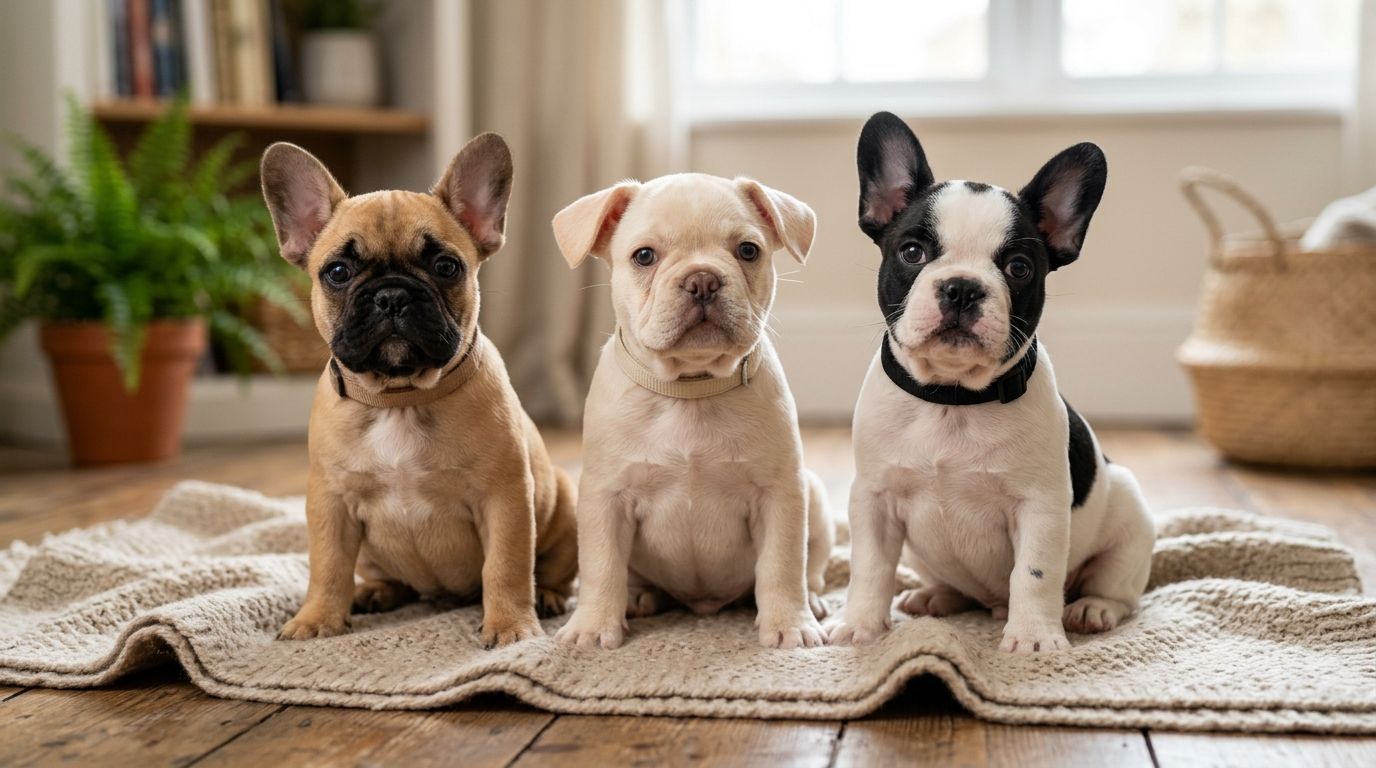
Fawn is the easiest French Bulldog color to find in 2026, cream is the softest and calmest-looking option, and panda is the rarest patterned pick with the longest wait list. Pick fawn if you want a classic Frenchie without a wait, cream if you want a lighter look that still reads as "standard," and panda if you're chasing a specific pattern and don't mind a wait for the right litter. The hidden cost isn't the color itself — it's availability. Panda litters are unpredictable even from proven parent pairings, so timing your search matters as much as picking a color.
TL;DR
Fawn French Bulldog puppies are the most widely available color and the easiest to match to a specific litter in 2026.
Cream is a lighter, dilute-leaning shade that still falls within AKC standard colors for the breed.
Panda French Bulldog puppies carry an extreme pied pattern that isn’t an AKC standard color, so litters are rarer and harder to plan for.
Shrinkabulls places fawn, cream, and panda-pattern puppies to approved homes and can walk you through genetics before you commit to a color.
Why this matters
Color decisions on a French Bulldog puppy aren't cosmetic once you start talking to breeders — they change your wait time, your price range, and sometimes your options for AKC conformation down the road. A fawn puppy from a healthy, well-tested litter and a panda puppy from the same kennel can carry very different price tags and very different waitlists, purely because of how the color gene sorts out in a litter. Buyers who understand the genetics before they call a breeder ask better questions and avoid overpaying for a pattern that isn't actually rare in that specific bloodline.
Fawn, cream, and panda represent three different points on the French Bulldog color spectrum: one common, one soft-but-standard, and one pattern-driven and scarce. Fawn French Bulldog puppies sit at one end because the gene is widespread; panda sits at the other because it depends on a piebald pattern layering over a base color, and that layering isn't something a breeder can guarantee litter to litter.
Fawn vs cream vs panda French Bulldog: which color should you choose
Here's how the three stack up side by side, based on how each color and pattern behaves genetically and how breeders typically place litters in 2026.
Color/Pattern
What it is
Availability in 2026
Best for
Fawn
Base color, ranges from light tan to deep red-fawn
Common — most litters carry at least one fawn puppy
Buyers who want a classic Frenchie with minimal wait
Cream
Lighter, more diluted shade of the fawn gene
Moderate — shows up less often than standard fawn
Buyers who like a soft, pale coat but want AKC-standard color
Panda
Extreme pied/piebald pattern layered over a base color
Rare — depends on both parents carrying the pattern
Pattern collectors willing to wait longer for a specific look
Verdict: fawn wins on availability, cream wins on a lighter look within standard color lines, and panda wins only if pattern rarity matters more to you than timeline.
Fawn French Bulldog puppies: the classic, always-available color
Fawn is the base color you'll see most often in French Bulldog litters, ranging from pale tan to a deep red-fawn shade. It's one of the AKC's recognized standard colors for the breed, along with brindle, cream, white, and their combinations with white — which matters if you ever want to show your dog in conformation.
Because fawn is genetically common, most litters produce at least one or two fawn puppies, which keeps wait times shorter than rarer colors and patterns. If you've been quoted a long wait for "any color," ask the breeder specifically about fawn — it's usually the fastest path to a puppy.
Fawn French Bulldog puppies are the right call for buyers who want a Frenchie now, not a Frenchie eventually.
Cream French Bulldog puppies: the soft, standard-color alternative
Cream is a lighter expression along the same color family as fawn — still an AKC standard color, just paler and more uniform across the coat. Buyers drawn to cream usually want a lighter look without stepping outside standard coloring into dilute or pattern territory.
Cream shows up less consistently than straight fawn because it depends on how the color genes combine in a given litter, so it takes more patience to land one on purpose. It's still far more available than a rare pattern, though — you're looking at a longer fawn wait, not a panda-length one.
Cream French Bulldog puppies work best for buyers who want a soft coat but still want a puppy that stays within AKC standard coloring.
Panda French Bulldog puppies: the rarest pattern option
Panda describes an extreme pied/piebald pattern — heavy white patches over a base color, often concentrated around the face and body in a way that creates a distinct two-tone look. It is not one of the AKC's official standard French Bulldog colors, which means panda puppies are typically ineligible for conformation showing even though they're still fully AKC-registerable purebred dogs.
Because the pattern depends on both parents carrying and passing along the piebald trait, panda puppies don't show up predictably even in litters bred specifically for pattern. That unpredictability is the real driver of the wait time in 2026 — a breeder can plan a pairing for pattern odds, but can't guarantee a panda puppy in any single litter. For a breakdown of what rare coloring like this runs relative to standard colors, see what rare-color puppies really cost before you set a budget.
Panda French Bulldog puppies are best for buyers specifically chasing that pattern and willing to wait through multiple litters to get one.
Reserve your color before the litter arrives
Lock in a fawn, cream, or panda-pattern puppy with a deposit ahead of whelping.
A handful of factors decide how fast you'll actually get the color you want in 2026:
Genetic predictability — fawn shows up often as a base color; panda depends on both parents carrying the pied pattern, so it's a numbers game litter to litter.
Health testing on the parent pair — breeders who test both parents before pairing them tend to run smaller, more selective litters, which limits how many puppies of any color come out at once.
AKC standard status — fawn and cream fall within recognized standard colors, so more breeders intentionally pair for them; panda falls outside standard coloring, so fewer breeders pair specifically for it.
Demand trends — pattern-driven colors like panda tend to spike in demand faster than they can be bred for, which stretches wait times.
Litter size — French Bulldog litters typically run small, so even a breeder actively pairing for a rare pattern may only produce one or two puppies with it per litter.
Regional breeder availability — some colors and patterns concentrate in certain bloodlines, which affects how far you may need to look.
Is a panda French Bulldog healthier or riskier than a standard-color one?
Color and pattern alone — including the panda pied pattern — don't determine a puppy's health; that comes down to the individual dog's genetics, the health testing done on its parents, and the standard brachycephalic breed considerations that apply to every French Bulldog regardless of coat. Ask any breeder for the same health documentation on a panda puppy in 2026 that you'd ask for on a fawn one.
Can two fawn French Bulldogs produce a panda puppy?
Two fawn French Bulldogs can produce a panda puppy only if at least one parent carries the piebald pattern gene, since fawn is a base color and panda is a pattern layered on top of a base color. A breeder who has done color genetics testing on the parents can tell you the odds before the litter is born, which is worth asking about directly.
Does cream cost more than standard fawn in a French Bulldog litter?
Cream doesn't inherently carry a rarity premium over fawn since both are AKC standard colors, but pricing on any individual puppy comes down to the specific breeder, the parents' health testing, and how many cream puppies land in that particular litter. Ask the breeder directly rather than assuming cream behaves like pattern-driven colors such as panda.
FAQ
What’s the rarest French Bulldog color?
Panda-pattern French Bulldogs are among the rarest because the extreme pied pattern depends on both parents carrying the trait, unlike fawn which shows up in most litters. Other pattern-driven colors can be just as scarce depending on the bloodline.
Is panda a recognized AKC color for French Bulldogs?
No, panda is not one of the AKC’s official standard French Bulldog colors, which include brindle, fawn, cream, white, and their combinations with white. Panda puppies can still be fully AKC-registered as purebred dogs even though they usually can’t compete in conformation.
Is cream the same as fawn in French Bulldogs?
Cream and fawn come from the same color family but aren’t identical — cream is lighter and more uniform, while fawn ranges from tan to deep red-fawn. Both are recognized AKC standard colors for the breed.
Are panda French Bulldogs more expensive than fawn ones?
Panda puppies typically carry a premium over fawn because the pattern is harder to breed for intentionally and litters produce fewer of them. Exact pricing varies by breeder, so ask directly rather than assuming a fixed markup.
Do panda French Bulldogs have more health issues than standard colors?
The panda pied pattern itself doesn’t cause health issues — health depends on the individual puppy’s genetics and the health testing done on its parents. Every French Bulldog, regardless of color, carries the same brachycephalic breed considerations.
Can a fawn and a panda French Bulldog be bred together?
Yes, and the resulting litter’s colors depend on which pattern and color genes each parent passes along. A breeder using color genetics testing can estimate the odds of specific outcomes before pairing them.
How long is the wait for a panda French Bulldog puppy in 2026?
Wait times for panda French Bulldog puppies run longer than fawn or cream in 2026 because the pattern isn’t guaranteed in any single litter. Ask a breeder how many panda puppies their pairings have produced historically to set realistic expectations.
One last thing
Most buyers assume panda is simply a "rarer fawn," but it's a different genetic layer entirely — a pattern gene sitting on top of a base color, not a variation of the color itself. That distinction is why two breeders can both advertise panda litters with wildly different odds of actually producing one, and why asking for the parents' color genetics test results matters more than asking for photos of past litters.
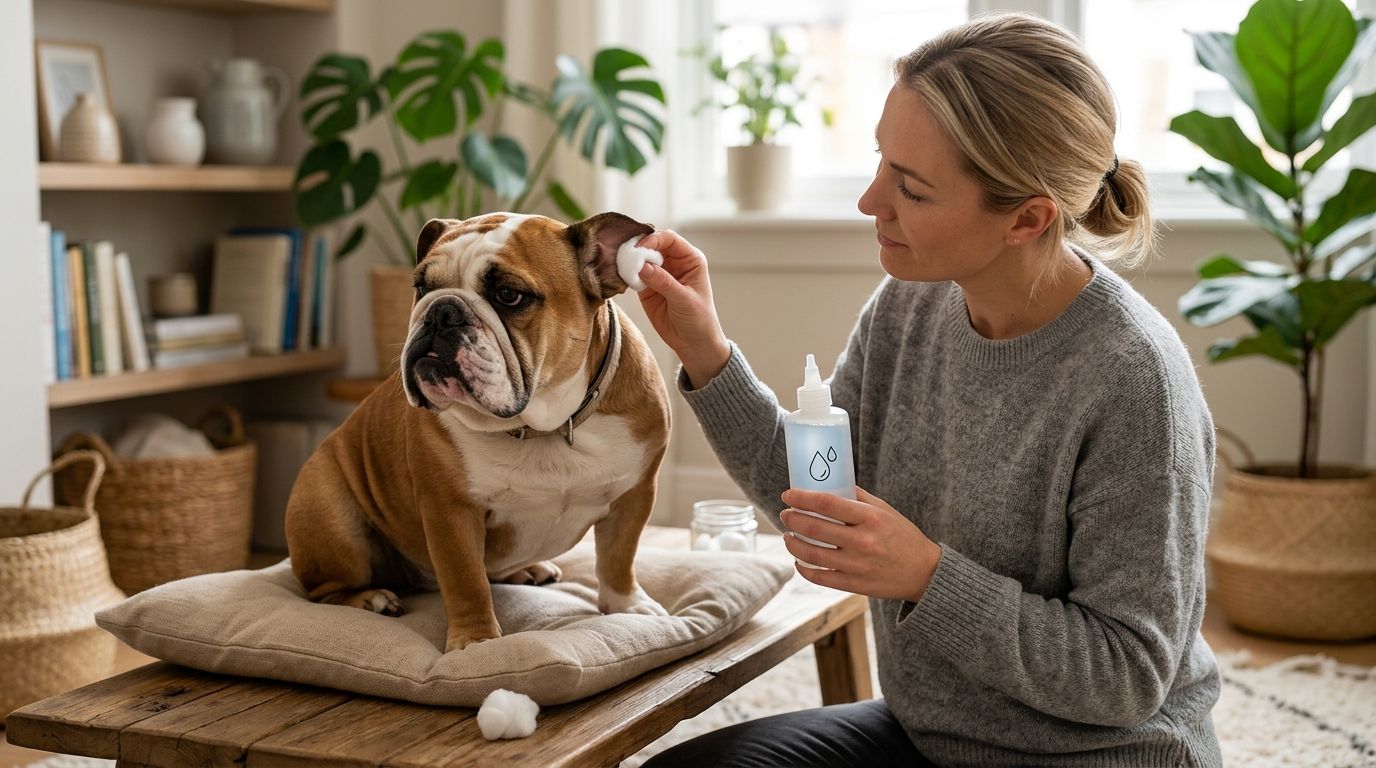
Clean an English Bulldog's ears once a week with a vet-approved cleanser, a plain cotton ball, and a full dry-off — the drying step matters more than the cleanser you pick, because a bulldog's rose-shaped ear traps moisture faster than almost any other breed's. Skip drying and you're looking at a yeast or bacterial flare-up within days, not weeks, since warm, damp folds are exactly what yeast wants.
TL;DR
Clean English Bulldog ears weekly with a vet-approved cleanser and cotton balls — never cotton swabs.
Drying the ear canal fully matters more for infection prevention than the cleaner you choose.
Redness, dark discharge, odor, or head-shaking means treat an infection, not just wipe the ear.
Bulldog ears need more attention than drop-ear breeds because folds trap moisture close to the skin.
A weekly ear check takes under two minutes once it is part of your grooming routine.
Why this matters
Ear infections rank among the most common vet visits for English Bulldogs, right alongside skin fold problems and eye issues. The rose ear — folded back and slightly open — actually gets more airflow than a hound's drop ear, but the trade-off is that the surrounding wrinkles and the ear opening collect dander, wax, and drool residue fast.
A weekly cleaning habit catches wax buildup before it turns into an infection that needs medicated drops and a vet visit. Left alone, a mildly waxy ear in 2026 can turn into a painful, odorous one in under two weeks. Bulldogs just don't self-clean the way some other breeds do.
How to clean an English Bulldog's ears at home
Here's the process, start to finish:
Gather supplies — a vet-approved ear cleanser (ask your vet which one fits your dog, since ingredients vary), several plain cotton balls, and a treat for after.
Lift the ear flap and look first. Healthy tissue is pale pink with light tan wax at most. Dark brown or black debris, redness, or a sour smell means you're past routine maintenance — the guide on ear infections in a French Bulldog covers what those signs mean in both bulldog breeds.
Saturate a cotton ball with cleanser. Don't pour cleanser directly into the canal unless your vet specifically told you to use a squeeze-bottle method.
Wipe the visible folds and the outer canal opening, working from the inside of the ear flap outward. Use a fresh cotton ball for each ear.
Dry thoroughly with a dry cotton ball. This is the step most owners skip, and it's the one that actually prevents infection. Trapped moisture, not the cleaning itself, is what breeds bacteria.
Reward immediately. Bulldogs remember which routines end in a treat, and that memory makes week three a lot easier than week one.
The whole process takes under two minutes per ear once your dog is used to it. Bulldogs aren't naturally thrilled about ear handling, so keep the first few sessions short and calm.
Routine weekly cleaning: what it looks like
For a healthy bulldog with no odor or discharge, weekly cleaning is maintenance, not treatment. You're removing normal wax and debris before it builds up, and the steps above are enough on their own.
Pair it with your regular wrinkle routine. Plenty of owners handle ears and skin folds in the same five-minute session, since both areas share the same moisture-trapping problem. The wrinkle grooming routine guide covers the fold half of that combined session.
Medicated cleaning during an active infection: what changes
If your bulldog already has redness, odor, or is shaking its head and pawing at an ear, a standard weekly wipe isn't enough — you need a vet diagnosis first. Bulldog ear infections are usually yeast, bacterial, or a mix of both, and the wrong cleanser can worsen a yeast overgrowth.
Once a vet prescribes a medicated drop or cleanser, you'll apply it on their schedule rather than weekly, and you'll dry the ear just as carefully between doses. Never start a leftover medication from a previous flare-up without asking first.
Why English Bulldog ears need more attention than other breeds
A handful of physical traits stack against bulldogs here:
Rose ear shape sits close to the skull and folds in a way that traps debris near the canal opening.
Facial and neck wrinkles near the ear base hold moisture from drool, water bowls, and normal skin oil.
Low ear carriage limits airflow compared to breeds with upright ears.
Allergy tendency — bulldogs are prone to food and environmental allergies, and itchy, inflamed ears are one of the first places that shows up.
Owner hesitation — many first-time bulldog owners skip ear cleaning entirely because the dog dislikes it, which lets wax and yeast build unchecked.
Water exposure — baths, pools, and beach days push moisture straight into the fold if you don't dry the ear afterward.
If your bulldog also deals with fold dermatitis, the same moisture-and-friction problem is behind it. The guide on skin fold infections in an English Bulldog walks through the parallel routine for facial and tail folds.
“Drying the ear is the step that prevents the infection. The cleanser just gets the debris out.”
How often should you clean a bulldog's ears?
Once a week is the standard for a healthy English Bulldog with no history of infection. Dogs prone to allergies or recurring ear trouble sometimes need cleaning every few days, but that schedule should come from a vet rather than guesswork — over-cleaning irritates healthy tissue just as much as under-cleaning lets debris build up.
Add an extra dry-off any time your bulldog swims or gets a bath in 2026, regardless of where you are in the weekly cycle.
Can you use a cotton swab to clean a bulldog's ears?
No. A cotton swab pushes wax and debris deeper into the canal instead of removing it, and it risks injuring the eardrum if your dog jerks its head mid-wipe. Stick to cotton balls for the visible canal opening and outer folds. Anything deeper than what you can see needs a vet's tools, not a Q-tip.
What does an infected bulldog ear look like compared to a healthy one?
A healthy ear shows pale pink skin, light tan wax, and no smell. An infected ear shows redness or swelling, dark brown or black discharge, a yeasty or sour odor, and usually head-shaking or scratching.
Any combination of those means a vet visit, not another home cleaning. A vet who works with brachycephalic breeds regularly will separate mild wax buildup from a real infection faster than a general practice will — choosing a vet experienced with brachycephalic breeds is worth sorting out before you need one urgently.
We've said it plenty around here: Bulldogs just make us happy, but their ears need real attention, not a quick swipe when you happen to remember. Build the habit while they're still a puppy and the whole routine is painless by the time they're grown.
See our available bulldog puppies
AKC-registered English and French Bulldog puppies, raised by our family.
What’s the best way to clean an English Bulldog’s ears at home?
Use a vet-approved cleanser on a cotton ball, wipe the visible folds and canal opening, then dry thoroughly with a second dry cotton ball. Drying matters more than the cleanser for preventing infection.
How often should you clean a bulldog’s ears?
Once a week is standard for a healthy English Bulldog. Dogs with allergies or a history of ear infections may need cleaning more often on a vet’s recommendation.
Is it normal for a bulldog’s ears to smell?
A faint neutral smell is normal, but a sour or yeasty odor is not and usually signals an infection. Get it checked rather than masking it with more frequent cleaning.
Can you use a cotton swab to clean a bulldog’s ears?
No. Cotton swabs push debris deeper into the canal and risk injuring the eardrum. Use cotton balls on the visible outer canal and folds only.
What ear cleaner is safe for English Bulldogs?
A vet-approved ear cleanser is safest, since ingredients vary and some formulas worsen a yeast overgrowth. Ask your vet which one suits your dog’s specific ear condition.
Do bulldog puppies need their ears cleaned too?
Yes, and starting young makes the routine far easier as they grow. Puppy ears produce less wax than adult ears, so they usually need cleaning less often.
What does an ear infection in a bulldog look like?
Redness, swelling, dark discharge, a sour smell, and head-shaking or scratching are the main signs. Any of these means a vet visit rather than another home cleaning.
Should you clean a bulldog’s ears after a bath or swim?
Yes, dry the ears after any water exposure even if you cleaned them earlier that week. Trapped water is the single most common trigger for a bulldog ear flare-up.
One last thing
The rose-shaped ear that makes bulldogs look so distinctive is actually better ventilated than a floppy drop ear. The real risk sits in the skin folds surrounding it, not the canal itself. Treat the ears and the nearby wrinkles as one combined weekly routine instead of two separate chores, and you'll catch most problems in 2026 before they ever need a vet trip.
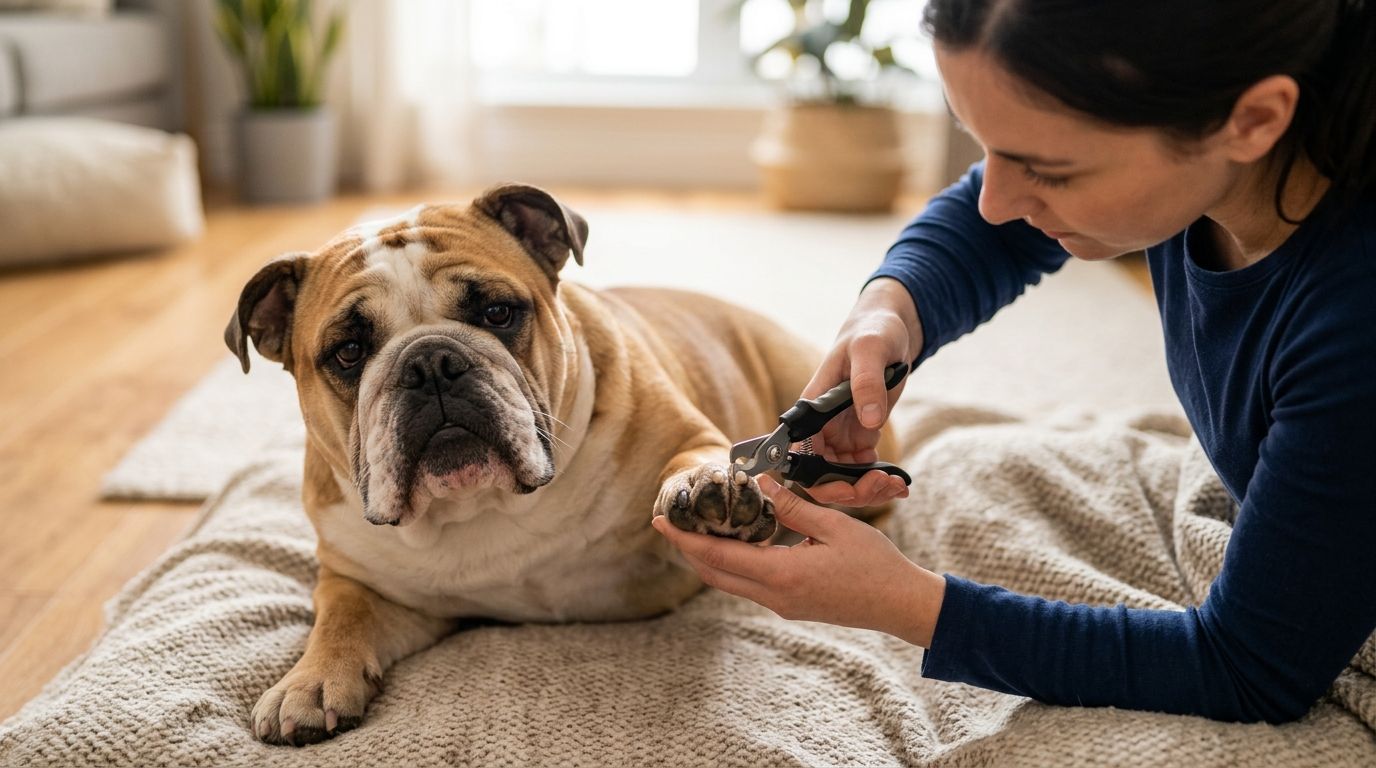
Trimming an English Bulldog's nails is one of the easiest home-care tasks you'll do for your dog, but bulldogs need it done more often and more carefully than most breeds because of how their bodies are built. This guide walks through the exact tools, angle, and schedule to use so you never nick the quick.
TL;DR
Trim English Bulldog nails every 2 to 4 weeks using a guillotine or scissor-style clipper.
Cut only the curved tip below the quick — nick it and the nail bleeds for several minutes.
Bulldogs wear nails down slower than active breeds because they cover less ground each day.
Overgrown nails push weight onto the heel and can worsen hip or joint strain over time.
Styptic powder stops a quick bleed in under a minute if you cut too close.
Why this matters
An English Bulldog's short legs, low activity level, and habit of lounging on carpet instead of pavement mean the nails almost never wear down on their own. Left alone, they curl, split, or push the toes sideways, which changes how a bulldog stands and walks. If you're setting up for a new puppy, a puppy starter supplies list that includes a proper clipper from day one makes this whole routine less of a fight later.
Getting nail trims right in 2026 isn't about buying an expensive tool — it's about frequency and technique. Most bulldog owners either wait too long between trims or cut too aggressively out of fear, and both mistakes cause the same problem: a dog that hates having its paws touched.
How to Trim an English Bulldog's Nails Safely
Follow these steps in order every time, whether you're using clippers or a grinder:
Handle the paw first, without the clipper in hand. Hold each foot for a few seconds and give a treat. Do this daily for a week before the first real trim if your bulldog is paw-shy.
Find the quick. On white or light nails you'll see a pink line running through the center — stop well before it. On black nails, trim in small slices and watch for a dark dot appearing in the center of the cut surface, which signals you're close.
Position the clipper at a 45-degree angle, cutting from the bottom up rather than straight across. This angle matches the natural curve of the nail and reduces splitting.
Cut a few millimeters at a time, not one big slice. Bulldog nails are thick and can be harder to read than they look.
File the cut edge with a nail file or the fine grit on a rotary grinder to smooth rough edges that can snag on carpet or bedding.
Reward immediately and keep styptic powder within reach in case you nick the quick — press it into the tip and hold for about 30 seconds.
Clipper vs. scissor vs. grinder: which tool works best
Tool
Best for
Pros
Cons
Verdict
Guillotine clipper
Owners with steady hands, thinner nails
Fast, clean single cut
Can crush thick bulldog nails if blade is dull
Buy for routine trims
Scissor-style clipper
Thick, dense bulldog nails
Handles dense nail material without crushing
Slightly slower, needs a firm grip
Buy — best all-around pick for English Bulldogs
Rotary grinder (Dremel-style)
Dark nails, nervous dogs, fine shaping
Removes tiny amounts at a time, low risk of cutting the quick
Noise and vibration scare some bulldogs at first
Hold — introduce slowly with treats before full use
Why English Bulldog Nails Grow Fast (And Need Extra Care)
A few structural and lifestyle factors make bulldogs different from a Lab or a Border Collie when it comes to nail wear:
Low daily mileage. Bulldogs tire quickly and prefer short walks on grass or carpet, surfaces that don't file nails down the way pavement does.
Wide, flat paws. The foot shape spreads weight differently than narrower-footed breeds, so natural wear happens unevenly.
Heat sensitivity limits exercise. Bulldogs overheat fast, which cuts into the outdoor time that would otherwise grind nails naturally.
Dewclaws are easy to miss. They never touch the ground, so they need manual trimming every single time or they can curl into the pad.
Long nails change gait over time, forcing weight backward onto the heel. That shift can aggravate joint issues — worth watching for alongside other early hip dysplasia signs in an English Bulldog.
“If you can hear a bulldog’s nails clicking on the floor, they were already overdue for a trim.”
How do you trim a bulldog's nails if it hates having its paws touched?
Start with short, no-clipper handling sessions of just a few seconds, paired with a treat every time, before you introduce the clipper at all. Most English Bulldogs relax within one to two weeks of daily paw handling, and trimming one or two nails per session instead of all of them at once keeps stress low.
What do you do if you cut the quick on a bulldog's nail?
Press styptic powder directly onto the bleeding tip and hold firm pressure for about 30 seconds — cornstarch works in a pinch if you don't have powder on hand. The bleeding usually stops within a minute, and a single nicked quick is not an emergency, but call a vet if bleeding continues past 10 minutes.
Can you use a Dremel or grinder on an English Bulldog's nails?
A rotary grinder works well on English Bulldogs, especially for dark nails where the quick is hard to see. Run it a few seconds at a time and let your dog get used to the vibration and sound before you attempt a full trim, since the noise startles some bulldogs the first few tries.
One detail owners overlook: bulldog puppies born into a program are handled for paws from the first weeks of life, which is exactly why a well-socialized Shrinkabulls English Bulldog puppy tends to tolerate trims better as an adult than one that never had its feet touched young.
See available Shrinkabulls puppies
Puppies come home already used to having their paws and nails handled.
How often should you trim an English Bulldog’s nails?
Trim an English Bulldog’s nails every 2 to 4 weeks in 2026, or sooner if you hear clicking on hard floors. Bulldogs need this more often than active breeds because low mileage means less natural wear.
What’s the best nail clipper for an English Bulldog?
A scissor-style clipper handles thick English Bulldog nails better than a guillotine style, which can crush dense nail material. A rotary grinder is a solid second tool for dark nails or nervous dogs.
Is it normal for a bulldog’s nail to bleed a little when trimmed?
A small amount of bleeding happens if you cut too close to the quick, and it usually stops within a minute with styptic powder or cornstarch. It is not normal for bleeding to continue past 10 minutes — call a vet if it does.
Do English Bulldogs need their dewclaws trimmed too?
Yes, dewclaws never touch the ground so they don’t wear down naturally and need trimming at every session. Left alone, they can grow long enough to curl into the paw pad.
Can you trim a bulldog’s nails without clippers?
A rotary grinder can shape nails without a traditional clipper cut, which some bulldogs tolerate better since it removes material gradually. It still takes patience to introduce the sound and vibration first.
How do you know if you’ve cut too much of a bulldog’s nail?
You’ve cut too much if the nail bleeds or your bulldog yelps and pulls the paw away. On dark nails, watch for a dark dot in the center of the cut surface as your warning sign before that point.
Why does my English Bulldog hate nail trims?
Most bulldogs resist nail trims because of a bad past experience with cutting the quick or lack of paw handling as a puppy. Short daily handling sessions with treats, done separately from actual trimming, usually fix this within a couple of weeks.
One last thing
The dewclaw is the nail most bulldog owners forget entirely, and it's the one most likely to snag on bedding or curl into the pad since it never makes contact with the ground. Check it every time you trim the other nails in 2026, not just when you remember — it's an easy miss with a real consequence if skipped for months.
English Bulldogs need short, low-intensity exercise scheduled around the coolest hours of the day once temperatures climb — think 5 to 10 minutes at a time, done before 8 AM or after 7 PM, with heat index above 80°F treated as a hard stop for outdoor activity. The hidden danger isn't the walk itself, it's the ground under their feet: asphalt can hit 125°F on a 77°F day, hot enough to blister paw pads before a Bulldog even breaks a sweat trying to cool off (and Bulldogs barely sweat at all — they cool almost entirely through panting).
TL;DR
Exercise an English Bulldog in hot weather only during early morning or evening, capped at 5-10 minutes once the heat index passes 80°F.
Hot pavement, not air temperature, causes most summer injuries — asphalt reaches 125°F on a 77°F day.
Overweight or older Bulldogs and dark-coated dogs need shorter sessions and closer monitoring in 2026’s warmer summer stretches.
Heatstroke in a brachycephalic breed like the English Bulldog can set in within 15-20 minutes of overexertion in heat.
Why this matters
The English Bulldog's flat face is the whole problem. Dogs cool themselves primarily by panting air across the tongue and nasal passages, and a Bulldog's shortened airway moves far less air per breath than a longer-muzzled dog. Add a thick, low-slung body that traps heat close to the skin and you've got a breed that overheats faster than almost any other, even at moderate temperatures that a Labrador would shrug off. This isn't a minor inconvenience — heatstroke is one of the leading preventable causes of emergency vet visits for Bulldogs every summer, and it can turn fatal in under an hour without intervention. A cooling vest helps on unavoidable warm-day outings, but timing and duration still matter more than any gear you put on the dog.
How do you exercise an English Bulldog safely in hot weather?
The safe approach comes down to when, how long, and how you read the dog. Here's the routine that keeps risk low without cutting exercise out entirely:
Check the heat index, not just the thermometer — humidity above 60% makes panting far less effective at cooling, even if the air temp reads mild.
Walk before 8 AM or after 7 PM — pavement and ambient temperature both drop sharply once direct sun is off the ground.
Run the 7-second pavement test — press the back of your hand on the sidewalk for 7 seconds; if it's too hot for your hand, it's too hot for paws.
Cap sessions at 5-10 minutes in anything above 80°F heat index, and split longer exercise needs into two short outings instead of one long one.
Carry water and offer breaks every 3-4 minutes rather than waiting until the dog looks distressed.
Watch breathing rhythm — a rapid, shallow pant with a wide-open mouth and pulled-back lips is the first sign to stop and cool the dog down, not push through.
Condition
Safe outdoor exercise?
Recommended action
Under 75°F, low humidity
Yes, normal duration
Standard walk, monitor as usual
75-85°F heat index
Shortened only
5-10 minutes, shade breaks every few minutes
Above 85°F heat index
No
Indoor play, AC time, skip walks entirely
Under 75°F: normal exercise is fine
Below 75°F with reasonable humidity, an English Bulldog can handle a typical 15-20 minute walk at an easy pace without special precautions. This is the window to bank your dog's exercise for the day — mornings in spring and fall, or early-summer days before the heat builds. Still watch for excessive drooling or a dog that starts lagging behind, since individual tolerance varies by age and weight.
75-85°F: cut sessions to 5-10 minutes
Once the heat index crosses 75°F, treat every outing as a short one. Ten minutes is the ceiling, and five is safer for older dogs or anything overweight. Skip pavement in favor of grass where you can, since grass stays dramatically cooler than asphalt or concrete under direct sun, and bring water even for a five-minute loop around the block.
85°F and up: skip outdoor exercise entirely
Above an 85°F heat index, outdoor walks aren't worth the risk for a brachycephalic breed. Bathroom breaks only, kept under two minutes, with the rest of the dog's activity moved indoors. Frozen lick mats, a game of fetch down a cool hallway, or a slow-motion tug session in air conditioning cover the exercise need without the heat exposure.
Heat exercise numbers to know
125°F
Asphalt temp on a 77°F day
80°F
Heat index cutoff for walks
5-10 min
Safe session length in heat
7 sec
Pavement hand-test threshold
Why heat tolerance varies between Bulldogs
Not every English Bulldog handles the same 80°F afternoon the same way. Factors that shift how much exercise is safe:
Weight — an overweight Bulldog carries extra insulation and works harder to move, both of which raise internal heat faster. A structured diet plan that gets a dog to a healthy weight directly improves heat tolerance.
Age — puppies and seniors regulate temperature less efficiently than adult dogs in their prime years.
Coat color — darker coats absorb more solar heat during midday sun than cream or fawn coats.
Airway health — a dog with narrower nostrils or an elongated soft palate has less cooling capacity to begin with; early breathing issues make heat exercise riskier and worth flagging to a vet before summer hits.
Acclimation — a Bulldog that's spent the winter mostly indoors needs a gradual reintroduction to warm-weather activity, not a jump straight into full walks.
Hydration status — a dog that skipped water earlier in the day starts any outing at a disadvantage regardless of the temperature outside.
“If a Bulldog’s pant sounds different than usual — louder, more strained, or paired with drooling — the walk is already over.”
How hot is too hot for an English Bulldog to walk?
An 80°F heat index is the practical cutoff for anything beyond a quick bathroom break, since humidity above 60% at that temperature sharply reduces how well panting cools the dog. Below 75°F with normal humidity, a standard walk is generally fine.
Can English Bulldogs swim to cool off in summer?
Supervised, shallow water works well as a low-impact cooling activity, but English Bulldogs are poor swimmers due to their heavy front-end build and short legs, so a life vest and constant supervision are non-negotiable — never leave one unattended near a pool.
How do I cool down an overheated Bulldog fast?
Move the dog to shade or air conditioning immediately and apply cool (not ice-cold) water to the belly, paws, and ears while offering small sips of water, then get to a vet experienced with brachycephalic breeds if panting stays rapid for more than 10-15 minutes after cooling starts. A vet who understands brachycephalic anatomy will know the difference between normal recovery panting and early heatstroke signs.
Planning a Bulldog for a warm climate?
See what a hot-climate household setup looks like before you bring one home.
What temperature is too hot to exercise an English Bulldog?
An 80°F heat index is the practical cutoff for walks longer than a bathroom break. Above that, indoor play replaces outdoor exercise entirely, since panting loses effectiveness once humidity climbs alongside the temperature.
How long can an English Bulldog walk in hot weather?
5 to 10 minutes is the safe window once the heat index passes 75°F, dropping to bathroom-break-only above 85°F. Under 75°F, a normal 15-20 minute walk is generally fine.
Do English Bulldogs need cooling vests?
A cooling vest helps for unavoidable warm-weather outings like vet visits or brief walks, though it doesn’t replace shortening or skipping exercise in real heat. It works best alongside timing changes, not instead of them.
What are the first signs of heatstroke in an English Bulldog?
Rapid, wide-mouthed panting, excessive drooling, and bright red gums are the earliest signs, often followed by wobbling or collapse if not addressed within 15-20 minutes. Move the dog to shade and cool water immediately at the first sign.
Is early morning or late evening better for exercising a Bulldog in summer?
Early morning before 8 AM usually beats evening because pavement hasn’t absorbed a full day of sun yet, keeping ground temperature lower. Either window works better than any midday outing.
Can an overweight English Bulldog exercise in hot weather?
An overweight Bulldog needs shorter sessions and closer monitoring than a lean dog at the same temperature, since extra weight raises internal heat faster. Getting the dog to a healthy weight improves heat tolerance well beyond any single summer.
Should English Bulldog puppies exercise differently in heat than adults?
Puppies regulate temperature less efficiently than adult dogs, so sessions should run shorter and stop sooner even at the same outdoor temperature. Watch a puppy’s breathing more closely than you would an adult’s.
Does humidity matter more than temperature for Bulldog exercise?
Humidity above 60% reduces how well panting cools an English Bulldog, sometimes making a 75°F humid day riskier than an 85°F dry one. Check heat index, not just the raw temperature, before any outing.
One last thing
Most Bulldog owners assume the danger is the sun on the dog's back, but the ground is usually the bigger threat — a 77°F day is warm enough to push asphalt past 125°F, which is well into the range that burns paw pads in under a minute. Grass and shaded trails beat pavement every single time in 2026's warmer summer months, even on days that don't feel that hot to you. If your Bulldog's exercise routine depends on sidewalks, switch the route before switching the schedule.
A French Bulldog puppy with entropion squints, holds one eye partly shut, and tears constantly because the eyelid rolls inward and the fur along the lid margin scrapes the cornea with every blink. The rolling usually shows up between 8 and 16 weeks of age, right as the wrinkled, heavy-browed face the breed is known for starts to fill in. Left alone, that friction turns into corneal ulcers, cloudiness, and permanent scarring — the fix is a surgical tack or a permanent corrective procedure, never a wait-and-see approach.
TL;DR
Entropion in a French Bulldog puppy shows as squinting, heavy tearing and eye rubbing between 8 and 16 weeks.
Pull the lower lid down gently; if it rolls back inward on release, that is entropion, not allergies.
Untreated, the inward-rolled lid causes corneal ulcers within days to weeks, not months.
Surgical tacking or permanent correction is the only real fix — no drop, wipe or balm resolves true entropion.
Wrinkled brachycephalic breeds like French and English Bulldogs sit at the top of the risk list in 2026.
Why this matters
Entropion does not heal on its own, and French Bulldogs get it more than almost any other breed because of the same facial architecture that makes them so recognizable — tight wrinkles, a short muzzle, a heavy brow. A puppy squinting through one eye at 10 weeks is not being shy or sleepy. That is a mechanical problem: the lid is folded the wrong way and every blink drags hair across the eye surface.
The cherry eye most bulldog owners already watch for is a completely different structure — a prolapsed tear gland, not a folded lid — but the two get confused constantly because both present as a red, weepy, irritated eye in a young puppy. Knowing which one you are looking at decides whether you are calling a veterinary ophthalmologist this week or just cleaning wrinkles.
We raise bulldogs, we whelp bulldogs, and we have seen enough eyes in our own nursery to say this plainly: the owners who catch entropion in the first month home end up with a simple outpatient fix. The ones who assume it is dust and wait until 6 months end up paying for ulcer treatment plus a bigger surgery. In 2026 that gap in cost and outcome is bigger than ever, because corrective eyelid surgery has gotten better while corneal scar repair has not.
How to recognize entropion in a French Bulldog puppy
The signs cluster together, and a puppy almost never shows just one of them:
Squinting or holding one eye partly shut, especially in bright light, wind, or after a nap
Constant tearing or thick discharge that keeps the fur under the eye wet and stained
Visible redness on the white of the eye or along the inner lid rim
Pawing and face-rubbing on carpet, bedding, or your leg — sometimes hard enough to scratch the lid
A visible fold where the lower or upper lid edge tucks inward instead of lying flat against the eyeball
Cloudy or bluish haze on the cornea, which means an ulcer has already started and the clock is now measured in days
The ten-second fold test
With the puppy calm and sitting in your lap, use one clean finger to gently draw the lower lid downward, then let go and watch what the lid does.
If the lid edge snaps back inward and the lashes or fur disappear against the eyeball, that is entropion.
If the lid settles flat and the eye simply looks a little goopy, you are more likely dealing with wrinkle irritation, dust, or a mild infection.
Do this test at every single vet visit through the first 6 months. It costs nothing and it is the most reliable home screen there is.
Sign
Entropion
Allergy or mild conjunctivitis
Eyelid position
Visibly rolled inward
Sits flat, no fold
Onset
Gradual, 8-16 weeks
Sudden, often both eyes at once
Eyes affected
Often one eye worse than the other
Usually symmetrical
Discharge
Thick, worsens over days
Clear, comes and goes
Response to eye wipes
No improvement at all
Often better within a day or two
Cornea
Can turn cloudy or hazy
Stays clear
Fix
Surgical
Medical or environmental
If your puppy matches the entropion column on more than one row, book a veterinary ophthalmology exam rather than watching it another week. A vet experienced with brachycephalic breeds will check lid tension and stain the cornea for ulcers in the same appointment, then tell you whether the case is mild enough to monitor or bad enough to tack now.
Mild, moderate and severe: what each grade means
Entropion is not one condition with one answer. Vets grade it by how much lid is rolled and how much damage the cornea has already taken, and the grade drives the plan.
Mild entropion: monitor and recheck
A small inward roll at the outer corner, intermittent squinting, no corneal haze. Best for: puppies under 12 weeks whose faces are still changing. The plan is lubricating drops as directed by your vet, wrinkle hygiene, and a recheck every 2 to 3 weeks. Verdict: monitor — but only with a scheduled recheck on the calendar, not a vague intention.
Moderate entropion: temporary tacking
A clear fold, persistent tearing, eye held shut a good part of the day. Best for: growing puppies who need relief now but are too young for permanent correction. The vet places temporary sutures that hold the lid outward while the skull finishes developing. Verdict: fix it now — tacking is the standard call and it protects the cornea during the growth window.
Severe entropion: permanent correction
Heavy roll on one or both lids, thick discharge, visible corneal cloudiness or a diagnosed ulcer. Best for: puppies where lid structure clearly will not self-correct. Permanent surgical correction removes a measured strip of skin to reset lid position, usually once facial growth has largely finished. Verdict: surgery — and treat the ulcer at the same time.
Any bulldog procedure means anesthesia, and anesthesia in a short-nosed breed deserves its own prep conversation with your vet before the day arrives. Ask specifically about airway monitoring and recovery observation time.
“A puppy squinting through one eye at 10 weeks isn’t shy — that’s a folded eyelid doing damage with every blink.”
Why entropion varies from puppy to puppy
Several factors stack up, and they stack hard in a breed built the way French Bulldogs are:
Excess facial skin and wrinkle depth pull the lid margin out of its resting position, which is why the wrinkliest puppies in a litter are often the ones to watch
A short, compressed muzzle changes the geometry the eyelid closes across, altering lid tension
Genetic predisposition within bloodlines — eyelid conformation travels in a pedigree the same way coat and head shape do, which is why serious programs tracking rare color genetics and pricing record eye health alongside color results
Rapid facial growth between 8 and 20 weeks can temporarily change lid shape before the skull finishes filling out
Chronic irritation from any other cause — dust, allergens, an early infection — can trigger secondary entropion, because a puppy that squints for weeks slowly pulls the lid inward
Dehydration or sharp weight loss in a sick puppy loosens the tissue around the orbit enough for the lid to fold, though this is far less common than the structural causes
Related questions owners ask
Is entropion in a French Bulldog puppy always congenital?
Entropion is congenital in most French Bulldog cases, present from early development rather than caused by injury. Secondary entropion does happen, usually after weeks of squinting from another irritation. Either way, once the lid is rubbing the cornea the treatment path is identical.
Can entropion resolve on its own as the puppy grows?
Mild entropion sometimes loosens as the face fills out between 4 and 6 months, but true structural entropion does not self-correct and worsens the longer the cornea takes friction. A vet exam at the first sign of squinting is what separates the monitor group from the surgery group — guessing wrong costs the puppy weeks of damage.
What happens if entropion goes untreated?
Untreated entropion progresses to corneal ulceration within days to weeks, because the rubbing never stops on its own. Given long enough, ulcers scar the cornea and can permanently cloud vision in the affected eye. This is a surgical condition, not a home-care one — and that has not changed in 2026.
Does a diagnosis mean the puppy will have lifelong eye problems?
No. Corrected early, most French Bulldogs go on to completely normal eye comfort and vision. The lifelong problems come from delay, not from the condition itself.
What to ask a breeder before you buy
This is where prevention actually lives. Ask any breeder — us included — three direct questions:
Do you check eyelid position on every puppy at the pre-placement vet exam?
Has entropion appeared in this bloodline, and what did you do about it?
What does the health guarantee say about congenital eye conditions?
A breeder who answers all three plainly is doing the job. A breeder who gets vague is telling you something. We put every one of our puppies through a vet check before they go home, and eyes are part of that check — because a squinting puppy at 9 weeks is a five-minute conversation, and a scarred cornea at 9 months is not.
Questions about a puppy’s eye health?
Ask before you reserve, not after. We walk every family through the vet-check details.
What does entropion look like in a French Bulldog puppy?
Entropion looks like a squint or partly closed eye with heavy tearing, and the lid edge visibly rolls inward when you gently pull it down and release. It shows up most often between 8 and 16 weeks of age.
Is entropion common in French Bulldogs?
Entropion is one of the most frequently reported eye conditions in heavily wrinkled brachycephalic breeds, including French Bulldogs and English Bulldogs. The short muzzle and excess facial skin change eyelid tension, which raises risk compared with longer-muzzled breeds.
How is entropion treated in a French Bulldog puppy?
Entropion is treated surgically, either by temporarily tacking the lid outward while the puppy grows or by permanently correcting the fold once facial growth finishes. No drop, wipe or balm fixes true entropion, though lubricating drops may be prescribed to protect the cornea in the meantime.
Can entropion be mistaken for cherry eye in a bulldog puppy?
Yes, both cause redness and tearing in young bulldog puppies, but cherry eye is a prolapsed gland that appears as a pink mass in the inner corner, while entropion is a folded eyelid margin. A vet tells them apart in minutes.
At what age does entropion show up in French Bulldog puppies?
Most cases appear between 8 and 16 weeks as the face fills out with the brow and wrinkle structure typical of the breed. Some show earlier, and secondary entropion can develop later after weeks of chronic eye irritation.
Does entropion in a bulldog puppy get worse over time?
Yes, untreated entropion worsens because lash and fur friction on the cornea continues with every blink. Given enough time it progresses to corneal ulcers and scarring, which is why early recognition beats waiting.
Should I ask a breeder about entropion before buying a French Bulldog puppy?
Yes, ask whether eyelid position is checked at the pre-placement vet exam and whether entropion has appeared in the bloodline. A breeder tracking this alongside other health screening is doing it right.
Is entropion surgery risky for a brachycephalic puppy?
The eyelid procedure itself is routine, and the main consideration is anesthesia in a short-nosed breed. Discuss airway monitoring and recovery observation with a vet experienced in brachycephalic patients before the appointment.
One last thing
The fold test takes ten seconds, and it tells you more than a week of watching a puppy squint and hoping. Run it on both eyes at every vet visit through 6 months of age, because entropion caught at 8 weeks is usually a short outpatient tacking, while entropion caught at 6 months after an ulcer has scarred the cornea is a larger surgery with a worse outcome. Bulldogs just make us happy — keeping those big round eyes comfortable is the least glamorous and most valuable thing a new owner does in 2026.



 REVIEWS